
You know that musty, damp smell? It’s almost always the first red flag of a hidden problem, popping up long before you actually see anything on the carpet. That smell means you're likely dealing with carpet mildew, a surface fungus that absolutely loves damp, poorly ventilated spaces. Finding the right mildew remover for carpet is the first step to getting your home’s freshness back and protecting your investment.
Identifying and Understanding Carpet Mildew
Before you can get rid of mildew, you have to know for sure what you’re up against. It’s sneaky and often starts small, but if you ignore it, you’re looking at much bigger problems for both your carpet and the air you breathe.
Recognizing the Telltale Signs
Mildew has a few distinct ways of making its presence known. The most obvious is that unmistakable musty odor, which you’ll really notice in closed-off areas like basements, closets, or rooms that don’t get much air.
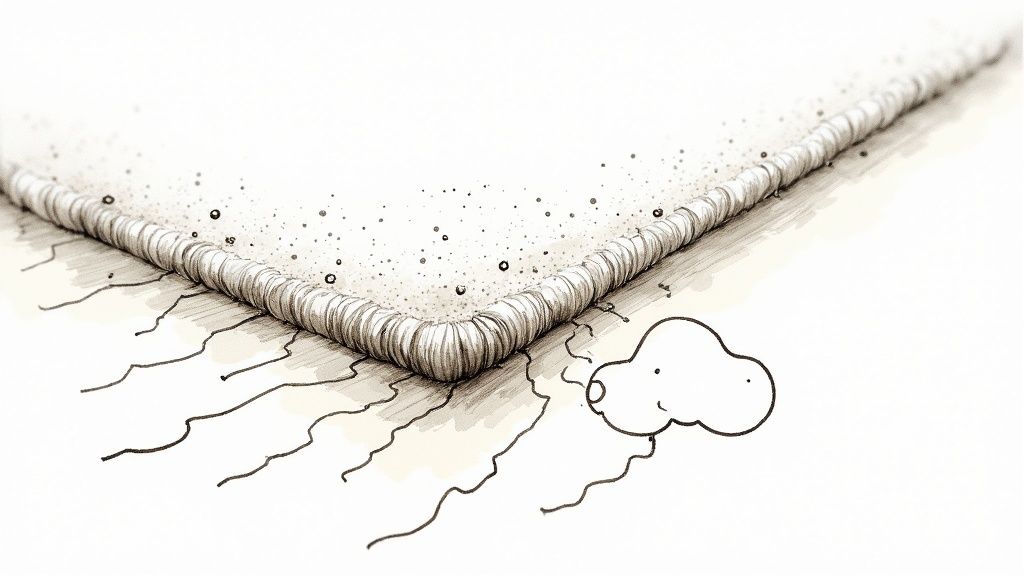
If you look closely, you might also see discolored patches on the carpet fibers. These spots can be white, gray, or even a little yellowish, and they often feel powdery or downy to the touch.
Catching these signs early is a big deal. Mildew isn't just ugly; it can kick up allergies and seriously degrade your home’s air quality. We talk a lot more about this in our guide on improving your home's indoor air quality.
Key Takeaway: Mildew is a surface-level fungus. It's different from its more destructive cousin, mold, which digs deep into materials. While it's less severe, mildew still poses risks and needs to be dealt with quickly before it has a chance to turn into a full-blown mold problem.
People are more aware than ever of the impact of mildew, and that has created a huge market for cleaning solutions. The global market for mildew cleaners was recently valued at around $2.5 billion, and it's expected to keep growing as homeowners focus more on keeping their homes hygienic. Getting on top of it fast is the best way to preserve your carpet and keep your living space healthy.
Choosing the Right Mildew Removal Method
When you've got a mildew spot, reaching for the first cleaner you find can be a big mistake. I've seen it happen time and again—the wrong choice can lead to faded colors or, worse, damaged carpet fibers. Suddenly, a small mildew issue has turned into a costly replacement project.
Not every mildew spot calls for the same treatment. A delicate wool rug, for instance, needs a much gentler, pH-balanced approach than a durable synthetic carpet that can handle a more aggressive cleaning solution. The first thing you should always do is figure out what kind of carpet you have.
This handy little decision tree can help you choose the right path based on your carpet's fiber and how bad the mildew situation is.
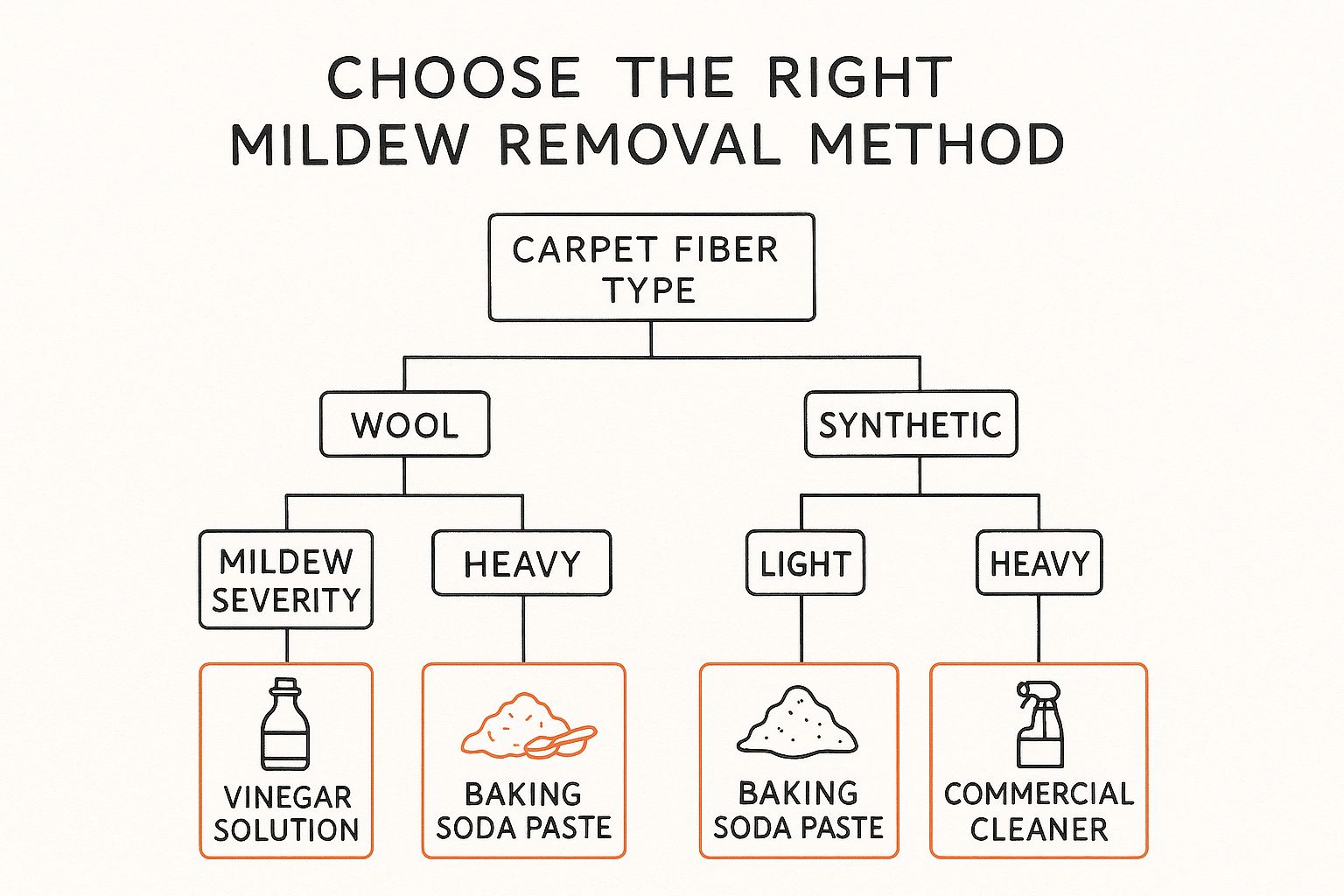
The takeaway here is pretty simple: DIY solutions are usually fine for small, surface-level spots on synthetic carpets. But for anything more serious, or for natural fibers, you're better off looking at a specialized commercial product.
DIY vs. Commercial Solutions: What Really Works?
It’s easy to see why natural remedies like vinegar and baking soda are so popular—they're cheap and you probably already have them in your pantry. A simple paste made from baking soda and water can do a surprisingly good job of lifting light mildew stains from synthetic fibers without any harsh chemicals.
But for stubborn mildew or larger patches, a commercial remover is almost always the better bet. These products are formulated specifically to kill the spores and stop them from coming back. The market for these products is huge; stain removers alone are a nearly $1.2 billion industry and still growing, mostly because everyone is more focused on hygiene and looking for eco-friendly options. You can read more on the carpet stain remover market trends if you're interested in the data.
To help you decide what's best for your situation, here's a quick comparison of the most common options out there.
Comparing Carpet Mildew Removal Options
| Method | Best For | Carpet Safety | Pros | Cons |
|---|---|---|---|---|
| Vinegar & Water | Small, fresh spots on synthetic carpets. | Generally safe, but test first. Can be too acidic for some natural fibers. | Non-toxic, inexpensive, kills some mold/mildew spores. | Strong odor, may not remove deep-set stains. |
| Baking Soda Paste | Light surface mildew and odors. | Very safe for most carpet types. | Absorbs moisture and odors, gentle abrasive action. | Can leave a powdery residue if not rinsed well. |
| Hydrogen Peroxide | Light-colored synthetic carpets. | CAUTION: Can have a bleaching effect. Always test an inconspicuous area. | Effective disinfectant that kills spores. | Risk of discoloration, especially on dark carpets. |
| Commercial Removers | Stubborn, widespread mildew on most carpet types. | Varies by product. Look for formulas safe for your carpet fiber. | Formulated for deep cleaning and preventing regrowth. | Can contain harsh chemicals, may be more expensive. |
As you can see, what works for a tiny spot on a polyester rug might be a disaster on a wool one. Always, always test your chosen cleaner on a hidden spot first!
Expert Tip: Steer clear of soap-based cleaners. It seems like a good idea, but the sticky residue they leave behind becomes a buffet for new mildew once moisture gets back in. It’s a frustrating cycle you don't want to get trapped in.
Ultimately, your goal is to kill the mildew without soaking your carpet. That's the classic mistake with many DIY methods—they add too much moisture back into the equation. Understanding the difference between cleaning techniques, like low-moisture VLM versus traditional steam cleaning, is key to getting it right for the long haul.
How to Safely Remove Mildew From Your Carpet
Alright, you've mixed up your cleaning solution and you're ready to get that mildew out. Before you go charging in, remember that proper prep is everything. It’s the difference between a successful cleaning and accidentally making things worse.
First things first: safety and airflow.
Pop open some windows and get a couple of fans blowing to really move some air through the room. This helps any fumes dissipate and speeds up the drying process later. Always, always wear protective gloves, and I'd recommend a mask too—especially if you're sensitive to strong smells.
Perform a Crucial Spot Test
I can't stress this enough. Before you put any mildew remover for carpet on a visible area, you have to do a spot test. It doesn't matter how gentle the product claims to be. This single step can save you from a world of hurt, like bleached spots or damaged fibers.
Find a small, out-of-the-way patch of carpet—think inside a closet or under a heavy sofa you never move. Apply a tiny bit of your cleaner, let it sit for the recommended time, then blot it up with a clean white cloth. Let it dry completely. If there's no color change or weird texture, you're good to go.
Application Without Oversaturation
This is where a lot of people go wrong. They think drowning the spot in cleaner will kill the mildew faster. In reality, you’re just inviting it back. Remember, moisture is mildew’s best friend. The goal is to treat the carpet fibers without soaking the backing or the pad underneath.
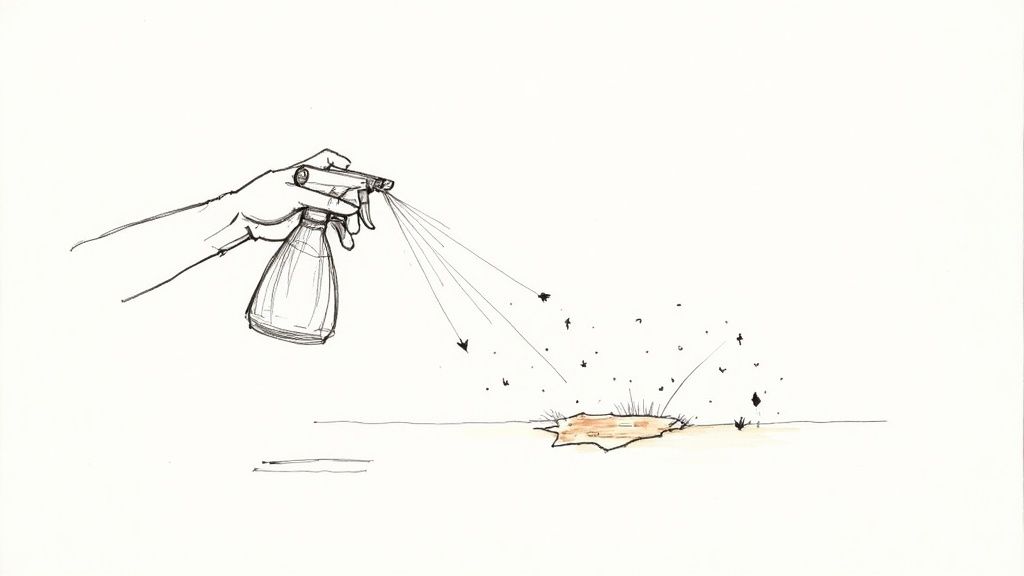
Use a spray bottle to lightly mist the affected area. This gives you way more control. Start spraying from the outside of the spot and work your way in; this keeps the mildew from spreading outward.
Pro Tip: Never pour a cleaning solution directly onto your carpet. It’s a guaranteed way to oversaturate the area, which can cause the carpet backing to separate and creates a perfect breeding ground for new mildew deep in the padding.
Let the solution sit for about 10-15 minutes. This gives it time to work its magic and actually break down the mildew spores. For some extra reading on dealing with this kind of stuff around the house, these general mold removal tips can be pretty helpful.
Blot, Lift, and Dry Thoroughly
Now it's time to get the gunk out. The key here is to blot, not scrub. Scrubbing just frays your carpet fibers and can grind the mildew even deeper. Take a clean, absorbent cloth and press down firmly. You’ll see the mildew start to transfer onto the cloth.
Once you’ve blotted up as much as you can, gently rinse the spot with a different cloth dampened with plain water. This removes any leftover cleaning residue.
The final step is the most important one: getting the area 100% dry. If you leave any moisture behind, the mildew will be back before you know it.
- Fans are your friend: Aim them directly at the damp spot to keep the air moving.
- Break out the dehumidifier: This is a fantastic tool for pulling every last bit of moisture from the carpet and the surrounding air.
- Prop it up: If you can, lift the edge of the carpet and slide something underneath to let air circulate under the backing.
When you dry the area this thoroughly, you're solving the problem for good, not just putting a temporary band-aid on it.
Handling Severe Mildew and When to Call a Pro
While a good DIY mildew remover for your carpet can tackle those annoying surface-level spots, some situations are just out of our league. Let's be real, if you've had a serious leak or fought a long battle with high humidity, the problem might not just be on the carpet—it's probably in it.
When mildew soaks all the way through to the padding or, even worse, the subfloor, you're playing a whole different ballgame.
This is where a home steam cleaner can actually make things worse. Sure, the heat might kill some of the mildew spores, but those machines blast a ton of water into your carpet and just don't have the commercial-grade suction to pull it all back out. You're left with a damp, soggy pad that quickly becomes the perfect breeding ground for even more aggressive growth.
Knowing When You're Outmatched
This is where the pros come in with their hot water extraction equipment. These aren't your rental machines from the grocery store. They're incredibly powerful units that flush the carpet and the padding with a cleaning solution, then immediately suck all that dirty, mildew-filled water right back out.
It's a method that truly gets rid of deep-seated mildew and the moisture that feeds it. There's a reason the professional market for carpet extraction cleaners was valued at a whopping $3.2 billion globally—people need powerful, quick-drying solutions that work.
So, when do you put down the spray bottle and pick up the phone? The signs are usually pretty obvious.
Don't Hesitate to Call an Expert If:
The musty smell comes roaring back just days after you've cleaned, the mildew patch is bigger than 10 square feet, or the carpet feels spongy when you walk on it. That spongy feeling is a dead giveaway that the padding underneath is saturated.
You also need to pay close attention to your family's health. If anyone at home is suddenly dealing with non-stop sneezing, coughing, or itchy eyes, it could be a reaction to a massive number of airborne spores from a hidden infestation. At that point, this has gone from a simple cleaning job to a potential health hazard that needs professional remediation. Waiting will only lead to more damage and a much bigger repair bill down the road.
Keeping Mildew From Coming Back For Good
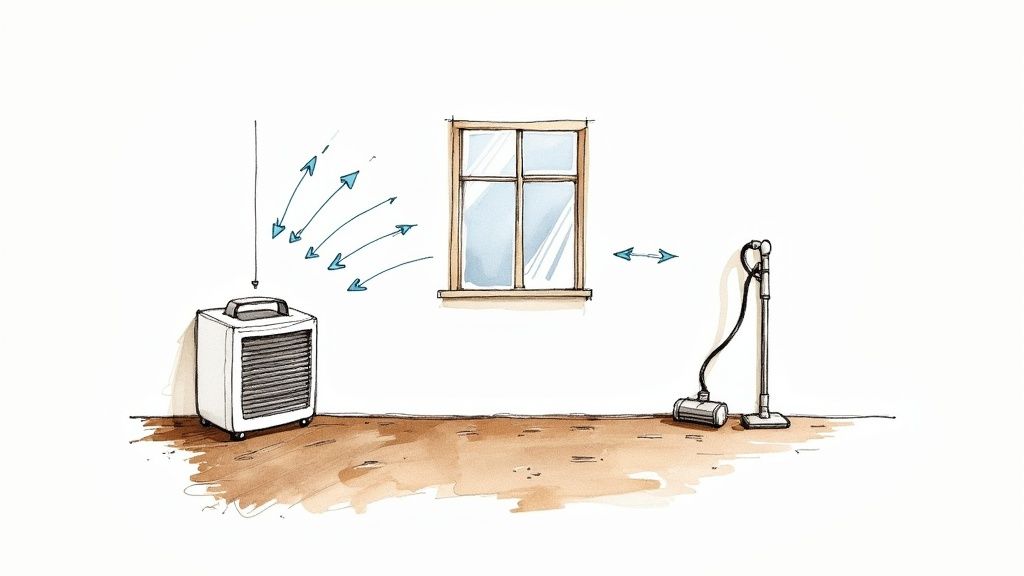
It feels great to get rid of a mildew spot, but the real win is making sure it never returns. Frankly, long-term prevention is all about controlling moisture. You have to create an environment where mildew just can't get a foothold.
When we see mildew, the root cause is almost always excess humidity. It's the perfect breeding ground.
Your first line of defense is getting your home's moisture levels under control. A dehumidifier can be an absolute game-changer, especially in those naturally damp spots like basements, laundry rooms, or stuffy bathrooms. The goal is to keep your indoor humidity below 50%. Do that, and you make the environment totally inhospitable for mildew spores.
Good airflow is another huge piece of the puzzle. It doesn't have to be complicated. Just running ceiling fans or cracking a window for a bit each day makes a massive difference. This simple step keeps that stagnant, humid air from settling deep into your carpet fibers.
Smart Habits and Fast Action
Believe it or not, your daily routine plays a major role here. Spills are going to happen—that's just life. But letting them sit is like rolling out the welcome mat for mildew.
Grab a clean, dry cloth and blot spills the moment they happen. Keep at it until the area is as dry as you can possibly get it.
Of course, regular carpet care is non-negotiable. Consistent vacuuming is key because it pulls up the dirt, dander, and other organic bits that mildew loves to feed on. Beyond your own cleaning, it's smart to think bigger. For a broader strategy, check out these excellent tips to avoid mold in your home and damp areas.
And don't forget professional cleanings. Understanding how often you should clean your carpet is vital for getting rid of that deep-down moisture and allergens that a vacuum just can't reach.
Your Top Carpet Mildew Questions, Answered
Even after you've got a plan, a few specific questions always seem to pop up. It's totally normal. Getting these details ironed out is the key to tackling the job with confidence and not accidentally making things worse.
Can I Just Use Bleach on Carpet Mildew?
That’s a hard no. While bleach is a beast of a disinfectant, it's way too aggressive for carpet fibers. Best case scenario? You'll get ugly, discolored blotches. Worst case? You could literally dissolve the fibers.
But the bigger problem is that bleach doesn't even solve the root issue. On something porous like carpet, it only kills the mildew it can touch on the surface. The "roots" that have worked their way into the backing and padding are left completely untouched, just waiting to grow right back.
How Can I Tell if Mildew Is in the Carpet Padding?
Your nose is often your best tool here. If a powerful musty smell just won't go away, even after you've cleaned the surface, that’s a huge clue.
Another dead giveaway is how the carpet feels. Press down on the suspicious area. Does it feel weirdly spongy or stay damp long after any spills should have dried? That's a bad sign.
If you really want to be sure, you can play detective. Find a hidden spot, like the corner of a closet, and carefully pull the carpet back from the tack strip. One look at the padding and the subfloor underneath will tell you everything you need to know—you'll see the moisture stains, dark discoloration, or even fuzzy growth right away.
Expert Insight: The moment you confirm mildew in the padding, the game changes. DIY methods just won't cut it. That padding acts like a giant sponge, holding onto moisture and contamination. Only a pro with high-powered hot water extraction gear can truly flush it all out and, more importantly, suck virtually all the water back out so it doesn't just grow back tomorrow.
Will a Steam Cleaner Get Rid of Mildew?
This is a common mistake that actually makes the problem much, much worse. Those rental steam cleaners you get at the grocery store are notorious for this.
They work by blasting a ton of hot water into your carpet, but they don't have nearly enough suction power to pull it all back out. You're left with a damp, warm carpet—basically, you’ve just created a perfect tropical resort for mildew to thrive and spread. Professional equipment is engineered to remove almost every drop of moisture it puts down, which is why it's a much safer bet.
If you're staring down a stubborn mildew problem and want it gone for good without the risk, Citrus Carpet Cleaning Buford has the low-moisture solution you need. Our citrus-based cleaner knocks out mildew without soaking your carpet. Schedule your "EXACT-imate" today!