
The best way to deal with stubborn carpet stains is to stop them from ever happening. It really comes down to setting up a proactive system, and it all starts at your front door. A few simple habits can stop up to 85% of dirt and debris from ever touching your carpet fibers.
Build a Smart Defense Against Everyday Mess
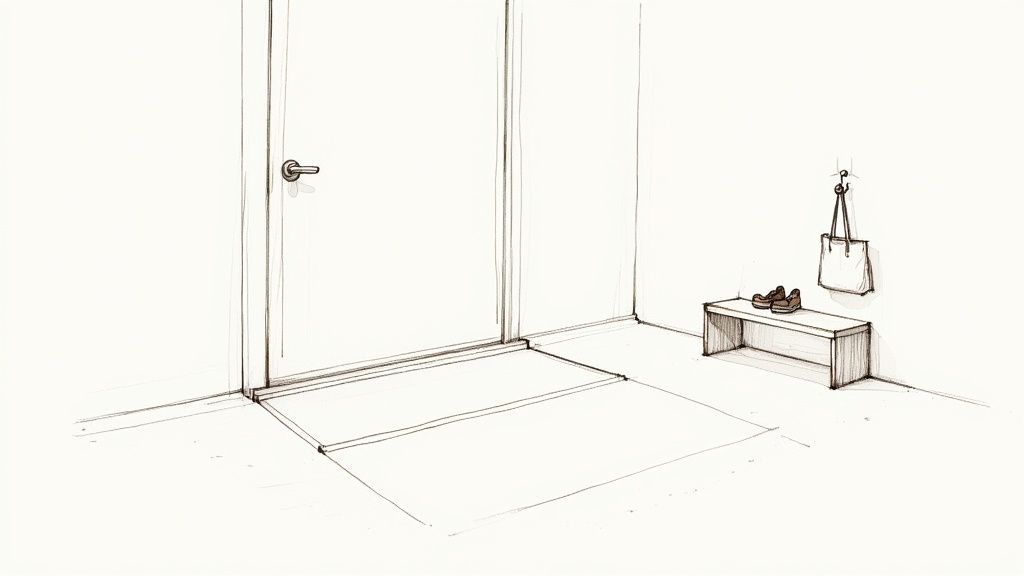
Honestly, protecting your carpet starts before anyone even steps foot inside. The overwhelming majority of the dirt that grinds down carpet fibers is tracked in from outside on the bottom of shoes. Creating a simple, effective system at your main entry points is the single most powerful thing you can do.
This doesn't mean you need a total remodel or have to enforce a strict, unwelcoming vibe. It’s just about building smart habits and using the right tools to create a buffer zone.
Establish an Effective Entryway System
Think of your home's entryway as the front line in the battle against stains. It’s a "drop zone" where the outside world stays outside. A simple bench or a designated shoe tray right by the door encourages everyone—family and guests—to kick off their footwear as soon as they come in.
This one small change dramatically cuts down on the amount of soil, moisture, and potential staining gunk that gets tracked across your home. For this to actually work, though, it has to be easy.
- Shoe Storage: Put a stylish shoe rack, basket, or mat right next to the door. It’s a visual cue that makes a "no-shoes" policy easy to follow without you having to say a word.
- A Place for Belongings: Add a few hooks for coats and bags. Those items can carry in just as much dust and grime as shoes.
- Comfort is Key: Keep a small stool or bench nearby. It makes taking shoes on and off much easier for family and guests, so they're more likely to do it.
The Power of Mats and Runners
Doormats and runners are the unsung heroes of carpet protection. They're designed to take a beating so your carpet doesn't have to. Placing them in strategic spots creates a physical barrier that traps dirt and soaks up spills before they become a problem.
A coarse "scraper" mat outside the door is perfect for getting rid of heavy grit and mud. Then, place a more absorbent "wiper" mat on the inside to catch that finer dust and moisture.
Pro Tip: Don't forget about high-traffic hallways and the transitions between rooms. Long runners in these areas prevent those ugly wear patterns from forming and catch spills before they ever reach the main carpet.
For an extra layer of defense, especially in busy homes, think about selecting the best indoor-outdoor rugs. These things are incredibly durable and a breeze to clean. And if you've got pets, choosing the right flooring is even more critical. Check out our guide on the best carpet for pet owners to find materials that can really stand up to the daily challenges.
Apply an Invisible Shield to Your Carpet Fibers
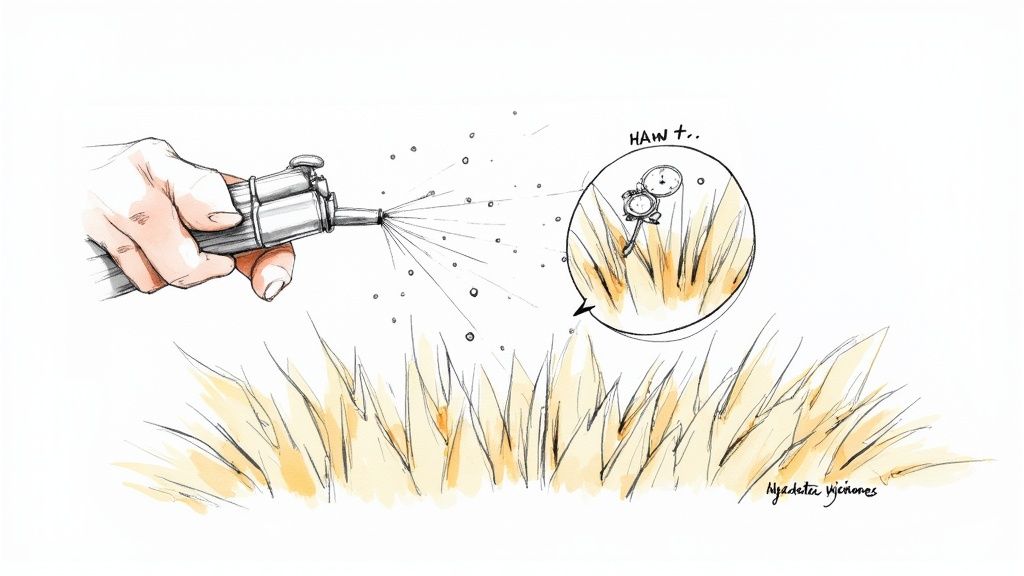
While physical barriers like mats and runners are your first line of defense, you can take your protection a step further by treating the carpet itself. Think of stain repellents as an invisible force field for each and every carpet fiber. It's one of the best ways to proactively guard your investment from the inside out.
These treatments work by coating the individual fibers, creating a surface that prevents liquids from immediately soaking in. When a spill happens—and it will happen—that coffee or red wine will bead up on top of the carpet instead of sinking straight into the pad. This gives you precious seconds, sometimes even a few minutes, to grab a towel and blot it up before it becomes a permanent resident.
Professional Treatments vs. DIY Sprays
So, you’ve decided to add a protective layer. You’ve basically got two options: have a professional apply it or grab a can and do it yourself. Each has its place.
Professional-grade treatments, which are usually applied right after a deep hot water extraction cleaning, are typically more powerful and last longer. The pros use specialized equipment to ensure the protectant is applied evenly and deeply, making sure every fiber gets coated for maximum effect.
On the flip side, DIY sprays from the store offer convenience and are easier on the wallet. They're perfect for hitting high-traffic zones like the area in front of the couch or under the dining room table between professional cleanings.
Key Takeaway: Let's be clear: a stain repellent doesn't make your carpet bulletproof. Its real job is to buy you time. That critical window between the "oops" and the "oh no, it soaked in" is where a good protectant saves the day.
How to Get the Most Out of Your Protectant
Proper application is everything. If you're going the DIY route, always—and I mean always—start with a thoroughly vacuumed, clean, and completely dry carpet. Spraying a protectant over a dirty carpet just seals in the dirt.
Make sure you've got good ventilation, then spray in a steady, overlapping pattern. You're not trying to soak the carpet; a light, even mist is all it takes. Once you're done, let it dry completely before anyone walks on it. This can take a few hours, so plan accordingly.
Remember, this shield isn't permanent. Regular foot traffic and vacuuming will wear it down over time. A good rule of thumb is to reapply the treatment every 6 to 12 months, or after every deep cleaning, to keep that defensive barrier strong.
It's a small bit of upkeep for some major peace of mind. And more homeowners are catching on—the global market for these products is growing as people look for better ways to protect their floors. You can even check out the research on carpet stain repellent market trends to see how popular these solutions have become. It's a core strategy for keeping your carpets looking great for the long haul.
Master a Simple Carpet Care Routine
Believe it or not, the secret to keeping carpets from staining over the long haul isn't about some intense, complicated cleaning ritual. It’s all about consistency and a simple, sustainable routine.
The biggest threat to your carpet isn't always a huge, dramatic spill. It’s the slow, steady buildup of fine dirt and grit that gets tracked in every single day. This stuff acts just like sandpaper, grinding away at your carpet fibers every time you walk across the room. Once those fibers are damaged, they can't fight off stains nearly as well, and your whole carpet starts to look dull and worn out.
Your best defense is a simple but powerful cleaning schedule.
Your Non-Negotiable Vacuuming Schedule
Regular vacuuming is, without a doubt, the most important thing you can do for your carpet. It pulls up all that dry soil before it has a chance to work its way deep into the fibers. For the best results, though, you need a game plan.
Focus your energy where it counts the most.
- High-Traffic Zones: Think hallways, entryways, and the main paths through your living room. These spots need to be vacuumed at least twice a week.
- Low-Traffic Areas: Rooms you don't use as often, like guest bedrooms or a formal dining room, can usually get by with a once-a-week vacuuming.
Don't forget to use your vacuum's settings! For those thick, plush carpets, raise the beater bar so you don't accidentally fuzz up or damage the fibers. On low-pile carpets, you can use a lower, more aggressive setting to really pull out that embedded grit.
The point of vacuuming isn't just to get the visible crumbs. It’s to remove the tiny, sharp particles of dirt that are silently destroying your carpet fibers from the inside out.
Going Deeper with Periodic Cleaning
While vacuuming is your first line of defense, it can't get everything. Over time, oils from our skin, allergens, and all sorts of sticky residues build up deep in the pile. This creates a magnet for even more dirt. That’s where periodic deep cleaning comes in.
This is the essential maintenance that removes the deep-down grime your vacuum leaves behind, bringing back your carpet's texture and resilience. Figuring out how often you should clean your carpet really depends on your household, but a professional cleaning every 12 to 18 months is a good rule of thumb for most homes. If you have pets or kids, you'll probably want to bump that up.
Whether you decide to rent a machine and do it yourself or bring in a pro, this deeper clean is absolutely critical for extending the life of your carpet. It's this one-two punch of frequent vacuuming and occasional deep cleaning that creates a routine for lasting protection against stains and wear.
Your Immediate Response Plan For Spills

Let's be real—no matter how careful you are, spills just happen. It's a fact of life. One minute you're enjoying a coffee, the next it's all over your beautiful cream carpet. What you do in those first few seconds makes all the difference between a quick cleanup and a permanent, ugly reminder.
The absolute golden rule? Blot, don't rub. I can't stress this enough. When you panic and start scrubbing a fresh spill, you're actually grinding the stain deeper into the carpet fibers and spreading it out. You can even damage the texture of the carpet itself, making a bad situation much worse.
Instead, grab a clean, dry, white cloth (so no dye transfers) and press down firmly on the spill. Start dabbing from the outside of the spill and work your way toward the center. This motion pulls the liquid straight up and out, containing the mess instead of making it grow.
Your Essential Stain-Fighting Toolkit
You don't want to be tearing through cabinets looking for supplies while a red wine stain is busy making itself at home. Having a small, dedicated spill kit ready to go is one of the smartest things you can do.
Here’s what I recommend keeping on hand:
- Clean White Cloths: Absorbent towels or a roll of heavy-duty paper towels are your first line of defense.
- Club Soda: The fizz is fantastic for lifting fresh spills, especially drinks.
- A Spray Bottle with Water: Perfect for lightly rinsing the area after you've treated it.
- A Reliable Spot Remover: A good quality liquid cleaner is a non-negotiable for tackling what the initial blotting leaves behind.
There's a reason the market for these products is so massive. The global carpet spot remover market was valued at USD 1.1 billion in a single year, with liquid removers making up over half of all sales. Why? Because they work. This just goes to show how essential these products are for homeowners who want to keep their floors looking great.
The goal of your immediate response isn't always to make the stain vanish completely on the first try. It’s to remove as much of the staining substance as possible, preventing it from bonding with the carpet fibers and setting permanently.
When tackling spills, having a quick reference can be a lifesaver. Different liquids require slightly different approaches, so I've put together a simple table to guide you through the initial steps for common household accidents.
Immediate Spill Response Guide
| Spill Type | Step 1 Action | Step 2 Solution | Important Note |
|---|---|---|---|
| Red Wine | Blot with a dry cloth immediately. | Apply club soda or a mix of white vinegar and water. Blot again. | Avoid using hot water, as it can set the stain. |
| Coffee / Tea | Blot as much liquid as possible with a clean, dry cloth. | Use a solution of mild dish soap and cool water. Dab gently. | Make sure to rinse with a damp cloth to remove any soap residue. |
| Mud / Dirt | Let it dry completely. Then, vacuum up the loose debris. | After vacuuming, treat any remaining discoloration with a spot cleaner. | Trying to clean wet mud will just smear it deeper into the fibers. |
| Pet Urine | Blot with heavy pressure to absorb as much as possible. | Use an enzymatic cleaner specifically designed to break down pet stains and odors. | Regular cleaners won't neutralize the odor-causing bacteria. |
| Grease / Oil | Scrape off any excess. Sprinkle with cornstarch or baking soda. | Let the powder sit for 15-20 minutes to absorb the oil, then vacuum. | Don't use water initially, as it will spread the grease. |
This guide is your first-response manual. For deeper or more stubborn stains that have already set, you'll need a more targeted approach.
Acting Fast and Smart
After you’ve blotted up the initial spill, apply your spot remover to a fresh cloth—never pour it directly onto the carpet. Gently dab the stained area, continuing that "outside-in" motion.
Once the stain is gone, lightly mist the spot with plain water and blot it with a dry cloth. This rinses out any leftover cleaning solution that could attract dirt later.
Finally, place a thick stack of clean paper towels over the damp area and weigh it down with something heavy, like a few books. This acts like a poultice, wicking up any residual moisture hiding deep in the carpet pile. For more advanced tips, you can learn how to remove stubborn stains from your carpet effectively. It's that final step that gives your carpet the best chance for a full, spot-free recovery.
Protecting Carpets in Homes with Kids and Pets
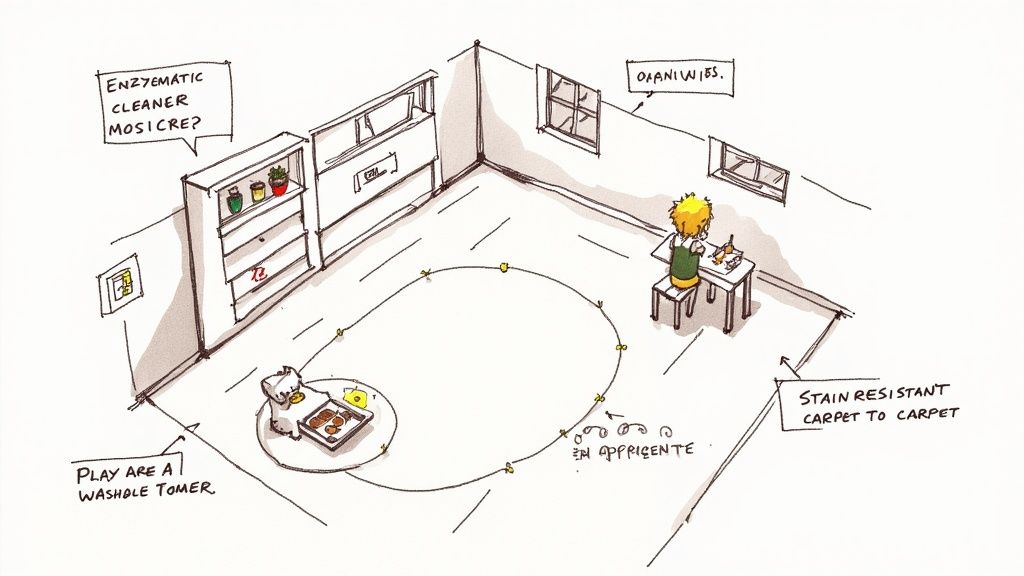
Let's be honest: a home full of kids and pets is a happy home, but it's also a minefield for your carpets. The usual rules of stain prevention are a decent starting point, but they just don't cut it when you're dealing with this level of chaos.
From muddy paws and spilled juice to the inevitable pet "oops," the potential for a new, stubborn spot is always there. The trick isn't to stop living; it's to get smarter with your strategy.
Pet-Specific Stain and Odor Solutions
When you're dealing with pet urine, your average carpet cleaner is completely out of its league. The problem isn't just the yellow spot you can see. The real enemy is the uric acid crystals left behind, which create that nasty, lingering smell. That odor is like a flashing neon sign telling your pet, "This is the spot, do it again!"
This is where enzymatic cleaners are non-negotiable. These aren't just soaps; they contain special enzymes that literally eat the organic proteins in pet waste. They don't just mask the smell—they destroy it at a molecular level.
By getting rid of the scent for good, you’re not just cleaning a stain. You're breaking the cycle of repeat accidents. For a deeper look at this, check out our guide on how to remove pet stains from carpet.
Creating Kid-Friendly Mess Zones
If you have young kids, you know that spills and messes are just part of the deal. Trying to prevent them entirely is a losing battle. A much better approach is to create designated zones where messes are okay.
- Set Up Snack Areas: Put an easy-to-clean area rug under the kids' table or in a corner of the family room. That's the only place snacks happen.
- Protect for Art Projects: Before the paint, slime, or crayons come out, lay down a washable mat or even just an old bedsheet. This creates a simple barrier that catches all the drips and splatters.
By corralling the messiest activities into specific, protected spots, you can let your kids have fun without having a panic attack about the state of your carpet. And for those high-traffic playrooms, think about investing in a seriously durable, stain-resistant carpet like nylon. The peace of mind is worth every penny.
Knowing When to Call a Carpet Cleaning Pro
Look, your daily and weekly cleaning efforts are the backbone of good carpet care, but they can only go so far. Think of your own vacuuming as daily maintenance and professional cleaning as the essential deep-dive that protects your investment long-term.
There are some pretty clear signs it’s time to bring in an expert.
When you notice your high-traffic areas look consistently dull or gray even right after you’ve vacuumed, that’s a big red flag. It means that deep-seated, abrasive dirt has literally bonded to the fibers. At-home rental machines just don't have the muscle to flush out that kind of grime.
The Power of Professional Hot Water Extraction
The pros use a method called hot water extraction, which you’ve probably heard called steam cleaning. This isn't just a light surface clean. The process shoots a high-pressure mix of hot water and cleaning solution deep into the carpet pile.
Then, a seriously powerful vacuum sucks it all back out—along with the dirt, allergens, bacteria, and sticky residues that your home machine leaves behind. It achieves a level of clean that consumer-grade equipment simply can't touch. This is what revives those crushed, matted-down fibers and pulls out the oily soils that act like a magnet for more dirt.
A professional deep cleaning isn't just about making visible stains disappear. It’s about removing the embedded grit that slowly shreds your carpet fibers, making them more likely to stain and wear out in the future.
Finding and Vetting a Quality Service
Not all cleaning services are created equal—not by a long shot. When you're looking for a pro, dig into local reviews and demand transparent pricing. Don't be shy about asking some direct questions before you book:
- Can you give me a written, upfront quote with no hidden fees?
- What's your go-to cleaning method for a house with kids or pets?
- Are your technicians certified and insured?
A reputable company will have ready answers for all of these. This kind of proactive home maintenance is becoming more and more common. In fact, the market for professional-grade carpet protector films is expected to hit USD 2.42 billion as more homeowners look for real solutions to make their carpets last. You can read the full research about these market trends to see just how seriously people are taking carpet care these days.
Booking a professional cleaning once a year isn't a luxury; it's a critical part of a complete carpet protection strategy.
Of course, even with the best game plan, questions always pop up. When it comes to keeping carpets looking their best, getting solid answers from someone in the trenches can make all the difference. Let's dig into a few of the most common ones I hear from homeowners.
Do Built-In Stain Resistant Carpets Actually Work?
Absolutely. The carpets sold with factory-applied stain resistance are the real deal. That treatment isn't just sprayed on top; it's bonded right to the carpet fibers during manufacturing. This creates a pretty tough shield that makes cleaning up spills a whole lot easier and often stops a stain dead in its tracks.
But here’s the thing: it’s not a lifetime pass. Over time, that protection gets worn down by heavy foot traffic and even routine cleaning. It's still critical to jump on spills the second they happen.
To keep that factory shield working like it should, I always recommend having a professional reapply a topical protectant every 12 to 18 months. Think of it like waxing your car—it restores that protective barrier.
What's the Best Homemade Carpet Stain Remover?
You don't always need a high-powered chemical for everyday messes. For a lot of common food spills or even fresh pet accidents, a simple homemade mix can be your best friend. My go-to is equal parts white vinegar and water in a spray bottle. It's surprisingly effective and safe for most carpets out there.
Another solid option? A couple of drops of clear, non-bleach dish soap mixed into a cup of warm water. It's gentle but does a great job of breaking down greasy spots.
Crucial Tip: Remember the golden rule: always blot, never scrub. Scrubbing just grinds the stain deeper into the fibers and can damage the carpet's texture. And before you go all-in with any cleaning solution, test it on a hidden spot—like inside a closet—to make sure it doesn't mess with the color.
How Often Should I Have My Carpets Professionally Cleaned?
This is a big one. As a baseline, most carpet manufacturers will tell you to get a professional deep cleaning every 12 to 18 months. Following this schedule is often required to keep your warranty valid, and it's just plain good for the life of your carpet.
But that's just a starting point. Your lifestyle is the real deciding factor. If your house is full of kids, pets, or just a lot of coming-and-going, you really need to shorten that timeline. In a busy household, scheduling a professional cleaning every 6 to 12 months is a much smarter strategy.
A pro cleaning isn't just about stains; it's about pulling out the deep, abrasive grit that your vacuum can't reach. That stuff acts like sandpaper on your carpet fibers, breaking them down over time and ruining their ability to resist stains.
When you're ready for that professional deep clean, you need a service that’s straightforward and effective. Citrus Carpet Cleaning Buford gives you transparent "EXACT-imates" with zero hidden fees. We use a low-moisture, citrus-based system that cleans deeply without leaving behind any of that sticky, soap-based residue.
Get your free quote today and see the difference for yourself.