
For homeowners and businesses in Buford, maintaining clean, fresh carpets is a constant battle against daily foot traffic, accidental spills, and persistent pet odors. A pristine carpet not only elevates the appearance of your home or office but also significantly contributes to a healthier indoor environment by trapping dust, allergens, and other pollutants. However, navigating the world of carpet care can be daunting, with a sea of conflicting advice and the genuine risk of using a product that could damage fibers or even void your carpet's warranty.
This comprehensive guide is designed to cut through the noise. We are providing a definitive collection of essential, actionable carpet cleaning tips specifically curated for the Buford community. Whether you're a homeowner dealing with a sudden red wine spill, a property manager prepping a unit for new tenants, or a pet owner tackling stubborn odors, this list has you covered.
You will discover the most effective DIY techniques for immediate stain removal, learn professional-grade maintenance strategies to prolong the life of your investment, and understand the science behind modern, low-moisture cleaning methods. We'll detail everything from a simple baking soda trick for neutralizing odors to the precise moment it becomes more effective and safer to call a professional. Let's explore the expert techniques that will keep your floors looking flawless, feeling fresh, and contributing to a cleaner space year-round.
1. Master the Basics: Why Thorough and Regular Vacuuming is Non-Negotiable
The absolute foundation of effective carpet care is not a complex secret; it is consistent and correct vacuuming. This simple act is your first and most powerful line of defense against premature carpet aging. It effectively removes up to 80% of the dry soil, dust, and abrasive debris before it can grind down and permanently damage delicate carpet fibers.
This isn't just about surface-level appearance. It's about preventing the slow, sandpaper-like effect of embedded grit that dulls your carpet's color and wears out its texture, significantly shortening its lifespan. For a typical Buford household, vacuuming main living areas and hallways 2-3 times per week is crucial. Less-used rooms, like a guest bedroom, can be maintained with a weekly pass.
Furthermore, a high-quality vacuum equipped with a HEPA filter does more than just clean floors. It actively improves your home's indoor air quality by trapping allergens, pet dander, and microscopic particles that would otherwise be recirculated into the air you breathe.
Actionable Vacuuming Tips
To elevate your routine from a quick chore to a powerful maintenance task, implement these professional carpet cleaning tips:
- Pace and Pattern: Rushing the job is counterproductive. Make slow, overlapping passes to allow the vacuum's brush and suction to work effectively. Aim for four to six passes over high-traffic areas like entryways and main walkways.
- Change Directions: Alternate your vacuuming direction with each session. If you vacuumed north-to-south last time, switch to an east-to-west pattern. This technique agitates the carpet pile from different angles, helping to lift and capture more embedded dirt.
- Maintain Suction Power: A full vacuum is an ineffective vacuum. Ensure your canister or bag is never more than two-thirds full to maintain maximum suction power.
- Adjust for Pile Height: Check your vacuum’s height setting. If it's set too high, it won't have enough suction to clean deep within the fibers. If it's too low, the beater bar can cause unnecessary friction and damage the carpet pile.
- Don't Forget the Edges: Once a month, use your vacuum’s crevice and upholstery tools. Pay close attention to the edges along baseboards and underneath furniture, as these are hotspots where dust, pet hair, and allergens accumulate.
2. Immediate Blot Technique for Fresh Spills
When a spill happens, your immediate reaction can mean the difference between a temporary accident and a permanent stain. The most critical rule is to blot, never rub. Rubbing or scrubbing a fresh spill forcefully pushes the liquid deeper into the carpet fibers and the backing, embedding the stain and often causing irreversible damage to the carpet pile.
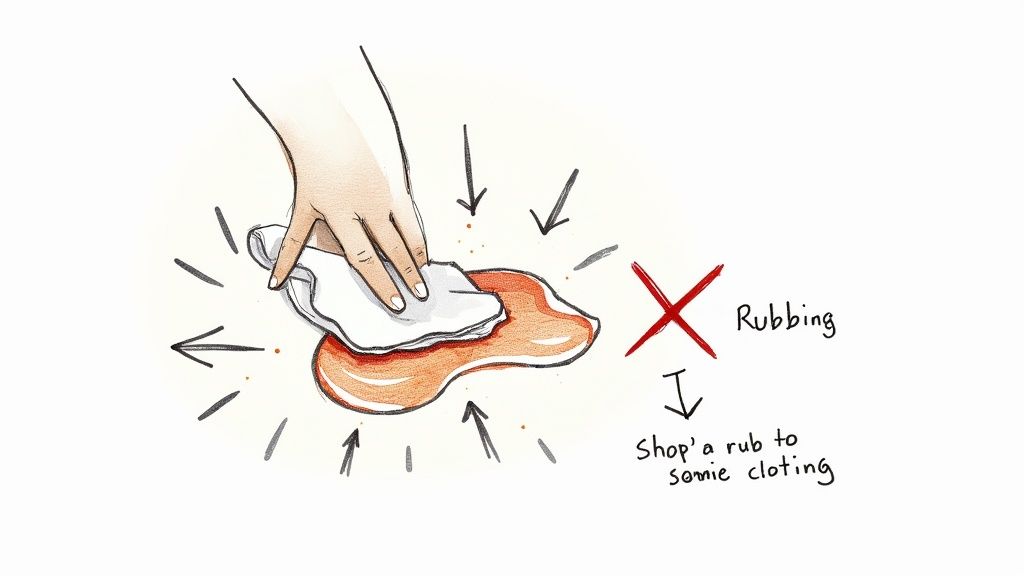
The blotting technique is designed to absorb the maximum amount of liquid from the surface before it has a chance to set. By applying firm, downward pressure with a clean, absorbent material, you lift the spill out of the carpet rather than spreading it. This is a fundamental first-aid step for everything from a knocked-over glass of wine to a coffee spill, protecting your carpet’s integrity and making professional follow-up more effective if needed.
For Buford homeowners, acting within the first few minutes is crucial. Quick action on spills like juice or milk can prevent the sugars from bonding with carpet fibers, a process that leads to discoloration and potential bacterial growth.
Actionable Blotting Tips
To master this essential carpet rescue skill, use these professional carpet cleaning tips the moment a spill occurs:
- Act Immediately: Speed is your greatest ally. The goal is to absorb the liquid before it has time to chemically react with and dye the carpet fibers. Grab your blotting materials within seconds.
- Use the Right Material: Always use a clean, white, absorbent cloth or plain white paper towels. Colored cloths can transfer dye onto the carpet, creating a new stain.
- Blot from Outside-In: Start at the outer edge of the spill and blot inward toward the center. This technique contains the spill and prevents it from spreading and becoming a larger problem.
- Apply Firm Pressure: Don't be timid. Apply firm, steady, downward pressure on the cloth. Imagine you are trying to press the liquid up into the cloth. Do not twist or grind the material into the carpet.
- Rotate and Replace: As the cloth or paper towel becomes saturated, fold it to a clean, dry section or get a fresh one. Using a wet cloth will only reapply the spill to the carpet, defeating the purpose.
3. Baking Soda for Odor Elimination and Absorption
One of the most effective and wallet-friendly carpet cleaning tips comes straight from your pantry: baking soda. This powerful, all-natural mineral (sodium bicarbonate) is a master of odor absorption. It works by neutralizing acidic and alkaline molecules that cause unpleasant smells, effectively trapping them until they can be vacuumed away, rather than just masking the problem.
This simple powder is your best defense against persistent odors from pets, cooking, or general household stuffiness. Its absorbent properties also help draw out moisture from small spills and damp areas, preventing the growth of musty smells. For Buford pet owners, this is an invaluable tool for managing those inevitable accidents and keeping your home smelling fresh between professional cleanings. Many pet owners can certainly relate to the unexpected messes and the ensuing odor challenges that come with their furry family members; they're among the many relatable 'sh*t happens' moments dog owners understand.
Unlike harsh chemical deodorizers that can leave behind sticky residues and irritate sensitive noses, baking soda is a non-toxic, eco-friendly alternative that is safe for both children and pets. Its fine particles penetrate deep into carpet fibers to provide a thorough refresh without any risk of discoloration.
Actionable Baking Soda Tips
To harness the full deodorizing power of baking soda, incorporate it into your cleaning routine with these specific techniques:
- Even Application: Use a fine-mesh kitchen shaker or a clean, empty spice jar to distribute a thin, even layer of baking soda across the carpet. Aim for approximately one cup for every 100 square feet.
- Allow Dwell Time: For general freshening, let the baking soda sit for at least 30 minutes. For stronger, more embedded odors like pet smells or mustiness, leave it overnight (6-8 hours) to give it maximum time to absorb odors.
- Enhance with Essential Oils: Add 10-15 drops of your favorite essential oil (like lavender or lemon) to the baking soda in a jar, shake well, and then sprinkle. This adds a pleasant, natural fragrance as you deodorize.
- Thorough Removal: Vacuum slowly and methodically, making multiple passes from different directions to ensure all the powder is lifted from the carpet fibers. A full vacuum bag will reduce suction, so check it beforehand.
- Spot Test First: While baking soda is generally safe for all carpet types, it's a good practice to test a small, hidden area first (like inside a closet) to ensure it vacuums up completely without leaving any visible residue.
4. White Vinegar and Water Solution for General Stains
Before reaching for harsh chemical cleaners, consider one of the most effective and affordable solutions hiding in your pantry. A simple mixture of white vinegar and water creates a powerful, non-toxic cleaning agent capable of tackling a wide variety of common household stains. The magic lies in vinegar's acetic acid, which gently breaks down the chemical compounds in many organic stains without damaging most common carpet fibers.
This DIY approach is a fantastic first response for everyday spills, from a dropped glass of wine to a child’s juice mishap. Its acidic nature makes it particularly effective at dissolving stains and neutralizing odors, offering a safe alternative for homes in Buford with children and pets. This method is a cornerstone of smart, preventative carpet care, allowing you to act fast before a minor spot becomes a permanent blemish.
Using a natural solution like vinegar also helps you avoid the sticky, soil-attracting residues that many store-bought cleaners leave behind. These residues can cause the spot to reappear over time as dirt clings to the area, a frustrating cycle that this simple homemade cleaner helps prevent.
Actionable Vinegar Solution Tips
To turn this kitchen staple into a stain-fighting powerhouse, follow these professional carpet cleaning tips for maximum effectiveness:
- Proper Proportions: For a general-purpose stain remover, mix one part white vinegar with two parts water in a clean spray bottle. For tougher stains like coffee or tea, you can increase the ratio to a one-to-one mixture.
- Always Patch Test: Before applying any solution to a visible area, spray a small amount on an inconspicuous spot of your carpet, such as inside a closet or under a large piece of furniture. Let it sit, then blot it dry to ensure it doesn't affect the carpet's color.
- Apply, Don’t Saturate: Lightly mist the stained area with the solution. Over-saturating the carpet can damage the backing and padding underneath, potentially leading to bigger problems like mold. Allow the solution to dwell on the stain for 5-10 minutes.
- Blot, Never Rub: Use a clean, white cloth to blot the stain, working from the outside edges inward. This technique lifts the stain out of the fibers instead of rubbing it deeper into the pile.
- Rinse and Dry: After blotting, lightly mist the area with clean water and blot again with a dry cloth to rinse out any remaining vinegar solution. To speed up the drying process and prevent water marks, place a fan near the damp spot.
5. Steam Cleaning (Hot Water Extraction) for Deep Cleaning
While regular maintenance is key, there are times when your carpets require a restorative, deep-down clean that goes far beyond the capabilities of a standard vacuum. This is where steam cleaning, more accurately known as hot water extraction, proves its value. The method involves injecting a high-pressure solution of hot water and specialized cleaning agents deep into the carpet pile, which dislodges stubborn dirt, grime, and allergens. A powerful vacuum then immediately extracts the dirty water and residue.
This process is the industry-standard for a true deep clean, as recommended by the IICRC (Institute of Inspection, Cleaning and Restoration Certification). It effectively removes the embedded soil, bacteria, and microscopic pollutants that routine vacuuming leaves behind. For Buford households, this is an essential service for periodic maintenance, allergy relief, or tackling persistent odors that have settled deep within carpet fibers.
Actionable Hot Water Extraction Tips
To maximize the effectiveness of a deep clean and ensure a smooth process, follow these professional carpet cleaning tips:
- Prep is Paramount: Thoroughly vacuum the entire area before the cleaning begins. This removes the top layer of dry soil, allowing the hot water extraction process to focus on the deeply embedded grime.
- Clear the Area: Move as much furniture as possible out of the room. This allows for complete, edge-to-edge coverage and prevents missed spots or uneven cleaning patterns.
- Ensure Proper Ventilation: After cleaning, open windows or use fans and a dehumidifier to accelerate the drying process. Proper airflow is crucial for preventing mold or mildew growth.
- Allow Adequate Dry Time: Keep foot traffic, pets, and children off the damp carpet for as long as possible, ideally 6-12 hours or until it is completely dry to the touch. Walking on it too soon can re-soil the fibers.
- Choose the Right Equipment: While DIY rental machines are available, professional-grade equipment used by certified technicians provides superior heat, pressure, and suction for a significantly deeper and more effective clean. The difference between these machines is substantial, as you can discover when comparing steam cleaners and carpet cleaners on citruscarpetcleaningatlanta.com.
6. Enzyme-Based Cleaners for Organic Stains and Pet Accidents
When dealing with organic stains like pet urine, blood, or food spills, standard carpet cleaners often fall short. They may remove the surface stain but leave behind odor-causing molecules deep within the fibers. This is where enzyme-based cleaners become an indispensable tool, offering a scientific solution that tackles both the stain and the smell at their source.
These specialized cleaners use non-toxic, biological enzymes designed to break down specific organic compounds. Lipase enzymes target fats (grease, oil), protease enzymes break down proteins (blood, urine, vomit), and amylase enzymes handle carbohydrates and starches. Instead of just masking odors, this molecular process completely dismantles and consumes the source, effectively eliminating the problem for good. This makes it one of the most effective carpet cleaning tips for Buford pet owners struggling with recurring accidents.
For a homeowner, this means finally conquering the stubborn smell of a cat urine accident or completely removing the evidence of a child’s spilled milk. The enzymes continue working long after application, ensuring that no trace of the organic matter remains to attract bacteria or cause lingering odors on humid Georgia days. To better understand the science, you can learn more about what an enzymatic cleaner is and how it functions at a molecular level.
Actionable Tips for Using Enzyme Cleaners
To maximize the effectiveness of these biological powerhouses, proper application is key. Follow these steps for the best results:
- Test and Prepare: Always test the cleaner on a small, hidden area of your carpet first to check for colorfastness. Before applying, blot up as much of the fresh spill as possible with a clean, white cloth.
- Apply Liberally and Correctly: Saturate the stained area thoroughly, ensuring the cleaner penetrates all the way down to the carpet backing and pad. The cleaner must make direct contact with the entire organic stain.
- Keep it Moist (The Key Step): Enzymes need moisture to stay active and do their job. Cover the treated area with a damp towel and a piece of plastic wrap to slow evaporation. The process can take anywhere from 24 to 48 hours.
- Patience is Paramount: Do not scrub or try to vacuum the area while the enzymes are working. Let the biological process run its course without interruption. Rushing will only lead to incomplete stain and odor removal.
- Final Blot and Dry: Once the dwell time is complete, remove the covering and blot the area with a clean, dry towel to absorb the remaining moisture. Allow the spot to air dry completely.
7. Use of Carpet Protectant Products (Scotchgard Technology)
Think of carpet protectant as an invisible shield for your investment. This specialized treatment, famously pioneered by brands like 3M Scotchgard, coats individual carpet fibers with a protective polymer barrier. It doesn't make your carpet invincible, but it dramatically changes how it responds to spills and soil, giving you a crucial window of opportunity to prevent a minor accident from becoming a permanent stain.
When a liquid is spilled on an untreated carpet, the fibers act like tiny straws, quickly wicking the liquid deep into the pile and backing. A protectant treatment effectively repels this liquid, causing it to bead up on the surface. This "surface tension" buys you precious time to blot the spill before it can be absorbed and cause lasting discoloration. For a busy Buford household with kids and pets, this can mean the difference between a quick cleanup and an expensive professional call.
This technology is not just for preventing stains from juice or pet accidents. The barrier also helps block dry soil from bonding to the fibers, making your regular vacuuming sessions more effective. By lifting away more dirt with each pass, the protectant helps maintain the carpet's original color and texture for longer.
Actionable Protectant Tips
To make the most of this powerful treatment, apply these professional carpet cleaning tips:
- Apply After Cleaning: The best time to apply a protectant is immediately after a professional hot water extraction cleaning. This ensures the treatment bonds to perfectly clean fibers for maximum effectiveness and longevity.
- Professional Application is Key: While DIY sprays are available, a professional application ensures even, complete coverage without over-saturating the carpet, which can lead to a stiff or sticky residue.
- Reapplication Schedule: Carpet protectant wears down over time with foot traffic and cleaning. Plan to have it reapplied every 12-18 months, or with every other professional cleaning, to maintain peak performance.
- Don't Skip Immediate Action: A protectant is a line of defense, not a magic force field. You must still blot spills immediately with a clean white cloth. The longer a spill sits, even on a treated carpet, the more likely it is to penetrate the barrier.
- It Complements, Not Replaces: Continue your regular vacuuming schedule. The protectant helps your vacuum work better by preventing dirt from becoming deeply embedded, but it does not eliminate the need for routine maintenance.
8. Targeted Spot Cleaning with Appropriate Cleaning Methods by Stain Type
One of the most common mistakes in DIY carpet care is treating every spill and stain the same. Using a generic, all-purpose cleaner on every spot is a recipe for frustration, as different stains have vastly different chemical makeups. An effective spot cleaning strategy requires identifying the stain type and using the correct cleaning agent to break it down without damaging your carpet.
This targeted approach is a cornerstone of professional carpet cleaning tips because it dramatically increases your chances of complete removal. For example, a protein-based stain like blood or pet urine requires cold water and an enzyme-based cleaner, as hot water will "cook" the protein and set the stain permanently. Conversely, a tannin-based stain like coffee or red wine often responds better to a mild acid (like diluted vinegar) or an oxidizing agent. Using the wrong tool for the job can spread the stain, discolor fibers, or leave a sticky residue that attracts more dirt.
Successfully removing a tough stain is less about aggressive scrubbing and more about chemical science. Understanding whether you are dealing with an oil, protein, or tannin stain allows you to neutralize it effectively, preserving the integrity and appearance of your carpet for years to come.
Actionable Stain-Specific Tips
To transform your spot cleaning from a guessing game into a precise science, implement these targeted methods:
- Identify the Stain Type: Before you apply anything, assess the stain. Is it greasy (oil, butter)? Is it from a plant source (coffee, tea, wine)? Is it a bodily fluid (blood, urine)? This initial diagnosis is the most critical step.
- Test Your Solution: Always apply your chosen cleaning solution to an inconspicuous area first, like inside a closet or under a large piece of furniture. Wait a few minutes and blot to check for any color transfer or fiber damage.
- Protein Stains (Blood, Egg, Dairy): Use cold water and a cleaner with enzymes. Scrape off any excess solids, then blot with a cloth dampened with the cold water/enzyme solution. Never use hot water, as it will bind the protein to the carpet fibers.
- Tannin Stains (Coffee, Wine, Juice): After blotting up as much liquid as possible, a solution of one part white vinegar to two parts water can be effective. For stubborn red wine, a paste of hydrogen peroxide and a small amount of dish soap can work wonders (after a successful spot test).
- Oil-Based Stains (Grease, Ink, Makeup): Water is ineffective here and can spread the stain. Instead, apply a dry-cleaning solvent or isopropyl alcohol to a clean white cloth and blot the stain, working from the outside in.
- Work from the Outside In: To prevent the stain from spreading, always blot or work on the spot from its outer edges toward the center.
- Patience is Key: Allow your cleaning solution to sit on the stain for 5-10 minutes to break down the spill. Rushing the process and scrubbing immediately is far less effective than letting the chemistry do its job.
9. Dry Powder Cleaning Methods for Low-Moisture Environments
When extended drying times are simply not an option, dry powder cleaning offers a powerful and effective low-moisture solution. This method involves sprinkling a specially formulated absorbent compound, which contains dry cleaning agents and solvents, evenly over the carpet. The micro-sponges in the powder attract and absorb soil, oils, and other grime from the carpet fibers.
This technique is particularly valuable in commercial settings like Buford offices that require overnight cleaning with no downtime. It's also an excellent choice for delicate, antique, or natural-fiber rugs (like sisal or jute) that could be damaged by excessive moisture. For homeowners, it serves as a fantastic interim maintenance cleaning to control allergens and refresh carpets between professional deep cleanings.
The process is straightforward: the powder is worked into the carpet pile, allowed to dwell and absorb the soil, and then meticulously vacuumed away, taking the dirt with it. This leaves carpets clean, deodorized, and ready for immediate use, a significant advantage over wet extraction methods.
Actionable Dry Cleaning Tips
To get the most out of this low-moisture carpet cleaning method, follow these professional guidelines:
- Prep with a Thorough Vacuum: Always start by vacuuming the area extensively to remove all loose, dry soil. This allows the powder to focus on absorbing embedded, oily dirt.
- Even Application is Key: Distribute the powder evenly across the entire surface. Avoid creating heavy clumps in one area and sparse patches in another for a uniform clean.
- Work it Into the Fibers: Use a counter-rotating brush machine (for professionals) or a stiff carpet brush (for DIY) to gently agitate the powder deep into the carpet pile, ensuring maximum contact with soil.
- Allow Proper Dwell Time: Let the powder sit for the manufacturer-recommended time, typically 15 to 30 minutes. This is when the absorbent "sponges" do their work.
- Vacuum, Then Vacuum Again: Use a high-quality vacuum, preferably with a HEPA filter, to remove the powder. Make slow, overlapping passes in multiple directions (north-south, then east-west) to ensure all the compound and trapped dirt is extracted.
- Always Spot Test: Before treating an entire room, test the product on a small, hidden area, like inside a closet, to check for any residue or color interaction. For more details on professional applications, you can learn more about how dry cleaning carpet works on our site.
10. Prevention Strategies: Entrance Mats and Carpet Maintenance Routines
The most effective carpet cleaning tip is to stop dirt before it ever reaches your carpet. Implementing a robust preventative strategy is the most cost-effective, long-term approach to maintaining your carpet's appearance and extending its life. An ounce of prevention truly is worth a pound of cure, as it drastically reduces the amount of abrasive soil and potential staining agents that enter your home.
This proactive mindset shifts carpet care from a reactive, emergency-based task to a simple, integrated maintenance routine. For Buford families with active children and pets, this means trapping up to 80% of tracked-in dirt at the doorway. For a high-traffic office, it can mean adding years to a commercial carpet's lifespan, saving thousands in premature replacement costs. It's a foundational strategy recommended by both professional cleaners and carpet manufacturers alike.
Understanding when to implement these routines yourself versus calling in a professional is a key part of home maintenance. To effectively determine when to tackle projects yourself or hire professionals for carpet cleaning, it's useful to understand the broader implications of the debate of DIY vs. handyman services.
Actionable Prevention Tips
Integrate these preventative measures into your household or business to protect your investment and simplify your cleaning workload:
- Deploy High-Quality Mats: Place durable, high-quality entrance mats both outside and inside every exterior door. The exterior mat should be coarse to scrape off large debris, while the interior mat should be absorbent to trap fine dust and moisture.
- Establish a "No-Shoes" Policy: Encourage family members and guests to remove their shoes upon entering. This is the single most effective way to prevent street oils, pesticides, and abrasive grit from being ground into carpet fibers.
- Create a Spill Response Kit: Keep a dedicated kit with clean white cloths, a spot remover appropriate for your carpet type, and a small spray bottle of water in a central location. Immediate action can prevent a minor spill from becoming a permanent stain.
- Rotate Your Furniture: Periodically rearrange your furniture, even by just a few inches. This simple act prevents the development of permanent indentations and concentrated wear patterns in high-traffic areas.
- Groom Pets Regularly: Frequent brushing of dogs and cats significantly reduces the amount of hair and dander that settles into your carpet, which in turn minimizes allergens and the need for deep cleaning.
Top 10 Carpet Cleaning Tips Comparison
| Method | 🔄 Implementation complexity | ⚡ Resources (cost / time / equipment) | ⭐ Expected effectiveness | 📊 Key outcomes / impact | 💡 Ideal use cases & brief tips |
|---|---|---|---|---|---|
| Vacuum Regularly and Thoroughly | Low — routine task, easy to train | Low cost (vacuum; HEPA recommended); weekly time | ⭐⭐⭐ | Reduces surface dirt/allergens; extends carpet life | Use HEPA, vacuum multiple directions, empty canister at ~75% |
| Immediate Blot Technique for Fresh Spills | Very low — immediate simple action | Minimal (white cloths/paper towels); minutes per spill | ⭐⭐⭐⭐ | Prevents spill penetration and permanent stains if done quickly | Blot outer→center, apply pressure, act within 5–10 minutes |
| Baking Soda for Odor Elimination | Low — sprinkle and vacuum | Very low cost; 15–30 min (or overnight) dwell time | ⭐⭐⭐ | Neutralizes odors; light absorption of moisture/odors | Apply evenly, let sit (15–30 min or overnight for strong odors), vacuum thoroughly |
| White Vinegar & Water Solution | Low — simple mixing/application | Very low cost; spray bottle; short dwell time | ⭐⭐⭐ | Effective on many organic/tannin stains; disinfects mildly | Mix 1:2–3 vinegar:water, test first, spray lightly, blot and rinse |
| Steam Cleaning (Hot Water Extraction) | High — equipment and technique required | High cost (professional $200–500+); 24–48 hr drying | ⭐⭐⭐⭐⭐ | Deep extraction of embedded dirt/allergens; restores pile | Pre-vacuum, move furniture, use pro-grade gear, allow full drying time |
| Enzyme-Based Cleaners | Moderate — product-specific use & timing | Moderate cost ($8–15); requires moisture and 24–48 hr action | ⭐⭐⭐⭐ | Eliminates organic stains/odors at molecular level; prevents re-soiling | Apply to slightly damp stain, keep moist, allow 24–48 hrs, test first |
| Carpet Protectant (e.g., Scotchgard) | Moderate — application skill or pro service | Medium–high (pro $100–300); reapply every 3–5 yrs | ⭐⭐⭐⭐ | Repels water/oil, gives extra cleanup time, extends carpet life | Apply to new carpets, professional application recommended, still vacuum regularly |
| Targeted Spot Cleaning by Stain Type | High — requires knowledge and correct products | Variable resources (multiple cleaners/tools); time per stain | ⭐⭐⭐⭐ | Higher removal success (70–95%) and less fiber damage | Identify stain class, test solutions, work outer→center, avoid heat on protein stains |
| Dry Powder Cleaning (Low‑Moisture) | Moderate — follow product procedure | Moderate cost; quick turn (1–2 hr dry); vacuum needed | ⭐⭐⭐ | Fast cleaning with minimal moisture; good for delicates/commercial use | Pre-vacuum, work powder in per directions, use HEPA vacuum for removal |
| Prevention Strategies (Mats, Routines) | Moderate — behavioral implementation & upkeep | Initial investment ($300–500 typical); ongoing maintenance | ⭐⭐⭐⭐⭐ | Biggest long-term ROI: less dirt, fewer cleanings, extended carpet life | Use indoor/outdoor mats, no‑shoes policy, regular schedule, clean mats weekly |
Your Action Plan for Long-Lasting, Beautiful Carpets
Navigating the world of carpet care can feel overwhelming, but as we've explored, maintaining beautiful, healthy carpets is entirely achievable with the right knowledge and a consistent routine. You are now equipped with a comprehensive arsenal of carpet cleaning tips, moving you from reactive panic over a spill to proactive confidence in your maintenance strategy. The journey from a dull, tired-looking floor to a vibrant, fresh carpet is built on a foundation of small, consistent actions.
The core principle is simple: a balanced approach. This means combining diligent daily habits with targeted, effective stain treatments and periodic professional deep cleaning. Think of it as a three-tiered system for total carpet wellness. Your consistent vacuuming and use of entrance mats form the first line of defense, preventing the bulk of dirt and grime from ever settling deep into the fibers. This isn’t just a chore; it’s the single most impactful habit for extending your carpet's life.
When accidents inevitably happen, you now know not to panic or grab the first harsh chemical you see. Instead, you can confidently apply the immediate blot technique, neutralize odors with baking soda, or tackle a variety of common stains with a simple vinegar solution. For pet owners in Buford, understanding the power of enzyme-based cleaners is a game-changer, as these solutions don't just mask pet stains; they biologically eliminate the source of the odor.
Key Takeaways for Your Buford Home or Business
Let's distill the most crucial concepts into actionable takeaways. Mastering these points will transform your approach to carpet maintenance:
- Prevention is Your Best Tool: The easiest stain to clean is the one that never happens. Strategic placement of high-quality entrance mats and enforcing a "no shoes" policy can reduce the amount of dirt tracked into your home by up to 80%. This simple step drastically cuts down on your cleaning workload.
- Speed and Technique Matter Most: For fresh spills, your immediate reaction is critical. Remember the golden rule: blot, don't rub. Rubbing grinds the stain deeper into the carpet fibers, potentially causing permanent damage. Gentle, patient blotting with a clean cloth will always yield better results.
- Match the Solution to the Stain: A one-size-fits-all approach doesn't work for carpet care. Organic stains from pets or food require enzyme cleaners. General grime responds well to vinegar solutions. Understanding this distinction is the difference between a successful removal and a permanent mark.
- Know When to Call a Professional: While these DIY carpet cleaning tips are incredibly effective for daily maintenance and minor incidents, they are not a substitute for professional deep cleaning. Hot water extraction or low-moisture citrus cleaning is essential for removing the deep-seated allergens, bacteria, and soil that regular vacuuming can't reach. For Buford homeowners, scheduling this service annually is a vital investment in your home's health and your carpet's longevity.
Embracing these strategies empowers you to take control of your home's environment. A clean carpet is more than just visually appealing; it contributes to better indoor air quality, reduces allergens, and protects a significant investment in your property. By integrating these tips into your routine, you are not just cleaning; you are preserving the value, comfort, and health of your living or working space. Start today by choosing one new habit to implement, whether it's more thorough vacuuming or creating a dedicated spot-cleaning kit. Your carpets will thank you for it.
When your carpets need a deep, restorative clean that goes beyond DIY methods, trust the local experts who specialize in a fast-drying, residue-free process. Citrus Carpet Cleaning Buford uses a low-moisture, citrus-based solution that is safe for families and pets, lifting dirt and leaving your home smelling fresh. Experience the difference a professional, eco-friendly clean can make by visiting Citrus Carpet Cleaning Buford to schedule your appointment today.