
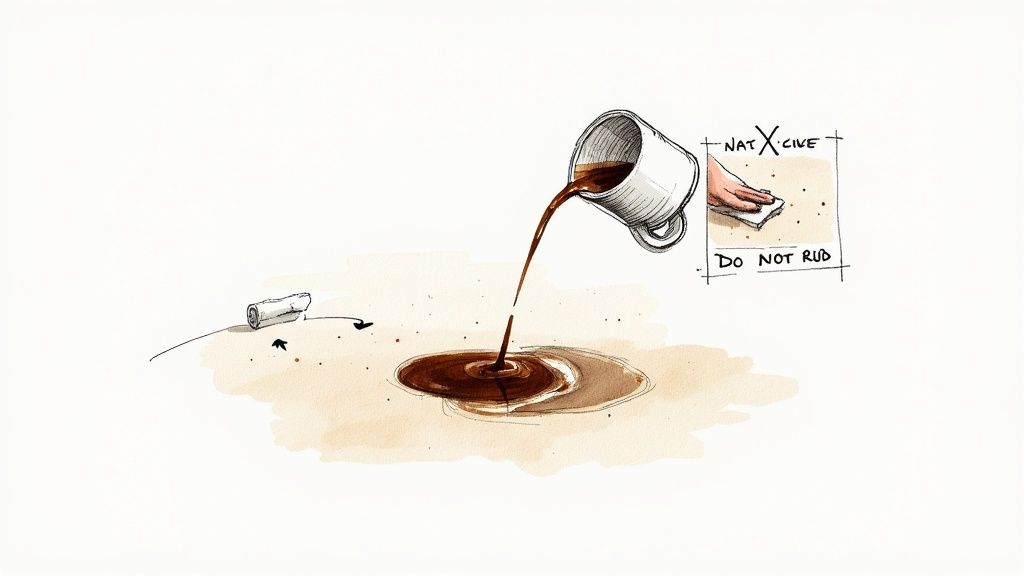
When you see a mug of coffee tumble onto the carpet, your first instinct can make all the difference. The single most important thing you can do is blot the fresh spill with a clean, dry cloth to soak up as much of that coffee as possible.
Whatever you do, don't rub it. Rubbing is the enemy here. It grinds the stain deeper into the carpet fibers and spreads it out, turning a small problem into a big one. Acting within the first five minutes is your best shot at preventing a permanent mark.
Your Immediate Response to a Fresh Coffee Spill
That heart-stopping moment doesn't have to ruin your carpet. What you do in those first critical minutes is what separates a quick cleanup from a permanent, ugly stain. Your only goal right now should be damage control—getting that liquid out of the carpet before it can really take hold.
Coffee stains have a nasty reputation for a reason. They're packed with dark pigments called tannins and natural oils from the beans. When that coffee is hot, those compounds are eager to bond with your carpet fibers. It's why every professional will tell you that immediate, gentle blotting is the key.
The Blotting Technique Explained
Forget everything you know about scrubbing. The only move you want to make on a fresh spill is a gentle, upward dabbing motion. Think of it as pulling the stain up and out, not pushing it down and in.
Start from the outside edge of the coffee spill and work your way toward the center. This little trick keeps the stain from spreading.
Grab a clean, white cloth or a stack of plain paper towels. Why white? Because a colored towel could bleed its own dye onto your carpet, and nobody wants to trade a coffee stain for a red or blue one. Press down firmly to absorb the coffee, then move to a fresh, dry part of the cloth and do it again. Keep going until your cloth comes up clean.
This simple flowchart breaks down that critical first step perfectly.

It all comes down to that one golden rule: blot, don't rub. It’s the move that sets you up for success. To dive deeper into tackling all sorts of carpet spots, check out our guide on the best way to get spots out of carpet.
To help you remember exactly what to do (and what not to do) in the heat of the moment, here's a quick checklist.
Immediate Action Checklist for Coffee Spills
| Action (Do This) | Mistake (Avoid This) |
|---|---|
| Grab a clean, white cloth immediately. | Using a colored or dirty towel. |
| Blot gently from the outside in. | Scrubbing or rubbing the stain. |
| Apply firm, even pressure to absorb. | Pouring water directly on the spill. |
| Use fresh sections of the cloth. | Ignoring the spill until it dries. |
| Work quickly within the first 5 minutes. | Applying heat from a hairdryer. |
Think of this table as your emergency plan. Follow the "Do This" column, and you'll dramatically improve your chances of getting that stain out completely.
Of course, sometimes a stain just won't budge, no matter how fast you act or what you try. For those stubborn spots or for more in-depth professional coffee stain removal advice, calling in an expert is always a smart move.
DIY Solutions Hiding in Your Pantry
Once you've blotted up all the fresh coffee you can, your next move probably doesn't require a trip to the store. Believe it or not, some of the best tools for the job are likely already hiding in your kitchen pantry. When you know how to mix and apply them, simple household items can work wonders on coffee stains.
But first, the golden rule still applies: always test your cleaning solution on a small, hidden spot of your carpet. Find an area under a couch or inside a closet to make sure your mixture doesn't discolor or damage the carpet fibers. Safety first.
The Classic White Vinegar and Water Mix
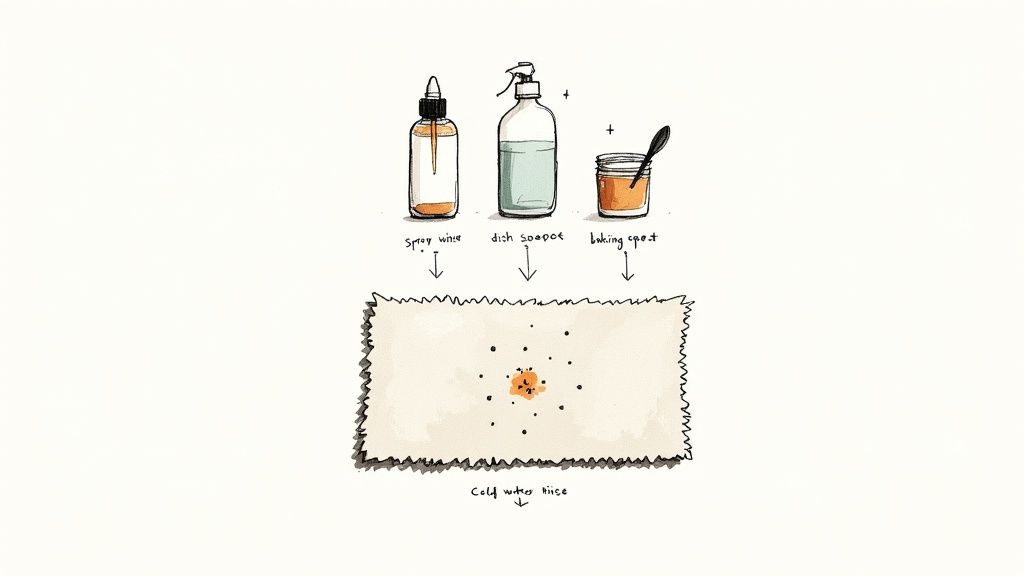
White vinegar is a cleaning powerhouse. Its mild acidity is fantastic for breaking down the dark pigments in coffee without being too harsh on most carpets, especially synthetics. It's my go-to for a lot of household stains.
Here's the recipe I use:
- Mix one tablespoon of white vinegar with one tablespoon of liquid dish soap.
- Add this to two cups of warm water.
- Stir everything together gently until the soap dissolves.
Whatever you do, don't pour this stuff directly onto the carpet—you'll just oversaturate it. A simple spray bottle is your best friend here. Lightly mist the stained area, give it a few minutes to work its magic, and then start blotting with a clean, dry white cloth.
A Gentle Dish Soap Solution
If you're a little hesitant to use vinegar, or maybe your carpet is made of more delicate fibers like wool, a simple dish soap solution is a great alternative. It’s gentle but surprisingly good at lifting the oily parts of a coffee stain that want to cling to the fibers.
Just mix a few drops of a clear, non-bleach dish soap with about a cup of warm water. Apply it the same way: mist the spot and blot gently from the outside edges inward. The trick is to use just enough to break up the stain without leaving behind a soapy residue that will attract dirt later on.
Using Baking Soda for Tougher Stains
For those stubborn, set-in stains that just refuse to budge, baking soda can give you the extra muscle you need. It acts as a mild abrasive and a natural deodorizer, which is perfect for coffee spills that had milk or sugar in them. This is a great follow-up after trying the vinegar or soap solution.
Simply make a paste with three parts baking soda and one part water. Gently spread the paste over the damp stain and just let it be. As it dries completely, the baking soda will actually pull the leftover coffee particles out of the carpet fibers. Once it’s dry and crusty, just vacuum it all up. For a deeper dive on this, check out our guide on using baking soda for removing carpet stains.
No matter which DIY trick you try, the final step is always a clean water rinse. Lightly dampen a fresh cloth with cold water and blot the area one last time. This removes any leftover cleaning solution and helps your carpet stay cleaner, longer. For more great DIY tips, you might find some useful ideas in The Best Way to Clean Rugs: A DIY Home Guide.
Choosing The Right Commercial Carpet Cleaner
Sometimes, your trusty homemade solution just isn't enough for a stubborn coffee stain. When you find yourself staring down the cleaning aisle, the sheer number of bottles promising miracle results can be overwhelming. How do you know which one will actually work without making things worse?
The secret is knowing what you're looking for. Those older, set-in coffee stains often need more muscle than vinegar and baking soda can provide. This is where commercial cleaners shine, with formulas specifically engineered to break down tough stains at a molecular level.
It's a massive industry—projected to hit around USD 5.5 billion by 2025—which tells you just how many people rely on these products. But not all cleaners are created equal, and grabbing the wrong one can be a costly mistake.
Enzyme vs. Oxygen Cleaners
When you're fighting a coffee stain, your two main allies are enzyme-based and oxygen-based cleaners. They work in completely different ways, so picking the right one is key.
-
Enzyme Cleaners: Think of these as biological stain-eaters. They use specialized enzymes to literally digest the organic stuff in stains like coffee, food, or pet accidents. They're fantastic for coffee spills that also contain milk or sugar.
-
Oxygen Cleaners: You'll often see these labeled as "Oxi" products. They work through a chemical reaction. When you mix them with water, they release tiny oxygen bubbles that power through stain particles, lifting them away from the carpet fibers. They are brilliant at brightening and tackling pigmented stains from things like black coffee or red wine.
Expert Tip: If your coffee spill had cream and sugar in it, reach for an enzyme cleaner. Hands down, it's the better choice. The enzymes will break down the proteins and sugars, which prevents that sticky residue that acts like a dirt magnet later on.
To help you decide what to grab off the shelf, here’s a quick breakdown of the most common types of commercial carpet cleaners.
Commercial Cleaner Comparison
| Cleaner Type | How It Works | Best For | Carpet Safety Notes |
|---|---|---|---|
| Enzyme Cleaner | Uses biological enzymes to break down and "digest" organic proteins, fats, and sugars. | Coffee with milk/cream, food spills, pet accidents. | Generally safe for most carpets, but always test. Avoid on wool or silk as enzymes can damage natural protein fibers. |
| Oxygen Cleaner | Releases oxygen bubbles that lift pigmented stains and brighten fibers. | Black coffee, tea, wine, juice, and general dinginess. | Safe for most synthetic carpets. Can cause color loss on some natural fibers like wool and cotton. Always test first. |
| Detergent/Surfactant Cleaner | Uses soap-like agents (surfactants) to trap dirt and oil so it can be rinsed away. | Greasy, oily stains that might accompany a coffee spill (e.g., from a pastry). | Can leave a sticky residue if not rinsed thoroughly, leading to rapid re-soiling. |
| Solvent-Based Spotter | Uses chemical solvents to dissolve oil-based stains. | Not ideal for coffee itself, but useful for related stains like ink or grease from a nearby food item. | Can be harsh. Requires good ventilation. May damage carpet backing or certain synthetic fibers. Patch test is critical. |
No matter which product you choose, the real work begins before you ever apply it to the stain.
How To Read The Label and Test Safely
I can't stress this enough: read the label. It’s not just a friendly suggestion—it’s the most important step to prevent a carpet catastrophe. The label will tell you exactly which types of carpet fibers the product is safe for.
A cleaner that works wonders on a synthetic olefin or polyester carpet might permanently bleach a natural wool one. The label is your roadmap.
Once you’ve confirmed the cleaner is right for your carpet type, you must do a patch test. This is non-negotiable.
- Find a hidden area of your carpet. Think inside a closet, under the sofa, or behind a heavy piece of furniture.
- Apply a small amount of the cleaner exactly as the directions say.
- Let it sit for the recommended time, then blot it away with a clean, damp cloth.
- Wait for the spot to dry completely. Then, check carefully for any color bleeding, fading, or fiber damage.
This quick test is your insurance policy against turning a small coffee stain into a giant, permanent eyesore. Remember, the goal is to remove the stain, not create a brand new one.
For more insights into different cleaning methods, you might find our comparison of low-moisture carpet cleaning versus traditional steam cleaning helpful.
You've wrestled with that coffee stain and it looks like you've won. Awesome. But don't break out the party hats just yet. Getting the stain out is only half the battle.
The final, and absolutely crucial, step is drying the area the right way. If you just walk away while the spot is still soaked, you’re likely to trade that coffee stain for a stiff, crunchy patch, a dingy watermark, or worse—mildew growth deep down in the padding. Nobody wants that.
That ugly watermark, usually a brownish ring that forms around the cleaned spot, is a classic sign of improper drying. It happens when leftover minerals and dirt from the cleaning solution wick their way to the surface of the carpet fibers as the water evaporates. The secret to avoiding this is to get the moisture out quickly and evenly, leaving zero trace of your hard work.
The Weighted Towel Method
Your first line of defense is dead simple but surprisingly effective. Go grab a thick, clean, and totally dry white towel. Lay it flat over the damp patch of carpet.
Now, you need to add some weight. A stack of heavy books or anything solid and flat will do the trick. Pile them on top of the towel. This pressure essentially turns the towel into a super-sponge, pulling every last bit of moisture up from the carpet fibers and even from the padding underneath.
Let it sit for at least an hour. When you check it, you'll be shocked at how damp that towel is. If the carpet still feels wet, just grab a fresh, dry towel and do it again.
Pro Tip: Whatever you do, don't use colored towels or anything with ink, like newspapers, directly on the carpet. The moisture can easily cause dyes and ink to bleed, leaving you with a brand new, even tougher stain to deal with. Always stick to a plain white cloth.
Speeding Up the Process
Once you’ve blotted up all the water you can, it’s time to get some air moving. Good airflow is your best friend in the fight against mildew, which can start to grow in damp conditions in as little as 24 to 48 hours.
- Set up a Fan: A simple box fan or an oscillating fan aimed directly across the surface of the damp carpet will work wonders.
- Use a Dehumidifier: If you live in a humid area, running a dehumidifier in the room is a game-changer. It pulls moisture right out of the air, which helps the carpet dry out much, much faster.
Final Inspection and Fluffing
After the area feels completely dry to the touch, give it one last look. Check it out from a few different angles and in different lighting to make sure no faint shadow of the stain is hiding in there.
You'll probably notice the carpet fibers look a bit flat and matted down where you cleaned. That's normal. To bring them back to life, just gently brush the area with your fingertips or a soft-bristled brush. You can also run the vacuum over the spot to lift the pile back up.
This last little touch will blend the cleaned area seamlessly with the rest of your carpet, making it look like that coffee spill crisis never even happened.
Knowing When to Call a Professional Cleaner
You’ve blotted, you’ve sprayed, and you’ve scrubbed, but that stubborn brown shadow of a coffee stain is still mocking you from the floor. I get it. While most DIY methods work wonders on fresh spills, there comes a point where you have to know when to throw in the towel and call for backup.
Pushing a home remedy too far can sometimes do more harm than good. You can actually set the stain permanently or, even worse, damage your delicate carpet fibers. Sometimes, the smartest move is to put down the spray bottle and pick up the phone. Recognizing that a stain is beyond your toolkit will save you a ton of frustration and protect your investment.

Signs a Coffee Stain Needs an Expert
Not every little spill needs a professional, but some situations almost always demand it. If you’re facing one of these scenarios, calling an expert is your best bet for getting your carpet back to normal.
- The Stain is Old and Set: A coffee stain that’s been sitting for weeks, months, or even years has had plenty of time to chemically bond with the carpet fibers. These deep-set stains usually need professional-grade solvents and equipment to break them down.
- You Have Delicate Carpet Fibers: Natural fibers like wool and silk are beautiful but notoriously sensitive. The wrong pH from a homemade vinegar solution or the harsh enzymes in a store-bought cleaner can cause irreversible color bleeding or even dissolve the fibers themselves. A true professional has specialized, pH-balanced solutions just for these materials.
- The Stain Keeps Reappearing: Ever cleaned a spot perfectly, only to see it magically reappear a day or two later? That frustrating experience is called wicking. It happens when the spill soaks deep into the carpet padding. As the surface dries, the liquid from the pad wicks back up the fibers, bringing the stain right back with it.
Professional hot water extraction (often called steam cleaning) is the only real fix for wicking. Their equipment has the power to flush out the padding and extract the deep-down moisture that your home vacuum can't even touch.
The Professional Equipment Advantage
What really sets a professional service apart is the machinery. Their truck-mounted hot water extraction systems heat water to much higher temperatures and use incredibly powerful suction to pull out nearly all the moisture, along with the dirt and staining agents. It’s a level of deep cleaning that rental machines and handheld spot cleaners simply cannot replicate.
They also show up with an entire arsenal of specialized cleaning agents. A pro can look at a coffee stain and adjust their approach based on whether it had milk, sugar, or cream mixed in. That expertise ensures they can remove the stain without leaving behind a sticky residue that just attracts more dirt later on.
Ultimately, if your best efforts have failed or you’re dealing with a high-stakes situation like a delicate antique rug, calling a professional isn’t admitting defeat. It’s just making a smart call to protect your home and restore your carpet safely and effectively.
Answering Your Top Coffee Stain Questions
Even with a solid plan, a real-life coffee spill can throw a curveball. What if it was a latte, full of milk and sugar? What if that dark brown liquid just exploded all over your brand-new beige carpet?
This is where experience comes in. Let's tackle those tricky situations that pop up when you're on your hands and knees, trying to save your carpet.
How Do I Handle a Coffee Spill with Milk and Sugar?
A coffee spill loaded with milk, cream, or sugar is a whole different beast. You're not just fighting the dark tannins from the coffee itself. You're also up against proteins and sugars, which love to leave behind a sticky, smelly residue that basically acts like a dirt magnet over time.
For this kind of mess, your cleaning game needs an extra player. After you've blotted up the initial spill and treated it with a standard vinegar and soap solution, you'll want to follow up with an enzyme-based cleaner.
An enzyme laundry detergent can be a fantastic substitute if you don't have a dedicated enzyme spotter. Just mix one capful into a cup of warm water. The enzymes are specifically designed to break down the proteins and fats from dairy—something a simple vinegar solution just can't handle.
Gently blot this enzyme mix onto the stain, let it work its magic for about ten minutes, and then rinse by blotting with a clean cloth dampened with water. Trust me, this extra step is the secret to stopping that faint, sticky spot from coming back to haunt you.
What Is the Best Way to Clean Coffee from a White or Light-Colored Carpet?
Few things cause more panic than watching dark coffee soak into a white or cream-colored carpet. The key is to act ridiculously fast, but you also have to be careful about what you use. The wrong cleaner can leave a yellowish or brownish ring, making the spot even more obvious.
When you're working with light-colored carpets, stick with clear or white ingredients. It's a simple rule, but it's crucial.
- Use clear dish soap. A blue or green soap can actually transfer its dye to the carpet fibers. A tiny drop of clear, dye-free soap is all you need.
- Hydrogen peroxide can be a secret weapon. For those really stubborn stains on synthetic white carpets, a mix of one part 3% hydrogen peroxide to three parts cool water acts as a gentle bleaching agent. CRITICAL: You absolutely must test this on a hidden spot first, like inside a closet. It can and will lighten colored carpets.
- Rinse, rinse, rinse. The number one reason people get those ugly watermarks is because they don't rinse well enough. After you've treated the stain, keep blotting the area with a cloth dampened with cool, clean water until every last trace of the cleaning solution is gone.
Can I Use Baking Soda on an Old Coffee Stain?
Absolutely. Baking soda is a great tool in your arsenal, especially for older, set-in coffee stains that are long past dry. Its power lies in its ability to wick the remaining stain particles out of the carpet fibers as it dries.
To make it work, you first need to wake up the old stain. Dampen it with a little warm water to loosen things up. Then, mix up a paste of three parts baking soda to one part water. Gently spread this paste over the stain and just let it be. It needs to dry completely, which might take a few hours.
Once it's dry and crusty, vacuum it up thoroughly. You'll find the baking soda has absorbed not just the discoloration but also any of that lingering musty coffee smell.
When a stubborn stain just won't give up, or if you want to be sure your carpets are cleaned professionally without any sticky, soap-based residue, Citrus Carpet Cleaning Buford is here to help. We use our signature citrus-based, low-moisture cleaning system to get the job done right. Schedule your "EXACT-imate" today at https://citruscarpetcleaningatlanta.com.