
That stubborn dog pee smell isn't just a simple stain you can wipe away. It's a science problem, and the real enemy is something called uric acid crystals. Your average household cleaner just can't touch them, which is why you need a specific tool for this job—an enzymatic cleaner that actually destroys these crystals instead of just covering up the smell.
Why That Dog Pee Smell Keeps Coming Back
Ever scrubbed a pet stain until it vanished, only to catch that same awful whiff a few days later, especially when it gets humid? It’s not your imagination, and it’s not because you did a bad job cleaning. The problem is baked into the chemical makeup of dog urine itself.
Unlike a spilled drink, dog pee is a cocktail of components that create a smell that just won't quit. Knowing what you're really up against is half the battle.
- Urea and Urochrome: This is the easy stuff. Urea is sticky, and urochrome gives the urine its yellowish tint. A little soap and water will usually handle these just fine.
- Uric Acid: Here's your real opponent. Uric acid is made of tiny, non-soluble salt crystals. They don't dissolve in water, and your go-to cleaners won't break them down.
- Bacteria: As urine sits, bacteria start feasting on the urea, which releases that sharp, ammonia-like smell you notice right away.
When you clean up an accident with standard soap or even a vinegar mix, you're only getting rid of the urea and urochrome. The spot looks clean. But the uric acid crystals are left behind, latched deep into your carpet fibers, upholstery foam, or the grain of your hardwood floors.
The Science of the Returning Smell
Those leftover uric acid crystals are like little odor time bombs waiting for a trigger. That trigger is moisture. This is exactly why the smell seems to reappear out of nowhere on a humid day or right after you've steam-cleaned the carpets. Moisture in the air essentially "wakes up" the crystals, and they start releasing that pungent smell all over again.
Think of it this way: cleaning with regular soap is like wiping mud off your boots but leaving it caked in the treads. They look fine at a glance, but the real mess is still there, ready to make an appearance with the next rainy day.
The key takeaway is simple: You cannot get rid of dog urine odor by just cleaning the visible stain. You have to completely neutralize the invisible uric acid crystals bonded to the surface.
Your Dog's Super-Sniffer and Repeat Offenses
Now, let's add another layer to the problem: your dog’s incredible nose. A dog's sense of smell is estimated to be 10,000 to 100,000 times more powerful than ours. So even when you can't smell a thing, your dog can easily pick up on the scent of those leftover uric acid crystals.
To your dog, that faint, lingering odor is a bright, flashing sign that says, "This is a good spot to go potty!" It’s a biological trigger that encourages them to mark the same spot over and over. You end up in a frustrating loop of accidents and cleaning that feels like it will never end.
Failing to destroy the odor at a molecular level is like leaving an invitation for your dog to do it again. It's not a training issue at that point; it’s pure instinct. Understanding this is the first step before you grab just any old cleaner. To truly get that dog pee smell out of your house, you have to pick a cleaner that beats the science, not just the stain.
Your Immediate Action Plan for Fresh Stains
The second you spot a fresh accident, the clock is ticking. What you do in those first few minutes is honestly the most critical part of getting that dog pee smell out of your house for good. A quick, smart response can be the difference between a five-minute cleanup and a nasty odor that just won't quit.
If you remember one thing, make it this: blot, never rub. When you rub a fresh urine spot, you're literally grinding the liquid deeper into the carpet fibers, furniture foam, or even the tiny pores in your wood flooring. All that does is push the uric acid crystals—the real source of the smell—somewhere you can't reach, making the problem a hundred times worse.
The Blotting Technique Done Right
Your number one goal is extraction. You have to get as much of that liquid up and out of there before it has a chance to soak down to the padding or subfloor.
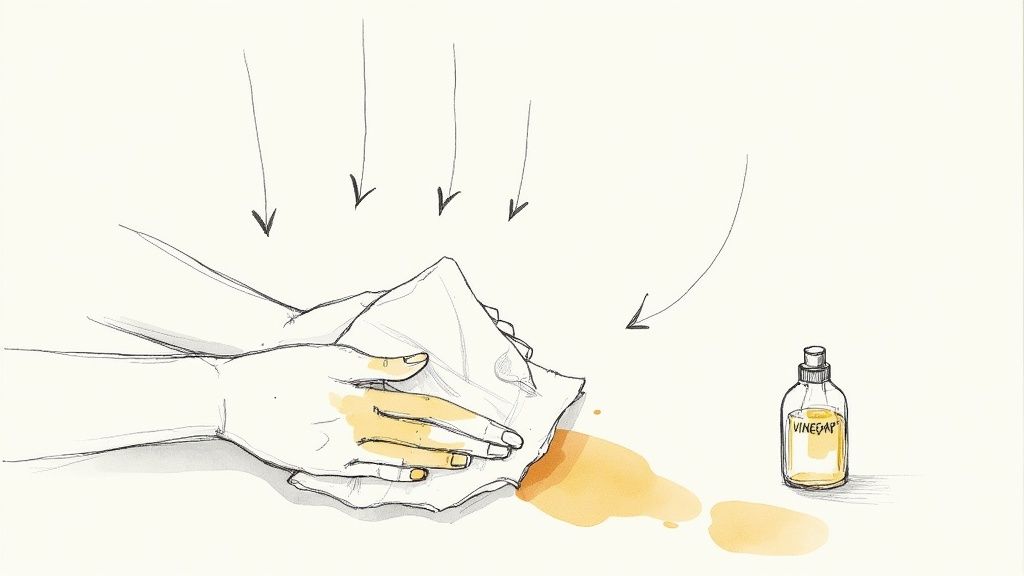
Grab a thick stack of paper towels or a few old, clean rags you don’t mind tossing. Lay them over the wet area and apply firm, steady pressure. Don't be shy—stand on the towels, especially if you have a thick, plush carpet. You'll be amazed at how much moisture this pulls out.
Keep swapping the soaked towels for dry ones and do it again. You'll want to repeat this until the fresh towels are coming up almost completely dry. This step alone gets rid of a huge amount of the urine, which makes the next steps way more effective.
Your First Line of Defense: A DIY Neutralizer
Once you've blotted the spot dry, it's time for an immediate pre-treatment. This isn't the final clean, but it's a vital first move to knock down that sharp ammonia smell and start breaking things down.
A simple mix of equal parts white vinegar and water in a spray bottle is your best friend here. Vinegar is acidic, which works perfectly to counteract the alkaline salts found in fresh dog urine.
Here's the plan:
- Lightly mist the vinegar and water solution over the area you just blotted. You're not trying to soak it again, just dampen the surface fibers.
- Let that solution sit for about 5 to 10 minutes. You might even hear a little fizzing sound, which is a good sign that it's working its magic.
- After it sits, grab some new dry towels and blot the area one more time to pull up the vinegar mix and the urine it just neutralized.
This quick action helps stop the odor-causing bacteria from setting up shop deep in your carpet or furniture. For a deeper dive into tackling carpet stains specifically, check out our professional tips on how to remove pet urine from carpet.
Pro Tip: Put together a "pet accident kit" and keep it handy. Get a small caddy and stock it with paper towels, old rags, your pre-mixed vinegar spray, and a pair of gloves. Having it all in one spot means you can act instantly without running all over the house.
Adapting to Different Surfaces
Of course, a puddle on a shag rug isn't the same as a splash on your kitchen tile. You'll need to tweak your approach based on where the accident happened.
- For High-Pile or Shag Rugs: Blotting is even more important here. After you apply pressure with towels, use your fingers (with gloves on!) to gently work your way between the long fibers and blot deeper down. You have to make sure you're getting to the base of the rug.
- For Hardwood or Laminate: Speed is absolutely everything. Wipe up the puddle immediately with paper towels. Liquid can seep between the planks in seconds and damage the subfloor, so you have to contain it fast. After you wipe, spray your vinegar solution on a cloth—not directly on the floor—and wipe the area down.
- For Upholstery: Go easy with the vinegar spray. You want to avoid soaking the foam cushion inside, which can lead to mildew problems. A very light mist followed by firm blotting is the way to go.
This immediate action plan is your best shot at winning the battle. It sets you up for success when you follow up with a deeper, more permanent cleaning later, ensuring you kick that dog pee smell out of your house for good.
Choosing the Right Cleaner for the Job
Walking down the cleaning aisle at the store is overwhelming, isn't it? Dozens of bottles scream from the shelves, all claiming to be the magic bullet for your pet stain problems. But when you're trying to get dog pee smell out of your house, you're not just wiping up a mess—you're fighting a chemical war against uric acid.
The wrong cleaner just slaps a flowery scent over the top for a few hours. The right one destroys the odor at its source.
This isn't a small problem. It's a massive industry. The global market for pet stain and odor control was valued at over USD 9.8 billion in 2025. Big brands like Nature’s Miracle, which commands a huge 18-22% of that market, built their empires on one thing: creating formulas that actually break down uric acid. That tells you just how many of us are desperately searching for a real solution, not just another air freshener.
The Undisputed Champion: Enzymatic Cleaners
If you want to get rid of the smell for good, enzymatic cleaners are your absolute best friend. These aren't just fancy soaps. They are bio-active formulas loaded with beneficial bacteria and enzymes specifically engineered to go after organic messes like urine.
Here's how it works in plain English: The uric acid crystals in dried dog pee are "food" for these microscopic enzymes. When you saturate the spot with the cleaner, the bacteria wake up and start producing enzymes that literally eat the uric acid, breaking it down into harmless, odorless stuff like carbon dioxide and water.
Once the "food source" (the pee) is gone, the bacteria die off, leaving nothing behind. This is the only way to truly obliterate the smell on a molecular level. Our guide explains in more detail what an enzymatic cleaner is and how it works.
What About DIY Cleaners?
You've probably heard that things like white vinegar, baking soda, and hydrogen peroxide can do the trick. And sometimes, they can help—but you have to know their limits. They are fantastic for a first response, but they often can't handle old, set-in odors.
- White Vinegar: Its acidity is great for neutralizing the ammonia in fresh urine. I always recommend it as a first step. But it doesn't break down those tough uric acid crystals, which means the smell will likely come back on a humid day.
- Baking Soda: This is a fantastic natural deodorizer. It's best used after cleaning to sprinkle over the damp area. It works wonders for pulling out any remaining moisture and surface-level smells.
- Hydrogen Peroxide: Peroxide can definitely lift stains and kill germs. A mix with a drop of dish soap can be surprisingly effective. But—and this is a big but—it's a mild bleach. It can easily pull the color out of your carpet or couch. Always, always test it on a hidden spot first.
These DIY tools have their place, but don't expect them to solve a serious, recurring odor problem. For that, you need the heavy hitter.
Key Insight: Whatever you do, never use a steam cleaner on a urine stain before treating it with enzymes. The intense heat will permanently fuse the urine proteins to the carpet fibers. At that point, the smell is cooked in, and it's never coming out.
Choosing Your Dog Pee Odor Cleaner
To make things simpler, let's compare the main options side-by-side. Knowing what to grab for a specific situation will save you a lot of scrubbing and frustration.
| Cleaner Type | How It Works | Best For | Pros | Cons |
|---|---|---|---|---|
| Enzymatic Cleaners | Uses bacteria and enzymes to digest uric acid. | Old, set-in stains and stubborn, recurring odors on any surface. | Permanently eliminates the odor at its source; safe for most surfaces. | Can be more expensive; requires time to work (cannot be rushed). |
| Oxygen-Based Cleaners | Uses sodium percarbonate to release oxygen bubbles that lift stains. | Fresh stains, surface discoloration, and general sanitizing. | Effective at stain removal; brightens fabrics. | May not fully neutralize deep-set odors; can sometimes lighten colors. |
| Vinegar & Baking Soda | Vinegar neutralizes ammonia; baking soda absorbs odors. | Immediate cleanup of fresh accidents; surface deodorizing. | Inexpensive, non-toxic, and readily available. | Does not break down uric acid; smell can return. |
| Hydrogen Peroxide | Oxidizes and breaks down stain-causing compounds. | Light-colored carpets and fabrics with fresh stains. | Strong cleaning power for stains. | High risk of discoloring or damaging fibers; must be used cautiously. |
In my experience, the best strategy is to have both a high-quality enzymatic cleaner and the basic DIY ingredients on hand. You can hit fresh accidents immediately with vinegar and then follow up with the deep-cleaning power of enzymes to make absolutely sure that dog pee smell is gone for good.
Surface-Specific Cleaning Tactics for Your Home
Dog pee seems to find its way onto every possible surface, and a one-size-fits-all cleaning strategy just won't work. To really get dog pee smell out of your house, you have to match your method to the material. An aggressive approach that works wonders on tile could easily ruin your hardwood floors. On the other hand, being too gentle on carpet won't get deep enough to kill the odor at its source.
This is where knowing your surfaces comes in handy. Let's break down the best way to tackle each common area in your home, so you can destroy the odor without causing any collateral damage.
Deep Cleaning Carpets and Rugs
Carpet is by far the toughest customer. Urine doesn't just sit on the surface; it soaks down through the fibers, into the backing, through the padding, and sometimes right onto the subfloor. Just cleaning the top layer is like trying to melt the tip of an iceberg—the real problem is lurking underneath.
For carpets, the magic word is saturation. You need your enzymatic cleaner to follow the exact same path the urine did.
- Find Every Last Spot: If the stain is old and you can't quite pinpoint it, grab a UV blacklight. Turn off the lights, and old urine stains will glow, revealing every single spot that needs treatment. You might be surprised by what you find.
- Soak It Generously: Pour a high-quality enzymatic cleaner directly onto the stain. Don't be shy here. You have to use enough of the cleaner to soak all the way through the carpet and get to the padding underneath.
- Cover and Wait: Lay a damp towel over the treated area. This is a crucial step because it keeps the spot moist. The good bacteria in enzymatic cleaners need a wet environment to stay alive and do their job—which is literally eating the uric acid crystals.
- Give It Time: Let the cleaner sit for at least 12-24 hours. This isn't a quick spray-and-wipe situation. Those enzymes need plenty of time to work their magic.
Once the time is up, remove the towel and let the area air dry completely. This can take a few days, so be patient. When it's bone dry, give it a good vacuuming.
This flowchart helps simplify when to grab a quick DIY solution versus when you absolutely need the power of an enzymatic cleaner for those stubborn, set-in smells.
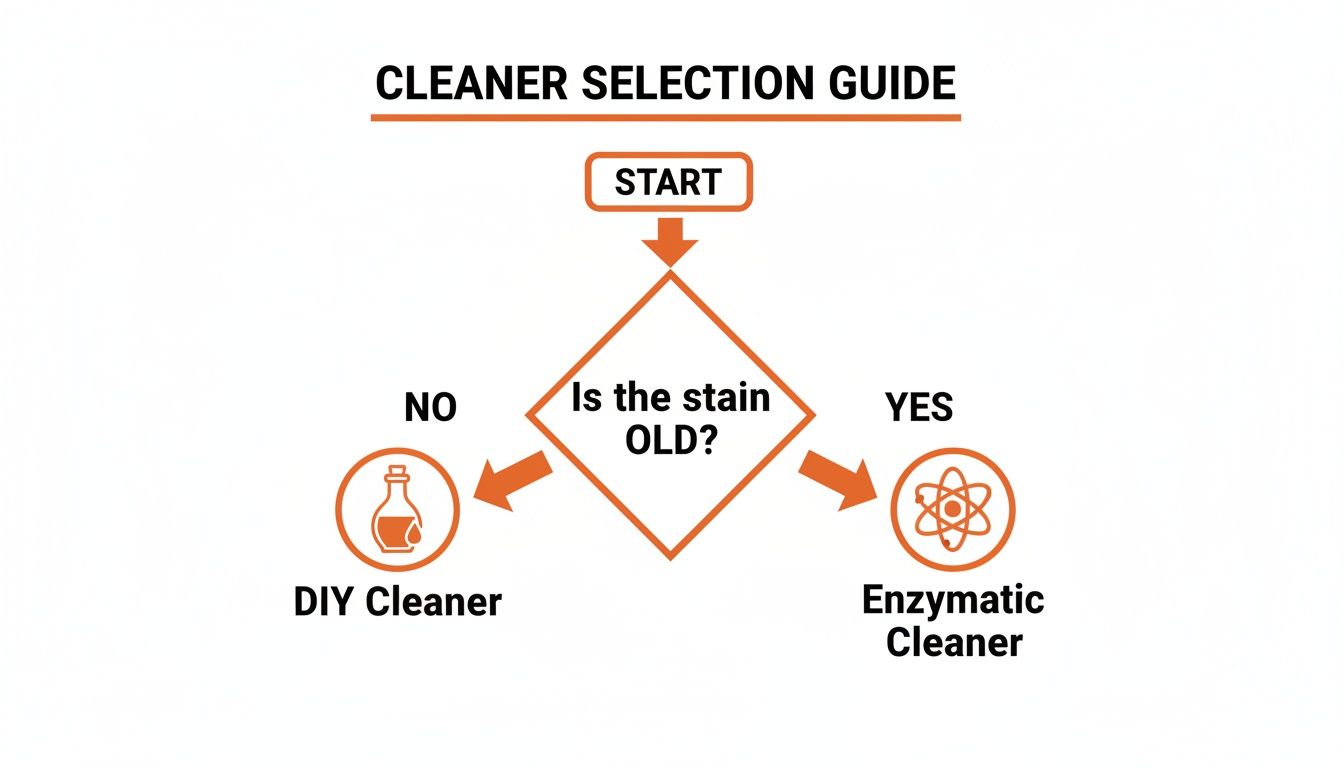
As you can see, while catching a mess early is great, enzymatic cleaners are your non-negotiable weapon for odors that just keep coming back.
Tackling Upholstery and Mattresses
When you're dealing with your sofa or mattress, the game plan is the exact opposite of carpet cleaning. The goal is to clean effectively without over-saturating the fabric. Too much moisture can lead to mildew and cause real damage to the delicate foam and filling inside.
For these surfaces, put your enzymatic cleaner in a spray bottle. Lightly mist the affected area until it's damp, but not soaking wet. Gently work the cleaner into the fibers with a soft-bristled brush, then blot it up with a clean, dry towel. You're better off repeating this light mist-and-blot process a few times than drenching it all at once. For a more holistic strategy on keeping your bedroom fresh, you might want to check out a comprehensive guide to bedroom cleaning.
Treating Hard Surfaces Like Hardwood and Tile
Sealed hardwood, tile, and laminate might seem like an easy cleanup, but they have a sneaky weakness: grout lines and the seams between planks. Urine loves to hide in these porous little crevices. You can wipe up the puddle easily, but the uric acid can seep right in.
After you've cleaned up the initial accident, spray your enzymatic cleaner over the area, making sure to get it into any grout lines or seams. Let it sit for 10-15 minutes so the enzymes have a chance to break down any urine that seeped in. Then, just wipe it clean with a damp cloth.
Important Note: Never let any liquid—cleaner or otherwise—pool on your hardwood or laminate floors for long. It can cause the wood to swell, warp, or discolor. Always wipe the area completely dry after you treat it.
Special Cases: Unsealed Concrete and Subfloors
Sometimes, the problem goes much deeper. Unsealed concrete in a basement or garage is incredibly porous and will soak up urine like a sponge, creating a smell that feels impossible to eliminate. And if you suspect urine has soaked all the way through your carpet to the wooden subfloor, you have to deal with it directly.
For these tough, porous surfaces, you need to get more aggressive.
- Clean It: Use a generous amount of enzymatic cleaner and really scrub it into the surface with a stiff brush.
- Seal It: After cleaning and letting it dry completely, you have to seal the surface. For concrete or a wooden subfloor, your best bet is an oil-based, stain-blocking primer. This creates a permanent barrier that locks in any lingering odor molecules so they can never escape again.
The battle against pet odors is a big deal for millions of households. It's no surprise that the global market for pet odor eliminator sprays was valued at a whopping USD 8.48 billion in 2023. In North America, where 62% of households own a pet, sprays are leading the charge because they're great at saturating surfaces to break down those stubborn urine crystals.
Knowing When to Call in a Professional
You've tried everything. You’ve blotted, sprayed enzymatic cleaners, and maybe even concocted a baking soda and vinegar solution for that stubborn spot. But the dog pee smell just won't quit.
Sometimes, despite your best efforts, the problem has simply gone too deep for any DIY method to handle. This is a frustrating and all-too-common wall that many pet owners hit.
When urine soaks past the carpet and into the padding—or even worse, the wooden subfloor—the source of the odor is effectively sealed underneath. It’s far beyond the reach of any spray bottle you can buy. At this point, continuing with home remedies is just a waste of time, money, and your sanity.
Recognizing the signs that you’ve reached this limit is the key to finally getting rid of the smell for good.
Signs You Need Professional Help
Have you cleaned the exact same spot over and over, only for the smell to mysteriously return on the first humid day? That's the classic sign that urine has saturated the carpet padding or subfloor. No amount of surface cleaning can fix an issue that's several layers deep.
Another major red flag is when the odor seems to permeate the entire room, even when you can't pinpoint a specific "wet" spot. This usually means there are multiple old, hidden accidents that have soaked deep into the foundation of your flooring.
Finally, if you just moved into a new place and can't shake that lingering "pet" smell no matter what you do, you're probably fighting the ghosts of a previous owner's pet.
Expert Insight: Professionals don't just use stronger cleaners; they use entirely different equipment. Their tools are designed to attack problems at a subsurface level, something homeowners simply can't replicate.
What Professionals Bring to the Fight
When you hire a professional carpet cleaning service, you're not just paying for elbow grease. You're paying for specialized technology that gets to the root of the problem. They have the right tools to truly get dog pee smell out of a house when it’s deeply embedded.
These services often use tools you can't just rent at the grocery store:
- Sub-Surface Extractors: These powerful tools are designed to flush water and high-powered cleaning solutions through the carpet and into the padding. Then, they use incredible suction to extract it all back out, effectively rinsing the padding and even the subfloor below.
- Ozone Generators: For severe, room-wide odors, some pros might use an ozone generator. This machine releases ozone (O3) into a sealed-off room, which then oxidizes and destroys odor molecules in the air and on every surface. Heads up: This is a serious process that requires the home to be empty of all people and pets during the treatment.
- Industrial-Strength Cleaners: The enzyme and chemical solutions used by professionals are far more concentrated and potent than anything you can buy over the counter.
Understanding Costs and Outcomes
Hiring a professional is an investment, but it's often more cost-effective than tearing out and replacing your carpet and padding. While pricing will vary based on your location and how bad the situation is, you can get a good idea of what to expect.
For a detailed breakdown, learning more about how much professional carpet cleaning costs can help you budget for the job.
A reputable company will give you a realistic assessment. They can tell you if the carpet and padding are salvageable or if the damage is so severe that replacement is the only real option. Making that informed decision can be the final, most important step in getting your home's air quality—and your peace of mind—back to normal.
Preventing Future Accidents to Keep Your Home Fresh
So, you’ve put in the elbow grease. The stains are gone, the smells are neutralized, and your home finally feels fresh again. Now what? The biggest piece of the puzzle is figuring out how to stop it from happening all over again.
This is where you shift from being reactive to proactive. Getting the dog pee smell out for good isn't just about cleaning up messes; it's about understanding why they happen in the first place. An "accident" is almost always your dog’s way of telling you something isn't right.
Uncovering the Root Cause of Accidents
Inappropriate urination is a symptom, not the problem itself. It can be rooted in medical issues or behavioral triggers, and if you ignore the cause, you'll be stuck in a never-ending cycle of cleaning.
The first thing you should always do is rule out a health problem.
Any sudden change in potty habits is a huge red flag for medical issues you can't see. Things like:
- Urinary Tract Infections (UTIs): Super common in dogs, UTIs can cause frequent, painful urination, which easily leads to accidents inside.
- Kidney or Bladder Stones: These create an uncontrollable, urgent need to go that your dog simply can't hold.
- Age-Related Incontinence: It happens. Just like people, older dogs can lose bladder control as their bodies change.
- Diabetes: One of the classic signs of diabetes is increased thirst and urination.
If your fully house-trained dog suddenly starts having accidents, a trip to the vet isn't just a good idea—it's non-negotiable.
Once your vet gives the all-clear, you can start looking at behavioral triggers. Dogs often urinate indoors because of stress, anxiety, or territorial marking. A new baby, a different pet, or even just moving the couch can throw off their routine and cause them to act out.
Key Insight: Think of an accident as a message. Your job is to decode what your dog is trying to tell you—whether it's "I'm in pain" or "I feel insecure about the new cat."
Reinforcing Training and Managing the Environment
Whether you're dealing with a brand-new puppy or an adult dog who's developed a bad habit, going back to potty training basics is crucial. Positive reinforcement is your best friend here. Rewarding your dog with high-value treats and tons of praise the second they go potty outside is the most effective way to build good habits.
But training is only half the battle. Management is just as important because it sets your dog up for success by controlling their environment.
- Limit Access: Use baby gates or simply close doors to keep your dog out of "problem rooms" where they tend to have accidents.
- Crate Training: A crate isn't a punishment. When introduced properly, it's a safe, den-like space for your dog and a lifesaver for preventing accidents when you can't supervise them directly.
- Protective Barriers: Don't leave your furniture vulnerable. Shielding your couch and chairs with specialized pet couch protectors is a simple but critical step in preventing future mishaps.
Using Scents to Your Advantage
A dog's incredible sense of smell can actually be used against them in this situation. Dogs have a natural aversion to certain strong smells and will instinctively avoid urinating in places that smell a certain way.
Dogs really, really don't like the smell of:
- Citrus: Oranges, lemons, and grapefruit are your allies.
- Vinegar: The sharp, acidic smell is overwhelming for a dog's sensitive nose.
- Coffee Grounds: Sprinkling used grounds in off-limits areas of your yard or planters can be surprisingly effective.
You can mix up a simple spray bottle with water and a bit of lemon juice or diluted white vinegar. Lightly misting it over areas you want your dog to avoid creates an invisible fence that encourages them to find a more appropriate place to do their business.
Even with the best prevention plan, some deep-set odors can be stubborn and resurface over time. If you feel like you're fighting a losing battle against stains that keep reappearing, it might be time to call in a professional. At Citrus Carpet Cleaning Buford, we use a low-moisture, citrus-based system that destroys odors at the source without leaving behind sticky, dirt-attracting residues. Get your free "EXACT-imate" today!