
If you've ever cleaned a cat urine spot only to have that awful smell reappear days, weeks, or even months later, you're not going crazy. It’s a frustratingly common problem, and it has nothing to do with how well you cleaned it. It's all about the unique chemistry of cat urine.
Getting a handle on the science behind the smell is the first real step to getting rid of it for good.
Why Cat Urine Smell Is So Hard to Remove
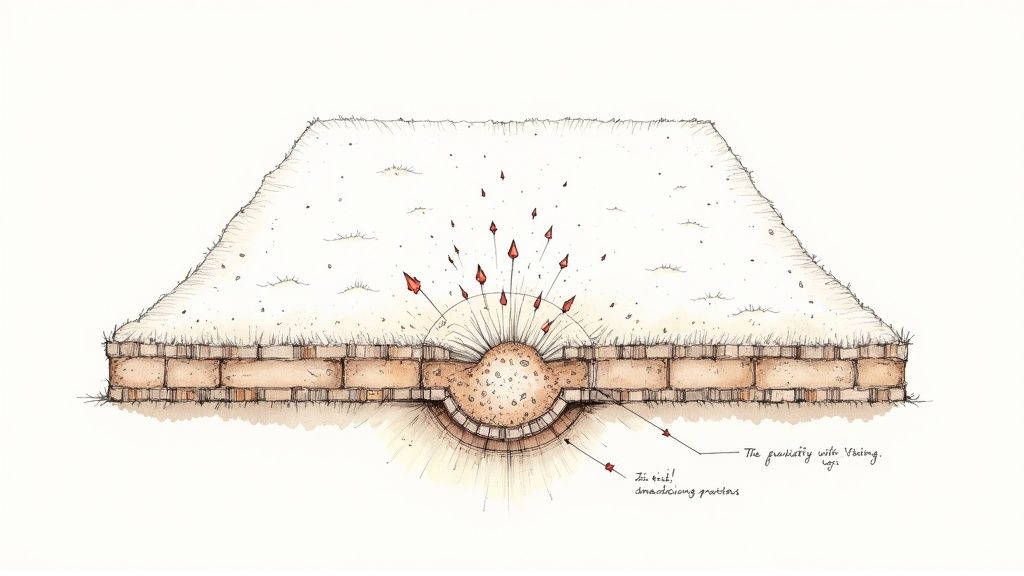
The real villain in this story is uric acid. While you might successfully clean up all the other liquid components of the stain, these tiny, salt-like crystals are left behind, and they don't dissolve in water. They dig in and bond tightly to your carpet fibers, just waiting.
The Science of the Smell
Cat urine is a potent cocktail of compounds, each playing a role in that notoriously stubborn odor:
- Urea: This is the sticky, water-soluble part that you can clean up relatively easily. As it breaks down, it’s responsible for that initial, sharp ammonia smell.
- Urochrome: This is just the pigment that gives urine its yellow color. It’s the visual evidence of the crime scene.
- Uric Acid: Here’s the troublemaker. These crystals are not water-soluble. They embed themselves deep into any porous surface they can find, like your carpet fibers and, worse, the padding underneath.
When these uric acid crystals dry out, they become dormant. This is the tricky part—it makes you think the smell is gone after your initial cleanup. But they're just lying in wait.
The slightest bit of moisture can bring the smell roaring back to life. Humidity from a rainy day, steam from a hot shower, or even just mopping a nearby floor is enough to reactivate these crystals, releasing that pungent odor all over again. This is exactly why a spot you thought was long gone can suddenly stink up the whole room.
Why Standard Cleaners Fail
This is where so many people go wrong. Most household cleaners, even DIY vinegar solutions, might cut through the initial ammonia smell from the urea, but they do absolutely nothing to the uric acid crystals. They just can't break them down.
And whatever you do, don't use a steam cleaner on an untreated cat urine stain. That's a huge mistake. The heat from the steam can actually bond the proteins in the urine to the carpet fibers, permanently setting both the stain and the odor. It's like welding the smell into your carpet.
To truly and permanently remove cat urine smell from carpet, you need something that can dismantle the uric acid itself. This is where a good enzymatic cleaner comes in. The active enzymes in these cleaners literally consume and digest the uric acid crystals, eliminating the source of the problem instead of just trying to cover it up.
How to Find Every Hidden Urine Spot
You can’t start removing cat urine smell from carpet if you don’t know exactly where every single spot is. It's a simple truth, but one a lot of people overlook. Even one tiny, missed area can keep that awful odor hanging in the air.
Your nose is a good starting point, especially for fresh accidents. But the real culprits are the old, dried stains that are totally invisible and often don't smell… until a humid day rolls around and suddenly your whole house stinks again.
So, your first move is a simple sniff test. Get down on your hands and knees and check the usual suspect areas—corners, along the baseboards, and near furniture legs. Cats are creatures of habit, so if they've had an accident in one spot before, chances are they'll hit it again. This initial search helps you tackle the most obvious problems right away.
Seeing the Invisible with a UV Blacklight
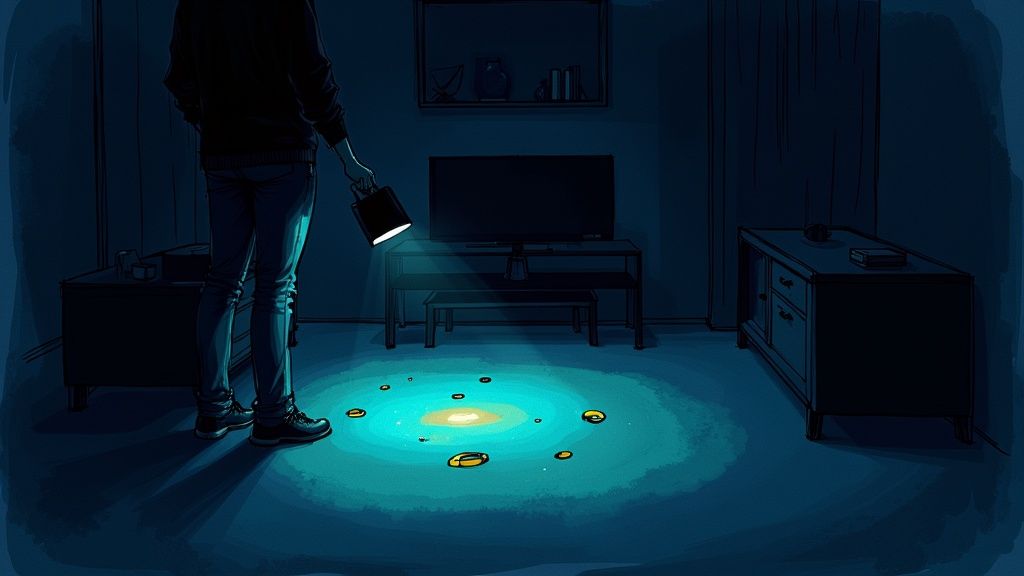
For a truly thorough search, you need to see what your eyes can't. This is where a UV blacklight becomes your best friend in this fight. The salts and phosphorus in dried cat urine glow brightly under ultraviolet light, revealing every last hidden spot on your carpet. It's like a secret map to every accident.
When you're buying a blacklight, make sure you get one specifically designed for pet stain detection. These use a particular wavelength (around 365-385 nm) that really makes urine salts pop. A generic party blacklight just won't cut it.
Pro Tip: This only works if the room is pitch-black. Seriously. Wait until night, turn off every single light, close the blinds, and shut the door. The darker the room, the more those urine spots will glow, guaranteeing you won't miss a thing.
Making Your Treatment Map
Once the room is completely dark, start sweeping the blacklight slowly across the carpet. Hold it about one to two feet above the fibers. The urine stains will show up as a distinct yellowish or greenish glow. Don't be shocked if you find way more spots than you ever imagined; it happens to the best of us.
As you find each spot, mark its location immediately. Trust me, you won’t remember where they all are once the lights are back on. A few easy ways to do this:
- Painter's Tape: Put small pieces of tape around the edge of each glowing area. It’s easy to see and won't damage your carpet when you pull it up.
- Chalk: Lightly draw an outline around the stain with some sidewalk chalk. This works great for bigger areas and vacuums right up when you're done.
This process gives you a complete "battle map" of every single area that needs to be treated. Now you can get to cleaning with confidence, knowing you won't leave any hidden odor source behind.
For more on dealing with lingering smells, you might want to check out our guide on how to eliminate pet odors in carpet. Taking this methodical approach is the key to successfully removing cat urine smell from carpet for good.
Choosing The Right Cleaner To Eliminate Odors
Walking down the cleaning aisle can feel like a pop quiz you didn't study for. With dozens of products all screaming they eliminate odors, it’s painfully easy to grab the wrong one and accidentally make the problem much, much worse.
When you're dealing with the unique chemistry of cat urine, picking the right cleaner isn't just a suggestion—it's the only way you're going to win this battle. Most general-purpose carpet cleaners are built to handle dirt and grime. They simply don't have the tools in their chemical toolbox to break down the uric acid crystals that cause that stubborn, lingering smell. This is where you have to get specific.
The Undisputed Champ: Enzymatic Cleaners
For removing cat urine smell from carpet, the undisputed champion is an enzymatic cleaner. And that’s not just marketing hype; it's straight-up science. These cleaners are loaded with specific, beneficial bacteria that produce enzymes, which are biological powerhouses designed to break down organic waste.
Think of it like this: the uric acid crystal is a complex lock, and the enzyme is the only key that fits. Enzymes like protease and urease target the exact proteins and uric acid in the urine. They don't just cover up the smell; they literally digest and dismantle the source, breaking it down into simple, harmless stuff like carbon dioxide and water. If you want to dive deeper into the science, we have a detailed guide explaining what is an enzymatic cleaner.
Comparing Cat Urine Cleaning Solutions
Not all cleaners are created equal. Some common household "remedies" can actually set the stain permanently or damage your carpet fibers. Before you pour anything on that spot, it's critical to know what you're working with.
Here’s a quick breakdown of the common options you'll see recommended online versus what actually works.
| Cleaning Agent | How It Works | Best For | Potential Risks |
|---|---|---|---|
| Enzymatic Cleaner | Enzymes digest uric acid crystals, permanently eliminating the odor source. | Both fresh and old cat urine stains. The only real permanent solution. | Needs proper dwell time to work; often costs more than DIY mixes. |
| DIY Vinegar Solution | The acid in vinegar helps neutralize the ammonia smell in fresh urine. | Temporarily knocking back the odor from a very fresh accident. | Does not break down uric acid; the smell will almost certainly return. |
| Citrus-Based Cleaner | Uses natural solvents to break down stains and neutralize odors without oversaturating the carpet. | Fresh stains and general pet odors; a fantastic low-moisture option. | May not fully dismantle set-in uric acid from very old, deep stains. |
| Bleach or Ammonia | Harsh chemicals that disinfect but can react dangerously with urine. | NEVER use these on cat urine. Ever. | Can create toxic chloramine gas, permanently discolor carpet, and destroy fibers. |
The main takeaway here is to avoid harsh chemicals at all costs. Using ammonia-based cleaners is a particularly bad idea because cat urine already contains ammonia. Adding more can actually signal to your cat that this is an approved bathroom spot, encouraging them to go there again.
You're literally reinforcing the exact behavior you’re trying to stop.
While you're tackling this specific problem, it doesn't hurt to brush up on general house odor elimination techniques. A fresher home overall can sometimes help discourage repeat accidents.
At the end of the day, investing in a high-quality enzymatic cleaner is your safest and most effective bet. It's the right tool for a very specific, very frustrating job.
A Practical Process for Treating Cat Urine Stains
Alright, you've located all the sneaky spots and picked your cleaner. Now it's time to roll up your sleeves and get to work. This is where your technique really makes or breaks the outcome.
If you just splash some cleaner around, you're not just wasting your time; you could actually spread the urine crystals and make the problem a whole lot bigger. Let's walk through the exact process I use to make sure you get it right the first time. The goal here isn't just to clean the surface—it's to get all the way down to the carpet padding and completely neutralize that nasty uric acid.
The Critical First Response: Blot, Don't Rub!
Did you catch your cat in the act or find a fresh, still-wet spot? Your first move is all about absorption. Whatever you do, do not scrub! Scrubbing is the worst thing you can do. It grinds the urine deeper into the carpet fibers and pushes it into the padding, spreading the contamination zone.
Instead, grab a thick stack of plain white paper towels or a clean, old white towel. Place it over the wet area and apply firm pressure. I mean it—use your body weight, stand on it if you have to. You want to blot and soak up every last drop of liquid you possibly can. Keep using fresh, dry towels until they come away almost completely dry. This simple step can remove a huge amount of the urine before it even has a chance to set in.
Saturate Correctly, Not Excessively
Once you've blotted the area as dry as possible, it’s time to bring in your secret weapon: the enzymatic cleaner. The key here is to saturate the area thoroughly. The cleaner needs to reach every single place the urine went, and that includes deep down.
This means you need to treat an area that's slightly larger than the visible stain on the surface, usually about one to two inches around the perimeter.
Pour the enzymatic cleaner slowly and directly onto the stain. A good rule of thumb is to try and match the volume of cleaner to the volume of the original accident. If it was a big one, don't be shy with the cleaner. For the enzymes to work their magic, they have to make direct contact with the uric acid crystals, which are almost certainly lurking in the padding beneath your carpet.
A common mistake I see all the time is people just lightly spraying the surface of the carpet. That does absolutely nothing for the urine that's soaked deep into the padding. You have to make sure the cleaner penetrates just as deeply as the urine did.
This decision tree gives you a quick visual guide for selecting the right tool for the job.
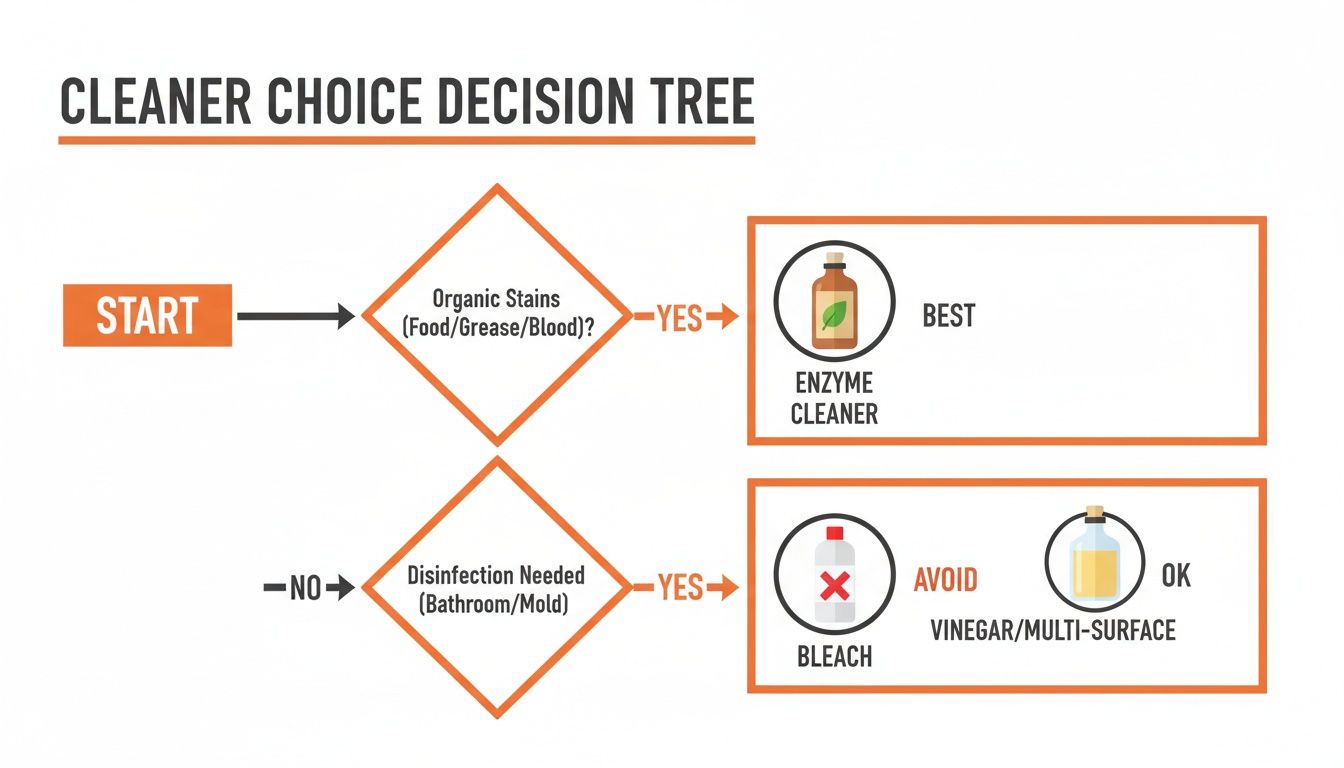
As you can see, those enzyme cleaners are your best bet for this specific problem. Steer clear of harsh chemicals that can do more harm than good.
The Power of Patience and Dwell Time
This might be the most important—and most often ignored—step in this entire process. Enzymes need time to work. This isn't an instant chemical reaction like you'd get with bleach. These are tiny biological organisms that literally need time to eat and digest the uric acid.
After you've saturated the spot, here's what you need to do:
- Cover the Area: Lay a clean, damp towel over the treated spot. This keeps the area moist, which is absolutely essential for the enzymes to stay active and do their job.
- Wait It Out: Let the cleaner dwell for at least 12-24 hours. Check the product's instructions, but for tough, old stains, longer is almost always better. Don't rush this part!
- Prevent Foot Traffic: Keep your pets and family away from the area. An easy trick is to cover the damp towel with an upside-down laundry basket or some other barrier to protect it.
During this "dwell time," the enzymes are hard at work, breaking down the complex uric acid into simple, harmless stuff like carbon dioxide and water. That’s the magic happening behind the scenes.
Rinsing and Extracting the Residue
Once the dwell time is up, the final step is to rinse and extract any leftover residue. If you leave cleaner behind, it can become sticky and attract dirt over time, creating a new dark spot where the old one was.
To finish the job, lightly pour a small amount of clean, cool water over the area. Then, use a wet/dry vacuum or a small carpet extractor to suck up all the moisture. If you don't have one of those, you can go back to the blotting method with clean, dry towels, but an extractor will always be more effective.
Get the area as dry as you possibly can, then let it air-dry the rest of the way. This final rinse removes both the broken-down urine components and the cleaner itself, leaving your carpet truly fresh and clean.
When to Call a Professional Carpet Cleaner
You’ve blotted, sprayed, and waited. You’ve followed all the right steps, but that faint, unmistakable smell of cat urine just won't go away. This is a common story. Sometimes, despite your absolute best efforts, a DIY approach simply isn't enough to win the war against uric acid.
Realizing when you’ve hit that wall is the key to finally getting your home back from those stubborn odors for good. If you find yourself cleaning the same spot over and over, or you notice the smell comes back strong on a humid day, that’s a huge red flag. It means the problem is much deeper than you can reach with a spray bottle.
Signs You Need Professional Help
Consumer-grade products are fine for fresh, surface-level accidents, but they just don't have the muscle to get deep into the carpet padding and subfloor. That's where the real odor problem festers.
You should seriously consider calling in a pro when:
- The Problem is Widespread: You broke out the blacklight and your heart sank. It's not just one or two spots—it’s multiple accidents spread across a huge part of the room.
- The Urine Has Soaked Through: The accident was either very large or went unnoticed for a while, giving it plenty of time to saturate the carpet, dive into the padding, and maybe even seep into the wooden subfloor.
- The Smell Keeps Returning: You've done everything right, but the odor always comes back. This is a classic sign that the uric acid crystals were never fully neutralized and are just waiting to be reactivated.
When urine penetrates the padding and subfloor, it creates a persistent odor reservoir that is nearly impossible to eliminate without specialized equipment. This is where a professional, low-moisture cleaning system becomes a true game-changer.
The Professional Advantage
Professional carpet cleaners bring equipment and chemistry that you just can't get from a rental machine at the grocery store. For instance, our low-moisture cleaning process is critical for pet urine issues. The biggest mistake people make is trying to "flush out" the stain with tons of water, which only pushes the urine deeper and can lead to mold, mildew, and an even worse smell.
To see why this approach is so different, check out our detailed overview of the benefits of a deep clean carpet service.
Ultimately, investing in professional cleaning is a common and smart decision for frustrated homeowners. Industry surveys show the average pet odor removal job costs around $350, with most folks paying somewhere between $100 and $700 depending on how bad the problem is. You can discover more insights about these costs on powerhousehcs.com.
Calling in an expert can save you a ton of time, frustration, and even money in the long run by making sure the problem is solved correctly the first time. No more buying bottle after bottle of cleaner that doesn't work.
Common Questions About Cat Urine Odor Removal
Even when you think you've done everything right, some situations can leave you scratching your head. Let's dig into some of the most common questions I hear from homeowners when they're in the trenches, fighting that stubborn cat urine smell. Consider this your quick-reference guide for those tricky "what if" scenarios.
Will Steam Cleaning Alone Remove Cat Urine Smell?
This is one of the biggest mistakes you can make, and unfortunately, it's a common one. Grabbing a steam cleaner first seems logical, but the intense heat will actually bond the uric acid proteins to your carpet fibers. It essentially cooks the smell right in, permanently setting the stain and making the odor nearly impossible to get out later.
The right way to use a hot water extractor is as the final step. You must first saturate the spot with a high-quality enzymatic cleaner and give it plenty of time to work its magic. Once the enzymes have fully broken down the uric acid, then you can use the extractor to rinse away all the residue and neutralized urine.
How Can I Stop My Cat from Urinating on the Carpet?
Prevention is just as critical as cleaning. Your top priority is making sure the odor from the old spot is 100% gone. Any lingering scent, even if it's undetectable to your nose, is like a bright neon sign for your cat, telling them, "This spot is an approved bathroom."
Once you're positive the area is truly clean, you have to play detective and figure out the "why." A sudden change in your cat's potty habits almost always points to a bigger issue.
- Medical Problems: A trip to the vet should always be your first move. You need to rule out health issues like a urinary tract infection (UTI), bladder stones, or kidney disease, which are common culprits.
- Litter Box Issues: Cats can be incredibly picky. Is the box spotless? Is it in a quiet, low-traffic area? Do you have enough boxes? The golden rule is one litter box per cat, plus one extra.
- Stress and Anxiety: Big changes in the home—a new pet, a new baby, even moving the sofa—can stress a cat out and lead to them acting out.
Are Vinegar and Baking Soda a Good Solution?
Vinegar and baking soda are the go-to DIY solutions, and while they can offer some temporary relief, they are absolutely not a permanent fix. White vinegar is an acid, so it can help neutralize the alkaline ammonia in fresh urine, which knocks back that initial sharp smell. Baking soda is a great odor absorber.
But here's the problem: neither of these household items can break down the uric acid crystals.
Uric acid is the real source of that long-lasting smell—the one that seems to reappear on humid days. While vinegar and baking soda might make things seem better for a little while, they're just masking the problem. The smell will inevitably return.
For a true, lasting solution that gets rid of the odor at its source, you absolutely need an enzymatic cleaner designed specifically for pet urine. If you want to dive deeper into various methods and product tips for stubborn smells, there's a comprehensive guide to cat urine odor removal that covers this in great detail.
If you've tried everything and that frustrating odor still lingers, it's time to call in the experts. For a professional, low-moisture cleaning that eliminates deep-seated odors without soaking your carpets, contact Citrus Carpet Cleaning Buford. Get your free EXACT-imate today!