

That heart-stopping moment when a mug of coffee goes airborne doesn't have to end in disaster for your carpet. Your absolute best chance at winning this fight is to act within the first few minutes. The key is a gentle blot, never a frantic rub, followed by a quick flush with cold water. This fast response is crucial because it stops the coffee pigments from grabbing hold and setting deep into the carpet fibers.
Your Immediate Response to a Fresh Coffee Spill
When coffee hits the carpet, the clock starts ticking immediately. The tannins in coffee—the very compounds that give it that rich color and slightly bitter kick—start to chemically bond with your carpet fibers almost instantly. A swift, correct response is the difference between a minor cleanup and a permanent brown stain that needs a professional's touch.
Blot a Fresh Stain Immediately
Before you do anything else, grab a clean, dry, white cloth or a thick stack of paper towels. Don't scrub! Just press down firmly on the spill, letting the cloth absorb as much of the liquid as it can. Always work from the outside edge of the stain toward the center to keep it from spreading out even further.
This simple blotting action is surprisingly effective. In fact, some textile studies show that blotting up the liquid within the first five minutes can prevent up to 80% of the stain from ever setting. The biggest mistake people make is giving in to the urge to scrub. Rubbing just grinds the coffee's tannins deeper into the pile, making it a nightmare to remove later.
Pro Tip: Always, always use a white cloth for blotting. I've seen it happen too many times—a colored towel can transfer its dye right onto the wet carpet, leaving you with a brand-new, even more complicated stain to deal with.
Flush the Area with Cold Water
Once you've blotted up all the excess coffee, it's time to dilute what's left behind. Gently pour a small amount of cold water directly onto the stain. Whatever you do, avoid warm or hot water. Heat is the enemy here; it can cause the stain to set in for good.
The goal is simple: the water helps lift the last of the coffee pigments away from the carpet fibers. Keep gently blotting the damp spot with a fresh, dry cloth, transferring the now-diluted coffee from your carpet to your towel. Repeat this process—a little water, then blot—until you don't see any more brown coming up on your cloth.
This quick visual guide really breaks down those first critical actions.
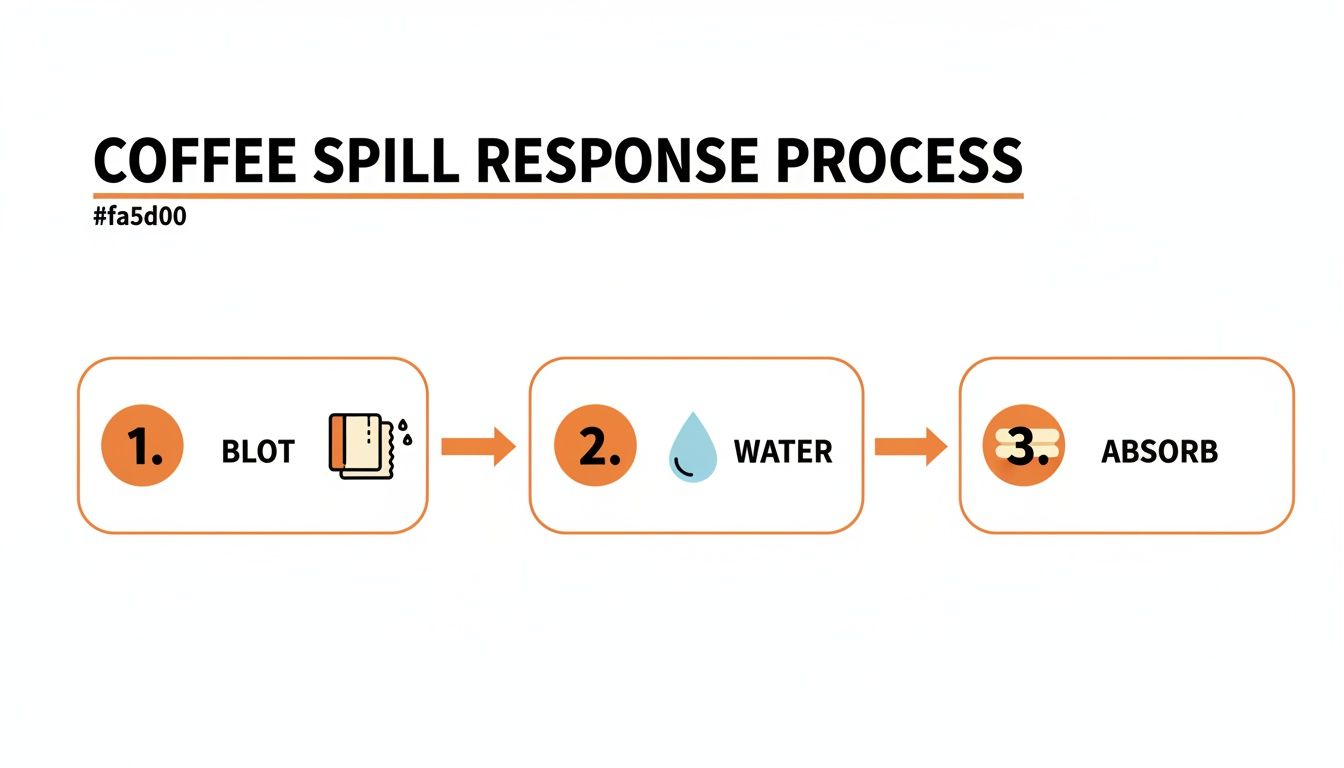
To make it even simpler, here's a quick-reference table for that moment of panic.
Immediate Action Plan for Fresh Coffee Spills
| Step | Action | Why It Works |
|---|---|---|
| 1. Blot | Gently press a clean, white cloth on the spill, working from the outside in. | Lifts the majority of the liquid coffee out of the fibers before it can soak in and set. |
| 2. Dilute | Pour a small amount of cold water onto the remaining stain. | Weakens the coffee pigments and prevents heat from permanently setting the stain. |
| 3. Absorb | Blot the wet area with a fresh, dry cloth until no more color transfers. | Pulls the diluted coffee and remaining color out of the carpet and into the cloth. |
This process of absorbing, diluting, and removing is your best defense. It stops the stain from spreading and sets you up for success. For more tips that cover all sorts of household spills, check out our guide on the best way to get spots out of carpet. By nailing these initial steps, you've already won half the battle against that fresh coffee spill.
Creating Effective DIY Coffee Stain Removers
Once you've blotted up the initial spill, don't feel like you have to make a mad dash for the store to buy expensive, specialized cleaners. Your own kitchen pantry probably has everything you need to mix up a surprisingly powerful solution that can get those coffee stains out for good. It's all about knowing which household staples can work together to break down and lift the stain right out of your carpet fibers.
It's actually pretty straightforward science. Coffee stains are mostly made of tannins, which are acidic compounds. To fight back, you need a cleaner that dissolves those tannins without being harsh enough to damage your carpet.
The Classic Vinegar and Dish Soap Solution
This is one of the most reliable DIY recipes out there, and for good reason. It combines the gentle lifting power of dish soap with the acidic punch of vinegar. We recommend this mix all the time because it’s safe for the vast majority of synthetic carpets and works wonders on fresh or moderately set-in stains.
Here’s the right way to mix it up:
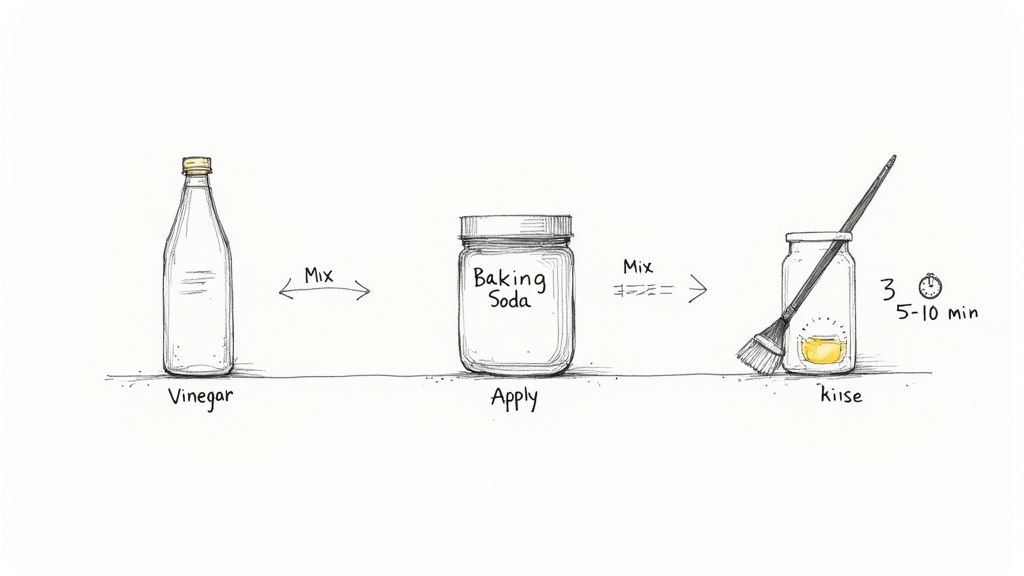
- Combine one tablespoon of clear liquid dish soap and one tablespoon of white vinegar in a bowl with two cups of warm water. Don't use hot water, as it can set the stain.
- Stir everything together gently. You don't want a bowl full of suds.
- Using a clean white cloth, dab the solution onto the stain. Always start from the outside edge and work your way in. This keeps the stain from spreading.
- Let it sit for about 5 to 10 minutes. This gives the vinegar time to really get to work on those tannins.
After a few minutes, take a fresh, dry cloth and start blotting the area. You should see the brown coffee stain transferring over to your cloth. Keep repeating the process until the stain vanishes. Finally, "rinse" the spot by blotting it with another cloth lightly dampened with plain cold water. This removes any leftover soapy residue that could attract dirt later.
Harnessing the Power of Baking Soda
For those really stubborn stains, or if your coffee had a lot of cream and sugar in it, baking soda paste can be your secret weapon. Baking soda is great because it does two things at once: it absorbs the stain from deep within the fibers and acts as a gentle abrasive to lift particles away.
Just mix about three parts baking soda to one part water to create a thick paste. Gently spread it over the entire stain and let it dry completely, which could take a few hours. As it dries, the baking soda literally pulls the stain up and out of the carpet. Once it's hard and crusty, just vacuum it all away. We have more tips on this in our guide about using baking soda to remove stains from carpets.
A critical first step, before applying any cleaner, is to blot—don't scrub. Forensic cleaning analyses show that scrubbing can spread a stain by 30%. After blotting, flushing with cold water can lift up to 70% of coffee pigments from nylon carpets, the most common type found in homes.
It really helps to understand what different cleaning agents do. If you're tackling messes on various types of flooring, checking out guides on the best floor cleaners for every surface can give you a better perspective. These homemade solutions prove you don't always need harsh chemicals to get professional-level results.
Dealing with Old, Set-In Coffee Stains
Finding an old coffee stain that’s had days, weeks, or even longer to set in can feel like a lost cause. When coffee dries, its tannins form a strong chemical bond with your carpet fibers. That’s what makes it so much more stubborn than a fresh spill.
But it’s not hopeless. With a bit more patience and some stronger solutions, you can often break down even these persistent marks. The trick is to rehydrate the stain first, which makes it receptive to cleaning agents again.
Start by gently dampening the entire stain with a cloth soaked in warm—not hot—water. This simple step begins to loosen the dried coffee. Let it sit for a few minutes, then blot the area with a dry, clean cloth. You might be surprised to see some of the pigment transferring already. This pre-treatment is a critical first step.
Bringing Out the Stronger Solutions
When your standard DIY vinegar solution just doesn't cut it, you need to step up your game. Set-in organic stains, like old coffee, often require a more targeted attack. For these tough situations, two of the most effective options are enzyme-based cleaners and hydrogen peroxide.
Enzyme Cleaners: The Organic Stain Eaters
Enzyme-based cleaners are your secret weapon for dismantling organic matter. The enzymes act like tiny demolition crews, breaking down the complex proteins and tannins in the coffee stain into smaller, simpler molecules that are easily wiped away. It's the same technology used in many pet stain removers for a reason—it works.
Here’s how to use one:
- Lightly spray the enzyme cleaner onto the rehydrated stain. You want full coverage but don't oversaturate the carpet.
- Let it sit for the time recommended on the product label, usually 10-15 minutes, to give the enzymes time to work their magic.
- Gently agitate the area with a soft-bristled brush to help lift the stain from the fibers.
- Finally, blot away the residue with a clean, damp cloth.
Hydrogen Peroxide: A Cautious Approach
For light-colored synthetic carpets, a 3% hydrogen peroxide solution can be an incredibly effective bleaching agent. It works by oxidizing the stain, which breaks the chemical bonds that create the color.
Crucial Safety Note: Never use hydrogen peroxide on dark or colored carpets without testing it first in a hidden spot, like inside a closet. It can and will pull the color right out of the fibers, leaving you with a permanent light splotch that’s way worse than the original coffee stain.
Mix a solution of one part hydrogen peroxide to two parts water. Apply it sparingly to the stain, let it sit for about 30 minutes, and then blot it thoroughly with a water-dampened cloth to rinse everything out.
The Full Process for Stubborn Stains
Tackling a dried coffee stain isn’t a quick fix; it’s a process that requires some patience. After applying your chosen cleaner, use a soft brush to gently work the solution deep into the fibers. Follow this with a thorough rinse-and-blot cycle using a cloth dampened with cool water. You may need to repeat these steps a couple of times to fully lift the discoloration.
For those really persistent or deeply embedded coffee stains, you might need to bring in the big guns. You can learn how to steam clean upholstery for deep stain removal, a technique that’s often effective for tougher marks on carpet as well. The goal is always the same: lift the stain completely without leaving any residue behind and get your carpet looking new again.
Matching Your Method to Your Carpet Type
Here's a hard truth: pouring a DIY cleaner on a coffee stain without knowing what your carpet is made of is a huge gamble. I've seen it happen time and again. Using the wrong solution can cause far more damage than the original spill, leading to ugly discoloration, damaged fibers, or even permanently setting the stain.
The secret to actually getting coffee stains out is simple. You have to match your cleaning method to the specific fiber type under your feet.
Most homes these days have synthetic carpets—think nylon, polyester, or olefin. These are engineered to be tough and stain-resistant, which makes them pretty forgiving. They usually handle mild, water-based cleaners just fine, including that popular vinegar and dish soap solution.
But natural fibers are a completely different animal. If you have wool, silk, or cotton carpet, you need to be much more careful with chemicals and pH levels.
Safely Cleaning Synthetic Carpets
Synthetic carpets are resilient, which is exactly why they make up the vast majority of carpets in homes today. Their non-porous fibers give you a little more time to act before a spill really soaks in. For coffee on nylon or polyester, you can feel pretty confident using most DIY and store-bought cleaners designed for general use.
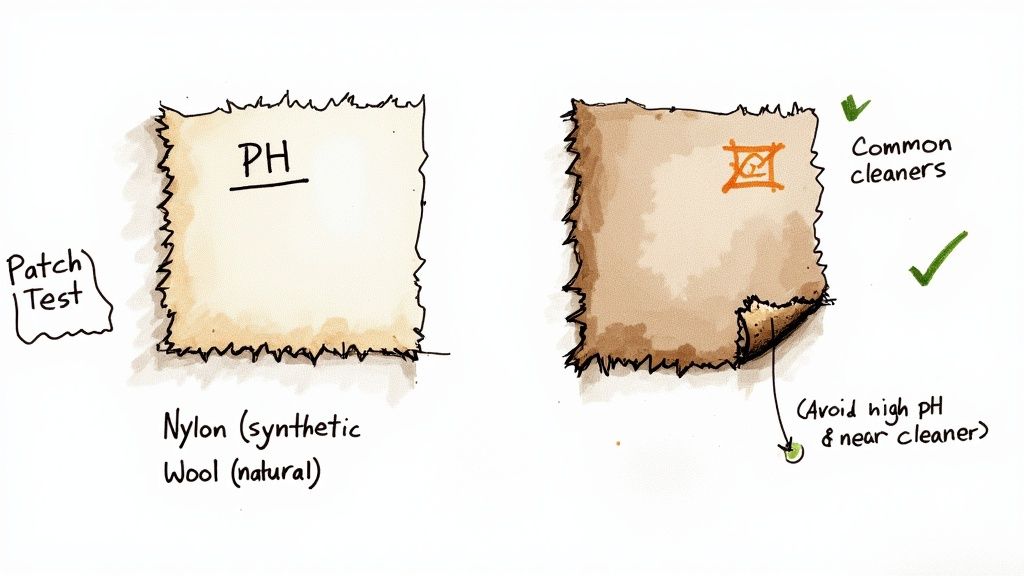
Even so, a little caution goes a long way. Always, and I mean always, do a spot test with any cleaning solution, no matter how gentle it claims to be. It's a simple step that can save you a massive headache.
How to Spot Test
Find a hidden area of your carpet—inside a closet or under a big piece of furniture is perfect. Apply a small amount of your cleaning solution. Let it sit for about 10-15 minutes, then blot it with a clean white cloth. Let it dry completely and check for any color bleeding or weird changes to the fiber before you tackle the main stain.
Handling Delicate Natural Fiber Carpets
Natural fibers like wool demand a much lighter touch. Wool is super absorbent and extremely sensitive to anything alkaline. High-pH cleaners, like ones with ammonia or oxygen bleach, will strip the natural oils from wool fibers. This can make them brittle and cause them to turn yellow over time.
Your best bet is to stick with pH-neutral cleaners specifically made for wool, or a very diluted mix of clear dish soap and water.
- Wool: Incredibly sensitive to high-pH cleaners and hot water. Only use cool water and products labeled as "wool-safe."
- Silk & Viscose: These are unbelievably delicate. Honestly, just call a professional. Water alone can cause permanent damage and discoloration. It's not worth the risk.
- Sisal & Jute: These plant-based fibers are like sponges and are notorious for getting water spots. Use as little moisture as possible, or look for a dry-cleaning solvent.
The carpet material really dictates your game plan. Knowing whether you have a durable synthetic or a sensitive natural fiber is the foundation of any successful stain removal strategy.
Cleaning Solutions by Carpet Fiber Type
To make it easier, here’s a quick breakdown of what you should—and shouldn't—be using based on your carpet type.
| Carpet Fiber | Safe Solutions | Solutions to Avoid |
|---|---|---|
| Synthetic | Mild detergent, vinegar solutions, most commercial carpet cleaners | Harsh chemicals like bleach, strong solvents, undiluted ammonia |
| Wool | pH-neutral, wool-safe cleaners, highly diluted clear dish soap | Alkaline cleaners (ammonia, oxygen bleach), hot water, vigorous scrubbing |
| Sisal/Jute | Dry-cleaning solvents, minimal water | Soaking with water, steam cleaning, soapy cleaners that leave residue |
| Silk/Viscose | Professional cleaning is strongly recommended | Water-based cleaners, DIY solutions, any kind of moisture without professional guidance |
Getting this right isn't just an extra step; it’s what keeps your flooring looking great for years to come. Take a moment to identify your carpet before you start treating that coffee stain—you’ll be glad you did.
Knowing When to Call a Professional Cleaner
Look, while do-it-yourself methods can work wonders on a lot of spills, there comes a point where even the best home remedy meets its match. Knowing when to throw in the towel and call for professional help is a crucial skill. If you push a home remedy too far, you can actually do more harm than good—sometimes setting a stain for good or wrecking delicate carpet fibers beyond repair.
Making the call isn't giving up; it’s the smart move to protect your investment. Some situations are just too dicey for trial and error. A real pro has the heavy-duty equipment, the right solutions for your specific carpet, and the experience to tackle stains that your pantry items just can't handle.
Signs You Need an Expert
It's tempting to keep dabbing away with another concoction you found online, but you need to watch for these clear signals that it's time to call in the cavalry. Ignoring them almost always leads to a bigger, more expensive problem.
- The Stain is a Ghost: You clean a spot, it looks great, and then a few days later, it mysteriously reappears. You're probably dealing with "wicking." This is a classic sign that the coffee soaked deep down into the carpet padding. As the surface fibers dry, the stain gets pulled—or "wicked"—right back up from below.
- It Was a Catastrophic Spill: A tiny drip is one thing. An entire mug of coffee completely saturating a large patch of carpet is a whole different beast. A massive spill pretty much guarantees that liquid has seeped through the carpet backing and into the padding, maybe even the subfloor. That requires powerful, professional extraction equipment to pull all that moisture out and prevent mold growth.
- Your Carpet is Fussy: If you have a wool, silk, or another natural fiber carpet, you’re playing with fire. The wrong pH in a cleaning solution can cause permanent color loss, bleeding, or browning. Professionals know exactly how to handle these materials without causing a disaster.
The Professional Advantage
When you hire a company like Citrus Carpet Cleaning Buford, you're not just getting someone to scrub harder. You're getting a targeted solution. We use powerful methods like hot water extraction that don't just clean the surface; they blast out deep-set gunk from both the carpet fibers and the padding underneath. This is especially key for coffee with cream and sugar, which leaves a sticky residue that becomes a magnet for dirt over time.
A professional assessment can be the difference between a restored carpet and a permanent eyesore. For particularly stubborn issues, exploring a professional deep carpet cleaning service can remove stains that have penetrated the backing and padding, which is something home remedies simply cannot achieve.
At the end of the day, knowing how to get coffee stains out of carpets also means knowing your own limits. For those stubborn, widespread, or zombie-like stains that keep coming back, calling a pro is the surest way to get your carpet looking new again and prevent any long-term damage.
Got More Coffee Stain Questions? We've Got Answers
Even when you know the basic steps for tackling a coffee stain, real life always throws a curveball. What about that extra-creamy latte? Or that phantom stain that keeps coming back no matter what you do? Let's dive into some of the questions I hear all the time from homeowners dealing with these exact scenarios.
These aren't rare situations; they're the everyday variables that can turn a simple cleanup into a major headache. Understanding why these things happen is the secret to getting rid of the stain for good.
Does Milk or Sugar Make Coffee Stains Worse?
You bet it does. When you spill a black coffee, you're mostly dealing with the brown tannins. But once you add milk, cream, or sugar into the mix, you've created a far more complex problem.
Sugar is a real pain because it leaves a sticky residue long after the brown color is gone. That tacky spot becomes a magnet for dirt, dust, and grime. Before you know it, you've got a dark, soiled patch right where the coffee was. Milk adds proteins to the equation, which often need a specific enzyme-based cleaner to break them down properly.
Here's the key takeaway: For any coffee spill with additives, a final, thorough rinse is non-negotiable. After treating the stain, keep blotting the area with a fresh cloth dampened with cool water. This pulls out any leftover sugar or milk residue. If you skip this, you're basically just setting out a welcome mat for future dirt.
Should I Use Hot Water to Clean Coffee Stains?
Please don't. This is one of the most common—and most damaging—mistakes people make. Hitting a coffee stain with hot water can trigger a chemical reaction with the tannins, essentially "cooking" the stain and setting it permanently into your carpet fibers.
Always, always start with cold or lukewarm water. Your goal is to gently dilute the coffee and flush it out of the fibers, not bond it to them forever. While it's true that we professionals use hot water extraction, our specialized equipment is paired with carefully balanced cleaning solutions to prevent stains from setting. It’s a completely different process than just pouring hot tap water on a spill.
Why Did My Coffee Stain Reappear?
Ah, the dreaded ghost stain. This frustrating problem is called wicking, and it’s a dead giveaway that the spill went deeper than you thought.
Wicking happens when coffee soaks all the way through the carpet fibers and into the padding underneath. You did a great job cleaning the surface fibers, but as the area dries, that hidden moisture in the padding wicks its way back up to the top, pulling the old coffee stain right along with it.
To fight it, you can try cleaning the spot again, but this time use as little moisture as possible. Then, grab a thick stack of clean, white towels, place them over the damp area, and weigh them down with something heavy (like a stack of books). This encourages the deep-down moisture to absorb up into the towels instead of reappearing on your carpet. If it still comes back, that's a sure sign the padding is saturated, and a DIY approach just won't cut it anymore.
If you're battling a stubborn stain that won't stay gone or you'd rather not risk making things worse, the team at Citrus Carpet Cleaning Buford is here to help. Our professional low-moisture cleaning process pulls stains out from deep within the padding, making sure they disappear for good. Schedule your "EXACT-imate" today!