

If you want to get dog pee out of your carpet for good, you have to go after the uric acid crystals left behind long after the liquid evaporates. A simple surface scrub just won't cut it. You need something powerful that can get deep into the carpet fibers and neutralize the source of that smell. This is the only way to make sure the odor doesn’t make a surprise comeback, especially on a humid day.
Understanding Why Dog Pee Is So Tough on Carpets
Every pet owner knows the feeling. You scrub a urine spot until it’s gone, but a week later, that faint, unmistakable smell is back. You're not failing at cleaning; you're just fighting a battle against chemistry.
Dog urine is a nasty cocktail of urea, salts, bacteria, and the real troublemaker: uric acid. While it's easy enough to blot up the liquid part, uric acid doesn't dissolve in water. As the pee dries, this acid turns into sharp, odorless crystals that dig themselves deep into carpet fibers, the backing, and sometimes even the subfloor below.
Why the Smell Comes Back
Those uric acid crystals are the hidden culprits. They lie dormant and wait for moisture. The moment it gets humid or you try cleaning the carpet again, the moisture reactivates them, releasing a fresh wave of that lovely ammonia smell. This is exactly why a simple soap-and-water approach almost always fails—it cleans what you can see but leaves the odor-causing crystals behind.
The real problem isn't the visible stain; it's the invisible uric acid crystals. Until you break down and eliminate them, that smell will always have a chance to return.
The Science of Saturation
The issue goes way deeper than just the surface of your carpet. If you don't treat a pet accident right away, the urine can soak 2-4 inches into the fibers and padding. This creates a perfect breeding ground for bacteria and makes those ammonia odors get stronger over time. In fact, some studies show that 60% of recurring carpet odors in homes come from old pet accidents. You can find more stats on common carpet cleaning issues at wifitalents.com.
This deep saturation creates a problem on multiple levels:
- The Carpet Fibers: This is where you see the stain first.
- The Carpet Backing: A thick layer that traps urine and moisture.
- The Padding: Acts like a sponge, absorbing most of the liquid and becoming a reservoir for uric acid.
- The Subfloor: In really bad cases, urine can even damage the wood or concrete underneath.
To truly get dog pee out of your carpet, you need a cleaner that attacks the problem at its source. This is where specialized cleaning agents make all the difference. To get a better handle on how these products work, check out our guide explaining what an enzymatic cleaner is and why it’s so effective against pet messes.
Your First Response Plan for Fresh Urine Stains
When you spot a fresh accident, the clock is ticking. What you do in those first few minutes is honestly the most important part of getting dog pee out of your carpet for good. Quick action stops that urine from soaking deep into the carpet padding, which is where the real nightmare of permanent damage and lingering odor begins.
Your main goal here is extraction, not scrubbing. So many pet owners make the mistake of grabbing a brush and scrubbing frantically. All this does is grind the urine deeper into the carpet fibers, damage their texture, and make the spot even more obvious later. You need to blot, and blot aggressively.
The Blotting Method: Your Best First Move
Grab a thick stack of plain white paper towels or a clean, absorbent cloth. Lay them right over the wet area and apply serious, downward pressure. Don't be shy—stand on the towels and use your body weight to get maximum absorption.
Once a towel is saturated, swap it for a fresh one and repeat the process. Keep going until the area feels just slightly damp and you're not pulling up much liquid anymore. It takes a little patience, but this simple step can pull up a whopping 80% of the urine before it even has a chance to set. Trust me, it makes the next steps way more effective.
A Quick First-Aid Treatment for Stains and Odors
After you've blotted up everything you possibly can, it's time for a simple, immediate treatment. You don't need anything fancy yet; a homemade mix of equal parts white vinegar and cool water is a fantastic first response. The acetic acid in the vinegar starts to counteract the ammonia in fresh urine, which helps knock down that initial smell.
- Mix Your Solution: Just combine one cup of white vinegar with one cup of cool water in a spray bottle.
- Spray Lightly: Gently mist the spot. The key here is lightly. You don't want to over-saturate the carpet, because adding too much moisture can actually make things worse.
- Blot One More Time: Let that vinegar solution sit for about five minutes. Then, grab another set of clean, dry cloths and blot the area again to pull up the excess moisture.
This flowchart really shows why getting that liquid out fast is so critical. The urine doesn't just sit on top; it dives deep into the carpet layers and padding where it forms nasty, odor-causing crystals.
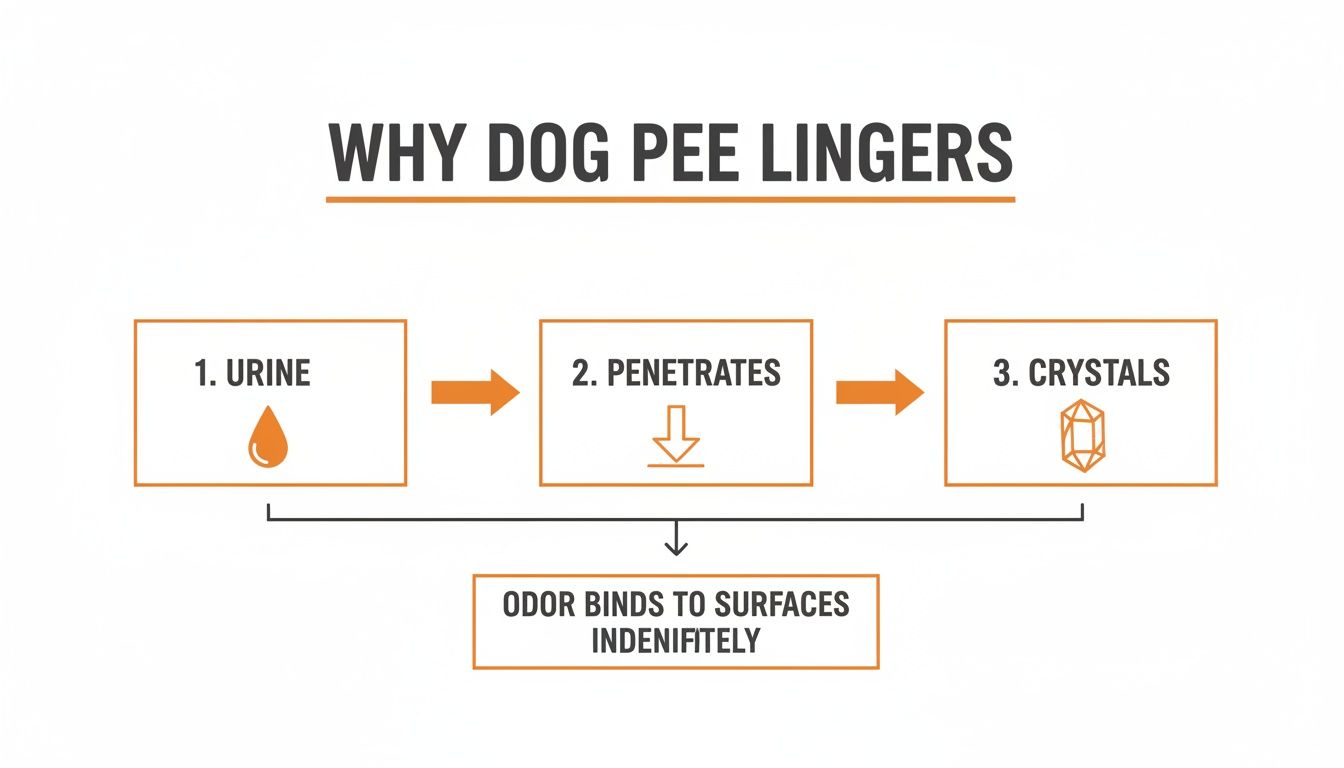
As you can see, the problem travels from the surface fibers straight down to the pad. This is exactly why your quick blotting is the most essential thing you can do.
Pro Tip: Never, ever use hot water or a steam cleaner on a fresh urine stain. The heat can actually bond the proteins in the urine to the carpet fibers. It basically "cooks" the stain right in, making it permanent. Always stick with cool water for your initial cleanup.
For many minor, fresh accidents, a DIY solution can be a lifesaver. But how do these common household remedies stack up against cleaners you'd buy at the store?
Comparing DIY and Store-Bought Spot Cleaners
When you're dealing with a fresh spot, you have options. Here's a quick look at how a simple DIY mix compares to a typical over-the-counter pet stain remover for that initial cleanup.
| Cleaning Agent | Effectiveness on Stain | Odor Neutralization | Risk of Damage/Residue |
|---|---|---|---|
| DIY Vinegar & Water | Good for fresh, light-colored stains. May not lift heavy discoloration. | Decent initial odor reduction. Counteracts ammonia smell. | Low risk. Vinegar is acidic, so test first. Rinses clean. |
| Store-Bought Cleaner (Non-Enzymatic) | Often very effective on visual stains due to detergents and surfactants. | Varies. Some just mask odors with fragrance. | High risk of soapy, sticky residue that attracts dirt later. |
While a simple vinegar solution is great in a pinch, store-bought cleaners can sometimes leave behind a sticky mess that causes spots to reappear down the road. The key is to avoid anything that feels soapy or foamy.
Remember, this vinegar treatment is a fantastic emergency measure for fresh spots, but it has its limits. It doesn't have the enzymes required to break down the uric acid crystals that form in older or more serious stains. If you're dealing with something more stubborn than a simple spot clean, you'll need to move on to a more powerful approach. For those bigger challenges, our detailed guide explains how to get a stubborn stain out of your carpet with more advanced techniques.
Tackling Those Set-In Stains and Lingering Smells
Fresh accidents are one thing, but what about the spots you find long after they’ve happened? Those set-in stains and the stubborn funk that comes with them are a completely different beast. This is where you have to shift your strategy from simple blotting to something a little more scientific to get that dog pee out of your carpet for good.
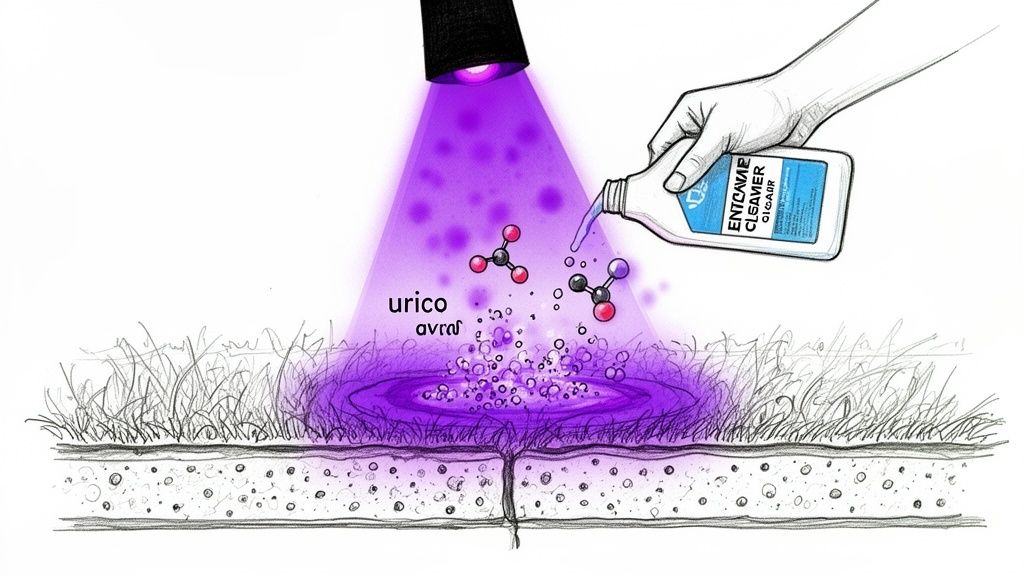
Your real enemy here isn't the visible stain; it's the dried uric acid crystals that have worked their way deep into the carpet fibers and, more importantly, the padding underneath. Your standard household cleaners just won’t cut it. To win this fight, you need a secret weapon: an enzymatic cleaner.
Find the Hidden Mess with a Black Light
Before you can even think about treating an old stain, you need to know exactly how big the problem is. That little spot you see on the surface? It's probably just the tip of the iceberg. As urine soaks down, it spreads out in the carpet pad, creating a much larger source of odor than you'd ever guess.
Grab a UV black light and turn off the lights. In the dark, old urine stains will glow a spooky yellowish-green, showing you every past accident and its true boundaries. You might be shocked to see a palm-sized spot on top is actually the size of a dinner plate underneath. This is a critical step—if you don't treat the entire affected area, that smell is never going away.
Let the Enzymes Do the Dirty Work
Enzymatic cleaners aren't your typical chemical detergents. They're biological powerhouses packed with specific enzymes and good bacteria that are literally designed to break down organic waste. Think of them as a microscopic cleanup crew that "eats" the uric acid crystals, turning them into harmless stuff like carbon dioxide and water.
Crucial Insight: The magic of an enzymatic cleaner isn't about scrubbing. It's about giving the enzymes enough time and moisture to do their job. This "dwell time" is totally non-negotiable if you want results.
When you apply the cleaner, don't be shy. You need to saturate the area enough so the solution can follow the exact same path the urine did, getting all the way down into the pad.
Here’s how to get it right:
- Saturate, Don't Sprinkle: Pour the enzymatic cleaner onto the stain, starting from the outside edge and working your way in. Use enough to feel confident it’s soaking through to the padding.
- Keep it Damp: Place a damp towel over the spot you just treated. This is key because it keeps the area moist, which keeps those little enzymes active and working hard.
- Be Patient: Let it sit for at least 12-24 hours. Seriously, don't rush this part! That's how long it takes for the enzymes to fully break down all those uric acid crystals.
- Blot and Dry: Once the time is up, pull off the towel and use clean, dry cloths to blot up as much of the moisture as you can. Then, just let the spot air dry completely. This might take a couple of days.
While these steps cover the basics, this comprehensive guide on dog urine stains offers even more detailed solutions for different scenarios you might run into.
Don't Make It Worse: Common Mistakes to Avoid
When you're dealing with tough pet odors, what you don't do is just as important as what you do. Using the wrong products or methods can actually lock in the stain and smell forever. For more on what not to do, check out our article on how to get dog pee smell out of your carpet for good.
The absolute biggest mistake people make is grabbing a steam cleaner. The high heat will literally cook the urine proteins, permanently bonding them to your carpet fibers. Once that happens, the stain and smell are there to stay.
For widespread problems or stains that have been there for ages, even the best DIY efforts have their limits. A professional cleaning, especially a citrus-based, low-moisture service, can remove 98% of urine contaminants. Compare that to DIY methods, which often only solve about 30-40% of the problem because they can't reach deep enough. The difference is pretty staggering.
Knowing When to Call a Professional Carpet Cleaner
You’ve blotted, sprayed, and saturated the spot with the best enzymatic cleaners you can find, but that faint, funky odor still creeps back on humid days. Sometimes, no matter how hard you try, DIY methods just can't win the war.
This isn't a failure on your part. It's a clear sign that the problem has moved beyond the surface and deep into the carpet padding, maybe even the subfloor.
When you're dealing with recurring odors or "ghost stains" that magically reappear after cleaning, you've likely hit the limit of what consumer-grade products can do. These are the telltale signs that urine has fully saturated the carpet pad, creating a hidden reservoir of uric acid crystals that your household equipment simply can’t reach. Knowing when to call for backup is the key to finally getting dog pee out of your carpet for good.
Signs You Have a Deeper Problem
Recognizing the limits of your own cleaning efforts can save you a ton of time, frustration, and money in the long run. If you notice any of these issues, it’s a strong signal that you need a professional's touch.
- The Odor Always Returns: You clean the spot, it smells fresh for a few days, but that unmistakable ammonia scent comes right back. This means the source deep in the pad was never truly eliminated.
- Stains Keep Reappearing: A cleaned spot looks perfect, but a faint yellow or brown outline slowly reappears as the carpet dries. This is a classic case of "wicking," where urine residue from the saturated pad is drawn up the carpet fibers like a candle wick.
- Multiple Accidents in One Area: If your pet has repeatedly used the same spot, the saturation level is almost guaranteed to be severe. We see it all the time—the damage often goes right through to the subfloor.
The real challenge isn’t just cleaning the carpet—it’s extracting the deeply embedded urine crystals from the padding. Household rental machines often use way too much water and lack the suction power to pull it all back out. Sometimes, they just make the problem worse by spreading the urine around underneath the surface.
The Professional Advantage for Pet Urine
Professional carpet cleaners bring two game-changers to the table: incredibly powerful equipment and specialized expertise. Unlike a rental machine from the grocery store, a professional-grade, truck-mounted system has immense suction power. It can flush water and cleaning solutions all the way through the carpet and padding and then extract nearly all of it, pulling the dissolved urine crystals out with it.
This is especially true for modern, low-moisture cleaning systems like the citrus-based method we use. This approach avoids soaking your carpets with soaps and shampoos that leave behind a sticky, dirt-attracting residue.
Instead, it uses a highly effective, natural citrus solvent that breaks down grime and urine crystals without oversaturating the pad. This leads to a much faster dry time of just 1-2 hours.
The timing of your decision matters, too. In major U.S. markets, a staggering 85% of cleaning companies report that their busiest times for pet odor removal are in the spring and fall. For Buford pet owners, waiting too long can be costly—re-soiling caused by leftover urine crystals can double the need for professional cleaning within just six months. You can learn more by exploring some carpet cleaning industry statistics.
Calling an expert isn't giving up. It’s escalating your strategy to ensure a truly clean, fresh, and healthy home for you and your pets.
Protecting Your Carpet and Preventing Future Accidents
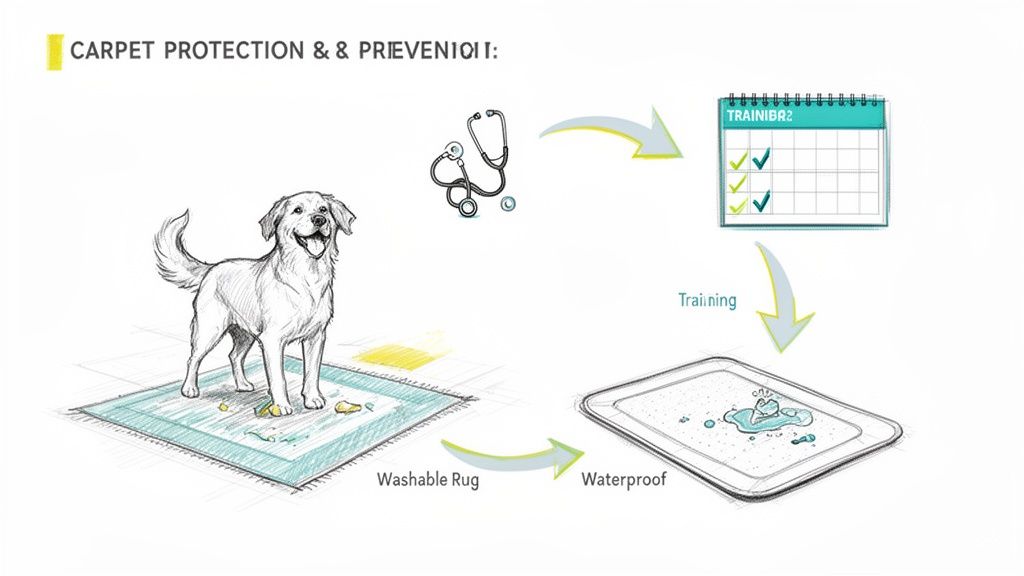
After you've put in all that elbow grease, the real final step is making sure this doesn't happen again. The best defense is a good offense. It's time to shift from cleanup mode to prevention mode, which protects your carpet and makes for a much happier, healthier home.
The first move is to figure out why the accident happened in the first place. Is it a training hiccup, or could something else be going on? Any sudden change in your dog’s potty habits is a red flag. It’s always smart to call your vet to rule out things like a urinary tract infection (UTI) or other medical issues.
Creating an Accident-Proof Environment
Once you've gotten the all-clear from the vet, it's back to basics: training reinforcement and managing your dog's space. A solid, consistent routine is your absolute best friend here. Regular potty breaks—especially right after waking up, after meals, and just before bed—drastically cut down the odds of an indoor accident.
Key Insight: Dogs are creatures of habit. Even a faint, lingering urine odor that you can't smell can act like a giant "pee here" sign for them, encouraging repeat offenses in the exact same spot.
This is exactly why that deep cleaning is so critical for prevention. You have to completely knock out those scent triggers that draw them back to the scene of the crime.
You can also use scents that dogs naturally find unpleasant to create a deterrent. Many dogs just can't stand certain smells, and you can use that to your advantage.
A few scents that often work as a repellent:
- Citrus: That sharp, acidic smell of lemons or oranges is a classic dog repellent.
- Vinegar: A bit of diluted vinegar can make a spot much less appealing for a return visit.
This all ties into a bigger strategy of making your home less vulnerable to accidents in the first place. Pet ownership is more common than ever—data shows about 70% of U.S. households have a pet. This makes dog pee a challenge homeowners everywhere are dealing with.
And if you want to be proactive outside as well as inside, you might even look into pee resistant grass options for your yard to cut down on lawn damage.
Your Top Questions About Dog Urine Removal
When you're on your hands and knees dealing with a dog accident, a lot of questions probably run through your mind. I hear them all the time from my clients. Getting the right answers can mean the difference between a clean carpet and a lingering smell that just won't quit.
Let's tackle the big ones.
Can I Just Use Baking Soda and Vinegar?
Yes, but think of it as first aid, not a permanent fix. For a brand-new puddle, this classic combo is a decent first line of defense. The vinegar's acid helps knock down that initial ammonia smell, and baking soda is a champ at soaking up whatever moisture is left on the surface.
But here’s the catch: it’s just a patch job. That mixture can't touch the uric acid crystals that have already started forming deep in the fibers. Sooner or later, especially on a humid Atlanta day, that smell will be back. It's a fine immediate step, but don't count on it for set-in stains.
Will a Steam Cleaner Get Rid of the Smell?
This is a hard no. In fact, it's one of the absolute worst things you can do.
Please, whatever you do, do not put a steam cleaner or any high heat on a urine spot.
The heat from a steam cleaner will literally cook the proteins in the urine, chemically bonding them to your carpet fibers. It essentially sets the stain and the odor forever. Once that happens, the damage is pretty much irreversible, even for a pro.
Always, always stick to cool water and the right kind of cleaner.
How Do I Know If the Pee Soaked Into the Carpet Pad?
There are a couple of dead giveaways that the problem goes deeper than just the carpet fibers. If you keep smelling that faint ammonia odor, and it gets noticeably stronger on rainy or humid days, that's a classic sign the padding is soaked.
Another big clue is a spot that keeps magically reappearing a day or two after you’ve cleaned it. This is called "wicking." As the carpet dries, urine trapped in the pad gets pulled back up to the surface. If you want to see the true extent of the damage, grab a black light, turn off the lights, and have a look. The glowing spots will show you exactly where the problem is.
How Often Should I Get Carpets Professionally Cleaned If I Have Pets?
For a house with furry family members, I always recommend a professional deep cleaning every 6 to 12 months. Think of it as essential maintenance. A pro cleaning gets rid of the deep-down dirt, dander, and allergens that your vacuum just can't reach.
More importantly, it eliminates those hidden urine crystals that act like a magnet, encouraging your dog to use the same spot again. A professional clean breaks that frustrating re-soiling cycle and keeps your home genuinely fresh and healthy.
When home remedies have failed and the smell just won't go away, it's time to call in an expert. At Citrus Carpet Cleaning Buford, we use a powerful low-moisture, citrus-based system that eliminates pet odors for good. Schedule your "EXACT-imate" today!