
When you’re looking at carpet shampooers vs. steam cleaning, the core difference is simple: shampooing is like scrubbing your carpet’s surface with soap, while steam cleaning uses high-temperature vapor to sanitize deep down. The right choice really comes down to what you’re trying to fix—caked-on mud on the surface, or deep-seated allergens and germs you need gone without leaving a sticky mess behind.
Your Quick Answer To The Carpet Cleaning Debate
Figuring out the best way to clean your carpets feels like a chore in itself, but it gets a lot clearer once you understand what each method is actually doing. Each one has its place, whether you’re doing routine maintenance or a serious deep clean. The secret to a great result is just matching the tool to the job.
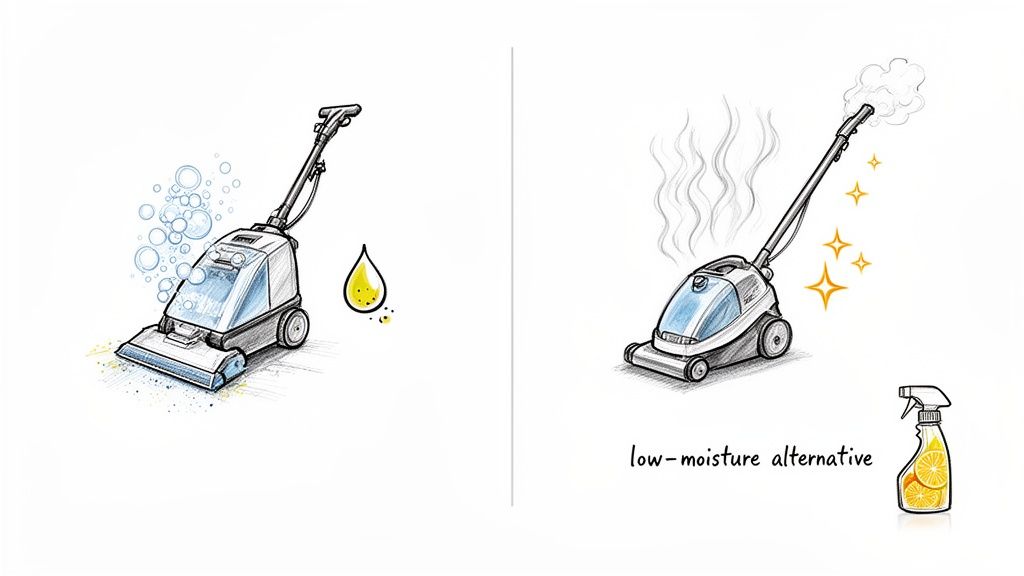
A carpet shampooer works pretty much how it sounds—like washing your hair. It squirts a detergent solution onto the carpet and then uses big, rotating brushes to work it into a thick foam. The idea is to scrub away heavy, visible dirt. Afterward, a vacuum tries to pull all that dirty, soapy water back out. It’s the method most people know from the rental machines at the grocery store and can be effective for really bad surface-level grime.
On the other hand, steam cleaning, which professionals call hot water extraction, is a completely different animal. This process heats water to over 200°F, then shoots the resulting steam deep into the carpet fibers under high pressure. That intense heat and moisture dissolves grime, kills bacteria, and breaks down dirt without needing a ton of harsh chemicals. A powerful vacuum sucks the hot water and all the loosened gunk out at the same time, giving you a legitimate deep clean.
A critical factor people often forget is what gets left behind. Shampooing is notorious for leaving a sticky soap film that actually attracts more dirt, making your carpets get dirty faster. True steam cleaning rinses with pure hot water, leaving fibers clean and residue-free.
There's also a third, more modern option that's getting popular for its sheer efficiency: low-moisture citrus cleaning. This method uses a natural citrus-based solvent that’s amazing at breaking down oils and soils. Specialized absorbent pads then lift the dirt away. It neatly solves the two biggest problems with the other methods—soaking wet carpets and sticky residue—making it a fantastic choice for many homeowners and businesses here in Buford.
To make things even clearer, here’s a quick side-by-side look at your options.
Shampooer Vs Steam Vs Citrus Cleaning: A Quick Comparison
This table breaks down the three main carpet cleaning methods, focusing on the factors that really matter when you're making a decision for your home or business.
| Decision Factor | Carpet Shampooer | Steam Cleaning (Hot Water Extraction) | Low-Moisture Citrus Cleaning |
|---|---|---|---|
| Cleaning Method | Uses soap and agitating brushes | Uses high-pressure hot water vapor | Uses natural solvent and absorbent pads |
| Best For | Heavy surface dirt and mud | Deep cleaning, sanitizing, allergen removal | Oily stains, quick drying, residue-free finish |
| Typical Dry Time | 12-24 hours | 4-8 hours | 1-2 hours |
| Residue Risk | High (sticky soap film) | Low (when done professionally) | None |
| Chemical Use | Detergents and chemical agents | Primarily water; minimal chemicals | Natural, plant-based citrus solvent |
As you can see, the choice isn’t just about getting dirt out. It’s about how long you can wait for your floors to dry and whether you want to risk that dreaded sticky residue that makes spots reappear.
Understanding The Mechanics Of Each Cleaning Method
When you're trying to decide between a carpet shampooer vs steam cleaning, you have to look at how each one actually works. They're not just different machines; they use completely different philosophies to get dirt out of your carpet fibers. Each approach has a real-world impact on how your carpet looks, feels, and how long it lasts.
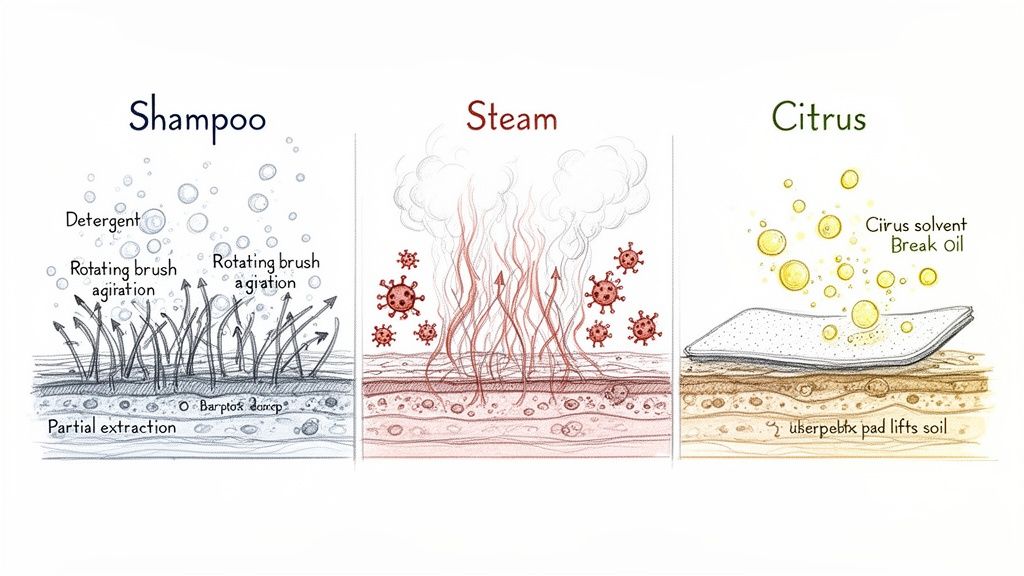
Think of a carpet shampooer like washing your hair—it’s all about soap and scrubbing. This is a mechanical process that uses agitation to get rid of surface-level dirt. The machine squirts out a mix of water and detergent, creating a thick foam, then works it in with spinning nylon brushes.
The whole point of all that scrubbing is to break loose things like dried mud, old food spills, and other obvious gunk. After all that, a vacuum function is supposed to suck up the dirty, soapy mess. But here's the catch: the whole thing lives or dies by the power of that vacuum, and on most machines you can rent or buy, it's just not strong enough.
How Carpet Shampooing Works
If you break it down, the shampooing process has three stages, and each one plays a part in the final result.
- Solution Application: The machine sprays a water-and-detergent mix right onto your carpet, pretty much soaking the fibers.
- Mechanical Agitation: Big rotating brushes start scrubbing that foam deep into the carpet, physically knocking dirt particles loose.
- Extraction Attempt: A vacuum motor then tries to pull all that dirty, soapy water back out and into a tank.
The biggest problem here is that it's nearly impossible to get all the soapy water out. What's left behind dries into a sticky residue that acts like a dirt magnet. This is exactly why carpets seem to get dirty again so fast after being shampooed.
The Science Of Steam Cleaning
Steam cleaning, which professionals call hot water extraction, is a much smarter and more hygienic way to clean. Instead of relying on suds and scrubbing, it uses the sheer power of super-heated water for a deep, sanitizing clean. It’s less about brute force and more about basic science.
Professional gear heats water past 212°F, turning it into high-pressure steam. This vapor is shot deep into the base of the carpet, where it instantly melts grease, breaks down stubborn dirt, and kills bacteria, dust mites, and other allergens on contact. It's using physics, not just friction, to get the job done.
The crucial difference is that steam cleaning sanitizes. The intense heat kills up to 99% of bacteria and germs without needing harsh chemicals, making it a fantastic choice for homes with kids, pets, or anyone with allergies.
Right after the steam is injected, a powerful, commercial-grade vacuum extracts almost all of the moisture, along with all the dissolved dirt and grime. Because it's essentially rinsing your carpet with pure, hot water, there’s no sticky soap residue left to cause problems later. For a deeper dive, check out our guide on steam cleaners versus carpet cleaners.
An Alternative Low-Moisture Approach
There's a modern alternative that sidesteps the problems of both shampooing and steam cleaning: our low-moisture citrus method. This system uses the natural cleaning power of citrus solvents to get incredible results without the downsides.
Here’s how it works:
- We apply a fine mist of our proprietary citrus-based cleaner. This natural solvent gets to work breaking the bond between the dirt and your carpet fibers.
- Next, a specialized machine with absorbent pads gently agitates the fibers, lifting the loosened soil and trapping it in the pads.
This process uses about 90% less water than old-school methods, which means your carpets are dry enough to walk on in just an hour or two. Best of all, it leaves absolutely zero sticky or soapy residue behind. Your carpets don't just get clean—they stay cleaner, longer.
Comparing Performance On Stains, Odors, And Allergens
When you're staring down a frustrating spill or a smell you just can't shake, this is where the carpet shampooer vs steam cleaning debate gets real. Which one actually solves the problem? The answer really depends on the mess you're facing.
A carpet shampooer's main selling point is its aggressive, mechanical scrubbing. Those rotating brushes are decent at dislodging surface-level, water-soluble stuff like mud or a fresh soda spill. For a simple mess you just made, it can do the job.
But that reliance on heavy detergents is a major handicap for oily or greasy stains. Soap-based cleaners just can't break down oils effectively. More often than not, they just smear the greasy residue around. Even worse, the sudsy gunk left behind is notorious for attracting more dirt, trapping you in a never-ending cleaning cycle.
Effectiveness On Common Household Stains
Let's get specific and look at the everyday stains Buford homeowners run into. From that morning coffee drip to tracked-in garage grease, using the right method is everything.
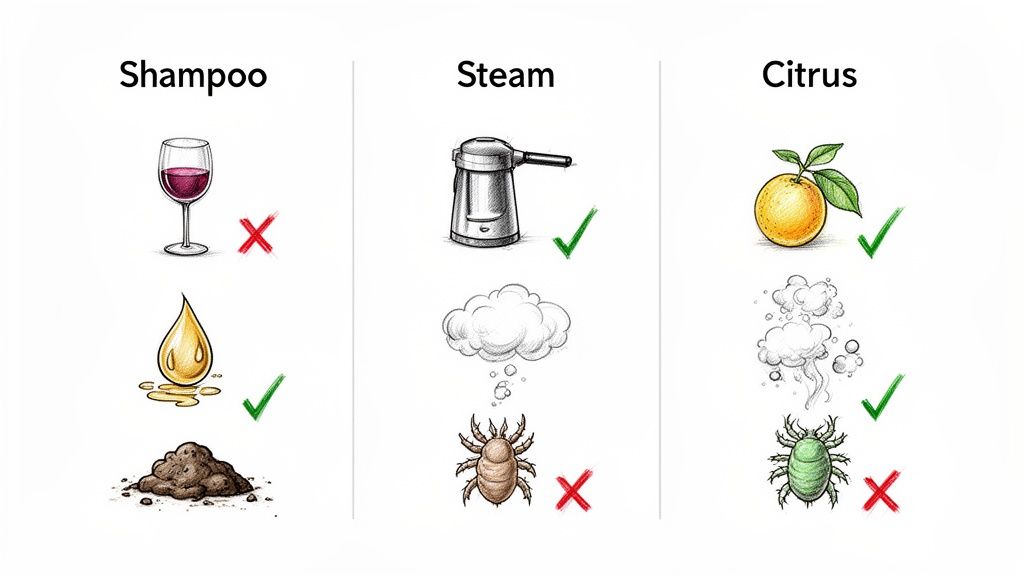
- Wine and Coffee Stains: Steam cleaning definitely has the edge here. The intense heat breaks down the tannins in coffee and wine, making them easy to extract without needing harsh chemicals. A shampooer might get some of the color out, but it often leaves behind a sticky spot.
- Mud and Dirt: This is where a shampooer's powerful brushes can seem effective, and they do perform reasonably well on dirt that's caked on the surface. The problem is they can turn dry dirt into wet mud, pushing it deeper into the carpet pad if the machine's suction isn't strong enough.
- Grease and Oil Stains: Shampooing really falls flat on its face here. Steam cleaning is much better because the heat helps liquefy the grease, allowing the vacuum to pull it from the fibers. A citrus-based solvent, like the one we use in our low-moisture method, is even better—it's a natural degreaser that flat-out dissolves these tough spots.
Key Insight: Here’s the bottom line: shampooing uses soap to scrub, while steam cleaning uses thermal energy to dissolve. If you want a deep, hygienic clean that actually removes contaminants instead of just masking them, heat and proper extraction will win every time.
Tackling Stubborn Odors At The Source
Those lingering smells from pets, food spills, or just general mustiness? They're caused by bacteria feasting on organic gunk trapped deep in your carpet. A shampooer often makes this problem worse. Its perfumed detergents might cover the smell for a day or two, but all that leftover moisture creates a perfect breeding ground for more bacteria. Before you know it, the odors are back with a vengeance.
Steam cleaning offers a real solution. The water is heated to over 212°F—hot enough to kill most odor-causing bacteria, mold spores, and other nasty microorganisms on contact. It gets to the root of the problem instead of just spraying perfume on it.
One thing to note with deep-set pet odors, especially urine, is that the initial heat from steam can sometimes make the smell more intense before it removes it. That's when you need a specialized approach. To see how the pros handle this, it helps to understand what an enzymatic cleaner is and how it specifically breaks down the proteins in pet waste.
Winning The Battle Against Allergens
For families in Buford dealing with allergies or asthma, cleaning carpets is a health issue, not just a cosmetic one. And in this arena, steam cleaning is the clear winner.
Carpet fibers are notorious for trapping allergens like:
- Dust mites
- Pet dander
- Pollen
- Mold spores
A carpet shampooer's brushes can actually kick these particles up into the air, which can make allergy symptoms worse both during and after the cleaning. It just doesn't have the sanitizing power to get rid of microscopic threats.
On the other hand, high-temperature steam goes deep into the carpet pile, killing dust mites and neutralizing the proteins in pet dander that set off allergic reactions. This sanitizing effect brings real relief to allergy sufferers and makes your home's air healthier. People are catching on; the global steam cleaner market is projected to hit $4.82 billion by 2030, growing faster than traditional shampooer segments. Why? Because it cleans without leaving behind the 20-30% of detergent residue that traps future allergens. You can see more data on these trends from Mordor Intelligence.
The Aftermath: Residue, Re-Soiling, And That Never-Ending Damp Feeling
What happens after the cleaning machine is put away is often more important than how the carpet looks on day one. When you're weighing a carpet shampooer against professional steam cleaning, the two biggest deal-breakers are the sticky residue left behind and the ridiculously long dry times.
The number one complaint I hear about rental shampooers isn't just that they do a mediocre job. It's how the carpet looks a few weeks later. These machines soak your carpets with heavy detergents that, even with the best of intentions, are nearly impossible to fully rinse out. What's left is a tacky, soapy film that acts like a dirt magnet.
You’ve probably seen it yourself. You spend a Saturday wrestling with a shampooer, and the high-traffic areas look great… for a little while. Before you know it, those same spots look darker and filthier than they did before you started. That's re-soiling in action, and it's a direct result of that leftover soap.
The Frustrating Cycle of Soap Residue
Think about what happens if you spill a little soda on a clean countertop and just give it a quick wipe with a dry towel. The surface stays sticky. Over the next day, every speck of dust floating by will stick to that spot, creating a new dark patch. That’s exactly what’s happening deep in your carpet fibers after using a typical shampooer.
A truly clean carpet should feel soft and fresh, not stiff and crunchy. If your carpet has a tacky texture after it dries, that's a dead giveaway that soap residue is lurking in the fibers, just waiting to attract new dirt.
This residue problem is why so many homeowners feel like they're trapped in an endless cycle of cleaning. For a deeper dive into what it takes to get a genuine clean, check out our guide on residue-free carpet cleaning. It's a huge issue in the $1.13 billion global market. While shampooers are still common, consumers are wising up and looking for methods that deliver better long-term results. Cleaning pros will tell you that this leftover soap can make carpets re-soil up to 40% faster—a major flaw that’s pushing people toward residue-free alternatives.
How Long Until I Can Use My Living Room Again?
The other major factor that sets these methods apart is how long your floors are out of commission. Dry time isn't just about convenience; it’s a critical part of a healthy, effective cleaning process.
- Carpet Shampooers (12-24 hours): These machines absolutely drench carpets with soapy water. The result is a saturated floor that can take a full day—or even longer—to dry. In the meantime, you have to avoid walking on it completely.
- Steam Cleaning (4-8 hours): A professional steam cleaning service uses far less water and relies on powerful, truck-mounted vacuums to pull almost all of the moisture right back out. This makes a huge difference, cutting dry time down to just a few hours.
- Low-Moisture Methods (1-2 hours): This is where modern systems really shine. Our own citrus-based cleaning uses about 90% less water than traditional methods. Your carpets are clean, fresh, and completely dry in just an hour or two.
Letting a carpet stay wet for too long is a recipe for disaster. If you're stuck in that situation, there are ways to quickly dry wet carpet, but it's best to avoid the problem in the first place. When moisture gets trapped in the carpet and pad for more than a day, it creates the perfect breeding ground for mold and mildew. That's a serious health risk you don't want in your home, especially in a humid climate like ours here in Buford, GA. Fast dry times aren't just a luxury; they're essential for a safe, proper clean.
How To Choose The Right Cleaning Solution
Trying to decide between a carpet shampooer and steam cleaning can feel like a chore in itself. But here's the thing: it's not about which one is "better" overall. It’s about matching the tool to the job right here in Buford, GA. A little spill from dinner might not need the big guns, but for a deep, healthy clean that actually lasts, professional methods win every time.
Making the right call means looking past the immediate spot and thinking about the long game—your family's health, how quickly you can use the room again, and the life of your carpet.
Guidance for Buford Homeowners and Pet Owners
For most families in Buford, the goal is pretty simple: a clean, healthy home. But when you have kids or pets, your definition of "clean" gets a lot more serious. It's less about surface dirt and more about getting rid of germs, allergens, and those stubborn pet odors.
- If You Have Allergies: Steam cleaning is the clear winner. The high heat zaps dust mites and neutralizes the allergens buried deep in your carpet fibers. A shampooer just can't compete with that.
- If You Have Pets: A shampooer might seem fine for a few muddy paw prints, but it's often no match for pet urine and dander. Steam cleaning sanitizes and helps kill the bacteria that cause odors. For the absolute toughest pet smells, our low-moisture citrus method is a game-changer. It powerfully deodorizes without soaking the carpet pad, which is where those smells love to hide.
Key Takeaway for Homeowners: If you want a truly hygienic clean that protects your family's health, professional steam cleaning or a low-moisture method is a smart investment. Save the DIY shampooer for small, non-greasy surface spills.
The market for carpet cleaners is getting bigger every year, expected to jump from $655.64 million in 2021 to $824 million by 2025. A big driver of this growth is commercial users—like healthcare facilities and daycares right here in Buford—who need fast, sanitary results. This is where shampooers fall short. They rely on soaps that, if not rinsed perfectly, leave a sticky residue that attracts more dirt. Steam cleaning, on the other hand, uses 212°F heat to kill 99% of bacteria and dries in hours. An even better option for homeowners is our low-moisture citrus cleaning; it leaves zero residue and carpets are dry in just 1-2 hours. You can read more about these market trends over at Cognitive Market Research.
Solutions for Property Managers and Businesses
For our commercial clients in Buford—from property managers flipping apartments to office managers keeping things tidy—the decision always comes down to efficiency, appearance, and the bottom line. Time is money, and a wet, dirty carpet can halt business or delay a move-in.
Honestly, a DIY shampooer just isn't a serious option for a commercial space. It doesn't have the muscle for high-traffic areas, and the long dry times are a deal-breaker.
- Property Managers: When you're turning over a unit, you need it done fast and done right. You need a method that erases the last tenant's messes without leaving behind a sticky film that the next tenant will complain about. The 1-2 hour dry time of a low-moisture citrus clean is perfect. You can show the apartment almost immediately after we're done.
- Offices and Retail: High-traffic carpets need a deep clean that doesn't disrupt your workflow. A low-moisture method is ideal because we can work after hours, and the floors will be completely dry and ready for business the next morning.
- Daycares and Healthcare: In places where health is everything, sanitization isn't optional. Professional steam cleaning is a fantastic choice here because its high heat kills germs and bacteria effectively. It provides peace of mind that you're maintaining a safe environment for kids and patients.
This simple flowchart helps break down the choice based on what your carpet looks like and how much time you have.
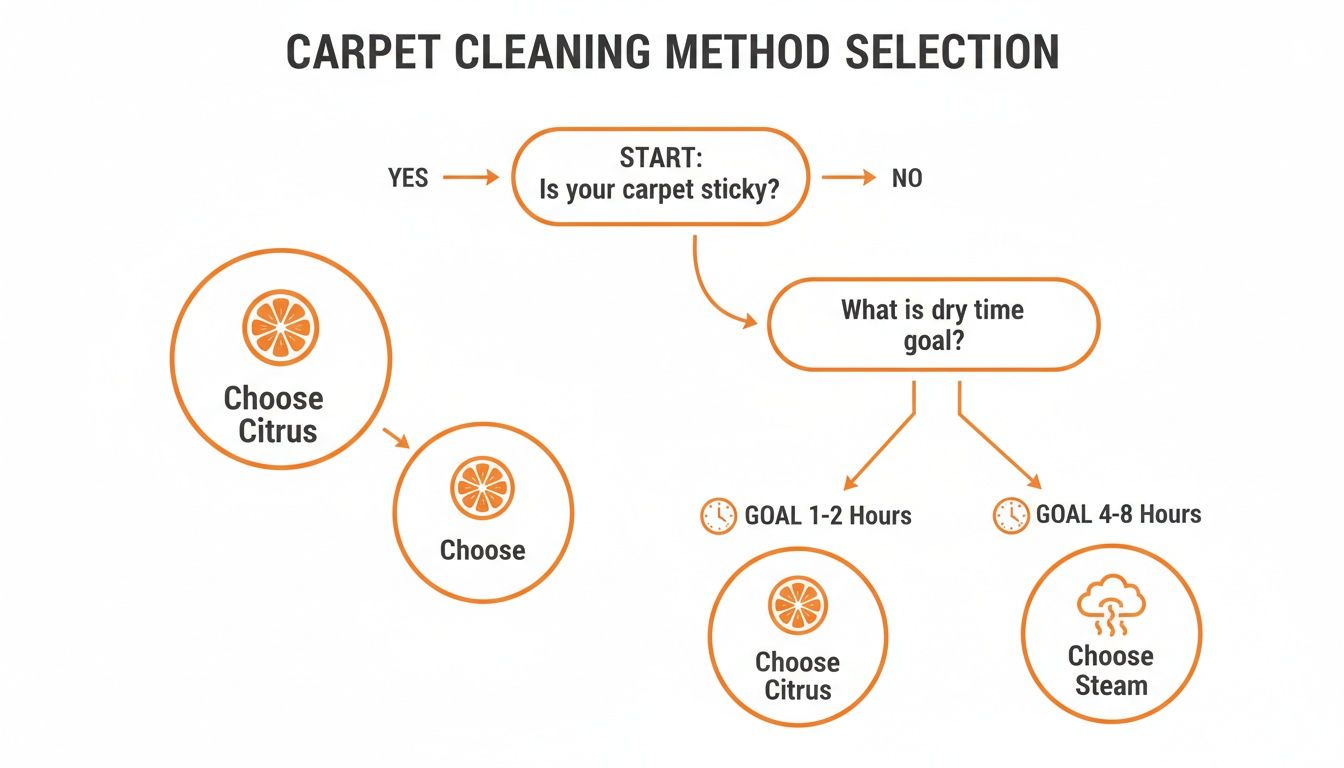
The takeaway here is pretty clear: when you need your carpets dry fast and you don't want any sticky soap left behind, a professional low-moisture method is the only way to go.
A Few Lingering Questions?
Even after laying it all out, you might still have a few things you're wondering about. Let's tackle the most common questions we get from homeowners here in Buford. My goal is to give you direct, no-nonsense answers so you can feel totally confident in your decision.
Is Steam Cleaning Going To Ruin My Carpets?
That's a fair question. The short answer is: it depends on the carpet.
"Steam cleaning," which is really hot water extraction, is perfectly safe for the vast majority of synthetic carpets out there—think nylon, polyester, and olefin. Those materials are tough and built to handle the heat and water that comes with a deep, sanitizing clean.
But when you get into natural fibers, you have to be careful. Wool and silk carpets are a different animal entirely. They're much more delicate and can react badly to high heat and too much water. You run a serious risk of shrinkage, colors bleeding, or permanently damaging the fibers if the job isn't done just right.
Our Pro Tip: Always, always check what your carpet's manufacturer recommends for cleaning. For a prized wool area rug or a silk heirloom, a professional low-moisture cleaning method is almost always the smarter—and just as effective—call.
Can I Really Get a Pro-Level Clean with a Rental Shampooer?
Look, renting a carpet shampooer for a weekend project seems like a great way to save a few bucks. And honestly, it can pull up some surface-level dirt and make a room look a little fresher for a bit.
But let's be realistic about what those machines can—and can't—do. The biggest difference is power. Those rental units just don't have the commercial-grade vacuum suction to pull out all the soapy water they dump into your carpet. This creates two huge problems:
- Soaked Carpets: All that leftover water can leave your carpet damp for 24 hours or more. That’s a perfect breeding ground for mold and mildew.
- Sticky Soap Residue: The detergent that doesn't get extracted dries into a sticky film. It's like a magnet for new dirt, which is why you see spots reappear so quickly after a DIY job.
If you want a true deep clean that yanks out the embedded dirt, allergens, and grime without leaving that sticky mess behind, you just can't beat the power and precision of professional equipment.
So, How Often Should I Actually Get My Carpets Professionally Cleaned?
This is a great question, because there's no single right answer—it really comes down to your home and your lifestyle. As a general rule of thumb, most carpet manufacturers will tell you to get a professional cleaning every 12 to 18 months. Sticking to this schedule is also usually a requirement to keep your carpet's warranty valid.
But that's just a baseline. Your home might need more frequent attention.
- Homes with pets or kids: You should be thinking about a cleaning every 6 to 9 months. It's the best way to stay on top of pet dander, odors, and the spills that are bound to happen, keeping your home healthier.
- Households with allergy sufferers: A cleaning every 6 months can make a huge difference by pulling out the dust mites, pollen, and other junk trapped deep in the fibers that make you miserable.
- High-traffic businesses: If you're running an office or retail shop in Buford, you should probably be on a quarterly cleaning schedule. It keeps the place looking sharp and protects your flooring investment.
Regular cleaning isn't just about looks. It's about protecting your investment and making the air inside your home cleaner.
Does "Steam Cleaning" Actually Involve Steam?
It's funny, the term "steam cleaning" is what everyone uses, but it's not quite accurate. The method professionals use is technically called hot water extraction.
Here’s the breakdown: the machine heats water to a blistering 200-212°F. You'll see some steam coming off it because it's so hot, but the real work is being done by the pressurized hot water.
This superheated water is shot deep into your carpet fibers, where the intense heat melts away grease, oil, and ground-in dirt. Then, a ridiculously powerful vacuum sucks out the hot water and all the gunk it just loosened. So, while it's not pure steam, that intense heat is the secret sauce that makes hot water extraction so powerful for deep cleaning and sanitizing. It’s a key difference in the carpet shampooer vs steam cleaning debate, since those rental machines are using lukewarm water at best.
Ready for a carpet cleaning that doesn't leave behind a sticky, soapy mess and actually dries in just 1-2 hours? The team at Citrus Carpet Cleaning Buford uses a proprietary low-moisture citrus solution for a deeper clean that lasts longer. Get your free, no-obligation EXACT-imate today!