
To get rid of a wet carpet smell, you have to attack it on two fronts: first, absorb every last drop of excess moisture, and second, speed up the drying process with fans and a dehumidifier. This isn't something you can put off until tomorrow. That sour, musty odor is a huge red flag for bacteria and mold, which can take hold in just 24-48 hours. If you wait, the smell will only get worse.
What to Do When Your Carpet Smells Damp
That distinct, nasty scent coming from a damp carpet is more than just annoying—it's an alarm bell. It’s telling you that a microbial party has started deep within your carpet fibers and, more importantly, in the padding underneath. For homeowners, especially here in humid areas like Buford, realizing how urgent this is is the first step toward fixing the problem for good.
The real issue isn't the water itself, but the perfect little ecosystem it creates. Dark, damp carpet fibers are an ideal breeding ground for mold and mildew. This is exactly why a simple spill or a minor leak can explode into a persistent, house-wide odor that feels impossible to beat.
Your Immediate Action Plan
Time is not on your side. The second you notice a damp spot or catch a whiff of that musty smell, your mission is simple: get the water out and get dry air in. Don't make the mistake of thinking it will dry on its own—it won't, at least not before that awful smell becomes a permanent resident.
Before you do anything else, you need a quick game plan. The first hour is the most critical for preventing long-term odor and damage.
Immediate Action Plan for Wet Carpets
| Action Step | Why It's Critical | Pro Tip |
|---|---|---|
| Blot, Don't Rub | Rubbing can fray carpet fibers and push water deeper into the padding. Blotting with heavy pressure pulls moisture up and out. | Use thick, white towels to avoid any color transfer. Stand on the towels to use your body weight for maximum absorption. |
| Create Airflow | Stagnant, moist air is mold's best friend. Cross-ventilation and direct fans evaporate surface moisture quickly. | Point one fan directly at the wet spot and another facing out an open window to push the damp air outside. |
| Bring in a Dehumidifier | This is your secret weapon. It pulls moisture from the carpet, the air, and even the subfloor, tackling the problem at its source. | Close the doors and windows in the room where the dehumidifier is running to maximize its efficiency. Empty the collection tank frequently. |
These initial steps are your first line of defense, but remember, they often only solve part of the problem.
The Hidden Danger in the Padding
While you're busy drying the surface, the real trouble is brewing in the carpet padding. Think of it as a giant sponge. Once it's saturated, getting it completely dry is incredibly difficult with household tools. This trapped moisture is the primary fuel source for that lingering mildew and stubborn "wet dog" smell that just won't go away. Our guide on how to get mildew out of carpet dives deeper into this very challenge.
You're not alone in this fight. Studies show that water damage impacts over 14 million U.S. homes each year, and you can bet carpet odors are a top complaint. This is precisely why a professional, low-moisture cleaning is often the only guaranteed way to kill the smell for good. It's designed to address both the carpet fibers and the problematic padding underneath without adding more water to the situation.
Finding the Source of the Carpet Odor
Before you can even think about getting rid of that wet carpet smell, you have to play detective. Just cleaning the spot you can see without nailing down the root cause is like putting a tiny band-aid on a gaping wound—it's a temporary fix, and that smell will be back. Your real target is the source of the moisture.
That musty odor isn't just a sign of dampness; it's a symptom. You've got to figure out if you're dealing with a one-time spill or something more sinister, like a hidden leak. Each problem requires a completely different battle plan to kill the smell for good.
Common Culprits Behind the Smell
Finding where the water is coming from usually takes a bit of snooping. Start with the obvious places, but be ready to dig deeper if the answer isn't staring you in the face.
- Appliance Failures: I've seen it a hundred times. Washing machines, dishwashers, and fridges with ice makers are notorious for slow, hidden leaks that soak the carpet and padding over weeks or even months.
- Plumbing Issues: A leaky pipe under a sink, inside a wall, or in the crawl space can be a silent but deadly source of moisture. Look for any discoloration on walls or ceilings near the soggy carpet.
- Foundation Cracks: In basements and ground-floor rooms, water can seep right through tiny cracks in the foundation, especially after a good, hard rain.
- High Humidity: Sometimes, it's not a leak at all. If your home has consistently high humidity, that moisture can settle deep into the carpet fibers, creating the perfect breeding ground for mildew.
It's so important to check for underlying problems. There can be very subtle signs of a hidden leak that are easy to miss. Fixing the source is the only way to guarantee that awful smell doesn't make a comeback.
A distinct, earthy smell almost always points to mildew from a slow, continuous moisture source. In contrast, a sharp, ammonia-like odor is the tell-tale sign of a pet accident that has soaked deep into the carpet padding.
Distinguishing Between Odor Types
The smell itself can give you some serious clues. Mildew and mold have that classic musty, earthy scent, like a damp basement. It’s a smell that builds over time and screams "long-term moisture problem."
On the other hand, pet urine leaves behind a sharp, pungent odor that gets way worse when it's humid. That’s because the uric acid crystals in the urine reactivate with moisture, releasing that nasty smell all over again.
Once you find a wet spot, you need to act fast. These first few steps are your best defense against the immediate damage.
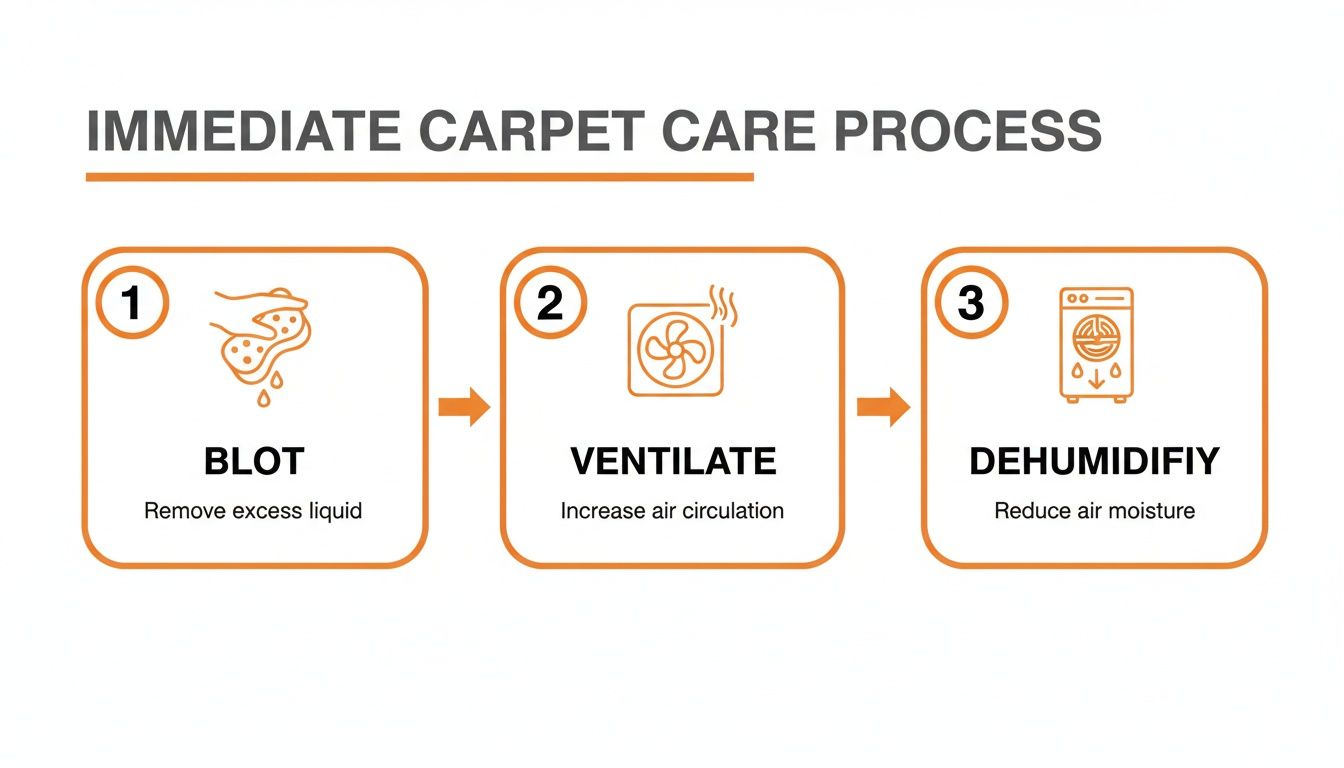
This simple three-step process—blotting, ventilating, and dehumidifying—is your first line of attack to stop odor-causing bacteria from taking hold. By figuring out the source and moving quickly, you're setting yourself up for success.
Evaluating Common DIY Cleaning Methods
When that first hint of musty carpet hits your nose, it’s completely natural to raid the pantry for a quick fix. We’ve all been there. Household staples like baking soda and white vinegar are popular for a reason—they can be surprisingly effective for minor, surface-level odors and are always on hand.
But understanding how they work is the key to knowing their limits.
Think of these DIY methods as your first line of defense, not a guaranteed cure-all. They work best on small, fresh spills or as a temporary measure while you figure out a bigger plan.
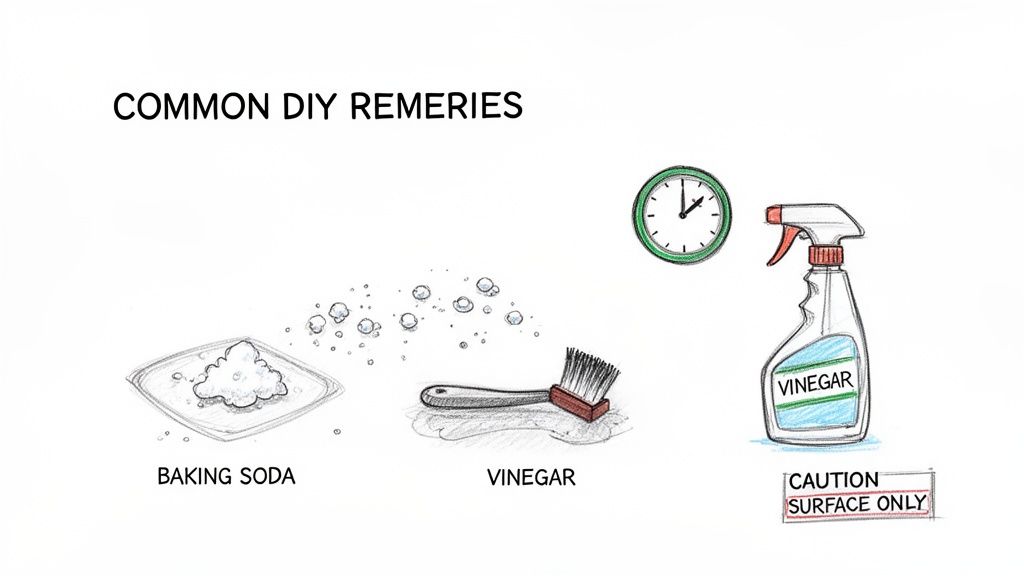
The Baking Soda Method
Baking soda is a fantastic odor absorber. It's just a weak base (sodium bicarbonate) that neutralizes the acidic molecules behind many bad smells. It’s simple chemistry in action.
For this to have any chance of working, the carpet must be completely dry on the surface first. Sprinkle a generous layer of baking soda over the smelly patch. You can work it into the fibers a bit with a soft brush, but don't be too aggressive.
Now, you have to be patient. Let it sit for at least a few hours—overnight is even better. This gives it time to pull in both the lingering moisture and those odor molecules. When you’re ready, vacuum it all up thoroughly. Pro tip: use a fresh vacuum bag or an empty canister to make sure you're actually removing everything.
The Vinegar Solution
White vinegar is another hero from the pantry, but it works very differently. Its power comes from acetic acid, which can kill some types of bacteria and mold on contact. A simple spray can help you get a handle on a wet carpet smell before it really takes hold.
- Create the Mix: Grab a spray bottle and mix equal parts white vinegar and cool water. Whatever you do, don't use hot water, as that can permanently set some stains.
- Apply Lightly: Gently mist the smelly area. The goal here is to dampen the carpet fibers, not soak the padding underneath. Over-saturating the carpet just adds fuel to the fire.
- Let It Dry: Allow the area to air-dry completely. Pointing a fan at the spot will speed things up. Yes, it will smell like vinegar for a bit, but that smell will fade as it dries, and hopefully, it takes the musty odor with it.
Crucial Takeaway: The single biggest mistake people make with DIY cleaning is using too much liquid. A soaked carpet pad is the real engine behind persistent mildew smells. Dumping more water or vinegar on it only feeds the problem.
The Unspoken Limits of DIY Fixes
Here’s the honest truth from someone who sees this every day: baking soda and vinegar can only treat what they can touch. These solutions are great for the surface-level carpet fibers, but that "wet carpet" smell almost never starts there.
The real problem is almost always lurking deeper, in the thick, sponge-like padding and sometimes even the subfloor beneath.
DIY methods simply can’t penetrate deep enough to neutralize the mold and bacteria colonies thriving down in the padding. Plus, if you’re dealing with something organic like pet urine, you need a completely different kind of weapon. To get a real handle on those, you need to understand what an enzymatic cleaner is and why it's a necessary next step for breaking down those stubborn compounds.
At the end of the day, household remedies often leave behind a powdery or sticky residue that can attract more dirt over time. They're a decent starting point, but they just can't replace the deep extraction and targeted treatments needed for a smell that has truly set in.
Advanced Solutions for Stubborn Smells
So, you’ve tried the baking soda and vinegar trick, and that musty smell is still hanging around. That’s a tell-tale sign the problem isn’t just on the surface. When that damp, stubborn odor lingers, it means moisture has soaked deep into the carpet padding, creating a perfect breeding ground for bacteria and mold. It’s time to move beyond the kitchen remedies.
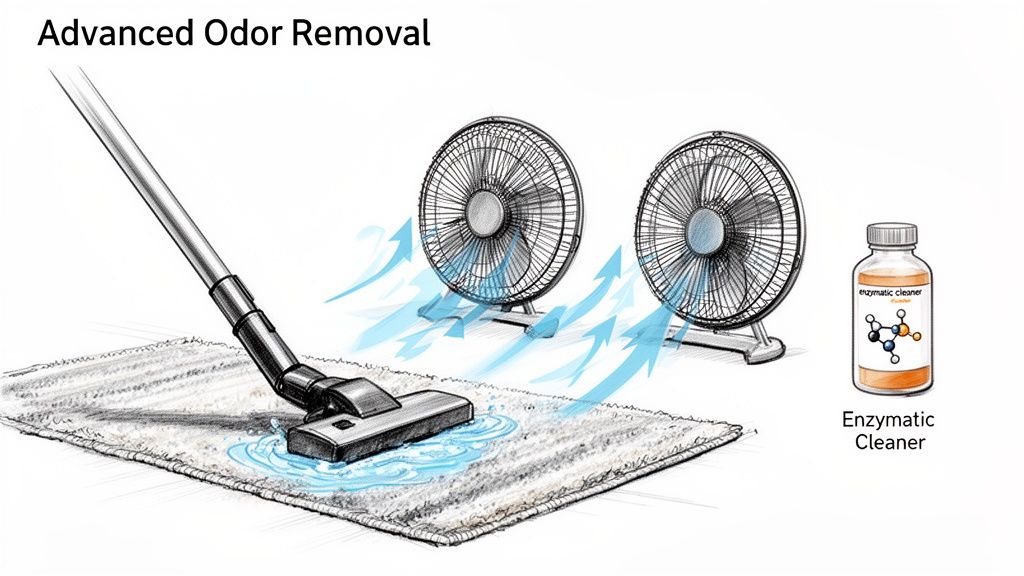
Think of this as the next level of DIY—the bridge between a simple cleanup and calling in a pro. These methods take a bit more elbow grease and the right tools, but they can be game-changers for those smells that just refuse to leave.
Harnessing the Power of Enzymatic Cleaners
If the smell is coming from something organic—we're talking pet accidents, spilled milk, or anything else that was once living—an enzymatic cleaner is your secret weapon. These aren't just fancy soaps. They're powerful formulas packed with beneficial bacteria that produce specialized enzymes.
Essentially, these enzymes act like tiny odor-destroying machines. They hunt down and literally "eat" the organic gunk causing the smell, breaking it all down into harmless, odorless stuff like carbon dioxide and water.
- Find the Right Stuff: Look for a cleaner specifically made for pet stains or organic spills. The label is your friend here.
- Follow the Directions: This is critical. You need to apply enough of the cleaner to follow the exact path the original spill took, soaking all the way down into the padding.
- Be Patient: The enzymes need time to work their magic. This isn't an instant spray-and-wipe fix. Most products need to sit for several hours to completely break down the source of the odor.
Maximizing Moisture Extraction with a Wet-Dry Vac
Your regular household vacuum is not built for this job. For a serious water problem, you need a wet-dry vacuum (often called a shop vac). After you've treated the area with your enzymatic cleaner, a wet-dry vac is the single most effective tool for pulling that dirty, smelly liquid out of your carpet and padding.
Make slow, deliberate passes over the wet area. You want to give the machine’s powerful suction time to lift as much moisture as possible. This step alone can slash your drying time and stop mildew from making a comeback.
Remember, the goal is always to get the carpet and padding as dry as possible, as fast as possible. Any moisture left behind is a potential food source for odor-causing bacteria.
It's also important to know when you're fighting a losing battle. Industry data shows that DIY odor removal attempts often fall short. In fact, for tough issues like pet urine, home remedies only succeed about 30% of the time. In contrast, professionals using advanced techniques can successfully eliminate lingering odors in about 70% of cases. You can dig into the data on why professional methods often beat home remedies through various industry research insights.
By pairing a targeted enzymatic treatment with heavy-duty water extraction, you give yourself a real fighting chance to finally knock out that stubborn wet carpet smell for good.
Why a Professional Cleaning Makes the Difference
So you’ve tried everything. You’ve blotted with towels, sprayed every cleaner you own, and vacuumed until your arm ached, but that stubborn, musty odor just keeps coming back.
Sometimes, the smartest move is knowing when you’ve hit the limits of a DIY fix. That’s when it’s time to call for professional backup.
Knowing When to Call for Backup
A persistent smell that sneaks back a few days after you clean is a huge red flag. It’s a sure sign the problem isn't just on the surface—it's lurking deep down in the carpet padding or even the subfloor.
It's crucial to know when you're out of your depth. Continuing with ineffective methods, especially those that add more moisture, can actually make the problem much worse.
Here are the dead giveaways that you need a pro:
- The Smell Keeps Returning: If the odor vanishes for a day or two only to creep back, it means the source in the padding was never truly eliminated.
- The Wet Area is Large: Any spot bigger than a couple of square feet is nearly impossible to dry completely without specialized equipment. That trapped moisture is a ticking time bomb for mildew.
- You See Visible Mold: If you spot any black, green, or discolored fuzzy patches, stop what you're doing. Do not try to clean it yourself. Disturbing mold can release harmful spores into your home's air.
- It's From a Major Leak: Water from a burst pipe, a broken appliance, or a flood is a different beast entirely. It contains contaminants and soaks deep into your home's structure, far beyond what any surface cleaning can reach.
When DIY methods fall short and the wet carpet smell persists, it's often a sign of deeper, more extensive water damage that requires professional expertise. For severe cases, especially those involving extensive water, understanding effective flood damage cleanup procedures and navigating associated insurance claims can be crucial.
The Citrus Carpet Cleaning Buford Advantage
This is where our whole approach really shines. Traditional steam cleaning might seem like a good idea, but it often blasts hot water deep into your carpet, saturating the padding and creating the perfect humid environment for the very mold you're trying to get rid of.
We do the exact opposite.
Our signature low-moisture, citrus-based cleaning method was designed to solve this very problem. We use a powerful, natural citrus solvent that breaks down grime and destroys odors without relying on gallons of water or soapy shampoos that leave behind a sticky, dirt-attracting residue.
The real game-changer is our dry time of just 1-2 hours. This rapid drying is your best defense against mold and mildew, which need moisture and time to grow. By getting the moisture out almost as fast as we put our cleaning solution in, we stop odor-causing bacteria dead in their tracks. We're not just masking the smell—we're eliminating its fuel source.
Lots of homeowners wonder if the investment is worth it, and our guide on whether professional carpet cleaning is worth it breaks down the long-term value and benefits.
When dealing with wet carpet odors, you can see how different approaches stack up.
DIY vs. Citrus Carpet Cleaning Buford
| Feature | DIY Methods | Citrus Carpet Cleaning Buford |
|---|---|---|
| Moisture Level | High (over-wetting is common) | Ultra-Low Moisture |
| Drying Time | 24-48 hours or more | 1-2 Hours |
| Odor Removal | Often just masks smells | Eliminates odors at the source |
| Residue | Soapy, sticky residue is likely | No sticky or soapy residue |
| Mold Risk | High due to long dry times | Extremely Low |
| Equipment | Household vacuums, fans | Professional-grade extraction tools |
Ultimately, while DIY methods can handle a minor spill, they simply can't compete with a professional process designed to tackle deep-seated moisture and odor.
At Citrus Carpet Cleaning Buford, we also believe in total transparency. That’s why we give you an upfront "EXACT-imate," not a vague estimate with hidden fees. The price we quote is the price you pay. Period.
And with our "FOREVER Pricing," you can trust that you’ll get the same fair price every single time you use our services. For Buford residents who are tired of that lingering damp smell, our process offers a faster, safer, and much more effective way to get your home smelling fresh and truly clean.
Your Wet Carpet Smell Questions, Answered
When you're dealing with a damp carpet, a million questions can run through your head. You need straight answers, not guesswork. I've heard them all over the years, so let's tackle the big ones homeowners ask when that dreaded musty smell shows up.
How Quickly Does a Wet Carpet Start to Smell?
It happens faster than you'd think. A simple spill can turn into a full-blown odor problem in as little as 24 to 48 hours.
Down here in Georgia, with our heat and humidity, that timeline can shrink even more. The amount of water and how much air is moving around are huge factors. This is exactly why jumping on it immediately isn't just a good idea—it's the only way to stop that sour, mildewy smell from getting a grip on your home.
Is the Smell from a Damp Carpet Harmful?
Absolutely. That musty odor is more than just annoying; it’s a red flag for your home's health. The smell you're noticing is literally the off-gassing from mold, mildew, and bacteria having a feast on your damp carpet fibers and padding.
As these little critters grow, they pump microscopic spores into your air. For anyone with sensitivities, especially kids and the elderly, breathing this stuff in can trigger allergies, asthma flare-ups, and other respiratory problems. A stinky carpet isn't just a cleaning problem—it's an air quality crisis.
Can a Rental Carpet Shampooer Fix the Smell?
I know it's tempting to run out and grab one, but I see the aftermath all the time. Using a standard rental shampooer usually makes the wet carpet smell much, much worse.
Here’s the deal with those machines:
- They drown the carpet: Rental units dump a ton of water into the fibers but lack the professional-grade vacuum power to suck it all back out.
- They soak the pad: All that leftover water sinks straight down into the carpet pad, basically creating the perfect swampy breeding ground for more mold and mildew.
You end up feeding the very problem you’re trying to solve, locking in even more moisture and intensifying the smell.
Will Replacing the Carpet Padding Get Rid of the Odor?
If you've had a serious leak or the carpet has been wet for a while, replacing the pad is often a must. That thing is a giant sponge, and once it's saturated and contaminated, it's nearly impossible to salvage.
But—and this is a big but—just swapping out the pad isn't a silver bullet. Odor-causing bacteria and mold spores are stubborn. They can linger in the carpet's backing and even work their way into the wooden subfloor. The only way to know for sure if a new pad is enough is to have a professional take a look. We can tell you if the carpet and subfloor also need a deep, thorough cleaning to kill the odor at its source for good.
When you've tried it all and that wet carpet smell just won't quit, it's a clear sign the problem is deeper than DIY can handle. Citrus Carpet Cleaning Buford uses a specialized low-moisture process that cleans deep and dries in just 1-2 hours, stopping mold and mildew right in their tracks. Schedule your EXACT-imate today!