
To really clean a dirty carpet, you need more than just a quick pass with the vacuum. It's a multi-step attack: first, get rid of all the dry, loose dirt. Then, you have to tackle the specific stains one by one. Only after that can you do a deep clean on the whole surface to bring it back to life. This way, you're actually pulling the grime out of the carpet fibers instead of just smearing it around.
Your Guide to Reviving a Dirty Carpet
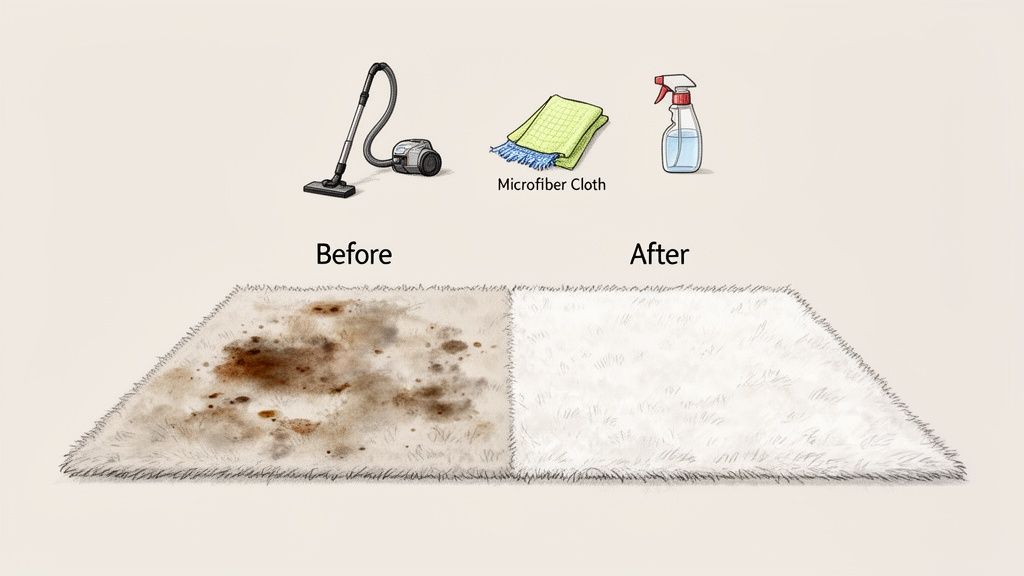
We've all had that moment. You look down and realize your cozy carpet has turned into a timeline of life's little messes—coffee spills, muddy paw prints, and who knows what else. It can look like a lost cause, but trust me, getting that carpet looking fresh again is totally doable. This guide is your roadmap for handling everything from small spots to that deep, set-in grime your vacuum gave up on long ago.
Why a Deep Clean Matters
Your regular vacuuming routine is great for grabbing surface-level stuff, but it doesn't stand a chance against the dirt, allergens, and gunk that gets mashed deep into the carpet fibers over time. All that buildup doesn't just make your carpet look dull; it can mess with your home's air quality and even shorten the life of your carpet by grinding away at the fibers.
A real, thorough deep clean gives you a few key wins:
- Brings Back the Color: It lifts out the layers of grime that make your carpet look faded and sad.
- A Healthier Home: It removes allergens, dust mites, and other junk trapped deep down.
- Gets Rid of Odors: Deep cleaning gets to the source of those funky smells instead of just covering them up.
- Protects Your Investment: Getting rid of abrasive dirt particles stops them from breaking down carpet fibers.
Understanding the Carpet Cleaning Industry
It's no secret that people want clean, healthy homes, and that demand has created a massive industry. The global market for carpet and upholstery cleaning was valued at a whopping USD 43.23 billion in 2024 and is only expected to grow. North America makes up about 31% of that market, largely because we love our carpets for the comfort and quiet they bring to a home. You can explore the full industry report on GlobeNewswire if you're interested in the market trends.
We're not just trying to sell you a service; we want to give you practical, honest advice from our years of experience at Citrus Carpet Cleaning Buford. For more great advice, you can always check out our collection of expert carpet cleaning tips. We'll help you get the best results possible, whether you decide to DIY it or give an expert a call.
Getting Your Carpet Ready for a Deep Clean
A real deep clean doesn't start with the machine; it starts with the prep work. If you skip this part, you’re just turning surface dirt into mud and pushing it deeper into the carpet fibers. It's the difference between a job that looks professional and one that feels like a wasted Saturday afternoon.
Taking a little time upfront to prep the room means your cleaning efforts will actually work. It’s not just about moving the couch—it’s about getting rid of all the dry, gritty stuff that can permanently scratch and damage your carpet fibers once it gets wet.
Clear the Room Completely
First things first, give yourself a blank slate. Get everything you can out of the room—chairs, tables, lamps, you name it. For the really heavy stuff like a massive entertainment center, you might have to clean in sections, but the goal is to see as much of that carpet as possible.
This isn't just for convenience. It allows you to:
- Hit every corner: Dust and grime love to hide along the baseboards.
- Get an even clean: You avoid those awkward clean spots around furniture legs that make the rest of the floor look even dirtier.
- Protect your furniture: Keep wood finishes and metal legs safe from moisture and cleaning solutions.
My Two Cents: If you can't get a huge piece of furniture out, just slide it over to one side of the room. Clean the empty half, let it dry completely, and then slide it back to tackle the other side. This simple move keeps you from getting trapped by a sea of wet carpet.
The Power of a Thorough Vacuuming
Once the room is empty, it’s time to break out the vacuum. Seriously, don't rush this. Your mission is to pull up every last bit of dry soil, pet hair, and crumbs. In fact, a study by the Vacuum Cleaner Manufacturers Association found that as much as 79% of the dirt in your carpet is the dry, loose kind that a good vacuuming can remove.
Go slow. A quick pass just skims the top. A slow, deliberate pace gives the vacuum's brush and suction time to really agitate the fibers and lift out the gunk that's been hiding deep down.
Work in overlapping rows, just like you’re mowing a lawn, so you don’t miss a single spot. Then, here's the trick: do it all over again, but this time in the opposite direction. If you went north-to-south the first time, go east-to-west for the second pass. This helps stand the carpet fibers up, exposing dirt that was trapped and flattened.
This isn't just about making the cleaning easier. That abrasive, gritty dirt acts like tiny little razor blades, tearing up your carpet fibers over time. Getting it out first is non-negotiable.
Gather Your Tools Before You Start
With the room cleared and vacuumed, the last prep step is to get all your supplies in one place. Trust me, you don’t want to be running across a damp, half-cleaned carpet because you forgot the spot treatment spray.
Here’s a quick checklist of what you should have handy:
- Your trusty vacuum: The star of the prep phase.
- Carpet cleaning machine: Rented or owned, have it ready to go.
- The right cleaning solution: Make sure it’s a quality, low-residue formula that's safe for your specific type of carpet.
- Spot treatment spray: For tackling those stubborn stains before you do the full cleaning.
- Clean white towels or microfiber cloths: Perfect for blotting and helping with spot treatments.
- A bucket: Always useful for mixing solutions or rinsing.
- Fans or a dehumidifier: You'll want these to get the carpet dry as fast as possible when you're done.
By prepping your space this way, you're not just setting yourself up for a cleaner carpet—you're making the whole process safer, more effective, and ensuring you get results you'll actually be happy with.
Tackling Common Stains and Spills Like a Pro
Even with the best prep, life happens. Someone tips over a coffee mug, a forkful of pasta misses the plate, or muddy paws make a beeline for the living room. It’s part of living in a home, not a museum. The real secret isn't preventing every spill—that's impossible. It's knowing exactly what to do the moment it happens.
Your best defense against a permanent stain is speed. The longer a spill sits, the deeper it bonds with your carpet's fibers, making it exponentially harder to get out. Your mission is always to lift the stain out, not grind it further in.
Before you even think about firing up a carpet cleaner for a full deep clean, you have to deal with these problem areas first.
This little chart breaks down the immediate decision you need to make.
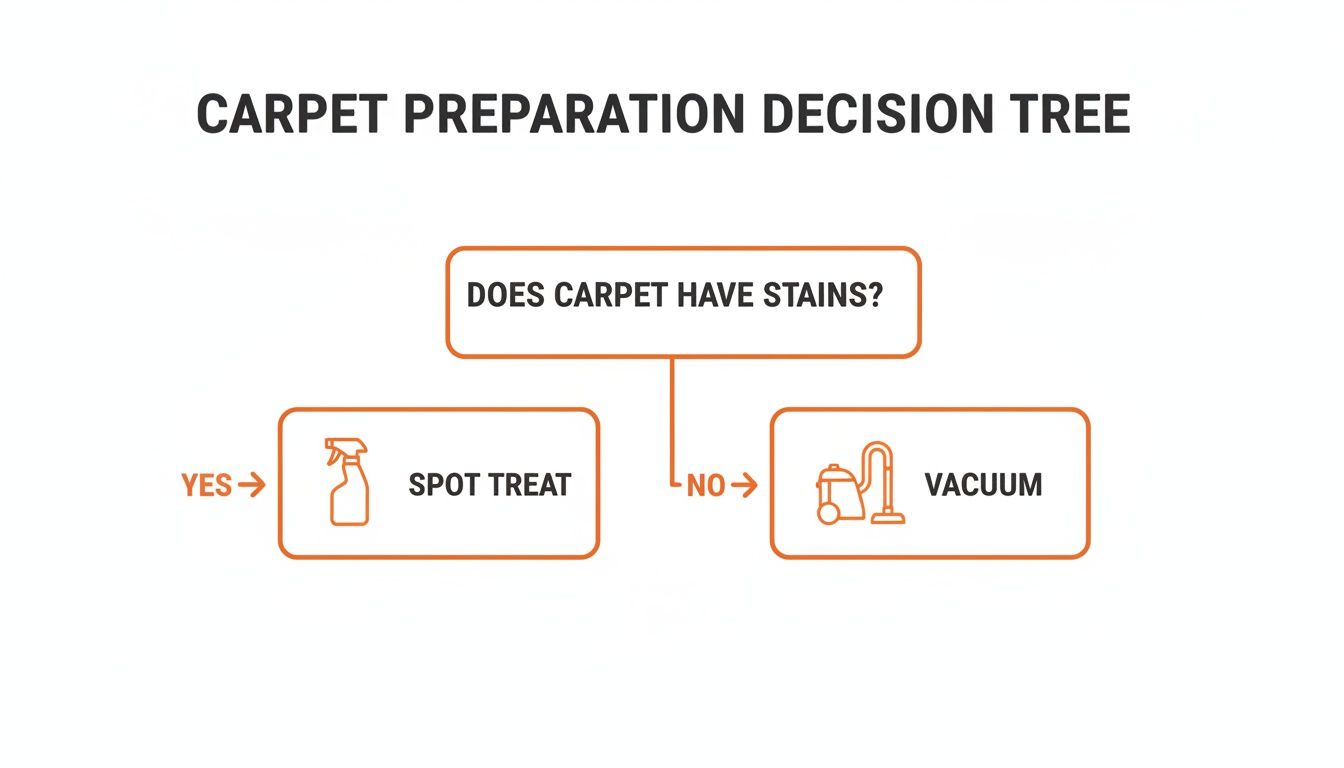
The takeaway is simple but crucial: always, always spot treat existing stains before you do anything else.
The Golden Rules of Spot Treatment
Before we get into specific recipes for different messes, there are two non-negotiable rules of spot treating. Ignoring these is the fastest way to turn a minor oops into a permanent eyesore.
First, blot, never rub. I can't stress this enough. Scrubbing a fresh spill just grinds the mess deeper into the carpet pile. It can also fray the fibers, leaving a fuzzy, damaged patch that looks worse than the original stain. Grab a clean, white cloth, press down firmly, and let it absorb the liquid. Always work from the outside edge of the spill inward to keep it from spreading.
Second, always test your cleaning solution first. Find a hidden spot—inside a closet, under the sofa, or on a leftover carpet scrap if you have one. Dab a little of your chosen cleaner on it and wait a few minutes. You need to be sure it won't bleach or discolor your carpet before you put it front and center.
DIY Spot Treatment Solutions
For most common household stains, you don't need a cabinet full of expensive, harsh chemicals. Simple ingredients you probably already have can work wonders. Here’s a quick-reference table for some effective DIY solutions.
| Stain Type | DIY Solution Recipe | Application Tip |
|---|---|---|
| Coffee & Wine | Mix 1 part white vinegar with 2 parts cool water in a spray bottle. | Lightly mist the stain (don't soak it) and blot gently with a clean cloth. The vinegar's acid helps break down tannins. |
| Pet Urine | A 50/50 mix of white vinegar and water can help neutralize the ammonia. Follow with a baking soda treatment. | Avoid hot water or steam, as heat can permanently set the stain. Neutralize first, then deodorize. |
| Grease & Oil | A few drops of clear, non-bleach dish soap (like Dawn) in a cup of warm water. | Blot with the soapy solution, then "rinse" by blotting with a clean, water-dampened cloth to remove soap residue. |
| General Grime | Mix 1/4 teaspoon of clear dish soap into 1 cup of warm water. | This is a great all-purpose cleaner for muddy footprints or general dirt spots once the solids are scraped away. |
| Blood | Cold water only! Add a couple of drops of dish soap for stubborn spots. | Never use hot water, as it will "cook" the protein and set the stain permanently. Blot with cold water immediately. |
Remember, the key with any of these is to blot, apply the solution sparingly, blot again to lift the stain, and then "rinse" by blotting with a clean, water-dampened cloth to remove any leftover cleaning solution.
Dealing with Pet Accidents
Pet urine is a double-whammy: it's a stain and a persistent odor. The culprit is uric acid, which forms crystals that can reactivate with humidity, bringing back that smell long after the spot is gone.
As always, start by blotting up as much of the fresh urine as humanly possible. Stand on a thick towel if you have to. And please, avoid steam cleaners or hot water. The heat will permanently bond the stain's proteins to the carpet fibers, and you'll never get it out.
Pro Tip: For stubborn pet odors, wait until the cleaned area is 100% dry. Then, sprinkle a ridiculous amount of baking soda over the spot. Let it sit for at least a few hours, or even overnight. The baking soda will absorb the lingering odor-causing molecules. Just vacuum it up thoroughly afterward.
Eliminating Greasy and Oily Marks
Grease from food, makeup, or tracked-in gunk is a whole different ballgame. Water alone won't touch it; you need something that can break down the oil.
A fantastic home remedy is a little bit of clear dish soap. First, use a dull knife or spoon to gently scrape off any solid bits. Mix just a few drops of a clear, non-bleach dish soap into a cup of warm water, and gently blot the stain with a cloth dipped in the solution.
The soap molecules grab onto both the oil and the water, allowing you to lift the grease away. The most important step here is to "rinse" by blotting with a fresh cloth dampened with plain water. If you leave soap residue behind, it becomes a sticky dirt magnet.
For a more in-depth guide, we've put together some great advice on how to get a stain out of carpet that covers even more tricky situations.
Comparing Deep Cleaning Methods for Your Home
So, you’ve prepped the rooms and zapped the worst of the stains. Now it’s time for the main event: the deep clean. This is where you have a big decision to make. Do you head to the grocery store, rent a machine, and tackle it yourself? Or do you call in a pro?
Honestly, the path you choose here will make a huge difference in your results, how much time you sink into the project, and the long-term health of your carpet.
The Gritty Reality of DIY Steam Cleaning
I get it. Renting a steam cleaner feels like you’re taking charge, and it seems like the cheapest way to go. But I’ve seen the aftermath of these rentals countless times, and they often create more problems than they solve. Those machines just don't have the muscle of professional-grade equipment.
Their biggest weakness? Poor suction. This leads directly to the most common—and most damaging—DIY mistake: overwetting the carpet. When you leave that much water behind, it soaks right through the carpet, into the padding, and sometimes even to the subfloor. Now you’ve created the perfect dark, damp environment for mold and mildew to throw a party. That musty smell that shows up a week later? That’s why.
The other major issue is soap residue. The detergents that come with those rentals are notoriously sticky. Use a little too much or fail to rinse it all out, and you’re left with a soapy film that acts like flypaper for new dirt. This is the classic, "My carpet looked great for a few days, and now it's dirtier than before!" scenario. The sticky soap is literally grabbing onto every bit of dust and soil, causing your carpet to get filthy, fast.
Insider Tip: If you absolutely have to rent a machine, do this: for every single pass you make spraying water (the "wet pass"), immediately follow it with two or three "dry passes" with only the suction on. It’s tedious, but it will pull up a lot more water and drastically cut your risk of wicking, which is when old stains magically reappear as the carpet dries.
How Professional Carpet Cleaning Has Changed
The professional cleaning world isn't stuck in the past. It’s constantly evolving to be safer and more effective. In fact, the market for carpet cleaning equipment is expected to jump from USD 823.84 million in 2025 to over USD 1.3 billion by 2033. That growth is all about innovation, especially the move away from old-school methods. You can read more about these innovations in the carpet cleaner market from Straits Research.
This evolution has led to smarter techniques that solve the old problems of overwetting and sticky residue. One of the best examples is low-moisture cleaning.
Understanding Low-Moisture Cleaning
At Citrus Carpet Cleaning, we specialize in a low-moisture system that gives you a deep, thorough clean without soaking your floors. Instead of pumping gallons of hot water into your carpet, we use our own citrus-based cleaning solution. It’s activated with just a tiny amount of moisture.
This natural, soap-free cleaner gets to work breaking down and encapsulating all the oily, sticky gunk trapped in the carpet fibers. Our commercial-grade machines then agitate the fibers and lift that encapsulated dirt right out, leaving your carpet fresh, clean, and almost totally dry.
Here’s why that makes all the difference:
- Dries in 1-2 Hours: Since we use so much less water, you can walk on your carpets in no time. No more tiptoeing around for 24 hours or dealing with soggy socks.
- No Sticky Residue: Our citrus cleaner is completely soap-free. It leaves nothing behind to attract new dirt, so your carpet stays cleaner, longer. Period.
- Stains Don't Reappear: By not saturating the carpet, we prevent old, deep-down dirt from wicking its way back to the surface as things dry. When a stain is gone, it’s gone for good.
- Safer for Your Family: Our solution is natural. It’s totally safe for your kids and pets, so you can have real peace of mind.
A rented machine might look like a quick fix, but the headaches from overwetting and soap residue just aren't worth it. For a deeper dive, we compare the two methods head-to-head in our guide to carpet shampooer vs. steam cleaning. Knowing the difference is the key to getting a home that’s truly clean.
Your Job Isn't Done Yet: Post-Cleaning Care For a Lasting Clean
You put in the elbow grease, and your carpet is finally looking fresh and vibrant. But don't put your feet up just yet. What you do after cleaning is the difference between a job that lasts for months and one that looks dingy again in a few weeks.
This is the step everyone wants to rush, and it’s a huge mistake. Skipping proper after-care can lead to musty smells, weird crunchy fibers, and a finish that just doesn't look quite right. A few extra hours here protects all the hard work you just did.
Get it Dry, Fast—and Prevent That Musty Smell
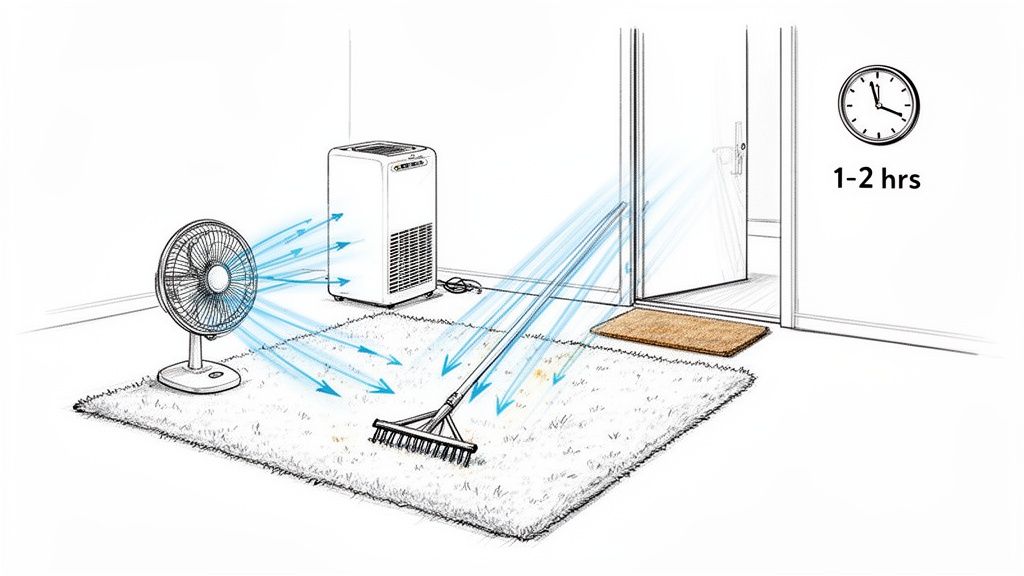
Lingering moisture is the number one enemy of a freshly cleaned carpet. A damp rug is a magnet for new dirt, but worse, it's the perfect place for mold and mildew to set up shop. This is exactly why low-moisture professional cleaning methods, which often dry in 1-2 hours, are so popular. If you've just used a rental machine, your goal is to mimic that fast-drying process as best you can.
Get the air moving. That's the whole game.
- Fans are your best friend. Turn on your ceiling fans (counter-clockwise pushes air down) and grab any box fans you have. Angle them to blow across the surface of the carpet.
- Open up the windows. If it's not a humid day, a good old-fashioned cross-breeze is a fantastic—and free—way to help things evaporate.
- Bring out the secret weapon: a dehumidifier. This machine will actively pull moisture from the air, which in turn helps pull it right out of your carpet fibers. It makes a huge difference.
Pro Tip: Your goal is to get the carpet completely dry to the touch within 6 to 12 hours. The faster it dries, the less chance you have of that dreaded damp-basement smell. And whatever you do, keep shoes off of it until it's 100% dry, or you'll track new dirt right back into the clean, damp fibers.
Fluff the Fibers for That Professional Finish
Ever notice how after a deep clean, especially with a machine, the carpet fibers look a little… flattened? They get pushed around and matted down. The final touch that gives a carpet that uniform, brand-new look is resetting the pile.
It sounds fancy, but it's incredibly simple.
Once the carpet is completely dry, grab a carpet rake or just use your vacuum cleaner. Gently "rake" or vacuum the entire carpet in one single, consistent direction. That's it. This small step lifts all the fibers, makes them stand up uniformly, and gets rid of any footprints or marks from the cleaning machine.
This final pass also sucks up any last bits of loosened dirt or crystallized cleaning solution that might have wicked to the surface as the carpet dried. It’s a little detail that makes a massive visual impact—it’s the signature of a professional job.
When to Call a Buford Carpet Cleaning Professional
Look, DIY carpet cleaning can be a fantastic weekend project, but you have to know when to throw in the towel. Sometimes, a situation just calls for more muscle and know-how than a rental machine can deliver. Calling in a pro isn’t admitting defeat—it’s just making a smart call to protect your carpet and your sanity.
Knowing when to make that call can save you a ton of frustration and even prevent permanent damage. If you're on the fence, a little general advice on knowing when to call a professional can help put things in perspective for all sorts of home projects. It really boils down to the size of the mess and the specific problem you're up against.
Signs It’s Time for Expert Help
Some carpet problems are dead giveaways that it's time to bring in an expert. If you’re staring down any of these, a DIY job is probably just not going to cut it:
- Widespread Pet Stains: If pet accidents are a recurring theme across multiple rooms, you need more than just a surface clean. Professionals have the heavy-duty equipment and specialized enzyme treatments to actually break down and remove the stain and the deep-set odor molecules that cause pets to return to the same spot.
- Delicate or Natural Fibers: Carpets made of wool, silk, or other natural fibers are a different beast altogether. They can shrink, bleed color, or get damaged if you use the wrong products or methods. It's a job best left to someone with experience.
- It’s Been Over a Year: Most carpet manufacturers actually recommend a professional deep cleaning every 12-18 months. This isn't just an upsell; it's to get rid of the deep-down, abrasive dirt that regular vacuuming simply can't reach and that slowly wears down your carpet fibers.
Why Buford Residents Choose Citrus Carpet Cleaning
When it is time for backup, you want a solution that’s powerful, quick, and doesn’t turn your life upside down. At Citrus Carpet Cleaning Buford, our whole low-moisture cleaning process was designed to solve the biggest headaches of carpet cleaning. We give you a true deep clean that’s safe for your family and dries in just 1-2 hours, so you can get right back to living.
We believe in total transparency. That’s why we offer an “EXACT-imate” before we start any work. The price you are quoted is the price you pay—no hidden fees, no upsells. If we can't make you happy, the cleaning is FREE.
The demand for trustworthy cleaning services is on the rise, with the U.S. market expected to hit around USD 6.9 billion by 2025. People are more focused than ever on home hygiene, and we're proud to be the go-to experts for our local community. You can discover more insights about the carpet cleaning market on Future Market Insights.
For our neighbors in Buford, we keep it simple. If your carpets need a real revival, just give us a call or text for a no-strings-attached quote.
Answering Your Top Carpet Cleaning Questions
Even after you've read a full guide, a few questions always seem to pop up. We get it. Here are the straight-up answers to the most common things we hear from folks trying to tackle a dirty carpet.
How Often Should I Have a Pro Clean My Carpets?
For most homes, the magic number is every 12 to 18 months. That’s what the carpet manufacturers themselves recommend. This schedule is key to pulling out the deep-down, abrasive grit that your home vacuum just can’t touch.
Now, that's just a baseline. Your mileage may vary:
- Got Pets or Kids? You'll want to bump that up to every 6 to 9 months. It’s the best way to stay on top of dander, mystery spills, and any lingering odors.
- Struggling with Allergies? More frequent professional cleanings are a game-changer for pulling dust mites and other allergens out of your home's biggest air filter—the carpet.
Is It Ever Okay to Use Bleach on a Carpet Stain?
Short answer: Never. Using bleach on your carpet is the fastest way to permanently strip the color right out of the fibers. You’ll be left with a bleached-out, discolored patch that no amount of cleaning can ever fix.
It gets worse. Bleach can also eat away at the carpet's backing, causing serious long-term damage. Just don't do it. Always stick to products made specifically for carpets to avoid a mistake that could cost you thousands.
Why Do Some Stains Come Back After I Clean Them?
Ah, the dreaded reappearing spot. This is a classic problem called "wicking," and it’s incredibly frustrating. It happens when a spot gets so wet—usually from a rental machine—that dirty, soapy water soaks all the way down into the carpet pad.
As the top of the carpet fibers dry, that nasty, deep-down grime gets pulled (or "wicked") right back up to the surface. Suddenly, the stain you thought you conquered is back with a vengeance. This is a huge reason we stick to low-moisture cleaning; it cleans deeply without oversaturating the carpet’s foundation.
Is a Rental Machine Just as Good as Hiring a Professional?
While renting a machine might seem like a good idea for a light touch-up, it’s not even in the same league as professional equipment. Those rentals just don't have the muscle.
They usually lack the powerful suction needed to pull out all the water, which leads to that wicking problem we just talked about. Plus, they tend to leave behind a sticky soap residue that actually becomes a magnet for new dirt.
A true professional uses commercial-grade extractors for a much deeper clean and has the experience to handle different carpet fibers and stubborn stains safely. It’s a completely different level of clean, without the risk of you accidentally damaging your own carpet.
Ready to see the difference a real deep clean can make, without the soggy mess or sticky residue? Citrus Carpet Cleaning Buford is here to refresh your home the right way. Call or text us for a fast, friendly, and totally honest "EXACT-imate" today at https://citruscarpetcleaningatlanta.com.