
That musty smell in your living room isn't just annoying; it's the calling card of mildew setting up shop in your carpet. Real, effective mildew removal for carpets starts with figuring out what you're dealing with and tackling the root cause—which is almost always trapped moisture. If you just ignore it, you’re letting mildew eat away at your carpet fibers and tank your home's air quality.
Spotting Mildew Growth in Your Carpet
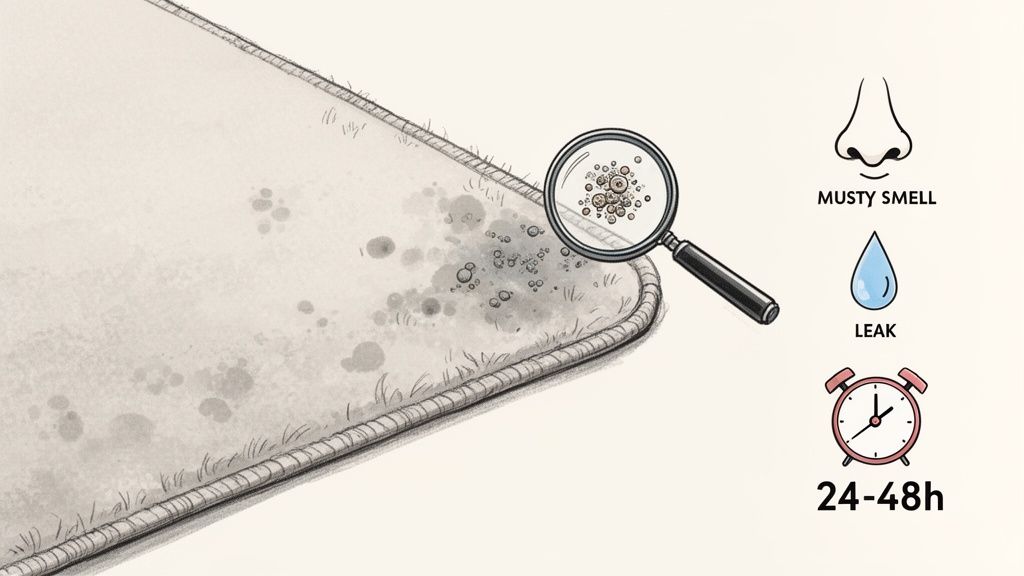
When you catch that musty whiff, that’s your first clue you’ve got a moisture problem. But before you start scrubbing, you need to be sure what you're up against. Mildew is a surface-level fungus that absolutely loves damp, humid spots, making Buford's climate a perfect breeding ground.
Mildew in carpets is a huge issue for homeowners, especially in humid areas. Carpets are basically giant sponges for spills, leaks, or even just high humidity (anything over 60%). It only takes 24-48 hours for that moisture to invite mildew growth. For homeowners in Buford, letting mildew go unchecked can slash a carpet's lifespan by 30-50%. That’s a lot of money down the drain for a replacement.
Is It Mildew or Mold? A Quick Identification Guide
Use this side-by-side comparison to quickly determine the type of fungal growth on your carpets and decide your next steps.
| Characteristic | Mildew Signs | Mold Signs |
|---|---|---|
| Appearance | Powdery or downy texture | Fuzzy or slimy texture |
| Color | Typically white, gray, or yellowish | Can be green, black, blue, or even orange |
| Location | Grows on the surface of the carpet fibers | Can penetrate deep into carpet backing & padding |
| Smell | Musty, like damp socks or wet soil | Stronger, more potent earthy or pungent odor |
This table should help you get a better handle on the situation, but when in doubt, it's always safer to assume it could be the more serious of the two.
Common Signs of Carpet Mildew
The signs can be subtle at first, but they get more obvious pretty quickly. The sooner you act, the better your chances of stopping a small spot from becoming a major restoration project. Keep an eye out for these tell-tale signs:
- A Musty Odor That Won't Quit: This is the big one. It's often described as earthy or like a pile of wet socks, and it just hangs in the air, even after you’ve opened all the windows.
- Visible Discoloration: Mildew looks like a powdery or fluffy patch. You’ll usually see it in shades of white, gray, or sometimes a pale yellow, sitting right on top of the carpet fibers.
- Sudden Allergy Flare-Ups: If you find yourself sneezing, coughing, or getting stuffy in one particular room, mildew spores could be the culprit. Those tiny particles get into the air and can really irritate your respiratory system.
For a deeper look, we have a whole guide on how to tell the difference between mold and mildew on your carpet.
Deciding What to Do Next
Okay, so you’ve found what looks like mildew. Now what? You have to decide if this is something you can handle yourself or if it’s time to call in the pros.
The real deciding factor here is the size of the affected area. If you’re looking at a patch bigger than a doormat, or if that musty smell is overwhelming, it’s a pretty clear sign the problem has soaked into the carpet padding. That's when you need professional help.
This little chart can help you make the right call for handling mildew on your carpets.
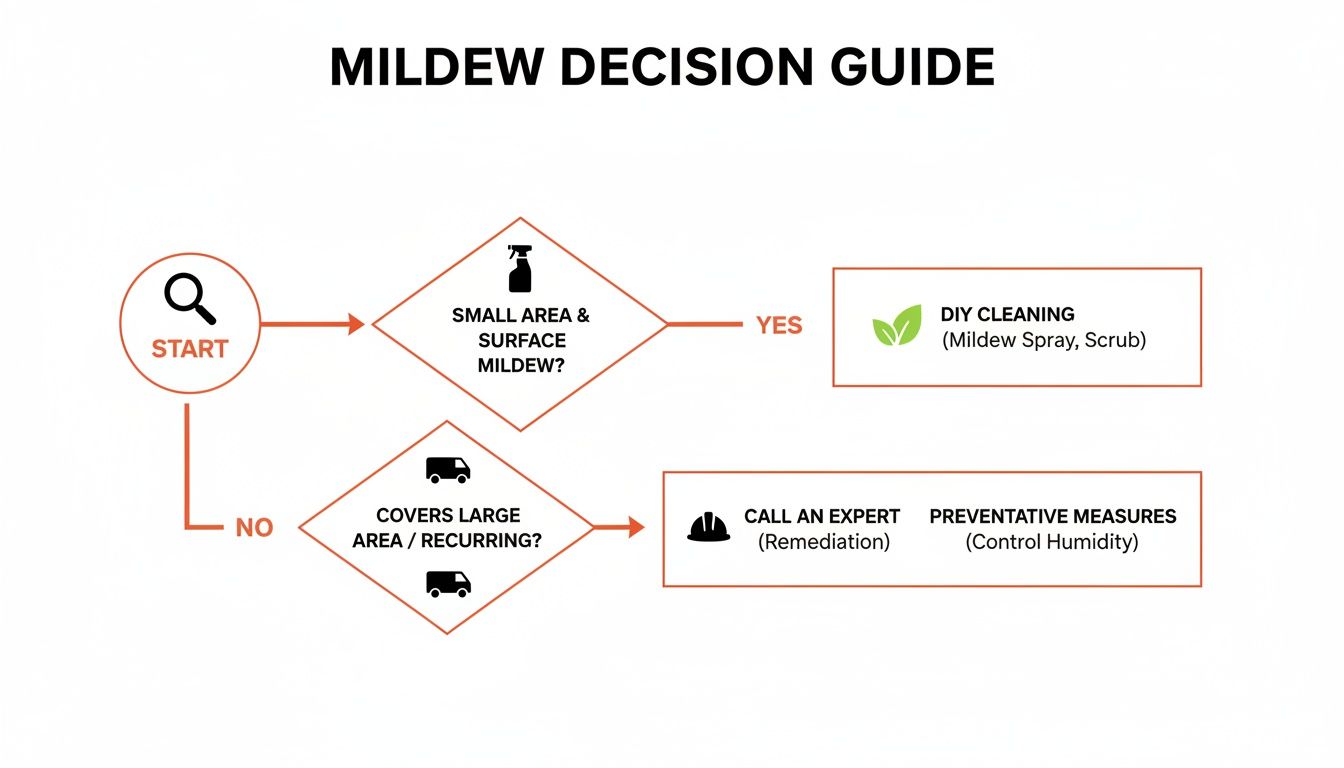
As you can see, small, surface-level spots are usually fair game for a DIY approach. But for anything bigger, or for mildew that keeps coming back, you'll save yourself a lot of headaches by getting an expert to make sure it's gone for good.
Safe and Effective DIY Mildew Removal Techniques
So, you've found a small, manageable spot of mildew. The good news is you can often tackle this yourself without calling in the big guns. Real mildew removal isn't about dousing your carpet in harsh chemicals; it's about using smart methods that actually kill the fungus without wrecking your floors.
But before you start mixing up any solutions, preparation is everything.
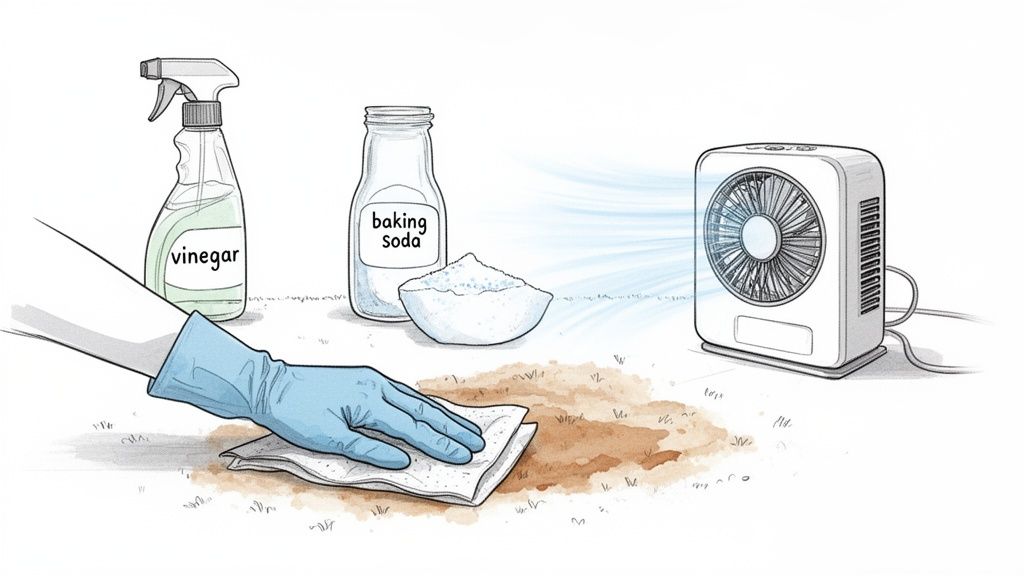
First, get some air moving. Open every window and door in the room to create a cross-breeze. This helps scatter any airborne spores and clears out fumes from your cleaning solutions. Next, gear up. Protect yourself with gloves, a mask, and even safety glasses. You don't want to breathe in those spores or get any of this stuff on your skin.
The Classic Vinegar and Baking Soda Method
One of the oldest tricks in the book is also one of the most reliable: white vinegar and baking soda. Mildew actually prefers a slightly acidic environment to grow, so hitting it with an alkaline cleaner like baking soda helps make your carpet an unwelcome place for it to live. Vinegar, while acidic itself, is a fantastic anti-fungal that knocks out surface-level mildew.
Here’s how to use this one-two punch:
- Soak Up the Dampness First: Start by lightly sprinkling baking soda all over the mildewed patch. Let it sit for at least an hour—overnight is even better—to pull out that lingering moisture and soak up the musty smell.
- Vacuum It All Up: Grab a vacuum that has a HEPA filter and go over the area thoroughly. A standard vacuum filter might just blow the spores right back into the air, spreading your problem around.
- Mix Your Vinegar Solution: In a spray bottle, mix equal parts white vinegar and warm water. You want to lightly mist the affected area, not soak it. Oversaturating the carpet will only lead to more moisture problems.
- Blot, Don't Scrub: Take a clean cloth and gently blot the vinegar solution. Whatever you do, don't scrub aggressively. That can fray your carpet fibers and push the mildew even deeper into the backing and pad.
Crucial Tip: Never, ever mix vinegar with bleach. This creates toxic chlorine gas, which is incredibly dangerous to breathe. Always stick to one cleaning agent at a time. It’s safer and more effective.
Tackling Mildew with Store-Bought Removers
If a DIY solution isn't your style, there are plenty of commercial products that can get the job done. The market for these spot removers is booming, largely because people are more concerned about indoor air quality than ever before. It's estimated that around 55 million U.S. households deal with indoor mold and mildew, and carpets are involved in a staggering 90% of those cases because they're so good at trapping moisture. You can read more about the trends in the carpet care market to see just how big this issue is.
When you're at the store, look for an anti-fungal carpet spray made specifically for mildew. And always—always—do a spot test on a hidden piece of carpet first, like inside a closet. You need to make sure it won't bleach or discolor your flooring. From there, just follow the manufacturer’s instructions to the letter.
The Most Important Step: Drying
This part is non-negotiable. No matter what cleaning method you used, the final and most critical step is getting that carpet completely dry. Any dampness left behind is basically a welcome mat for mildew to come right back.
Set up some fans and aim them directly at the treated spot to speed up the drying process. If you own a dehumidifier, now is the time to use it. Put it in the room and let it run until the carpet feels bone-dry when you touch it. Don't skip this step
Why Low-Moisture Cleaning Beats Traditional Methods
Sure, DIY methods can sometimes tackle a small surface spot. But they often don't stand a chance when mildew has worked its way deep into your carpet fibers. That's when most people think about professional steam cleaning, but here's the kicker: that old-school approach can actually make your mildew problem a whole lot worse. The real enemy here is excessive water.
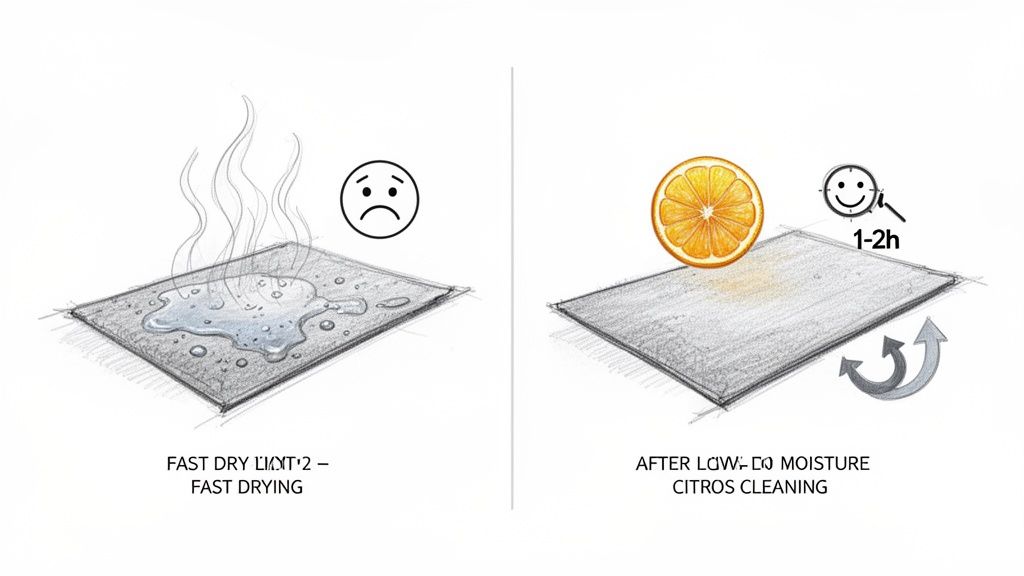
Traditional steam cleaners absolutely drench your carpets, leaving them damp for 12 to 24 hours or even longer. In a humid climate like ours in Buford, that’s an open invitation for mildew to come roaring back. You might think the problem is gone, but you've just created the perfect, soggy breeding ground for it to regrow, often worse than before.
The Power of Fast Drying
To really beat mildew for good, you have to break the moisture cycle. That's where low-moisture cleaning changes the game. Instead of flooding your carpet and its padding with gallons of water, this method uses just a tiny fraction of the liquid.
The result? Your carpet’s dry time is slashed to just one to two hours. By getting rid of the moisture that quickly, we slam the door shut on mildew spores before they have a chance to reactivate and spread. Your carpets are left clean, fresh, and most importantly, dry enough to stop regrowth in its tracks.
This rapid drying isn't just a convenience; it's the core of the solution. When a carpet is dry in an hour, mildew doesn't stand a chance. It’s the difference between truly solving the problem and just temporarily hiding it.
No Sticky Residue Means a Cleaner Carpet
Here's another big problem with old-school carpet cleaning: soap. A lot of traditional methods depend on heavy detergents that leave behind a sticky, soapy residue. This film is like a magnet for dirt, dust, and—you guessed it—mildew spores. Your carpets get dirty faster and are more likely to have fungal problems down the road.
Our citrus-based solution is totally different. It's a natural degreaser and disinfectant that gets deep into the fibers without any soap. That means zero sticky residue is left behind to attract more grime. Your carpet stays cleaner for much longer, and that fresh citrus scent is a great bonus that actually helps eliminate musty odors at their source, not just cover them up.
At Citrus Carpet Cleaning Buford, our soap-free citrus method is proven to remove 95% of embedded mildew without leaving any residue. Our 1-2 hour dry times slash the risk of re-infestation by 60% compared to traditional methods. If you're curious about the industry, you can find some insights on carpet care equipment here.
A Safer and Healthier Approach
Low-moisture cleaning is simply a healthier choice for your family and pets. Let's break it down:
- Traditional Steam Cleaning: Often relies on harsh chemicals. These can leave behind fumes and residues that irritate allergies and contribute to poor indoor air quality because of the prolonged dampness.
- Low-Moisture Citrus Cleaning: We use a natural, citrus-based formula that's both gentle and powerful. The super-fast drying process means no lingering dampness, which promotes better air quality and a healthier home all around.
If you want to see exactly how we do it, you can learn more about our unique low-moisture carpet cleaning process and understand why it’s the smarter choice for homes in the Buford area. It’s all about getting a deep clean that truly lasts.
Knowing When to Call a Professional Carpet Cleaner
Look, DIY methods can work wonders on a tiny, fresh mildew spot. But you have to know when a problem has outgrown a spray bottle and some elbow grease.
Pushing a DIY solution too far can actually make things worse. You might spread spores around or fail to get to the root of the issue, which means that musty smell will be back before you know it. Recognizing the red flags that say "it's time to call the pros" is the key to effective mildew removal for carpets.
One of the biggest giveaways is the size of the patch. If you're looking at mildew covering an area larger than a small throw rug—think roughly 10 square feet—that's a sign of a significant moisture problem. What you can see on the surface is often just the tip of the iceberg; there's likely a much bigger issue lurking deep in the carpet padding.
When the Problem Runs Deep
Another major red flag? A musty odor that just won't quit, even after you've scrubbed the visible spots. That stubborn smell is a classic symptom of mildew that has worked its way into the carpet backing and, more importantly, the padding underneath. Your store-bought surface cleaner just can't get that deep.
The carpet padding is basically a giant sponge. Once mildew sets up shop in there, no amount of surface scrubbing will fix it. The only way to truly kill the source and the smell is with professional-grade equipment that can pull out that deep-seated moisture and sanitize the whole carpet structure.
At this point, trying to fix it yourself is usually a waste of time and money. For really bad or recurring mildew, you might even need to consider expert mould remediation services to make sure it's removed completely and safely. A pro can tell you just how bad the damage is and if your carpet and padding can even be saved. If you're weighing the costs, our guide on whether professional carpet cleaning is worth the investment can help you decide.
Different Stakes for Different Properties
For a homeowner, tackling a small spot might be no big deal. But for businesses and property managers, the health risks and liability are on a whole other level. The threshold for calling a professional is much, much lower.
Think about these situations:
- Rental Properties: As a landlord, you're responsible for providing a healthy home. A mildew problem can quickly lead to tenant complaints or even legal trouble if you don't handle it properly.
- Commercial Spaces: In an office, daycare, or shop, you have to think about the health of your employees and customers. Mildew can set off allergies and breathing problems, creating a huge liability risk.
- Recurring Issues: Have you cleaned the same spot over and over, only for the mildew to pop right back up? That’s a sure sign of an underlying moisture source that only a professional can properly track down and fix.
In these cases, calling a pro isn't just a smart move—it's essential for protecting both people and property.
Long-Term Strategies for Preventing Carpet Mildew
Getting rid of mildew is only half the battle. The real victory is making sure it never comes back. Preventing mildew boils down to one simple thing: controlling moisture. A few consistent habits can completely change the game, turning your home from a potential mildew breeding ground into a place it just can't survive.
Here in a humid climate like Buford, Georgia, you have to be proactive about managing your indoor environment. A dehumidifier is your absolute best friend, especially for basements or any room that just feels a little damp. Your goal should be to keep your home's humidity level somewhere between 30% and 50%. This one simple step makes the air far less inviting for any kind of fungal growth.
Smart Habits for a Drier Home
It's the little changes you make to your daily routine that have the biggest impact on long-term prevention. It really all starts with how you handle spills and ventilation.
- Act Fast on Spills: The second a drink hits the carpet, grab a clean, dry cloth and start blotting immediately. Whatever you do, don't scrub. Once you've blotted up most of it, lay a fresh, dry towel over the spot and put something heavy on top. This will help pull that last bit of moisture out of the carpet fibers and, more importantly, the padding underneath.
- Improve Air Circulation: Use your ceiling fans or even a simple standing fan to keep the air moving around. This is especially important in rooms that don't get much natural airflow. Good ventilation is one of the easiest and most effective ways to keep dampness from settling in.
A huge mistake people make is assuming the problem is solved just because the surface of the carpet feels dry. Moisture can stay trapped deep in the carpet padding for days, creating a hidden mildew factory right under your feet. Always make sure you've dried spills all the way through, not just on the surface.
Learning broader strategies for moisture control, like understanding how to avoid mold in your home and damp buildings, is a crucial piece of the prevention puzzle.
The Role of Regular Professional Cleaning
Even if you're a ninja with spills and keep your home perfectly ventilated, microscopic dirt, skin oils, and allergens are going to build up in your carpet. Over time, this buildup becomes a buffet for mildew. That's why scheduling a regular professional cleaning is your ultimate line of defense.
A professional low-moisture cleaning, like the kind we do here at Citrus Carpet Cleaning Buford, goes way beyond what you can do yourself. It's not just about removing the dirt you can see; it's about extracting the deep-seated grime and moisture that your household vacuum can never hope to reach.
Because we get your carpets completely clean and dry in just 1-2 hours, we essentially hit the reset button. We take away all the elements mildew needs to get started. This kind of proactive maintenance doesn't just make your carpet last longer—it protects your family's health by ensuring the foundation of your home is consistently clean and dry.
Still Have Questions About Mildew Removal?
Even after reading through a guide, it's completely normal to have a few more specific questions pop up. It happens all the time. Here are some of the most common things we hear from homeowners right here in Buford when they're wrestling with mildew removal for carpets.
Can I Just Blast the Mildew with Bleach?
Please, don't do it. We get why you'd think to reach for bleach—it’s famous for killing germs. But when it comes to carpet, it almost always creates a bigger problem than the one you started with.
First off, bleach is a powerful color-stripper. Using it on your carpet will likely leave a permanent, bleached-out spot that’s impossible to hide. Worse yet, bleach often doesn't sink deep enough into the carpet backing and pad to kill the mildew at its roots. So, it looks like it's gone for a little while, but then it just grows right back.
A much safer bet for a tiny spot is a simple mix of white vinegar and water. But honestly, to be sure you've killed the mildew without ruining your carpet, a professional, pH-balanced cleaning solution is the only way to go.
I Cleaned the Carpet, but It Still Smells Musty. What Did I Do Wrong?
That lingering musty smell is the number one tell-tale sign that the problem is deeper than you think. It means the mildew has worked its way down into the carpet backing or, even worse, the pad underneath. Your DIY cleaner just can't get that far down.
The odor is a dead giveaway that moisture and active mildew are still trapped where you can't see them. It's also possible that the carpet didn't dry fast enough after you cleaned it. That extra moisture, ironically, can create the perfect breeding ground for mildew to make a comeback.
This is exactly where our low-moisture system shines. We get carpets bone-dry in just 1-2 hours, which completely robs mildew of the dampness it needs to survive. If you can still smell it, the problem isn't really solved.
What's the Real Cost for Professional Mildew Removal in Buford?
This is a big question, and the cost can definitely vary based on the size of the room and just how bad the mildew situation is. Some companies will hit you with extra fees for "pre-treatment" or "heavy soil," but we think that’s just not right. We believe in being totally transparent from the start.
At Citrus Carpet Cleaning Buford, we give you an "EXACT-imate" before we do a single thing. We'll take a look, assess the job, and give you one clear, honest price. No hidden fees, no last-minute upsells. The price we quote is the price you pay—period. Our entire goal is to give you an affordable, effective fix that protects your home without any confusing pricing games. You get the peace of mind of knowing the job is done right for a fair, upfront cost.
Ready to kick that musty smell to the curb and protect your home? Trust the experts at Citrus Carpet Cleaning Buford for a fast-drying, residue-free clean that stops mildew cold. Schedule your EXACT-imate today!