
So, how do you really get cat pee smell out for good? The secret is going straight for the source: the uric acid crystals that get left behind long after the liquid part of the urine has evaporated. Your best bet is to blot up any fresh mess immediately and then absolutely saturate the area with a high-quality enzymatic cleaner. These cleaners are biological powerhouses, using specific enzymes to literally break down and digest the odor-causing compounds that regular soaps and detergents just can’t handle.
Why That Cat Pee Smell Is So Hard to Remove
If you've ever tried to scrub away that sharp, ammonia-like cat pee smell, you know it’s a uniquely stubborn problem. It’s not just a simple stain you can wipe away; it's a complex chemical reaction happening deep down in the fibers of your carpet or couch. Getting a handle on the science behind the stink is the first real step toward getting rid of it forever.
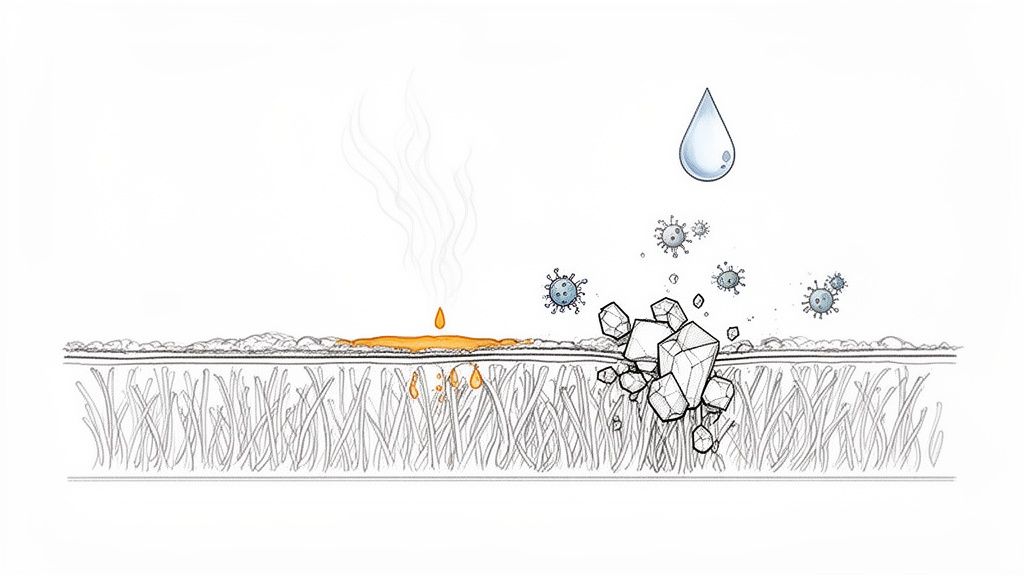
Cat urine is made up of a few different things, but the real troublemaker is uric acid. While you can clean up the other components with basic soap and water, uric acid isn't water-soluble. It bonds tightly to whatever surface it lands on. As the urine dries, bacteria get to work on the urea, which creates that first wave of ammonia odor.
The Science of the Lingering Odor
But it gets so much worse. As the decomposition continues, it produces mercaptans—the very same compounds that give skunk spray its signature, unforgettable smell. This is exactly why an old cat spot often smells far more potent and offensive than a fresh one.
The real source of the recurring nightmare, though, is the uric acid itself. It forms tiny, salt-like crystals that embed themselves in your carpet, rug, or furniture, staying there long after the area feels dry to the touch. These crystals can lie dormant for months or even years, just waiting for one thing: moisture.
Here's the kicker: That's precisely why the cat pee smell seems to magically reappear on humid or rainy days. The moisture in the air is all it takes to reactivate those uric acid crystals, releasing that foul odor all over again, as if the accident just happened.
This reactivation is why so many standard household cleaners just don't cut it. They might cover up the smell for a bit or clean the surface-level gunk, but they leave the uric acid crystals behind. And that's a guarantee the smell will be back.
Dealing with cat urine odor requires a two-pronged attack: immediate action to minimize the initial damage and a deep-cleaning strategy to destroy the underlying cause. Here’s a quick look at how these approaches differ.
Immediate Response vs Deep Cleaning At a Glance
| Action Type | Goal | Methods | Effectiveness |
|---|---|---|---|
| Immediate Response | Minimize saturation and surface odor. | Blotting with paper towels, applying baking soda. | Temporary. Reduces the immediate problem but doesn't solve it. |
| Deep Cleaning | Destroy uric acid crystals and eliminate odor permanently. | Enzymatic cleaners, professional steam cleaning. | Permanent. Neutralizes the source of the smell completely. |
Think of the immediate response as damage control, while deep cleaning is the real solution. You need both to truly reclaim your space from that persistent odor.
The Challenge for Pet Owners
You're definitely not alone in this battle. The global market for pet stain and odor control products is enormous for a reason. By 2025, this market hit an estimated value of USD 9,828.23 million, and it's only projected to grow as more people bring pets into their families. This boom shows just how many of us are desperately searching for a real solution that works. You can discover more insights about the pet odor control market and its growth on futuremarketinsights.com.
To successfully get rid of cat pee smell, you have to do more than just clean the surface—you have to chemically destroy the source. This means using the right tools and methods designed to completely break down uric acid, ensuring no trace of those odor-causing crystals is left behind to haunt you later.
How to Find Every Hidden Urine Stain
Let’s be real. You can't get that cat pee smell out if you can't find every last spot. It's almost never the one obvious stain you already scrubbed that's causing the lingering odor. The real culprits are the hidden, older spots you never even knew were there. To win this war, you have to become a detective.
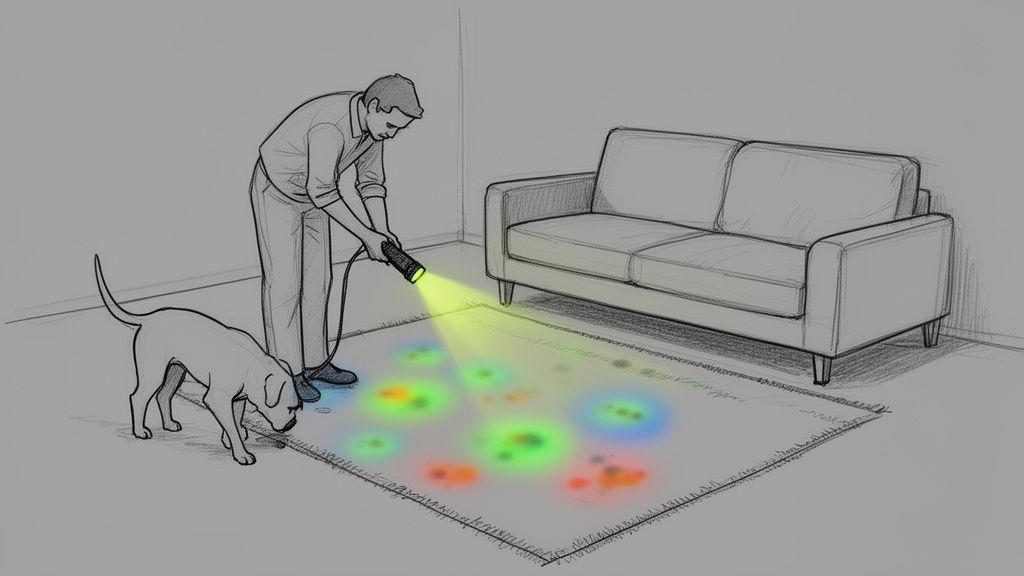
Your best friend in this investigation is a UV blacklight. Cat urine has phosphorus and proteins that glow bright under ultraviolet light, making invisible stains pop. This simple little tool is a total game-changer, showing you exactly where you need to focus your cleaning efforts.
Putting a UV Blacklight to Work
For this to work, you need total darkness. Wait until nighttime, kill all the lights in the room, and slowly scan the blacklight over your carpets, furniture, and even up the baseboards. You’ve got to be methodical—hold the light just a few inches from the surface.
You’re hunting for glowing patches, which usually look like a dull, yellowish-green. Don’t be shocked if you find way more spots than you thought, especially in corners or along the edges of furniture. Those are prime territory-marking zones for cats.
Once you find a glowing stain, mark the outside edge of it with a small piece of chalk or a sticky note. That way, you can easily find it again when you turn the lights back on and it’s time to get to work.
This step is absolutely critical. A liquid stain can soak down and spread underneath the carpet to an area 5 to 10 times larger than what you see on the surface. A blacklight helps you see the whole disaster, not just the tip of the iceberg.
The Low-Tech Method: Nose to the Ground
No blacklight? No problem. You can still find those hidden spots with a more hands-on (and nose-on) approach. It's time to get down on your hands and knees and trust your sense of smell. This method takes patience, but it’s surprisingly effective.
Work your way across the room in a grid pattern. Gently press your nose near the carpet or upholstery and take a sniff. It might feel a bit ridiculous, but it's a tried-and-true way to find the source of the smell when you don't have the tech.
Make sure you pay extra attention to these common hiding spots:
- Underneath furniture: Get right under the couches, chairs, and tables.
- Along walls and baseboards: Cats love to back up against vertical surfaces.
- Carpet edges: Check the perimeter where the carpet meets the wall.
Finding every single stain is half the battle. If you're still struggling to eliminate pet odors in carpet even after a thorough search, you might need a professional to get to what’s soaked deep into the fibers. Being a good detective at the start sets you up for a much better outcome.
Choosing Your Cleaning Arsenal
Alright, you’ve mapped out the crime scenes. Now it's time to assemble your cleaning toolkit. When it comes to getting cat pee smell out of your house for good, you’ll find that not all cleaners are created equal. You’ve really got two main paths: mixing up a DIY solution or grabbing a commercial enzymatic cleaner.
If you catch a spot while it’s still fresh and damp, a DIY approach can be a fantastic first move. It’s cheap, you probably have the ingredients already, and it’s all about immediate damage control.
The Go-To DIY Solution for Fresh Spots
Believe it or not, a simple mix of white vinegar and water is surprisingly effective for that initial cleanup. The acid in the vinegar does a great job neutralizing the alkaline salts found in fresh cat urine, which is what causes that sharp, ammonia-like stench.
Here's the recipe I always keep on hand:
- Grab a spray bottle and mix equal parts distilled white vinegar and cool water.
- After you've blotted up as much of the fresh urine as you can, spray the vinegar solution all over the spot. Be generous—you want to saturate an area slightly larger than the visible stain.
- Let it sit for about five minutes, then get back to blotting with fresh, clean towels.
Once you’ve blotted it dry, go ahead and sprinkle a good layer of baking soda over the still-damp area. Baking soda is a champ at pulling out any leftover moisture and odor. Just let it dry completely (this can take a few hours) before you vacuum it all up.
Why Enzymatic Cleaners Are the Gold Standard
While that vinegar solution is a solid first responder for fresh accidents, it just doesn’t have the muscle to break down the uric acid crystals in older, set-in stains. This is where you bring in the big guns: enzymatic cleaners.
These aren't your average soaps. They're powerful biological formulas packed with specific enzymes that literally "eat" the organic proteins in urine. Think of it as a microscopic demolition crew breaking down the uric acid into harmless, odorless stuff like carbon dioxide and ammonia gas that just evaporates away. It's the only way to truly destroy the source of the smell. When stocking up, look through different pet grooming and cleaning products to find a trusted brand.
The science here has been around for a while. A pivotal 1989 study looked at various cat urine removers and found that the newer enzyme-based products were miles ahead of the competition. They completely knocked out both new and old stains and stopped the odor from coming back in 75-90% of cases. This early research really set the stage for the amazing products we have today. You can actually check out the study's abstract on PubMed.
Crucial Tip: Whatever you do, never use harsh chemicals like ammonia-based cleaners or bleach before an enzymatic cleaner. They can permanently set the stain and might even create a dangerous chemical reaction with the urine. Always start gentle.
Picking the right cleaner is everything. If you want to dive deeper into how these formulas get the job done, you can learn what an enzymatic cleaner is and why it’s a must-have for any pet owner. An enzymatic cleaner doesn't just cover up the smell—it eliminates it at the chemical level, making sure that odor doesn't creep back on the next rainy day.
A Practical Guide to Deep Cleaning Pet Stains
Alright, you’ve found the spots and picked your cleaning weapon of choice—now for the main event. Getting cat urine out for good isn’t about scrubbing harder. It's about a smart, methodical process that lets your cleaner work its way deep into the carpet fibers where the real problem lies.
First things first: if the spot is fresh, your immediate goal is to get up as much of the liquid as possible. Grab a thick stack of plain white paper towels or a clean, absorbent cloth. Press down firmly and stand on it if you have to. You want to soak up everything you can. Resist the urge to scrub! Rubbing just pushes the urine deeper into the carpet padding and makes a bigger mess.
Keep blotting with fresh, dry towels until you can't pull any more moisture out. This one step is huge—it drastically cuts down on the amount of uric acid you’ll have to deal with later.
Applying Your Cleaning Solution the Right Way
Now it's time to bring in your cleaner, whether it’s your DIY vinegar mix or a heavy-duty enzymatic product. The keyword here is saturation. You have to remember that liquid spreads out under the surface. What looks like a small spot on top is often a much bigger problem in the padding below.
Be generous when you apply the cleaning solution. A good rule of thumb is to treat an area about 50% larger than the visible stain. This makes sure the cleaner can reach every last bit of that hidden urine. For enzymatic cleaners, this is non-negotiable. The enzymes literally have to touch all the uric acid crystals to break them down and destroy the odor.
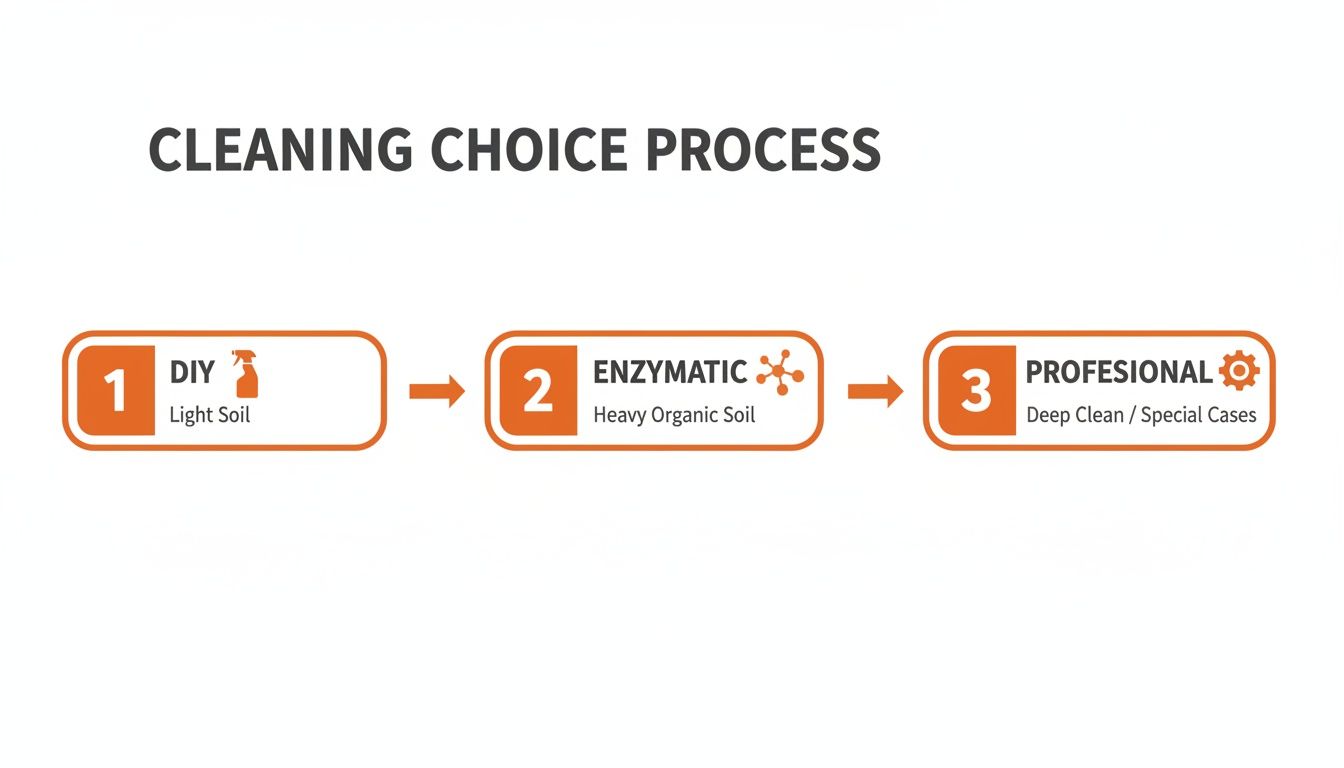
As you can see, while a simple solution might work for a fresh, minor accident, you need the power of an enzymatic cleaner to really tackle the compounds that cause that awful, lingering cat pee smell.
Why Dwell Time Is Your Best Friend
After you’ve applied the cleaner, the biggest mistake people make is getting impatient. You can't just spray and wipe. The cleaner needs time to do its job, which we call "dwell time."
A vinegar solution might only need 5-10 minutes to knock down the immediate ammonia smell. But with an enzymatic cleaner, you're playing a longer game. Those little enzymes are literally eating the organic matter, and that biological process takes time.
Always follow the directions on the bottle, but generally, plan on letting an enzymatic cleaner sit for at least 15-30 minutes. For really old, stubborn stains, you might need to cover the spot with a damp towel and let it sit for a few hours—or even overnight—to keep the enzymes active and working.
Rinsing and Getting the Gunk Out
Once the dwell time is up, the final step is to flush out all the cleaning solution and the broken-down urine it has loosened. If you leave that residue behind, it’ll just attract dirt and leave you with a stiff, crunchy spot on your carpet.
Pour a small amount of cool, clean water over the area to rinse it. Then, immediately start blotting with fresh, dry towels to soak everything up. A wet/dry vac is a fantastic tool for this part; it will pull out way more liquid than blotting alone.
Repeat this rinse-and-blot process a couple of times, but don't go crazy and flood the area with water. You want to flush it, not create a swamp.
Finally, get that spot completely dry. Aim a fan at it or open a window to get the air moving. This is crucial for preventing mold or mildew from growing in the damp padding underneath.
When to Call in a Professional Cleaner
You've tried everything. You've blotted, sprayed, and saturated the spot with the best enzymatic cleaner you could find, but that faint, stubborn odor just won't quit. While DIY methods are fantastic first aid for fresh accidents, sometimes even the best home remedies can't finish the job.
Knowing when to wave the white flag and call for backup can save you time, frustration, and ultimately, your carpet.
Sometimes the problem isn't the cleaner you're using; it's how deep the pee has gone. If a cat keeps going in the same spot, that urine has likely soaked way past the carpet fibers. It gets into the padding and can even seep into the wooden or concrete subfloor. Once it hits those layers, no amount of surface spraying is going to fix it.
Signs You Need Professional Help
It’s crucial to recognize the limits of at-home cleaning. You'll know it's time to bring in an expert when you hit one of these walls:
- The Smell Comes Back: This is the big one. If that cat pee smell returns, especially on humid or rainy days, it’s a dead giveaway. The uric acid crystals are hiding deep in the padding or subfloor and were never fully neutralized.
- The Stain is Old or Huge: A stain that's been there for a while or covers a large area is almost impossible to saturate and extract properly with household tools. You just can't get deep enough.
- You've Cleaned it Over and Over: Have you treated the same spot more than twice with zero success? Stop right there. More attempts might just make things worse by oversaturating the padding and spreading the problem.
This is where professional equipment and expertise really make a difference. For instance, Citrus Carpet Cleaning Buford uses a low-moisture, citrus-based cleaning process that goes far beyond what any store-bought solution can do. Our soap-free method avoids leaving behind a sticky residue, which is notorious for attracting new dirt and turning a clean spot into a dirt magnet.
It's no secret the pet odor control market is massive. In 2024, North America alone accounted for 51.42% of the global market. Homeowners spend billions on retail sprays, but pros often succeed where these products fail, especially on those deep, set-in stains.
The Professional Advantage
Professional cleaners bring out the heavy artillery, like powerful hot water extractors that can literally flush contaminants out from deep within your carpet padding. Unique methods like citrus-based cleaning also offer incredibly fast dry times—typically just 1-2 hours—which helps prevent any chance of mold or mildew setting in.
If your DIY efforts just aren't cutting it, it's smart to consider professional help. Understanding what's included in a service agreement, like a commercial cleaning contract, can give you clarity on what to expect.
Ultimately, calling a professional isn’t admitting defeat. It’s making a smart investment in your home's health and your own sanity. If you're wondering about the value, you can read our guide on whether professional carpet cleaning is worth it for tough jobs like persistent pet odors.
Your Questions About Cat Pee Smell, Answered
Even after you've scrubbed and sprayed, a few questions always seem to linger. Trying to get rid of cat urine odor can feel like a frustrating science experiment, so it's totally normal to have concerns about the process and what to expect.
Let's tackle some of the most common questions we hear from homeowners trying to get that stubborn cat pee smell out for good.
Will the Cat Pee Smell Ever Truly Go Away?
Yes, it absolutely can be eliminated, but you have to use the right stuff. The secret is an enzymatic cleaner that actually breaks down the uric acid crystals—that’s the real source of the never-ending smell.
Simply masking the odor with air fresheners or using standard soaps just won’t cut it.
If you're dealing with a serious situation where urine has soaked deep into the carpet padding, you'll likely need a professional extraction to remove the source completely.
Can I Use Bleach to Clean Cat Urine?
Definitely not. This is a dangerous one. When you mix bleach with ammonia (a main ingredient in cat urine), you create toxic chloramine gas. It's incredibly harmful to inhale for both you and your pets.
On top of that, bleach will almost certainly discolor and permanently damage your carpet fibers. You’re much better off sticking to solutions made specifically for pet urine. A vinegar-based mix can work for fresh spots, but for set-in stains, you need a dedicated enzymatic product.
Using the wrong chemical can turn a cleaning problem into a health hazard. Always prioritize safety and use products formulated for pet messes. This simple rule prevents dangerous chemical reactions and protects your home's surfaces from irreversible damage.
Why Does the Cat Pee Smell Come Back on Rainy Days?
Ah, the classic phantom smell. This is the tell-tale sign that the uric acid crystals were never fully broken down and removed in the first place.
These stubborn little crystals are reactivated by moisture. So, when the humidity spikes on a rainy day, the crystals essentially "rehydrate" and release that awful urine odor all over again. It’s not a new accident; it's just the old one coming back to haunt you. This confirms the initial cleaning only got the liquid parts, leaving the odor-causing solids deep in the fibers.
If you're stuck in a cycle with a recurring odor that just won't quit, it's a clear signal the problem has seeped into the carpet padding or even the subfloor. For these deep-set issues, your best bet is a professional deep cleaning. Contact Citrus Carpet Cleaning Buford today for a free EXACT-imate and let our citrus-based, low-moisture system eliminate that odor for good. Find out more at https://citruscarpetcleaningatlanta.com.