
When you're trying to get dog urine out of a carpet, you're fighting more than just a visible stain. The real battle is against the uric acid crystals that work their way deep into the carpet fibers, the padding, and sometimes even the subfloor below.
If you want to truly win, you have to neutralize these hidden sources of odor. Just blotting the surface won't cut it. This is the secret to finally getting rid of that awful smell that loves to make a comeback on humid days.
The Hidden Damage of Dog Urine in Your Carpet
That little wet spot you see on the carpet after your dog has an accident? That's just the tip of the iceberg. What you're seeing is only a tiny fraction of the actual problem.
Dog urine is a potent mix of ammonia, proteins, hormones, and the biggest offender: uric acid. This stuff is practically engineered to bond with and wreck carpet fibers. As the liquid soaks in, it doesn't just stay on the surface. It travels down, saturating the carpet backing, the pad underneath, and can even seep into the wood or concrete subfloor.
This is where the real nightmare begins. The water in the urine eventually evaporates, but the uric acid crystals don't go anywhere. They stick around, clinging to everything they've touched.
Why Does That Smell Keep Coming Back?
Ever feel like you're going crazy? You clean a spot until it's gone, but a week later—especially if it's rainy or humid—the smell is back with a vengeance. You're not imagining it. It’s a bit of frustrating science at play.
Those uric acid crystals left deep in your carpet are hygroscopic, which is a fancy way of saying they pull moisture right out of the air. When humidity levels rise, the crystals reactivate and release a fresh blast of that concentrated ammonia smell. This is exactly why your standard carpet shampoos and sprays often seem to fail. They might clean the yellow stain you can see and cover the odor for a little while, but they leave the uric acid crystals behind, guaranteeing the smell will return.
The core issue is that you are fighting an invisible enemy. The visible stain might be gone, but the odor-causing crystals remain deep in the carpet's structure, waiting for the right conditions to reactivate.
It’s More Than Just a Bad Smell
Letting dog urine sit does a lot more than just stink up the place. If you don't tackle it right away, you could be looking at serious, long-term damage to your flooring.
A single accident can soak through every layer of your carpeting. When those urine components crystallize, they pull in moisture, which not only brings back the smell but can also lead to mold growth in a matter of weeks. It can also cause delamination, where the layers of your carpet start to separate—damage that is often permanent.
The urine's chemistry can also permanently bleach or alter the dyes in the carpet fibers, leaving behind ugly yellow or rust-colored stains that no amount of scrubbing will ever get out. Understanding these risks can definitely influence your choices down the road. For anyone weighing their options for future flooring, this guide on Carpet vs Hardwood Flooring offers some helpful insights.
Ultimately, getting a handle on the science behind the stain is the first step toward finding a dog urine removal solution that actually works for good.
Your First Response to a Fresh Urine Stain
The second you spot that fresh puddle, you’re on the clock. How you react in these first few minutes can honestly make the difference between a quick cleanup and a phantom smell that haunts your living room for months. Acting fast is your biggest weapon.
Your one and only goal right now is absorption. You have to get as much of that liquid out of the carpet fibers as you can before it seeps down into the padding and, even worse, the subfloor. Once it gets that deep, the fight gets a whole lot harder.
Blotting: The Key to Damage Control
I know the first instinct is to grab a brush and start scrubbing like a maniac. Please, don't do this. It’s hands-down the worst mistake you can make.
Scrubbing doesn't lift the urine out. It just forces it deeper into the carpet backing and pad, which is exactly what we’re trying to avoid. On top of that, the aggressive friction can permanently wreck your carpet fibers, leaving a fuzzy, frayed patch that sticks out like a sore thumb long after the stain is gone.
The right move is to blot.
Grab a thick stack of paper towels or a clean, absorbent white cloth. Lay it over the wet spot and apply firm, steady pressure. Seriously, stand on it for a minute or two to really get the most out of it. You’ll see the urine wicking up into the towels. Keep repeating this with fresh, dry towels until they come away almost completely dry.
Remember, the goal is to lift, not grind. Think of it like a rescue mission to pull the urine out, not a demolition job on your carpet. Every drop you blot up now is one less drop that will crystallize into a lingering odor later.
A Proven DIY Neutralizing Method
Once you've blotted up as much as you can, it's time to neutralize the ammonia and start knocking down that initial odor. A simple but highly effective trick is using two things you definitely have in your kitchen: white vinegar and baking soda. This is a fantastic first-response tactic before you break out the heavy-duty cleaners.
Here’s what you do:
- Mix Up a Vinegar Solution: In a spray bottle, mix a 50/50 solution of distilled white vinegar and cool water. The vinegar is a mild acid, which is perfect for neutralizing the alkaline ammonia in fresh dog urine.
- Give the Area a Light Spray: Lightly mist the spot with your vinegar solution. The key word here is lightly. You're not trying to create a vinegar puddle; just an even, damp mist over the affected area is all you need.
- Blot It Again: Let the solution sit for about five minutes. Then, grab some more clean, dry towels and gently blot the area again to soak up the extra moisture.
This diagram really shows why this is so critical. The urine doesn't just sit on top; it dives deep into the carpet pad and can even reach the subfloor.
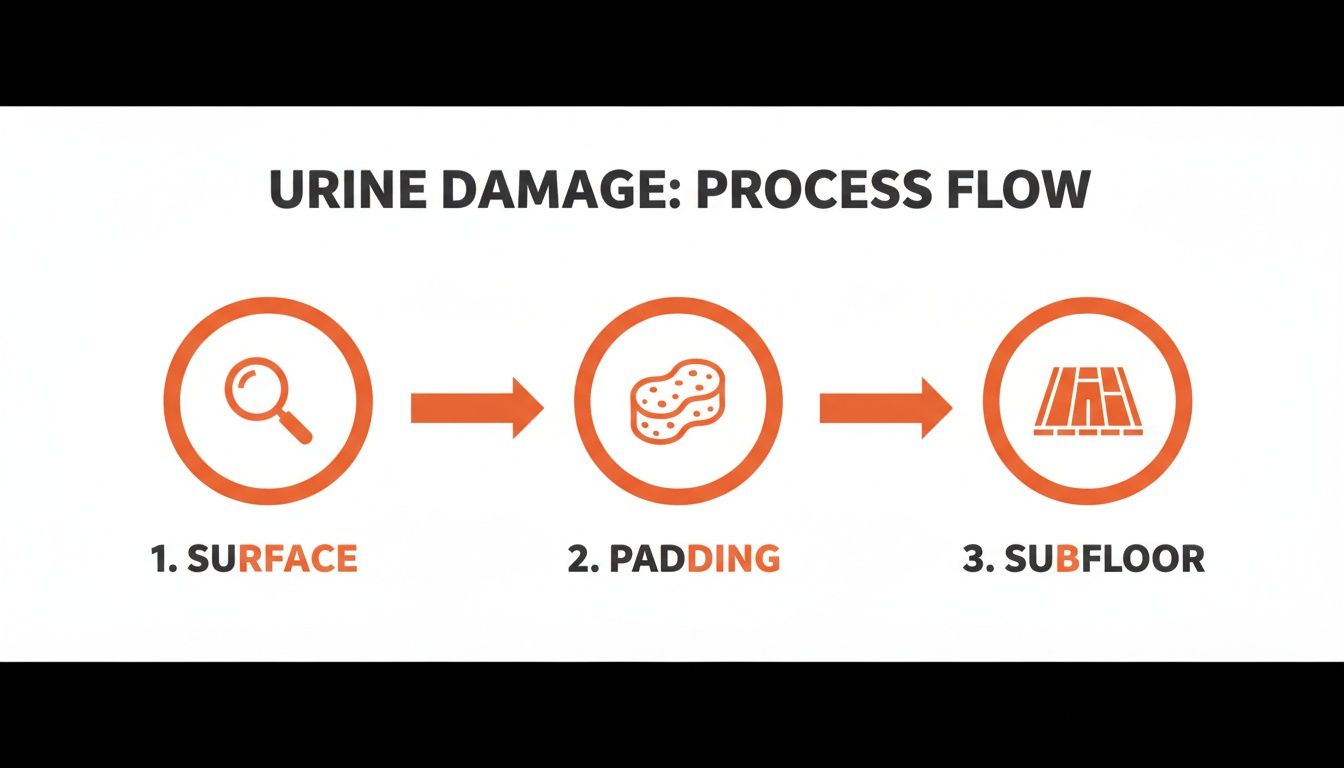
This is a perfect illustration of why just cleaning the surface never works and why immediate blotting is your best defense against that downward spiral.
Soaking Up the Last of the Odor
Okay, the final step in this emergency cleanup is to tackle any leftover moisture and odor. This is where baking soda becomes your best friend.
After you've blotted the vinegar solution, sprinkle a generous layer of baking soda over the entire damp spot. Don't be shy—you want a nice, visible coating. The baking soda will act like a giant sponge, wicking out the very last traces of moisture and odor from deep within the fibers.
Now, just let it sit until it's completely dry. This might take a few hours, or you may need to leave it overnight. You’ll probably see it clumping up as it works, which is a good sign it's absorbing everything. Once it's bone-dry, vacuum it all up thoroughly.
This initial process will neutralize the immediate smell and put your carpet in the best possible shape for a deeper clean if you find it's still needed.
How to Tackle Old, Set-In Stains and Odors
Tackling an old dog urine stain is a completely different ballgame. When an accident is fresh, speed is your best friend. But old, set-in stains have had plenty of time to work their way deep into the carpet fibers, crystallize, and bond with the material. This is where a simple blotting technique or a quick spritz of a surface spray just won't cut it.
To win this fight, you need a smarter strategy and the right tools. The first hurdle is often just finding all the problem areas. You might be surprised to learn that the spots you can see are only part of the problem.
Uncover Hidden Stains With a Blacklight
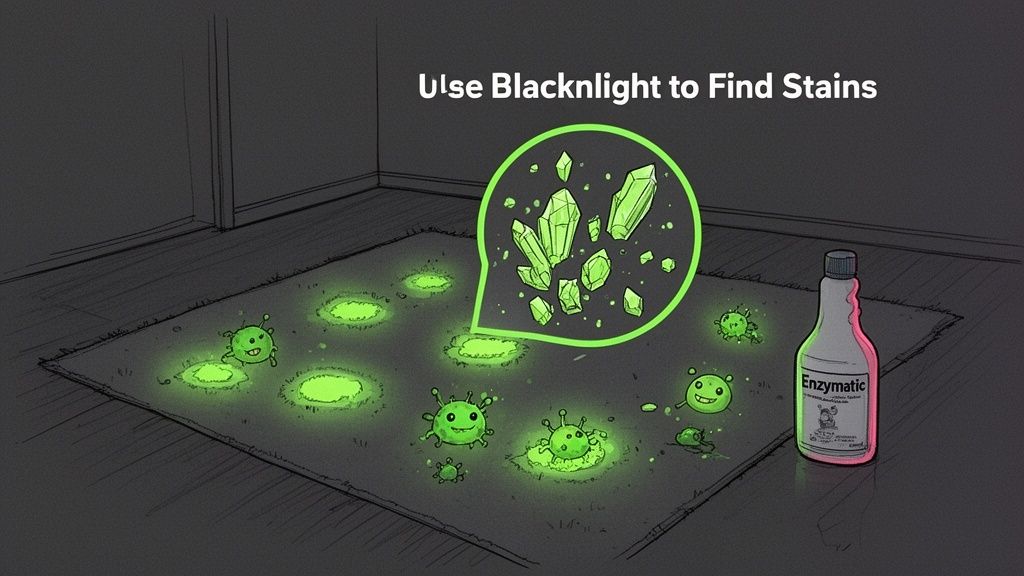
Your eyes can play tricks on you, but a UV blacklight never lies. Dried urine contains phosphorus and proteins that glow brightly under ultraviolet light, revealing every single old accident—even the ones totally invisible in daylight.
Using one is simple but incredibly revealing:
- Wait until it’s dark and turn off all the lights. The darker it is, the better.
- Slowly scan the carpet with the blacklight, holding it about a foot or two above the fibers.
- Old urine stains will light up in a distinct yellowish-green color.
Mark each glowing spot with a small piece of painter's tape. This creates a treasure map of every single area you need to treat. Don't be shocked if your carpet lights up like a Christmas tree; this is common and it’s a crucial first step for getting the job done right.
The Real Power of Enzymatic Cleaners
Once you’ve mapped out all the old stains, it's time to bring in the heavy artillery: enzymatic cleaners. These aren't your average carpet shampoos. They are biological formulas packed with beneficial bacteria that produce enzymes.
When you apply them to a urine stain, these enzymes get to work breaking down the specific organic compounds causing the problem—the uric acid crystals. The bacteria essentially "eat" the source of the stain and the odor until nothing is left. This is the only way to permanently destroy that smell, not just mask it for a little while. To get a better handle on the science, check out this guide explaining what an enzymatic cleaner is and how it really works.
Getting Maximum Impact From Your Enzymatic Cleaner
Just spraying an enzymatic cleaner on the surface and wiping it away is a waste of time and money. These cleaners need time and the right conditions to do their job. Think of it like sending in a microscopic cleanup crew that needs to stay on-site to finish the project.
First, always test the cleaner on a hidden spot, like inside a closet, to make sure it doesn't mess with your carpet's color. Once you know it's safe, follow these steps for the best results:
- Soak the Area: Be generous. You need to apply enough of the cleaner to soak all the way through the carpet and reach every layer the urine did—that includes the carpet backing and even the pad underneath. The treated area should be much larger than the visible stain on the surface.
- Let It Dwell: This is the most critical part. The enzymes need time to work their magic. Cover the damp area with a clean, damp towel to keep it from drying out too fast. Let it sit for at least 12 to 24 hours. Seriously, don't rush this step.
- Blot and Let It Be: After the dwell time is up, remove the towel and use clean, dry cloths to blot up as much excess moisture as you can. Then, just let the area air dry completely. This could easily take a day or two.
Whatever you do, don't use a fan or a heater to speed up the drying process. The enzymes work best in a damp environment. Letting it dry slowly and naturally gives them the maximum amount of time to break down those uric acid crystals.
If a pet stain has been sitting for weeks, the situation gets trickier. Urine can actually weaken the carpet's bonds and cause permanent dye changes, either bleaching the fibers or adding a nasty discoloration. Plus, the composition of urine changes based on a pet's health and diet, meaning some stains are just impossible to remove completely.
Without professional help, those urine residues can linger for up to six months, breeding bacteria and triggering asthma. A pro cleaning can remove up to 98% of pet-related allergens, but for older, stubborn stains, a single DIY application might not be enough. If a faint odor or spot remains after the carpet is fully dry, don't be afraid to repeat the entire process. A second round is often what it takes to finally get the job done.
Common Cleaning Mistakes That Make Things Worse
Even when you mean well, it’s surprisingly easy to make a dog urine problem a whole lot worse. A few wrong moves can turn a simple cleanup into a permanent stain or a smell that just won't quit. Trust me, knowing what not to do is just as important as knowing the right way to tackle dog urine on your carpet.
The wrong products or techniques can absolutely ruin your carpet fibers, lock in those awful odors for good, and even encourage your dog to use that same spot again. Let's walk through the biggest mistakes I see pet owners make, so you can avoid them and get your carpets truly clean.
Using an Ammonia-Based Cleaner
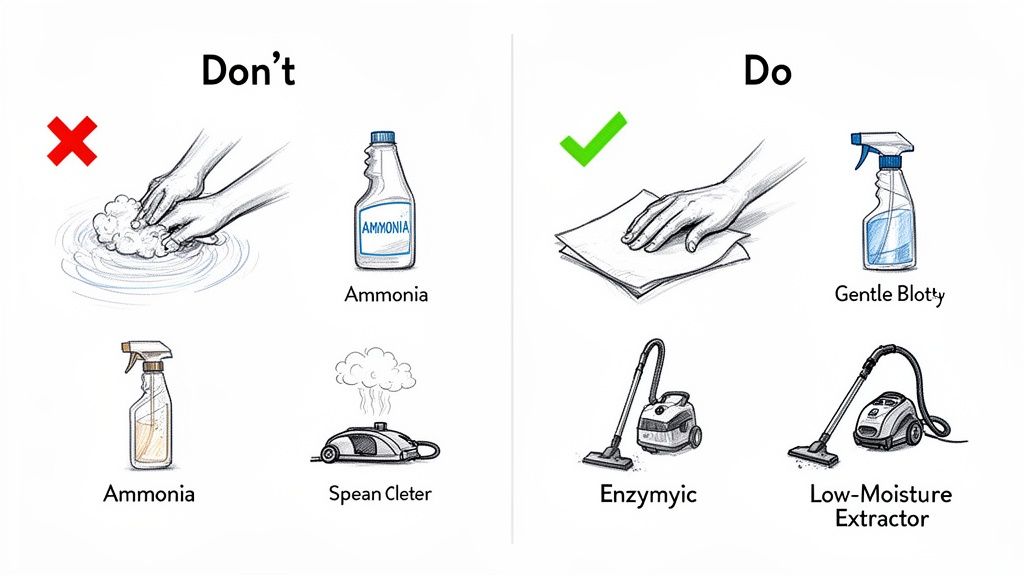
This one seems logical on the surface—urine contains ammonia, so a cleaner with ammonia should work, right? Wrong. This is a critical mistake. To a dog's incredible sense of smell, the ammonia in that cleaner smells an awful lot like urine itself. You're basically putting up a neon sign that says, "This is the perfect place to potty!"
You end up creating a frustrating cycle. You clean the spot, but your dog is drawn right back to that familiar scent, reinforcing the very habit you're trying to break.
Relying on a Steam Cleaner
Grabbing a steam cleaner or hot water extractor feels like bringing out the big guns. It seems like the best way to deal with deep-down stains. But when it comes to pet urine, that intense heat is your absolute worst enemy.
The high temperatures from a steam cleaner will essentially "cook" the proteins found in urine, bonding them permanently to your carpet fibers. This process sets both the stain and the odor, making them nearly impossible to ever get out.
Instead of fixing the problem, you've just made it a permanent part of your home. Always stick with cool or lukewarm water and cleaners specifically made for pet messes.
Scrubbing the Stain Aggressively
When you see a spot, the first instinct is to grab a brush and scrub like there's no tomorrow. I get it. But this does way more harm than good.
- You're pushing the urine deeper. All that aggressive scrubbing just forces the liquid down out of the carpet fibers and into the backing and the pad underneath. You're spreading the contamination.
- You're damaging the carpet. That friction untwists and frays the carpet fibers, creating a fuzzy, worn-out patch that honestly looks worse than the original stain ever did.
- You're making the stain bigger. Rubbing a spot just pushes the urine outwards, growing the affected area.
The right way is to blot gently. Use a clean, absorbent cloth and press down firmly to lift the liquid up and out of the carpet.
Overlooking Pet-Safe Cleaning Options
Lots of powerful household cleaners are loaded with harsh chemicals that can be really harmful to your pets if they inhale or ingest them. It's so important to choose products that are specifically made to be safe for use around animals.
You can learn more about why pet-safe carpet cleaning matters and what to look for in a product. Going with a non-toxic, pet-friendly cleaner means you're not just trading one problem for a potentially much more serious one.
When to Call a Professional Carpet Cleaner
Let's be honest, sometimes you do everything right and the problem still won't go away. You’ve blotted, sprayed enzymatic cleaners, and followed every DIY trick in the book, yet that faint, unmistakable smell returns on a humid day. Or maybe a shadowy stain keeps reappearing like a ghost.
This is the frustrating reality for so many of us with pets. When this happens, it’s a clear sign the urine has gone deeper than any surface treatment can possibly reach. It's not your fault; you're just not equipped to fight a battle that's happening deep inside the carpet padding and subfloor.
Knowing when to throw in the towel on DIY and call a professional is the key to protecting your carpet investment and, frankly, your sanity.
Has the Stain Gone Deeper?
Certain situations almost always need a pro's touch. These are the classic signs that urine has soaked straight through the carpet backing, saturated the thick padding underneath, and possibly even seeped into the wooden subfloor.
You’re no longer just cleaning carpet fibers at this point. You're dealing with a multi-layered contamination problem.
Here are the tell-tale signs that it’s time to pick up the phone:
- The Smell That Won't Die. If the odor comes back after you've cleaned, especially when the air is damp, it means uric acid crystals are still active deep down.
- "Wicking" Stains. You clean a spot and it looks great. A day or two later, it’s back. This is a classic sign of wicking, where urine trapped in the padding is drawn back up the carpet fibers as the surface dries.
- Years of "Little" Accidents. The buildup from many small accidents over time can lead to widespread saturation that's impossible to spot-treat effectively.
- A Major Spill. One big accident, especially from a larger dog, can instantly flood every layer of your flooring. A surface cleaner doesn't stand a chance.
The Hidden Damage Underneath
The real trouble with dog urine is what you can't see. We've seen it time and time again, especially in rentals. Landlords pull back the carpet to find that urine has soaked through the padding and started to rot the wooden subfloor.
This kind of damage can lead to replacement costs that are shockingly high—far more than professional cleaning would have been. On top of that, urine can chemically damage carpet dyes. In beige carpets, for example, it often attacks the blue dyes, causing permanent red or yellow stains to appear months later.
When you hire a professional, you're not just getting a better cleaning product. You're paying for powerful, commercial-grade equipment and the expertise to solve problems happening far beneath the surface of your carpet.
How a Professional Tackles Pet Urine
Professional carpet cleaners bring a whole different level of technology to the fight. Our low-moisture, citrus-based cleaning process, for instance, is specifically designed to knock out dog urine.
Most cleaners use soaps or shampoos that leave behind a sticky, dirt-attracting residue. We don't. Our natural citrus solvent gets to work breaking down the oils and proteins in the urine without all that gunk.
Crucially, this method avoids oversaturating the carpet. Pumping tons of water into a pet stain is a huge mistake—it just pushes the urine deeper and spreads it across a wider area of the pad. Our process uses just enough moisture to activate the cleaner before our powerful extraction equipment pulls all the dissolved contaminants out from deep within the fibers.
This gives pet owners a few major advantages:
- No Sticky Residue. Without a soapy film left behind, your carpet stays cleaner for much longer.
- Dries in 1-2 Hours. We use way less water, so your carpets are typically dry in just 1-2 hours, not days. No more soggy carpets or risk of mildew.
- True Odor Removal. By pulling the source of the problem out of the padding, we eliminate the uric acid crystals that cause those nasty, lingering smells.
Deciding if it's the right time to bring in an expert can be tough. For a closer look at the value, check out our guide on whether professional carpet cleaning is worth it. When you’re up against a stubborn dog urine problem, calling in a pro isn't giving up—it's the smartest move you can make.
Your Top Dog Urine Removal Questions Answered
Even with the best plan, tackling a dog urine problem can bring up a lot of questions. Let's be honest, it can feel a little overwhelming, and every single situation is different. To give you some extra confidence, I've put together answers to the most common questions I hear from pet owners just like you.
Think of this as your personal cheat sheet for those tricky "what-if" moments. Getting the right information is the key to successfully treating dog urine on your carpet and, more importantly, not making the problem worse by accident.
Will Baking Soda and Vinegar Really Get the Smell Out?
Baking soda and vinegar are a fantastic first-aid kit for a fresh accident. The vinegar is great at neutralizing the sharp ammonia smell you notice right away, while the baking soda does a solid job of soaking up any leftover moisture and odors on the surface.
But here’s the catch: they’re not a permanent fix. The real culprit behind that lingering, reappearing pee smell is the uric acid crystals. These little crystals don’t dissolve in water and will spring back to life with any bit of humidity, releasing that phantom odor all over again. To truly destroy them for good, you have to bring in the big guns—an enzymatic cleaner.
Can I Just Use My Home Carpet Shampooer?
I get this question all the time, and my answer is always a hard "no." Using a standard home carpet shampooer for pet urine is a huge gamble. Most of these machines use heat, which can literally cook the protein-based stain into your carpet fibers, setting it permanently. Once that happens, it's next to impossible to reverse.
On top of that, those machines tend to blast the carpet with far too much water and just don't have the commercial-grade suction to pull it all back out. All that extra water just pushes the urine deeper, spreading it across the padding and maybe even down to the subfloor. A tiny spot can quickly become a massive, hidden disaster zone.
My Dog Keeps Peeing in the Same Spot! How Do I Stop It?
This is easily one of the most frustrating things a pet owner can deal with, and it almost always comes down to one thing: scent. A dog's sense of smell is thousands of times more powerful than ours. Even when you think a spot is spotless, your dog can still pick up the faint scent markers left behind.
That scent is basically a bright, flashing sign that says, "This is an approved bathroom spot."
The only way to break this frustrating cycle is to completely obliterate that scent marker. You need a high-quality enzymatic cleaner that will literally break down and consume every last trace of those uric acid crystals. When the spot is truly odor-free to your dog, they'll no longer be drawn to it. If the behavior keeps up after a thorough cleaning, it's always a good idea to check with your vet to rule out any medical issues.
How Is a Professional Cleaning Different for Pet Stains?
A professional approach is a whole different ballgame because we target the problem at its source without the risks of DIY methods. Instead of soaps that leave behind a sticky residue that just attracts more dirt, we use specialized, non-toxic solvents engineered to dissolve stains and odors.
Most importantly, a professional low-moisture system—like the one we use—avoids the overwetting that sends urine deep into your carpet's padding. We follow that with powerful, truck-mounted extraction equipment that physically pulls all the dissolved gunk out of your carpet for good. This process accomplishes three critical things:
- It gets rid of the visible stain.
- It completely eliminates the odor-causing bacteria and crystals.
- It stops stains from wicking their way back to the surface as the carpet dries.
This is, hands down, the most reliable way to handle those deep-set or recurring pet urine problems in your carpet.
Ready to finally get rid of those stubborn stains and odors for good? The expert team at Citrus Carpet Cleaning Buford uses a proven low-moisture, citrus-based system to safely and effectively remove pet urine from your carpets without leaving behind sticky residues. Schedule your "EXACT-imate" today!