

We've all been there. That slow-motion moment when the coffee mug topples over. It's a universal feeling of dread, but getting coffee stains out of carpet doesn't have to ruin your day. The trick is to jump into action fast—and with the right moves. How you react in those first few seconds makes all the difference.
Why Acting Fast Is Your Best Defense
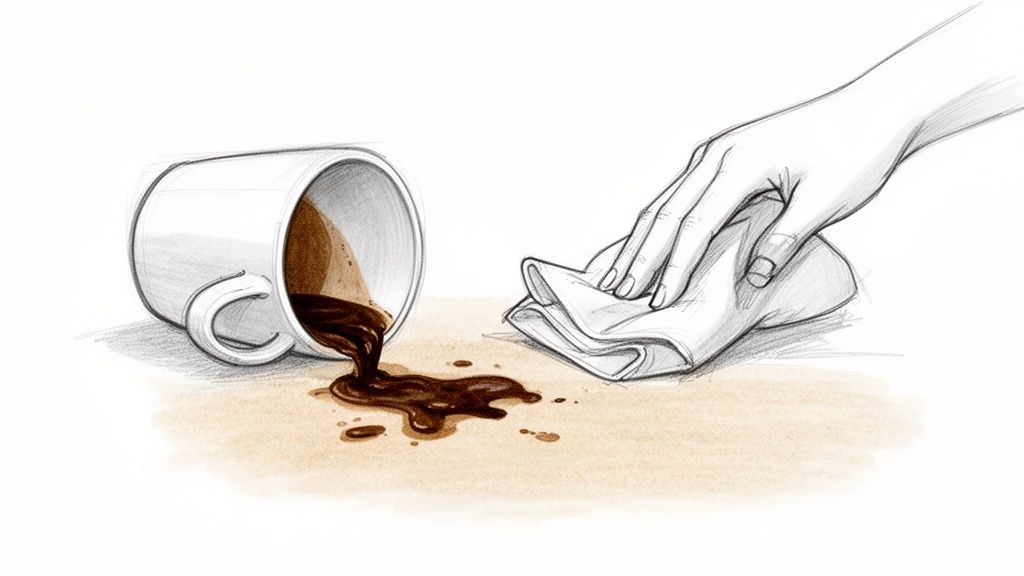
It happens in a flash. You bump the end table, the dog's tail whips by, and suddenly there's a dark brown puddle soaking into your beautiful beige carpet. The panic is real, but what you do next is what truly matters.
The Science of a Coffee Stain
So, what makes coffee such a tough stain? It's loaded with natural compounds called tannins, the very same stuff you find in red wine and tea. Think of tannins as natural dyes just looking for a home, and your porous carpet fibers are prime real estate. As soon as that coffee hits, the tannins start to grab on and bond.
This is exactly why speed is your secret weapon. The longer that coffee sits, the deeper those tannins work their way in, creating a chemical bond that can become permanent.
Blotting: The Cardinal Rule
Before you even think about grabbing a cleaner, your first and most critical move is to blot. Get a clean, white cloth (or a good stack of paper towels) and press it firmly onto the spill.
Your only goal here is absorption. Press down hard to pull as much of that coffee out of the carpet as you can. Always work from the outside edge of the spill inward to keep it from spreading. Whatever you do, don't scrub!
Scrubbing a fresh spill is a huge mistake. It does two things, both bad:
- It actually forces the coffee deeper into the carpet fibers.
- It can damage the carpet yarn itself, causing it to fray and look fuzzy forever.
Mastering this one simple blotting technique can turn a potential disaster into a totally manageable cleanup. It’s the perfect first step to getting that stain out for good.
Your Go-To Toolkit for Fresh Coffee Spills
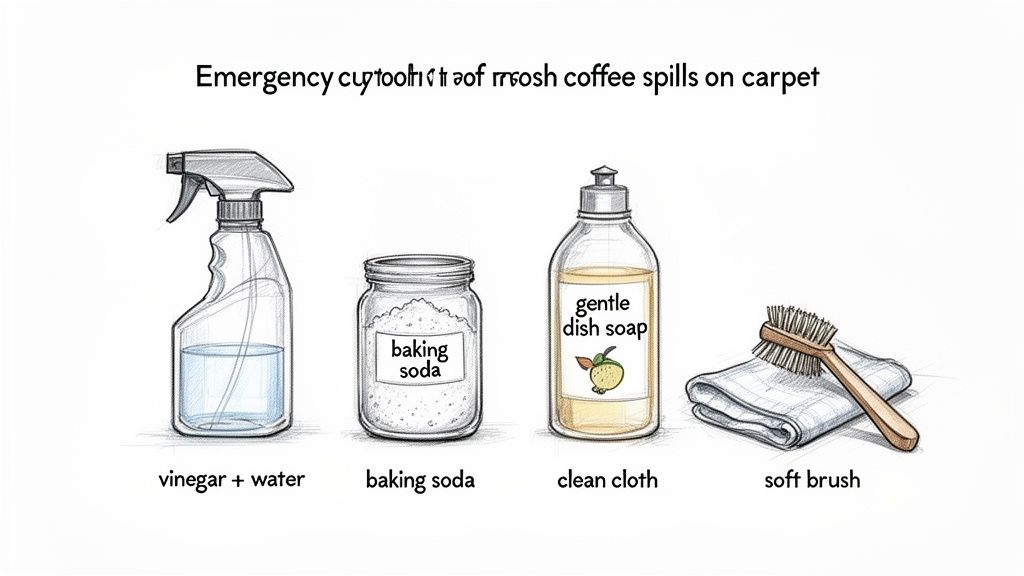
When you're fighting to get coffee stains out of carpet, you don't always need a fancy store-bought cleaner. A quick trip to your kitchen cabinet will usually do the trick, as long as you know what you're doing. The real secret is using the right stuff in the right way so you don't accidentally set the stain or damage your carpet.
Before you go all in, always patch-test your cleaning solution. Find a hidden spot—maybe inside a closet or under the sofa—to make sure it doesn't bleach or discolor the fibers. It's a small step that can save you a huge headache.
The Vinegar and Water Method
White vinegar is one of the most reliable tools in the DIY arsenal. It has a mild acidity that's fantastic at breaking down the tannins in coffee, but it’s gentle enough for most synthetic carpets.
Just mix one part white vinegar with one part cool water. Grab a clean, white cloth, dip it in the mix, and wring it out well. You want it damp, not soaking wet. Then, gently dab—don't rub!—the stain. Keep blotting with a clean, dry section of the cloth until you see the coffee lifting away.
The Baking Soda Paste Technique
If you're dealing with a larger spill, baking soda is your best friend. It’s super absorbent and literally pulls the coffee up and out of the carpet fibers. It's a pretty neat trick.
- Whip up a paste using three parts baking soda and one part water.
- Carefully spread the paste over the entire stain, making sure it's completely covered.
- Now, you just have to wait for it to dry completely. This can take a few hours, so be patient.
- Once it’s dry and crusty, just vacuum up the residue.
The best part? Baking soda is a natural deodorizer, so it tackles that lingering stale coffee smell at the same time. If you're interested in other simple but powerful cleaners, check out our guide on the best homemade carpet cleaner recipes.
Gentle Dish Soap Solution
Not a fan of the vinegar smell? A simple dish soap solution can work wonders, too. The key is to use a clear, non-bleach dish soap. You don't want to risk adding color to your carpet while trying to remove a stain.
Mix about a quarter teaspoon of the soap into a cup of warm water. Apply it sparingly with a cloth, blotting gently from the outside of the stain inward.
CRITICAL TIP: You absolutely have to rinse this solution out. Any soap left behind will become a sticky magnet for dirt, and you'll end up with a new dark spot right where the old one was.
Now, while these home remedies can definitely save the day, they aren't miracle workers. Industry research actually shows that DIY attempts with vinegar or dish soap are only successful about 32% of the time. Often, they leave behind a faint brownish shadow that seems to reappear days later as the stain oxidizes. It's also vital to know what your carpet is made of; for example, there are very specific rules for how to care for wool rugs that don't apply to synthetics.
DIY Coffee Stain Removal Methods at a Glance
To make things even easier, here's a quick cheat sheet for the most common home remedies. It breaks down what to use and when.
| Method | Mixture | Best For | Caution |
|---|---|---|---|
| Vinegar & Water | 1 part white vinegar, 1 part cool water | Most synthetic carpets; breaks down dark tannins effectively. | Strong smell; always patch-test on a hidden area first. |
| Baking Soda Paste | 3 parts baking soda, 1 part water | Highly absorbent for fresh, wet spills; also neutralizes odors. | Can be messy; requires several hours to dry before vacuuming. |
| Dish Soap | 1/4 tsp clear dish soap, 1 cup warm water | A gentle alternative to vinegar for light-colored carpets. | MUST be rinsed thoroughly to prevent sticky residue that attracts dirt. |
Remember, these are your first line of defense. They're great for immediate action but might not be enough for a tough, set-in stain.
Confronting Old and Dried Coffee Stains
So, you found a coffee stain from yesterday… or last week. We’ve all been there. This is a much bigger challenge than a fresh spill. A dried, set-in stain is a whole different beast because time has allowed oxidation to do its dirty work. That chemical process has basically bonded the coffee's dark tannins deep into your carpet fibers, acting almost like a dye.
Forget just blotting. Your first move now is to carefully rehydrate the spot. Grab a spray bottle with cool water and lightly dampen the stain. This is a crucial first step—it "wakes up" the stain, making it ready to accept the cleaning solution you're about to use.
A Stronger Approach for Stubborn Marks
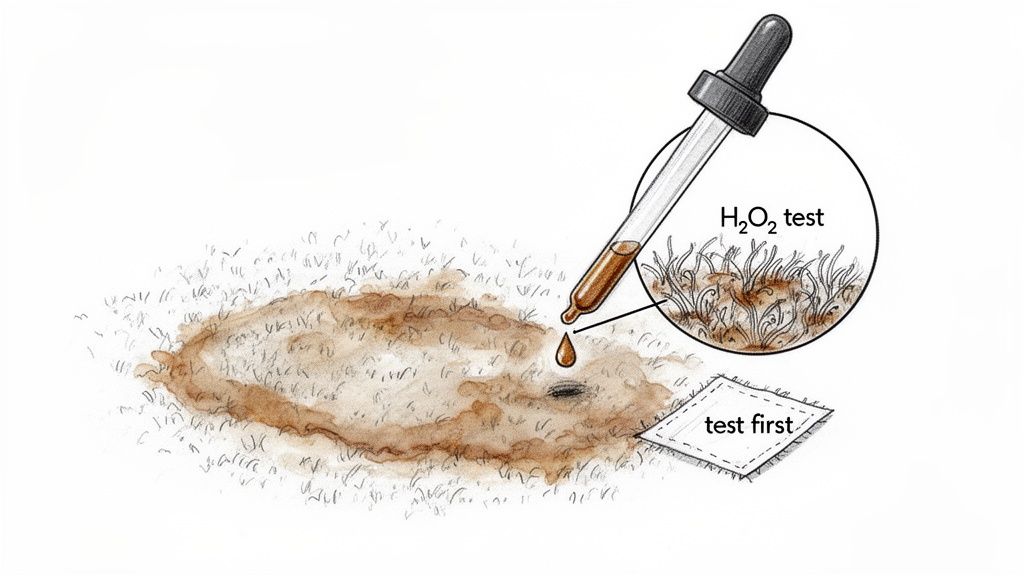
For these tough, settled-in situations, you’ll probably need to bring out something with a little more punch than vinegar and dish soap. A hydrogen peroxide solution can be really effective, but you have to be extremely careful. It's a mild bleach, and it can discolor your carpet if you're not cautious.
- Mix Up the Solution: Combine one part 3% hydrogen peroxide with two parts water. I like to add a single drop of clear, non-bleach dish soap to help break down any oily residue left in the stain.
- Always Test First: This is non-negotiable. Before you go near the stain, find a hidden spot on your carpet—think inside a closet or under the sofa. Apply a tiny amount of your solution and let it sit for at least 15-20 minutes. You're checking to make sure it doesn’t bleach or change the color of your carpet.
- Apply and Be Patient: Once you've confirmed it's safe, lightly apply the solution to the rehydrated stain. Now, you wait. Let it sit for up to 30 minutes. You need to give the peroxide time to work its oxidizing magic and break down those coffee tannins. Then, come back with a clean, white cloth and gently blot to lift the stain away.
It's really important to have realistic expectations here. If that stain is sitting on natural fibers like wool or it's been there for a very long time, it might have permanently dyed the carpet. Sometimes, even the best DIY methods just can't completely undo a set-in stain.
Knowing the limits of what you can do at home is key to protecting your carpet. For a deeper dive, check out our guide on removing set-in carpet stains. If that mark just refuses to budge, that's a pretty clear signal it’s time to call in a professional.
Common Mistakes That Make Coffee Stains Worse
In that split-second panic after a coffee cup tumbles, it’s all too easy to make a mistake that locks in a stain for good. Believe me, knowing what not to do is just as important as the right cleaning technique. Avoid these all-too-common blunders and you’ll save your carpet from a permanent blemish.
Your first gut reaction is probably to scrub the living daylights out of it. Don't. Aggressively scrubbing a fresh spill just grinds the coffee deeper into the carpet fibers and can even cause them to fray. You end up with a fuzzy, damaged patch that looks ten times worse than the original stain ever did.
What to Avoid at All Costs
Grabbing the wrong tool or a harsh chemical can backfire, and fast. Stay away from these guaranteed stain-setters:
- Colored Towels: Never, ever grab a colorful dish towel or a paper towel with a nice pattern on it. The dyes in those towels can transfer right onto your light-colored carpet, leaving you with a brand-new, multi-colored stain to deal with. Always stick with plain white cloths or towels.
- Too Much Water: It seems like a good idea to just flood the area with water, right? Wrong. Dousing a stain only soaks the carpet backing and the pad underneath. This not only spreads the stain but creates the perfect dark, damp environment for mold and mildew. A little moisture goes a long way.
- Harsh Chemicals: Reaching for the bleach or an ammonia-based cleaner is a one-way ticket to disaster. These chemicals don't just clean; they strip the color right out of your carpet fibers, leaving a bleached-out spot that is absolutely impossible to fix.
The goal is to lift the stain out, not annihilate the carpet fibers in the process. Harsh chemicals almost always cause more harm than good, leading to damage that's far more expensive than the original spill.
This is where the pros know the difference. Our citrus-based, low-moisture system, for instance, has a 95% restoration rate for tough stains. Compare that to bleach-based alternatives, which can permanently damage carpet fibers up to 60% of the time. You can learn more about professional cleaning industry insights and see why the right method protects your investment.
When Your Best Efforts Aren't Enough
So, you’ve tried everything. Vinegar, baking soda, blotting, rinsing… you’ve done it all. But that stubborn brown shadow just won't budge. You’re left with the ghost of that coffee spill, and it's staring right back at you.
This is the point where more scrubbing can do more harm than good. If you’re dealing with a huge spill that soaked deep into the carpet padding, or if you're working on a delicate wool or silk rug, it’s time to stop. These situations need a professional touch to avoid permanent fiber damage or discoloration.
Another classic sign you're in too deep? The stain mysteriously reappears a day or two later. This frustrating little trick is known as "wicking," and it’s a sure sign the problem is deeper than you think.
Knowing When to Call a Pro
Wicking happens all the time with DIY methods that use too much water. The surface looks clean, but the spill is still trapped down in the padding. As the carpet dries, that moisture rises, bringing the stain right back to the surface with it.
Professional services, like our citrus-based, low-moisture system at Citrus Carpet Cleaning Buford, are specifically designed to prevent this. We clean deep without oversaturating your carpet. That means no sticky soap residue gets left behind to attract even more dirt. It’s a huge advantage when you need to get coffee stains out of carpet for good.
Beyond looks, untreated spills can become a health concern for families and pet owners. Did you know untreated coffee stains can harbor bacteria growth up to 10 times higher than clean carpets? That can lead to nasty odors that linger for months.
This chart shows some of the most common mistakes that turn a simple spill into a permanent problem.
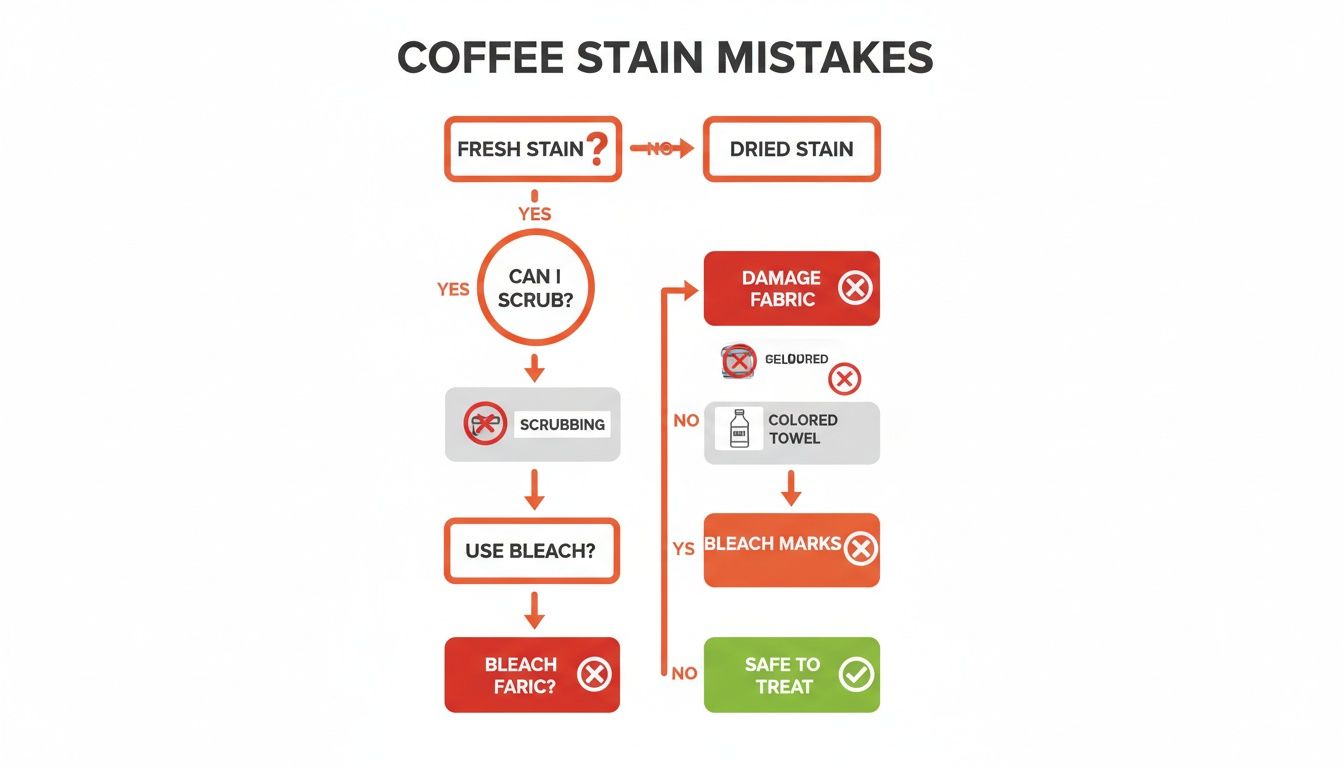
As you can see, aggressive scrubbing, using colored towels, and applying harsh chemicals like bleach are surefire ways to make that stain worse.
When a stain resists multiple gentle cleaning attempts, the risk of damaging your carpet by trying again outweighs the potential reward. That’s the signal to tag in an expert to save your carpet and your sanity.
Deciding to switch from DIY to a pro can feel tough, but knowing these signs protects your investment. Wondering if it’s the right move for you? We break down the cost and benefits in our guide exploring if professional carpet cleaning is worth it.
Your Coffee Stain Questions Answered
Even after you think you’ve won the battle, a few questions about coffee stains tend to pop up. Getting these details right can make the next spill (and let's be honest, there will be a next one) a whole lot less stressful.
Can I Just Use a Store-Bought Carpet Cleaner?
You can, but you have to be careful. A lot of the cleaners you grab off the shelf are packed with harsh soaps that leave a sticky, gummy residue behind. That residue is like a magnet for dirt, and before you know it, you’ve got a brand-new dark spot right where the coffee stain used to be.
If you go this route, always remember two things:
- Test it first. Find a hidden spot, like inside a closet, and make sure it doesn't bleach or discolor your carpet.
- Follow the directions to the letter. Don't drown the carpet thinking more is better—it's not.
Does Adding Milk or Sugar Make the Stain Worse?
Oh, absolutely. It's a game-changer. When you spill a latte or a sweetened coffee, you're not just dealing with a simple brown stain anymore.
The sugar creates a sticky film that grabs onto every speck of dirt, while the proteins in milk can actually sour deep in the carpet fibers. If you don't get it all out, you'll be dealing with a nasty odor in a few days. These "combo stains" are a whole different beast and often need professional-grade cleaners to truly break everything down.
Spills don't just happen on the floor, of course. Knowing how to remove furniture stains like a pro is just as crucial for keeping your whole house looking sharp. The same rule applies: act fast, and know your materials.
Ultimately, the best defense is a good offense. A professional-grade carpet protectant creates an invisible shield, giving you precious extra time to blot up spills before they have a chance to set in.
If you're tired of fighting spots that just won't budge, Citrus Carpet Cleaning Buford offers a better way. Our low-moisture, citrus-based cleaning lifts stains completely without leaving any of that sticky, dirt-attracting residue behind.
Call or text us today for your free EXACT-imate!