
We’ve all been there. That slow-motion, heart-in-your-throat moment when a warm coffee mug slips, and your morning pick-me-up becomes a sprawling brown puddle on your favorite rug. It's a universal feeling.
That Heart-Stopping Moment a Coffee Spill Happens
Before you panic, take a breath. The key to successfully getting coffee out of a rug is to act immediately.
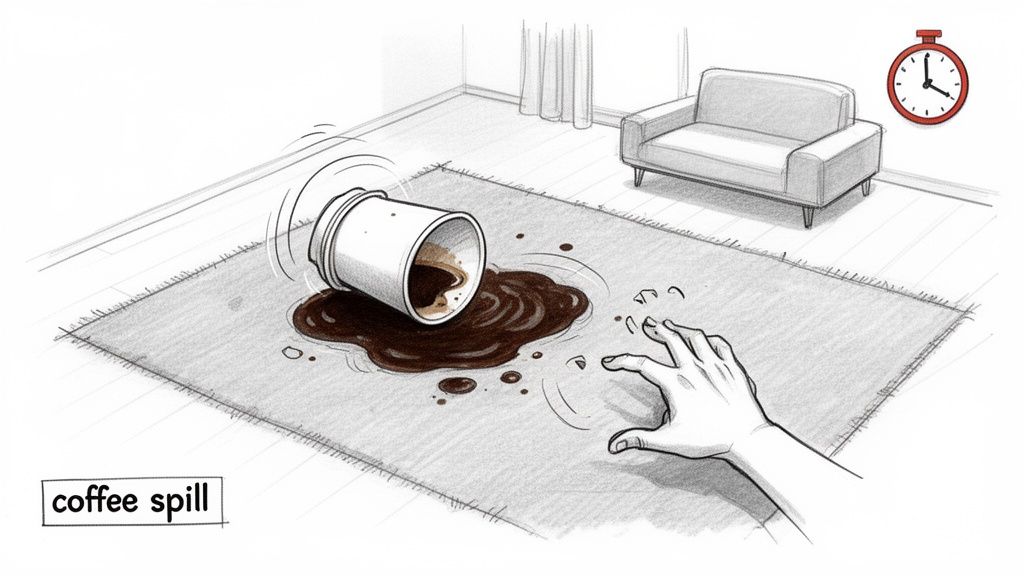
Your first instinct might be to grab a cloth and start scrubbing for dear life. Don't do it! Aggressive scrubbing is the absolute worst thing you can do—it just grinds the coffee deeper into the rug fibers and can permanently damage them.
Instead, you need to blot. Gently press a clean, dry cloth onto the spill to lift as much liquid as you possibly can. This simple first response is what prevents the stain from setting in and becoming a real problem.
The goal is always to lift the stain out, never to drive it further in. Your initial reaction in the first few minutes makes all the difference between a minor cleanup and a lasting problem.
This guide moves past the generic advice to give you practical, actionable steps that actually work. We'll give you an immediate action plan to confidently tackle that fresh spill so it doesn't become a permanent fixture.
Of course, the best defense is a good offense. For anyone looking to be proactive, learning more about professional rug stain protection can save you a lot of future headaches.
Ultimately, knowing the right technique empowers you to handle these everyday mishaps. But for those really tough, set-in stains in the Buford area, we'll also cover when calling in an expert like Citrus Carpet Cleaning Buford is the smartest move you can make for your home.
Your Immediate Action Plan for Fresh Coffee Spills
That moment your morning coffee goes flying can feel like a slow-motion disaster. But believe me, what you do in the first five minutes makes all the difference between a minor cleanup and a permanent new feature on your rug.
The mission is simple: get the liquid out of the rug fibers, not push it deeper.
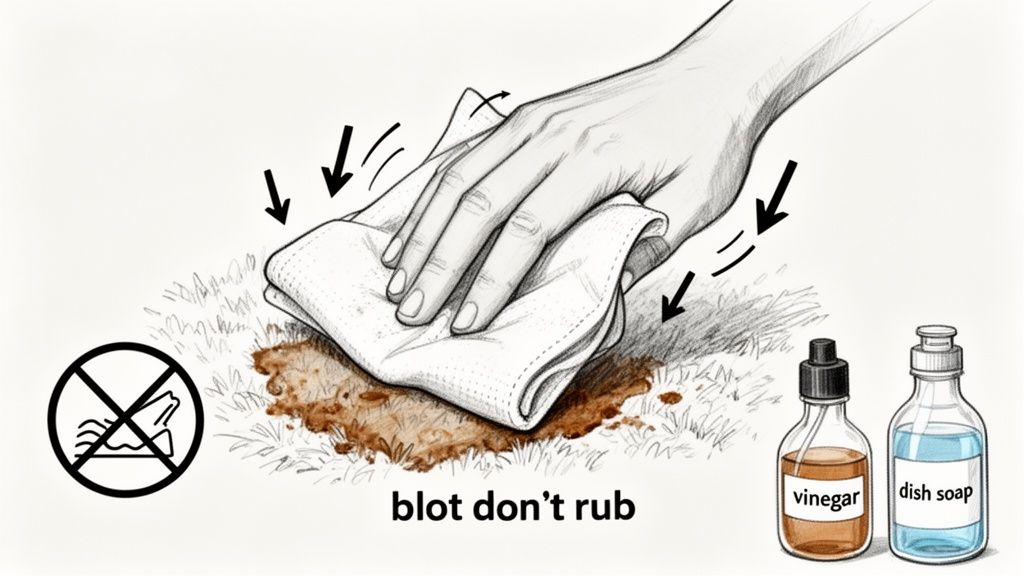
First thing's first—grab a clean, white, absorbent cloth or a handful of paper towels. Why white? Because a colored towel can easily bleed its dye right into your rug, giving you a second, much tougher stain to deal with.
Press down firmly on the spill. Let the cloth soak up as much of that coffee as it can. Lift it, find a dry part of the cloth, and do it again. Keep blotting until you’re not seeing any more coffee transfer to the towel. Always work from the outside edge of the stain toward the center to keep it from spreading.
Create a Simple DIY Cleaning Solution
Once you’ve soaked up the excess, it’s time to tackle what’s left. You don't need a harsh chemical cleaner; a simple, gentle homemade solution is usually all it takes for most rug types.
- Vinegar and Soap Mix: Just combine one tablespoon of clear, unscented dish soap and one tablespoon of white vinegar with two cups of cool water. Whatever you do, don't use hot water. Heat is your enemy here. It can cause the tannins in the coffee to chemically bond with the rug fibers, setting the stain for good.
Using a fresh, clean cloth, dab this solution sparingly onto the stain. Again, dab, don't rub. Let it sit for a few minutes so it has time to work its magic and break down the coffee. Then, take a dry cloth and blot the area to lift both the solution and the stain out.
Crucial Tip: Never, ever saturate your rug with a cleaning solution. Too much liquid can seep into the padding underneath, which is a perfect recipe for mildew growth and can even damage the rug’s backing over time.
Rinse and Dry the Right Way
After you've treated the spot, you need to "rinse" it to get rid of any soap residue. Just dampen a new cloth with plain cold water and blot the area again. This is a vital step because any soap left behind will become sticky and attract dirt like a magnet.
To finish up, lay a thick, dry towel over the damp area and weigh it down with something heavy—a stack of books works perfectly. Let that sit for several hours to pull out as much moisture as possible. After that, you can let it air dry completely.
It's no surprise that dealing with stubborn spills can be a massive headache. That frustration is a big reason why the professional carpet and upholstery cleaning market is projected to grow from USD 2.62 billion in 2024 to USD 3.93 billion by 2030. This just shows how often people turn to experts for guaranteed results, especially with something as common as a coffee spill. You can read more about the trends driving the carpet cleaning industry on Accio.com.
What About Old and Dried Coffee Stains?
We’ve all been there. You move a piece of furniture and discover a coffee stain that’s long past fresh. It’s dried, it’s set, and it feels like a lost cause. But it’s definitely not.
A dried stain just takes a little more elbow grease and a slightly different approach than a fresh spill. The real challenge is that the tannins in the coffee have had plenty of time to grab hold and bond with the rug fibers, making them much more stubborn.
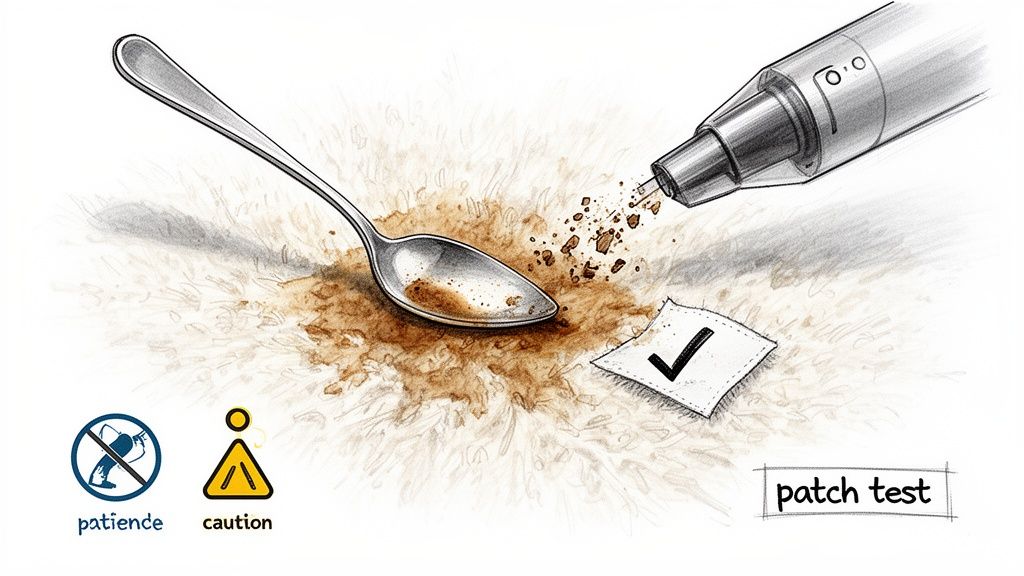
Your first move is to break up that crusty residue. Take the edge of a spoon and gently scrape away any dried coffee from the rug. The key here is to be careful—you don’t want to pull or snag the threads. Once you’ve flaked off as much as you can, give the area a good vacuuming to suck up all those loose bits.
Rehydrating and Lifting the Stain
With the crust gone, it's time to rehydrate the stain to make it workable again. You’ll want to dampen the spot with a cloth soaked in cool water. Don't drench it; just get it damp enough to soften things up. Now you can bring back that vinegar and dish soap solution we talked about for fresh stains.
If you're dealing with a particularly stubborn spot on a light-colored synthetic rug, you might need something stronger. A mix of one part 3% hydrogen peroxide to three parts cool water can do the trick. But this comes with a serious warning.
Crucial Safety Note: Hydrogen peroxide is a mild bleach. You absolutely have to perform a patch test on a hidden area of your rug first—think under the sofa or in a closet. Let the test spot dry completely to make sure there's no color loss before you even think about putting it on the visible stain.
The Final Steps for Set-In Stains
Once you've applied your solution, let it sit for about five minutes. Then, start blotting the area with a clean, dry cloth. You’ll probably have to repeat this process a few times to completely lift the coffee out. Patience is everything when it comes to old stains. If you want a deeper dive, check out our guide on removing set-in carpet stains.
Honestly, the sheer difficulty of getting out tough, dried stains is a big reason why the professional carpet cleaning industry is booming. The global market, which was valued at USD 43.23 billion in 2024, is expected to hit USD 57.34 billion by 2030. That growth tells you one thing: more and more homeowners are deciding to call in the experts for guaranteed results on these kinds of frustrating problems.
Cleaning Coffee Stains on Different Rug Materials
Not all rug fibers are created equal, and treating a coffee stain is definitely not a one-size-fits-all job. You can be a bit more aggressive with a durable synthetic rug, but that same approach could permanently ruin a delicate wool or silk heirloom. It all comes down to knowing what your rug is made of and acting accordingly.
Most synthetic rugs—think nylon, polyester, or olefin—are built to withstand daily life. They’re generally tough and pretty resistant to water-based stains like coffee, which gives you more options. The vinegar and dish soap solution we talked about earlier is perfectly safe here. If you're dealing with an older, stubborn stain on a light-colored synthetic rug, you can even try a carefully tested hydrogen peroxide solution to lift it.
Handling Natural Fiber Rugs with Care
When you’re working with natural fibers like wool, silk, or jute, you have to switch gears and take a much gentler approach. These materials are incredibly absorbent and can be easily damaged by the wrong chemicals or too much moisture.
- Avoid Harsh Chemicals: Whatever you do, keep ammonia-based cleaners or strong detergents away from wool and silk. They can strip the natural lanolin from wool fibers, leaving them dry and brittle. On silk, they can cause permanent discoloration.
- Use Minimal Water: Over-saturating natural fibers is one of the biggest mistakes you can make. Wool can hold up to 30% of its weight in water before it even feels damp, creating a perfect environment for mildew and rot if it isn't dried properly. Too much water on jute can cause browning and weaken the fibers.
- Blot, Never Rub: This rule is twice as important for natural fibers. Their structure makes them prone to fraying and fuzzing if you scrub them, so always blot gently.
A common problem with DIY cleaning on any rug is leaving soap residue behind. That sticky film is a dirt magnet, making the spot look dirty again in no time. This is exactly the kind of issue that professional low-moisture cleaning, like the citrus-based method we use at Citrus Carpet Cleaning Buford, is designed to prevent.
When you're trying to get coffee out of a rug made from natural fibers, the goal is to be as gentle as possible. Less is always more—less water, less cleaner, and less agitation.
Treating coffee spills on different rug materials requires knowing the right approach for each fiber type. Below is a quick guide to help you choose the best method and avoid common mistakes.
Rug Fiber Stain Removal Guide
| Rug Fiber | Recommended Cleaner | Technique To Use | What To Avoid |
|---|---|---|---|
| Synthetic (Nylon, Polyester) | Mild dish soap & white vinegar solution | Blot gently, can handle light scrubbing | Harsh chemicals like bleach; excessive heat |
| Wool | pH-neutral wool-safe cleaner or vinegar/water | Blot only; use minimal water and dry quickly | Hot water, ammonia, alkaline detergents |
| Silk | Diluted white vinegar & cool water | Blot delicately with a clean white cloth | Any heat, vigorous rubbing, enzymatic cleaners |
| Jute or Sisal | Dry cleaning powder or minimal vinegar/water | Scrape solids, blot dampness immediately | Over-saturating with water, steam cleaning |
Remember, this table is a general guide. Always test any cleaning solution on a small, hidden spot first to ensure it won't cause damage or discoloration.
While this guide covers some solid general advice, you can find more detailed methods for cleaning coffee stains on different rug materials that often require a more specialized touch. And for a deeper dive into overall home care, check out our comprehensive guide on how to clean area rugs at home.
When a DIY Fix Is Not Enough
Let's be honest. Sometimes, no matter how hard you try, that home remedy just isn't going to cut it. For some coffee spills, a DIY approach can even make the problem worse, especially when you're dealing with a really nice rug.
Knowing when to throw in the towel and call for backup is the key to protecting your investment. You should seriously think about calling a professional cleaner if you're up against:
- A huge spill that didn't just stain the surface but soaked deep down into the rug's padding.
- A stain on a delicate or expensive heirloom rug, like something made of silk or a valuable antique wool piece. Don't risk it.
- Coffee that was loaded with cream and sugar. That sugary, milky residue is a magnet for bacteria and can lead to some seriously funky odors down the road.
If you're dealing with a major spill in a rental property and your DIY efforts have failed, it's also worth understanding your landlord's responsibilities for repairs to know what your next steps should be.
Why Professional Cleaning Matters
Calling in a specialist like Citrus Carpet Cleaning Buford gives you a clear advantage. We use a low-moisture, citrus-based cleaning process that’s designed specifically to break down tough, sticky stains without leaving that soapy residue you often get from store-bought cleaners.
Our method not only gets the stain out but also gets your rug dry in just a couple of hours. This is huge, because it prevents any chance of mold or mildew from growing in an oversaturated rug.
Figuring out what your rug is made of is the first step in any stain removal effort, and this chart can help you see why different materials need different approaches.

As the chart shows, synthetic and natural fibers need totally different levels of care—a distinction that a professional cleaner is trained to handle correctly. Modern low-moisture cleaning has become so popular because it solves the biggest headache for homeowners: long drying times that can actually damage the rug's structure. By cutting down dry times to just 1-2 hours, today's equipment gives you a deep clean without the risk.
A Few Common Questions About Coffee Stains
Even with the best game plan, a few questions always pop up when you're on your hands and knees tackling a coffee spill. To make sure you're ready for anything, here are some straight answers to the questions we get asked all the time.
Can I Use Baking Soda to Get Coffee Out of a Rug?
Absolutely. Baking soda is a fantastic tool to have in your corner, especially for soaking up that last bit of liquid and knocking out odors from a latte spill. After you've blotted up a fresh spill as much as you can, don't be shy—sprinkle a thick layer of baking soda over the whole mess.
Let it sit for a good 30 minutes to an hour. This gives it plenty of time to pull the leftover coffee and moisture out of the carpet fibers. Once it's worked its magic, just vacuum it all up. For a dried stain, you can mix it with a little water to form a paste, spread it on, let it dry completely, and then vacuum. Just be sure to test it on a hidden area first, because it can sometimes leave a light residue on darker rugs.
Will Club Soda Really Work on a Coffee Stain?
Believe it or not, club soda can be a great first responder for a brand-new spill. The bubbles—the carbonation—actually help lift the coffee particles away from the rug fibers, making it much easier for you to blot them up.
Just pour a small amount right on the stain and immediately start blotting gently with a clean, dry cloth. The key is not to flood the area; you just want enough to get that bubbling action going. While it’s a brilliant trick for a spill that just happened, it doesn't have the muscle to handle old, set-in stains or those sticky messes with sugar and cream.
Pro Tip: Think of club soda as your emergency first aid. It's perfect for immediate damage control but it's not a replacement for a real cleaning solution on tougher or dried-on coffee stains.
What If the Coffee Stain Has Milk and Sugar in It?
Once you add milk and sugar to the mix, you've got a much bigger problem on your hands. The sugar leaves behind a sticky residue that becomes a magnet for every bit of dirt in the house. Worse, the proteins in the milk can go sour, leading to some pretty nasty odors down the line.
For these kinds of spills, you have to "rinse" the spot after cleaning. Gently mist the area with cool water and blot, blot, blot with a dry cloth to pull out every last bit of that sugary, milky residue. Honestly, because there's such a high risk of lingering stickiness and potential bacterial growth, these are the kinds of stains best left to a professional. We can make sure everything is completely extracted so you don't have bigger problems later on.
If you're dealing with a stubborn coffee stain that refuses to give up, don't risk damaging your beautiful rug. The team at Citrus Carpet Cleaning Buford uses a low-moisture, citrus-based system that safely lifts even the toughest coffee stains without leaving a sticky mess behind. Get your free "EXACT-imate" today!