

When it comes to getting your carpets cleaned, it can feel like you're staring at a wall of options, with every company claiming their method is the one. But here’s the thing: the “best” way to clean your carpets really comes down to your life. Do you have pets? Kids? Allergies? Are you trying to get a rental deposit back, or are you just trying to keep your home fresh?
Figuring out the differences between the main players is the first step to making a smart choice—one that actually protects your carpet and keeps your home healthy.
You’ll usually run into three main types of carpet cleaning: hot water extraction (which most people call steam cleaning), low-moisture cleaning, and dry chemical cleaning. Each one works differently, and they all have their own pros and cons.
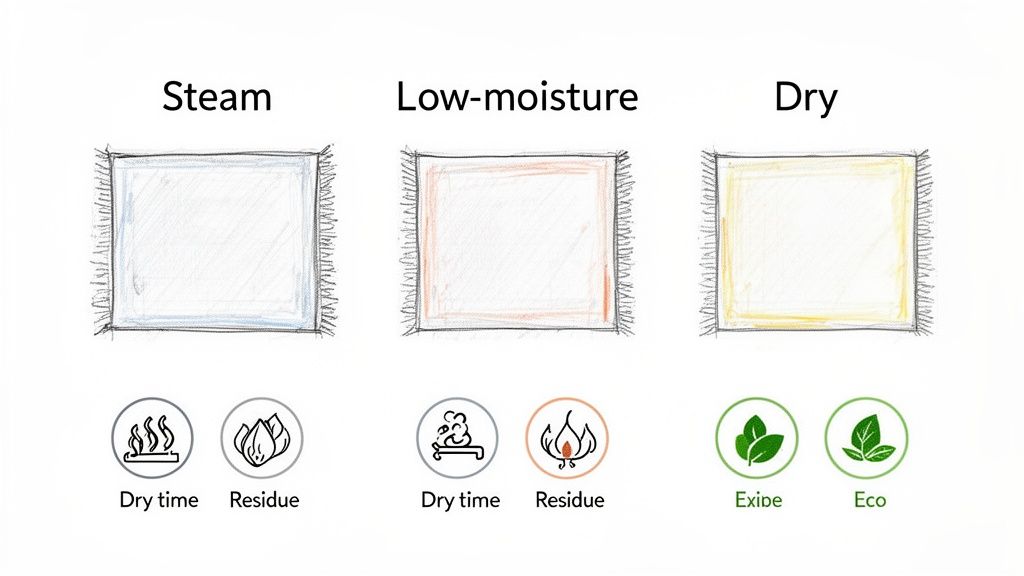
Comparing Key Cleaning Factors
For years, hot water extraction was the go-to method. It uses high-pressure hot water to blast dirt loose from deep in the fibers. The problem? It uses a ton of water, which means your carpets can stay wet for up to 24 hours. In a humid place like Georgia, that’s a long time for moisture to sit around, creating a perfect environment for mold and mildew.
Then you have low-moisture methods, like the citrus-based cleaning we use. These techniques use just a fraction of the water. Instead, they rely on powerful, natural cleaning solutions that break down dirt and grime, crystallizing it so it can be easily vacuumed away. This is a game-changer because it cuts the drying time down to just 1-2 hours. It’s effective, convenient, and you get your room back fast.
Lastly, there's dry chemical cleaning. This method uses absorbent powders and zero water. It’s really only meant for super delicate fabrics or antique rugs that can't handle any moisture. For the kind of carpet in most homes, it just doesn't provide a deep enough clean.
To make it even simpler, here's a quick look at the factors that matter most.
Carpet Cleaning Methods at a Glance
Choosing the right method can make a huge difference in the results and your overall experience. This table breaks down the most common options to help Buford homeowners and business owners see the real-world differences at a glance.
| Cleaning Method | Average Dry Time | Residue Risk | Best For | Eco-Friendliness |
|---|---|---|---|---|
| Hot Water Extraction | 8-24 Hours | High | Deep sanitization, heavily soiled carpets | Moderate (high water usage) |
| Low-Moisture Cleaning | 1-2 Hours | Very Low | Busy homes, pet owners, allergy sufferers | High (minimal water) |
| Dry Chemical Cleaning | Immediate | Moderate | Delicate or antique rugs, water-sensitive fibers | Varies by chemical |
Ultimately, the choice comes down to what you prioritize. If you need a deep, sanitizing clean but can afford the downtime, steam cleaning might work. But for most of us, low-moisture is the smarter call.
Key Takeaway: The biggest trade-off is between the deep soaking of steam cleaning and the fast, effective convenience of low-moisture methods. For most families and businesses here in Buford, a low-moisture approach gives you a fantastic clean without the headache of long dry times, mildew risk, or that sticky soap residue that makes stains come right back.
Analyzing Hot Water Extraction or Steam Cleaning
Hot water extraction, which most people know as steam cleaning, has been the reigning champ in the carpet cleaning world for a long time. When you picture a professional carpet cleaner, this is probably the method that comes to mind. It's built on a pretty simple deep-cleaning principle that's been trusted for decades.
The process itself is intense. A machine sprays highly pressurized hot water, mixed with detergents, deep down into your carpet fibers. This powerful jet is designed to blast away the embedded dirt, dust, and grime that your vacuum just can't touch. Almost immediately after, a high-powered vacuum sucks up the hot water and all the loosened gunk, pulling it into a holding tank.
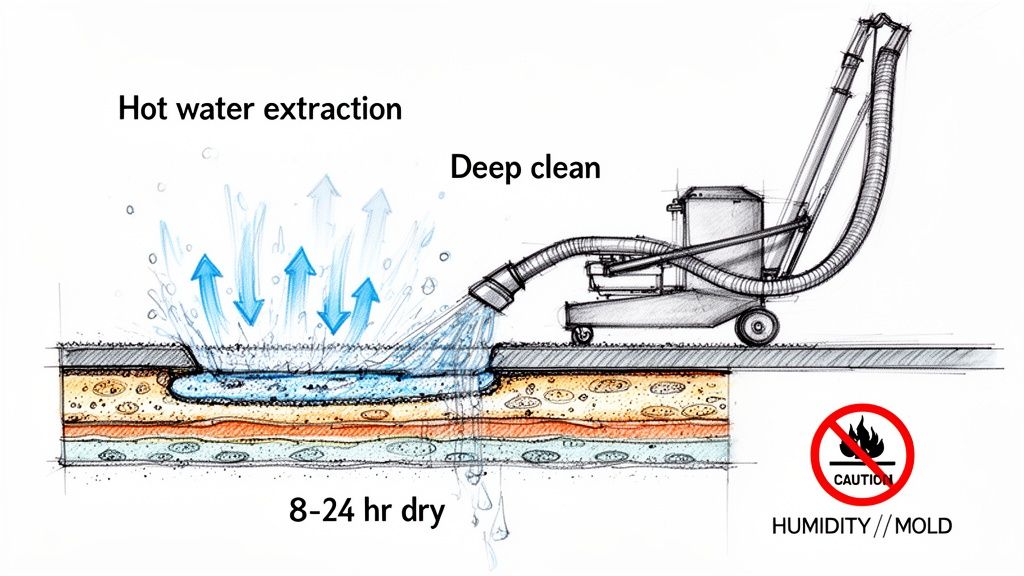
The Power and Popularity of Deep Extraction
There's no denying it—this method can be really effective in certain situations. It’s a powerhouse for carpets that are seriously soiled or haven't seen a professional cleaner in years. The high temperature of the water also helps sanitize the fibers, killing off bacteria and dust mites, which is a huge plus for many homeowners.
You can see how popular it is just by looking at the numbers. Carpet extraction cleaning held the biggest global revenue share at 45.1% in 2024. That shows just how many people still count on this traditional approach for what they believe is the deepest clean possible.
But that deep-cleaning power comes with some major trade-offs, especially for those of us living in humid climates like Buford, Georgia. While it's great at pulling out dirt, it also leaves a ton of moisture behind.
Significant Drawbacks of Using So Much Water
The biggest problem with hot water extraction is the ridiculously long drying time. Your carpets can stay damp for anywhere from 8 to 24 hours. That means a room is completely out of commission, which is a massive inconvenience for any busy household or business.
When you're dealing with water-based cleaning, it's critical to know how to dry wet carpet fast to avoid bigger problems. That lingering dampness isn't just annoying; it creates the perfect breeding ground for mold and mildew. Before you know it, you're dealing with musty odors and allergy triggers you didn't have before.
Key Insight: While steam cleaning sanitizes with heat, the excessive moisture it leaves behind can create new health hazards like mold and mildew, sometimes negating the initial cleaning benefits. This is a critical consideration in Georgia's humid environment.
Another common issue is the sticky soap residue left behind from all those detergents. If it isn't rinsed out perfectly, that residue acts like a dirt magnet, making your carpets get dirty again even faster. You might even see old spots mysteriously reappear as the residue wicks dirt back to the surface—a frustrating cycle called re-soiling. You can learn more about these differences in our article comparing carpet cleaning vs steam cleaning.
Ideal Use Cases and When to Avoid It
So, when does steam cleaning actually make sense?
- Restorative Cleaning: For a carpet that's been truly neglected or is extremely soiled, the intense flushing action of HWE might be necessary for a one-time rescue mission.
- Sanitization Needs: If killing bacteria is your absolute top priority, the high heat is a clear advantage.
On the flip side, it’s often a terrible choice for regular maintenance. This is especially true in high-traffic areas or for families with kids and pets who can't afford to wait a whole day for the floors to dry. The risk of quick re-soiling and potential moisture problems makes it a much less practical option for keeping a home consistently clean and healthy. This is exactly where modern, low-moisture alternatives really shine.
The Smarter Way to Clean: Exploring Low-Moisture Methods
For years, the biggest complaints about professional carpet cleaning have been soggy carpets that take forever to dry and that weird, sticky feeling left behind. You know the one—it seems to attract dirt faster than before. As the downsides of old-school, high-moisture methods have become clearer, a much more efficient solution has taken center stage: low-moisture cleaning.
This modern approach, which includes techniques like encapsulation, was specifically designed to tackle those classic problems head-on. It’s built on a simple but powerful idea: instead of flooding your carpet with gallons of water, it uses a minimal amount of a specialized cleaning solution. This isn't soap; it's an advanced formula with polymers that act like tiny sponges, grabbing onto dirt and grime and crystallizing around it as they dry.
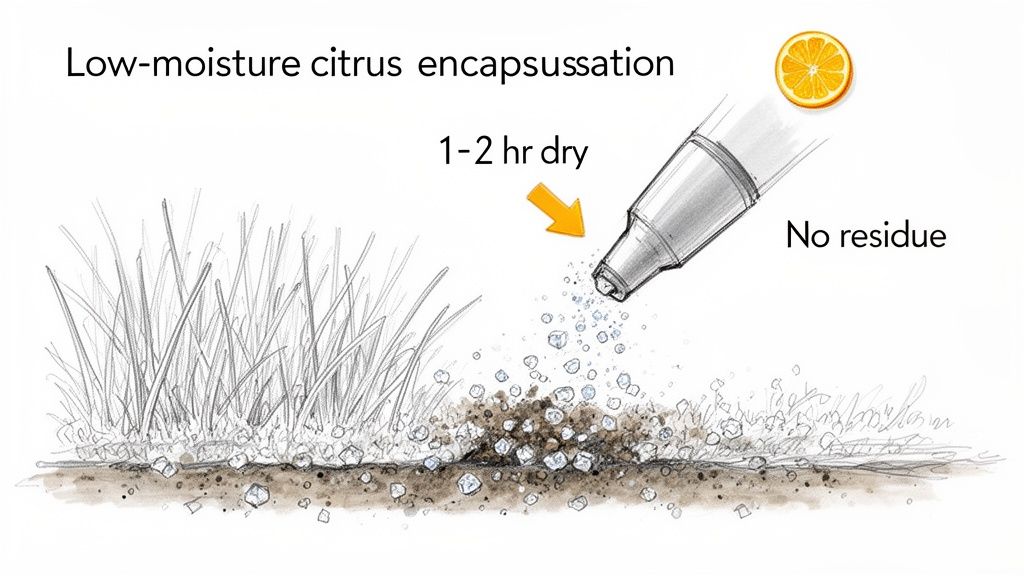
Once the solution works its magic, those tiny encapsulated crystals are simply vacuumed away, lifting all that trapped gunk right out of the carpet fibers. You get a genuinely deep clean without the swampy mess, completely changing the game.
The Game-Changing Benefits of Faster Drying
The most immediate and obvious win with low-moisture cleaning is the ridiculously fast drying time. While hot water extraction can leave your carpets soaked for a full day (or even longer), low-moisture methods leave them dry and ready for you to walk on in just one to two hours.
This speed isn't just about getting back to your life faster; it's about protecting your home and your carpet. By getting rid of that prolonged dampness, you slam the door on mold and mildew growth—a very real concern here in Georgia’s humid climate.
Key Takeaway: Being able to use a room just a couple of hours after a deep clean makes low-moisture the best carpet cleaning method for busy households, commercial spaces, and anyone who can't afford to wait around.
It also solves another frustrating problem called "wicking." That’s when deep-set stains from the carpet backing get pulled up to the surface as the fibers dry, making old spots reappear like magic. With low-moisture cleaning, stains are targeted and removed without the oversaturation that causes them to come back to haunt you.
A Residue-Free Clean That Lasts Longer
Here’s the other major difference: no sticky, soapy residue. Traditional methods often depend on shampoos that, if not rinsed out perfectly (and they rarely are), leave behind a film that acts like a dirt magnet. It's the reason why steam-cleaned carpets often look dirty again in no time.
Low-moisture systems, especially those using natural citrus-based solvents like we do at Citrus Carpet Cleaning Buford, are completely soap-free. They clean incredibly well without leaving anything behind to attract new soil. This means your carpets don't just get clean—they stay cleaner, longer. You end up stretching the time between professional cleanings and preserving the life of your carpet. You can learn more about our low-moisture carpet cleaning and how it works.
This combination of efficiency and eco-friendliness is why low-moisture cleaning is quickly becoming the preferred method for modern homes and businesses. It solves real-world problems. This shift is even reflected in the market—the global carpet cleaner industry, valued at USD 1.13 billion in 2023, is projected to hit USD 1.49 billion by 2029, with low-moisture technology leading that growth. It just makes sense: it reduces mold risk, slashes water usage, and delivers better, longer-lasting results.
Who Is Low-Moisture Cleaning Perfect For?
The versatility of this method makes it the hands-down winner for a ton of real-world situations right here in Buford.
- Homes with Pets and Children: Fast dry times mean less chaos for your family and four-legged friends. The soap-free finish also means a healthier surface for little ones and pets to play on.
- Commercial Properties: For businesses, offices, and daycares, downtime is lost money. A carpet can be cleaned in the morning and be ready for customers and clients that same afternoon.
- Property Managers: When you're trying to turn over a rental unit, speed is everything. A low-moisture clean gets the apartment fresh and ready for new tenants without any delay.
- Allergy Sufferers: By avoiding the risk of mold and mildew that comes with oversaturated carpets, this method helps maintain much better indoor air quality—a huge relief for anyone with asthma or respiratory sensitivities.
What About Other Carpet Cleaning Techniques?
While the industry loves to throw around a lot of different terms, most professional carpet cleaning really boils down to two main camps: hot water extraction and low-moisture cleaning. But there are a couple of other niche methods you might hear about, and it's good to know what they are so you can understand why they aren't the right fit for a deep residential clean.
These two outliers are dry chemical cleaning and bonnet cleaning. They both serve very specific purposes but come with some serious limitations you need to be aware of.
Dry Chemical and Bonnet Cleaning: What Are They?
Dry chemical cleaning is just what it sounds like—no water. A cleaner sprinkles a special absorbent powder compound all over the carpet. This powder is designed to attract and latch onto dirt and grime. After it sits for a bit, it’s all vacuumed up, taking the trapped soil with it.
The biggest—and really, only—selling point here is the zero dry time. As soon as the vacuuming is done, the room is ready. This makes it a potential option for commercial spaces that run 24/7 and simply can't afford any downtime.
Bonnet cleaning is sometimes lumped in with low-moisture methods, but it works completely differently from our citrus encapsulation process. It involves a machine with a big, rotating pad (the "bonnet") that's been dipped in a cleaning solution. As it spins across the carpet, the bonnet is supposed to absorb dirt from the very top of the fibers.
Because it's fast and makes a carpet look better instantly, you'll often see bonnet cleaning used in places like hotels for a quick touch-up on high-traffic hallways between deeper cleanings.
Why These Methods Just Don't Cut It for Your Home
So, why aren't these common in houses? Both methods have major drawbacks that make them a poor choice for a true, deep-down clean.
The problem with dry "cleaning" is that it's not really a deep clean at all. That powder only works on the surface. It can't possibly reach the dirt, dust mites, and allergens that have settled deep down at the base of your carpet. Worse, if the vacuuming isn't perfect, it leaves behind a powdery chemical residue.
Bonnet cleaning is even more of a problem for residential carpets.
Crucial Insight: Bonnet cleaning is infamous in the industry for pushing dirt deeper into the carpet instead of removing it. The spinning motion often just smears grime around, and as the bonnet gets dirty, it starts spreading that soil from one area to the next.
That aggressive spinning action can also wreck your carpet fibers over time, leaving them fuzzy and frayed. At best, it's cleaning the top third of the fiber, which creates the illusion of a clean carpet while hiding the gunk underneath.
There's a reason the global carpet cleaning machine market, valued at $781.5 million in 2024, is dominated by extraction and true low-moisture systems, not these superficial methods. You can explore more about the global market trends and see for yourself how deep cleaning technologies lead the way.
When you want a real, restorative clean that actually removes contaminants and makes your carpet last longer, these other techniques just don't make the cut.
How To Choose The Right Method For Your Needs
Knowing the differences between cleaning methods is one thing, but figuring out which one actually makes sense for your home is a completely different ballgame. There's no single "best" method for everyone. The right choice is the one that solves your specific problems—whether that’s pet accidents, allergy flare-ups, or just keeping a busy office looking sharp—without creating new headaches.
To get started, you first have to consider what kind of carpet you even have. Some materials just can't handle aggressive cleaning.
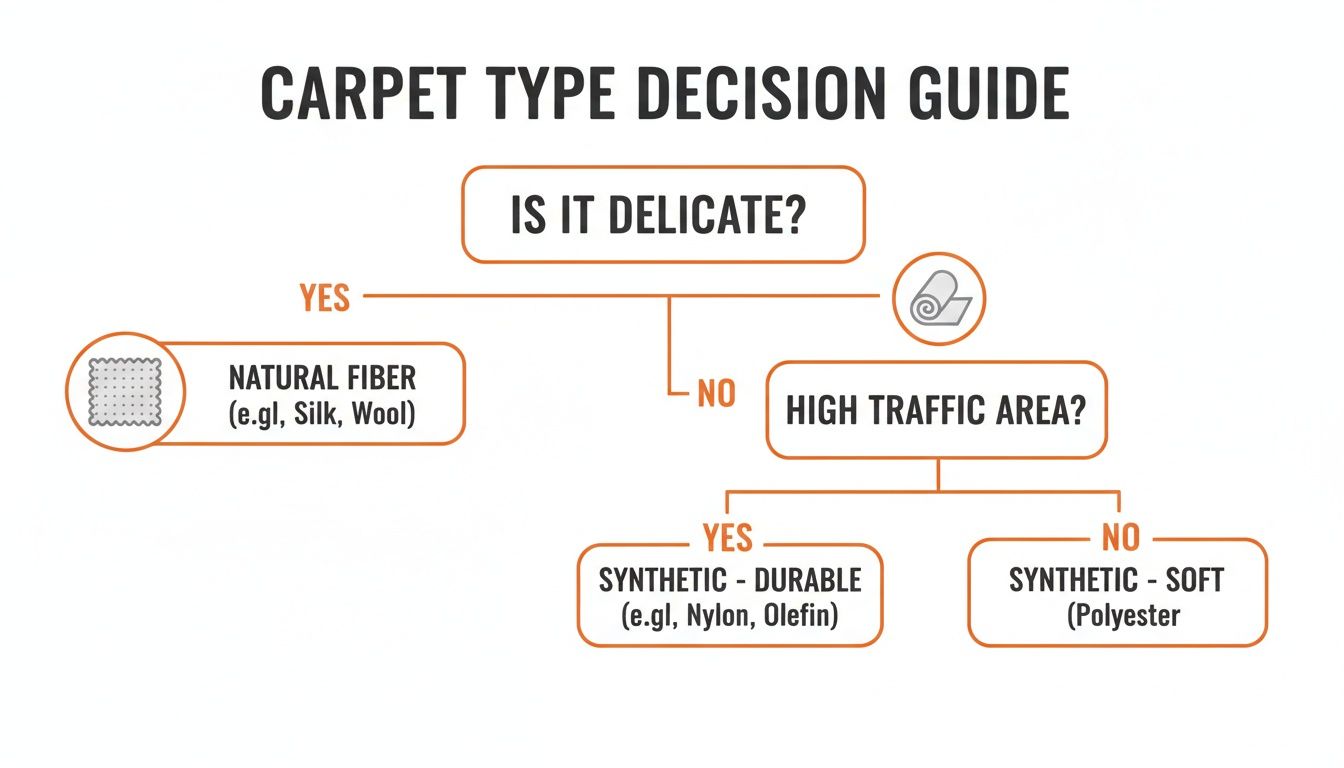
This chart helps you narrow down the options right away based on your carpet's durability. Now, let's dive into the real-world situations we see every day here in Buford.
For Homes With Pets
If you have pets, you know the struggle is real. You're not just cleaning up dirt; you're in a constant battle with stubborn stains, lingering odors, and an endless supply of fur and dander. This is where your choice of cleaning method can make or break the freshness of your home.
The big problem with pet urine is that it doesn't just sit on the surface. Traditional steam cleaning can actually make things worse. The high heat can permanently "cook" the stain into the fibers, and all that excess water often pushes the urine crystals deep into the carpet pad. As it dries, the smell comes back even stronger.
A low-moisture, citrus-based cleaning method is a much smarter approach. The specialized solution actually breaks down the organic proteins in pet stains and odors on a molecular level instead of just masking them. And because it uses so little water, there’s zero risk of soaking the pad and having those old stains wick their way back to the surface.
Key Insight for Pet Owners: A low-moisture clean gets to the root of pet odors and dries in just 1-2 hours. That means your furry friends can get back to their favorite nap spots without tracking messes through a soggy carpet.
For Families With Allergies
For anyone dealing with allergies or asthma, your carpet is basically the biggest air filter in your house. It traps dust, pollen, pet dander, and all sorts of other airborne gunk. The goal of cleaning should be to remove those allergens for good, not just kick them back into the air.
Hot water extraction might seem like it would sanitize things, but the long drying time it requires is a huge problem. A damp carpet is the perfect breeding ground for dust mites and mold spores—two major allergy triggers. You could end up trading one problem for a much worse one.
This is exactly why a low-moisture, soap-free method is so highly recommended for improving indoor air quality. By using minimal water, it completely sidesteps the risk of mold and mildew growth. The encapsulation process traps allergens and dirt into tiny crystals that are fully removed when vacuumed, leaving your home healthier and the air much cleaner.
For Rental Properties And Landlords
If you’re a landlord or property manager in Buford, your world revolves around speed, results, and your budget. When a tenant moves out, you need that unit flipped and ready for the next person yesterday. A carpet that takes a full day—or longer—to dry is a serious bottleneck.
Those long dry times can hold up painters, movers, and the final walkthrough, costing you real money in lost rent. The 1-2 hour dry time of a low-moisture clean is a massive advantage. You can have the carpets cleaned in the morning and be showing the apartment that same afternoon.
Plus, a residue-free clean means the carpets look genuinely fresh for new tenants and won't attract dirt, leading to fewer complaints later. For situations like deep cleaning a home after a move-out or maintaining a commercial property, you can also look into options from various professional cleaning services.
For Commercial And High-Traffic Spaces
Businesses, offices, churches, and daycares in our community can't afford to shut down. Closing off entire sections of your building for a day just for carpet cleaning simply isn't practical. You need a solution that works around your schedule and causes minimal disruption.
Bonnet cleaning might seem fast, but it only cleans the very surface and can damage carpet fibers over the long haul. And hot water extraction, with its marathon drying time, is usually a non-starter for businesses.
Low-moisture cleaning is the clear winner for commercial spaces. It provides a deep, restorative clean that pulls grime and stains out of high-traffic lanes without the logistical nightmare. We can clean after hours, and the carpets will be bone dry and ready for foot traffic long before you open the next morning. That efficiency makes it the best carpet cleaning method for keeping any commercial space looking professional and healthy.
So, how does this all stack up for your specific situation? Here’s a quick guide to help you match your needs with the right method.
Situational Cleaning Method Recommendations
| Cleaning Scenario | Primary Challenge | Recommended Method | Why It Works Best |
|---|---|---|---|
| Home with Pets & Kids | Frequent spills, tough organic stains (urine, food), and strong odors. | Low-Moisture Citrus Cleaning | Breaks down organic matter at the source, neutralizes odors instead of masking them, and dries in 1-2 hours to prevent wicking. |
| Allergy/Asthma Sufferers | Removing allergens (dust, dander, pollen) without creating a damp environment for mold/mildew. | Low-Moisture Encapsulation | Traps allergens in crystals for complete removal via vacuuming. Fast drying prevents mold and dust mite growth. |
| Rental Property Turnover | Need for fast, effective cleaning to minimize vacancy time and attract new tenants. | Low-Moisture Citrus Cleaning | Dries in 1-2 hours, allowing for same-day showings. Leaves no sticky residue, so carpets stay cleaner for the new tenant. |
| High-Traffic Business Office | Constant foot traffic, coffee spills, and the need to avoid business disruption. | Low-Moisture Encapsulation | Can be done overnight with carpets dry by morning. Deep cleans without soaking the carpet, ideal for 24/7 operations. |
| Deep Restoration for Old, Soiled Carpet | Heavy, set-in grime and dirt that hasn't been professionally cleaned in years. | Hot Water Extraction (Steam Cleaning) | The high pressure and heat can be effective for severe cases, but be prepared for a 24+ hour dry time and potential for recurring spots. |
| Delicate Natural Fiber Rugs (Wool, Silk) | Risk of color bleed, shrinkage, and fiber damage from harsh chemicals or excess water. | Dry Cleaning (Absorbent Compound) | Uses no water, preserving the integrity and color of delicate, expensive rugs. It's a surface-level clean, not a deep restoration. |
Ultimately, the goal is to find a method that cleans deeply, dries quickly, and leaves your space healthier than it was before. For most homes and businesses in Buford, a low-moisture approach checks all the right boxes.
Why Choose a Low-Moisture Citrus Cleaner
After laying out all the different ways to get your carpets clean, it becomes pretty obvious that a modern, low-moisture approach has some serious advantages. For those of us here in Buford, dealing with busy lives and that classic Georgia humidity, this method isn't just another option. It’s the smart solution for a truly clean, healthy home, without the headaches that come with old-school techniques.
The benefits are immediate. The biggest one? A rapid 1-2 hour dry time. This alone solves the number one complaint about professional carpet cleaning. No more being held hostage by soggy floors for a whole day, and no more worrying about that musty smell from mold or mildew setting up shop in the damp fibers. You get your rooms back, simple as that.
Just as important, though, is what gets left behind—or in this case, what doesn't.
The Power of a Soap-Free Clean
Think about it: traditional methods blast your carpets with heavy detergents. If the technician doesn't get every last drop rinsed out (and they rarely do), you're left with a sticky residue that's like a magnet for new dirt. This is exactly why you see spots reappear just a few weeks after a steam clean. It’s a frustrating cycle.
A professional low-moisture citrus method sidesteps this problem completely. By using a natural, citrus-based solvent, it effectively breaks down and lifts grime away without leaving any sticky soaps behind.
This means your carpets don't just look clean—they actually stay cleaner, for a lot longer. The powerful deodorizer found naturally in citrus also goes to work on odors from pets, spills, and everyday life, neutralizing them at the source. The result is a home that smells genuinely fresh, not like it's been covered up with perfume. It’s the best way to get a deep clean that lasts. You can get a closer look at how our citrus-fresh carpet cleaning process pulls this off.
The Citrus Advantage: A citrus-based, low-moisture clean is a triple threat. It delivers a deep clean, knocks out odors, and leaves a zero-residue finish that helps your carpets last longer and look fresh.
A Provider You Can Trust in Buford
Picking the right method is half the battle, but finding the right local company to do the work makes all the difference. We’ve been serving our neighbors here in Buford since 2004, building our reputation on being upfront and reliable. We give you clear, honest ‘EXACT-imates’ with absolutely zero hidden fees or last-minute surprise charges. Period.
We back up our work with promises you can count on, like a price-match guarantee and loyalty pricing for our repeat customers. Our top-rated service speaks for itself, and we're proud of the trust we've earned in the Buford community. If you’re ready for a better clean that respects your time, your home, and your wallet, it’s time to see what the citrus difference is all about. Contact us today for your free, no-obligation estimate.
We Get These Questions All The Time…
To make sure you feel totally confident in your decision, let’s tackle some of the most common questions we hear from folks right here in Buford. These answers should clear up any lingering doubts and pull together the key takeaways from this guide.
How Often Should I Really Have My Carpets Professionally Cleaned?
Most industry folks will tell you a professional cleaning every 12 to 18 months is the standard. And for general upkeep, that’s not bad advice. But let's be real—that's just a baseline.
If you've got pets, kids, or anyone with allergies, you'll want to ramp that up. Cleaning every 6 to 9 months makes a huge difference in keeping your home's air healthy and your floors looking their best. This is exactly where a fast-drying, low-moisture method is a game-changer. It makes frequent cleanings a minor pit stop in your day, not a major household disruption.
Can Your Low-Moisture Cleaning Actually Get Rid of Tough Pet Stains and Odors?
Absolutely. It’s one of the biggest worries for pet owners, and our citrus-based solution is specifically designed to handle it. A lot of cleaners use soaps that just mask smells for a little while. That's not a real solution.
Our natural citrus solvent gets to the root of the problem, breaking down the organic proteins in pet urine and other accidents. This completely neutralizes the odor—it doesn't just cover it up. Plus, because we use so little moisture, those pesky stains can't "wick" their way back to the surface as the carpet dries. Once a stain is gone, it stays gone.
Isn't Steam Cleaning Better for Killing Germs?
It’s true that the high heat from steam cleaning can sanitize, but it comes with a serious trade-off. All that excessive water it pumps into your carpet and pad can create the perfect damp, dark environment for mold, mildew, and bacteria to throw a party. You could end up making your indoor air quality worse than when you started.
A professional low-moisture citrus clean offers a much healthier long-term solution. It gives you a powerful deep clean and sanitizes with a natural, potent solution—all without the risk of oversaturation, sticky soap residue, or waiting forever for your carpets to dry.
Ready to see for yourself what a deep clean that dries in just a couple of hours looks like? Citrus Carpet Cleaning Buford provides a soap-free, residue-free clean that keeps your home fresh and healthy. Get your free, no-obligation "EXACT-imate" today by visiting https://citruscarpetcleaningatlanta.com.