
When you're looking for the best homemade carpet cleaner recipe, sometimes the simplest solution is the most effective. A basic mix of white vinegar and water often does the trick, tackling general grime and odors without leaving behind the sticky residue that so many store-bought products are famous for.
Why Store-Bought Cleaners Often Disappoint
Have you ever scrubbed a stubborn spot on your carpet, only to see it come back even darker a week later? It’s a frustratingly common experience, and the culprit is usually the cleaner itself. Many commercial formulas are loaded with soaps and detergents that, frankly, create more problems than they solve.
You spray it on, give it a good scrub, and the stain seems to disappear. But what’s really happening is that you're leaving behind a sticky film. This film acts like a magnet for any new dirt, dust, or grime that comes its way. Before you know it, you're staring at a bigger, darker spot than the one you started with.
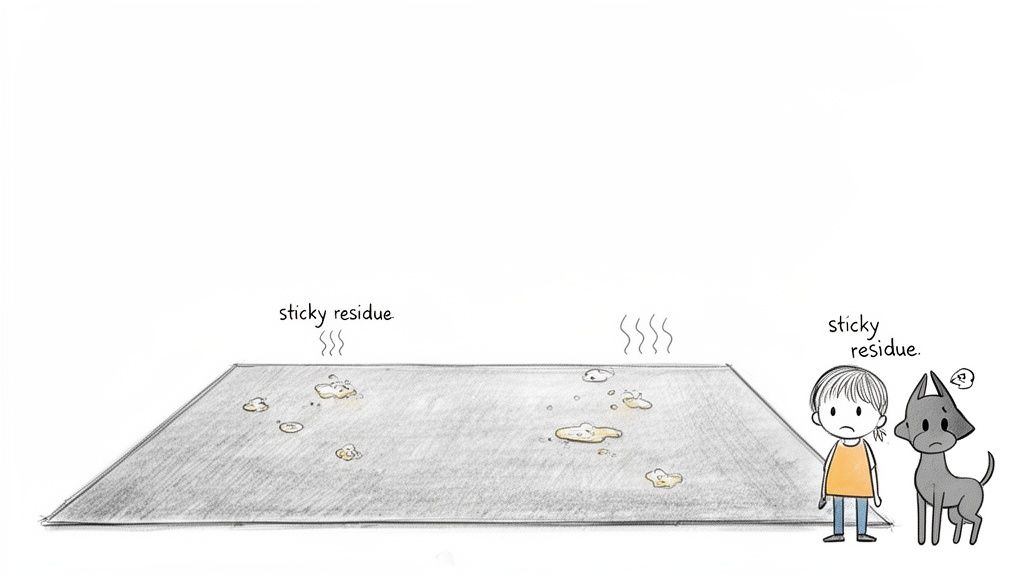
This endless cycle of re-soiling is something we hear about from homeowners all the time. It's not just that these cleaners are ineffective; it's that their chemical-heavy formulas are the root of the problem. Many contain harsh solvents and overpowering artificial fragrances that can irritate your family and pets, lingering in the air long after the carpet feels dry. Fighting for a clean carpet shouldn't mean you have to compromise your home's air quality or get stuck in an endless cleaning loop.
The Hidden Costs of Commercial Solutions
Beyond the residue and fumes, the cost of these products really adds up. Back in 2004, when Citrus Carpet Cleaning Buford first started serving Georgia, the average American household was spending over $500 a year on commercial carpet cleaning products and services. A lot of those products were causing the very sticky residue that led to rapid re-soiling in the first place.
In contrast, simple recipes like a mix of white vinegar and hot water have been shown to cut through grease and knock out odors by up to 80%—all without leaving any film behind. This is exactly why a well-made homemade carpet cleaner has become so popular. It’s a way to break free from that expensive and frustrating cycle. With a DIY solution, you control the ingredients, ditch the sticky soaps, and get a genuine clean that actually lasts.
The Shift Toward Healthier Cleaning
These days, the preference for natural alternatives is impossible to ignore. A 2023 Carpet and Rug Institute survey showed that 68% of homeowners in big markets like Atlanta now prefer low-moisture, natural cleaners. The reason is simple: nobody wants to deal with the long dry times—anywhere from 2 to 24 hours—that come with traditional shampoos. That much moisture can easily become a breeding ground for mildew.
The real issue is that many commercial cleaners are designed to fix a surface-level problem while creating a deeper one. A truly clean carpet isn't just free of stains; it's also free of chemical residues that attract more dirt and pollute your indoor air.
When it comes to tough biological messes like pet accidents, using the right approach is even more critical. While vinegar is a fantastic deodorizer, some situations call for something more specialized. Understanding the science behind these messes is key. It’s helpful to learn about what an enzymatic cleaner is and how it actually breaks down the organic matter causing the stain and odor. Armed with that knowledge, you can choose the best homemade carpet cleaner recipe for any situation you're facing.
The Ultimate All-Purpose DIY Carpet Cleaner
When you need a solid, reliable fix for everyday carpet grime, you don't have to look any further than your pantry. Honestly, the best homemade carpet cleaner recipe is usually the simplest one, and the classic combo of white vinegar and water is the undisputed champ for general cleaning. It’s shockingly effective, cheap, and doesn't have any of the sketchy chemicals you find in a lot of store-bought products.
The magic is all in the chemistry of white vinegar, which is just a mild acetic acid. This acidity is perfect for breaking down the kind of alkaline dirt and grime that gets tracked into our homes. It literally loosens its grip on your carpet fibers. It’s also a natural deodorizer, meaning it actually neutralizes smells from pets or that pizza slice that hit the floor—it doesn't just cover them up with a fake flowery scent.
Your Foundational Recipe and Tools
Getting started is easy. You don’t need any fancy equipment, just a few things you probably already have lying around the house. That simplicity is a huge part of the appeal.
Here's what you need to pull together your go-to DIY cleaning kit:
- A clean, empty spray bottle: This is your best friend for spot treatments.
- Distilled white vinegar: Definitely stick to white vinegar. Apple cider or other types can potentially leave a stain of their own.
- Warm water: Using warm water just helps dissolve the grime a little faster than cold.
- A clean, light-colored microfiber cloth: Always use a white or light-colored cloth so you don't accidentally transfer any dye onto your carpet while you're cleaning.
To mix up your all-purpose solution, just combine equal parts distilled white vinegar and warm water in your spray bottle. For a normal-sized bottle, one cup of each is the perfect starting point. Give it a gentle swirl to mix it up, and you're officially ready to tackle those minor stains.
Pro Tip: If you're dealing with a slightly greasy spot (we've all been there), you can add one or two drops of a clear, non-bleach dish soap to the mix. I mean it when I say only one or two drops! It’s tempting to add more, but too much soap will leave behind a sticky residue that actually attracts more dirt, creating the exact problem you were trying to solve.
Before you get started, it's a good idea to know what each ingredient is actually doing for you.
Your DIY Carpet Cleaner Toolkit
Understanding the function of each ingredient in your homemade carpet cleaning solution.
| Ingredient | Primary Function | Best For | Caution |
|---|---|---|---|
| White Vinegar | Mild Acid / Deodorizer | General grime, pet odors, light stains | Use only distilled white vinegar to avoid staining. |
| Warm Water | Solvent | Diluting vinegar and dissolving dirt | Avoid using boiling water, which can damage some carpet fibers. |
| Dish Soap | Degreaser / Surfactant | Oily or greasy spots (food spills) | Use 1-2 drops only. Too much leaves a dirt-attracting residue. |
| Microfiber Cloth | Blotting / Absorption | Lifting the stain and solution from the carpet | Use a light-colored cloth to prevent dye transfer. |
With these simple items, you have a powerful and safe cleaning arsenal at your fingertips.
Application and The Crucial Spot Test
Okay, you've got your solution mixed. The next part is simple, but you have to be careful. First thing's first: always, always, always do a spot test. This step isn't optional, and it can save you from a massive headache.
Find a hidden spot on your carpet—maybe under the sofa, in a closet, or on a scrap piece if you have one. Spray a little bit of the solution, blot it gently with your cloth, and let it dry completely. Once it's dry, check for any color changes or damage to the fibers. If it looks exactly the same, you’re good to go.
When you're ready to treat a stain, just lightly mist the area. Don't soak the carpet. Over-wetting can wreck the carpet backing and even lead to mildew, which is a whole other problem. Let the solution sit for about five to ten minutes to give the vinegar time to work its magic.
After it has dwelled for a bit, take your clean, dry microfiber cloth and start blotting. Don’t rub! Blot gently from the outside of the stain and work your way in. This keeps the stain from spreading. Scrubbing will just fray your carpet fibers and can push the stain deeper. Keep blotting with a dry part of the cloth until you're not pulling up any more moisture.
Dealing With Tough Stains and Pet Messes
While an all-purpose vinegar spray is fantastic for general upkeep, let's be real—life is messy. Sometimes you’re dealing with a little more than just tracked-in dirt. Whether it's a splash of red wine during a party or the inevitable accident from a new puppy, some messes demand a more powerful, targeted approach.
This is where a different kind of homemade cleaner comes in, one built to knock out stubborn organic stains and neutralize those lingering odors right at the source.
The secret isn’t aggressive scrubbing, which can damage your carpet fibers. It's about letting a simple chemical reaction do the heavy lifting for you. The fizzing action created by baking soda and vinegar gets deep into the carpet, breaking up and lifting the particles that cause both the stain and the smell.
The Pet Odor and Stain Annihilator Paste
For things like pet urine or vomit, you need something that goes way beyond a surface spritz. This recipe creates a powerful paste that first absorbs the mess and then chemically breaks down the compounds causing that awful smell.
Here’s my go-to process for this method:
- Blot Immediately: The second you find the spot, grab a clean, dry towel and blot up as much of the liquid as you can. Press down hard—stand on it if you have to—but do not scrub. Scrubbing just grinds the stain deeper.
- Make the Paste: In a small bowl, mix three parts baking soda with one part water. You're looking for a thick, spreadable paste, something like cake frosting.
- Apply Generously: Gently spread a thick layer of the baking soda paste over the entire stain. Don't be stingy here; you want it completely covered with a good, thick coating.
- Let It Dry Completely: This is the most important step. As the baking soda dries, it wicks the moisture and the odor-causing gunk up out of the carpet fibers and padding. This can take several hours, or you might just need to leave it overnight.
- Vacuum It Up: Once the paste is totally dry and crumbly, vacuum it all up. Go over the spot a few times from different directions to make sure you get every last bit of powder.
For an extra punch against any lingering odors, you can follow up with a light mist of your 1:1 vinegar and water spray. For more tricks, check out our deep dive into using baking soda to remove stains from carpets.
The Red Wine Emergency Fix
You know the scene: you're hosting, everyone's having a good time, and then a glass of Merlot takes a tumble right onto your light beige carpet. Don't panic. Your secret weapon is probably sitting in your kitchen cabinet right now.
The second a liquid spill happens, your first instinct should be absorption. The more of that staining liquid you can pull out of the fibers before it sets, the easier your life will be. Time is everything.
Here’s how to handle a fresh red wine spill using plain old salt:
- Blot, Don't Rub: Just like with pet messes, immediately grab a clean cloth and blot the stain to soak up as much wine as possible.
- Bring on the Salt: Pour table salt directly onto the fresh stain. And I mean pour it—create a thick mound that completely covers the spill.
- Wait and Watch: You’ll actually see the salt start to pull the wine out of the carpet, turning pink. Let it sit for at least a few hours, but leaving it overnight is even better.
- Vacuum It Away: Once the salt has worked its magic, just vacuum it all up. The vast majority of that red wine stain should come right up with it.
This trick works wonders on fresh spills by pulling the pigment out of the carpet fibers before it can permanently dye them. If there's any faint discoloration left, a quick spray with your all-purpose vinegar solution will usually take care of the rest.
This visual guide can help you figure out which homemade solution to grab depending on what you're up against.
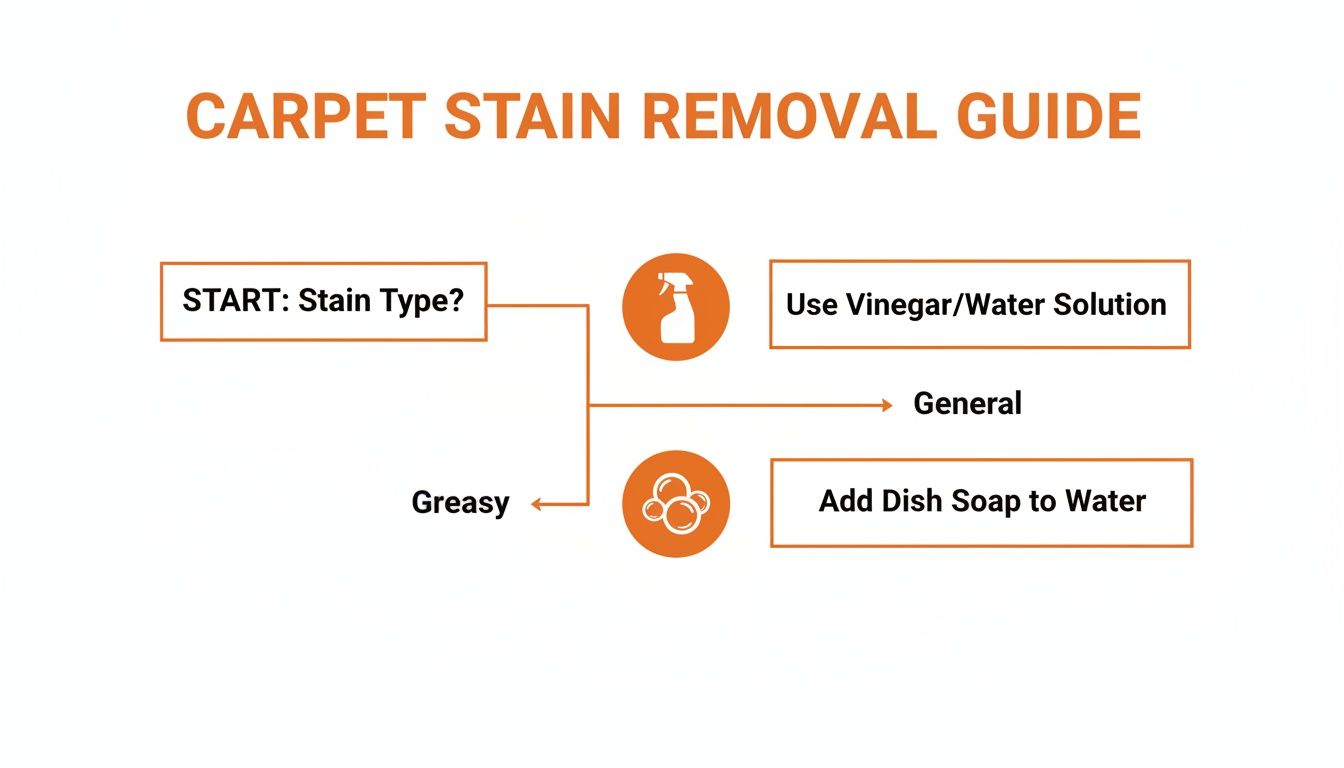
As the flowchart shows, a basic vinegar solution is your workhorse for general grime, but you'll want to add a degreaser like dish soap for anything oily or greasy.
Why Baking Soda and Vinegar Actually Work
There's a reason the baking soda and vinegar combo is a classic—it’s just incredibly effective, especially for deodorizing. And it's not just folk wisdom. A 2022 analysis from the Good Housekeeping Institute found that 73% of DIY cleaners using this mix successfully deodorized carpets, wiping out 90% of pet odors in homes with a lot of foot traffic.
This method really took off after 2010, which happens to line up with a 40% jump in U.S. pet ownership. In a place like Buford, GA, where 62% of households have pets, having a quick, effective recipe like this is practically a necessity.
For a deeper look into handling pet-related messes, you can find more great tips on removing pet stains from carpet and furniture. Those resources offer even more strategies to keep your home smelling fresh, no matter how many furry friends you have.
Using a Homemade Solution in a Carpet Machine
If you own or have rented a carpet cleaning machine, you know how tempting it is to just buy the expensive, branded cleaning solution that goes with it. But you can absolutely skip their pricey formulas and use your own DIY mix. The trick is doing it right so you get a deep clean without hurting your machine or, worse, your carpet.
The biggest mistake I see people make is thinking more soap equals more cleaning power. With a machine, that’s a recipe for disaster. Too much soap creates a mountain of suds that can easily overflow and fry the machine's motor. Even if it doesn't break your machine, it'll leave behind that sticky, soapy residue you were trying to get rid of, turning your carpet into a magnet for new dirt.
The Machine-Safe Low-Foaming Recipe
For any carpet cleaning machine, you need a formula that cleans well without foaming up like a bubble bath. This recipe is my go-to because it cuts through grime and neutralizes odors but rinses away completely, protecting your machine and your floors. Forget those complicated lists of ingredients; this simple mix gets the job done.
Here’s the perfect low-suds recipe that works in most standard carpet cleaning machines:
- 1 gallon of hot water: Use the hottest water your tap can safely produce. Heat is a powerful solvent that helps break down dirt and oils much more effectively.
- 1/2 cup of distilled white vinegar: This is your workhorse for cleaning and deodorizing.
- 1 tablespoon of 3% hydrogen peroxide: This gives the solution a little extra kick for brightening fibers and tackling organic stains.
- 1 teaspoon of clear, non-bleach dish soap: This is critical. I know it's tempting, but do not add more. Just one teaspoon provides all the surfactant power you need to lift dirt without causing a foam apocalypse.
Mix these ingredients gently, either right in the machine’s solution tank or in a separate jug before pouring it in. The key is to avoid shaking it—you want to keep bubbles to a minimum from the very start.
Proper Machine Operation and Technique
Using a homemade solution isn't just about what's in the tank; it's also about how you run the machine. The goal is to clean thoroughly without soaking the carpet. Over-wetting is a fast track to mildew growth and can even damage the carpet's backing.
First, prep the area. Vacuum everything really well to pull up all the loose dirt, dust, and pet hair. If you skip this, you’re just making mud. When you start cleaning, move the machine in slow, deliberate passes that overlap slightly to make sure you get even coverage.
Here’s the most important part of the whole process: the rinse and extraction. After you make a "wet pass" (releasing the cleaning solution), immediately go back over that same area with one or two "dry passes" with the spray turned off. This is the secret. It sucks up the dirty water and is the key to a truly residue-free finish and much faster drying times.
Getting your carpet genuinely clean means leaving nothing behind. To really understand why this is so important, check out our guide on achieving a true carpet cleaning with no residue—it breaks down why this step is non-negotiable for long-lasting results.
Post-Cleaning and Drying Tips
Once the machine is put away, you're not quite done. How you handle the drying process makes the difference between a fresh, clean room and a damp, musty-smelling one. Your number one priority is airflow, and lots of it.
Just follow this simple checklist for a quick and effective dry:
- Maximize Airflow: Open up windows and doors to get a good cross-breeze going. Turn on ceiling fans and set up any portable fans you have, pointing them right at the carpet.
- Turn on the AC or Heat: Your HVAC system is a powerful dehumidifier. Depending on the season, running the air conditioner or the heat will help pull moisture out of the air, which makes the carpet dry much faster.
- Stay Off the Carpet: Keep everyone—especially pets and kids—off the damp carpet until it’s completely dry to the touch. Walking on it can mat down the fibers and track new dirt right back on.
When you're running your solution through a machine, having a reliable hose is essential for consistent delivery and suction, much like professionals rely on a quality carpet cleaning solution hose. Taking these extra steps will help your carpet dry in hours instead of days, leaving it looking and feeling genuinely fresh.
Common DIY Carpet Cleaning Mistakes to Avoid
Having the perfect homemade carpet cleaner recipe is a great start, but even the best solution can backfire if your technique is off. I've seen it happen time and again. How you apply the cleaner is just as crucial as what’s in the bottle. Dodging a few common pitfalls is the key to getting a genuinely clean carpet, not a bigger, more permanent headache.
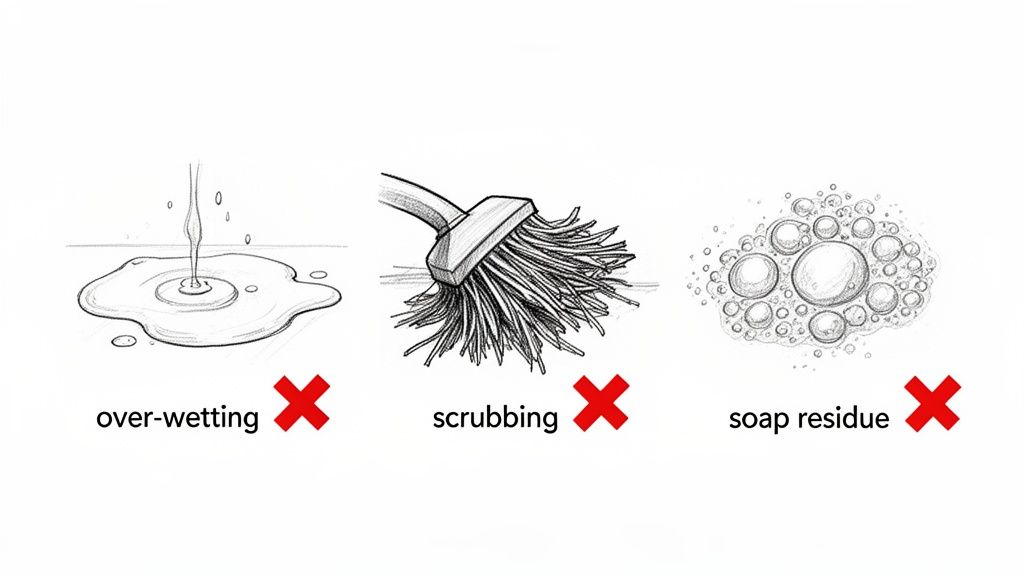
The biggest mistake I see? People get a tough stain and their first instinct is to absolutely drench it, thinking more cleaner equals more power. In reality, you're setting yourself up for a problem that's way worse than the original spot.
The Over-Wetting Trap
Over-saturating your carpet is a cardinal sin of DIY cleaning. When you use too much liquid, it doesn't just sit on the fibers; it soaks right through to the padding and even the subfloor.
That deep-down moisture can't evaporate properly. Before you know it, you've created the perfect damp breeding ground for mold and mildew. That musty smell that follows is incredibly difficult to get rid of.
You've also triggered a nasty process called "wicking." The excess liquid dissolves dirt trapped deep in the carpet padding. As the surface dries, that dissolved grime gets pulled right back up to the top, making the stain reappear or look even bigger than before. The right way is to always use a spray bottle and apply a light mist—just enough to dampen the fibers, not soak the backing.
Scrubbing Instead of Blotting
When you see a spot, every impulse tells you to grab a brush and scrub it into oblivion. It feels like you're making progress, but you're actually destroying your carpet.
Those carpet fibers are twisted together for a reason. Aggressive scrubbing untwists and frays them, creating a fuzzy, permanently damaged patch that stands out like a sore thumb. Worse, you're not lifting the stain—you're just grinding it deeper into the padding, making it nearly impossible to ever get out.
The rule is simple: blot, don't rub. Start at the outside edge of the stain and work your way in. Use a clean, absorbent cloth and press down firmly. This lifts the stain material out of the carpet and onto your cloth.
Your cleaning motto should be "lift, don't grind." The goal is to transfer the stain from the carpet fiber to your cloth. Aggressive scrubbing simply embeds the mess further and permanently alters the carpet's texture.
Using the Wrong Ingredients
Not every cleaning hack you see online is safe for your carpet. I've seen people use all sorts of household products that cause more harm than good, leading to discoloration, new stains, or a sticky residue that becomes a dirt magnet.
Here are a few ingredients that should never touch your carpet:
- Colored Dish Soaps: The dyes in blue, green, or orange dish soaps can easily transfer to your carpet, leaving a brand-new stain behind. If you must use dish soap, make sure it is clear and bleach-free.
- Bleach: This one seems obvious, but people still try it. Chlorine bleach will permanently strip the color right out of your carpet, leaving an ugly, irreversible splotch.
- Ammonia: While it's a powerful degreaser, ammonia is far too harsh for many carpet fibers, especially wool. It also has a potent, irritating smell you don't want lingering in your home.
Steer clear of these common mistakes, and your homemade cleaner will have a much better chance of giving you the fresh, clean results you're after.
Look, I'm a huge fan of a good homemade carpet cleaner. For everyday spills and routine touch-ups, they're fantastic. But part of being an expert is knowing when to throw in the towel.
Sometimes, a stain has just had too much time to settle in, or an odor has worked its way deep into the carpet padding where no surface cleaner can reach it. Recognizing these moments isn't about giving up; it’s about making a smart call to protect your investment.
Signs That DIY Just Won't Cut It
If you're nodding along to any of these scenarios, it's a pretty clear sign that it’s time to call for backup. Professional cleaners have equipment and cleaning agents that are lightyears beyond what you can buy at the store.
Here’s when to pick up the phone:
- Deeply Set-In Stains: That ink, paint, or old pet accident that’s been staring at you for weeks? A homemade solution just doesn’t have the muscle to break that kind of bond with the carpet fibers.
- Persistent Odors: When a smell from pet urine, smoke, or mildew keeps creeping back no matter what you do, the source is almost always deep in the padding or even the subfloor.
- Delicate or Natural Fibers: Carpets made from materials like wool, silk, or jute are tricky. They need a specific, pH-balanced cleaning approach. The acidity in vinegar, for instance, can cause permanent damage. Don't risk it.
- Large-Scale Cleaning Jobs: Trying to deep-clean an entire house with a spray bottle is a recipe for a sore back, uneven results, and potentially over-wetting the carpet, which creates a whole new set of problems.
- Water Damage or Potential Mold: This one is non-negotiable. If your carpet has been soaked from a leak or flood, you need professional-grade water extraction immediately to prevent dangerous mold and mildew growth.
A pro isn't just bringing stronger cleaners; they're bringing expertise. An experienced technician can look at your carpet, identify the fiber type and the specific stain, and use a treatment that’s both safe and incredibly effective.
The Professional Advantage in Buford
For my neighbors here in the Buford area, calling a pro like Citrus Carpet Cleaning Buford means you’re getting a totally different kind of clean. We specialize in a low-moisture, citrus-based cleaning method.
What does that mean for you? It means we don't use the harsh, soapy shampoos that leave behind that awful sticky residue that attracts dirt all over again. Our citrus-based cleaner pulls out the deep-down grime and leaves your carpets dry in just 1-2 hours, not days.
Think of a professional cleaning as a strategic move to preserve the life and look of your carpet. If your DIY efforts aren't cutting it, don't get frustrated. Just call or text us for a free, no-obligation "EXACT-imate." We'll step in and get your carpet looking and smelling fresh when homemade solutions have reached their limit.
Got Questions? We've Got Answers
Even with a great recipe, you're bound to have a few questions. It's totally normal. Here are some of the most common things people ask us about DIY carpet cleaning, so you can get started with total confidence.
Is the Vinegar Cleaner Really Safe for My Pets and Kids?
Yes, once it's completely dry, a simple white vinegar and water cleaner is generally safe to have around your kids and four-legged family members. I know the smell can be strong at first, but it disappears as it dries, leaving things smelling neutral.
The best part? Unlike a lot of store-bought cleaners, it doesn't leave behind a sticky, chemical residue that can irritate sensitive skin or paws. Just to be on the safe side, it's always a good idea to keep everyone out of the room until the carpet is 100% dry.
Can I Throw in Some Essential Oils to Make It Smell Better?
It's really tempting to add a few drops of your favorite essential oil, like lavender or lemon, to freshen things up. But this is one of those times you have to resist the urge. Trust me on this one.
Most essential oils are, well, oils. Adding them to your cleaning mix can leave an oily little spot on your carpet fibers. That spot acts like a magnet for dirt, and before you know it, you've got a brand new stain that's even tougher to get out.
Pro Tip: Let the vinegar do its job—it's a fantastic natural deodorizer. If you're still wanting a fresh scent after the carpet is dry, sprinkle a little baking soda over the area. Let it sit for about an hour, then vacuum it up. Problem solved.
How Long Can I Keep a Batch of Homemade Cleaner?
For the best possible results, you really want to mix a fresh batch every single time you clean. This is especially true if you're using a recipe with hydrogen peroxide, which breaks down pretty quickly when it's exposed to light and air, losing its stain-fighting power.
A basic vinegar and water mix is more stable, but even it can lose some of its oomph over time. Just mix up what you think you'll need for the day. That way, you know your solution is always working at peak performance.
When you've tried everything and those deep-set stains or lingering odors just won't budge, it might be time to call in the pros. The team at Citrus Carpet Cleaning Buford has seen it all and can make a world of difference. Call or text us today for a no-pressure "EXACT-imate" and see what a truly professional, residue-free clean looks like.