
If you're a pet owner, you already know that accidents are just part of the deal. But knowing which cleaner to grab when they happen can be the difference between a quick fix and a permanent stain. The best choice usually comes down to two main types: an enzymatic cleaner for organic messes like urine and vomit, or an oxygen-based cleaner for pigmented stains like mud or spilled food.
Understanding Your Pet Stain Removal Options
Let's face it, when you welcome a furry friend into your home, you're also welcoming the occasional mess. Having the right product on hand is everything. Your choice of cleaner will make or break your success in the fight against stains and lingering odors.
There's a reason the market for these products is huge. Pet-related messes are actually responsible for 59.7% of all household demand for carpet spot removers. Liquid formulas are especially popular, holding a 56.2% market share because they can penetrate deep into carpet fibers—which is exactly what you need for tough stuff like urine. You can see more details on the carpet cleaner market here.
The Three Main Types of Cleaners
To make the right call, you need to understand what makes these cleaners different. Each one works in a specific way and is designed for a particular kind of mess.
- Enzymatic Cleaners: These are the real powerhouses for biological stains. They use proteins (enzymes) like protease and amylase to literally break down and digest the organic compounds in urine, feces, and vomit. This isn't just covering up the smell; it's completely eliminating the source so your pet isn't drawn back to the same spot.
- Oxygen-Based Cleaners: You'll often see these with ingredients like hydrogen peroxide. They work through oxidation, releasing tiny oxygen bubbles that lift the stain away from the carpet fibers and kill odor-causing bacteria. These are fantastic for pigmented stains from things like muddy paws, spilled pet food, or even blood.
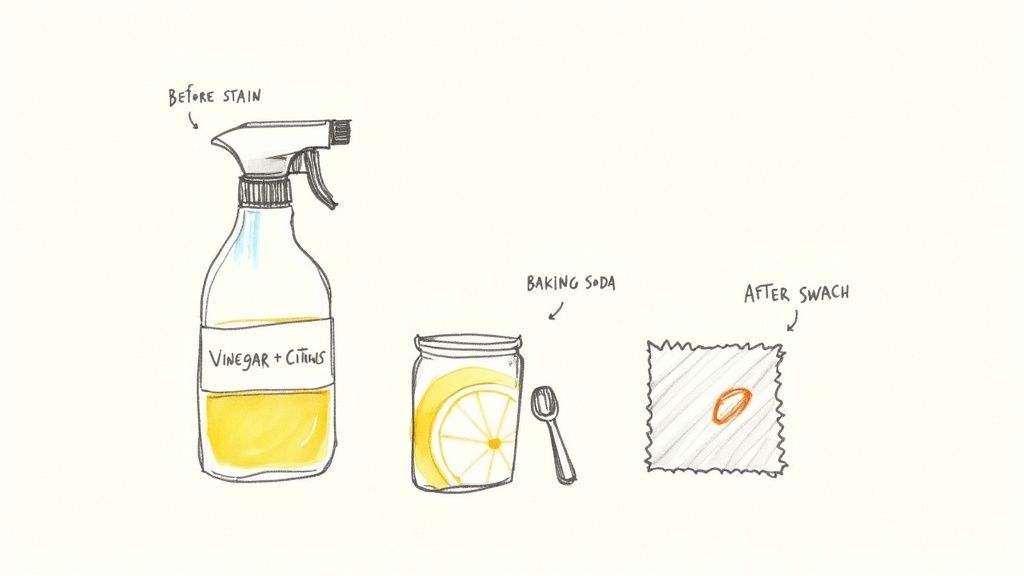
- DIY Citrus Solutions: For those who prefer a more natural approach, a homemade mix of vinegar, water, and citrus essential oils can be a good first line of defense. The vinegar's acidity helps break down some stains, while the citrus provides a fresh scent and has natural degreasing abilities.
This infographic gives a great visual breakdown of how each type works.
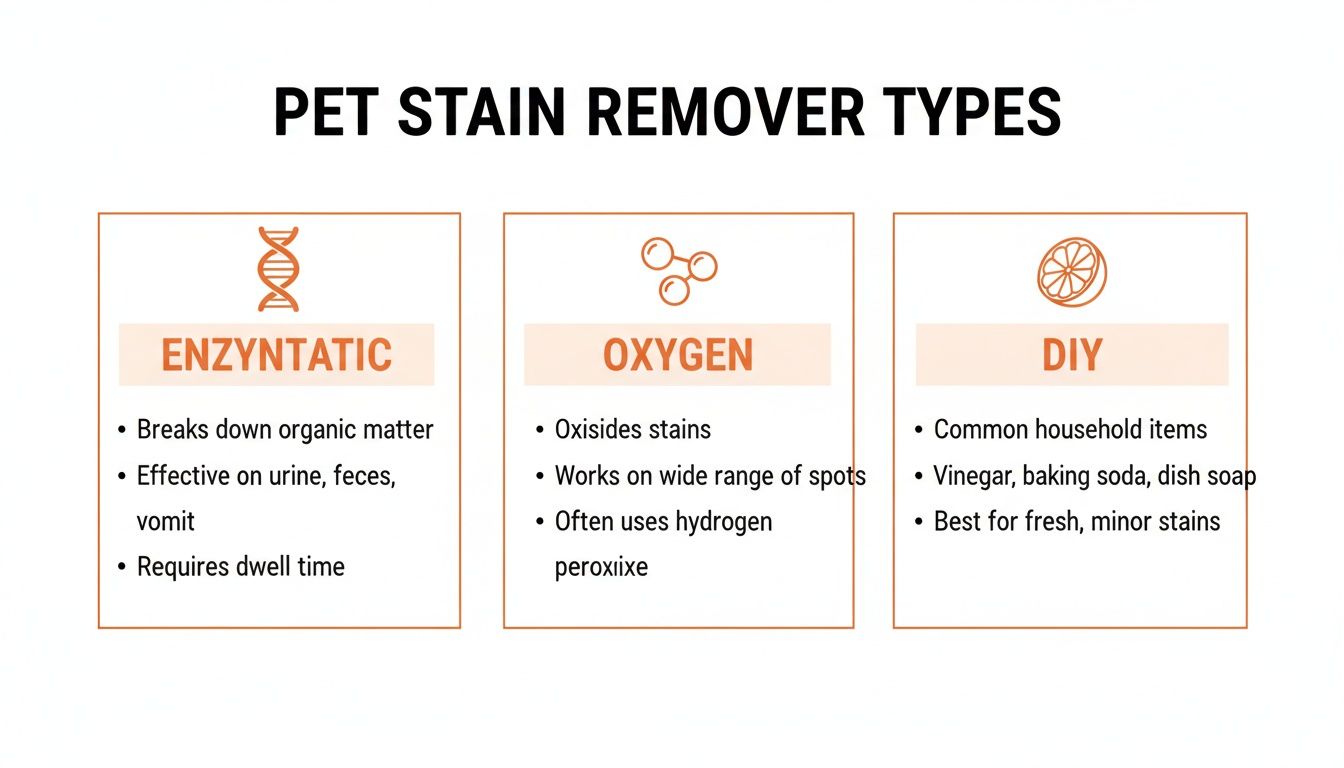
As you can see, it's all about matching the cleaner to the mess. Enzymatic cleaners tackle the biological stuff, oxygen cleaners lift discoloration, and DIY options offer a simple, natural alternative.
To make it even clearer, here’s a quick comparison of the three main types of pet stain removers.
At-a-Glance Comparison of Pet Stain Remover Types
| Remover Type | Best For | Key Advantage | Potential Drawback |
|---|---|---|---|
| Enzymatic | Urine, vomit, feces, and other organic stains | Completely eliminates odors at the source | Can take longer to work as enzymes need time |
| Oxygen-Based | Mud, blood, food spills, general dirt | Fast-acting and effective on colored stains | May cause slight discoloration on some carpets |
| DIY Citrus | Light, fresh stains and general freshening | Natural, non-toxic, and inexpensive | Less effective on set-in or severe stains/odors |
Choosing the right tool for the job is half the battle. For serious biological messes, an enzymatic cleaner is almost always your best bet, while an oxygen-based one is great to have on hand for everything else.
How to Choose an Effective Commercial Stain Remover
Walking down the cleaning aisle at the store can be overwhelming. You're faced with dozens of bottles, all screaming promises of miraculous results for your carpets. To find a product that actually works, you have to look past the flashy labels and get a feel for what's inside.
The truth is, the right choice completely depends on the kind of stain you're dealing with.
Most pet accidents—urine, feces, drool, vomit—are organic. That means they come from a living thing. For these types of messes, your absolute best friend is an enzymatic cleaner. These cleaners are packed with specific proteins, or enzymes, that are basically biological catalysts.
Think of it like this: the enzymes are tiny, microscopic helpers that are programmed to find and literally "eat" the organic gunk in the stain. They break it all down into simple, harmless stuff like carbon dioxide and water, taking the smell with them.
Decoding the Ingredients Label
Now, not all enzymatic cleaners are created equal. The real secret is to look for a cleaner with the right types of enzymes for the job.
- Protease: This is the big one. It specifically breaks down protein-based stains, which is exactly what you need for tackling urine and feces.
- Amylase: This enzyme goes after starches. It's incredibly useful for accidents involving pet food or vomit that contains kibble.
- Lipase: This one works on fats and oils, helping to dissolve any greasy components in the mess.
A truly high-quality product will have a blend of these to cover all your bases. Knowing this is key, because the pet stain remover market is huge—valued at around USD 9,828.23 million globally and still climbing. Innovations in these formulas are a big reason why. In fact, advanced enzymatic cleaners have been shown to beat out traditional chemical removers by up to 30% in odor neutralization tests.
What to Avoid in a Pet Stain Remover
Just as important as knowing what to look for is knowing what to run away from. Some chemicals can do permanent damage to your carpet fibers or, even worse, pose a risk to your pets and family.
Make sure to stay far away from products that list:
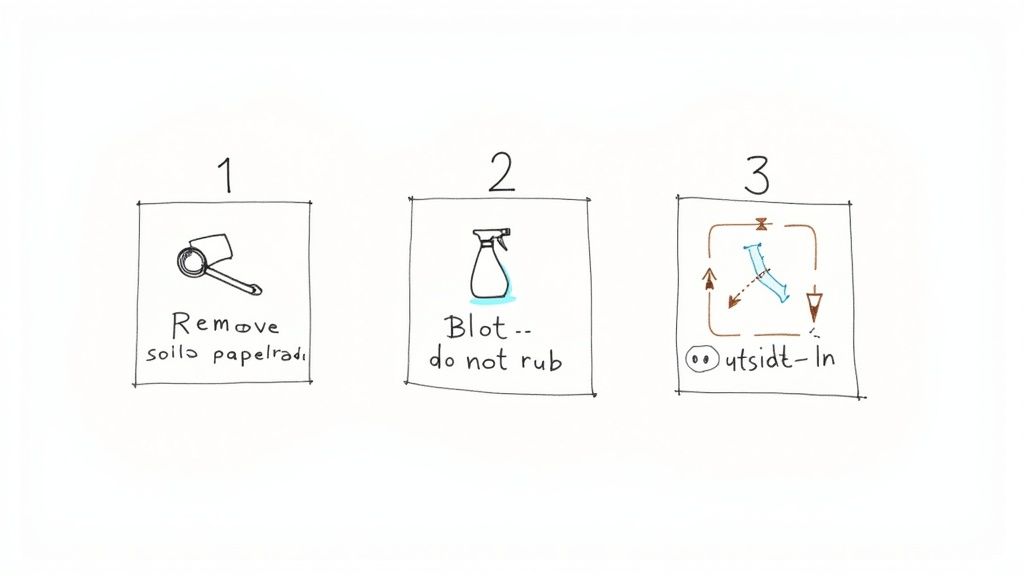
- Chlorine or Bleach: This is a surefire way to discolor your carpet or strip the color out completely.
- Ammonia: This is a tricky one. While it's a common cleaner, ammonia has a chemical makeup that's surprisingly similar to a component in pet urine. Using it can actually encourage your pet to mark the same spot over and over again.
- Harsh Solvents: Things like perchloroethylene can eat away at your carpet's backing and release nasty volatile organic compounds (VOCs) into your air.
Pro Tip: Always try to find a cleaner with a neutral pH level (right around 7.0). Anything too acidic or too alkaline can break down the stain-resistant coatings on modern carpets, leaving them wide open for future stains.
The Value of Certifications
If you want to cut through the noise and make a simple, confident choice, look for third-party certifications. The most trusted one in our industry is the Carpet and Rug Institute (CRI) Seal of Approval.
When a product has this seal, it means it has been put through some serious independent testing. They've proven it can effectively get rid of stains without causing any damage to the carpet itself.
Choosing a CRI-approved product gives you peace of mind. You know you're getting one of the best pet stain removers for carpets out there—one that works like a charm while protecting your investment. For a more detailed look at how these specialized cleaners get the job done, check out our guide on what an enzymatic cleaner is.
A Practical Method for Treating Fresh Pet Stains
When your pet has an accident, the clock starts ticking. I've seen it a hundred times—how you react in those first few minutes can mean the difference between a simple cleanup and a permanent problem. Acting fast is truly the best thing you can do to keep a stain from setting deep into your carpet fibers.
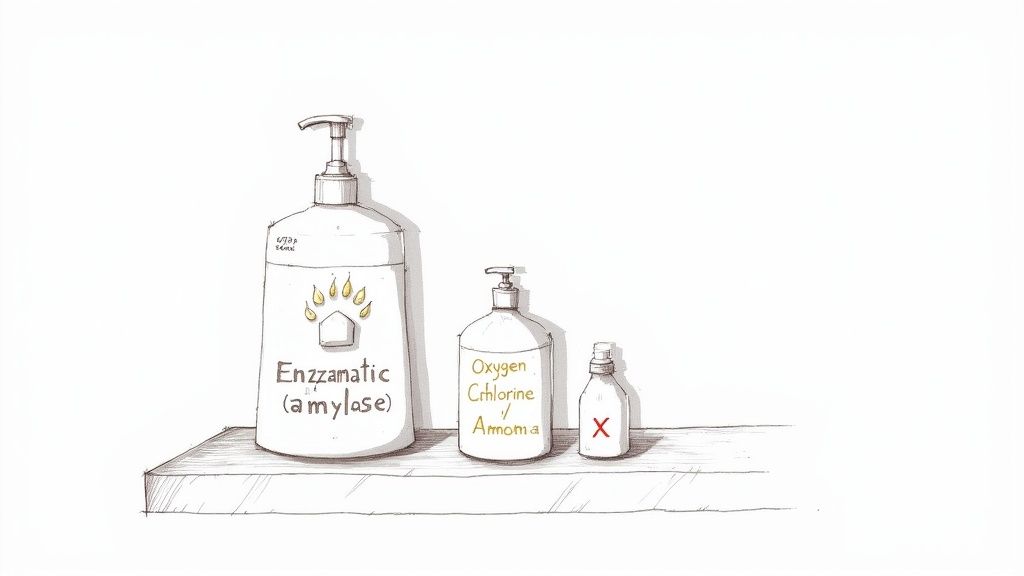
Before you do anything else, deal with any solid or semi-solid stuff. Gently scoop it up with a paper towel or a dustpan. The key is to be careful not to press it deeper into the carpet pile. Your goal is just to get as much of the physical material out of the way before tackling the liquid.
Now for the most important part: blotting. Grab a clean, dry, white cloth (white is best so you don't transfer any dye) or a thick stack of paper towels and press firmly onto the wet spot. Lift it up, find a fresh part of the cloth, and press down again. Keep doing this. You'll be amazed at how much moisture you can pull out this way.
Crucial Reminder: Whatever you do, don't rub the stain. I can't stress this enough. Rubbing just frays the carpet fibers and shoves the liquid down into the padding, which makes the problem ten times worse. Always blot with firm, downward pressure.
Applying Your Cleaner Correctly
Once you’ve blotted the area until it’s only slightly damp, it's time to bring in your pet stain remover. It doesn't matter if you're using a store-bought enzymatic spray or one of your own DIY solutions; how you apply it makes all the difference.
Lightly spray the cleaner onto the stain, making sure you cover the entire spot and a little bit of the area around its edges. Here’s a pro tip: always work from the outside edges of the stain inward. This simple trick helps contain the mess and stops it from spreading while you clean.
Let the product sit for the recommended amount of time, which is usually 5-10 minutes. That "dwell time" is absolutely essential, especially for enzymatic cleaners. It gives the active ingredients a chance to get to work breaking down the organic proteins in the stain. For a deeper dive into how that works, our guide explains more about how to remove pet urine from carpet and why it's so effective.
Finishing the Job Without Complications
After the cleaner has had a chance to do its job, you need to rinse and dry the area properly. A common mistake I see people make is leaving cleaning solution behind in the carpet. That residue gets sticky, attracts dirt, and eventually creates a new, dark spot.
To get a flawless finish, follow these final steps:
- Gently Blot Again: Take a fresh, clean cloth, dampen it slightly with cool water, and blot the area. This helps "rinse" the cleaner out of the fibers.
- Dry Thoroughly: Lay a thick, dry towel over the spot and put something heavy on top of it, like a stack of books. Let it sit there for several hours—or even overnight—to wick up every last bit of moisture.
- Fluff the Fibers: Once it's completely dry, give the area a quick vacuum and then use your fingers to gently fluff the carpet fibers back up. This will help restore their original look and feel.
Properly drying the area is non-negotiable. If you leave it damp, you're just asking for mildew growth or those ugly yellow or brown water rings to appear, turning your successful stain removal into a brand-new headache.
Whipping Up a Powerful Stain Remover in Your Own Kitchen
Sometimes, a pet accident happens when you least expect it, and you need a quick fix right now. Or maybe you just prefer using natural, everyday ingredients you already have on hand. The good news is your kitchen pantry is probably stocked with some surprisingly effective stain fighters.
Making your own pet stain remover is a fantastic option. It’s cheap, easy, and you know exactly what's going onto your carpets and around your family. No mystery chemicals here.
Many of the best homemade recipes are built around one simple ingredient: plain old white vinegar. Its natural acidity is a powerhouse at breaking down the alkaline salts in pet urine, which helps dissolve the stain itself while knocking out some of that initial odor.
My Go-To DIY Citrus-Vinegar Spray
This is my favorite homemade recipe because it combines the punch of vinegar with the natural degreasing and deodorizing magic of citrus. I've found it to be a brilliant first response for fresh accidents.
Here’s how to mix it up:
- Combine equal parts white vinegar and cool water in a clean spray bottle.
- Add about 10-15 drops of lemon or orange essential oil. The citrus oils are great at cutting through any greasy residue and leave a much fresher scent than just vinegar alone.
- Give the bottle a gentle shake to mix everything together.
When a mess happens, blot up as much as you can first. Then, spray your DIY solution liberally over the stain and let it sit for at least five minutes. Let it do its thing! After that, come back with a clean, dry cloth and blot it up.
Unleash the Power of Baking Soda
For those really stubborn stains or if you’re worried about lingering smells, baking soda is your secret weapon. After you've treated the area with your citrus-vinegar spray, go ahead and sprinkle a generous layer of baking soda right on top of the damp spot.
You might see some fizzing—that’s totally normal! It’s just the chemical reaction between the acidic vinegar and the alkaline baking soda. This little reaction actually helps lift the stain right out of the carpet fibers.
Let the baking soda sit until it's bone dry. This could take a few hours, or you might just want to leave it overnight. Once it’s fully dry, just vacuum it all up. This one-two punch is incredibly effective at tackling both the stain you can see and the smell you don’t want.
A Quick Word of Caution: Always Patch Test
Before you go all-in on a visible stain, please do a quick spot test. Find a hidden area of your carpet—inside a closet, under the sofa, anywhere it won't be seen—and apply a small amount of your homemade solution. This is just to make sure it doesn’t cause any weird discoloration or damage to your specific carpet fibers. Better safe than sorry
Tackling Set-In Stains and Lingering Odors
We've all been there. You move a piece of furniture or the light hits the carpet just right, and you spot it: an old, dried pet stain that's become one with the floor. It can feel like a lost cause. Fresh accidents are one thing, but these set-in messes have had time to truly bond with the carpet fibers, making them a whole different beast to tackle.
Before you even think about applying a cleaner, the first job is to bring that stain back to life. You can't clean something that's basically fossilized into your carpet. Gently mist the spot with warm water—don't soak it—and give it a few minutes to soften up. This simple step makes a world of difference.
For these tough jobs, an enzymatic cleaner isn't just a suggestion; it's a requirement. While oxygen-based products might lift some of the surface discoloration, only the enzymes can get deep down and break apart the hardened organic proteins that have glued that stain in place. Be prepared to do this more than once; old stains rarely give up without a fight.
The Science of Stubborn Pet Odors
Sometimes, even after the stain is gone, its ghost lingers in the form of a stubborn odor. This is especially true with pet urine. That smell isn't just a general funk; it's a specific chemical signature left behind by uric acid crystals.
Here's the problem: these crystals don't dissolve in water. That’s why your standard carpet shampoo or that vinegar-and-water trick you read about online often fails. They might clean the visible mess and mask the smell for a bit, but the moment there's any humidity in the air, those crystals reactivate, and that all-too-familiar ammonia smell comes right back. It's a massive frustration for pet owners—in fact, reports show that 40% of them struggle with odors that just won't go away after cleaning.
The only real way to win this battle is with an enzymatic cleaner. The specific enzymes in these formulas are designed to target and completely destroy the uric acid, permanently getting rid of the odor's source. If you don't eliminate these crystals, your pet's powerful nose will find that spot again, and you'll be stuck in a frustrating cycle of re-soiling.
A Proven Method for Set-In Stains
When you're up against a dried-on, stubborn stain, this is the process that gets results:
- Bring it back to life: Start by lightly spraying the stain with warm water. You're not trying to flood the carpet, just make it damp enough for the cleaner to sink in.
- Bring in the enzymes: Apply a high-quality enzymatic cleaner generously. Make sure you completely cover the stain and even a little bit of the area around it.
- Let it work: Place a clean, damp towel over the spot. This keeps the enzymes from drying out so they can stay active and do their job, sometimes for several hours or even overnight.
- Blot it up: Once the enzymes have had time to work, remove the towel. Use a dry, clean cloth to blot the area and pull up the dissolved gunk and extra moisture. Then, just let it air-dry.
This takes patience. Don't be surprised if one round isn't enough for a really deep-set stain. You might need to repeat the whole process two or even three times over a couple of days to fully break everything down.
If you've tried everything and that smell just won't quit, the problem might be deeper than the carpet fibers. For more advanced strategies, check out our guide on finding the best carpet cleaner for pet odors.
Knowing When to Call a Professional Carpet Cleaner
Look, even the best pet stain remover you can buy at the store has its limits. While DIY methods and off-the-shelf products are fantastic for tackling those fresh, isolated accidents, some situations are just too much for a spray bottle and a bit of elbow grease.
It’s important to know when to wave the white flag. Trying to fix a major issue yourself can sometimes just make it worse and end up costing you your carpet.
Think about it this way: if a pet has had a really big accident or keeps going back to the same spot, that problem runs deep. We're talking urine that has soaked right through the carpet fibers, saturated the padding underneath, and maybe even seeped into the wooden subfloor. At that point, no surface cleaner in the world can truly reach the source. That’s when you need professional-grade equipment.
Signs a Stain Is Beyond a DIY Fix
So, how do you know you're in over your head? Take a look at the stain. Is it bigger than the palm of your hand? Has it been sitting there for weeks, or maybe even months? These are pretty clear signs you might need an expert.
You should seriously consider calling in a pro if you're dealing with:
- Deep Saturation: This is when you know—or strongly suspect—the urine has soaked all the way through to the carpet pad.
- Multiple Large Stains: Trying to tackle numerous, widespread spots one by one is not only overwhelming but usually ineffective. You're just chasing your tail.
- Delicate Materials: If you have wool or silk carpets, don't even think about experimenting. The wrong cleaning method can easily cause permanent damage.
- Lingering Odors: A smell that just won't quit, even after you've cleaned the spot multiple times, is a dead giveaway. It means the uric acid crystals are still active deep down in the fibers.
The big difference is that professionals use techniques like hot water extraction, which literally flushes out contaminants from deep within the carpet pile. Home remedies just can't do that. This process gets rid of the deep-seated gunk, allergens, and the nasty, odor-causing bacteria that your home cleaner inevitably leaves behind.
For our neighbors here in the area, calling a trusted local service is the right next step. When you need a full-on restoration, the team at Citrus Carpet Cleaning Buford uses powerful, yet completely pet-safe, methods. We can save carpets that look like a lost cause and get rid of stubborn odors for good, making sure your home is truly fresh and clean again.
A Few Lingering Questions About Pet Stains
Even with the best game plan, a few questions always pop up. It's totally normal. Here are some of the most common things we hear from pet owners who are in the thick of the fight against carpet stains and smells.
Can I Just Use a Regular Carpet Cleaner on Pet Messes?
It's so tempting to just grab whatever cleaner is under the sink, but trust me, this is almost always a mistake. A standard carpet cleaner might make the stain look a little better on the surface, but it's not getting to the root of the problem.
Think of it this way: regular cleaners aren't designed to break down the specific stuff in pet urine, like organic proteins and uric acid crystals. This means that while the yellow stain might fade, the actual odor-causing bacteria are left behind deep in the carpet fibers. I guarantee that unpleasant smell will be back.
How Do I Stop My Dog from Peeing in the Same Spot?
If your pet keeps going back to the same "crime scene," it's not because they're being stubborn—it's pure instinct. Their sense of smell is incredibly powerful, and they can detect tiny odor molecules that are completely unnoticeable to our human noses.
The only way to break this frustrating cycle is to completely destroy those scent markers.
This is where an enzymatic cleaner becomes absolutely essential. It doesn't just mask the smell; it consumes and eliminates the source. After you've given the area a really thorough cleaning, you can also try using a pet-repellent spray with a citrus scent. Most cats and dogs really don't like it.
One more thing: it's always smart to talk to your vet. Repeat accidents can sometimes be a red flag for an underlying medical issue or a behavioral problem that needs a professional's help. It's always best to rule out any health concerns first.
Are "Pet-Safe" Cleaners Really Safe for My Animals?
For the most part, yes. When a product is specifically labeled as "pet-safe," it means it's formulated without harsh chemicals like chlorine, ammonia, or phosphates, which can be dangerous for them. These products are designed with homes that have pets and kids in mind.
However, "safe" doesn't mean your pet should be drinking it. The best practice is to keep your furry friends out of the room while you're actively cleaning. Don't let them back on the carpet until it's 100% dry. And anytime you bring a new product into your home, just keep an eye on your pet to make sure they don't have an unusual reaction.
When DIY just isn't cutting it and you need to bring in the pros, Citrus Carpet Cleaning Buford provides professional, genuinely pet-safe cleaning that gets rid of stains and odors for good. Get your free "EXACT-imate" by visiting our site: https://citruscarpetcleaningatlanta.com.