
Here’s the deal: after a professional cleaning, your carpet could be dry in just an hour or it might take a full day. It really depends.
Think of it like watering your lawn. A quick mist on a hot day evaporates almost instantly, but a deep, long soak takes a while to dry out. The same idea applies to your carpets, and the single biggest factor dictating that time is the cleaning method itself.
Why Do Carpet Drying Times Vary So Much?
How long your carpet stays damp isn’t random. It’s a mix of a few key things working together. And while the cleaning process is the main event, knowing the other players helps you set the right expectations—and maybe even speed things up.
A soggy carpet isn't just annoying because you can't use the room. When it stays wet for too long, it creates the perfect damp, stuffy environment for musty smells and even mold to take hold. That's why getting it dry faster is a big win for your home's health and your family's convenience.
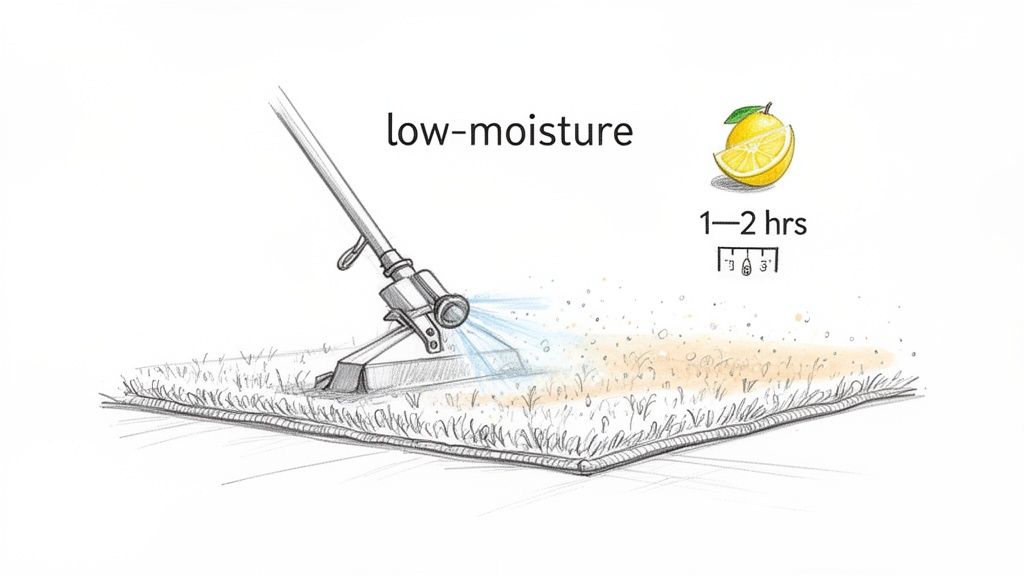
This infographic lays it out pretty clearly, showing the massive difference in dry time between the two most common professional methods.
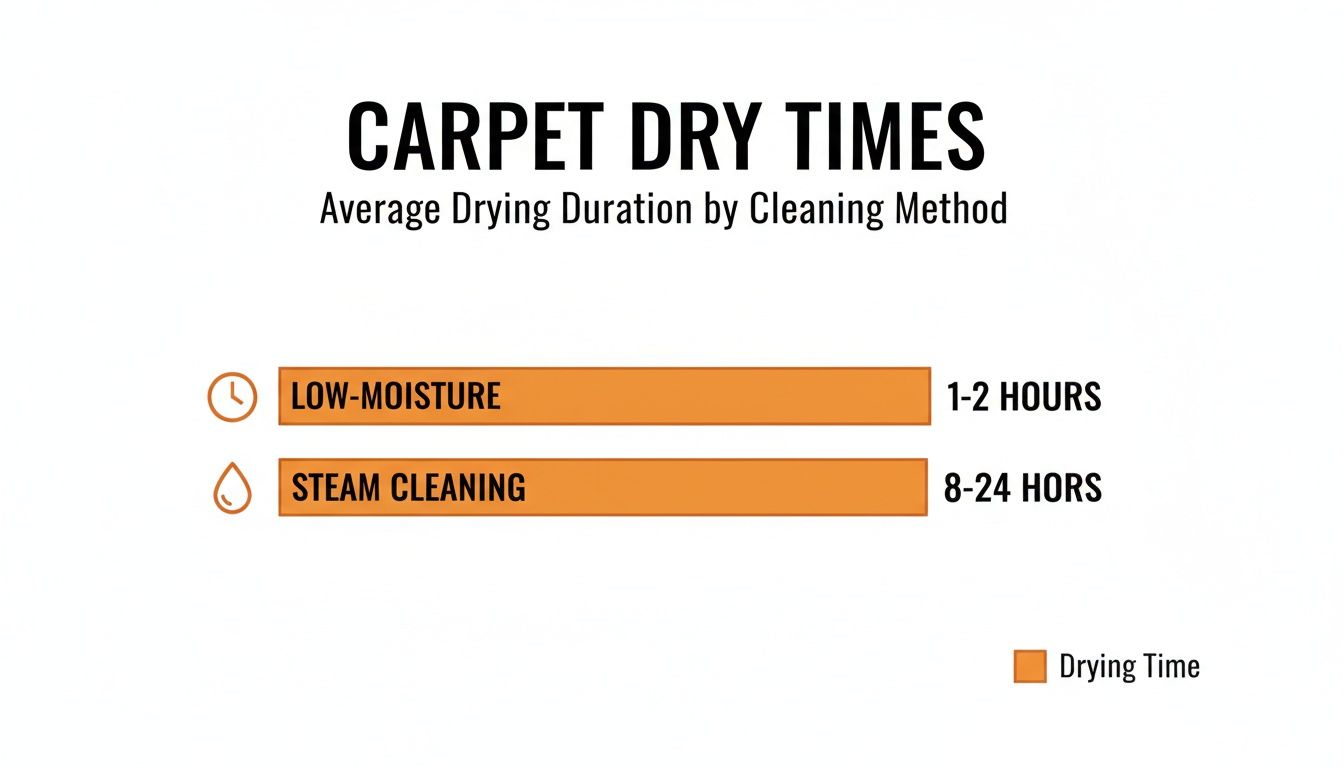
As you can see, a low-moisture cleaning gets you back on your floors the same day. No contest.
Carpet Cleaning Dry Times at a Glance
To make it even simpler, here’s a quick breakdown of what to expect from the most common professional carpet cleaning methods out there.
| Cleaning Method | Average Dry Time | Moisture Level |
|---|---|---|
| Low-Moisture Cleaning | 1–2 Hours | Very Low |
| Encapsulation Cleaning | 1–3 Hours | Low |
| Bonnet Cleaning | 1–4 Hours | Low to Moderate |
| Steam Cleaning | 8–24 Hours | Very High |
| Shampooing | 12–24+ Hours | Extremely High |
It's pretty obvious that some methods leave you with a much longer wait than others. That's why asking about dry times before you book is one of the smartest questions you can ask.
The Factors That Control Drying Speed
So, what’s the science behind all this? It really just comes down to basic evaporation. For the moisture trapped in your carpet fibers to escape, it needs a little help. Several things can either give it a push or stop it dead in its tracks.
Here’s what really matters:
- The Cleaning Method: This is the big one. Traditional steam cleaning (hot water extraction) blasts hot water deep into your carpet and padding, soaking everything. Low-moisture systems, like ours, use just enough solution to break down the dirt without saturating the backing. Less water in means less water has to come out.
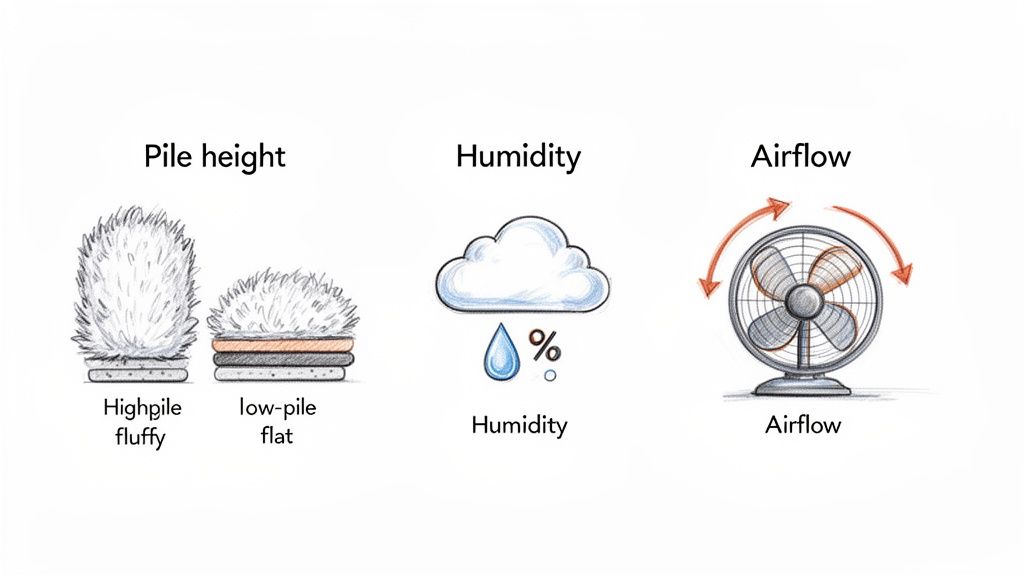
- Carpet Thickness & Fiber Type: A thick, plush, high-pile carpet is like a fluffy bath towel—it loves to hold onto water. On the flip side, a thin, low-pile berber or commercial-style carpet is more like a kitchen dishrag that dries in no time.
- The Humidity in Your Home: How much moisture is already in the air plays a huge role. On a muggy Georgia summer day, evaporation slows way down because the air is already saturated. A dry winter day is a completely different story.
- Airflow and Ventilation: Moving air is your best friend. Cracking a window or turning on fans helps whisk moisture away from the carpet's surface, speeding up the whole process. Stagnant, still air just traps the humidity right where you don't want it.
When you understand these factors, you can see why choosing a cleaning service isn't just about getting stains out. It’s about getting your home back to normal—quickly, safely, and without the soggy mess.
Why Does Traditional Steam Cleaning Take Forever to Dry?
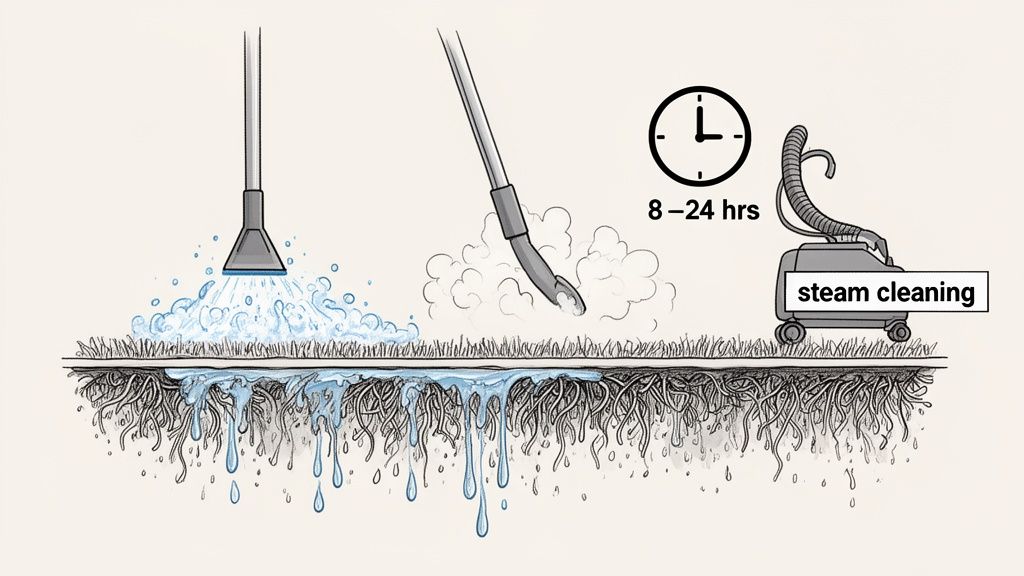
Most people have heard of "steam cleaning," but in the professional world, we call it hot water extraction. The name pretty much gives the game away. It works by blasting an incredibly high-pressure mix of hot water and cleaning chemicals deep into your carpet to force out dirt.
Think about it like power washing your driveway. That intense spray is great for dislodging all the gunk, but it leaves the concrete totally soaked. It’s the same with your carpet. The second step is a powerful vacuum that tries to suck all that filthy water back up, but let's be realistic—it never gets all of it.
The Saturation Problem
No matter how beastly the vacuum is, it's just physically impossible to pull 100% of that water back out. A good chunk of it gets left behind, trapped in the carpet fibers, the backing, and even soaking down into the pad underneath. This is the real reason steam cleaning takes so long to dry.
All that leftover moisture has to go somewhere, and its only option is to evaporate. This process takes a lot longer than you'd think. Did you know that traditional steam cleaning can leave your carpets damp for a mind-boggling 8 to 24 hours? It's a method that's been around for decades, but its biggest downside has always been turning your home into a swampy, unusable space for a full day.
From Damp to Damaging
An 8-to-24-hour dry time isn't just an annoyance that keeps you tiptoeing around your own living room. It creates the perfect damp, humid breeding ground for much bigger problems.
A carpet that stays wet for more than 24 hours is at a high risk of developing mold and mildew. This doesn't just create a nasty, musty smell—it can become a real health hazard for you and your family.
This long, soggy drying period is the fundamental flaw of the whole "saturate-and-extract" model. You might get a clean that looks deep, but you're trading it for the very real problems that come with excessive moisture. If you want to dive deeper, you can compare steam cleaners vs. modern carpet cleaners to see why using less water doesn't mean a less powerful clean. This lengthy downtime is exactly the problem that newer, low-moisture methods were created to solve.
Ever wondered why your carpet took what felt like an eternity to dry, while your neighbor’s was ready for foot traffic in just a couple of hours? The time it takes for a carpet to dry isn't some big mystery—it's actually a science, and it all comes down to a few key variables. Once you understand what's at play, you can set realistic expectations and even take steps to speed things up.
Think of your carpet like a big sponge. A thick, fluffy sponge is going to hold onto water for a long, long time. A thin, flat one? It’ll dry out in a flash. That simple analogy is the perfect way to start thinking about the forces at work in your own home.
Carpet Material and Pile Height
First off, the physical makeup of your carpet is a huge player in this game. Different materials absorb and release moisture at completely different rates, which directly impacts how long they stay damp after a good cleaning.
- Natural Fibers (Wool): Wool is incredibly absorbent. It’s a fantastic, durable material, but it loves to hold onto water, which can really stretch out the drying process.
- Synthetic Fibers (Nylon, Polyester): These are the most common carpet materials for a reason. They aren't nearly as porous as wool, meaning they don't soak up as much water and can dry significantly faster.
Beyond just the fiber type, the carpet's thickness—what we call the pile height—is critical. A high-pile, plush carpet has a ton of surface area for water to cling to, just like a thick bath towel. On the flip side, a low-pile berber or commercial-grade carpet has way less material to hold moisture, almost like a thin dishrag that dries out quickly.
Humidity and Airflow in Your Home
The environment inside your house is just as important as the carpet itself. The amount of moisture already floating around in the air—the humidity—dictates how quickly more moisture can evaporate from your freshly cleaned floors.
On a sticky, humid Buford summer day, the air is already saturated with water. This dramatically slows down evaporation from your carpet. In contrast, the crisp, dry air of winter actually helps pull moisture out of the carpet much more efficiently.
This is where good old-fashioned airflow becomes your best friend. Stagnant air is the enemy. It lets a little pocket of humid air form right above the carpet, bringing the drying process to a screeching halt. You've got to get that air moving. Cranking up fans or just opening a few windows replaces that damp air with drier air, encouraging much faster evaporation. Good ventilation is an absolute non-negotiable for cutting down on dry time.
The Cleaning Method Itself
When it's all said and done, the single biggest factor is the cleaning method being used. As we've covered, traditional steam cleaning (hot water extraction) works by blasting a large volume of water deep into the carpet and its padding. Even with powerful truck-mounted vacuums, a significant amount of moisture is always left behind.
Low-moisture methods, on the other hand, were designed from the ground up to avoid this exact problem. By using just a fraction of the water, they deliver a deep, effective clean without soaking the carpet's backing and pad. This fundamental difference is why low-moisture cleaning, like our citrus method, offers a 1–2 hour dry time, while steam cleaning can leave you with squishy, wet floors for up to 24 hours.
Let's break down how these variables work together. The table below shows what helps and what hurts when it comes to getting your carpets dry quickly.
How Different Factors Impact Drying Speed
| Factor | Speeds Up Drying | Slows Down Drying |
|---|---|---|
| Carpet Fiber | Synthetic fibers like nylon or polyester. | Natural fibers like wool. |
| Pile Height | Low-pile or berber carpets. | High-pile, plush, or shag carpets. |
| Humidity | Low indoor humidity (dry winter air). | High indoor humidity (muggy summer day). |
| Airflow | Open windows, ceiling fans, box fans. | Closed windows, no fans, stagnant air. |
| Cleaning Method | Low-moisture or dry cleaning methods. | High-moisture steam cleaning (HWE). |
| Carpet Pad | Thinner, less absorbent padding. | Thick, dense, or old absorbent padding. |
As you can see, the ideal scenario for fast drying is a low-pile nylon carpet cleaned with a low-moisture method on a dry day with plenty of fans running. The opposite is also true—a wet-cleaned wool shag carpet on a humid day with no airflow will take ages to dry. Understanding these trade-offs helps you know exactly what to expect.
The Hidden Problem of Sticky Soap Residue
Have you ever had your carpets cleaned, only to watch the same spots magically reappear just a few weeks later? You’re not going crazy. This frustrating cycle is usually caused by a secret culprit left behind by traditional steam cleaning: sticky soap residue.
Think about what happens if you wash your hands but don't rinse all the soap off. They feel tacky, and every bit of dirt you touch sticks right to them. The exact same thing happens to your carpet fibers. When high-moisture methods blast detergents deep into the pile, they often can't pull it all back out, leaving behind a magnet for new dirt.
This leftover chemical film is the number one reason for rapid re-soiling. Instead of looking fresh and clean, your carpet starts to look dingy and gray way too fast because it’s trapping every speck of new dirt, dust, and allergens.
Why Leftover Moisture Means Leftover Soap
The problem is tied directly to all that water used in hot water extraction. Many of these wet cleaning systems only manage to extract between 60-85% of the liquid they spray into your carpet.
Let's do some quick math. If a cleaner pumps 10 gallons of soapy water into a room, that means 3-4 gallons of that chemical-filled liquid gets left behind. It soaks deep into your carpet and, more importantly, the pad underneath, creating the perfect setup for that sticky residue to do its dirty work.
This is a huge headache for homeowners, especially for the 60% of families in Buford who own pets and are constantly battling high-traffic areas. The one-two punch of a long carpet cleaning dry time and sticky residue creates a cleaning cycle that never seems to end.
Rapid re-soiling isn't just an inconvenience; it means you're not getting the lasting value you paid for. A truly effective cleaning shouldn't leave anything behind but fresh, clean fibers.
The only way to break the cycle is to pick a cleaning method that doesn’t depend on harsh soaps or detergents in the first place. When you understand the common issue of carpet cleaning with no residue, it becomes clear why a soap-free approach is the key to a clean that actually lasts. It gets to the root of the problem, ensuring your floors stay brighter and fresher for much, much longer.
Practical Ways to Speed Up Carpet Drying
No matter which cleaning method was used, you have a surprising amount of power to slash that carpet cleaning dry time. It's not about just sitting around and waiting. A few smart moves can get your floors back in action in hours instead of a full day. This is more than just cracking a window; it's about creating the perfect storm for evaporation right inside your house.
Think about hanging a wet towel on a clothesline. On a sticky, still day, it feels like it takes forever to dry. But on a clear, breezy day? It’s dry in a flash. Your job is to create that breezy day indoors to help moisture escape from the carpet fibers.
Create an Environment for Fast Drying
It really boils down to two things: airflow and humidity. If you can get a handle on those, you’re actively helping the moisture leave the carpet and get out of your home. It’s a simple game plan, but it works wonders, and you can start the second your technician walks out the door.
Here are the most effective things you can do:
- Get the Air Moving: Flip on every ceiling fan you have, especially in and around the rooms that were cleaned. If you have box fans or portable fans, set them up to blow across the carpet, not straight down at it. This creates a surface-level breeze that acts like a shuttle, grabbing the damp air just above the fibers and carrying it away.
- Put Your HVAC to Work: Your air conditioner and furnace are your secret weapons. In the summer, running the A/C is a fantastic way to dehumidify the house, pulling moisture right out of the air. During a chilly winter, cranking up the heat warms the air, allowing it to hold more moisture and suck it out of the carpet.
- Open the Windows (But Only When It Makes Sense): If it’s a nice, dry day outside, opening the windows is a great, free way to get some ventilation going. But be careful—on a classic humid Buford summer day, you’ll actually be slowing things down by letting more moisture in.
Get a Handle on Indoor Humidity
Controlling the moisture that’s already in your air is a huge piece of the puzzle. If the air in your home is already saturated and muggy, it just can't absorb any more water from your carpet. Think of it like a full sponge; it can't soak up another drop. This brings the drying process to a dead stop.
The real game-changer in the fight against dampness is a dehumidifier. Firing one up in a recently cleaned room can dramatically cut down the dry time, especially when it's humid outside. It actively yanks water vapor from the air, which in turn forces your carpet to let go of its moisture much faster.
Beyond the specific cleaning method, how you manage your home’s environment is key. For example, knowing how to reduce humidity in your home gives you a major advantage. These simple steps put you in control, making sure your carpets get dry quickly and properly, which stops any musty smells from ever starting and lets you get back to your life.
The Low-Moisture Method: A 1-2 Hour Dry Time
What if you could have sparkling clean carpets that are actually ready for your family to walk on in just an hour or two? That’s not a gimmick; it’s the reality of modern low-moisture cleaning. We designed our entire process to avoid the soggy, frustratingly long waits that come with old-school methods.
Instead of blasting your floors with gallons and gallons of water, this approach uses a powerful, citrus-based cleaning solution. Think of it like a really good degreaser cutting through a greasy pan—it’s made to break down and dissolve all the gunk, oils, and allergens without needing a massive amount of water to do its job.
This efficiency is a total game-changer. By using so much less liquid, the whole process speeds up the carpet cleaning dry time to an incredible 1-2 hours.
Why a Faster Dry Time Matters in Buford
For busy families, folks with pets, and local businesses here in Buford, a carpet that takes all day to dry is more than just annoying—it’s a major disruption. Low-moisture cleaning gets you back on your floors fast, so you can get back to your life without roping off half your house.
This rapid drying isn't just a perk; it's becoming the new standard. People are moving away from the 24-hour dampness and the musty smells that can come with it. In fact, the global market for these low-moisture methods is expected to hit $1.49 billion by 2029 as more people demand a better, faster experience.
At Citrus Carpet Cleaning Buford, our citrus solvent doesn’t just clean deep down. It evaporates quickly, leaving nothing behind but a fresh, clean scent. Best of all, it completely gets rid of the sticky soap residue that makes carpets get dirty again so fast. Your carpets will actually stay cleaner, longer.
Our entire process was built from the ground up to solve the two biggest complaints in this industry: carpets that take forever to dry and spots that keep coming back. By tackling both problems head-on, we deliver a clean that really lasts and fits into your schedule.
Curious how it stacks up against the old way of doing things? You can see a full breakdown in our article comparing low-moisture cleaning vs. traditional steam cleaning.
Common Questions About Carpet Drying
Even after figuring out which cleaning method seems right, you probably still have a few questions swirling around. Getting straight answers is the best way to feel good about the process and know what to expect. Here are the questions we hear most often from homeowners right here in Buford.
Can I Walk on My Carpet While It Is Drying?
With a low-moisture system like ours, you absolutely can. We just ask that you use clean socks or house slippers, and you can get back to your life pretty much immediately.
For traditional wet cleaning methods, though, it's a different story. You really need to wait until the carpet is 100% dry. Walking on a saturated carpet can crush the fibers and, worse, transfer dirt from your shoes right onto your freshly cleaned floor, creating new spots before the old ones are even a memory.
Does a Longer Dry Time Mean a Deeper Clean?
This is a myth we hear all the time, and it’s just not true. A genuinely deep clean comes from pulling the dirt, grime, and allergens out of the carpet, not from how much water you can pump into it.
In fact, soaking a carpet with excessive water is a recipe for disaster. It can lead to mold, mildew growth in the pad, and that sticky, crunchy residue that seems to attract dirt overnight.
A quality clean is defined by the gunk that’s removed, not the hours you spend waiting for your floor to dry. Modern methods give you a powerful clean without turning your home into a swamp for a day or two.
What Should I Ask a Cleaner About Their Dry Time?
Knowing what to ask is your best defense against a bad cleaning experience. Before you book any company, make sure you get clear answers to these three questions:
- What is your average carpet cleaning dry time? A pro should be able to give you a confident, specific answer—usually a tight hour range, not a vague "sometime today."
- What cleaning method do you use? This is a crucial question. It tells you right away if they're using a high-moisture or low-moisture approach.
- Do you use soaps that can leave a sticky residue? Asking this helps you avoid that frustrating problem where carpets look dirty again just weeks after being cleaned.
A reputable, honest company will have no problem giving you straightforward answers to all three.
Ready for a deep clean that’s actually dry in just 1–2 hours? Contact Citrus Carpet Cleaning Buford today for your free EXACT-imate. It’s time to experience a truly lasting clean without the soggy mess. Schedule your appointment at https://citruscarpetcleaningatlanta.com.