
When you're dealing with pet accidents, the best weapon in your arsenal is an enzymatic cleaner. These aren't your average, everyday carpet sprays. They're specifically formulated with enzymes that literally digest the proteins found in urine and other organic messes.
Instead of just covering up the smell, a good enzymatic cleaner goes right to the source and eliminates it. This is huge, because it's the key to stopping your pet from sniffing out that same spot and using it again.
Why Are Pet Stains So Hard to Get Rid Of?
Have you ever cleaned up a pet stain, thought you did a great job, only to see it reappear a few days later like a bad dream? It's a classic pet owner problem, and it all comes down to the science of what our furry friends leave behind.
You can't just grab any old household cleaner and expect it to work. Most of them are simply outmatched by the unique organic compounds in pet messes. To really win the battle, you have to understand what you're up against.
The Science Behind That Lingering Pee Smell
The main villain here is uric acid. It's the component in pet urine that makes the odor stick around forever. When you clean up the initial accident, you might get the liquid part, but you're leaving behind invisible uric acid crystals.
These tiny crystals don't dissolve in water and they latch onto your carpet fibers like glue, often soaking deep into the padding and even the subfloor beneath.
Here's where the real trouble starts. Those uric acid crystals can lie dormant, but the moment they're exposed to humidity—think a rainy day or even just mopping a nearby floor—they reactivate. That’s when you get hit with that unmistakable, foul ammonia smell all over again.
This is exactly why that old odor can suddenly pop up out of nowhere. Soap and water just won't cut it; they can't break down these stubborn crystals. You need something that specifically targets and neutralizes them for good.
It's More Than Just a Surface-Level Problem
It’s not just urine, either. Other messes like vomit or feces bring their own set of challenges, packed with proteins and bacteria that demand a special kind of cleaning.
Using a regular carpet shampoo might get rid of the color, but it often leaves behind the organic material. This becomes a buffet for bacteria, which not only keeps the odor alive but also creates a pretty unhygienic spot on your floor.
Here's a quick rundown of what you're really fighting:
- Deep Penetration: The mess doesn't just sit on top. It seeps down through the carpet fibers, into the padding, and sometimes all the way to the subfloor, creating a hidden odor source.
- Bacterial Growth: Leftover organic matter is a breeding ground for bacteria, which produces its own lovely set of smells long after the initial cleanup.
- Sticky Residue: Many cleaners leave behind a soapy, sticky film. This residue is a dirt magnet, leading to a dark, dingy spot that often looks worse than the original stain.
This is precisely why you need a dedicated carpet cleaning solution for pets. These formulas are built from the ground up to break down the specific proteins, fats, and acids that make pet messes so tough, ensuring both the stain and the smell are gone for good.
Choosing Your Go-To Commercial Carpet Cleaner
Walking down the cleaning aisle can feel overwhelming. So many bottles, all promising miracles. But when you’ve got pets, the stakes are way higher. The right carpet cleaning solution for pets doesn't just slap a fragrance over the smell; it goes to the source and knocks it out for good, without putting your furry family at risk.
You’ve basically got two main allies in this fight: enzymatic cleaners and oxygen-based cleaners. Knowing when to use which one is half the battle.
An enzymatic cleaner is your absolute best friend for organic messes—think urine, vomit, or feces. These formulas are packed with beneficial bacteria that produce enzymes. These little guys act like a microscopic cleanup crew, literally breaking down and consuming the specific proteins and uric acid that cause those stubborn stains and lingering smells. They don't just cover it up; they eat the problem.
Then you have oxygen-based cleaners, often with "Oxy" right on the label. These work through a chemical reaction called oxidation. It sounds complicated, but all it really does is break the chemical bonds holding a stain to your carpet fibers, lifting it right out. They’re fantastic for things like mud, grass, or that glass of juice the dog’s tail knocked over, but they can hold their own against some pet messes, too.
Decoding the Label: What to Actually Look For
Before you just grab the first bottle that catches your eye, flip it over and read the ingredients. What a product doesn't have in it is often just as important as what it does.
Here’s what you should be looking for:
- Pet-Safe and Non-Toxic: This is non-negotiable. Look for formulas specifically labeled as safe for pets and kids. You don't want any nasty chemical residues left behind where your dog or cat likes to nap.
- Enzyme-Fortified: For pet accidents, "enzymatic" is the magic word. It's the only way you're going to truly neutralize the uric acid crystals in pet urine that create that smell that just keeps coming back.
- Reside-Free: You know that sticky, soapy film some cleaners leave behind? That stuff is a total dirt magnet. A good cleaner will rinse away clean, which means your carpets stay cleaner, longer.
This chart helps break down the main culprits behind tough pet stains so you can figure out what you’re really up against.
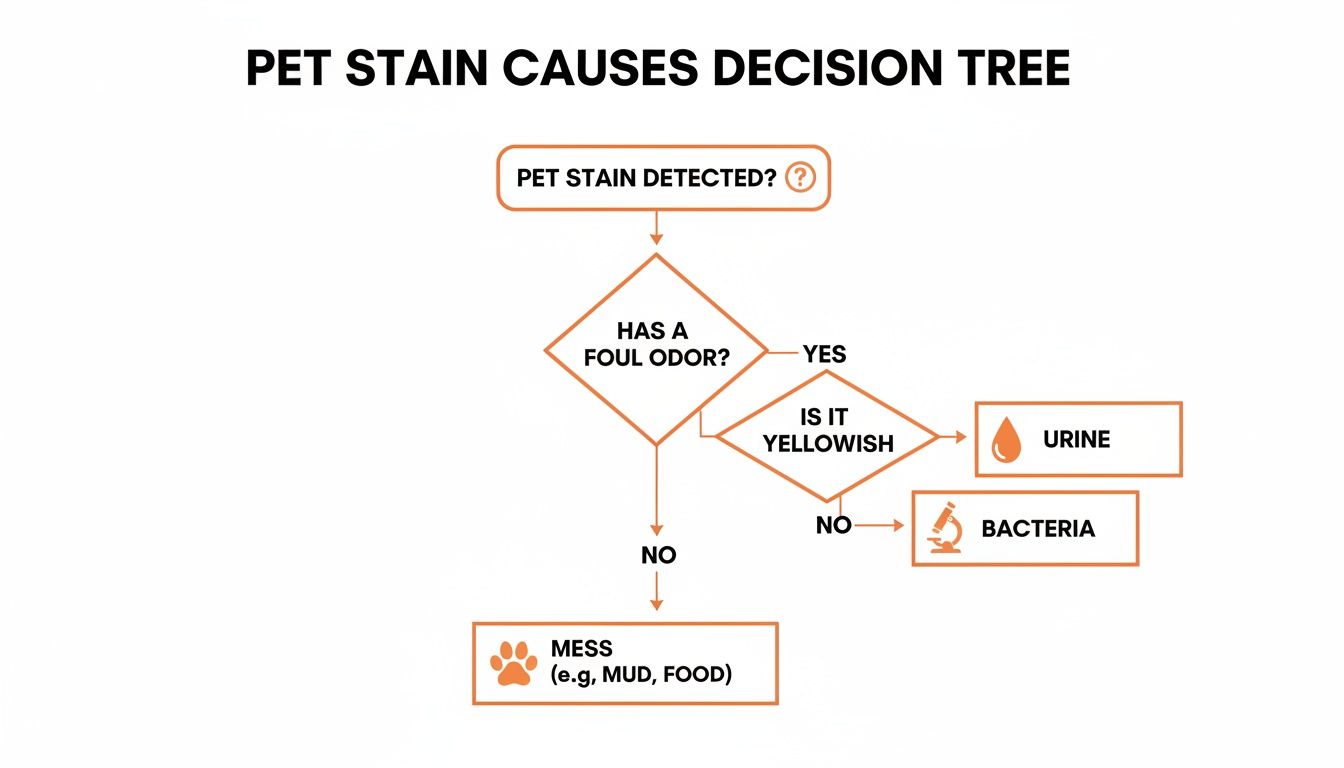
As you can see, even though the messes look different, the root cause is usually organic compounds and bacteria. That’s why targeted solutions are so important.
Comparing Commercial Pet Carpet Cleaners
To make things easier, here's a quick side-by-side look at the most common types of commercial cleaners you'll find on the shelf.
| Solution Type | Best For | How It Works | Safety Considerations |
|---|---|---|---|
| Enzymatic Cleaners | Urine, vomit, feces, and other organic stains | Uses natural enzymes to break down and digest odor-causing proteins and uric acid. | Generally very safe. Look for formulas specifically labeled non-toxic and pet-safe. Allow to dry completely. |
| Oxygen-Based (Oxy) Cleaners | Mud, blood, food stains, and general pet messes | Uses oxidation to break the chemical bonds of stains, lifting them from carpet fibers. | Can cause discoloration on some natural fibers. Always spot test first. Ensure good ventilation during use. |
| Standard Carpet Shampoos | General dirt and grime in high-traffic areas | Uses detergents and surfactants to lift surface-level dirt. | Often leaves a sticky residue that attracts more dirt. Many contain harsh chemicals not ideal for pets. |
Ultimately, enzymatic and oxygen-based cleaners are your best bets for tackling the specific challenges that come with pet ownership. Standard shampoos just can't compete when it comes to breaking down the source of stains and odors.
Chemicals to Avoid for Pet Safety
Knowing what to look for is great, but knowing what to run from is just as crucial. Some common cleaning chemicals can be downright harmful to your pets and can even damage your carpet.
Always avoid products containing ammonia, chlorine (bleach), and phthalates. Ammonia's scent is actually similar to urine for a pet, which can encourage them to mark the same spot again. Chlorine and other harsh agents can discolor your carpet and seriously irritate your pet's nose and lungs.
If you want to get really granular on what makes a cleaner work against tough smells, check out our guide on the best carpet cleaner for pet odors for more specific advice.
When you're shopping, think about your specific needs. Do you need a quick spot-treatment spray for those little "oops" moments? Or do you need a concentrated formula for a carpet cleaning machine to give the whole living room a refresh? Honestly, having both on hand is the best way to be prepared for anything.
Creating Effective DIY Cleaning Solutions at Home
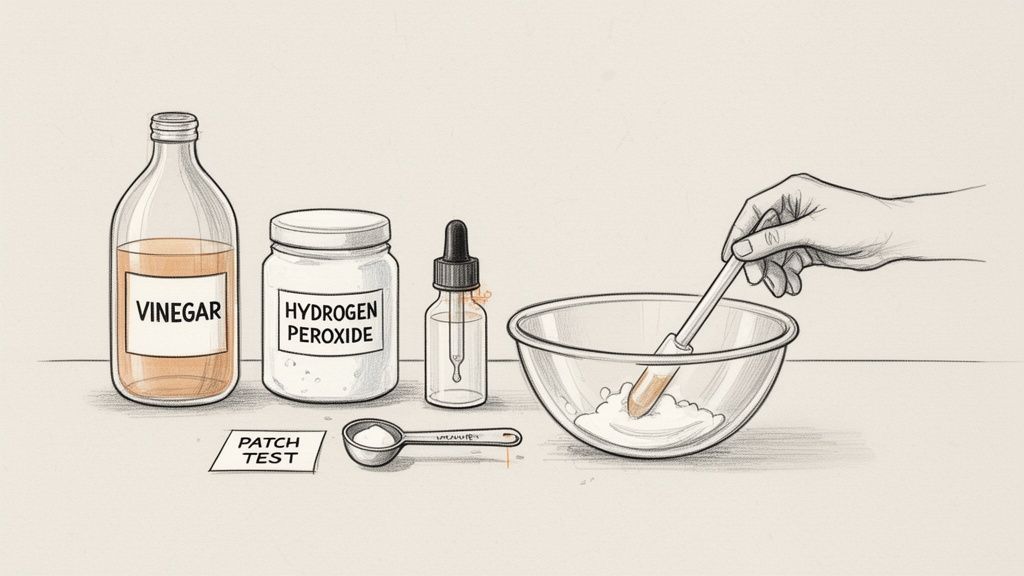
While the pros have powerful tools, sometimes the best solutions for pet messes are hiding right in your kitchen pantry. When you mix your own pet-safe carpet cleaner, you get total control over the ingredients—a huge plus if you have sensitive pets or family members. It’s also incredibly easy on the wallet.
Plenty of people are skeptical about going the DIY route, but you'd be surprised how effective simple household staples can be against tough pet stains. The trick is knowing what each ingredient does and how to combine them safely for the best results.
The Go-To Vinegar and Baking Soda Combo
This classic pairing is a go-to for a reason. White vinegar is a natural acid that brilliantly neutralizes the alkaline salts in dried urine, which is what causes that lingering smell. Baking soda is a fantastic odor absorber and adds a bit of gentle grit to help lift the stain out.
Here’s how to put this simple but powerful duo to work:
- Mix your vinegar spray. Combine equal parts white vinegar and cool water in a clean spray bottle.
- Lightly mist the stain. Just enough to dampen it. You never want to soak the carpet, as too much moisture can get into the backing and subfloor, causing bigger problems down the line.
- Sprinkle on the baking soda. Be generous here—cover the entire damp spot with a good layer of baking soda. You’ll see a little fizzing action as the two get to work breaking down the stain.
- Let it do its thing. Now, you just have to let the mixture dry completely. This can take a few hours, or you might even need to leave it overnight. As it dries, the baking soda pulls the gunk and the odor right out of the carpet fibers.
- Vacuum it all up. Once the spot is bone dry, vacuum up all the baking soda. You might need to pass over it a few times to get every last bit.
This method works wonders on fresh urine spots and is great for preventing your pet from "remarking" the area, since it completely gets rid of the scent.
Hydrogen Peroxide for Tougher Stains
Got a more stubborn or older stain? Hydrogen peroxide can be a real game-changer. It works as a natural oxidizer, breaking down the color in the stain, much like those commercial "Oxy" cleaners you see in stores.
Crucial Safety Note: Hydrogen peroxide can act like a bleach on certain types of carpet. Always do a spot test on a hidden area first—think inside a closet or under the sofa—before you tackle a stain out in the open.
For a more potent spot cleaner, try this recipe:
- 1 Teaspoon: Clear, gentle dish soap
- 1 Tablespoon: 3% Hydrogen Peroxide
- 1 Tablespoon: Baking Soda
Mix these into a paste and gently work it into the stain with your fingers or a soft cloth. Let it sit for about an hour, then blot it up with a clean, damp cloth and let it air dry.
Finally, a quick word of warning: some household chemicals should never be mixed. For instance, combining vinegar and hydrogen peroxide creates peracetic acid, a corrosive substance that can irritate your skin, eyes, and lungs. Always stick to proven, safe recipes. If you're looking for more ideas, this is a great homemade carpet cleaner recipe that explores other effective options.
The Right Way To Tackle Pet Stains and Odors
Having the perfect carpet cleaning solution for pets is a great start, but your technique makes all the difference. The moments right after an accident are crucial. They can determine whether you have a simple cleanup or a permanent stain setting in.
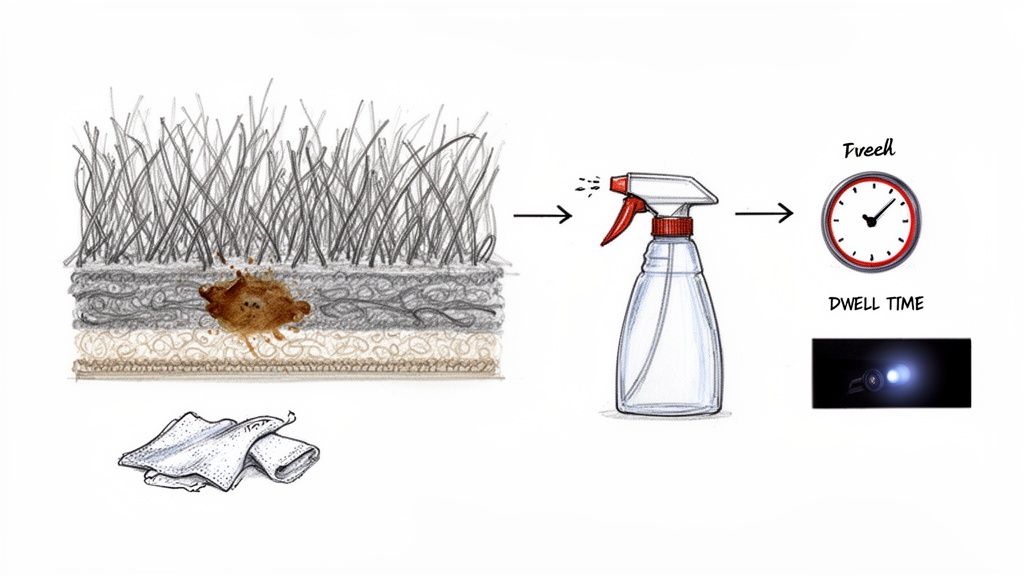
The single most important rule is to blot, never rub. When you scrub a fresh stain, you're not lifting it. You're just grinding it deeper into the carpet fibers and spreading it out. Grab a clean, absorbent cloth or some paper towels and press down firmly to soak up as much of the mess as you can.
Applying Your Cleaner Correctly
Once you've blotted up the excess, it's time for your chosen cleaner. Whether you're using a commercial product or a DIY mix, don't oversaturate the area. Too much liquid can soak right through to the carpet padding and subfloor, creating a hidden moisture problem that can lead to mold or mildew. Nobody wants that.
Just lightly spray the stain, making sure you cover the entire spot. You want the area to be damp, not sopping wet. This gives the cleaner enough moisture to do its job without causing bigger problems underneath.
This is especially true for enzymatic cleaners, which need moisture to activate the good bacteria that eat away the stain. These formulas are fascinating—you can learn all about them by reading our guide explaining what an enzymatic cleaner is: https://citruscarpetcleaningatlanta.com/what-is-an-enzymatic-cleaner/
Let The Solution Dwell
Here's where a little patience really pays off. After applying your cleaner, you have to give it time to work its magic. This "dwell time" lets the active ingredients—especially the enzymes or oxygen agents—penetrate the stain and break it down on a molecular level.
Don't rush this step. Rinsing too early is a common mistake that just leaves part of the stain behind. Most products recommend a dwell time of at least 5-10 minutes, but always check the specific instructions on the bottle for the best results.
While you wait, you can get a clean cloth and a small bowl of cool water ready for the next phase.
Rinsing and Drying The Area
After the dwell time is up, gently blot the spot again with a fresh, damp cloth. This helps lift both the cleaning solution and the dissolved stain out of the carpet. Keep repeating this with a clean section of the cloth until no more residue comes up.
Finally, place a dry, clean towel over the spot and press down hard to absorb as much remaining moisture as possible. I'll often place something heavy, like a stack of books, on top of the towel and leave it there for an hour. Once you're done, let the spot air dry completely to prevent any watermarks from forming.
These basic principles of blotting, dwelling, and careful rinsing are pretty universal. And it's not just for carpets! For a complete guide on tackling messes around the house, check out this great resource on how to remove stains from a sofa, as many of these techniques work on different fabrics, too.
When to Call in the Carpet Cleaning Pros
Look, even the most dedicated pet parent with the best DIY cleaning arsenal has their limits. Spot treatments and home machines are fantastic for tackling those everyday "oops" moments, but there are definitely times when you need to call in the heavy artillery.
Bringing in a professional isn't just about giving up on a tough stain. It's a critical part of maintaining your home, protecting your investment, and keeping your family healthy.
Think of it this way: your home carpet cleaner is great for surface-level messes. But a pro's equipment is built to deep clean all the way down to the carpet backing and pad. That's where the real troublemakers—deep-seated dander, stubborn allergens, and bacteria—love to hide. These are the microscopic culprits that can tank your home's air quality and fire up allergies.
Signs You Need Professional Help
Sometimes, the writing is on the wall, like a mystery stain that just won’t budge no matter what you throw at it. Other times, the clues are a bit more subtle.
It's probably time to make the call if you're seeing:
- Lingering Odors: If a funky pet smell hangs in the air even after you’ve cleaned multiple times, the source is almost certainly trapped deep in the fibers or, worse, the padding. Your home machine just can't reach it.
- Widespread or Multiple Stains: Are you playing a daily game of whack-a-mole with pet accidents? When you're dealing with a large stain or a minefield of smaller ones, a pro can tackle the whole area efficiently and save your sanity.
- High-Traffic Areas Look Dingy: If the main pathways through your home look permanently sad, dirty, or matted down, professional hot water extraction can work wonders to lift out that compacted grime and restore the carpet's texture.
A professional's truck-mounted hot water extraction system is in a completely different league than a rental or home unit. It blasts hot water and specialized cleaning solutions deep into the carpet, then uses incredible suction power to pull out the dirty water along with all the embedded gunk, allergens, and bacteria.
For those with really challenging pet situations, looking into professional turf cleaning services for pet issues can offer some interesting parallels. The core principles of deep extraction and proper sanitation are key, whether you're dealing with carpet or another surface.
Protecting Your Investment and Your Health
Let's be honest, being a pet owner is a real commitment. Total pet industry spending in the U.S. has climbed to some pretty staggering levels, and that includes taking care of the home you share with them. You can dive deeper into the numbers by exploring insights on the carpet cleaning market.
Scheduling a professional cleaning once or twice a year is one of the smartest things you can do to protect the thousands you've spent on your flooring. It removes the abrasive, gritty dirt that grinds down and wears out carpet fibers over time, helping your carpet last longer.
More importantly, it creates a healthier space for everyone in your home—two-legged and four-legged alike. It yanks out the pollutants that your vacuum and spot treatments simply can't reach.
Common Questions About Cleaning Pet Messes on Carpet
Even with the best game plan, questions are bound to pop up when you're dealing with pet messes. It just comes with the territory. This final section tackles the most common queries we hear day in and day out, giving you straightforward answers so you can handle any carpet challenge that comes your way.
How Often Should I Deep Clean Carpets with Pets?
For a home with pets, a good rule of thumb is to get a professional deep clean at least twice a year. Your weekly vacuuming and quick spot treatments are absolutely essential, don't get me wrong, but they only scratch the surface. A real deep clean is what pulls out the embedded dander, allergens, and nasty microscopic bacteria that our furry friends track in.
You might want to bump that up to every 3-4 months if you're dealing with:
- Multiple pets running around the house.
- A long-haired dog or cat that sheds a ton.
- Anyone in the family with allergies or asthma.
- A new puppy or kitten who's still figuring out the whole potty training thing.
What If My Pet Keeps Soiling the Same Spot?
Ah, the classic (and incredibly frustrating) "return to the scene of the crime" problem. This almost always comes down to one thing: scent. If your pet can still smell even the tiniest, faintest trace of a previous accident, their instinct kicks in to mark that spot again. Your typical off-the-shelf cleaners just can't break down the uric acid crystals that trigger this behavior.
To finally break the cycle, you have to bring out the big guns: a high-quality enzymatic cleaner. This isn't just a fancy name; these formulas have active enzymes that literally break down and digest the organic proteins causing the odor. Once you've cleaned the spot thoroughly with a good enzymatic product, the scent cue for your pet should be completely gone.
Can I Use a Carpet Cleaner on an Area Rug?
Yes, but you need to be careful. A lot of area rugs, especially if they're made from natural fibers like wool or silk, can be really sensitive to water and certain cleaning solutions. The very first thing you should do is find and read the manufacturer's care tag.
Before you go all-in, do a quick spot test on a small, hidden area, like a corner on the underside of the rug. Put a little bit of your cleaner on it, let it sit for a few minutes, and then blot it dry. Look closely for any color bleeding or changes in the fiber's texture. If you have any doubt at all, it's always safer to call a professional rug cleaning specialist.
Here's something important for pet owners to remember: a professional clean isn't just about getting rid of stains you can see. Industry research shows that professional services can remove around 98% of pollutants and dirt from carpets. That's a huge deal for improving your home's air quality, which can be compromised by all that pet dander and other hidden gunk. You can dig into the carpet cleaning industry findings for yourself.
By following this advice, you can keep your carpets looking and smelling fresh, which makes for a healthier and happier home for you and your four-legged family members.
When you're ready for a professional clean that gets real results, Citrus Carpet Cleaning Buford is here to help. Our citrus-based, low-moisture system is a beast on tough pet stains and odors but won't leave behind any of that sticky, soap-like residue. Get your free "EXACT-imate" today by visiting us at https://citruscarpetcleaningatlanta.com.