
When grease hits the carpet, time is your biggest enemy. That gut-wrenching moment when a greasy potato chip or a slick of olive oil lands on the floor doesn't have to mean a permanent stain, but you have to jump on it fast.
The whole game is about containing the mess and soaking up as much of that oil as you can before it works its way deep into the carpet fibers. Your actions in the first few minutes really set the stage for whether it's an easy cleanup or a long-term headache.
Your First Response to a Fresh Grease Stain
Think of it like first aid for your carpet. The quicker and smarter you act, the better the outcome.
First, Get Rid of Any Solids (Without Making it Worse)
Before you do anything else, you need to get any solid bits of food or debris off the carpet. Grab a spoon or the dull side of a butter knife and gently scoop up whatever fell.
Whatever you do, don't grab a paper towel and press down. That’s a rookie mistake. Pushing down will just force the grease deeper into the carpet pile, turning a small spot into a much bigger problem. You’re just trying to remove the source of the grease before you tackle the oily slick it left behind.
Next, Blot and Absorb the Oil
Once the solids are gone, fight every instinct you have to scrub the stain. Frantically rubbing at a grease spot only spreads it around and can permanently damage the texture of your carpet fibers.
Instead, grab a clean, white cloth or a few paper towels and gently blot the area. Start from the outside of the stain and work your way toward the center. This little trick keeps the grease contained instead of spreading it into a bigger circle. You’re trying to lift the oil out, not grind it in.
Key Takeaway: Blot, don't rub. Seriously. Blotting pulls the stain up and out of the carpet. Rubbing just grinds it in deeper and can leave you with a frayed, fuzzy patch that looks worse than the original stain.
After you've blotted up as much as you can, it's time to bring out the secret weapon: an absorbent powder. Sprinkle a ridiculously generous amount of baking soda or cornstarch right on top of the stain. Don't be stingy here—you want a thick pile completely covering the greasy area.
This powder will act like a million tiny sponges, pulling the oil right out of the carpet fibers. Let it sit for a good 15-30 minutes, but an hour is even better if you have the time. You’ll probably see the powder start to look clumpy or discolored as it soaks everything up.
Finally, just vacuum up all the powder. This one-two punch of blotting and absorbing is a game-changer for fresh spills. And while we’re talking about carpet here, many of the same ideas apply when you're getting grease out of leather, too.
Proven DIY Methods for Grease Removal
Alright, so you’ve blotted the spill and vacuumed up the powder, but the oily ghost of that stain is still staring back at you. This is where the real fight begins. Don't panic; you can often win this battle without calling in the pros just yet. A few things you probably already have in your kitchen or bathroom can work surprisingly well to clean grease from carpet for good.
First things first, let's look at the immediate game plan for any fresh spill.
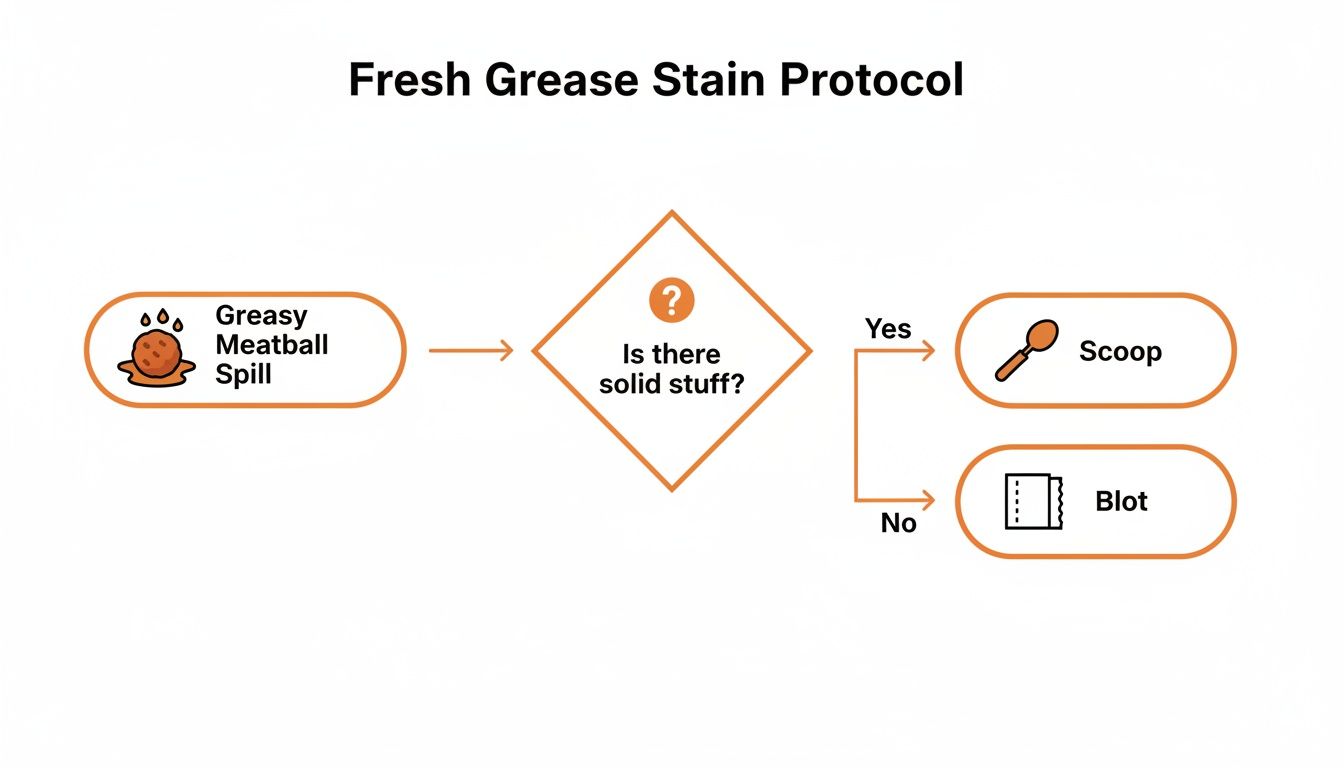
The takeaway here is dead simple: get any solid stuff up first, then blot the liquid. If you blot first, you risk grinding solids deeper into the carpet fibers, making your job way harder.
The Classic Dish Soap Degreasing Method
There’s a good reason we all trust dish soap for greasy pans—it’s literally designed to break down and lift away oil. That same magic works on carpet stains, but you have to be careful. Get the technique wrong, and you'll end up with a sudsy, sticky mess that attracts even more dirt.
Grab a clear or white liquid dish soap. Seriously, avoid the colorful blue, green, or orange stuff. Their dyes can bleed into your carpet and give you a brand-new stain to worry about. You only need a tiny bit.
Mix about one teaspoon of dish soap into two cups of warm water. Stir it gently; you’re not trying to make a bubble bath for your floor.
Now, take a clean, white cloth, dip it in your solution, and wring it out until it’s just damp. Gently blot the stain, starting from the outside and working your way in. This little trick stops the grease spot from spreading. As you see the grease transfer to your cloth, move to a clean section so you aren't just putting the oil back where you found it.
Pro Tip: Whatever you do, don't pour the soap solution right onto the carpet. If you oversaturate it, the liquid can soak through to the padding, creating a perfect environment for mildew. Control is everything here.
Once the stain is gone, you need to "rinse" the spot without flooding it. Get a new clean cloth, dampen it with plain water, and blot the area to pull out any soap residue. This is a step people often skip, but leftover soap becomes a dirt magnet over time.
Using Solvents Like Rubbing Alcohol
For tougher, more stubborn grease—think motor oil tracked in from the garage or a makeup spill—a solvent is your next best bet. Isopropyl alcohol (rubbing alcohol) is a fantastic choice because it dissolves the oil and evaporates quickly.
But before you go anywhere near that stain, you must do a spot test. Find a hidden piece of carpet—in a closet, under the sofa, wherever nobody will see it. Put a little alcohol on a cotton ball and dab it on.
Let it dry completely and check for any color changes or damage to the fibers. I can't stress this enough: do not skip this step. Skipping it could leave you with a permanent bleached spot that’s way worse than the original stain. Most modern synthetic carpets (nylon, polyester) are fine, but natural fibers like wool can be pretty sensitive.
If the test goes well, you're good to go. Lightly dampen a clean, white cloth with the rubbing alcohol and start blotting the stain gently. You’ll see the grease start to lift right off the carpet and onto your cloth.
Keep blotting with fresh parts of the cloth until the stain disappears. Since alcohol evaporates so fast, you don't really need a rinsing step, but it’s still a good idea to blot the spot with a dry towel when you're done to soak up any last bit of moisture.
Exploring Natural Citrus-Based Cleaners
If you'd rather use a natural solution or just can't stand chemical smells, a citrus-based cleaner is a great option. The secret ingredient is d-Limonene, a natural solvent that comes from citrus peels. It absolutely shreds through grease and oil.
You can buy commercial citrus cleaners, or you can mix up a simple version yourself. While there are a bunch of recipes out there, a good starting point is often a mix of vinegar, water, and a few drops of citrus essential oil. If you want to dive deeper, checking out the best homemade carpet cleaner recipe can give you some fantastic, safe alternatives to try.
The process is pretty much the same as the other methods:
- Test It First: Even natural stuff can mess with carpet dye. Always, always test in a hidden spot.
- Apply Lightly: A spray bottle is perfect for this. Lightly mist the stain or apply the cleaner with a damp cloth. Don't soak the carpet.
- Blot, Don't Rub: Let the citrus solvent do its job breaking down the oil. Your job is to gently blot and lift it away.
- A Quick Rinse: After the stain is gone, blot with a cloth dampened with plain water to remove any leftover cleaner.
- Dry It Out: Press a dry towel firmly on the spot to absorb as much moisture as you can.
Not only does this method clean grease from carpet effectively, but it also leaves the room smelling fresh and clean—a nice little bonus after dealing with a spill.
Comparing DIY Grease Removal Methods
When you're standing over a fresh grease stain, deciding which method to use can feel overwhelming. This quick table breaks down the three main DIY approaches to help you pick the right tool for the job.
| Method | Best For | Pros | Cons |
|---|---|---|---|
| Dish Soap | Food-based grease, fresh spills, general-purpose cleaning. | Inexpensive, readily available, gentle on most carpet types. | Can leave a sticky residue if not rinsed properly; may create too many suds. |
| Rubbing Alcohol | Stubborn oil-based stains like makeup, ink, or motor oil. | Evaporates quickly, requires no rinsing, very effective solvent. | Can damage natural fibers (wool) or unstable dyes; requires a mandatory spot test. |
| Citrus Cleaners | Most types of grease and oil; for those who prefer natural solutions. | Effective degreaser, leaves a pleasant scent, eco-friendly. | May require purchasing a specific product; homemade versions can vary in strength. |
Each method has its place. For a simple salad dressing spill, dish soap is perfect. For a more serious mechanical grease stain, rubbing alcohol is your go-to. And for an everyday, eco-friendly option, citrus cleaners are hard to beat. The key is matching the solution to the specific type of stain you're dealing with.
Tackling Tough Set-In Grease Stains
Fresh grease is one thing, but a set-in grease stain is a whole different beast. It’s that mystery spot you find behind the sofa weeks later or the greasy footprint that’s had days to become one with your carpet fibers.
Over time, grease and oil go through a process called oxidation. This chemical change makes them bond tightly to carpet fibers, whether they're synthetic or natural. The stain gets darker, stickier, and far more stubborn than a fresh spill. The oil essentially polymerizes, creating a tough, varnish-like film. At this point, you have to escalate your tactics beyond simple blotting and dish soap.
The Heat Transfer Method for Old Grease
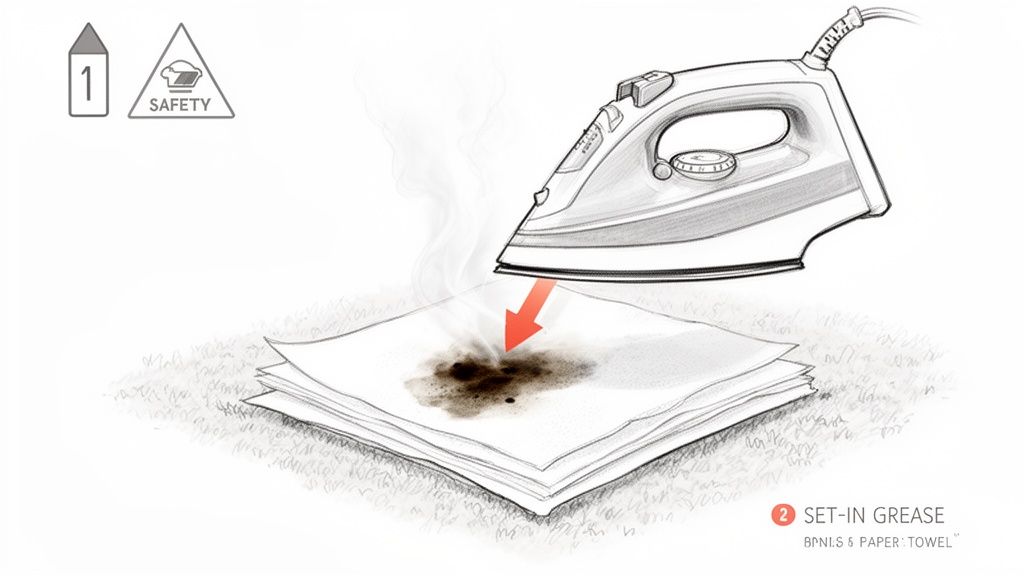
One of the most effective tricks for an old, hardened grease stain is the heat transfer method. This technique uses gentle heat to basically re-liquefy the grease, turning it from a solid back into a liquid that can be absorbed out of the carpet.
All you need are a few simple household items:
- A standard household iron (make sure the steam function is off)
- Several plain white paper towels or a brown paper bag
- A little patience
This process can work wonders, but you have to be careful. Too much heat will permanently melt synthetic carpet fibers like nylon or olefin, and that’s damage you can’t undo. The goal is to gently warm the grease, not scorch the carpet.
Safety First: Always start your iron on the lowest possible heat setting. You can always turn it up a bit if needed, but you can never fix melted carpet. And never, ever let the iron sit in one spot—keep it moving.
How to Safely Use an Iron on Your Carpet
Before you start, give the area a quick vacuum. You want to remove any loose dirt or debris that could get ground into the carpet fibers during the process.
Once you’ve vacuumed, lay a clean, folded paper towel flat over the entire grease stain.
With your iron on a low, no-steam setting, gently place it on the paper towel for just a few seconds. Lift it up immediately and check the towel. You should see a yellowish or brownish oily spot where the grease has started to melt and transfer.
Now, move the paper towel so a clean section is over the stain and repeat. Keep gently pressing and lifting the iron, replacing the paper towel as it gets soaked with grease. You'll have to do this several times, but you'll notice the stain on the paper towel getting lighter with each pass. That's how you know you're successfully managing to clean grease from carpet.
Knowing When to Stop
The heat transfer method is surprisingly effective, but it does have its limits. If you've repeated the process several times and you're no longer seeing any grease transfer onto fresh paper towels, you've likely removed all you can with this technique.
But what if a faint shadow of the stain is still there? Sometimes, certain types of grease—especially automotive oil or burned cooking grease—can permanently dye the carpet fibers. Pushing further with DIY methods at this stage could actually damage your carpet.
When you've hit a wall, it’s time to call a professional. For a deeper look at stubborn spots, our guide on removing set-in carpet stains has more info on when it's time to bring in the experts.
Proper Drying and Carpet Aftercare
You did it. The oily evidence of that grease stain is finally gone. It’s tempting to celebrate and walk away, but don't skip the final steps—they're just as crucial as the cleaning itself. Leaving a damp patch in your carpet is basically rolling out the welcome mat for mildew, water rings, and that stiff, crunchy texture that screams, "Something happened here."
Properly drying the area is what makes all your hard work pay off, ensuring the spot blends back in seamlessly. First things first: get out as much of that excess moisture as you possibly can.
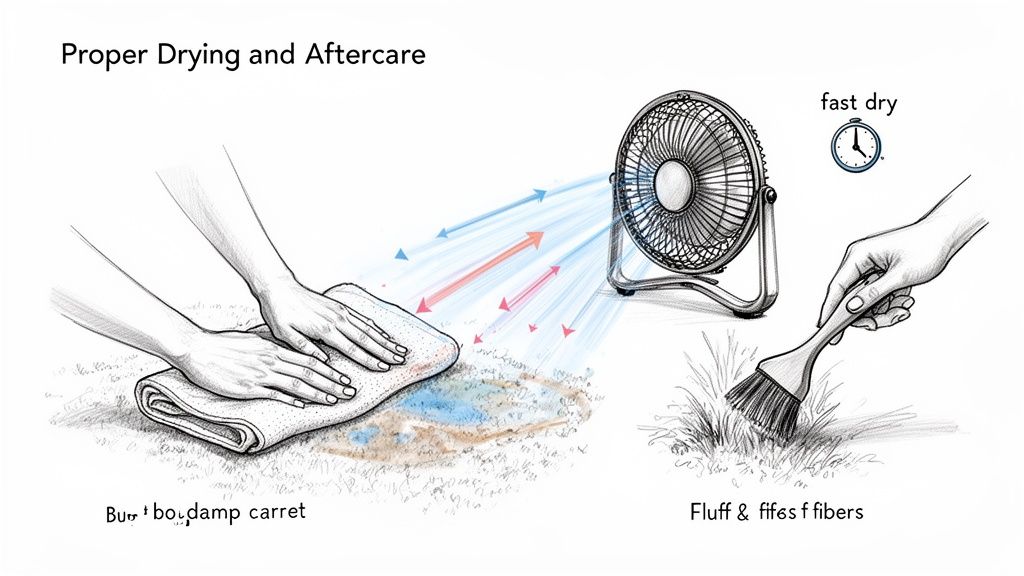
Grab a stack of clean, dry, white towels and lay them over the damp area. Now, press down hard. Even better, stand on them for a minute. That pressure will wick a surprising amount of water out of the carpet fibers and into the towels. Keep swapping in fresh towels until they come away feeling only slightly damp. A wet-dry vac, if you have one, is a fantastic tool for this part of the job.
Promoting Airflow to Prevent Problems
With the bulk of the water gone, your next goal is to speed up evaporation. Stagnant, damp air is the enemy here. It slows down drying and lets those musty odors take hold. Even a little bit of moisture left in the carpet padding can become a breeding ground for mold.
Creating good airflow is the simplest and most effective solution.
- Bring in a Fan: Set up a portable or box fan and point it directly at the damp spot. Let it run for several hours, or even overnight if the area was particularly soaked.
- Open Windows: As long as it’s not too humid outside, cracking a few windows creates cross-ventilation, which helps carry moisture right out of the room.
- Use a Dehumidifier: If you live in a damp basement or a humid climate, running a dehumidifier in the room can drastically speed up the drying time by pulling moisture straight from the air.
The goal is to get the carpet bone dry, not just "dry to the touch." This can take anywhere from a few hours to a full day, depending on the conditions. We've got more detailed info on our blog about how long for carpet to dry after a cleaning.
Restoring Your Carpet's Texture
Once you are 100% certain the spot is completely dry, you’ll probably notice the carpet fibers look a little flat or stiff. This is perfectly normal after you clean grease from carpet, especially after being mashed down by towels and moisture.
Getting that soft, plush feel back is the final touch. Just take your fingers or a carpet brush and gently agitate the fibers to fluff them back up. A quick pass with a vacuum cleaner also works wonders to lift the pile and help the cleaned area blend in perfectly with the rest of the room. This last step is what truly erases any final sign that a stain was ever there.
When to Call a Carpet Cleaning Professional
Let's be honest, DIY methods can be surprisingly effective for a lot of spills. But sometimes, you have to know when to wave the white flag and bring in a professional. Pushing a home remedy too far can actually set a stain permanently or damage your carpet fibers. You don't want to turn a solvable problem into a costly replacement.
Knowing when you're out of your depth is the most important part of protecting your carpet.
Sometimes, the writing is on the wall. If you've tried a couple of methods and that greasy spot is stubbornly clinging to your carpet, it’s a clear sign the grease has bonded deep down with the fibers. If you keep throwing different chemicals at it or blasting it with heat, you risk discoloration or ruining the texture of the carpet.
Red Flags That Signal a Need for Backup
There are certain situations that should have you reaching for the phone right away. Don't waste your time, energy, and cleaning supplies—if you recognize these scenarios, just make the call. It's almost always the smartest and most cost-effective decision in the long run.
- The Scale of the Disaster: A few drops of salad dressing? You can probably handle that. An entire pan of bacon grease overturned on the floor? That's a different beast entirely. When a large area is saturated, grease soaks right through the carpet backing and into the padding. That leads to lingering odors and a stain that can wick its way back to the surface weeks later.
- Your Carpet's Material: Delicate, natural fibers like wool or silk can react badly to common cleaning solutions. Rubbing alcohol can strip them of their natural oils, and too much water can cause them to shrink or turn brown. These high-end carpets need specialized care and pH-balanced solutions that only a pro has.
- The Source of the Grease: Kitchen grease is one thing, but automotive or mechanical grease is much tougher. It's often darker and filled with tiny metal particles and other contaminants that will permanently dye your carpet fibers. For these deep, complex stains, professional carpet shampooing offers a restorative clean that simple blotting can't match.
The Professional Advantage: A Deeper Clean Without the Residue
Hiring a professional isn't just about getting rid of the stain you can see; it's about tackling the gunk you can't. Professional-grade equipment generates far more heat and extraction power than any rental machine from the grocery store. This allows a technician to flush out grease that has settled deep into the carpet pile and padding.
The method used here really matters. Traditional steam cleaning can work, but it often relies on soaps and detergents. If they aren't rinsed out completely, they leave behind a sticky residue. This soapiness acts like a magnet for new dirt, causing spots to reappear. It's a frustrating cycle called "wicking."
At Citrus Carpet Cleaning Buford, we sidestep this problem entirely. Our low-moisture, citrus-based cleaning process relies on a natural degreaser derived from citrus peels. This powerful solution breaks down grease and dirt without any soapy detergents, meaning there’s absolutely no sticky residue left behind.
The Value of Low-Moisture Citrus Cleaning
The benefits of our low-moisture approach go way beyond just avoiding that sticky residue. Because our method uses so much less water than steam cleaning, your carpets are dry in just 1-2 hours, not 1-2 days. You can get back to your life without tiptoeing around a damp, soggy house.
Here’s what that means for homeowners and businesses in Buford:
- No Returning Spots: Without a sticky residue, those frustrating grease stains won't come back.
- Longer-Lasting Cleanliness: Your carpet stays cleaner for longer because it isn't a magnet for new soil.
- Improved Carpet Lifespan: Professional cleanings remove the abrasive dirt and embedded oils that wear down fibers, potentially saving you thousands in replacement costs.
When you're staring down a grease stain that just won’t quit, calling a professional is the best way to restore your carpet. You'll get a clean you can both see and feel.
Even after you’ve tackled a grease stain, a few tricky questions can pop up. You might be dealing with a special kind of carpet or a spot that just won’t quit. Getting the right answers can be the difference between a clean carpet and a permanent greasy reminder.
Here are some of the most common questions we get from homeowners trying to clean grease from carpet.
Will Baking Soda Bleach My Carpet?
This is a huge concern for people, but you can relax. Baking soda is just sodium bicarbonate—it's a mild alkali that’s generally color-safe for pretty much any carpet, synthetic or natural. Its job is to absorb the grease, not bleach out the color.
That said, it never hurts to be cautious. Before you go all-in on a visible stain, just sprinkle a little bit in a hidden spot, like inside a closet or under the sofa. It’s a simple step that gives you peace of mind.
Can I Use WD-40 or Other Degreasers?
It seems logical, right? Grease meets degreaser. The problem is, products like WD-40 are a big risk for carpets. While it might break down the original grease stain, WD-40 is an oil-based lubricant itself. You’re essentially trading one oily mess for another, and the new one is often much harder to remove.
That new oily residue will attract dirt like a magnet. Over time, you’ll end up with a dark, dingy spot that looks even worse than what you started with. It's much better to stick with things meant for fabric, like rubbing alcohol or a pH-neutral cleaner that won’t leave its own greasy film behind.
Expert Insight: The goal is always to remove oil, not replace it with another kind. Products designed for squeaky hinges are formulated completely differently than what's safe for soft fibers and can cause permanent damage.
Why Did My Grease Stain Reappear After Cleaning?
Ah, the dreaded reappearing stain. It’s incredibly frustrating, and it almost always comes down to one of two culprits: wicking or residue.
- Wicking: This happens when the grease has soaked all the way down into the carpet padding. You clean the surface fibers, and they look great. But as the carpet dries, moisture from the padding "wicks" its way back to the top, bringing dissolved grease along for the ride. And just like that, the stain is back.
- Residue: If you used too much soap or didn't rinse the spot well enough, you’re left with a sticky residue. Think of it like flypaper for dirt. Every bit of dust and debris that lands on that spot is going to stick, slowly building up until the area looks dark and dirty all over again.
The key to stopping this annoying cycle is to get all the moisture out and thoroughly rinse away any cleaning solution you used.
What Is the Best Way to Clean Grease from Wool Carpet?
Wool is a natural fiber, so it needs a much gentler touch. Harsh chemicals or high heat can easily damage its delicate structure, causing it to shrink or lose its color. You should absolutely never use ammonia or chlorine bleach on a wool carpet.
Your best bet for DIY on wool is the absorbent powder method—using baking soda or cornstarch first. Then, follow up with a very mild, pH-neutral cleaning solution. A few drops of clear dish soap in water or a diluted white vinegar solution (one part vinegar to two parts water) usually does the trick.
Always blot gently and never, ever soak the fibers. Frankly, because wool is so sensitive, if a grease stain doesn’t come out after one gentle attempt, your next move should be calling a professional.
How Long Can I Leave a Grease Stain Before It's Permanent?
There isn’t a magic number, but the rule is simple: the faster you act, the better. A grease stain can set and become permanent in just a few days as it oxidizes and bonds with the carpet fibers. Things like heat and direct sunlight can make this happen even faster.
If you catch a fresh spill within an hour, you have an excellent chance of getting it out completely yourself. But a stain that’s been sitting for a week or more? That’s going to be a tough fight and will almost certainly need professional help to clean grease from carpet without a trace.
When your best efforts just aren't enough, or you want your carpets cleaned right the first time without any sticky, dirt-attracting residue, Citrus Carpet Cleaning Buford has you covered. Our low-moisture, citrus-based process gets a deep clean with a crazy-fast 1-2 hour dry time. Get your free "EXACT-imate" today by visiting us at https://citruscarpetcleaningatlanta.com.