
When you flip over a cushion tag and see a big letter ‘W’, you can breathe a sigh of relief. This is the code you want to see.
It’s the most common and straightforward of all the upholstery cleaning codes, and it simply means you can safely use water-based cleaning solutions on the fabric. No need for harsh, smelly solvents or a trip to a specialist. This code tells you the material can handle a good old-fashioned cleaning with water without shrinking, bleeding colors, or getting damaged.
Decoding the Code W Upholstery Tag
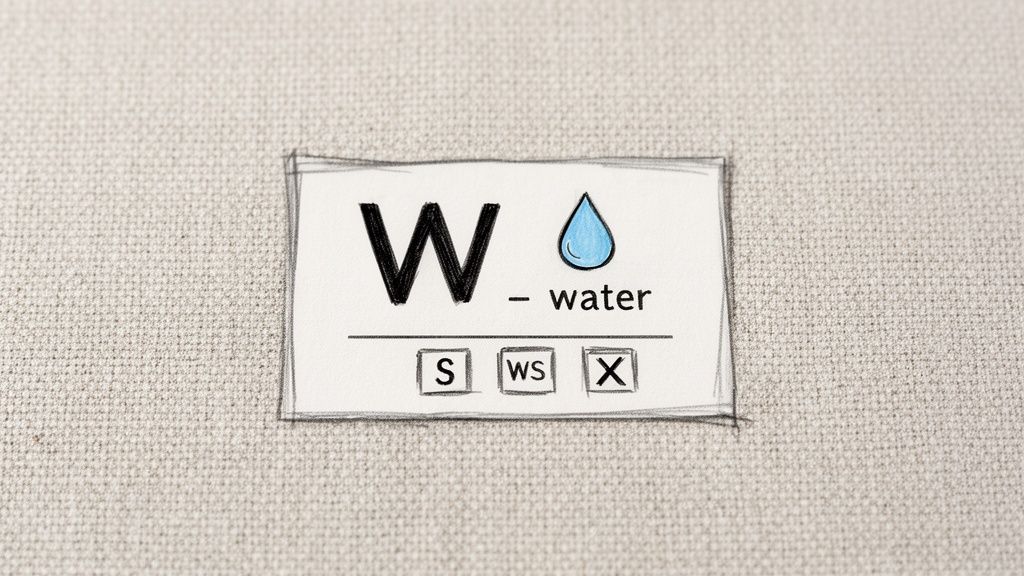
Finding a “W” on your furniture’s care tag is basically the green light for DIY cleaning. Your sofa or chair is likely made from a tough synthetic fabric like polyester or nylon that’s built to withstand everyday life. You can tackle spills, spots, and general grime yourself without worrying about ruining your investment.
This little letter is your most important tool. I can't tell you how many times homeowners have accidentally created permanent water rings on an 'S' (solvent-only) fabric or completely destroyed the texture of an 'X' (vacuum-only) piece. It’s a costly mistake. In fact, industry numbers show that a staggering 80% of premature upholstery damage isn't from wear and tear—it's from using the wrong cleaning method.
Understanding the Different Cleaning Codes
To really appreciate what 'W' means, it helps to know what the other letters stand for. Each one calls for a completely different game plan. Getting them mixed up is a recipe for disaster.
Here's a quick rundown to help you tell them apart. Think of this as your cheat sheet before you tackle any stain.
| Upholstery Cleaning Codes at a Glance |
| :— | :— | :— | :— |
| Cleaning Code | What It Means | Approved Cleaning Method | What to Avoid |
| W | Water-Based Cleaner | Safe to clean with water, mild detergents, or upholstery shampoo. | Solvents, non-water-based cleaners, and excessive moisture. |
| S | Solvent-Based Cleaner | Must be cleaned with water-free dry-cleaning solvents only. | All water and water-based detergents. |
| WS | Water or Solvent | A versatile code; either water-based or solvent cleaners are safe. | Hot water extraction or steam cleaning, which can be risky. |
| X | Vacuum Only | Do not use any liquid cleaners. Clean with a vacuum or soft brush. | All liquids, including water and solvents. |
Knowing the difference is everything. A 'W' tag gives you the freedom to handle cleanups at home, but an 'S' or 'X' code is a clear warning sign that a professional's touch is the only safe option. That's why checking the tag before a single drop of cleaner touches the fabric is the absolute golden rule of upholstery care.
Key Takeaway: The 'W' on your upholstery tag isn't just a suggestion—it's your guide to safe and effective cleaning. It confirms that water-based methods are the correct approach, empowering you to handle spills and maintenance with confidence.
Just by finding that tag and reading the code, you've already won half the battle. This simple check protects your furniture and keeps it looking great for years. For a deeper dive into the whole process, from prepping the fabric to the final drying steps, check out our complete guide on how to clean your sofa upholstery.
Getting Your Upholstery Cleaning Toolkit Ready
Before you even think about tackling that stain, let’s talk prep. Success with cleaning Code W upholstery isn't just about elbow grease; it’s about having the right tools on hand before you start. This isn't just a random shopping list—each item is here for a reason, specifically to help you avoid common DIY disasters like leaving water rings or, worse, transferring color onto your beautiful sofa.
Think of it like being a surgeon. You wouldn't start an operation without your instruments laid out, right? A little prep work makes the whole process smoother and gets you a result that looks like a pro did it.
The Core Cleaning Essentials
Your main tools are pretty simple, and you probably have most of them around the house already. What’s important is knowing why you’re using them.
- Distilled Water: Don't just use water from the tap. Seriously. Tap water is full of minerals that, once they dry, can leave behind ugly, chalky rings on your fabric. Distilled water is pure and mineral-free, so it rinses clean without a trace.
- White Microfiber Cloths: The keyword here is white. The last thing you want is the dye from a colored rag bleeding onto your light-colored couch. Microfiber is a workhorse for blotting up spills and gently working in your cleaning solution.
- A Soft-Bristled Brush: An old, soft toothbrush works perfectly here, or you can grab a dedicated upholstery brush. The goal is to gently work on stubborn spots without roughing up or fraying the fabric. Stay away from anything stiff that could snag the weave.
- Spray Bottle: This is your secret weapon against oversaturation. A simple spray bottle lets you apply your cleaner as a fine, even mist. Soaking the fabric is one of the quickest ways to cause water damage and mildew, so a light touch is key.
Picking the Right Cleaning Solution
When you're dealing with Code W upholstery, forget the harsh chemicals. All you really need is a mild, water-based cleaner.
Honestly, the safest and most effective cleaner is one you can make yourself: just mix a few drops of a clear, unscented dish soap into a bowl of distilled water. It has just enough power to cut through everyday grime and grease without leaving behind a sticky film that just attracts more dirt down the road.
Make sure to avoid any dish soaps that are colored or have heavy perfumes. They can introduce new stains or leave a lingering scent you didn't bargain for. When it comes to your furniture, simpler is almost always better.
Your Guide to Spot Cleaning Code W Fabrics
Alright, this is where the real work begins. Let's walk through the entire process for cleaning Code W upholstery, and I'll share some insights from my years of experience that make all the difference.
Your first move, always, is to vacuum away any loose dirt, pet hair, and crumbs. Grab that upholstery attachment and work systematically, getting into every single crevice. It’s shocking how much gunk gets trapped in the seams, and removing it now prevents it from turning into mud the second you add water.
Prepare and Test Your Cleaning Solution
Before you even think about putting a cleaning solution on a visible part of your sofa, you have to mix your solution and do a spot test. I can't stress this enough: this single step is the most critical part of the whole process. It's what will save you from potential discoloration or fabric damage.
When it comes to your cleaning solution, simpler is better. Just mix a few drops of a clear, mild dish soap with about a cup of distilled water. Steer clear of any colored or heavily scented soaps, as they can leave behind their own pesky stains or residues.
Here’s a quick look at the only tools you'll really need for this.
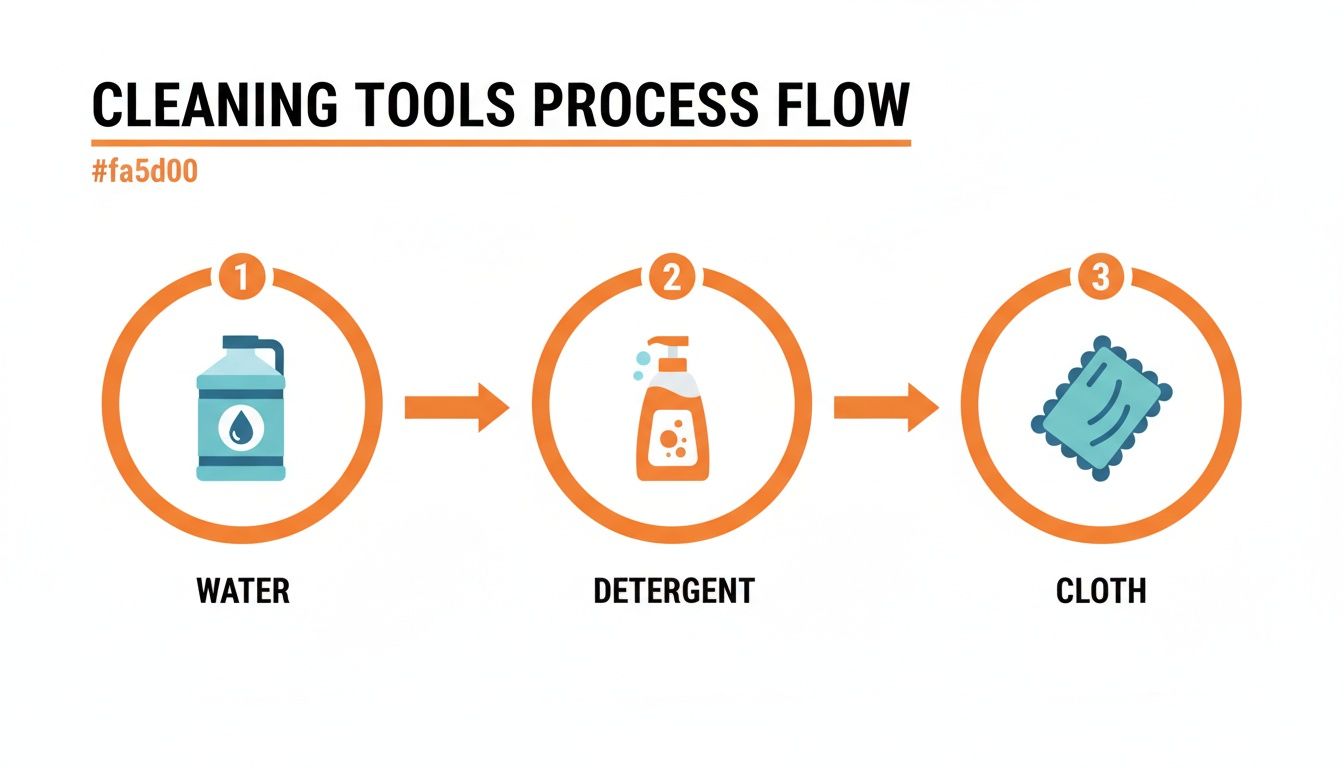
As you can see, the core components are simple: pure water (to avoid mineral deposits), a mild detergent to lift the grime, and a clean cloth for applying and blotting.
Now for that crucial test. Find a hidden spot on your furniture—think the underside of a cushion or a small area on the back near the floor. Apply a tiny amount of your solution with a white microfiber cloth. Let it sit for a few minutes, then blot it with a clean, damp cloth and let the area dry completely. If you don't see any color change or texture damage, you've got the green light to proceed.
Master the Blotting Technique
With your solution tested and ready to go, it's time to tackle that stain. The golden rule here is to blot, never scrub. Scrubbing might feel like you're being more effective, but you're actually just fraying the fabric fibers and pushing the stain deeper into the upholstery, making it a nightmare to remove.
Lightly dampen a fresh, white microfiber cloth with your cleaning solution. Start blotting the stain from the outside edge and work your way toward the center. This "outside-in" method is absolutely key for containing the spill and stopping it from spreading into a bigger, more obvious mark.
Continue this gentle dabbing motion, and be sure to switch to a clean section of your cloth often. If you don't, you'll just be reapplying the dirt you just lifted. You should see the stain gradually transferring from the upholstery right onto your cloth.
Pro Tip: Patience is everything here. It might take several rounds of blotting to fully lift a stubborn stain. Rushing the process by scrubbing or oversaturating the fabric is a common mistake that almost always leads to a worse outcome.
Rinse and Dry Properly
Once the stain is gone, you have to "rinse" the area to get rid of any soap residue. Leaving soap behind is a classic mistake; it creates a sticky patch that acts like a magnet for more dirt down the line.
To do this, grab a new, clean white cloth and dampen it lightly with only distilled water. Gently blot the entire area where you used the cleaning solution. This helps lift any leftover soap from the fabric fibers.
Finally, getting it dry the right way is essential for preventing those annoying water rings. Blot the damp area with a dry, absorbent towel to soak up as much moisture as you can. Then, just let the spot air dry completely. If you want to speed things up and make sure it dries evenly, you can aim a small fan at the area.
This careful approach ensures you're not just getting rid of a stain but also protecting the look and feel of your furniture. For more advice on tough spots, you might find our guide on how to get a stain out of your carpet helpful, since a lot of the same principles apply.
Handling Tough Stains and Lingering Odors
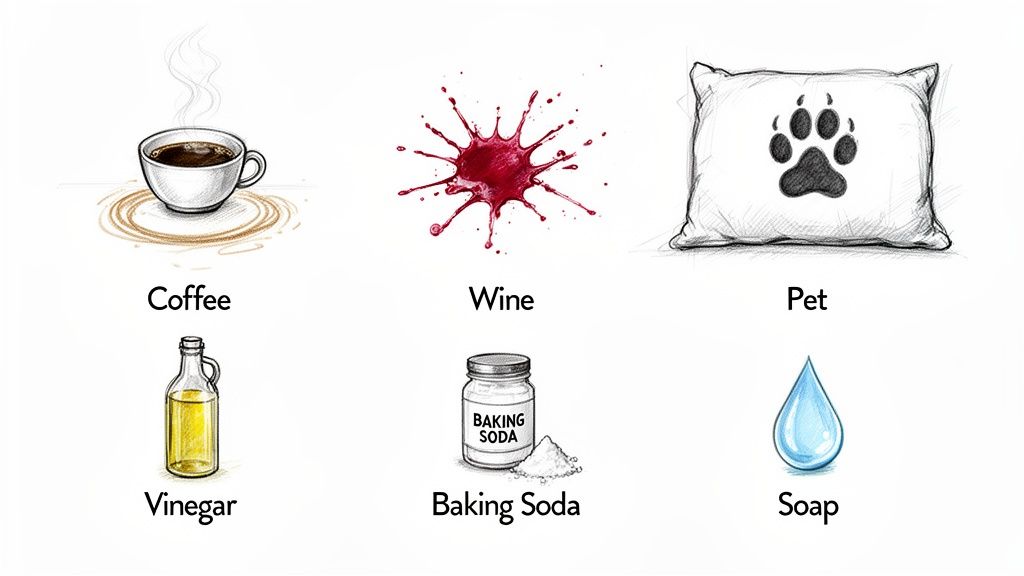
Life happens. Spills are just a part of it, but they don't have to leave a permanent mark on your favorite couch or chair. The great thing about having cleaning code W upholstery is that you can tackle even the meanest-looking messes with simple, water-based cleaners. The real secret is moving fast and using the right method for the right mess.
For busy Buford families juggling kids, pets, and everything else, knowing how to handle a spill right now is a lifesaver. And you don't need a scary arsenal of harsh chemicals. More often than not, the best tools for the job are probably already in your pantry.
DIY Solutions for Common Upholstery Stains
A greasy pizza slip needs a different game plan than a tipped-over glass of red wine. Each spill has its own weakness. Here are a few of our go-to homemade remedies for fabrics that are safe for water.
- Greasy Food Stains: For oily spots from butter, dressing, or that runaway French fry, start by piling on some baking soda. Let it sit for 15-20 minutes so it can soak up the oil, then just vacuum it away. Follow up with a little dabbing using your mild soap and distilled water mix.
- Coffee or Wine Spills: First, blot, blot, blot! Get up as much of the liquid as you can. Then, mix equal parts white vinegar and water in a spray bottle. Lightly mist the stain and gently blot with a clean cloth, starting from the outside edge of the stain and working your way in. This keeps it from spreading.
- General Grime and Dirt: For that everyday buildup on armrests and headrests, a few drops of clear dish soap in a cup of distilled water is usually all it takes. It's gentle but effective.
One thing I always tell my clients: always, always do a spot test. Pick a hidden area—under a cushion, on the back—and test your cleaning solution first. This one simple step can save you from a major headache.
Tackling Pet Stains and Odors
Pet accidents are in a league of their own. You're fighting both a visible stain and an odor that loves to stick around. For these messes, vinegar is your friend. After you've blotted the spot dry, a spritz of 50/50 white vinegar and water does a great job neutralizing the ammonia smell in urine.
But to really knock out the problem for good, you might need to bring in the big guns. The bacteria from pet urine can seep deep into the foam of a cushion, and if you don't break it down completely, that smell will come back, especially on humid days. This is where an enzymatic cleaner is a must-have. You can learn more about how enzymatic cleaners work to literally eat the organic proteins that cause those stubborn odors.
For homeowners in areas like Buford, Georgia, where families battle pet odors and busy lifestyles, low-moisture cleaning methods that dry in just 1-2 hours are a game-changer, preventing mold and keeping stains from reappearing.
Knowing When to Call a Professional Cleaner
Doing it yourself is a great way to handle fresh spills on your cleaning code W upholstery, but there are definitely times when calling for backup is the smartest move you can make. Even the most careful homeowner can run into a stain or a smell that just won't budge with household products.
Knowing your limits is the key to protecting your furniture. A simple-looking spot can easily become a permanent eyesore if you use the wrong product or technique. Some jobs just demand a deeper, more powerful clean than what you can achieve on your own.
Signs You Need an Expert’s Touch
Sometimes, you need to put down the spray bottle and pick up the phone. If you're wrestling with any of these situations, a DIY approach could actually make things worse by setting the stain or locking in an odor for good.
- Large or Set-In Stains: That mystery spot on the armchair that’s been there for months? Or that big spill that soaked right through the cushion? Those require professional-grade extraction to lift them out completely without leaving behind ugly water rings.
- Persistent Odors: If you’ve tried everything to kill a lingering smell—especially from pets—and it just keeps coming back, the source is probably deep inside the foam padding. Pros have the tools to neutralize odors at a microbial level, something sprays just can't do.
- Delicate or Vintage Pieces: Older furniture can have fragile fibers or dyes that react badly to standard cleaners. An expert can identify the fabric and choose a safe cleaning method that won't cause damage.
For many people, it's really about health. Upholstery is a giant filter for dust mites, pet dander, and all kinds of grime. This stuff is more than just gross; it can be a real health hazard. It's why the professional cleaning industry is moving toward low-moisture systems that don't rely on harsh soaps, avoiding that sticky residue that actually attracts more dirt. Plus, they offer dry times as fast as 1-2 hours.
The Citrus Carpet Cleaning Buford Solution
For homeowners here in Buford, this is exactly where we come in. At Citrus Carpet Cleaning Buford, our specialty is a low-moisture, citrus-based cleaning process that delivers far better results. We don’t use heavy soaps or shampoos that leave a sticky film, which is the secret to why our clean lasts so much longer.
Our method gets your furniture truly deep-cleaned, and it dries in just a couple of hours, not days. You can get back to living in your home without a long wait.
We also believe in being completely upfront. That’s why we provide “EXACT-imates.” You will know the precise cost before we even start—no hidden fees, no surprise up-sells. The price we quote is the price you pay. Period.
When looking for a pro, make sure you know how to avoid common cleaning service scams so you can hire a company you can trust.
Your Top Questions About Code W Upholstery
Even when a cleaning code seems simple, you're bound to have questions. It's completely normal. Getting straight answers is the best way to feel confident you’re doing the right thing for your furniture. Let's tackle some of the most common things homeowners ask me about their Code W pieces.
Can I Use My Steam Cleaner on 'W' Code Fabric?
This is probably the number one question I get. While 'W' means water is safe, the intense, high-pressure heat from a typical household steam cleaner is usually way too aggressive. It's a recipe for disaster.
That much moisture can oversaturate the fabric and the padding underneath, leading to musty smells or even mold. Worse, the heat can cause the fabric to shrink, warp, or lose its original texture and color for good. A professional low-moisture cleaning is a much, much safer bet.
How Often Should I Clean My Furniture?
For day-to-day upkeep, consistency is key. Grabbing your vacuum's upholstery attachment once a week makes a world of difference. It pulls up all that loose dirt, dust, and pet hair before it has a chance to get ground into the fibers.
When it comes to a deep clean, I recommend a professional service every 12 to 24 months. Where you fall in that range really depends on your home life. If you’ve got kids, pets, and lots of visitors, you’ll want to lean closer to that 12-month mark. A quieter home can probably stretch it to 24 months.
People are paying more attention to what’s in their homes these days, especially when it comes to air quality. It's no surprise the global carpet and upholstery cleaning market was valued at USD 62.37 billion in 2024 and is projected to hit USD 97.15 billion by 2032. For Buford’s pet owners, this just confirms what we already know: professional low-moisture methods are the best way to deal with stains and keep them from coming back.
What Happens if I Accidentally Use the Wrong Cleaner?
This is where that little 'W' tag becomes so important. Using a solvent-based cleaner (or even a harsh, soapy water-based one) on a 'W' fabric can cause some serious, permanent damage.
Here’s what you’re risking:
- Discoloration: The wrong chemical can literally strip the dye right out of the fabric, leaving a bleached-out, faded spot that sticks out like a sore thumb.
- Fabric Shrinkage: Some cleaners will cause the fibers to tighten up and shrink, leaving the area puckered and distorted.
- Texture Damage: You could end up with a stiff, crunchy patch where the fabric used to be soft and comfortable.
This is exactly why we stress spot testing and sticking to gentle, approved water-based solutions. It protects your investment, whether it’s a sofa, accent chair, or even fabric-covered pieces like upholstered beds. Always check the code, and always test first.
When your own cleaning efforts just aren't cutting it, Citrus Carpet Cleaning Buford is here to help. Our low-moisture, citrus-based system gets deep into the fibers without harsh chemicals, and your furniture is dry in just a few hours.
Call or text us for your free, no-obligation EXACT-imate today! https://citruscarpetcleaningatlanta.com