
For certain delicate fabrics, dry cleaning isn't just an option—it's the only safe way to get a couch truly clean. This low-moisture technique uses specialized solvents to break down and lift away dirt and stains. Because it avoids soaking the fabric, you don't have to worry about shrinkage, ugly water marks, or mildew. It's the go-to method for any material with an "S" code on the tag.
Why Dry Cleaning Might Be Your Couch's Best Friend
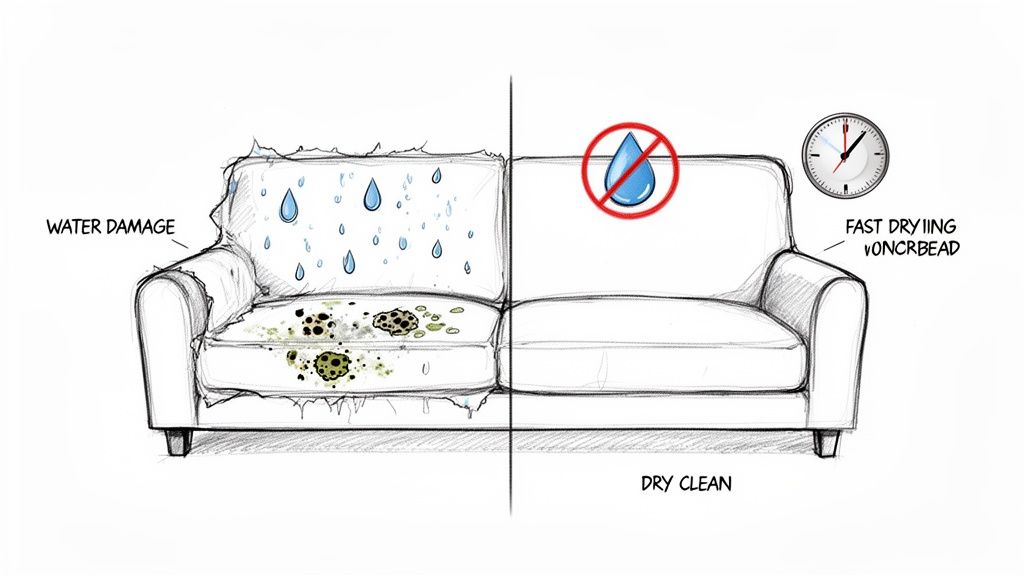
When you imagine cleaning your sofa, you probably picture soap, water, and a whole lot of elbow grease. But for many couches—especially those made from natural fibers like silk, velvet, or linen—water is the absolute enemy. Dousing these fabrics can cause irreversible damage, from colors bleeding everywhere to the material itself warping out of shape.
This is where dry cleaning comes in as a much smarter, safer alternative. Its biggest advantage is the low-moisture approach. Instead of saturating the upholstery, it uses chemical solvents that dissolve oils and grime without over-wetting anything, heading off some of the most common cleaning disasters before they can even start.
Key Advantages of a Water-Free Clean
The appeal of dry cleaning isn't just about preventing a mess; it’s about getting a deeper, longer-lasting clean. More and more homeowners are choosing this route because it sidesteps all the headaches that come with traditional wet cleaning.
Here’s why it works so well:
- Prevents Mildew and Mold: No excess moisture means no damp cushions or frames where mold and mildew love to grow. It’s a simple but crucial difference.
- No Risk of Shrinkage: Water causes natural fibers to tighten up and shrink. Solvent-based cleaning keeps your couch's fabric looking exactly as it should—no surprises.
- Avoids Water Stains: It’s a frustrating irony, but cleaning with too much water can leave behind those ugly rings and blotches as the fabric dries unevenly.
- Faster Drying Times: A professionally dry-cleaned couch is typically ready to use again in just a few hours, not days.
The whole point of dry cleaning upholstery is to get the fabric clean without introducing all the risks that come with water. It's a targeted solution for materials that just can't handle being soaked.
This move toward low-moisture cleaning isn't just a niche trend. The global dry cleaning services market is expected to hit USD 26,449.4 million by 2030. A big part of that growth is coming from people demanding upholstery care that works with a busy lifestyle and actually protects their furniture investment. You can discover more insights about the dry cleaning services market on grandviewresearch.com. It just goes to show that quick, effective, and residue-free results are what people are looking for.
How to Read Your Couch's Cleaning Tag
Before you even think about cleaning your couch, you’ve got to play detective. Tucked away under a cushion, along a seam, or on the underside of the frame is a little fabric tag. This isn't just a manufacturer's label; it's your instruction manual.
This tag holds the key to whether your cleaning attempt will be a success or a complete disaster. It uses a simple letter code that tells you exactly what you can—and can't—use on your upholstery. Ignoring it is the single fastest way to cause permanent water rings, color bleeding, or even fabric shrinkage. Don't skip this step.
Thinking about this from the get-go is smart. When you're learning how to choose a sofa that fits your home and lifestyle, paying attention to its cleaning requirements can save you a world of hurt down the road.
Decoding the Upholstery Cleaning Codes
So, what do these mystery letters mean? There are four main codes you'll run into, and each one points to a very specific cleaning method. There’s really no guesswork involved if you know what to look for.
Here’s a quick breakdown to help you figure out which code your sofa has.
Understanding Your Couch Cleaning Codes
This little reference guide will help you quickly decipher the cleaning code on your couch's tag.
| Code | Meaning | Recommended Cleaning Method | Common Fabrics |
|---|---|---|---|
| W | Water-Based Cleaner | Safe to use water-based shampoos and cleaners. | Polyester, Nylon, Acetate |
| S | Solvents Only | Use only water-free, solvent-based cleaners. | Cotton, Linen, Rayon, Silk |
| W/S | Water or Solvent | Flexible; either water-based or solvent cleaners can be used. | Blends, Microfiber |
| X | Vacuum Only | Do not use any liquid cleaners. Light brushing and vacuuming only. | Delicate, antique, or unique fabrics |
Following these codes is your best defense against damaging your furniture. It's the manufacturer telling you exactly what the fabric can handle.
If your tag has a W, you have more options for DIY cleaning. You can learn more about the specifics by checking out our guide on what cleaning code W means for your upholstery.
Essential Prep Work Before You Clean
Once you've found your code and have the right type of cleaner, don't just go to town on that wine stain. A couple of prep steps are absolutely non-negotiable if you want a good result.
First, give the entire couch a thorough vacuuming. Use a soft brush attachment for the main surfaces and swap to a crevice tool to get deep into the nooks and crannies. You'd be amazed at how much dust, crumbs, and pet hair collect in those seams.
The most important step you can take is the spot test. I can't stress this enough. No matter what the tag says, always test your cleaning solvent on a small, hidden area first—like the back of the skirt or an underside flap.
Just apply a small amount of the cleaner, blot it gently with a clean white cloth, and then let it air dry completely. Once it's dry, check for any color transfer on your cloth or any changes to the fabric's color or texture. If everything looks good, you can proceed with confidence, knowing you've done your homework.
Your DIY Guide to Water-Free Couch Cleaning
Alright, you've done the prep work. You found the fabric code, vacuumed like a pro, and your spot test didn't cause any drama. Now for the main event.
Let me be clear: patience and proper technique are everything here. If you start scrubbing away or rushing through it, you’re going to be disappointed with the results. The idea is to work methodically, tackling one small section at a time. This keeps you in control and prevents you from soaking the fabric with solvent, which creates a whole new set of problems. You're trying to lift the dirt out, not grind it deeper into the couch fibers.
This little diagram sums up the critical first steps you should have already completed.
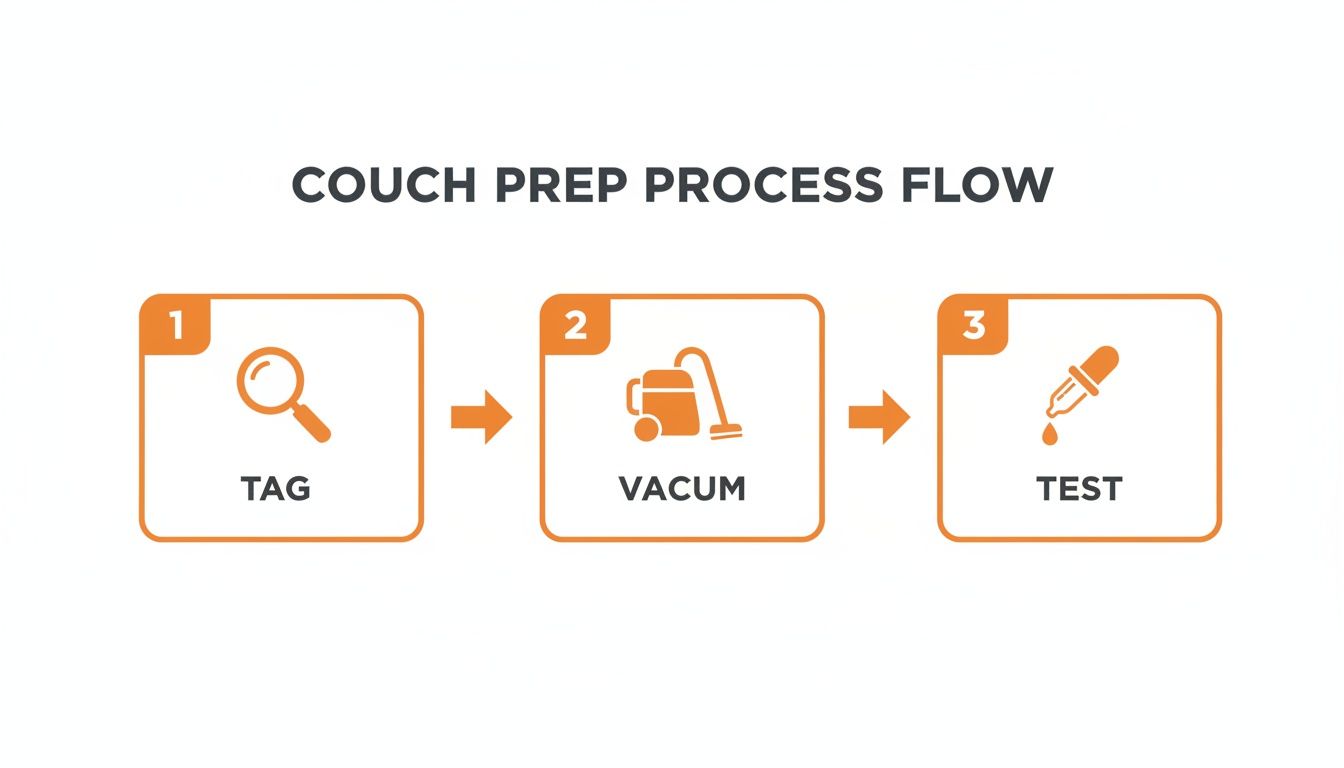
Seriously, don't skip these checks. Confirming the cleaning code, getting rid of loose debris, and doing that spot test are the foundation for a clean that's both safe and effective.
Choosing Your Cleaning Agent
When you hit the store, you'll see a few different types of water-free upholstery cleaners. The two you’ll run into most often are solvent sprays and dry cleaning powders.
- Solvent Sprays: These are the most direct approach. You just lightly mist the fabric and then blot it with a clean, white microfiber cloth. They're fantastic for getting rid of general grime and tackling light stains.
- Dry Cleaning Powders: With these, you sprinkle the powder over the upholstery, gently work it in with a soft brush, let it sit for a bit, and then vacuum it all up. Powders are especially good at absorbing oily stains and killing odors.
Which one should you pick? It really comes down to your couch's specific issue. For a general refresh, a solvent spray is fast and efficient. But if you're dealing with greasy pizza spots or a lingering funky smell, the powder is probably your best bet.
The Application Process: Blotting, Not Scrubbing
No matter which product you end up with, the golden rule is to blot, never scrub. I can't stress this enough. Scrubbing will rough up delicate fabric fibers, push stains deeper, and can even create a faded, worn-out looking patch on your couch. Nobody wants that.
Start on a hidden spot and work your way across the couch in a grid pattern. Think one cushion at a time, or one armrest at a time. Follow the product's directions—usually, this means a light, even mist. As soon as you spray, grab a clean, dry, white cloth and press it firmly onto the area. You should literally see the dirt transfer from the couch to your cloth.
Once your cloth starts looking dirty, fold it to a clean section or just grab a new one. This is critical. If you keep dabbing with a soiled cloth, you’re just putting that grime right back where you found it.
Look, you're using a chemical solvent. Proper ventilation isn't a friendly suggestion—it's a must. Crack open some windows, get a fan going, and make sure fresh air is moving through the room while you work and while the couch dries.
It's no surprise that people are looking for better ways to care for their furniture. The global market for fabric sofa cleaning products is expected to reach USD 1,742 million by 2025. Homeowners are tired of dealing with pet messes and everyday spills, and they're leaning toward dry methods that don't involve long drying times or the risk of water damage.
If you're interested in eco-friendly cleaning in general, it's worth checking out some tips for DIY natural home cleaning solutions. While you can't use all of them on "S" code fabrics, understanding the principles is helpful. The techniques for dry cleaning a couch are actually pretty similar to other low-moisture methods, like the ones we talk about when discussing the https://citruscarpetcleaningatlanta.com/dry-cleaning-carpet/.
Tackling Tough Stains and Odors Without Water
Life happens right on your living room furniture. One second you're enjoying movie night, the next you're staring down a fresh red wine spill or a greasy pizza mark. When your couch has an "S" cleaning code, these moments can feel like a total crisis.
But don't panic. With the right water-free approach, you can manage these tough spots without making things worse.
The key is to act fast and use the correct cleaning agent for that specific type of stain. Remember, you're not trying to "wash" the stain out like you would with clothes. Instead, you're using a solvent to break down the problem substance so it can be lifted away from the fabric fibers for good.
A Targeted Strategy for Common Stains
Different messes need different battle plans. A greasy, oily stain won't respond to the same treatment as an ink mark from a stray pen. Keeping a small arsenal of dry cleaning agents on hand can save your upholstery from a permanent blemish.
Here’s a quick guide for some of the usual suspects:
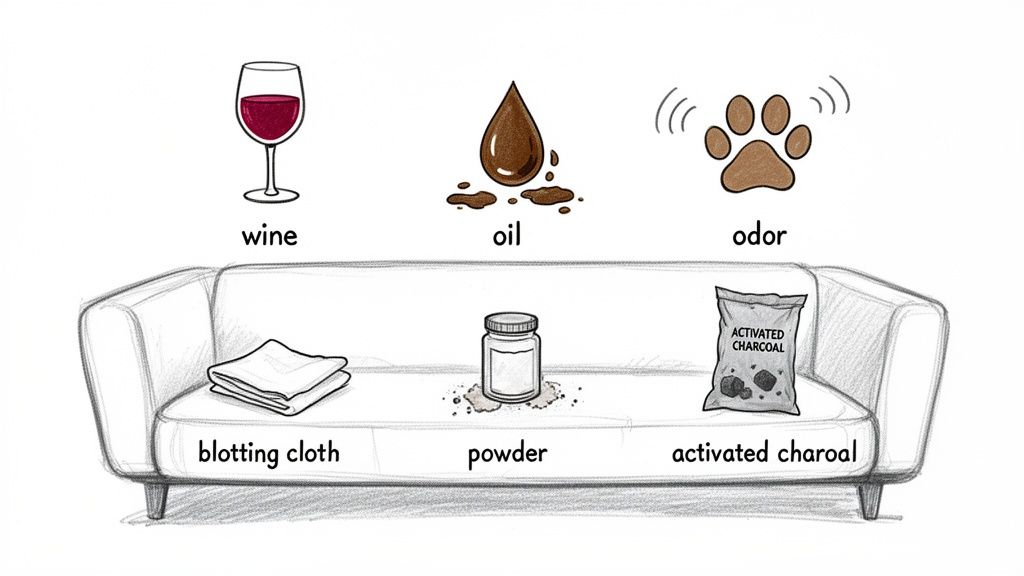
- Grease and Oil Stains: For fresh spots from things like butter, pizza, or salad dressing, immediately bury the area in cornstarch or baking soda. Let it sit for at least 15-20 minutes to absorb the oil, then vacuum it up completely.
- Ink Marks: That dreaded ballpoint pen mark can often be handled with isopropyl (rubbing) alcohol. Lightly dampen a clean white cloth—and I mean white—with alcohol and gently blot the ink. Work from the outside of the stain inward to keep it from spreading.
- Red Wine or Coffee Spills: Blot, blot, blot! Use a dry cloth to soak up as much of the liquid as possible right away. Then, reach for a commercial dry cleaning solvent made specifically for upholstery, and be sure to follow the product's instructions to the letter.
Always remember to test any cleaning product on a hidden spot first. Even if it says it's for "S" code fabrics, different dyes and fabric blends can react in weird ways. A quick test on a skirt flap or under a cushion prevents a small spot from turning into a huge, bleached-out disaster.
Neutralizing Lingering Odors at the Source
Stains are one thing, but odors can be even more stubborn, embedding themselves deep within the cushions and frame. This is especially true for pet accidents or old food smells that have had time to settle in. Spraying an air freshener is just putting perfume on the problem; true odor removal means killing the source.
Baking soda is a fantastic, cheap first step. Sprinkle it generously over the entire couch, let it sit for several hours (or even overnight), and then vacuum it up thoroughly. This can absorb a surprising amount of general mustiness.
For tougher smells, especially from pets, you'll need something more powerful. Specialized pet odor removal powders work by breaking down the organic compounds that cause the smell in the first place. If you're struggling with ongoing pet issues, it's worth exploring some effective home remedies for pet odor removal before they become a permanent part of your home.
When to Call a Professional for a Deeper Clean
Look, DIY methods are fantastic for regular upkeep and catching those "oops" moments right after they happen. But let's be honest—there are times when your couch needs more muscle than a can of solvent from the hardware store can offer.
If you're dealing with stubborn, set-in stains, that gradual, widespread discoloration from years of movie nights, or deep-seated odors from your four-legged family members, it’s time to call in a pro.
Think of it this way: DIY is like brushing your teeth every day. A professional service is like getting a deep cleaning from the dentist. It's a whole different level. Pros have access to commercial-grade equipment and advanced, low-moisture solutions that you just can't buy off the shelf. They can bring a piece of furniture back to life in a way that's nearly impossible to do on your own.
The Power of Low-Moisture Professional Cleaning
This is where the real magic happens. Professional upholstery cleaners who specialize in low-moisture techniques, especially those using citrus-based solvents, have some serious advantages. Their solutions are engineered to break down and dissolve the heavy stuff—body oils, ground-in soil, and allergens that have wormed their way deep into the fabric and padding.
It's a two-part punch. First, the potent cleaning agents dissolve all that grime. Then, specialized extraction equipment lifts it all out of the upholstery, leaving virtually nothing behind.
A residue-free finish is a huge deal. Leftover soap or shampoo from traditional wet-cleaning methods gets sticky, and that sticky residue actually attracts more dirt. It's a frustrating cycle that makes your couch get dirty again way faster.
A professional low-moisture cleaning doesn't just get rid of the stains you can see; it tackles the microscopic stuff you can't. We're talking about dust mites and pet dander, which can seriously impact your home's air quality. A true deep clean creates a healthier space for your family to relax.
When DIY Is Not Enough
Knowing your limits is the key to protecting your furniture. Waving the white flag and calling an expert is the smart move if you're facing any of these situations:
- Valuable or Antique Furniture: If that couch is a family heirloom or a serious investment, don't risk it. A simple DIY mistake could cause irreversible damage. It’s just not worth the gamble.
- Widespread Water Damage or Stains: Large water rings or massive discolored patches need a very delicate touch paired with powerful equipment. Trying to fix it yourself can easily spread the stain and make it permanent.
- Deep-Set Pet Odors: When a pet accident soaks through the fabric and into the cushions and frame, a surface spray won't cut it. You need a professional treatment that can get deep down to neutralize the odor-causing bacteria at the source.
- The Couch Has Never Been Cleaned: Let's be real. If a sofa has gone years without a proper cleaning, a quick surface spritz isn't going to make a dent in the layers of accumulated dirt, oils, and life.
The need for this kind of specialized service is only growing. The global market for carpet and upholstery cleaning is valued at a massive USD 59.3 billion in 2024, and a big driver is our love for pets and concerns about allergies.
With over 70 million households in the U.S. owning pets, low-moisture techniques that get couches dry in just one to two hours are becoming the new standard. Learn more about upholstery cleaning market trends on researchandmarkets.com to see how this powerful, convenient solution is exactly what busy homes need.
Got Questions About Dry Cleaning Your Couch? We've Got Answers
Even after walking through the process, it’s totally normal to have a few more questions rattling around. When you're talking about your couch—one of the most used pieces of furniture in your home—you want to get it right.
Let's clear up some of the most common things people ask us about dry cleaning their upholstery. Think of this as a quick FAQ to help you feel confident you're making the best choice.
How Often Should I Really Be Cleaning My Couch?
For just general upkeep to keep your sofa from looking dingy, having it professionally cleaned every 12 to 18 months is a pretty solid schedule. This keeps that slow, invisible buildup of dust, skin oils, and allergens from getting out of control.
But—and this is a big but—your lifestyle is the real deciding factor. If you've got pets, kids, or family members with allergies, you’ll want to bump that up. Cleaning every 6 to 12 months can make a huge difference, not just in how your couch looks but in your home's air quality, too.
Of course, always jump on spills the moment they happen. A quick spot clean right away can prevent a minor "oops" from becoming a permanent resident on your cushions.
Are Those DIY Dry Cleaning Kits Actually Safe?
I get this question a lot. DIY kits can be okay for a small, fresh spill on a durable, "S" code fabric, but they come with some serious warnings. They are absolutely not a magic bullet for every couch or every stain, and you can cause real damage if you're not careful.
I cannot stress this enough: always do a spot test on a hidden area first. I mean somewhere completely out of sight, like under a cushion flap. Never, ever use these kits on delicate fabrics marked with an "X" code (vacuum-only). You could end up with a disaster that can't be fixed.
Keep in mind, these kits are for surface-level stuff. They just don't have the power to pull out deep-down dirt or set-in stains like a professional low-moisture cleaning can.
Can Dry Cleaning Get Rid of Tough Pet Odors for Good?
Baking soda and other home remedies might help a little with faint, surface-level smells, but they're no match for stubborn pet odors. Why? Because that smell isn't just on the fabric; it has soaked deep down into the foam and padding of the cushions.
This is where the pros have a serious advantage. We use powerful, specialized enzymatic cleaners that don't just cover up the smell with a fragrance. These formulas work on a chemical level to find the odor-causing bacteria and completely break them down. It’s the difference between a temporary fix and actually eliminating the source of the problem.
What's the Real Difference Between Dry Cleaning and Steam Cleaning?
It really just boils down to one word: water. Getting this difference is key to not accidentally ruining your couch.
Here’s a simple way to think about it:
| Cleaning Method | Moisture Level | Best For | Key Consideration |
|---|---|---|---|
| Dry Cleaning | Very Low to None | Water-sensitive "S" code fabrics (silk, velvet) | Uses solvents to lift dirt without soaking fibers. |
| Steam Cleaning | High | Durable, water-safe "W" code fabrics (polyester) | Uses hot water extraction but requires long dry times. |
Dry cleaning is your go-to safe bet for delicate fabrics that water would shrink, warp, or stain. Steam cleaning (which is really hot water extraction) works great on tough, synthetic fabrics but comes with the risk of overwetting. If not done perfectly, that excess moisture can lead to mildew, browning, or fabric damage.
Ready to give your upholstery the deep, residue-free clean it deserves without the risks of overwetting? The experts at Citrus Carpet Cleaning Buford use a powerful, low-moisture citrus-based solution that leaves your couch fresh, clean, and dry in just 1-2 hours. Call or text us today for your free "EXACT-imate" at https://citruscarpetcleaningatlanta.com.