
To get dog pee smell out of your carpet for good, you have to go after the uric acid crystals. These are the nasty little things left behind long after the liquid part of the urine has evaporated. Your average, everyday cleaner just won’t cut it because they don't have what it takes to neutralize these crystals, which are the real source of that stubborn, "it's back again" odor.
Understanding Why Dog Pee Smell Lingers
Ever cleaned up a pet accident, thinking you did a fantastic job, only to have that unmistakable ammonia smell hit you a few days later? It's even worse when it's humid, right? It’s a super common, and frankly, maddening scenario. But it’s not because you missed a spot. The problem is a little more scientific and goes deep into the chemistry of dog urine itself.
When your dog has an accident, the puddle you see is mostly water. As that water dries, though, it leaves behind a concentrated cocktail of chemical compounds. The worst offender in that mix? Uric acid crystals. These microscopic crystals are the true villains in the fight to get dog pee smell out of your carpet.
The Science of the Stubborn Smell
Here’s the deal: unlike regular dirt or a spilled soda, these uric acid crystals don't just dissolve in water or soap. They latch onto your carpet fibers, burrowing deep down into the padding and sometimes even the subfloor underneath. That’s where the real trouble starts.
When they’re dry, these crystals are dormant. But they are hygroscopic, which is just a fancy way of saying they love to pull moisture from the air. So, on a humid day, or when you try to steam clean the spot, the crystals wake up and release a fresh wave of that pungent ammonia smell. This is exactly why an odor you thought was long gone can suddenly reappear with a vengeance. The science behind dog pee smell is why so many DIY fixes fail spectacularly; you’re up against complex chemistry that simple soap can't touch. In fact, research shows these urine salts can pull in humidity and reactivate odors for years. You can discover more insights about pet urine in carpeting and its long-term effects.
Key Takeaway: You're not just cleaning a stain; you're fighting a chemical reaction. The real goal isn't to mask the odor but to completely destroy the uric acid crystals causing it.
Why Surface Cleaning Is Not Enough
Just blotting the wet spot and scrubbing the surface only gets rid of the initial liquid and the visible yellow stain. It feels like you've solved the problem, but those invisible crystals are still there, just waiting for the right conditions to stink up your house again. Getting this part right is the most critical step in winning the war.
To truly kill the smell for good, you need a cleaner specifically designed to target and break down these uric acid crystals. This means using a product that can:
- Penetrate deep into carpet fibers and right down to the padding.
- Chemically neutralize or literally digest the uric acid.
- Wipe out the odor at its source, not just cover it up.
Once you grasp this, it makes sense why some cleaning methods actually make things worse. Using a steam cleaner, for example, can be a disaster. The heat can permanently bond the proteins in the urine to your carpet fibers, setting the stain and smell forever.
Your First Response to a Fresh Accident
When you find a fresh accident, the clock is officially ticking. What you do in those first few minutes is probably the single most important factor in getting that dog pee smell out for good. If you act fast, you win. If you hesitate, you could be fighting a phantom odor for weeks.
Your goal here is simple damage control. You need to get as much of that liquid out of the carpet as possible before it has a chance to soak down into the padding and subfloor.
Your first gut reaction might be to grab a brush and start scrubbing like crazy. Don't do it. That’s actually the worst thing you can do. Scrubbing just grinds the urine deeper into the carpet fibers and can even fray them, making both the stain and the smell much more permanent.
The real secret? Blot, blot, and then blot some more.
The Blotting Method Explained
Grab a thick stack of plain white paper towels or a couple of clean, old, absorbent towels. Cover the wet spot completely, then apply firm, consistent pressure. The best way to do this is to just stand on the towels. Let your body weight do the work.
As the towels soak up the urine, you'll feel them get saturated. Swap them out for fresh, dry ones and repeat the process. Keep going. You'll know you're making good progress when the new towels you put down are coming up almost completely dry.
This isn’t just busywork. This methodical blotting actually wicks the moisture upward, pulling it out of the carpet instead of pushing it down. It’s a simple trick, but it makes a massive difference in how much urine actually reaches the padding—which is where those stubborn, lingering odors love to hide.
To help you get ahead of a smelly situation, here's a quick checklist to follow the moment you spot an accident.
Immediate Response Checklist for Pet Accidents
| Step | Action | Why It's Important |
|---|---|---|
| 1. Gather Supplies | Grab a thick stack of paper towels or clean, white cloths. | Having supplies ready means you can act immediately without wasting precious seconds. |
| 2. Blot, Don't Rub | Place the towels over the wet area and apply firm, downward pressure. Stand on it! | Blotting lifts the liquid out. Rubbing or scrubbing grinds it deeper into the carpet padding. |
| 3. Replace & Repeat | As towels become saturated, replace them with dry ones and continue blotting. | This ensures you are removing the maximum amount of urine before it can set. |
| 4. Check Your Progress | Keep going until a fresh towel comes away almost completely dry. | This tells you that you've removed as much of the liquid as possible from the surface fibers. |
Following these steps right away significantly improves your chances of completely eliminating the odor later on.
This decision tree shows exactly why getting the blotting step right is so critical for stopping those smells from coming back.
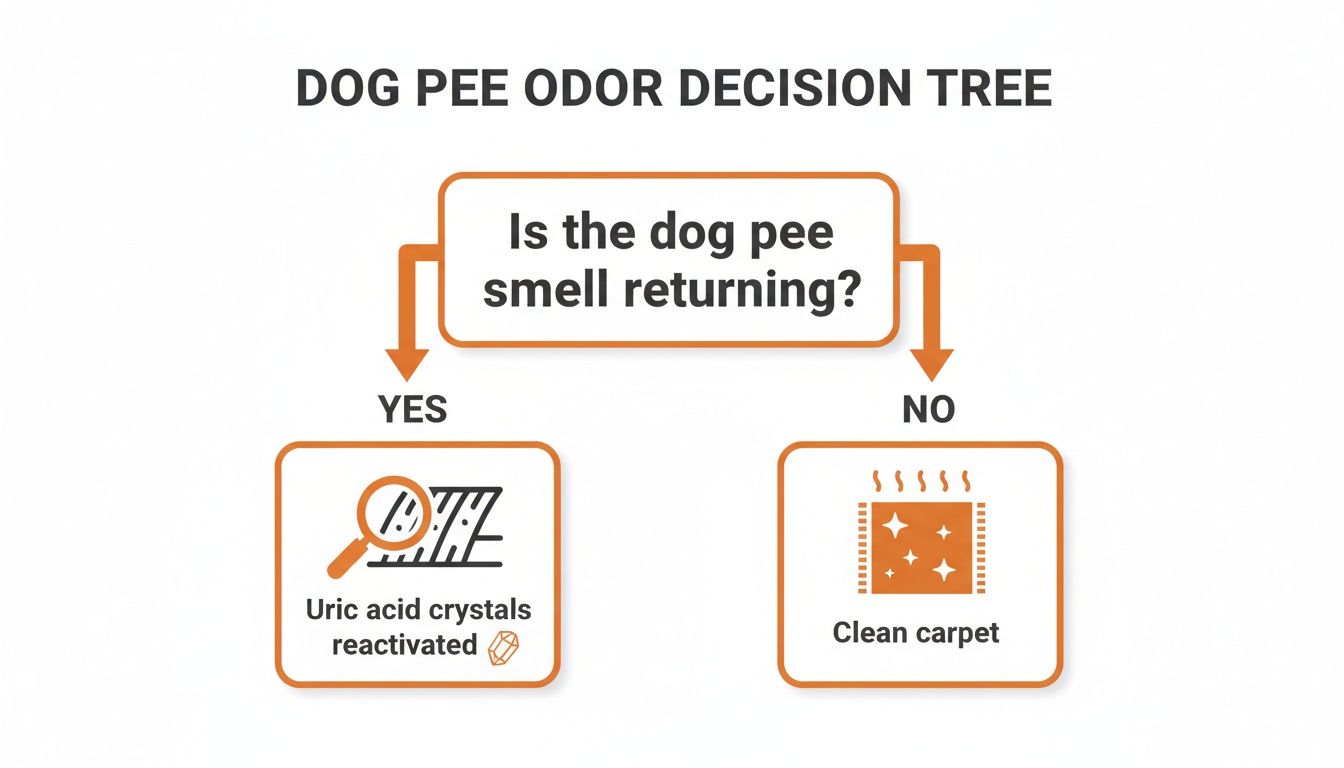
As you can see, if a smell comes back, it's almost always because uric acid crystals got left behind and were reactivated by moisture or humidity. Your initial blotting is your first line of defense against that.
Once you’ve blotted the area until it’s as dry as you can get it, you're ready to start neutralizing what's left. Resist the urge to just grab any old household cleaner from under the sink. A lot of common products, especially anything with ammonia, can actually smell like urine to a dog. Using them can accidentally encourage your pup to mark that same spot all over again.
Critical Tip: Whatever you do, never use a steam cleaner or hot water on a fresh urine stain. The heat can cause the proteins in the urine to permanently bond to your carpet fibers. You’ll set the stain and the odor forever.
By acting quickly and using the right technique from the start, you set yourself up for success. This first response is your best shot at tackling the uric acid head-on, making all the next cleaning steps that much more effective.
Effective DIY Cleaning Solutions That Actually Work
If you prefer tackling messes with ingredients you already have in your pantry, you’re in luck. While there are plenty of commercial cleaners out there, a simple homemade solution can be surprisingly powerful when you need to get dog pee smell out of your carpet. The secret is using the right combination of ingredients that work together to neutralize odors on a chemical level.
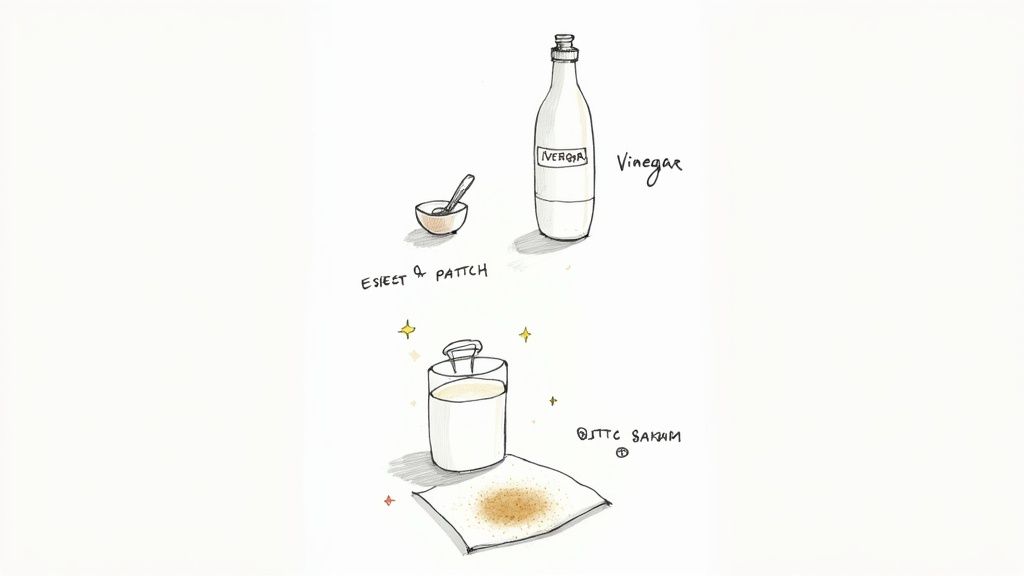
The most effective DIY duo is plain old white vinegar and baking soda. This isn’t just a folksy household tip; there's real chemistry behind it. Dog urine contains ammonia, which is alkaline. The acetic acid in vinegar is—you guessed it—acidic. When they come into contact, the vinegar neutralizes the ammonia, stopping the odor-causing reaction right in its tracks.
Then, baking soda comes in for the second punch. It's a fantastic natural odor absorber, pulling any lingering funky smells out of the carpet fibers as it dries.
The Vinegar and Baking Soda Method
Ready to mix up your own odor-fighting solution? It’s simple, but how you apply it is what really makes the difference.
- Mix Up Your Vinegar Solution: In a spray bottle, combine equal parts white vinegar and cool water. This 50/50 mix is gentle enough for most carpets but has enough oomph to get the job done.
- Saturate the Spot: After you’ve blotted the fresh spot dry, generously spray your vinegar solution onto the affected area. Don't be shy here; you need it to penetrate just as deeply as the urine did to be effective.
- Give It Time: Let the solution sit for at least 15-20 minutes. This gives the vinegar time to really work its magic on the ammonia.
Once it has soaked in, grab some more clean, dry towels and blot the area again to soak up the excess vinegar solution. Now, you’re ready for the baking soda.
Pro Tip: Before you go all-in, always do a spot test on a hidden piece of your carpet—like inside a closet or under the sofa. This is a quick way to make sure your solution won't cause any discoloration.
Finishing with Baking Soda
With the area just damp, sprinkle a generous layer of baking soda directly over the entire spot. You might see a slight fizzing or bubbling reaction, which is a good sign! It means the neutralization process is still active.
Now, just let the baking soda sit until it's completely dry. This could take several hours or even overnight. As it dries, it’s actively absorbing the lingering odors and moisture from deep within the carpet fibers. For a deeper dive into this process, you can check out this guide on using baking soda to remove stains from carpets.
Once it’s bone dry, vacuum it up thoroughly. You may need to go over the spot a few times to get every last bit of powder out of the carpet.
Critical Mistakes to Avoid
This DIY method works great, but a few common mistakes can completely sabotage your efforts.
- NEVER Use Ammonia-Based Cleaners: Products like Windex often contain ammonia. Since dog urine also contains ammonia, using these cleaners can actually encourage your dog to mark the same spot again. It’s like putting up a "pee here" sign.
- Avoid Hot Water or Steam: I've said it before, but it's worth repeating: heat is your enemy here. It can permanently set urine stains and smells by basically cooking the proteins into your carpet fibers. Always stick with cool water for your DIY solutions.
Keeping a fresh-smelling home goes beyond just one-off spot treatments. To maintain a truly fresh home with pets, following an ultimate vacation rental cleaning checklist can be a game-changer for overall tidiness, ensuring no sneaky odors are left behind. By using the right homemade ingredients and steering clear of these common pitfalls, you stand a much better chance of winning the war against stubborn pet odors.
What About Those Powerful Enzymatic Cleaners?
So, you've tried the DIY route and that stubborn pee smell is still hanging around. Don't throw in the towel just yet. It's time to bring in the professional's secret weapon for getting dog pee smell out of carpet for good: enzymatic cleaners.
These aren't your average soaps or vinegar solutions. Not even close. Enzymatic cleaners work on a completely different level. Instead of just masking a smell, they use science to completely destroy it at the source.
They're packed with beneficial bacteria that produce specialized enzymes. When these little powerhouses hit organic material—like the uric acid crystals in dog urine—they get to work, breaking it down and literally consuming it. The only things left behind are harmless carbon dioxide and water.
How These Cleaners Biologically Eat Odors
Think of it like this: the enzymes are like billions of tiny Pac-Men, and the uric acid in your carpet is their lunch. They are relentless. They won't stop working until every last bit of the odor-causing material is gone.
This biological process is the only way to be 100% sure the smell won't creep back on a humid day. It eliminates the source entirely, rather than just putting a temporary band-aid on it.
Standard cleaners might neutralize some of the ammonia smell, but they often leave the uric acid crystals behind. An enzymatic cleaner removes those crystals from the equation completely, which is why it's the gold standard. You can dive deeper into what makes an enzymatic cleaner so effective in our detailed guide.
Make sure you choose a quality product specifically designed for pet urine. This ensures it has the right kind of enzymes to target the unique proteins and lipids found in these messes.
The Two Golden Rules for Making Them Work
Just spraying a little enzymatic cleaner on the surface of the carpet is a complete waste of your time and money. For these products to actually work, you have to nail two things: saturation and dwell time.
1. You Have to Fully Saturate the Area
This is non-negotiable. You have to get the cleaner to every single spot the urine touched. A single accident can soak right through the carpet fibers, deep into the padding, and sometimes even reach the subfloor. Once it's down there, it forms stubborn urine crystals that can reactivate months or even years later.
This means you need to be generous. Use enough of the cleaner to saturate the area completely, letting it sink down as deep as the original accident did.
2. Give It Time to Work (Seriously, Be Patient)
Enzymes aren't a magic wand—they don't work instantly. They need time to do their job. This "dwell time" is when the bacteria are actively munching away on the uric acid.
Crucial Insight: The single biggest mistake people make is rushing the process. If you don't give the cleaner enough time, it will fail. Always check the product's instructions, which will usually recommend letting it sit for several hours, sometimes up to a full 24 hours.
Here's a pro tip: while the cleaner is dwelling, cover the treated area with a damp towel and then put a piece of plastic wrap over that. This keeps the spot moist, which is essential for keeping those little enzymes alive and hungry.
Once the dwell time is up, blot the area with clean, dry towels to soak up the excess moisture and let it air dry completely. When it's done, that odor should be gone for good.
How to Find and Treat Old Hidden Stains
Sometimes, that lingering dog pee smell isn't from the accident you just cleaned up. It's the ghost of messes past—old, invisible stains that have soaked deep into your carpet fibers and are now haunting your home.
To win this battle, you have to play detective and find every single hidden spot.
Your most powerful tool for this mission is a UV blacklight. It might sound like something straight out of a crime scene show, but it’s an absolute game-changer for pet owners. The science is simple: the salts in dried dog urine, specifically the uric acid crystals, glow under ultraviolet light. This lets you see what your naked eye can't, revealing every old accident with shocking clarity.

Uncovering The Problem Areas
To get started, wait until it’s dark. Turn off all the lights in the room you're tackling—the darker, the better.
Slowly scan the UV light across your carpet, holding it about a foot or two above the fibers. Old urine stains will pop right out, glowing a dull, yellowish-green color.
Expert Tip: Don't just check the middle of the room. Dogs often seek out-of-the-way spots for accidents. Make sure you scan along walls, under furniture, and in corners.
As you find each glowing spot, mark its location. You can use chalk, small pieces of painter's tape, or even a few spare coins. The goal is to create a complete "map" of every problem area. Don't be surprised if you find way more than you expected.
Treating Set-In Urine Stains
Once you've identified all the culprits, it’s time for a targeted attack. These old, dried stains are much tougher than fresh ones because the uric acid crystals are deeply embedded in the carpet fibers and padding. They require a more patient and aggressive approach.
Your best weapon here is a high-quality enzymatic cleaner. A simple spray and wipe just won't cut it. These deep-set stains need heavy saturation to make sure the cleaner reaches all the way down to the carpet padding where the urine has settled.
Here’s what to do for each spot you marked:
- Saturate Thoroughly: Pour the enzymatic cleaner directly onto the spot. Don't be shy—you want to use enough to match the amount of the original accident.
- Be Patient: Let the cleaner dwell for several hours, or even overnight. This gives the enzymes the time they need to actually break down and consume the old uric acid crystals.
- Repeat If Needed: For very old or stubborn stains, one round might not be enough. If a faint odor remains after the area is completely dry, don't hesitate to repeat the whole process.
This methodical approach is the only way to truly get dog pee smell out of carpet when you're dealing with old, hidden stains. By finding and treating every single source, you can finally restore freshness to your home. For more professional insights, our guide on how to eliminate pet odors in carpet offers additional expert strategies.
Knowing When to Call a Professional
You’ve blotted, sprayed, and broken out the best enzymatic cleaner money can buy, but that stubborn, phantom odor just won't quit. I get it. Sometimes, no matter how hard you try, a pet accident is just too much for even the best DIY methods.
Deciding when to throw in the towel and call a pro isn't admitting defeat; it's the smartest move you can make to save your carpet and, honestly, your sanity.
There are a few tell-tale signs that you're beyond a simple spot treatment. If the urine smell seems to hang in the air and fills the entire room, that's a huge indicator. It usually means you're dealing with multiple hidden spots or one massive accident that has soaked clean through to the subfloor. Once urine seeps into the carpet padding and hits the wood or concrete underneath, no amount of surface spraying is going to fix it.
Another major red flag is an odor that keeps coming back in the exact same spot, even after you've deep cleaned it over and over. This is a classic sign that the uric acid crystals have embedded themselves so deep into the carpet backing and pad that your at-home cleaners just can't physically reach them.
When Professional Help Is a Must
I always tell my clients to hire an expert in these specific situations:
- The Problem Area Is Huge: If your pet has had a series of accidents across a large section of carpet, a professional has the heavy-duty equipment needed to treat the whole area uniformly and effectively.
- The Urine Has Reached the Subfloor: Pros have specialized tools, like sub-surface extractors, that can literally flush out the padding. Sometimes they can even treat the subfloor itself without having to pull up the entire carpet. It's pretty impressive stuff.
- You're Trying to Sell Your Home: Nothing kills a home sale faster than a lingering pet odor. A professional cleaning is an investment that ensures potential buyers are smelling a fresh, clean home, not Fido's old mistakes.
My Two Cents: Professional carpet cleaners who specialize in pet odor don't just "clean" the surface. They show up with powerful, truck-mounted extraction systems and commercial-grade enzymatic treatments that are worlds stronger than anything you can buy at the store.
For those really deep-set, pervasive smells, especially from old or hidden stains, your best bet is to consult with professional odor removal services. They have the know-how to tackle issues that consumer-grade products simply can't touch.
Trust me, investing in an expert is often the most cost-effective solution in the long run. It prevents permanent damage to your flooring and finally helps you get dog pee smell out of carpet for good.
A Few Common Questions About Dog Urine Odor
Will That Dog Pee Smell Ever Really Go Away?
It absolutely can, but there's a catch. You have to destroy the source of the smell: the uric acid crystals. Just cleaning the surface of the carpet won't cut it.
The secret is using a high-quality enzymatic cleaner. These cleaners don't just mask the smell; they contain active enzymes that literally break down and consume those uric acid crystals. If you treat the spot thoroughly enough to reach the carpet padding underneath, that smell won't be coming back.
How Can I Stop My Dog From Peeing in the Same Spot?
This is a classic problem, and it all comes down to scent. Your dog's powerful nose picks up on the faintest leftover odor, telling them, "This is the spot!"
First, you have to follow the steps above and completely eliminate every last trace of the old accident with a good enzymatic cleaner. Once you're sure the scent is gone for good, you can use a smell that dogs naturally dislike to make the area less appealing. A light mist of water mixed with citrus oil usually does the trick—dogs are not fans of strong citrus or vinegar smells.
My Two Cents: Think of it as a one-two punch. First, you use the enzymatic cleaner to completely erase the spot from their scent map. Then, the citrus spray acts as a friendly "keep off the grass" sign. It's about 100% odor removal, followed by prevention.
Are you tired of battling stubborn pet odors in your carpet? Citrus Carpet Cleaning Buford uses a professional, citrus-based cleaning process that gets deep into the fibers to knock out tough stains and smells without leaving sticky, dirt-attracting residues behind. Get your free, no-obligation EXACT-imate today at https://citruscarpetcleaningatlanta.com.