
When it comes to getting a stain out of your carpet, your very first move is almost always the most important one. For any fresh spill, the immediate instinct should be to blot the area with a clean, dry cloth. Never, ever rub it. Rubbing just shoves the stain deeper into the carpet fibers, and that's how a minor spot becomes a major, permanent problem.
Your Immediate Action Plan for Fresh Carpet Spills
We've all had that heart-stopping moment—a glass of red wine goes flying, or a kid's plate of spaghetti takes a nosedive onto the living room floor. It doesn't have to end in disaster. How you react in those first few minutes is the difference between a simple cleanup and a lasting blemish on your carpet. Your goal here is damage control, and it all starts with one golden rule.
The All-Important Blotting Technique
The single most critical thing to remember is to blot, not rub. When you scrub a fresh spill, you're literally grinding the staining agents deeper into the yarn. It makes them infinitely harder to get out. On top of that, aggressive rubbing can fray the carpet fibers, creating a fuzzy, damaged patch that honestly looks just as bad as the stain itself.
Instead, grab a clean, white, absorbent cloth (or a thick stack of paper towels). Press down firmly on the spill, letting the cloth soak up as much of the liquid as it can. Lift the cloth, find a clean, dry section, and press down again. Keep repeating this until you're no longer pulling any moisture or color out of the carpet. You're trying to contain the spill, not spread it around.
Your First-Response Toolkit
You don't need a bunch of fancy equipment for this initial step. In fact, most of what you need is probably already in your kitchen or under the sink.
- Clean White Cloths or Paper Towels: These are your best friends. Using white ensures you don't accidentally transfer any dye from the cloth to your carpet.
- A Spoon or Dull Knife: For thicker messes like ketchup, mud, or pet accidents, gently scrape off the excess solids before you start blotting.
- Cold Water: Keep a spray bottle filled with cool water handy. It's perfect for lightly misting the area after you’ve blotted up the initial spill.
The key here is containment. By getting rid of all the excess liquid and solid gunk first, you stop the stain from spreading and give yourself a much better shot at getting it out completely.
Once you’ve contained the spill, you can think about using a gentle cleaning solution. For many common spills, a simple mix of a few drops of clear dish soap in a cup of lukewarm water does the trick.
For a deeper dive into specific spot removal strategies, understanding the best way to get spots out of carpet can give you more targeted techniques for different types of stains. Just remember to always test any cleaning solution on a hidden spot first (like inside a closet) to make sure it doesn't mess with your carpet's color.
Targeted Solutions for Common Household Stains
Let's be honest, not all carpet stains are created equal. A splash of coffee needs a completely different battle plan than a smudge of grease or one of those pet accidents. Using a one-size-fits-all cleaner is a recipe for frustration and can actually set the stain for good. The real secret to success is matching the right solution to the specific spill you're fighting.
This targeted approach is how you get a stain out of carpet without accidentally making things worse. It’s all about knowing what you’re up against—whether it's water-based, oil-based, or protein-based—and using simple stuff from your pantry to fight back.
Tackling Organic Stains Like Coffee, Wine, and Juice
Spills from coffee, tea, red wine, and fruit juice are probably the most frequent offenders in any home. These are usually water-soluble and contain tannins, which are basically natural dyes found in plants. Your best weapon here is often a mild acid to break down those pesky pigments.
A simple mix of equal parts white vinegar and water is surprisingly effective. Just grab a clean, white cloth, dampen it with the solution, and gently blot the stain. The vinegar gets to work dissolving the tannins without being harsh on your carpet fibers. For a particularly stubborn coffee ring, our detailed guide on how to get coffee stains out of carpets gives you a few extra tricks.
When a spill happens, it's easy to panic. This little decision tree can help you focus on what to do first.
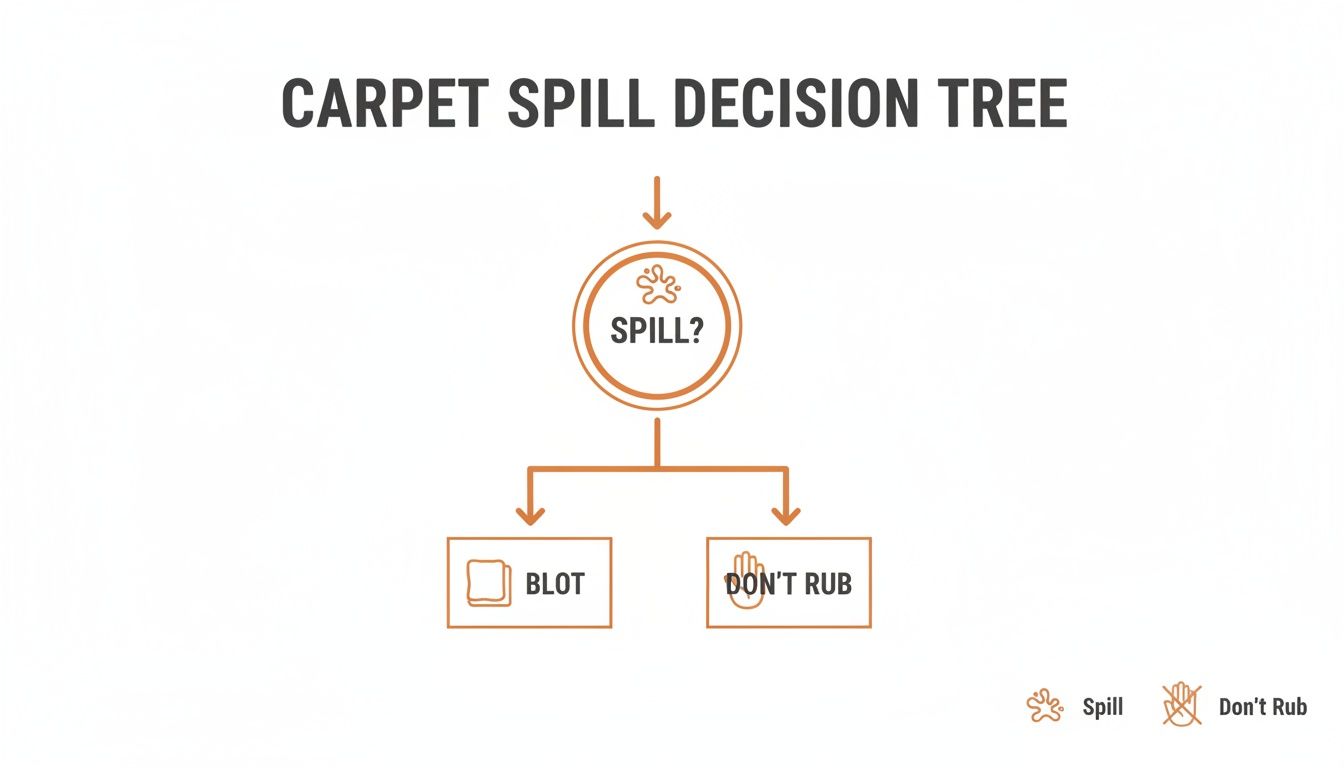
As you can see, the golden rule is to always blot up the excess liquid before you apply any cleaning solution. This stops the stain from spreading and becoming an even bigger headache.
Sometimes, you need a quick answer without digging through the pantry. This table is a handy cheat sheet for common stains and what to throw at them.
Quick DIY Solutions for Common Carpet Stains
| Stain Type | Recommended DIY Solution | Key Technique |
|---|---|---|
| Coffee/Tea/Wine | 1:1 White Vinegar & Water | Blot, never rub. The vinegar helps break down tannins. |
| Grease/Oil | Baking Soda or Cornstarch | Sprinkle on, let it sit for 20 mins to absorb, then vacuum. |
| Ink (Ballpoint) | Rubbing Alcohol on a cloth | Dab gently. Transfer the ink from the carpet to the cloth. |
| Pet Urine (Fresh) | 1:1 White Vinegar & Water, then Enzyme Cleaner | Blot first, then neutralize with vinegar solution. Follow with enzyme cleaner for odor. |
| Mud | Let it dry completely | Scrape off the dried dirt, then vacuum thoroughly before treating any remaining stain. |
| Blood | Cold Water & a drop of dish soap | Blot with cold water only (hot water sets protein stains). |
Remember, these are for fresh spills. If a stain has been sitting for a while, it might need a more professional touch.
How to Handle Oil-Based and Greasy Spills
Stains from cooking grease, salad dressing, makeup, or ink play by a different set of rules. Water and vinegar won't do much good here—you know what they say about oil and water. For these, you need something that can break down and soak up the grease.
First, scrape off any gunk you can. Then, pile on the cornstarch or baking soda. Be generous. Let it sit for at least 15-20 minutes so it can pull the oil out of the carpet fibers, then vacuum it all up. You should see a huge difference.
If you’re left with a mark from something like a ballpoint pen, rubbing alcohol is your friend. Put a little on a cloth (not directly on the carpet!) and gently dab the ink. You’ll see the ink start to lift onto the cloth.
Expert Tip: Never pour a solvent like rubbing alcohol straight onto the carpet. Always put it on your cleaning cloth first. This gives you control and prevents the alcohol from soaking through to the carpet backing, where it can dissolve the latex adhesive holding your carpet together.
The Challenge of Pet Urine and Odors
Pet accidents are a double-whammy: you’ve got the stain and a lingering odor. The uric acid in urine can permanently damage carpet fibers and create a smell that loves to reappear on humid days. Your average cleaner just isn't going to cut it.
For pet urine, you absolutely need an enzymatic cleaner. These products are formulated with special enzymes that literally eat the uric acid crystals and bacteria, getting rid of both the stain and the smell at the source. Blot the area really well, then saturate it with the enzyme cleaner and let it air dry. It might take a day or two, but it’s the only way to truly solve the problem.
Of course, prevention is always best. Things like reusable dog pee pads can save you a lot of trouble, especially when you're house-training a puppy or have an older pet. It's a massive issue for homeowners—the global market for carpet spot removers hit USD 1.1 billion and is expected to almost double in ten years. With households making up nearly 60% of that demand, it’s clear we’re all in this together.
Common Carpet Cleaning Mistakes to Avoid
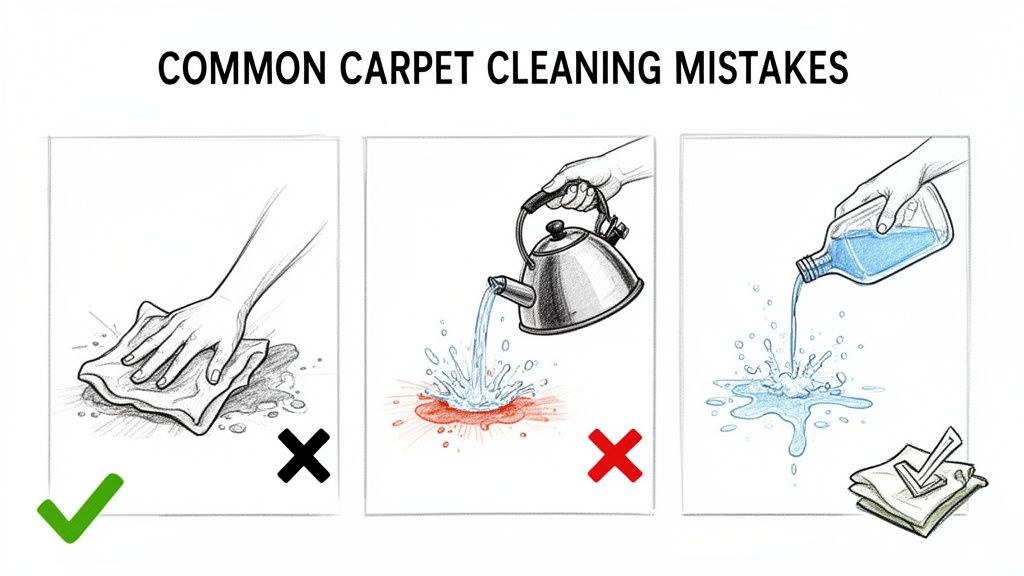
When a spill happens, the first instinct is to panic and act fast. While speed helps, doing the wrong thing can make a small spot a whole lot worse. Your quick reaction can accidentally set a stain for good or even ruin your carpet fibers. Before you reach for whatever cleaner you have on hand, let’s talk about the common traps that turn a minor spill into a major headache.
Honestly, knowing what not to do is just as important as knowing the right way to clean. I've seen it countless times—good intentions lead to recurring spots, faded patches, and a whole lot of frustration.
The Pitfall of Aggressive Scrubbing
The number one mistake I see people make is scrubbing at a stain. It seems logical, right? Just grind it away. But that’s the most destructive thing you can do. Scrubbing frays the carpet fibers and, even worse, pushes the spill deeper into the carpet and down into the padding. Once it's in the padding, it's almost impossible to get out completely.
Instead, you need to blot with gentle pressure. Always use a clean, white cloth. This simple technique lifts the stain out of the carpet instead of grinding it further in.
Using the Wrong Temperature Water
Hot water feels like it would be a powerful cleaner, but for many common stains, it’s a disaster waiting to happen. If you're dealing with protein-based stains—think milk, blood, or a pet accident—hot water will literally "cook" the proteins. This binds them to the carpet fibers, setting the stain permanently.
Always start with cold or lukewarm water for blotting and rinsing. It's the safest bet for nearly any spill and keeps you from accidentally locking in the stain before you've even had a chance to remove it.
Key Takeaway: The wrong temperature or technique can make a stain permanent. Always blot, never scrub, and start with cool water to avoid setting protein-based stains into the fibers.
The Overuse of Cleaning Solutions
More is not better when it comes to carpet cleaners. Dousing a stain with a ton of solution is a classic mistake. All that liquid soaks right through the carpet and into the padding, which can lead to mold, mildew, and nasty odors that are tough to get rid of.
Worse yet, that excess solution leaves behind a sticky residue. Many store-bought cleaners are full of soaps that don't rinse out easily. This sticky film acts like a dirt magnet, attracting new soil to the exact same spot and creating that frustrating mark that just keeps coming back. It’s one of the biggest carpet cleaning misconceptions we have to correct for homeowners.
To avoid this, use your cleaning solution sparingly. Put a small amount on your cloth, not directly on the carpet, and then blot the stain. After you've treated the area, do a light rinse by blotting with a clean, water-dampened cloth to remove any leftover cleaner. Then, blot it as dry as you can.
Knowing When to Call a Carpet Cleaning Professional
Look, DIY methods are fantastic for tackling fresh spills and minor spots. But let’s be honest, there are times when your best efforts just won’t cut it. Knowing the limits of home remedies is the key to avoiding a costly mistake, like accidentally making a stain permanent or ruining your carpet fibers.
Sometimes, the smartest move you can make is to just pick up the phone.
Think of it this way: a spray bottle solution is like first aid, but some situations demand a specialist. If a stain has been sitting for days, weeks, or even months, it’s no longer just a surface issue. It has likely bonded chemically with the carpet fibers, and a simple vinegar solution isn’t going to change that.
Signs It’s Time for Expert Help
Recognizing when you're out of your depth can save you a ton of frustration and, frankly, a lot of money in the long run. Professional help isn't just for convenience; it's necessary for specific, challenging scenarios that go way beyond a simple surface clean.
Here are some dead giveaways that it's time to call in the pros:
- The Zombie Stain: You clean a spot, it looks great, and then a few days later, it’s back. This is a classic case of “wicking.” It means the spill soaked deep into the carpet padding. As the surface dries, moisture from below gets drawn back up, bringing the stain right back with it. You can't win this fight from the surface.
- You Have Delicate Carpet: Natural fibers like wool, silk, or sisal are gorgeous but incredibly sensitive. Using the wrong cleaning solution—or even just water that’s too hot—can lead to permanent discoloration, shrinkage, or fiber damage. It's a high-stakes gamble not worth taking.
- The Odor Just Won't Quit: Lingering smells, especially from pet accidents, are a huge red flag. It means the source is buried deep within the carpet padding or has even reached the subfloor. A professional deep clean is the only way to truly neutralize odors at their source.
- The Stain is Huge (or Everywhere): Trying to tackle a massive spill or multiple stains all over a room with a small spray bottle is a recipe for disaster. You’ll end up with patchy, uneven results and a whole lot of wasted time.
When a stain resists your best efforts or you’re dealing with delicate materials, pushing further with DIY methods is a big risk. You could set the stain for good. A professional service like Citrus Carpet Cleaning Buford has the specialized equipment and know-how to handle these problems safely and effectively.
The Professional Advantage for Tough Stains
So, what makes a professional service so much more effective? It really comes down to better technology and hands-on experience. We use advanced, low-moisture cleaning methods that get deep into the fibers without oversaturating your carpet. This process lifts stains right from the base, which stops wicking in its tracks and prevents that sticky residue that makes spots reappear.
Ignoring tough stains has a real financial impact, too. Industry stats show that untreated stains contribute to 25% of premature carpet replacements. Think about that—a quarter of all carpets being replaced could have been saved!
Plus, professional services can prevent 80% of re-soiling issues that are caused by improper DIY cleaning. You can read more about the stain remover market findings to see just how much of a difference expert care makes.
Calling a pro isn't just about cleaning; it's about protecting your investment.
What to Look for in a Buford Carpet Cleaning Service

So, you've tried everything, and that stubborn stain is still staring back at you. Time to call in the pros. But when you start searching for carpet cleaners in Buford, you’ll find plenty of options, and they are definitely not all the same. Choosing the right one goes way beyond just finding the cheapest price—it's about understanding their methods and how they do business.
You're not just hiring someone for a one-off job; you're looking for a partner to help care for your home. The best companies have deep roots in the community and a long list of happy customers who call them back year after year.
Prioritize Advanced and Safe Cleaning Methods
The technology a carpet cleaner uses is a huge deal. Old-school steam cleaning might sound powerful, but it often blasts your carpet with so much water that it soaks straight through to the padding. This can lead to insane dry times—we're talking 24 hours or more. All that lingering moisture is a perfect breeding ground for mold and mildew. Even worse, as the carpet slowly dries, wicked-up stains can reappear like magic. Not good.
Instead, look for a company that’s invested in modern, low-moisture cleaning techniques. A citrus-based process, for example, uses a powerful natural solvent that breaks down dirt and stains without drenching your floors. This approach has two massive benefits for you:
- Your carpets dry in just 1-2 hours, not days. You can get back to your life.
- There’s no sticky soap residue left behind, which means your carpet won't become a dirt magnet the second it's clean.
This isn’t just about getting your carpet clean now; it's about making sure it stays cleaner for longer. When you need to get a stain out of carpet, a modern approach is simply smarter, safer, and way more convenient.
Demand Transparent and Honest Pricing
Let’s be honest: nobody likes a surprise on their bill. A trustworthy carpet cleaning service will be upfront and honest about their pricing from the very start. Be wary of companies that give you a vague, lowball quote over the phone, only to show up and start tacking on extra fees for “pre-treatment” or charging by the spot. It’s a classic bait-and-switch.
A reputable company should offer an "EXACT-imate"—a firm, in-person quote that guarantees the price you’re given is the price you’ll pay. If they can’t stick to their quote, the service should be free.
That kind of guarantee tells you everything you need to know about their business philosophy. It shows they respect you and your budget and are confident in the value they're providing. You want a reliable partner for your home, not someone trying to make a quick buck with confusing fine print and last-minute upsells.
Your Top Carpet Stain Questions Answered
Look, even when you follow all the right steps, carpet stains can be tricky. Specific questions always seem to pop up right when you're on your hands and knees, trying to avoid a disaster. I'm going to tackle some of the most common ones I hear from homeowners to give you the clarity you need before you accidentally make things worse.
Can I Use Bleach on My White Carpet?
Please, don't do this. I've seen the aftermath, and it's not pretty. Using bleach on your carpet is one of the most damaging mistakes you can make, period.
Even carpets that look pure white are almost always an off-white or cream color that was dyed at the factory. Household bleach will literally strip that dye right out, leaving a permanent, ugly yellow or orange patch that stands out like a sore thumb.
Beyond just ruining the color, bleach is aggressive. It can weaken and even dissolve the carpet fibers themselves, causing damage that's completely irreversible. Always, always stick to cleaners made specifically for carpet. It's the only way to protect your investment.
How Do I Remove an Old, Set-In Stain?
Old stains are a whole different ballgame. They've had time to do more than just sit on the surface; they’ve chemically bonded with the carpet fibers. It's a tough challenge.
For a DIY attempt, you can try dampening the area with a 50/50 mix of white vinegar and water. Let it sit for about ten minutes to hopefully loosen that bond, then get to work blotting with a clean, dry cloth. You'll have to be patient and keep at it.
The reality is, your best chance of success with a set-in stain is with a professional. Their powerful, low-moisture extraction equipment and specialized solutions can break down old stains that most home remedies simply can't touch.
Will a Professional Get Every Single Stain Out?
While professional cleaning gives you the absolute best shot at removal, some things can permanently dye carpet fibers. It’s just a fact. Spills from things like bleach, certain artificial food colorings (think red sports drinks), or even some acne medications can alter the carpet's color for good.
A reputable pro will always give you an honest assessment before they even start working. The goal is either to get the stain out completely or, at the very least, make it so faint that you'd never notice it. A trustworthy company guarantees they'll deliver the best possible result for your specific situation. For more great advice on keeping household fabrics in top shape, these mattress maintenance and cleaning tips are also really helpful.
When your best efforts just aren't cutting it, don't risk permanent damage. The experts at Citrus Carpet Cleaning Buford use advanced, low-moisture techniques to safely and effectively tackle even the toughest stains. Get your free "EXACT-imate" today!