
Getting cat urine smell out of your carpet isn't just about a quick spray and wipe. The real secret is to neutralize what causes the odor in the first place—those stubborn uric acid crystals. For that, you absolutely have to use an enzymatic cleaner. This type of cleaner works on a molecular level to actually break down the crystals, not just cover up the smell like a lot of household products do.
To get it right, the cleaner needs to soak the area completely, getting just as deep as the original accident did.
Why Cat Urine Odor Lingers So Stubbornly
Ever cleaned up a cat accident, thought you were done, and then caught that same awful smell on a rainy day? You're not losing your mind. That unmistakable, sharp odor is a complex chemical problem, and understanding the science behind it is the first step to winning the battle for good.
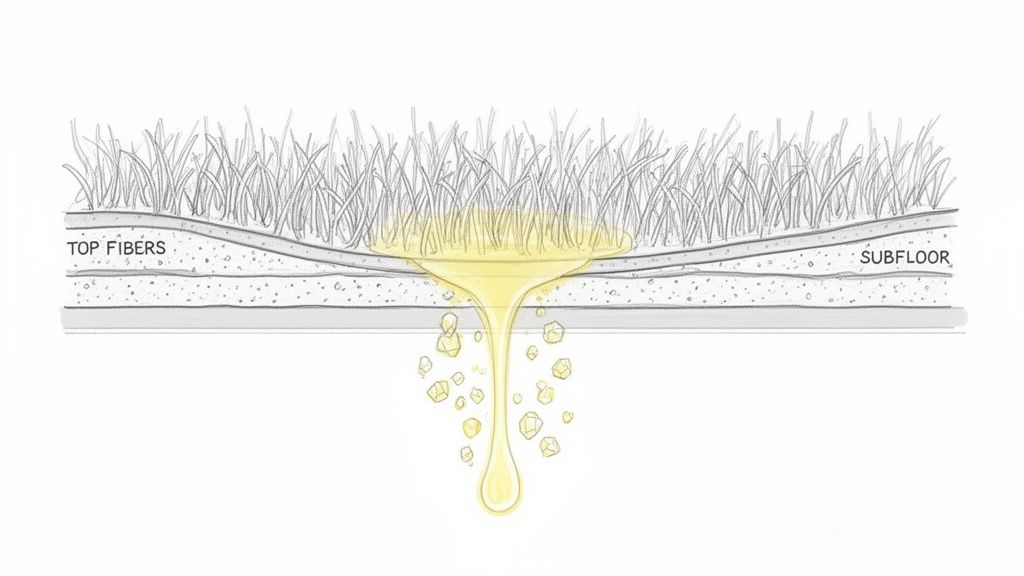
The issue goes way deeper than the carpet fibers you can see. When your cat has an accident, the urine doesn't just sit on top. Gravity is working against you, pulling that liquid deep down into the carpet padding. In really bad cases, it can even soak into the wood subfloor underneath. This is exactly why a simple surface scrub almost never works.
The Chemistry Behind the Smell
So, what makes this smell so uniquely persistent? It all comes down to the chemical makeup of cat urine. Unlike a spilled drink, it’s a cocktail of ingredients that create a long-term problem.
The real enemy here is uric acid. While other components might clean up easily at first, uric acid is not water-soluble. It forms sharp, invisible crystals that bond tightly to whatever surface they land on. These crystals just lie there, dormant and odorless, waiting for one thing: moisture.
The humidity from a hot day, steam from the shower, or even a damp mop can "reactivate" these crystals. Once that happens, they release that potent ammonia smell all over again, and you're right back where you started.
Key Takeaway: You're not just cleaning a stain; you're fighting a chemical battle. The uric acid crystals can hang around for years, and standard carpet shampoos and soaps simply can't break them down. This is why those methods so often fail.
The Science Behind Stubborn Cat Urine Odor
Here’s a quick look at the chemical components in cat urine and why they make odor removal such a persistent challenge for homeowners.
| Component | Its Role in the Stain | Why It Makes Removal Difficult |
|---|---|---|
| Urea | The sticky, water-soluble part of the urine. | While easy to clean initially, it can contribute to the ammonia smell as it breaks down. |
| Urochrome | The pigment that gives urine its distinct yellow color. | This is what causes the visible staining on light-colored carpets and fabrics. |
| Uric Acid & Salts | The primary culprit behind the lingering odor. | It's not water-soluble and forms sharp, odor-causing crystals that reactivate with moisture. |
This chemistry is precisely why cat urine can be so destructive. As it dries and those salts form, the odor can come back long after you thought the spot was clean. This process also damages carpet fibers over time, causing them to separate and leading to permanent dye damage—either by bleaching the color out or leaving behind a nasty yellow stain.
For a deeper dive, the Carpet and Rug Institute offers more insights into how pet urine affects carpeting. This is why getting that smell out requires a specific approach that tackles the problem at a molecular level.
How to Find Every Hidden Urine Spot
Let's be honest: you can't clean a stain you can't find. Your nose is a good starting point for getting that cat urine smell out of your carpet, but it usually only leads you to the freshest—or most potent—spots. If you want to eliminate the odor for good, you have to track down every single source. That includes the older, dried accidents that don't smell as strong but still harbor those nasty uric acid crystals.
This is a bigger challenge than most people realize. Over 45 million U.S. households have cats, and it's an issue pretty much all of them will face. It’s no surprise that cat owners often replace their carpets 1.3 times more frequently than people without pets. Untreated urine soaks deep into the carpet backing and even the subfloor, leading to odors that just won't quit.
Use a UV Blacklight Like a Pro
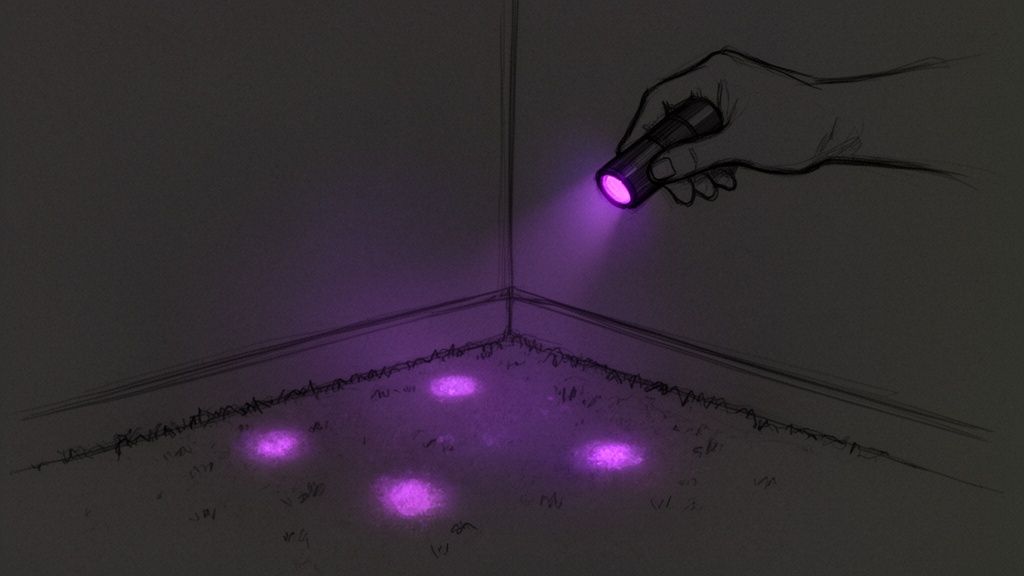
Your secret weapon in this detective work is a UV blacklight. The phosphorus and proteins in dried cat urine glow when hit with ultraviolet light, revealing stains that are totally invisible in normal light. To make it work, you have to use it like the pros do.
- Wait until it's completely dark. Kill all the lights, close the blinds, and shut the door. Any little bit of ambient light will make it much harder to see the glowing spots.
- Scan the room slowly. Hold the blacklight about a foot or two above the carpet and move methodically, like you're mowing a lawn. Pay extra attention to corners, the base of furniture, and along the walls—cats love to mark their territory there.
- Mark every single spot. Don't think you'll remember where they all are. Use painter's tape or chalk to outline each glowing area. This gives you a clear map for when you start the cleaning process.
Pro Tip: Not everything that glows is cat pee. Some laundry detergents, spilled drinks, or even certain carpet fibers can light up. You're looking for a dull, yellowish-green glow, which is the signature color of urine.
Look for Other Physical Clues
A UV light is fantastic, but don't forget your other senses. Sometimes, you can find a spot just by touch and feel, especially if you don't have a blacklight handy.
Get right down on the floor and run your hands over the carpet. Do you feel any areas that are stiff or crunchy compared to the surrounding fibers? You might also see a faint, ring-like stain or a slight discoloration on lighter carpets. These are dead giveaways of a dried urine spot.
Combining a hands-on approach with a blacklight inspection is the best way to make sure no hidden source of odor gets missed. It's the only way to set yourself up for a successful cleaning. For more advanced strategies, our guide on how to eliminate pet odors in carpet offers additional expert advice.
Your Immediate Response to a Fresh Stain
When you find a fresh cat urine spot, what you do in the next few minutes can make all the difference. Honestly, acting fast is your best weapon against a smell that just won't quit. The goal is simple: get as much of that liquid up as you can before it has a chance to soak down into the carpet padding.
The most important thing to remember is to blot, not rub. I see this mistake all the time. Scrubbing just grinds the urine deeper into the carpet fibers and can even damage them permanently. Instead, grab a thick stack of paper towels or a clean, absorbent cloth (white is best so you don't transfer any color). Lay it over the wet spot and apply firm, steady pressure straight down.
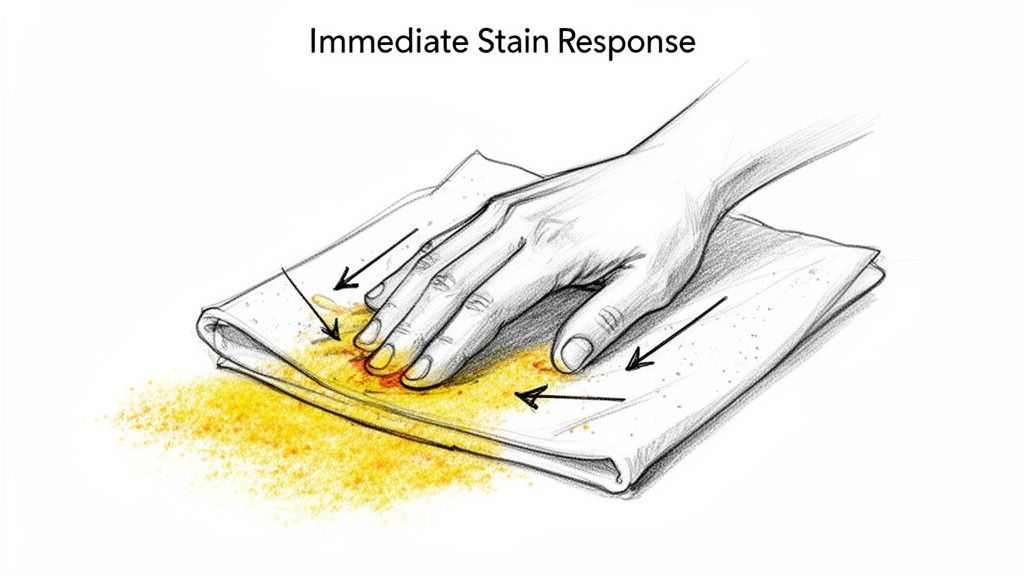
Don't be afraid to put your weight into it—you can even stand on the towels to really maximize absorption. Keep swapping them out for fresh, dry ones until you can’t pull any more moisture from the carpet. This first step is absolutely non-negotiable if you want to successfully get that cat pee smell out.
Critical Mistakes to Avoid Immediately
In a panic, it’s easy to grab the first cleaner you see under the sink. But some common cleaning methods don't just fail; they can actually set the stain and odor forever, making the problem a whole lot worse.
Crucial Warning: Never, ever use a steam cleaner or apply any kind of heat to a fresh urine stain. The high temperature actually bonds the uric acid proteins to the carpet fibers on a chemical level. Once that happens, the smell is virtually impossible to get out.
It's also a bad idea to use anything with ammonia in it. Since urine already contains ammonia, using a cleaner that smells similar can actually encourage your cat to mark that same spot all over again.
Just steer clear of these common pitfalls:
- Don't Rub the Stain: You'll just spread the urine and damage your carpet fibers.
- Don't Use Heat: Avoid steam cleaners and hot water. They'll lock in the odor.
- Don't Use Ammonia: This can attract your cat right back to the scene of the crime.
- Don't Ignore It: Letting urine sit is a recipe for disaster. It just gives it more time to soak into the padding and subfloor.
By focusing on blotting right away and dodging these key mistakes, you're setting yourself up for success. This quick response can be the difference between a simple cleanup and a lingering nightmare.
When you're staring down a stubborn cat urine stain, a quick internet search can feel like drinking from a firehose. Everyone has a miracle cure. But which DIY solutions actually stand a chance of getting that awful smell out of your carpet for good?
Let's cut through the noise. We're going to look at the two biggest players in the DIY game: enzymatic cleaners and the old-school vinegar-and-baking-soda trick. They both have their moments, but they work in completely different ways and, trust me, they deliver very different results.
The Real Deal: Enzymatic Cleaners
If there's a "gold standard" for DIY pet odor removal, this is it. The reason is simple: science. Enzymatic cleaners aren't just covering up the smell with a nicer one; they're designed to go to war with the source of the odor.
These cleaners are packed with beneficial bacteria that produce enzymes. When you unleash them on a urine stain, these little microscopic helpers get straight to work, breaking down the complex organic proteins in the urine. Most importantly, they target and destroy the uric acid crystals, which are the stubborn culprits behind that lingering cat pee smell.
Essentially, they "eat" the urine, converting it into harmless, odorless stuff like carbon dioxide and water. If you want to dive deeper into the science, we've got a whole guide on what is an enzymatic cleaner.
But for this method to work, you can't cut corners. You have to follow the instructions to the letter.
- Go Deep or Go Home: You must use enough cleaner to completely saturate the area, matching the depth of the original urine puddle. That often means getting it all the way into the carpet backing and maybe even the pad underneath.
- Give It Time: This isn't a spray-and-wipe job. The enzymes need time to do their thing—we're talking several hours. Covering the treated spot with a damp towel keeps the area moist and the enzymes active.
This approach is incredibly effective on fresh stains and even moderately old ones because it eliminates the problem at a chemical level.
The First-Aid Fix: Vinegar and Baking Soda
Ah, the classic vinegar and baking soda combo. It’s a go-to for countless household cleaning tasks, and it can offer a bit of help with a brand-new urine spot. The acetic acid in vinegar helps neutralize the ammonia, and baking soda is a champ at absorbing stray odors.
Here’s how people typically do it:
- After blotting up as much fresh urine as you can, lightly spray the area with a 50/50 mix of white vinegar and water.
- Let that sit for about 10-15 minutes, then blot it up with a clean, dry towel.
- Once the carpet is just damp, sprinkle a good amount of baking soda over the spot.
- Let the baking soda sit for a few hours (or even overnight) to soak up any leftover odor.
- Vacuum it all up thoroughly.
Let's Be Realistic: Think of this method as battlefield first aid for a fresh accident. It can knock down the initial smell and help with the stain, but it simply doesn't have the muscle to break down uric acid crystals. For older, deeper, or recurring odor problems, this method almost always comes up short.
Comparing DIY and Professional Cleaning
So, you've tried the home remedies, but should you keep trying or is it time to call in a pro? It really depends on the severity of the problem. Here’s a quick rundown to help you decide.
| Approach | Effectiveness Level | Ideal for These Situations | Potential Downsides |
|---|---|---|---|
| Vinegar & Baking Soda | Low | A single, brand-new, surface-level accident. | Doesn't break down uric acid; can leave a residue if not rinsed. |
| Enzymatic Cleaner | Medium to High | Fresh to moderately old spots; small-to-medium sized accidents. | Requires heavy saturation and long dwell times; can be costly for large areas. |
| Professional Cleaning | High | Old, set-in stains; multiple accidents; odors that have soaked into the pad. | Higher upfront cost compared to DIY products. |
Ultimately, DIY methods are great for immediate, isolated incidents. But when you're dealing with a serious, set-in odor that keeps coming back, professional-grade equipment and solutions are usually the only way to truly solve the problem for good.
When You Need to Call a Professional Cleaner
You’ve tried everything. You’ve scrubbed, sprayed, and blotted, but that unmistakable cat urine smell just won't go away. Despite your best efforts with DIY solutions, sometimes you reach a point where home remedies just can't win the war.
Recognizing when to throw in the towel and call a professional is key to saving your carpet, your time, and your sanity. If you've tried enzymatic cleaners and the odor keeps returning, that’s a clear signal the problem is deeper than you can reach.
That recurring smell is the number one sign that urine has soaked through the carpet fibers and backing, settling deep into the padding underneath. Once it reaches this layer, no amount of surface spraying will effectively neutralize the source. You’re no longer just cleaning the carpet; you're fighting a hidden reservoir of uric acid crystals.
Signs It Is Time for Expert Help
Knowing the specific red flags can help you make the right call before you waste more money on products that won't solve the core issue. Calling in an expert isn't an admission of defeat—it's a strategic move to permanently solve the problem.
You should seriously consider professional help if you're facing any of these scenarios:
- The Odor Persists: You've cleaned the spot multiple times with high-quality enzymatic cleaners, but the smell returns, especially on humid days.
- The Stain Is Old or Large: An old, set-in stain or a very large saturation area is almost impossible to treat effectively with DIY methods.
- Multiple Accidents Occurred: If a pet has repeatedly used the same area, the cumulative damage to the padding and subfloor is likely severe.
- You're a Landlord or Seller: When you need a guaranteed, certifiable solution for a rental property or a home you're selling, professional cleaning is non-negotiable.
Crucial Insight: The pet carpet market is booming, expected to hit USD 711.68 million by 2034, largely driven by the demand for odor removal. Yet, data reveals that 32% of cat households struggle with recurring odor issues because the sticky proteins in cat urine cause damage that outlasts typical dog messes, often requiring subfloor treatment.
The Professional Advantage: Low-Moisture Cleaning
When you hire a professional, you're not just paying for a stronger cleaning solution; you're investing in advanced technology and expertise. Modern professional services, particularly those using low-moisture systems, offer significant advantages over traditional steam cleaning, which can sometimes worsen a urine problem by spreading the moisture around.
This decision tree shows a simplified approach for DIY cleaning, where fresh stains are best handled with vinegar and older ones need an enzymatic cleaner.
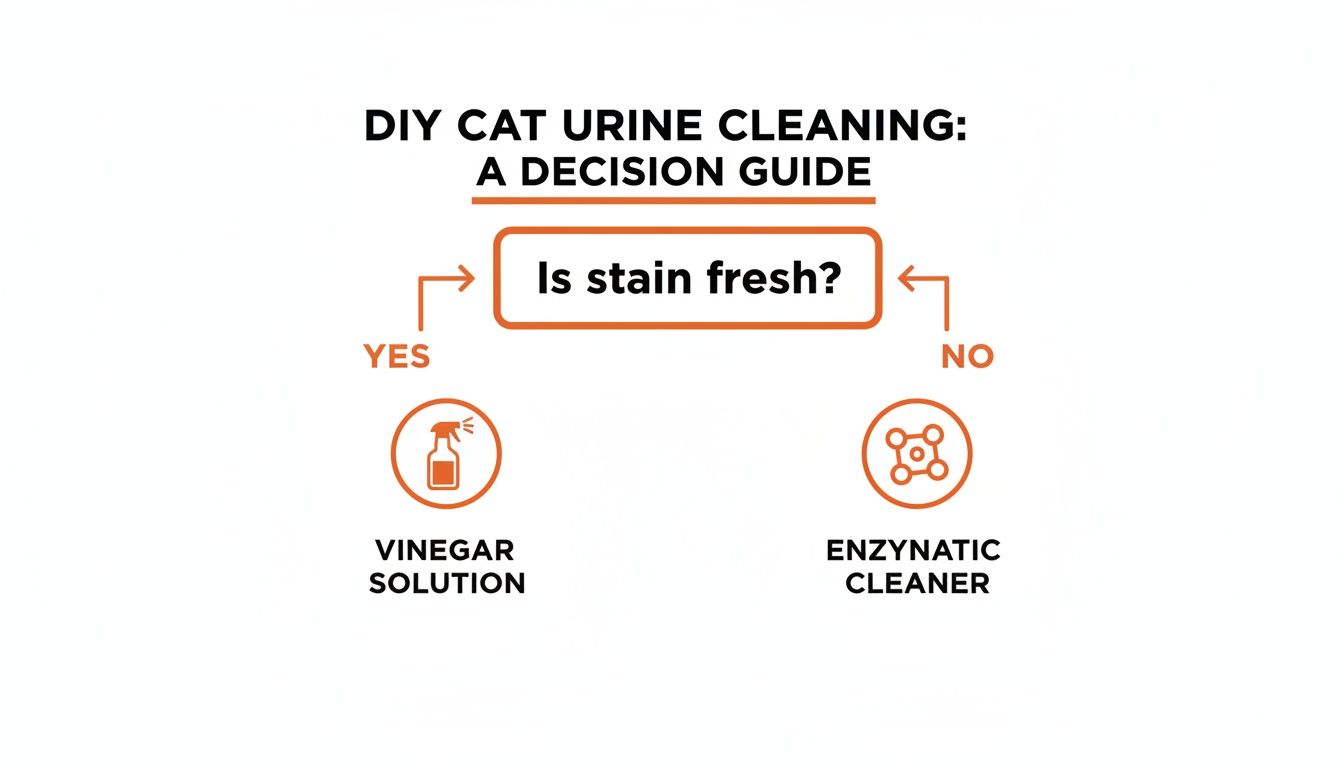
However, when neither of these DIY methods resolves the deep-set odor, it's a clear indicator that professional intervention is the next logical step.
A low-moisture cleaning process is specifically designed to tackle deep-set uric acid crystals without over-saturating your carpet. This method uses a citrus-based or specialized solvent that crystallizes dirt and urine residues, which are then extracted.
This approach is better for two big reasons. First, it prevents the mold and mildew growth that can happen from soaking the carpet. Second, it leaves behind no sticky, soapy residue that attracts more dirt later on. For deeply embedded odors that just won't quit, professional deep cleaning services are really the only way to go.
Ultimately, investing in a professional cleaner can be more cost-effective than repeatedly buying DIY products or facing premature carpet replacement. To better understand the value, check out our guide on if professional carpet cleaning is worth it. It provides the peace of mind that the odor is gone for good.
Some Common Questions About Cat Urine Smell
Even after you've scrubbed and treated, you might still have some nagging questions. It's a tough problem, and it's easy to wonder if you're missing a crucial step. Let's dig into some of the most frequent worries I hear from frustrated pet owners.
Think of this as your quick-reference guide for those "what if" moments. We'll get you some clear, straightforward answers so you can move forward with confidence.
Can You Ever Really Get Rid of Cat Urine Smell?
This is the big one, isn't it? The million-dollar question. I'm happy to report that the answer is yes, you absolutely can get the smell out for good. But there's a huge catch: it all comes down to neutralizing every single uric acid crystal.
If even a microscopic amount of that uric acid is left behind in the carpet fibers, the padding, or even the subfloor, that awful smell will rear its head again, especially on humid days. This is exactly why a quick surface spray often feels like it worked, only for the odor to return a week later. Permanent removal means getting deep down to every layer the urine touched.
For more general advice on hunting down and eliminating stubborn household smells, you might find this guide on how to get rid of home odors for good helpful. It really drives home the point that you have to treat the source, not just mask the symptom.
Why Does Steam Cleaning Make Cat Urine Odor Worse?
On the surface, it seems to make perfect sense. You've got a tough, organic stain, so blasting it with hot steam should solve the problem, right? Unfortunately, with cat urine, this is one of the worst mistakes you can possibly make.
The intense heat from a steam cleaner causes a chemical reaction with the proteins in the urine. It essentially "cooks" the stain, permanently bonding the uric acid crystals to your carpet fibers at a molecular level.
Critical Warning: Once you apply high heat to a pet urine stain, the odor and discoloration become virtually permanent. It's something that even professional cleaners have an almost impossible time reversing. Never, ever use a steam cleaner or apply heat to a pet accident.
This is a huge reason why we champion low-moisture cleaning systems for homes with pets. They focus on breaking down and extracting the source of the smell without the high heat that locks it in forever.
How Do I Stop My Cat From Peeing on the Carpet in the First Place?
Once you’ve finally won the battle and your carpet is fresh again, the last thing you want is a repeat incident. Preventing it from happening again is just as important as the cleanup. This means you need to put on your detective hat and figure out why your cat is avoiding the litter box.
Here are the most common culprits I've seen over the years:
- Underlying Health Problems: A sudden change in bathroom habits is often the first sign of a medical issue like a urinary tract infection (UTI) or kidney problems. Your very first step should always be a trip to the vet to rule this out.
- Litter Box Issues: Cats are notoriously picky. The box needs to be scooped daily, be big enough for them to turn around in comfortably, and placed in a quiet, safe spot. Sometimes, it's as simple as them hating the new brand of litter you bought.
- Stress and Anxiety: A new baby, a new puppy, or even just moving the couch can throw a sensitive cat into a tailspin. Inappropriate urination is often a cat's way of marking territory when they feel insecure.
By getting to the root cause of the behavior, you can stop the cycle and keep your carpets—and your home—smelling fresh.
When your best DIY efforts just aren't enough, Citrus Carpet Cleaning Buford offers the professional-grade, low-moisture cleaning that's needed to truly eliminate pet odors for good. We tackle the problem without the risk of heat-setting the stain like steam cleaners do. Our powerful, citrus-based solution breaks down the uric acid at its source, making sure that smell is gone for good. Schedule your "EXACT-imate" today!