

We've all been there—that heart-stopping moment when a full mug of coffee takes a nosedive. What you do in the next sixty seconds can mean the difference between a minor cleanup and a permanent stain. The absolute key is to move fast and blot that spill with a clean, dry cloth. Your goal is to soak up as much liquid as you possibly can before it has a chance to set. This one move is your best defense, no matter what surface took the hit.
Your Immediate Game Plan for Fresh Coffee Spills
When coffee spills, your first instinct might be to scrub like crazy. Resist that urge! Frantic scrubbing is a classic mistake that only makes the stain bigger and can seriously damage delicate fabric or carpet fibers. Instead, your mission is to lift the coffee out of the fibers, not grind it deeper in.
Grab a clean white cloth or a stack of paper towels and gently blot the spill. Always work from the outside edge of the stain inward. This simple technique keeps the spill contained and prevents it from spreading into an even bigger problem.
After you've blotted up all the excess liquid, your next step depends on where the coffee landed. If it's on your clothes, run cold water through the back of the stain to help push the coffee particles out. For carpets and upholstery, a little cool water is your best friend for the initial flush.
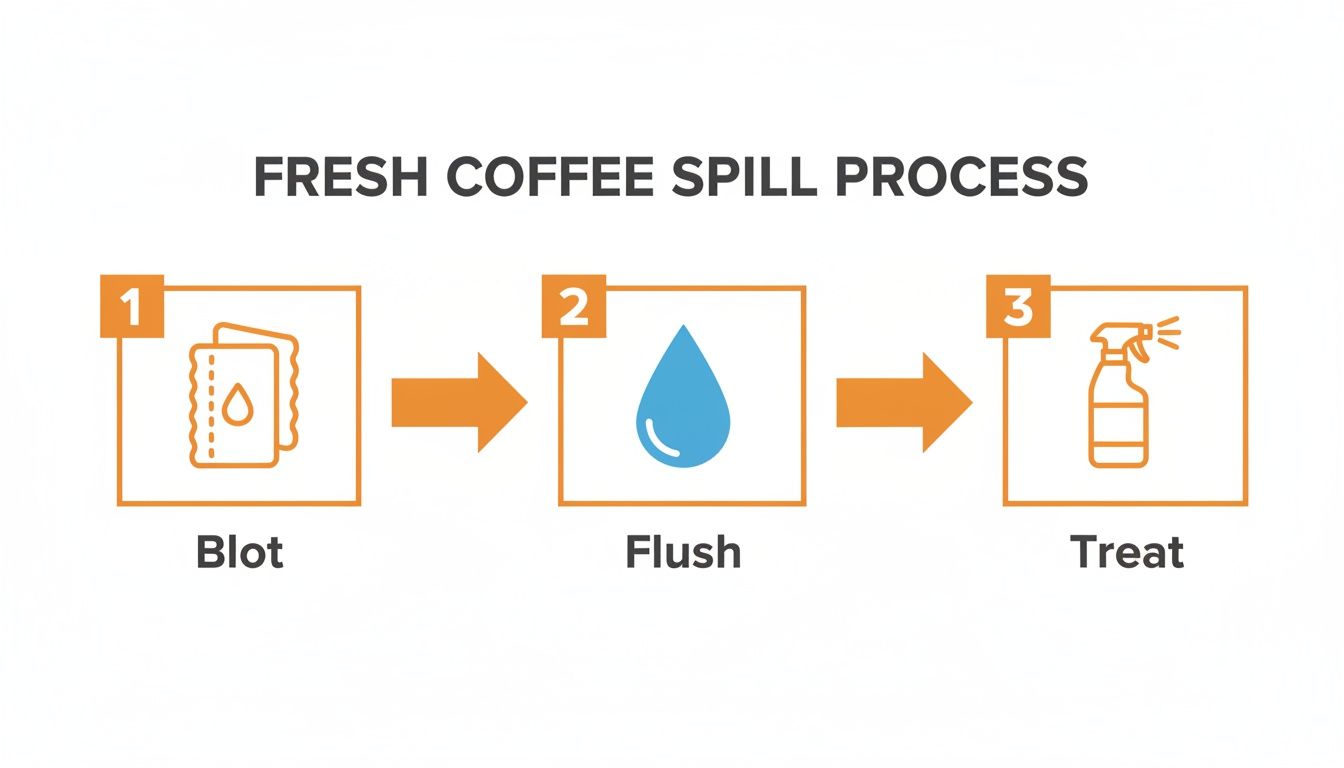
As you can see, the order matters. Blotting first is non-negotiable. If you pour water on a big puddle of coffee, you're just creating a bigger, more diluted mess to deal with.
The Dos and Don'ts of Damage Control
Knowing what not to do is just as important as knowing what to do. The wrong move can set a coffee stain for good, turning a simple accident into a real headache.
To help you react correctly under pressure, here’s a quick-reference table comparing the immediate steps for different surfaces.
Emergency Response for Fresh Coffee Spills
| Surface Type | First Action (Within 2 Minutes) | What to Avoid |
|---|---|---|
| Clothing | Blot with a dry, white cloth. Then, run cold water through the back of the stain. | Rubbing the fabric vigorously. Using hot water. |
| Carpet | Blot repeatedly with a thick towel (stand on it for pressure). Dab with cool water. | Scrubbing the pile. Using colored soap or harsh cleaners. |
| Upholstery | Blot gently with a paper towel. Lightly spritz with cool water and continue blotting. | Over-saturating the fabric. Using heat from a hairdryer. |
This table underscores a few universal rules: always blot first, always use cool water, and never, ever scrub.
Here are a few more critical tips to keep in mind:
- DO use a plain white cloth or paper towel. You don't want to deal with dye transfer from a colored towel on top of the coffee stain.
- DON'T use hot water. Heat is your enemy here. It can cause a chemical reaction with the tannins in coffee, essentially "cooking" the stain right into the fibers.
- DO work from the outside of the stain toward the center to keep it from spreading.
- DON'T immediately reach for colored soaps or aggressive chemical cleaners. They can bleach your fabric or leave a sticky film that just attracts more dirt later.
In my experience, the single biggest mistake people make is scrubbing a fresh spill. This just forces the coffee deeper into the carpet pile or the weave of the upholstery, making it a much tougher job for even a professional to get out.
When coffee hits your carpet, that gentle blotting and flushing technique is everything. Knowing how to correctly get a stain out of the carpet without causing more damage is a skill every homeowner should have. Acting fast and using the right method will dramatically boost your chances of getting that stain out completely, saving you a lot of stress down the road.
Removing Coffee Stains from Carpets and Rugs
That moment when coffee spills on the carpet can trigger instant panic. It feels like a permanent disaster, and for good reason. Coffee is packed with dark tannins, which are nature's own little dyes, and your carpet fibers are all too happy to grab onto them.
But don't reach for the scrub brush just yet. Two of the biggest mistakes people make are scrubbing furiously and soaking the area with water. Scrubbing just damages your carpet fibers and grinds the stain deeper into the padding. Soaking it creates its own set of problems, like ugly watermarks, mildew growth, and "wicking"—that frustrating phenomenon where the stain magically reappears as the carpet dries.
Your Go-To DIY Carpet Stain Solution
For most synthetic carpets, a simple homemade solution can be your best friend. But first, a word of caution: always, always do a quick spot test on a hidden area of your carpet. Under the sofa or inside a closet is perfect. You need to be sure the solution won't cause any discoloration.
Once you know it’s safe, mix up your cleaner. It’s incredibly simple.
- Start with one tablespoon of plain white vinegar and one tablespoon of liquid dish soap.
- Add two cups of warm water.
- Give it a gentle stir. You want it combined, not a bubbly mess.
Now, grab a clean white cloth and dampen it with the solution. Never pour the mixture directly onto the carpet. Gently blot the stain, working from the outside edge toward the center to keep it from spreading. You'll see the coffee transfer to your cloth. As it does, switch to a clean part of the cloth so you're not just dabbing the stain back on. Keep at it until the spot is gone.
Next, you'll want to "rinse" the spot by dabbing it with a fresh cloth dampened with a little cool water. This removes any leftover solution. Finally, blot the area with a dry towel. For best results, lay the dry towel over the spot and place something heavy on it for an hour or so. This will pull out as much moisture as possible. Knowing how to properly get coffee stains out of carpets is key to making sure you don't leave any residue behind.
Why Some Stains Keep Coming Back
Have you ever cleaned a spot, felt proud of your work, and then watched it reappear the next day? You're not alone. This is usually because of sticky, soapy residue left behind by store-bought cleaners.
The global stain remover market is massive, expected to hit USD 31.32 billion by 2030, but so many of these products just don't deliver. They often leave a soapy film that acts like a dirt magnet. In fact, many treated stains have a 35% reappearance rate within just a month because of this sticky problem. You can dig into more of these industry stats over at Grandview Research.
This is exactly why a simple vinegar and water solution often works better—no sticky residue. But sometimes, a DIY approach isn't enough, especially if the stain is old, large, or has soaked deep into the carpet padding.
A professional low-moisture cleaning method is the best way to tackle deep-set stains. It uses advanced technology to lift the stain from the very base of the fibers and extract all the cleaning solution, ensuring no residue is left behind to attract future dirt.
Treating Coffee Stains on Clothing and Fabrics
When coffee hits your shirt, the fabric's weave acts like a tiny net, snagging those dark pigments. The good news? Most clothing is a lot more forgiving than carpet, but you have to use the right technique. A drip on your favorite blouse doesn’t have to spell disaster.
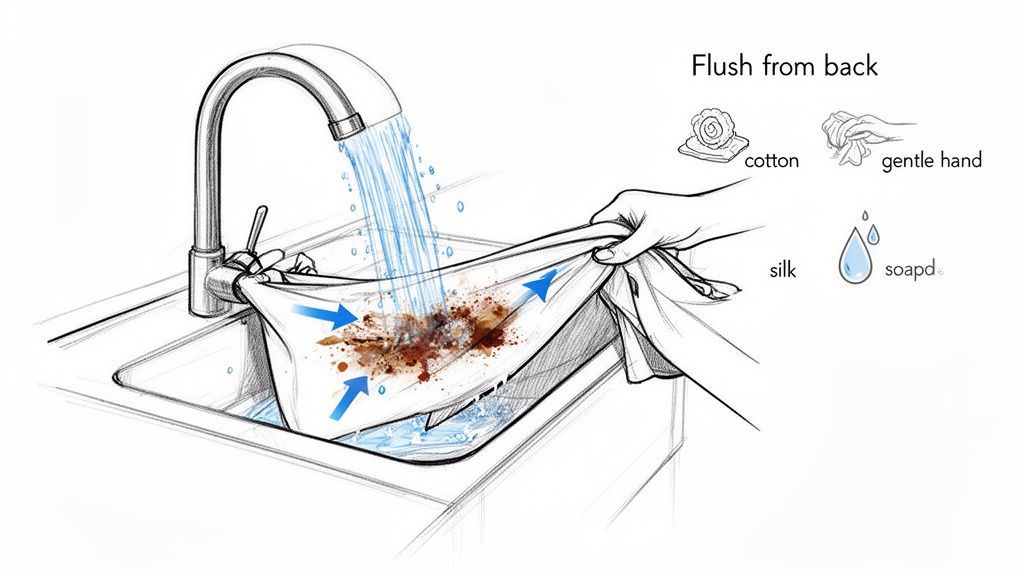
The absolute first thing you must do is flush the stain with cold running water. But here’s the trick I’ve learned over the years: turn the garment inside out and run the water through the back of the stain. This pushes the coffee particles back out the way they came in, instead of forcing them deeper into the fibers.
Creating a Simple and Safe Stain Paste
Once you've flushed it, you can whip up a gentle but powerful pre-treatment paste using stuff you already have in your kitchen. There’s no need to reach for harsh chemicals that could ruin delicate fabrics.
For most everyday fabrics like cotton or polyester, this simple mix does the trick:
- Mix one part clear liquid dish soap with three parts cold water.
- Gently work the solution into the stained area with your fingers.
- Let it sit for about five to ten minutes. This gives it time to break down the oils in the coffee.
This approach is so much safer than just grabbing a random household cleaner. Coffee stains are a massive headache for consumers, fueling a stain remover market that's projected to grow by USD 7.25 billion between 2023 and 2028. But even with all the commercial powders and liquids out there, their effectiveness can vary wildly—sometimes by as much as 20-40%. You can learn more about these market trends and analysis at Technavio. This makes a reliable DIY method like this a fantastic first line of defense.
For tougher spots on more durable fabrics, a paste made from baking soda and a little water can give you some gentle scrubbing power.
Here's the biggest mistake people make: throwing a stained piece of clothing straight into a hot dryer. That heat will permanently set the coffee tannins into the fabric, making the stain almost impossible to get out. Always, always check that the stain is completely gone before you even think about drying it.
Handling Different Fabric Types
Not all fabrics are created equal. What works for a rugged cotton t-shirt could destroy a silk blouse, so you have to adjust your game plan based on the material.
Durable Fabrics (Cotton, Linen, Synthetics):
These tougher materials can easily handle the dish soap solution and a regular wash. After you pre-treat the spot, just toss the item in the laundry using the coldest water setting allowed on the care tag.
Delicate Fabrics (Silk, Wool):
For these, you want to avoid rubbing entirely. After flushing with cold water, gently blot the stain with a mix of equal parts white vinegar and water. Rinse it thoroughly with more cold water before washing on the delicate cycle or by hand, whatever the tag says.
Once you’ve washed any garment, hold it up to a bright light while it’s still wet and give that spot a good inspection. If you can still see any hint of the stain, repeat the pre-treatment process and wash it again. A little patience at this stage is what saves your favorite clothes from a permanent coffee mark.
Cleaning Coffee Spills from Upholstery and Furniture
Spilling coffee on your favorite armchair or couch feels like a special kind of disaster. Unlike a shirt, you can't just toss it in the washing machine. Getting a stain out of upholstery is all about a careful, measured approach that protects not just the fabric you see, but the padding underneath.
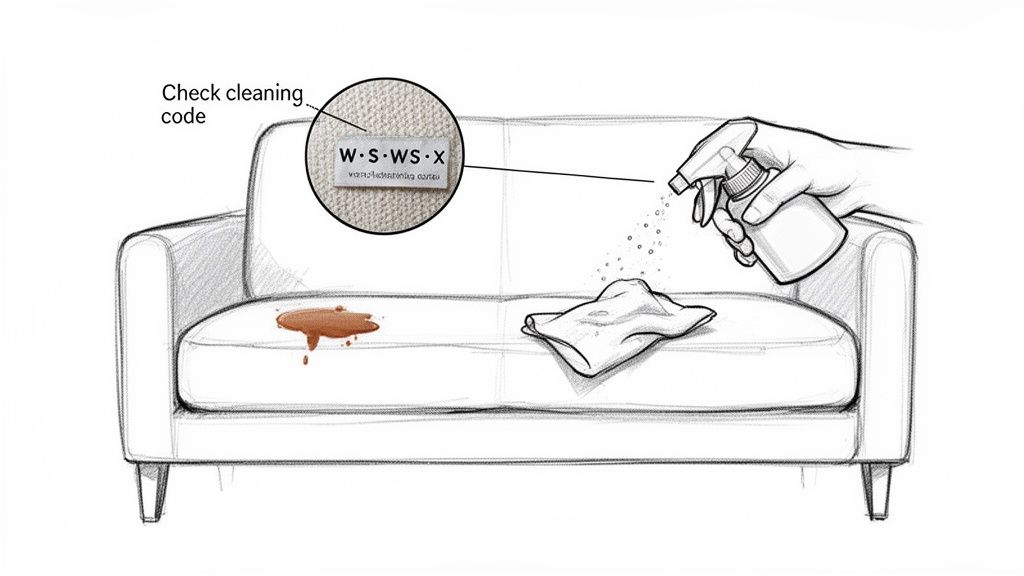
Before you touch that stain with anything, your first mission is to find the manufacturer's cleaning tag. It's usually tucked away under a cushion or on the frame. This little tag holds the most critical piece of information you'll need: the cleaning code.
This code tells you exactly what you can—and absolutely cannot—use to clean the fabric. Ignore it, and you risk turning a small coffee spot into a giant water ring, a bleached-out patch, or a mess of bleeding colors.
Decoding Upholstery Cleaning Codes
Think of these codes as your furniture's care instructions. Using the wrong product can cause irreversible damage, so this step is non-negotiable. Here's a quick guide to what those letters actually mean.
| Cleaning Code | What It Means | Safe Cleaning Solution |
|---|---|---|
| W | "Water-Based Cleaner" | You're in luck! Water and water-based cleaning solutions are safe to use. |
| S | "Solvent-Based Cleaner" | Water is the enemy here. Use only water-free, dry-cleaning solvents. |
| W/S | "Water or Solvent" | You have options. Both water-based and solvent-based cleaners are safe. |
| X | "Vacuum Only" | Stop. Do not use any liquid. Professional cleaning is your only safe bet. |
See an "X" on that tag? Your DIY journey ends here. Trying to clean this yourself will almost certainly leave a permanent mark. This is a job for a professional upholstery cleaner, period. If you have a "W" or "W/S" code, you can move forward with a very gentle, low-moisture cleaning method.
The Gentle Approach to Upholstery Stains
For any fabric labeled with a "W," your best friend is a simple mix of clear dish soap and cool water. Don't just pour it on! The trick is to create foam.
Grab a small bowl, add a cup of water and just a couple of drops of soap. Then, use a whisk to whip it up until you have a nice head of suds. You're going to use only the foam, not the watery part.
Using a clean, white cloth, apply just the suds to the coffee stain. The key here is using as little moisture as possible to keep from soaking the cushion padding, which can lead to mildew. Gently dab the stain from the outside edges inward to prevent it from spreading. Never rub or scrub!
Once you've treated the spot, take a second cloth, dampen it slightly with plain water, and blot the area to "rinse" away the soap residue. Finish by pressing a dry towel firmly onto the spot to pull out as much moisture as you can.
You can find more detailed tips on the best techniques in our full guide on how to clean your couch upholstery.
A Word of Caution: Even if a delicate or vintage piece of furniture has a "W" code, it's often smarter to call in an expert. The risk of creating water rings or damaging fragile, older fibers is just too high. A professional low-moisture cleaning is the safest way to protect your investment.
You’ve blotted, mixed your special concoction, and scrubbed with everything you’ve got, but that stubborn brown shadow of your morning brew just won't budge. It's a frustrating moment, realizing your best efforts might not be cutting it. Knowing when to throw in the towel is just as critical as knowing how to start.
Pushing forward with ineffective home remedies can do a lot more harm than good. You could end up driving the stain deeper into the fibers, damaging the carpet itself, or even setting the discoloration permanently. If you’ve tried your go-to methods and that stain is still staring back at you, it’s time to stop and rethink the game plan.
Signs It's Time to Call in a Pro
Sometimes, the spill itself or the material it landed on puts the problem way beyond a simple DIY fix. Calling an expert isn’t admitting defeat; it’s a smart move to protect your furniture and floors. This is especially true for bigger items where a mistake can be costly. When your own efforts come up short, a service that offers professional carpet and furniture cleaning services can get the job done right without the risk.
Here are a few classic scenarios where professional help is your best bet:
- The Stain Is Old and Set-In: A coffee stain that’s been hanging around for weeks (or months) has had plenty of time to chemically bond with the fibers. This makes it incredibly tough to remove without powerful, specialized equipment.
- It Was a Big Spill: If you knocked over a whole mug, that coffee didn't just stain the surface. It soaked deep into the carpet padding or upholstery foam. DIY methods can’t reach that far, which leads to "wicking"—where the stain mysteriously reappears as the area dries.
- The Fabric Is Delicate: Materials like silk, wool, velvet, or any upholstery with an "S" or "X" on the cleaning tag should never be treated with water-based home remedies. Professionals have the right solvents and low-moisture tools to handle these tricky fabrics safely.
The real secret weapon professionals have is their extraction technology. A home attempt often leaves cleaning solution and residue behind. A pro's equipment, on the other hand, flushes the fibers with a rinsing agent and then uses powerful suction to pull out all the liquid, leftover residue, and stain particles. Nothing gets left behind to cause problems later.
Why That Store-Bought Cleaner Might Let You Down
It’s tempting to just grab a bottle of stain remover at the store, but many of these products end up creating brand new problems. Most over-the-counter liquid removers use harsh chemicals that might dissolve the stain, but they leave behind a sticky, soap-based residue. This residue acts like a dirt magnet, causing the spot to get dirty again in no time.
Research backs this up. One study on commercial whitening products found that some only removed 60-70% of coffee stains on certain surfaces. It’s a perfect example of why our own efforts often don’t deliver a complete clean. For folks in the Buford area, local pros who have been in business since 2004 use advanced, low-moisture methods with citrus-based cleaners. These skip the soaps entirely, so you never get that sticky residue, and the clean is deeper and lasts longer. You can read more about the issues with commercial stain removers on Arizton.com. When you're facing a coffee stain that refuses to leave, bringing in a pro ensures it’s gone for good.
Common Questions About Coffee Stain Removal
Even with the best guides, real-world spills bring up some tricky questions. You’re not alone if you’ve followed all the steps and still feel like you're missing something. Getting to the bottom of these common problems is the key to finally getting those coffee stains out without making frustrating mistakes.
Let's dig into the questions I hear most often from homeowners battling a stubborn coffee spot. The right answer can save you a ton of time and prevent you from accidentally damaging your favorite things.
Can I Use Hot Water on a Coffee Stain?
This is probably the most common—and most damaging—mistake people make. The answer is almost always a hard no, especially on clothing or natural fibers like wool.
Think of it this way: hot water can actually "cook" the stain right into the fabric. It chemically changes the tannins in the coffee and any proteins from milk, setting the stain permanently. It's like trying to un-bake a cake. Once it’s set, it’s set for good.
Always, always start with cold water. A good flush of cold water from the back of a garment helps push the coffee particles out instead of deeper in. For tough synthetic carpets, you might get away with using warm (never hot) water in a cleaning solution, but only after you’ve blotted up every last drop of the initial spill. Cold water is your safest first move, every time.
Does Baking Soda and Vinegar Really Work on Old Stains?
A simple paste made from baking soda and white vinegar can be surprisingly effective on older, set-in coffee stains, but its success isn't a sure thing. The vinegar's mild acidity helps break down the hardened coffee tannins, and the baking soda acts as a gentle abrasive to lift the gunk from the fibers. It's a great first-line defense for old spots before you try something stronger.
However, it definitely has its limits. On something porous like a deep-pile carpet, this DIY trick might only lighten the stain instead of removing it completely. If you've tried it once or twice without seeing a big difference, it's best to stop. You don't want to damage the carpet fibers by scrubbing too much.
The reason this method often fails on carpets is that the stain has soaked deep into the carpet backing or even the padding underneath. A surface treatment just can't reach that far, which is why professional extraction is often the only way to get it all out.
How Do I Remove Coffee with Milk and Sugar?
Ah, the creamy, sweetened coffee spill. This creates a "combination stain" that's a bit more complicated. You're not just fighting the brown tannins from the coffee; you're also dealing with proteins from the milk and sticky sugars. Each of these components needs a different approach.
Here’s your game plan:
- First, gently scrape off any sticky gunk from the surface. A dull knife or the edge of a credit card works well.
- Next, attack the milk and sugar proteins. Blot the stain with a clean cloth dampened with cold water and a drop of an enzyme-based cleaner, like a clear dish soap. The enzymes are key to breaking down those specific compounds.
- Once the milky, sugary part is gone, you can tackle the leftover brown coffee stain using the standard methods we've already covered.
The absolute golden rule here is to avoid heat at all costs. Heat will set the milk protein almost instantly, and you'll be left with a permanent reminder of your spill.
Why Did My Coffee Stain Reappear on the Carpet?
This is one of the most frustrating things that can happen. You clean a spot, it looks great, and then a day or two later, it's back. This phenomenon is called "wicking," and it happens when a spill soaks deep into the carpet backing and pad.
As the surface of the carpet dries, moisture from below gets drawn up to the tips of the carpet fibers through capillary action, bringing the hidden stain particles right back up with it. It can also happen if you use a soapy, store-bought cleaner that leaves behind a sticky residue, which then attracts new dirt like a magnet.
This is a dead giveaway that the spill was much larger than it looked on the surface. And while we're talking about cleaning, remember that keeping your coffee machine clean can prevent other issues. You can learn more about choosing effective cleaning products for coffee equipment to keep your whole setup in top shape.
When wicking happens, the only real solution is a professional cleaning. A pro has the powerful extraction equipment needed to pull the entire stain out from the padding up. At Citrus Carpet Cleaning Buford, our low-moisture, residue-free process is specifically designed to prevent wicking and make sure that when a stain is gone, it’s gone for good. Visit us at https://citruscarpetcleaningatlanta.com to get your free EXACT-imate today.