

How long does it take for carpet to dry after cleaning? The answer can be anything from a quick 1–2 hours to a painfully long 48 hours. This huge difference almost always comes down to the cleaning method used, the humidity in your home, and how much air is flowing over the carpet.
Your Complete Guide to Carpet Drying Times
After a professional cleaning, waiting around for your carpet to dry can feel like an eternity. But the question "how long for carpet to dry" is about more than just convenience—it's about protecting your investment and your home's health.
A carpet that stays damp for too long is the perfect breeding ground for mold and mildew. Before you know it, you're dealing with musty odors and potential health issues. Nobody wants that.
Understanding the typical drying timeline is your best defense, and the cleaning method you choose is the single biggest factor. Traditional steam cleaning, while it can get things clean, absolutely soaks your carpet fibers and, more importantly, the padding underneath.
The Impact of Cleaning Methods on Drying Time
Just how long are we talking? Research from industry groups shows that old-school hot water extraction (steam cleaning) can easily take 12 to 24 hours to dry completely. If you live in a humid climate, that can stretch to a full 48 hours. It's no wonder that a staggering 70-80% of homeowners get frustrated with these long wait times. You can dig into these carpet cleaning market insights on Arizton.com to see for yourself.
To give you a clearer picture, let's break down the typical drying times for different methods.
Carpet Drying Time Comparison by Cleaning Method
This table gives a quick overview of what to expect from the most common professional and DIY carpet cleaning techniques.
| Cleaning Method | Typical Drying Time | Water Usage |
|---|---|---|
| Low-Moisture Cleaning | 1–2 hours | Very Low |
| Dry Compound Cleaning | 30 minutes – 1 hour | None |
| Hot Water Extraction (Steam) | 12–24 hours | Very High |
| DIY Rental Machines | 24–48 hours | High |
As you can see, the difference in water usage directly translates to how long you're stuck waiting for your floors to be usable again.
This infographic really drives the point home, showing a side-by-side comparison.
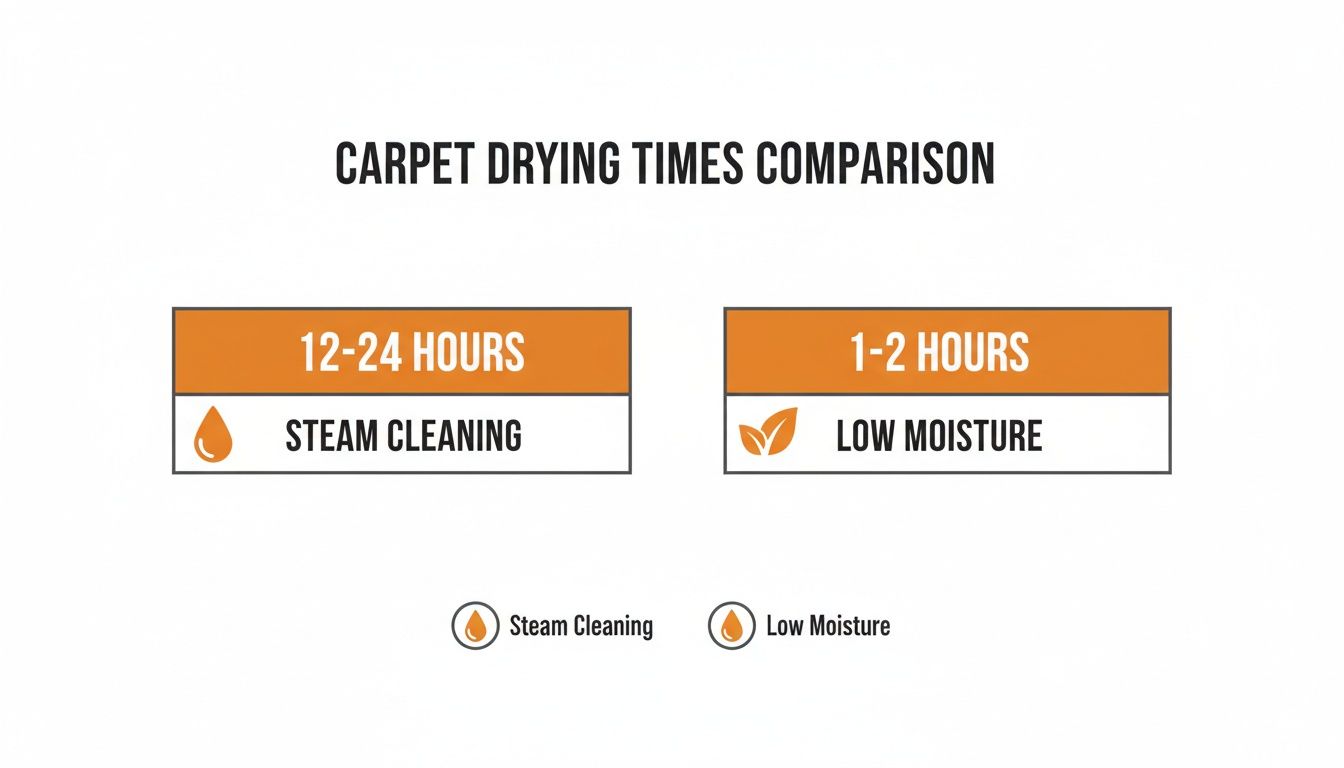
The difference is dramatic. Modern low-moisture methods slash that wait time, which significantly reduces the risk of all the problems that come with prolonged dampness.
Here in Buford, where humidity can be a real challenge, choosing a low-moisture cleaner like Citrus Carpet Cleaning means your floors are clean, dry, and ready for you to walk on in just a couple of hours. This guide will walk you through all the key factors that control your carpet's drying speed and give you some real, actionable tips to speed things up.
Why Cleaning Methods Dictate Drying Speed
Think about drying two shirts. One was dunked in a bucket of water, and the other was just misted with a spray bottle. It's pretty obvious which one will be wearable first, right?
That simple idea is exactly why your choice of carpet cleaning method is the single biggest factor in how long your floors will be out of commission. It all comes down to how much water a technique dumps into your carpet fibers—and more importantly, the padding underneath. More water means a longer wait.
Hot Water Extraction: The Soaking Method
Hot Water Extraction (HWE), which everyone calls steam cleaning, is the heavyweight champ when it comes to water usage. This method blasts a high-pressure mix of hot water and soap deep into your carpet to loosen up dirt. Then, a powerful vacuum tries to suck all that dirty water back out.
While it can get things deep-down clean, its biggest flaw is that it completely saturates your carpet. No matter how good the equipment is, it’s impossible to pull out all that water. The result? Your carpet stays damp for a long, long time—usually 8 to 24 hours.
Very Low Moisture: A Modern Approach
On the flip side, you have modern techniques like Very Low Moisture (VLM) cleaning, which works on a "less is more" philosophy. Methods like encapsulation use special polymers that grab onto dirt with just a tiny bit of water. The polymers crystallize around the soil, and once dry, you just vacuum it all away.
Because it uses so much less water, VLM delivers incredibly fast drying times, typically just 1 to 2 hours. You can see a detailed comparison between VLM and traditional steam cleaning to really get into the nitty-gritty of why the difference is so huge. The goal isn't just to clean the surface; it's to do it without creating a soggy mess that causes a whole new set of problems.
A key industry report highlights this shift: while professional steam cleaning is still used in about 40% of jobs, its lengthy 8-24 hour drying time is a major drawback. In contrast, low-moisture alternatives can dry in as little as 30-90 minutes, making them a top choice for commercial spaces where quick turnaround is critical. You can learn more about these carpet cleaning service market trends at Grandview Research.
The DIY Dilemma: Risk of Over-Saturation
Finally, let's talk about those rental machines you see at the grocery store. They seem convenient, but they often lack the powerful vacuum suction that professional truck-mounted systems have. You end up with a machine that pumps out a ton of water but can't pull it back out effectively.
That's a recipe for disaster. Carpets cleaned with these rental shampooers can take the longest to dry, sometimes 24 to 48 hours or even more. This extended dampness doesn't just keep the room off-limits; it dramatically increases the risk of mold, mildew, and that awful musty smell developing deep in your carpet and padding. Choosing a cleaning method is about more than just getting rid of dirt—it’s about getting your room back quickly and safely.
The Hidden Factors Controlling Drying Time
The cleaning method we talked about sets a baseline for your drying time, but honestly, it's only half the story. The real answer to "how long will my carpet take to dry?" depends on a unique set of conditions right there in your home.
Think of it like hanging your laundry out on a clothesline. A sunny, breezy day will have those clothes bone-dry in no time. But a still, humid day? You'll be waiting forever. Your carpet is no different.
There are a handful of factors that team up to either speed things up or drag them out. Once you get a handle on these, you can figure out why your carpet might be taking longer than expected to dry and actually do something about it. These variables fall into two main buckets: what’s going on in your house, and what your carpet is actually made of.
Your Home's Unique Environment
The atmosphere inside your room plays a massive role in how quickly moisture can escape the carpet fibers. Just like that clothesline, getting the conditions right can shave hours off your wait time.
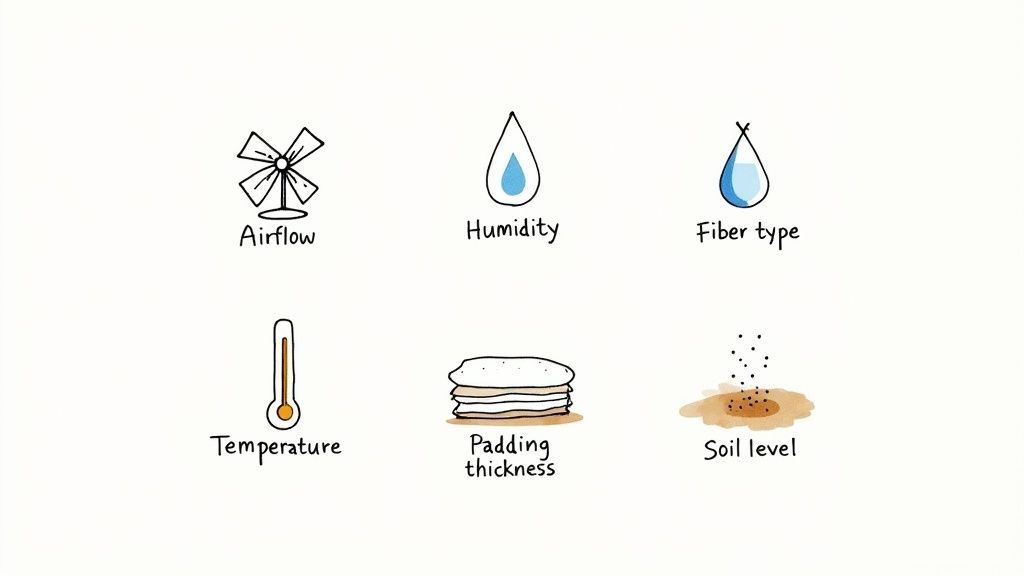
- Airflow: This is the big one. If you have stagnant, moist air just sitting on top of your carpet, the water in the fibers has nowhere to go. It can't evaporate. You need movement. Turning on some fans or even cracking a window creates airflow that whisks away that damp air, replacing it with drier air and kickstarting the evaporation process.
- Humidity: High humidity is the enemy of fast drying, plain and simple. When the air is already full of moisture (think of a muggy Georgia summer day), it can’t absorb much more from your carpet. For the best results, you want your indoor humidity to be below 50%.
- Temperature: Here's a simple fact: warmer air holds more moisture than cooler air. Keeping the room at a comfortable 70-72°F creates the ideal conditions for evaporation to happen efficiently. Just don't crank the heat way up—sometimes that can just make the room more humid and work against you.
Your Carpet's Physical Characteristics
Not all carpets are created equal, especially when it comes to holding onto water. The materials and construction of your flooring have a direct impact on how fast it dries.
Think of your carpet and padding as a big sponge. A thin, synthetic kitchen sponge dries out pretty fast. But a thick, dense natural sea sponge can stay damp for what feels like an eternity. The same principle applies to your flooring.
- Carpet Fiber Type: Natural fibers like wool are super absorbent. They can hold a ton of water, which makes them notoriously slow to dry. On the other hand, synthetic fibers like nylon and polyester are way less porous, so they let go of moisture much more quickly.
- Padding Thickness and Density: This is the ultimate hidden factor. A thick, plush carpet pad can soak up and hold onto a shocking amount of water. Even when the carpet surface feels dry to your hand, the padding underneath can stay saturated for days. This creates a hidden risk for that dreaded musty smell. A lingering damp odor is a serious red flag, and you'll want to know how to get mildew out of carpet before it turns into a much bigger headache.
- Soil Level: Finally, it just makes sense that a really dirty carpet needs more water and a more aggressive cleaning to come clean. All that extra moisture naturally means it's going to take longer to dry than a carpet that just needed a light refresh.
Proven Techniques to Dry Your Carpet Faster
So, now that we've covered what makes a carpet dry fast or slow, let's talk about how you can take control of the situation. You don't have to just sit around and watch the clock. By making a few smart moves, you can create the perfect environment to get that moisture out in record time.
Think of it like this: you need to give that dampness an easy escape route. By managing the airflow, temperature, and humidity, you can turn a slow, frustrating wait into a quick and efficient process. The goal here is simple: get your room back to normal as fast as possible.
This push for quicker drying is a huge deal in the professional cleaning world. The entire USD 776.62 million carpet cleaner market is shifting toward faster, more efficient solutions. While old-school steam cleaning can leave you waiting 4-12 hours, newer methods are gaining ground because they get the job done in as little as 20-60 minutes.
Create an Airflow Vortex
Stagnant, moist air is your absolute worst enemy when you're trying to dry a carpet. Getting that air moving is the single most effective thing you can do. It's a game-changer.
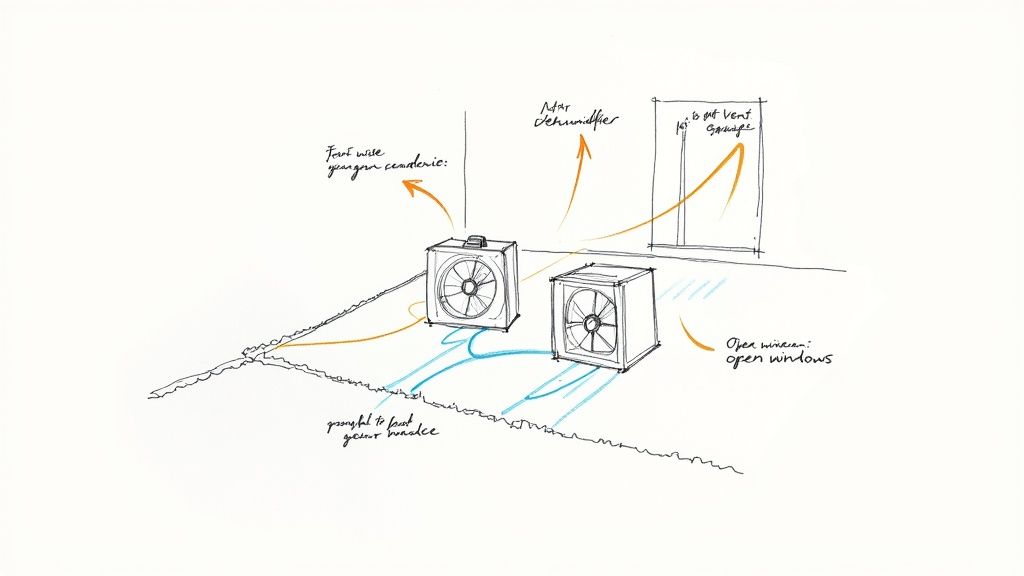
- Bring in the Fans: Turn on your ceiling fans and grab any box fans or oscillating fans you have. Don't just point them straight down at the carpet, though. You want to aim them across the surface of the floor. This creates a sweeping, vortex-like motion that literally whisks the damp air up and away.
- Open the Windows: As long as it isn't humid and rainy outside, opening windows on opposite sides of the room is a fantastic way to create a natural cross-breeze. This simple trick can make a massive difference in circulation.
When it comes to speeding things up, more air movement is always better. You can check out some effective methods for increasing room airflow, even if you don't have an air conditioner, to help that moisture evaporate faster.
Use Your HVAC System to Your Advantage
Your home’s HVAC system is a seriously powerful tool for controlling your indoor climate. Don't forget to put it to work!
- Run the AC in Summer: During those hot, humid months, your air conditioner is your best friend. It's basically a giant, whole-house dehumidifier, pulling tons of moisture out of the air. This makes it much, much easier for the water in your carpet to evaporate.
- Switch to the Fan Setting: If it’s not hot enough to blast the AC, just turning your system’s fan to "On" will help circulate air throughout the entire house. This prevents that damp, heavy air from getting trapped in one room.
Bring in a Dehumidifier
If you want a targeted attack on moisture, especially on a rainy or muggy day, nothing beats a good dehumidifier. These machines are designed for one job: pulling water straight out of the air.
Plop one right in the middle of the room, and it will drastically lower the humidity, creating the perfect dry environment for your carpet to breathe.
Pro Tip: Try to keep the room temperature right around 70-72°F. This is the sweet spot. It's warm enough for the air to hold moisture, but not so hot that you end up with a stuffy, humid mess that actually slows things down.
Knowing how to juggle these factors is a big part of the professional cleaning process. For example, understanding the ideas behind dry carpet cleaning techniques really shows why using less water from the get-go is often the smartest strategy for a quick and painless experience.
To help you get your carpets dry in a flash, we've put together a quick guide on the most effective techniques you can use right at home.
Effective Carpet Drying Techniques and Their Impact
| Technique | Primary Mechanism | Estimated Time Reduction |
|---|---|---|
| Use Box & Ceiling Fans | Increases airflow across the carpet surface, accelerating evaporation. | 30-50% |
| Run a Dehumidifier | Directly removes moisture from the air, lowering ambient humidity. | 25-40% |
| Turn on Air Conditioning | Cools and dehumidifies the air, creating an ideal drying climate. | 20-35% |
| Open Windows (Low Humidity) | Creates a natural cross-breeze to replace moist air with dry air. | 15-30% |
| Use HVAC Fan Setting | Circulates air throughout the home, preventing moisture buildup. | 10-20% |
By combining two or more of these methods, you're not just waiting for your carpet to dry—you're actively making it happen.
How to Know When Your Carpet Is Truly Dry
So, after all that effort to speed up the drying process, how do you know your carpet is actually ready for real life to resume? A quick touch with your hand just isn't going to cut it.
It's a classic rookie mistake. The surface fibers might feel dry, but the real enemy—that sneaky, lingering moisture—is often hiding deep down in the padding.
Putting furniture back too soon is a recipe for disaster. Heavy couches or tables can leave permanent dents in damp carpet fibers. Even worse, metal legs can leave rust stains, and the dyes from wood furniture can bleed, leaving you with permanent marks on your freshly cleaned floor. Giving it enough time is absolutely critical.
Simple DIY Tests for Dryness
Before you declare victory and start moving everything back, run a couple of simple checks to be absolutely sure. These methods go way beyond a simple hand-pat and give you a much clearer picture of what's happening beneath the surface.
-
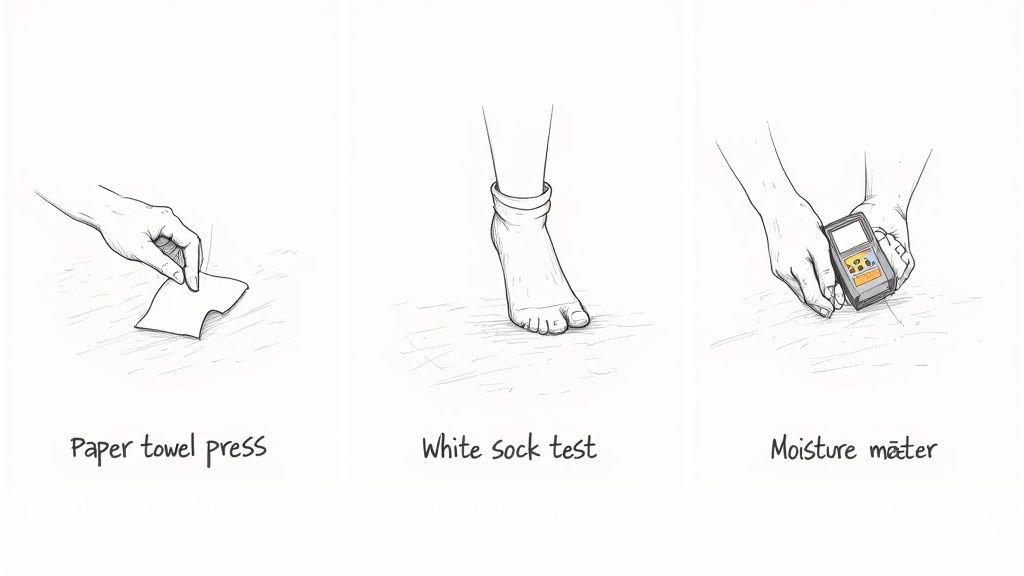
The Paper Towel Press: Grab a few folded, dry paper towels and place them on a high-traffic spot. Now, press down firmly with your whole hand for about 10 seconds. If you see even a hint of moisture on those towels, your carpet needs more time.
-
The White Sock Walk: This is my personal favorite. Put on a clean pair of white socks and just walk around the room. Pay extra attention to the corners and areas near baseboards where airflow is usually the weakest. Shuffle your feet a little to create some friction. Any dampness on your socks is a dead giveaway that the carpet isn't fully dry yet.
Don't Forget the Hidden Spots
Remember, moisture doesn't evaporate evenly across the entire floor. You have to double-check the spots that are most likely to hang onto dampness the longest. These are almost always along the walls, deep in the corners, and under any furniture you couldn't move out of the room.
Failing to get your carpet completely dry is like sending a written invitation to mold and mildew. If you don't dry your carpet properly, you risk nasty growth; you can learn how to get mould out of carpet if you find it, but the very first step is always to dry the area completely.
Making sure your carpet is bone-dry is the final—and most important—step of the whole cleaning process. It protects your investment, prevents damage, and keeps your home's air healthy. A little bit of patience right now will save you from massive headaches down the road.
Frequently Asked questions about carpet drying
Even after your carpets are professionally cleaned, a few questions always seem to pop up. Let's tackle some of the most common ones I hear from homeowners.
Getting the right answers helps you sidestep common mistakes and protect your carpet investment.
Is It Safe to Sleep in a Room with a Wet Carpet?
Generally, yes—especially if your cleaner used a low-moisture method. The room is usually ready by bedtime with modern methods that boast a 1-2 hour dry time.
However, if you've had traditional steam cleaning, the high humidity left behind can be a real pain for anyone with asthma or allergies. If that's the case, crank up the AC, get some fans blowing, and crack a window to keep the air moving.
Can a Hair Dryer Speed Up Small Wet Spots?
I get why people think this is a good idea, but please don't do it. A hair dryer puts out concentrated, high heat that can literally melt the synthetic fibers in your carpet. You'll end up with a permanently frizzy, frayed patch.
High heat can also "set" any stains that might be lingering deep down. The much safer play is to blot the spot with a clean towel and aim a small fan at it for some gentle airflow.
What Does a Bad Wet Carpet Smell Mean?
A freshly cleaned carpet should smell, well, clean. Maybe a little fresh, but never funky. If you start noticing a musty, sour, or dirty-sock smell after 24 hours, that’s a huge red flag. It’s the classic calling card of mold or mildew taking root.
This almost always happens when the carpet and, more importantly, the padding underneath got way too saturated and just aren't drying out. If you smell that tell-tale odor, you need to act fast. Go all-in with fans and dehumidifiers. If it doesn't go away, you need to call a professional back immediately to check things out.
Tired of the soggy carpets and musty smells that come with old-school steam cleaning? The team at Citrus Carpet Cleaning Buford uses a low-moisture, citrus-based solution that leaves your carpets truly clean, fresh, and dry in just 1–2 hours. See for yourself and get your home back to normal faster by scheduling your "EXACT-imate" today at https://citruscarpetcleaningatlanta.com.