
So, you've got microsuede furniture. It’s got that luxurious, soft feel that looks incredible, but real life happens. Sooner or later, you're going to be staring down a coffee spill, an ink mark, or a set of muddy paw prints.
The secret to cleaning microsuede isn't complicated. It usually comes down to a simple solution of mild soap and water or a solvent like rubbing alcohol. The real trick is knowing which one to use for your specific piece of furniture. Get it right, and the mess is gone. Get it wrong, and you could end up with a permanent blemish.
Your Guide To Keeping Microsuede Looking New
The biggest mistake I see homeowners make is grabbing the first cleaner they find and scrubbing a stain aggressively. Microsuede’s fibers are tough, but they're also delicate. Scrubbing too hard can crush the nap, leading to a permanent change in how the fabric looks and feels.
Gentle blotting is always the better way to go. You want to lift the stain out, not grind it deeper into the fibers.
This guide is your roadmap to cleaning microsuede the right way, so you can tackle any mess with confidence and keep your furniture looking pristine. Before we dive in, it helps to remember that not all upholstery is the same. Taking a moment for understanding different upholstery materials can give you some great context for why microsuede needs its own special care routine.
What You'll Learn in This Guide
This is more than just a list of tips—it's a complete game plan. We’re going to walk through everything you need to know.
- How to Decode the Care Tag: We'll break down those confusing cleaning codes (W, S, W/S, X) so you know exactly what your furniture can handle. This is the most important first step.
- Tackling Common Stains: I'll give you specific, proven steps for getting out everything from red wine and greasy food to ink and pet messes.
- Restoring That Velvety Texture: Ever clean a spot only to have it feel stiff or look flat? I'll show you the secret to fluffing the nap back to its original, soft state.
- When to Call a Pro: Sometimes, a DIY job isn't the best move. We'll cover the signs that tell you it's time to call in a professional for a low-moisture clean.
Let's get your furniture looking its best.
Microsuede Cleaning At A Glance
Before we get into the nitty-gritty details for every type of stain, here's a quick overview of the process. Think of this as your cheat sheet.
| Step | Action | Key Tip |
|---|---|---|
| 1. Check the Tag | Locate the manufacturer's care tag and find the cleaning code (W, S, W/S, or X). | This code dictates everything. Never use water on an 'S' or 'X' coded fabric. |
| 2. Gather Supplies | Collect your cleaning solution (water/soap or alcohol), microfiber cloths, and a soft brush. | White or light-colored cloths are best to prevent dye transfer. |
| 3. Spot-Test | Apply a tiny amount of cleaner to a hidden spot (like under a cushion). | Wait for it to dry completely to check for discoloration or texture changes. |
| 4. Blot, Don't Rub | Gently blot the stain from the outside in with a clean, damp cloth. | Scrubbing can damage the fibers and spread the stain. |
| 5. Restore the Nap | Once dry, use a soft-bristled brush to gently fluff the fibers in a circular motion. | This brings back that signature soft, velvety texture. |
This table covers the fundamentals for almost any situation. Now, let's dive into the specific techniques you'll need for different types of messes.
Decoding Your Furniture's Care Tag
Before you even think about grabbing a cleaning cloth, the most important clue you need is hiding in plain sight on your furniture. That little care tag is your roadmap, and it tells you exactly how to clean microsuede without making a huge, irreversible mistake.
Ignoring that tag is the fastest way to turn a small spot into a permanent, ugly problem. These codes aren't just gentle suggestions; they're the rules of the road for your fabric's specific composition. To get a handle on the basics, this expert guide on cleaning upholstery like a pro is a great starting point.
Using water on a solvent-only fabric, for example, is a recipe for disaster. You'll likely end up with stubborn water rings and could even damage the material itself.
Understanding The Cleaning Codes
Think of these letters as a simple language. Once you know what they mean, you can clean your microsuede with confidence.
- W (Water-Based Cleaner): This is the code you're hoping for. It's the most common and means you can safely use water and a mild, water-based cleaner. A few drops of dish soap mixed with water often does the trick. You can learn more about this process in our deep dive on safely cleaning 'W' code upholstery.
- S (Solvent-Based Cleaner): This code means water is the enemy. You'll need to use a dry-cleaning solvent or a safe alternative like isopropyl (rubbing) alcohol. If you use water on an 'S' code fabric, you're almost guaranteed to leave a stain.
- W/S (Water or Solvent): You've got options here. You can use either a water-based or a solvent-based cleaner. That said, you still absolutely need to do a spot test first, as some of these fabrics react better to one method over the other.
- X (Vacuum Only): This is the most delicate type of fabric out there. Don't use any liquids on it, period. Cleaning is strictly limited to vacuuming and a light brushing with a soft, non-metallic brush.
This chart breaks down the decision-making process based on what you find on your furniture's tag.
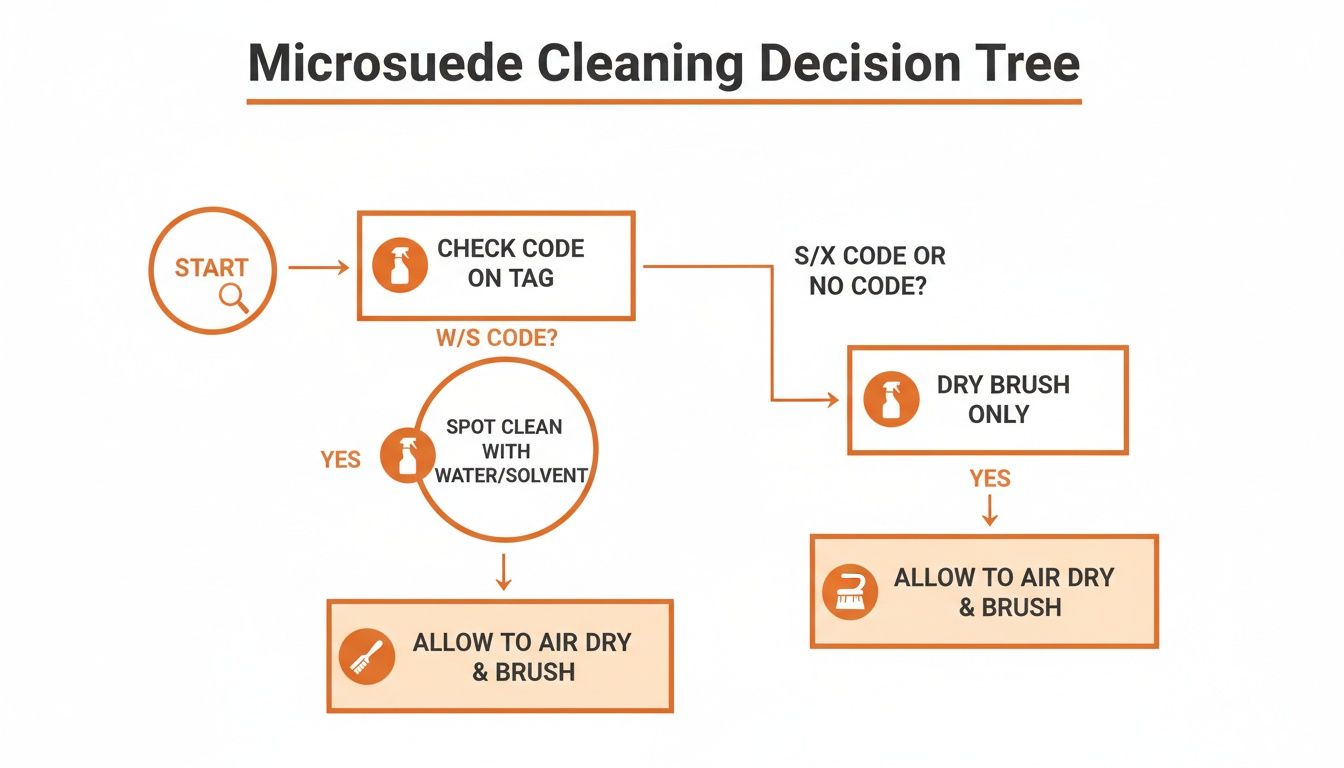
The big takeaway here is that finding the code is the non-negotiable first step. Everything else you do depends on it.
The Non-Negotiable Spot Test
Okay, so you've figured out your cleaning code and have your solution ready. Now for the most important step of all: the spot test. This quick check is your insurance policy against a major cleaning disaster.
Find a hidden area on your furniture—think the underside of a cushion, a seam on the back, or the fabric skirt at the bottom. Apply a small amount of your cleaner to a clean, white microfiber cloth and gently dab the spot.
Now, walk away and let it air dry completely. If you come back and see any color has transferred to the cloth, or if the fabric looks discolored or feels different, stop right there. Your chosen cleaner isn't safe for that fabric.
A successful spot test means the area looks and feels exactly as it did before you touched it. If it passes the test, you can move on to the real stain with confidence.
I can't stress enough how important speed is when a spill happens. Acting within the first 60 seconds can prevent 85% of stains from setting in for good. Microsuede gives you a fighting chance here because its tightly woven fibers have spill absorption rates that are 40% lower than most cotton fabrics. A quick blot is your best friend.
Tackling Common Microsuedes Stains
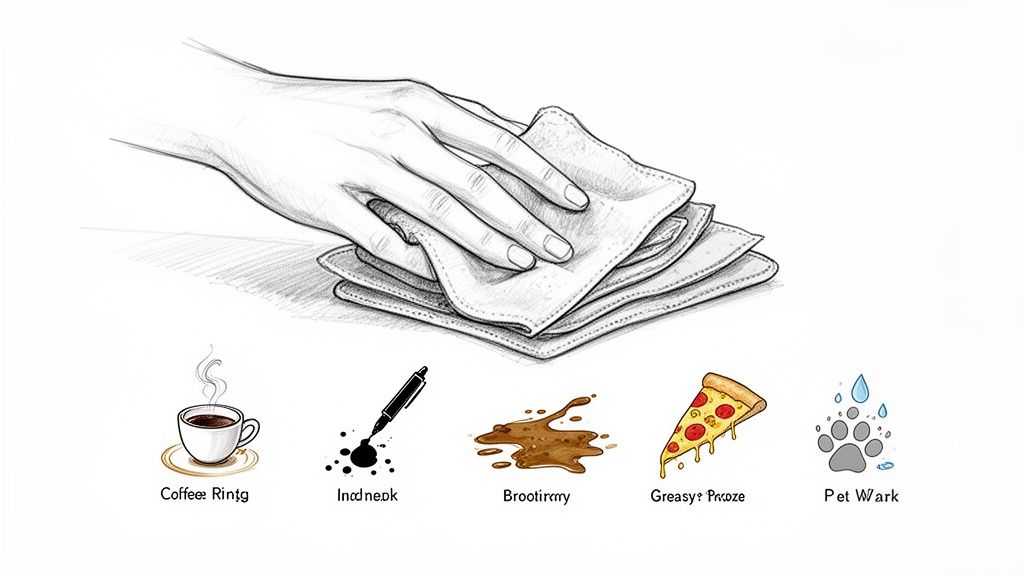
Life happens. And your beautiful microsuede sofa often has a front-row seat to the spills. From a tipped-over coffee mug to a rogue pen mark, stains are just a part of furniture ownership. The good news? Most common messes are manageable if you act quickly and use the right technique.
The universal rule for any stain is simple: blot, never scrub. Aggressively rubbing a stain just grinds it deeper into the fabric's delicate fibers. It can also permanently crush the nap, leaving a flattened, noticeable mark that’s worse than the original stain. Your goal is always to lift the stain out gently.
For any extensive or deeply set-in issues, remember that professional help is often the safest and most effective route. Our detailed guide on how to clean sofas and upholstery dives deeper into when it's best to call in the experts.
Removing Water-Based Stains
This category includes some of the most frequent offenders: coffee, tea, juice, soda, and even muddy paw prints. If your fabric has a ‘W’ or ‘W/S’ code, your approach is pretty straightforward.
First, blot up as much of the liquid as possible with a clean, dry microfiber cloth. Then, mix a tiny amount of mild, clear dish soap with water to create a sudsy solution. Dip a clean cloth into just the suds, not the water itself, and gently dab the stained area.
Always work from the outside edge of the stain toward the center. This little trick prevents the stain from spreading and creating a larger, more obvious ring. Continue blotting with a new, damp cloth to "rinse" the soap out, then press a dry cloth onto the spot to soak up any excess moisture.
Dealing With Ink and Marker Stains
An accidental pen swipe can feel like a total disaster, but it’s often fixable on microsuede with an ‘S’ or ‘W/S’ code. For these types of stains, isopropyl (rubbing) alcohol is your best friend.
Dampen a cotton ball or the corner of a white cloth with the rubbing alcohol. Gently dab at the ink mark, being careful not to press too hard or oversaturate the fabric. You should see the ink start to transfer from the upholstery to your cloth—that's how you know it's working.
Keep rotating to a clean section of the cloth as you go to avoid just smearing the ink back onto the couch. Once the mark is gone, let the area air dry completely. The alcohol will evaporate quickly.
Lifting Greasy Food and Oil Stains
Pizza night can sometimes leave a greasy reminder on your couch cushions. For oil-based stains from food, lotions, or makeup, your first step is to absorb the grease before it sets.
Sprinkle a generous amount of cornstarch or baking soda directly onto the spot. Let it sit for at least 15-20 minutes. This gives the powder time to draw the oil out of the fabric fibers.
The powder will absorb the grease, often clumping up or changing color. That's a great sign that it's working as intended. Once it has sat, just vacuum the powder away using a brush attachment.
After vacuuming, you can treat any remaining discoloration based on your fabric’s care code. For ‘S’ fabrics, a little rubbing alcohol on a cloth does the trick. For ‘W’ fabrics, go back to the sudsy water method we talked about earlier.
Tackling Pet Stains and Odors
When it comes to pet urine, you have to act fast and use the right products. First, blot the area with a clean towel to absorb as much of the liquid as you can. Stand on it if you have to!
Next, you need an enzymatic cleaner specifically designed for pet stains. These cleaners contain enzymes that actually break down the uric acid in pet urine, which is the source of that lingering, stubborn odor. Standard cleaners often just mask the smell, which means your pet will likely return to the scene of the crime.
Apply the enzymatic cleaner according to the product's directions, then blot away the excess. A word of caution: avoid using hot water or steam, as heat can permanently set the protein in the stain, making it impossible to remove. Cold water is always the safer choice for this type of mess.
Water-Based vs. Solvent-Based Cleaning: Getting It Right
Once you’ve figured out your furniture’s care code, you know which cleaning path to take. This isn’t just a friendly suggestion from the manufacturer—it’s a strict rule to keep you from ruining your couch.
Getting this part right is the absolute core of cleaning microsuede properly. If you get it wrong, you’re looking at water rings, weird discoloration, or a stiff, matted texture you can’t fix. Think of it like tossing a "dry-clean only" wool sweater into a hot wash cycle; you know the outcome is going to be bad.
For ‘W’ and ‘W/S’ Coded Fabrics: The Water Method
If your tag has a ‘W’ or a ‘W/S’, you’ve got the green light to use a gentle, water-based solution. The trick here is to work with the suds, not the water itself. The single biggest mistake people make is getting the fabric too wet. That’s a one-way ticket to water stains and, if you’re really unlucky, mildew inside the cushion.
First, grab a bowl of lukewarm water and mix in just a few drops of a clear, mild dish soap. Give it a good whisk until you have a nice, thick layer of foam sitting on top.
Now, take a clean, white microfiber cloth and dip it into just the suds. You want the cloth damp, not sopping wet. Gently blot the stain, always working from the outside edge toward the center to stop it from spreading. The idea is to let the soap lift the stain out, not to push water deep into the cushion’s padding.
For ‘S’ Coded Fabrics: The Solvent Method
When that tag says ‘S’, water is completely off-limits. Seriously, don’t even think about it. For these fabrics, your go-to is either a dry-cleaning solvent or a much more common household item: isopropyl (rubbing) alcohol. Its high alcohol content is perfect because it cleans effectively and then evaporates in a flash, keeping moisture exposure to an absolute minimum.
Before you start, crack a window or turn on a fan. Solvents can have some pretty strong fumes, so you’ll want the room to be well-ventilated.
Next, put a small amount of rubbing alcohol onto a clean, white microfiber cloth. Gently dab at the stain. You’ll see the alcohol start to break it down, transferring the grime from your sofa onto the cloth. As this happens, make sure you keep switching to a clean part of the cloth. Otherwise, you're just rubbing the dirt right back in.
Crucial Pro-Tip: I don’t care which method you use, never pour any cleaner directly onto the microsuede. Always, always apply it to your cloth first. This gives you total control and helps you avoid oversaturating the fabric, which is responsible for an estimated 80% of all microfiber upholstery damage I see.
The tools you use matter, too. A good microfiber cloth, like the ones I recommend, can achieve an impressive 95% microbial reduction. A standard cotton rag? Only about 68%. That difference is huge, especially since getting things too wet can encourage mold growth. You can find more data on the effectiveness of microfiber cleaning methods and why they’re the superior choice for home cleaning.
Restoring Your Microsuede's Soft Texture
Getting the stain out is a huge win, but the job isn't quite finished yet. If you’ve ever cleaned a spot on your couch only to have it dry into a stiff, flat patch, you know exactly what I’m talking about. The final, and arguably most crucial, step in learning how to clean microsuede is bringing back its signature velvety feel.
This is what separates an okay DIY job from a truly professional-looking result. If you rush this part, the fabric can feel crunchy and look matted, which just draws more attention to the area you were trying to fix in the first place. The good news? Bringing back that softness is surprisingly simple.
Let It Dry Properly
Before you can fluff up those fibers, the fabric has to be 100% dry. Seriously, patience is your best friend here. Whatever you do, resist the urge to grab a hairdryer or any other direct heat source. High temperatures can literally melt the ultra-fine fibers, causing permanent damage you can't undo.
The best approach is to just let it air dry. If you want to speed things up safely, you can point a fan at the spot or open a nearby window to get some air circulating. This helps prevent those annoying water rings from forming and gets the fabric ready for the final touch.
Bringing the Nap Back to Life
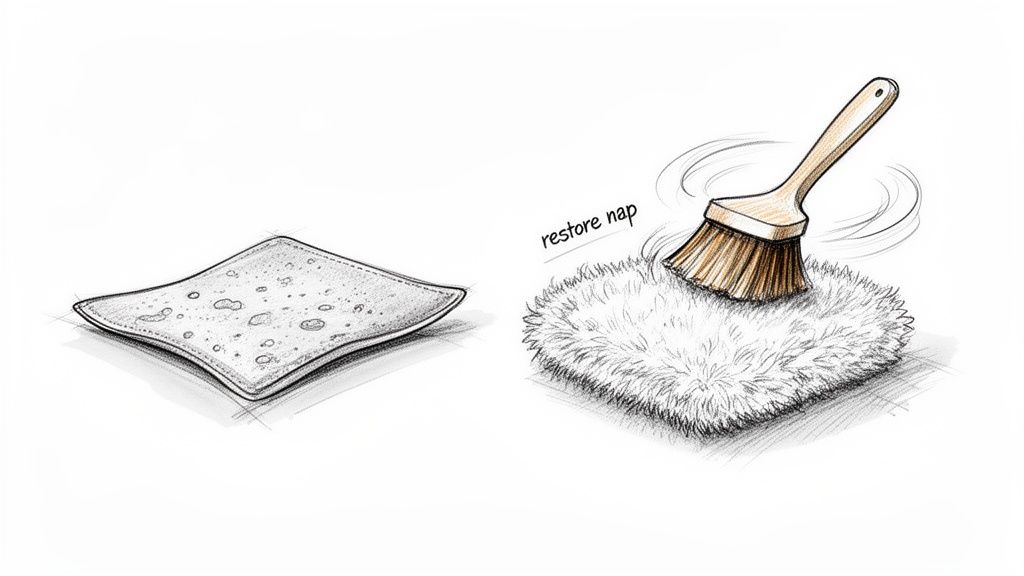
Once the area is completely, bone-dry, it's time to revive the nap. The "nap" is just the term for all those tiny, raised fibers that give microsuede its soft, suede-like texture. Cleaning solutions, especially as they dry, have a tendency to make these fibers clump together and feel stiff.
Your goal here is simple: gently separate and fluff up these fibers without damaging them. This little step is the secret to erasing all evidence of your cleaning efforts, making the fabric look and feel brand new again.
To pull this off, you just need a soft-bristled brush. An upholstery brush is ideal, but a clean shoe brush or even a new, soft-bristled toothbrush will work perfectly in a pinch.
- Go in gentle circles: Lightly brush the dried area using small, overlapping circular motions. Don't press too hard.
- Switch directions: Brush from different angles to make sure you lift the fibers from every which way.
- Feel the difference: Keep brushing until that stiff, crunchy texture is gone and the spot feels just as soft as the rest of the furniture.
This process basically "combs out" the stiffness, restoring the fabric's uniform look and luxurious feel. It’s a technique that echoes what we see in professional cleaning, where the final grooming makes all the difference. In fact, many high-end services focus on leaving no trace of their work, a core idea behind zero-residue carpet and upholstery cleaning.
By taking a few extra minutes to brush your microsuede, you're achieving that same kind of spotless, residue-free finish, ensuring your furniture looks completely untouched. It’s what truly completes the cleaning process.
When Your DIY Efforts Just Aren't Cutting It
You’ve blotted, dabbed, and brushed. You've followed all the steps for how to clean microsuede, but sometimes, a problem is just too big for a home remedy. It's a tough pill to swallow, but knowing when to throw in the towel and call a professional is what separates a clean couch from a ruined one.
Honestly, pushing a DIY fix too far is one of the most common and costly mistakes I see.
Let's say you're dealing with widespread soiling from years of kids, pets, and everyday life. Or maybe a huge spill soaked clear through the cushion. These aren't simple spot-cleaning jobs. If a stain has been sitting there for weeks or months, its chemical makeup has probably bonded with the fabric fibers. At that point, you need specialized solutions, not just dish soap and a prayer. This is especially true if you’re staring at a delicate ‘S’ code fabric and don't feel great about handling potent solvents yourself.
Knowing When to Pick Up the Phone
Sometimes the issue isn't one big, ugly spot but the overall state of the furniture. Over time, body oils, dust, and pet dander build up, leaving the whole piece looking dull and feeling grimy. Trying to tackle an entire sofa with a cloth and a small bowl of cleaner is a recipe for disaster. You’ll almost always end up with a patchy, uneven finish, complete with watermarks and streaks.
That’s when a professional's touch becomes non-negotiable.
Keep an eye out for these red flags:
- Widespread Grime: The arms or headrests have become noticeably darker than the rest of the sofa.
- Lingering Odors: You’ve tried baking soda, but that stubborn pet or smoke smell just won’t quit.
- Water Rings: Your own cleaning attempts have left behind those tell-tale circular stains.
- High-Stakes Fabric: You have an expensive piece of furniture or one with an ‘S’ or ‘X’ cleaning code, and the thought of damaging it makes you break out in a cold sweat.
Why a Low-Moisture Cleaning System Is Your Best Bet
When you decide to call in an expert, don’t just hire any carpet cleaner. You need to find a service that specializes in low-moisture upholstery cleaning. This is totally different from the old-school steam cleaning that blasts your furniture with hot water, which can easily oversaturate microsuede and lead to mildew or even fabric shrinkage.
A low-moisture system, especially one that uses a citrus-based or natural cleaner, is a different beast entirely.
This method uses a tiny fraction of the water, so it cleans deep down in the fibers without soaking the cushion's padding. The payoff? A truly deep clean, much faster dry times—often just 1-2 hours—and zero sticky, soap-based residue left behind to attract more dirt.
Professionals also come armed with an arsenal of pH-balanced, fabric-safe solutions for every kind of stain imaginable, from ink to old pet accidents. They can correctly identify the stain and match it with the right chemical remover—a process that is way too risky to attempt through trial and error at home.
Stepping back and letting an expert take over isn't admitting defeat. It’s making the smartest possible choice for the long-term health and beauty of your furniture.
Still Have Questions About Microsuede Care?
Even after you've got the basics down for how to clean microsuede, a few questions always seem to pop up. It's totally normal. Here are some of the most common ones we get from homeowners, answered straight and simple.
Can I Use a Steam Cleaner on My Microsuede Sofa?
That's a hard no. It might seem like a good idea, but the intense heat and moisture from a steam cleaner can be a disaster for microsuede.
You're looking at a high risk of setting stains permanently, creating ugly water rings, and completely ruining the delicate fibers that make the fabric feel so soft. It's just not worth the gamble. Always, always stick to the cleaning method on the care tag.
How Do I Get Rid of Pet Smells?
For that general "dog" smell or other light, musty odors, baking soda is your best friend. It’s cheap, safe, and works surprisingly well. Just sprinkle a generous, even layer over the completely dry fabric.
Don't be shy with it! Let the baking soda sit for at least a few hours. For really stubborn smells, leaving it overnight is even better. It needs time to absorb the odors. When you're ready, just vacuum it all up with your upholstery attachment. If the smell just won't quit, it's time to call in a pro.
What’s the Deal With Cleaning an 'X' Code Fabric?
An ‘X’ code is the big one—it means liquids are forbidden. Seriously. Do not use any water or solvent-based cleaners on this fabric. You'll cause damage, and there’s no going back.
For these fabrics, your toolkit is limited, but effective for routine upkeep:
- A vacuum with a soft brush attachment is all you need to lift surface dust and crumbs.
- A dry, soft-bristled brush can help you gently work dirt out of the nap and crevices.
If you're dealing with an actual stain on an ‘X’ code couch, your safest bet is to stop what you're doing and call a professional upholsterer right away. Don't try to be a hero on this one.
Is Rubbing Alcohol Actually Safe for Microsuede?
Yes, for the most part! If your furniture has an ‘S’ or ‘W/S’ code, isopropyl (rubbing) alcohol can be a real lifesaver, especially for tricky stains like ink.
The magic is that it acts as a solvent to break down the stain but evaporates incredibly fast. This quick evaporation is key because it dramatically lowers the risk of moisture damage or water rings. But—and this is a big but—you must always spot test it on a hidden area first. You have to make sure it doesn't mess with the color or texture of your specific couch.
When your best efforts just aren't cutting it, Citrus Carpet Cleaning Buford offers a better way. Our safe, low-moisture citrus solution lifts out the grime without soaking your furniture, getting it back to looking its best. Get your free EXACT-imate today!