
That heart-stopping moment when your coffee mug tips over doesn't have to ruin your day—or your carpet. The absolute most important thing to do is act fast.
You need to immediately blot the fresh spill with a clean, dry cloth to soak up as much of that coffee as you can. Whatever you do, never scrub. Scrubbing is the fastest way to permanently damage your carpet fibers and shove that stain deep down where it doesn't want to come out.
What to Do Immediately After a Coffee Spill
When coffee hits the carpet, the clock starts ticking. The tannins and dark pigments in coffee are eager to bond with your carpet fibers, and they do it fast. Quick, smart action is the key to preventing a permanent stain.
It's easy to panic and just start rubbing, but that's a huge mistake. A calm, methodical approach will stop a small accident from becoming a permanent eyesore. Your only goal in these first few minutes is damage control—lift the liquid out before it soaks through to the padding.
Your First Response Matters Most
That urge to grab a towel and scrub like crazy? Fight it. That’s pretty much the worst thing you can do.
Aggressive rubbing frays and untwists the delicate carpet fibers. Not only does this push the coffee deeper, but it also messes with the carpet's texture, leaving behind a fuzzy, damaged patch that’s often more obvious than the original stain.
Instead, think gentle pressure. A clean, white, absorbent cloth is your best friend here because it won't transfer any of its own color onto the carpet. Paper towels work in a pinch, too.
Professional Tip: Always blot from the outside edge of the spill and work your way inward. This keeps the stain contained instead of spreading it into an even bigger mess.
This visual guide breaks down those crucial first steps perfectly.
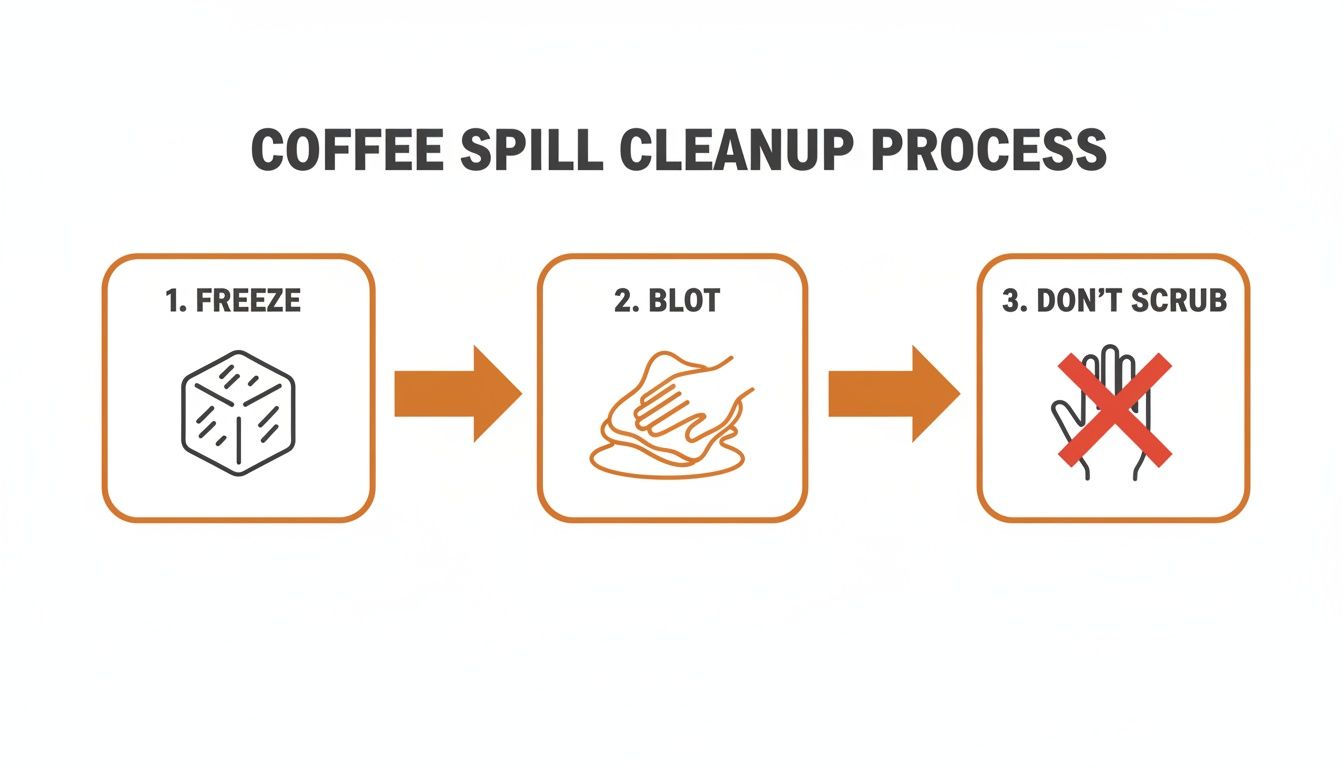
As you can see, the key is to solidify the liquid, absorb it by blotting, and absolutely avoid scrubbing to protect your carpet fibers.
To make this crystal clear, here’s a quick-reference guide for what to do—and what not to do—in those first critical moments.
Immediate Spill Response Checklist
| Action | Why It Works | What to Avoid |
|---|---|---|
| Grab a dry, white cloth or paper towels. | Absorbs the liquid without transferring any color onto your carpet. | Using colored or printed towels that could bleed dye. |
| Blot gently, applying firm pressure. | Lifts the coffee out of the fibers and into the cloth. | Scrubbing, rubbing, or circular motions. |
| Work from the outside edge inward. | Prevents the stain from spreading and getting larger. | Starting in the middle and pushing the liquid outward. |
| Rotate to a clean section of the cloth often. | Ensures you are lifting the coffee, not just moving it around. | Reusing a saturated part of the cloth. |
Following these simple rules can make all the difference between a temporary spill and a permanent stain.
An Unconventional but Effective Trick
Here’s a trick that sounds a little weird but really works, especially if your coffee had cream or sugar in it. Grab a few ice cubes from the freezer and place them directly on the spill for a few minutes.
This helps solidify the sugars and fats, making them much easier to lift out of the carpet fibers. In fact, this simple step can help you absorb up to 75% of the liquid before you even start blotting in earnest.
After a few minutes, take the ice off and begin blotting with your cloth. It’s a simple protocol, but it’s crucial. We’ve seen that improper scrubbing damages carpet fibers in nearly 70% of DIY cleaning attempts. This little pre-treatment step sets you up for a much more successful cleanup.
For more deep-dive advice on tackling tough spots, you can find great information in our guide on how to get stains out of carpet.
Simple DIY Solutions For Fresh Coffee Stains
Okay, so you've blotted up the worst of the spill. Now you're probably staring at a faint, brownish ghost of that coffee on your carpet. Don't panic—this is where a simple, homemade solution can work wonders.
You really don't need to reach for a heavy-duty chemical cleaner for a fresh spill. In my experience, the right household items can lift that remaining coffee pigment out without being harsh on your carpet fibers. The trick is knowing which ingredients to use and, more importantly, how to use them correctly so you don't leave behind a sticky residue that just attracts more dirt later.
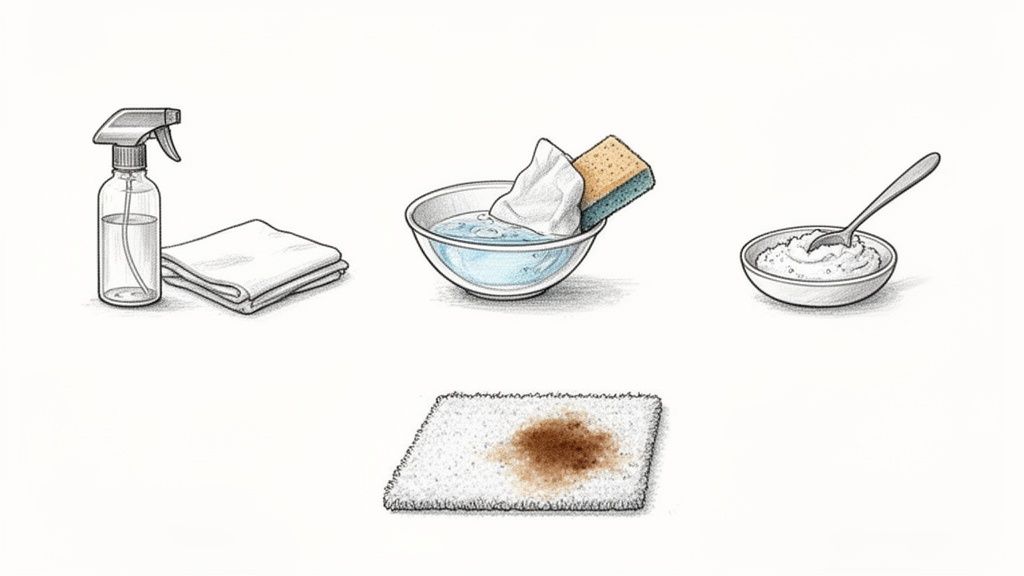
The Vinegar and Water Method
Plain old white vinegar is a fantastic cleaning agent. Its mild acidity is perfect for breaking down the tannins in coffee, which are the compounds that cause the stain. For a straightforward black coffee spill, this is almost always the first thing I recommend trying.
Here’s what you do:
- Mix one part white vinegar with two parts lukewarm water in a clean spray bottle.
- Lightly mist the stained area. You want it damp, not soaking wet.
- Let that solution sit for about five minutes. This gives the vinegar time to actually work on the stain.
Next, grab a clean, dry, white cloth and start blotting again. You should see the brown stain transferring from the carpet right onto your cloth. Just keep blotting with fresh sections of the cloth until the stain is gone. To finish, give the spot a light mist of plain water and blot it dry. This little rinse step removes any leftover vinegar smell and residue.
For Spills With Milk or Cream
Now, if your coffee had milk, cream, or one of those sugary syrups in it, you've got a slightly different challenge. The fats and sugars can leave a sticky, oily residue that a simple vinegar solution might not cut through completely.
This is where baking soda is your best friend.
Make a simple paste with three parts baking soda to one part water. Gently spread this paste directly onto the stain, making sure it's completely covered. As that paste dries, it will literally pull the coffee, sugars, and oils up and out of the carpet fibers.
Let the baking soda paste dry completely on the stain. This might take a few hours, but patience is key here. Once it's hard and crusty, you can easily vacuum it all away, taking the stain with it.
The Gentle Dish Soap Solution
For a versatile cleaner that works on almost any coffee spill, a mild dish soap mixture is a great go-to. The key words here are mild and mixture. You have to use the right kind and the right amount.
Here's a recipe I've seen work time and time again:
- Mix just a 1/4 teaspoon of a clear, non-bleach liquid dish soap with one cup of warm water. Any more soap than that and you're asking for trouble.
- Dab the solution onto the stain with a clean cloth—don't pour it.
- Gently blot the area, always working from the outside of the stain inward to avoid spreading it.
- And this is the most important part: Rinse the area thoroughly. Get a separate cloth, dampen it with plain cold water, and blot, blot, blot.
Skipping that rinse step is the biggest mistake people make. If you leave soap behind, it becomes a dirt magnet, and that "cleaned" spot will slowly turn dark and dingy again.
Exploring the best homemade carpet cleaner recipes can give you even more safe and effective options. But no matter what you use, always test your solution on a hidden spot first—under a sofa or in a closet—to make sure it doesn't mess with your carpet's color.
What About Those Stubborn, Set-In Coffee Stains?
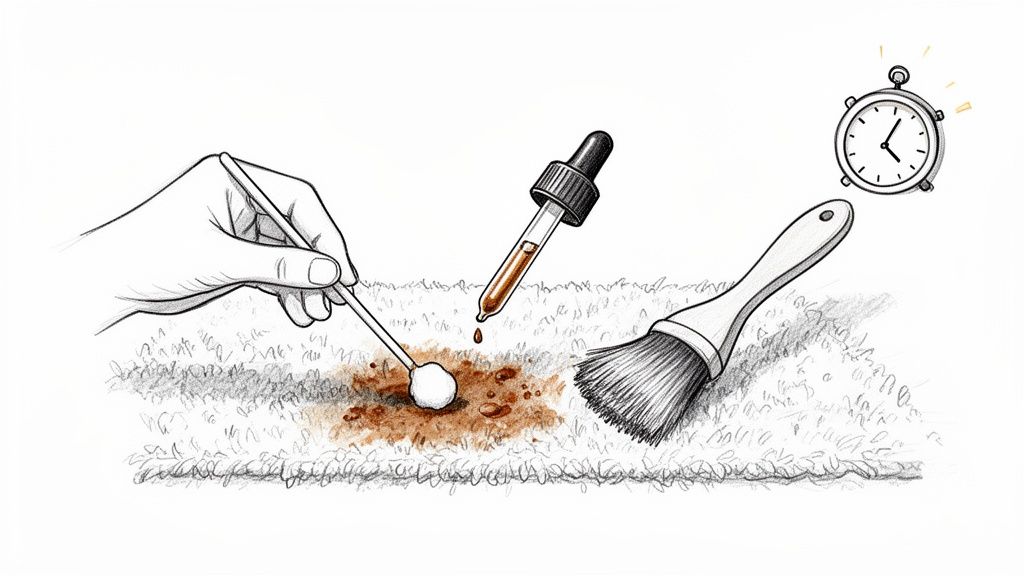
Finding a coffee stain that’s been sitting for days—or even weeks—is a whole different ballgame. The liquid is long gone, but it left behind concentrated pigments that have chemically bonded with your carpet fibers. This isn't just a simple cleanup; it’s a bit of a restoration project that calls for more patience and smarter solutions.
What's happening here is pretty simple science. Over time, oxidation sets in and essentially "dyes" the carpet fibers. If there was any cream or sugar, those sugars caramelize and create a sticky, stubborn mess. A simple vinegar and water mix just won't cut it. You need something that can break down these deep-set organic compounds.
Using Hydrogen Peroxide—But Be Careful
For light-colored synthetic carpets, a solution of 3% hydrogen peroxide can work wonders. Peroxide is a mild bleaching agent that breaks the chemical bonds in the stain, but without the harshness of actual bleach. This method comes with a huge warning, though: always, always spot test first.
Find a hidden area, like inside a closet or under a big piece of furniture, and apply a small amount. Give it at least a few hours—a full day is even better—to make absolutely sure it doesn’t discolor your carpet.
If your test spot looks good, here’s what to do:
- Mix one part 3% hydrogen peroxide with three parts cool water in a spray bottle.
- Lightly mist the old coffee stain. You don't want to soak it and get the carpet pad wet.
- Lay a clean, white towel over the damp spot and put something heavy on top, like a stack of books.
The towel will slowly wick the peroxide and the broken-down stain particles right out of the carpet. You might have to repeat this a couple of times over a few days. Patience is key here. Aggressively scrubbing will only damage your carpet fibers.
The Power of an Enzyme-Based Cleaner
When you're up against an old coffee stain that had milk, cream, or sugar in it, an enzyme-based cleaner is your best friend. These products are incredible. They contain specific enzymes that act as catalysts to break down organic stuff—like the proteins in milk and the tannins in coffee.
Think of it as digestion for your carpet. The enzymes literally "eat" the stain, turning it into smaller, water-soluble particles you can easily blot away.
Key Takeaway: Enzyme cleaners aren't instant. They need time to do their job. Always follow the product's instructions, which usually involve letting the solution sit on the stain for several hours or maybe even overnight.
This approach is so effective because it tackles the whole problem—not just the brown spot you can see, but also the sticky residue you can't, which will attract more dirt later. One patient application of an enzyme cleaner is way better than scrubbing multiple times with a weaker solution. When you're learning how to clean spilled coffee on carpet, understanding what's in the stain is half the battle. It points you to the right tool for the job.
Common Cleaning Mistakes That Can Ruin Your Carpet
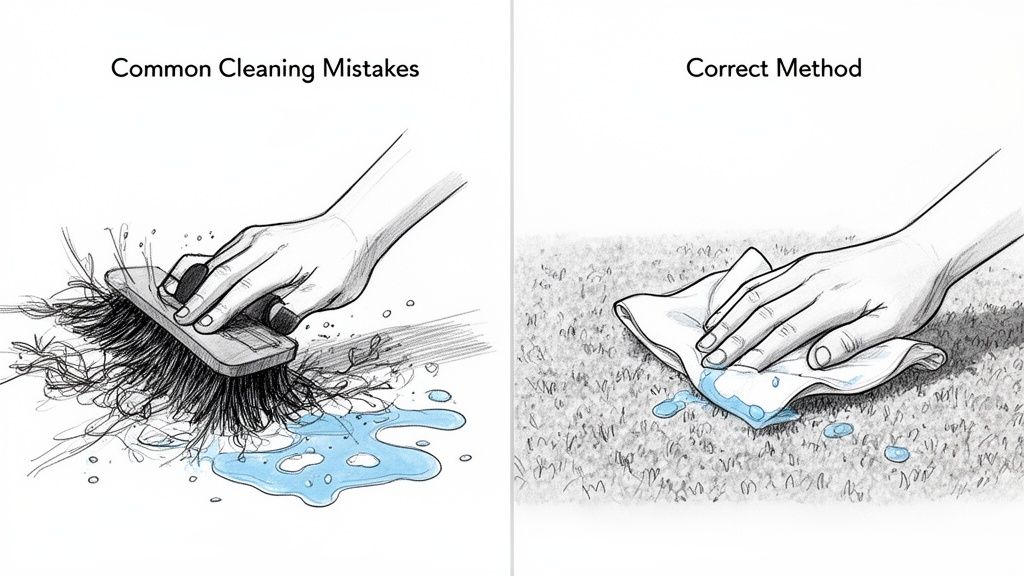
When you see a dark coffee stain on your carpet, your first instinct is probably to go on the attack. Unfortunately, all that well-meaning enthusiasm can often lead to permanent damage. The right technique is just as crucial as the right cleaning solution, and a few wrong moves can turn a small spill into a huge problem.
The single biggest mistake we see is aggressive scrubbing. It feels like you're accomplishing something, but all you're really doing is grinding the coffee deeper into the carpet padding and fraying the fibers. This can permanently untwist the carpet pile, leaving a fuzzy, distorted patch that’s way more noticeable than the original stain ever was.
It’s worth taking a moment to understand some common cleaning mistakes before you dive in, just to make sure you don't make the situation worse.
Using Harsh Chemicals and Too Much Water
Grabbing a bottle of bleach or a harsh all-purpose cleaner might seem like a good idea, but it's a recipe for disaster on carpet. These chemicals are simply not made for delicate carpet fibers. They can strip the color right out, leaving a permanent faded or even yellowed spot. Even on a white carpet, bleach can chemically burn the fibers, making them brittle and weak.
Another critical error is drenching the stain with water or a cleaning solution. It feels logical—you want to "rinse" the stain out, right? But all that excess moisture soaks right through the carpet backing and into the pad underneath. This creates two major headaches:
- Wicking: As the pad eventually dries, any coffee residue trapped down there gets pulled back up the carpet fibers. The stain you thought was gone suddenly reappears a few days later.
- Mold and Mildew: A soggy carpet pad is the perfect place for mold to grow, leading to musty smells and potential health issues you can't even see.
Your goal is to use just enough liquid to treat the fibers you can see, not the padding you can't. When it comes to putting liquid on your carpet, less is almost always more.
The Problem With DIY Residue
A lot of DIY solutions, while well-intentioned, fail because they leave behind a sticky residue. Maybe the soap wasn't fully rinsed out, or some baking soda got left behind. This residue acts like a dirt magnet, and over time, that "clean" spot slowly turns into a dark, dingy patch.
This is exactly why calling a professional is often the smartest move. Research shows that improper DIY cleaning attempts fail to remove over 75% of the coffee residue embedded in the carpet. This leads to reappearing spots in a staggering 82% of cases.
A service like Citrus Carpet Cleaning Buford, which has been serving Georgia since 2004, uses low-moisture methods. We extract the contaminants without leaving behind sticky soaps, getting your carpets dry in just one to two hours. This approach avoids the common pitfalls that turn a simple spill into a lasting problem.
Why Professional Cleaning Is Often the Best Choice
So you've blotted, you've sprayed, and you might have even tried that baking soda paste trick you saw online. But there it is: a faint, brownish shadow where that coffee spill used to be. It’s a frustratingly common story. While those quick DIY methods are great for immediate damage control, they often just can't completely knock out a stubborn stain, especially one that’s had time to settle in.
This is where the difference between a good effort and a guaranteed result becomes crystal clear. Your at-home solutions are limited by whatever you have under the sink and some basic physics—you can only pull so much of a stain out from the surface. A professional brings specialized equipment and years of know-how to the fight.
The Limits of a DIY Approach
The single biggest problem with any home remedy is the residue it leaves behind. Even if you rinse and rinse, it’s nearly impossible to get all the soap, vinegar, or store-bought cleaning solution out from deep within the carpet fibers. That leftover film gets sticky, and what does sticky stuff do? It grabs onto new dirt and dust like a magnet. The result is that the very spot you worked so hard to clean slowly reappears as a dark, dingy patch.
Plus, those over-the-counter cleaners and homemade concoctions can’t compete with the power of professional-grade, pH-balanced solutions. Using something too aggressive can literally strip the color from your carpet. Even worse is improper rinsing, which leads to "wicking"—that’s when the stain resurfaces from the deep-down carpet pad as everything dries.
Professional Power and Precision
A professional service like Citrus Carpet Cleaning Buford doesn’t just dab at the surface; we tackle the problem from the base of the fibers all the way up. We use a unique low-moisture, citrus-based cleaning process that chemically breaks down and extracts stains without drowning your carpet and pad.
This method gives you a few key advantages:
- No Sticky Residue: Our process avoids the soaps and harsh shampoos that are notorious for causing spots to come back.
- Faster Dry Times: We use way less water, which means your carpets are dry in just 1-2 hours, not days.
- A Deeper Clean: Our equipment has the professional-grade power to lift out everything your blotting leaves behind, including the oils and sugars in coffee that make it so stubborn.
A coffee spill isn't just an eyesore; it's a genuine hygiene problem in the 45 million U.S. households with carpeting. Coffee's oils and dyes sink into fibers fast; within 30 minutes, a shocking 70% of the stain can become permanent. As you can guess, this makes DIY methods a real long shot—they only succeed in under 35% of cases, leading to stains coming back at a 50% higher rate.
Professional cleaning is really an investment in your home’s health and the life of your carpet. By completely removing the stain and avoiding sticky residues, we help your carpet last longer and make sure those ugly spots don't return.
When you've done everything you can, calling a professional isn't giving up—it’s the smart move to protect your investment. You'll save yourself the headache of a reappearing stain and the potential cost of permanent damage. If you're still on the fence, looking into whether professional carpet cleaning is worth it can really clarify the long-term benefits for your home.
Your Coffee Stain Questions Answered
Even when you follow all the right steps, some spills just make you pause and wonder if you’re about to make a huge mistake. We get calls all the time about the little details—what to do with a latte versus black coffee, or how to handle a spill on a white carpet.
These are the moments where a bit of professional experience can save you a world of hurt. We’ve rounded up some of the most common questions we hear from homeowners to give you some clear, straightforward answers.
Can I Use Bleach on a White Carpet for a Coffee Stain?
Please, don't do it. This is a hard no. It's a tempting idea, I get it, especially when you're staring at a dark brown spot on a pristine white carpet. But reaching for the bleach is one of the worst things you can do.
Here's why: bleach doesn't just lift color. It's a harsh chemical that will literally burn and destroy your carpet fibers, leaving them brittle and weak. Over time, that spot will almost certainly turn into a permanent, ugly yellow stain. On top of that, bleach strips away any factory-applied stain protection, leaving that area completely defenseless against future spills.
The only truly safe bet is a pH-neutral cleaner made specifically for carpets. If a coffee stain just won’t budge on your light-colored carpet, calling a professional is the only way to get it out without causing irreversible damage.
Is a Coffee Stain with Cream and Sugar Harder to Clean?
Yes, by a long shot. A black coffee spill is basically just a dye stain from the tannins in the coffee. Easy enough. But once you add milk and sugar to the mix, you've created a far more complex cleaning problem.
- Sugar: That sweetness creates a super sticky film that gets deep into the carpet fibers. Your standard water-based cleaners just can't break it down. This sticky residue becomes a dirt magnet, which explains why a stain you thought you removed magically reappears a few weeks later as a dark, grimy spot.
- Dairy: The fats and proteins in milk and cream are oily. This creates a greasy barrier that repels water, making your cleaning attempts pretty useless. You need a solvent-based approach to dissolve the grease before you can even begin to tackle the coffee dye itself.
This one-two punch of sticky sugar and oily fat is exactly why most DIY methods fail on lattes, cappuccinos, and other sweet, creamy coffee drinks. It really takes a professional-grade solution to break down both elements without leaving anything behind.
How Soon Should I Call a Professional?
You should always, always blot a fresh spill immediately to absorb as much as you can. But knowing when to throw in the towel and call for backup is key.
You should think about calling a professional right away if the spill is massive, has soaked deep into the pad, or if it happened on a delicate carpet like wool or silk.
If your first gentle attempt at cleaning doesn't lift the stain, stop what you're doing. The more you scrub and douse a stain with the wrong products, the more you risk setting it for good or damaging the carpet fibers. Getting professional help quickly gives you the best possible chance of complete removal without any lasting damage. And for keeping your whole home in top shape, checking out a comprehensive spring cleaning guide can help you stay ahead of the game.
When your best efforts aren't enough, don't let a coffee stain become a permanent fixture in your home. Citrus Carpet Cleaning Buford uses a proven, low-moisture citrus-based method to safely and effectively remove even the toughest coffee stains without leaving sticky residues behind. Call or text us today for your free "EXACT-imate" at https://citruscarpetcleaningatlanta.com.