
If you want to get rid of that cat pee smell for good, you have to use an enzymatic cleaner. This isn't just about scrubbing away a stain; it's about breaking down the stubborn uric acid crystals that cause the odor to linger. Simply blotting the area and hitting it with soap and water won't cut it. Those crystals aren't water-soluble and can come back to haunt you months later.
Why That Cat Urine Smell Is So Persistent
Ever notice how that sharp, ammonia-like cat pee smell seems to pop up out of nowhere, especially on a humid day? You're not imagining things. The science behind this incredibly stubborn odor is the key to finally kicking it to the curb.
Unlike dog urine, a cat's urine is highly concentrated. Over time, it breaks down into several different stinky components. The initial smell you get is from urea, but as bacteria get to work, it quickly transforms into that pungent ammonia smell we all know and hate. And that's just the first stage of the problem.
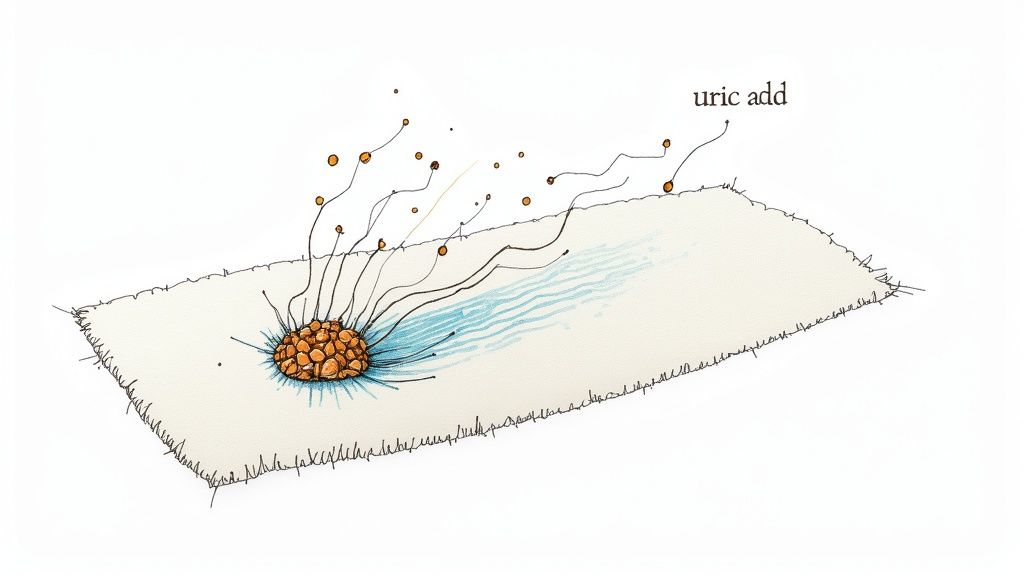
The real villain behind the smell that just won't quit is uric acid.
Uric acid doesn't dissolve in water or your typical household cleaners. Instead, it forms salt-like crystals that worm their way deep into porous surfaces—think carpet fibers, wood, and upholstery. These crystals can lie dormant for months or even years.
When the humidity in the air goes up or the area gets damp again, those crystals reactivate, releasing that foul odor all over again. This is exactly why a spot you thought was clean can suddenly start stinking on a rainy summer day.
The Molecular Challenge of Uric Acid
Because uric acid is a tough customer that isn't water-soluble, your usual cleaning methods are basically useless. Scrubbing with soap and water might get rid of the visible stain and the initial urea, but it leaves the uric acid crystals behind. You're getting a temporary fix, but the core of the problem is still lurking in your carpet or couch.
This molecular resilience is precisely why specialized cleaners are a must-have for this battle. You need a product designed specifically to break down the chemical bonds of the uric acid itself.
This is where enzymatic cleaners come in as the hero. These formulas contain specific enzymes that act like tiny biological Pac-Men, targeting and "eating" the uric acid crystals. They break them down into harmless, odorless compounds like carbon dioxide and ammonia gas. It's a scientific approach that explains why enzymatic cleaners dominate the pet odor control market with a 34.2% share—they're made to neutralize the source, not just mask it. You can read more about the effectiveness of these products.
Understanding the science helps you see why the methods we cover in this guide are so important. You’re not just cleaning a stain; you're waging a tiny chemical war against an incredibly persistent compound. And by choosing the right tools, you can finally win.
How To Find Every Hidden Urine Spot
Let's be real—you can't get rid of that cat pee smell if you only clean the spots you can see. Cats are absolute masters of stealth. They often pick hidden, out-of-the-way places for their accidents or territorial spraying. What you think is just one little mishap might actually be part of a much bigger, invisible problem.
To permanently kill the odor, you have to play detective. This means going beyond what your nose can tell you and grabbing the right tool to uncover every single last spot.
Your Best Friend: The UV Blacklight
A UV blacklight is your non-negotiable secret weapon in this fight. Cat urine contains phosphorus, which just happens to glow a very distinct yellowish-green under ultraviolet light. This lets you find old, dried stains that are completely invisible in normal daylight.
To get the best results with a blacklight, you need to do a few things:
- Wait for Darkness: That glow is way easier to see when the room is pitch-black. Wait for nighttime, shut the blinds, and kill all the lights.
- Scan Systematically: Don't just wave the light around like a magic wand. Be methodical. Start in one corner and slowly scan in sections—first the floor, then the baseboards, and then move up the walls to about cat height.
- Mark Your Territory: When you find a glowing spot, mark it. Use something that won't cause another stain, like a small piece of painter's tape or a sticky note placed right next to the area.
Don’t be shocked if you find way more spots than you ever imagined. It’s incredibly common to discover stains on walls, behind the sofa, or even on curtains—places you would never have thought to check. This process finally reveals the true scope of the problem you're dealing with.
Where to Hunt for Hidden Stains
While the UV light will show you the evidence, it helps to know where to start looking. Cats tend to favor specific types of locations when they decide to go outside the litter box.
You have to think like your cat. They often look for either vertical surfaces to mark their territory or soft, absorbent surfaces when they're feeling stressed or sick. For a more detailed look, understanding how to eliminate pet odors in carpet can give you more insight into how urine soaks into different materials.
Here are some of the most common—and some not-so-common—hiding places to check first:
- Behind and Under Furniture: Couches, armchairs, and beds are prime real estate. Make sure you pull furniture completely away from the walls to check the carpet underneath and the back of the furniture itself.
- Closets and Corners: Cats love quiet, low-traffic spots. The back of a closet you barely open is a classic spot for them to do their business in peace.
- Near Doors and Windows: These are major territorial zones. A cat might spray near a sliding glass door if they spot a neighborhood cat taunting them from the yard.
- On Electrical Cords and Appliances: It sounds bizarre, but it happens. The warmth coming from electronics can sometimes attract them. Always check around cords and the base of things like speakers, lamps, or computer towers.
By doing a really thorough search with your UV light, you're essentially creating a complete map of every single area that needs to be treated. This systematic approach is the only way to guarantee you don't miss a lingering source of that awful smell, setting you up for a successful and permanent victory.
The Definitive Guide to Cleaning Any Surface
Alright, you've mapped out every last hidden urine spot. Now it's time to roll up your sleeves and declare war on that smell.
The cleaning method you pick is everything, and it all comes down to the surface you're treating. What works wonders on your area rug could completely ruin your hardwood floors. Trust me, you need a specific game plan for each material to get this right.
This isn't just about a quick spray-and-wipe. We're talking about a deep clean that gets to the very source of the smell—those nasty uric acid crystals. We’ll break down exactly what to do for carpets, upholstery, mattresses, and hard floors, so you have the right tools and techniques for the job.
Before you start cleaning, you have to be 100% sure you've found every single spot. This little infographic nails the basic process.
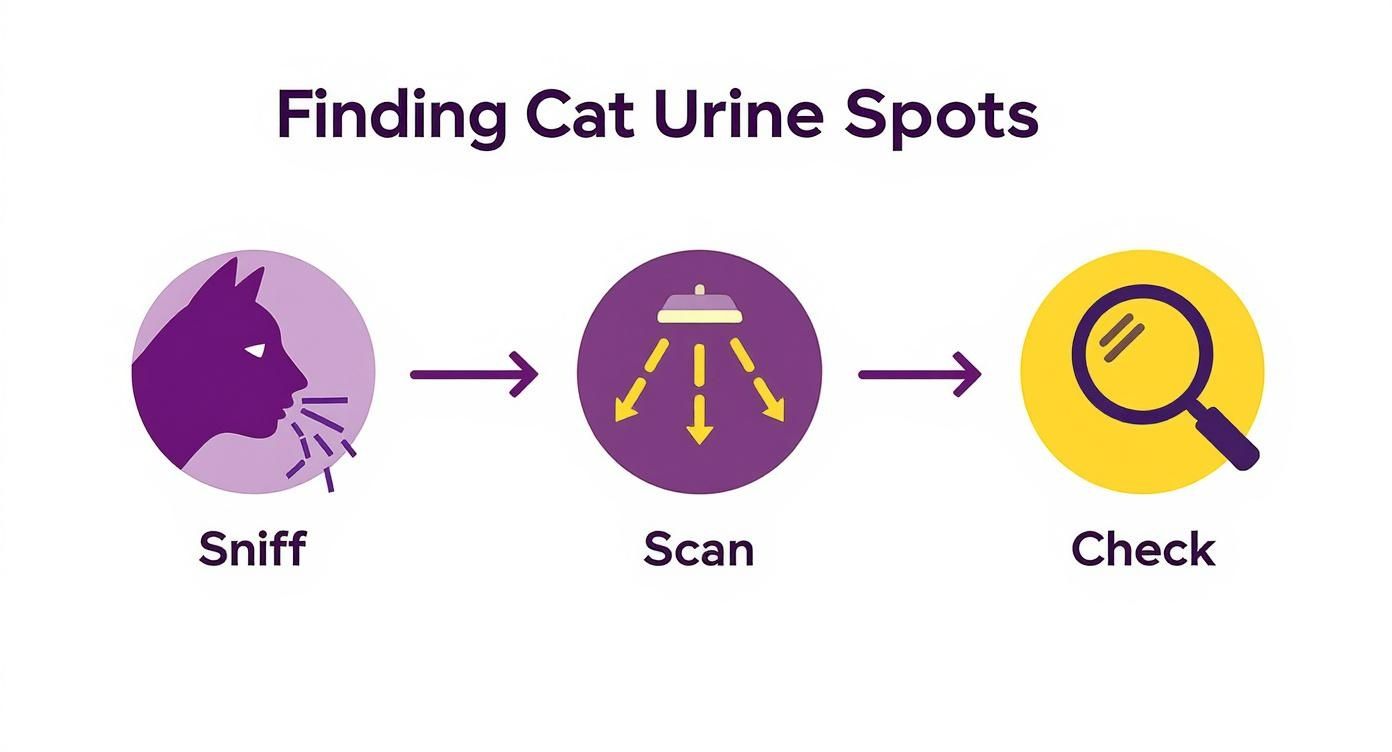
It’s about using all your senses—your nose and a good UV blacklight—to make sure nothing gets missed.
Treating Carpets and Rugs Effectively
Carpet is basically a giant sponge for cat pee. The liquid zips right past the fibers you can see, goes through the carpet backing, and sinks deep into the padding. If you only clean the surface, you're leaving the main odor source behind to stink another day. You have to treat all three layers.
First thing's first: if the spot is still wet, grab some thick paper towels and blot like crazy. Press down hard to pull up moisture from deep in the pile. Whatever you do, don't scrub! Scrubbing just pushes the urine around and can permanently damage the carpet fibers.
Next, you need to absolutely saturate the area with a high-quality enzymatic cleaner. Don't be shy here. For the cleaner to work on the urine in the padding, it has to soak in just as deep as the pee did. Pour it on, making sure to cover a slightly wider area than the original stain to catch any splash.
Critical Tip: Patience is your best friend in this fight. Enzymatic cleaners need time to do their job. Cover the wet area with some plastic wrap to keep it from drying out, and let it sit for at least 12-24 hours. This gives the good bacteria and enzymes time to break down every last uric acid crystal.
After letting it dwell, we get to the most important step: extraction. You have to get all that dissolved gunk and cleaning solution out of the carpet and padding. The best tool for this is a wet vac or a carpet extractor. Go over the spot again and again until you can’t pull any more liquid out. This is what separates a temporary fix from a permanent solution.
Cleaning Upholstery and Mattresses
Your sofa, favorite armchair, and mattress are tricky. They're super absorbent, but you can't just drench them like a carpet without risking mold, mildew, or ruining the stuffing inside. The strategy is the same—blot, treat, extract—but with a lighter touch.
Start by blotting any fresh spots with a clean, dry cloth. Once you've soaked up as much as you can, lightly spray the area with your enzymatic cleaner. You want the fabric to be damp, but not soaked through to the cushion. Gently work the cleaner into the fibers with a soft brush.
Let the cleaner sit for as long as the directions say, usually around 30-60 minutes. For these delicate surfaces, you can lay a damp towel over the spot to help the enzymes work without over-saturating the furniture.
Extraction is just as important here. Use the upholstery attachment on a wet vac or carpet cleaner to suck the liquid out. No wet vac? No problem. You can firmly blot the spot with clean, dry towels, pressing down hard to absorb the solution. Keep going until the fabric feels just slightly damp.
When you're dealing with stubborn smells on something as absorbent as a mattress, there are some specific tricks that really help. You can learn more about how to clean a mattress and banish odors to make sure you're using the safest and most effective methods.
Finally, set up a fan to blow across the surface. This speeds up drying and stops any musty smells from cropping up. Good airflow is non-negotiable for upholstery and bedding.
Managing Cat Urine on Hard Floors
You might think hard floors are an easy win, but porous surfaces like unsealed wood, concrete, and tile grout can trap urine odor just as well as a shag rug. The uric acid seeps into all those little cracks and crystallizes, making the smell incredibly tough to get out.
For sealed hardwood, vinyl, or laminate, it's pretty straightforward.
- Wipe up the puddle right away.
- Clean the spot with a wood-safe cleaner or a 50/50 mix of white vinegar and water.
- Finish with an enzymatic cleaner made for hard surfaces to break down any leftover residue.
The real headache is with porous materials. If urine has soaked into unsealed concrete, grout lines, or the subfloor, you need to get more aggressive.
- For Tile Grout: Mix up a paste of baking soda and water and scrub it right into the grout lines. Let it sit for an hour, then spray it with your enzymatic cleaner. You’ll see it foam up—let that work for another 30 minutes before wiping it all clean.
- For Unsealed Wood or Subflooring: This is a tough one. You’ll have to saturate the area with an enzymatic cleaner and really let it sink in. This might take a few applications over several days. In really bad cases where the wood is black and saturated, you might have to cut out and replace that section of the subfloor.
To make things easier, here’s a quick-reference guide comparing the essential steps for each surface.
Cleaning Methods by Surface Type
This table breaks down the key differences in tackling cat urine on various household surfaces.
| Surface Type | Initial Step | Recommended Cleaner | Critical Tip |
|---|---|---|---|
| Carpets & Rugs | Blot heavily; do not scrub | High-quality enzymatic cleaner | Saturate deeply to reach the pad and use a wet vac for extraction. |
| Upholstery | Blot gently; avoid over-saturation | Enzymatic cleaner (spray bottle) | Use a fan to accelerate drying time and prevent mildew. |
| Mattresses | Blot firmly; control moisture | Light application of enzymatic cleaner | Extract thoroughly with an upholstery tool and ensure complete drying. |
| Hard Floors | Wipe up immediately | Surface-appropriate enzymatic cleaner | Treat porous materials like grout or unsealed wood multiple times. |
No matter what you're cleaning, the core principles of getting cat urine smell out are the same: act fast, use an enzyme cleaner to destroy the uric acid, and make sure you're treating the problem at its source. By tailoring your attack plan to the material, you can finally get that smell out for good and bring the freshness back to your home.
Choosing the Right Cleaner for the Job
Stepping into the cleaning aisle can feel overwhelming. The shelves are packed with bottles, all promising to be the magic bullet for cat urine odor. But here's the thing I've learned from years in this business: not all cleaners are created equal. Choosing the wrong one won't just waste your money—it can actually make the problem worse.
You have to understand that this is a chemical battle, not just a surface-level cleanup. Your real opponent is uric acid, the stuff in cat pee that keeps stinking. You need a cleaner specifically designed to find and destroy it. This is where you separate the products that just mask an odor from the ones that truly eliminate it for good.
The Gold Standard: Enzymatic Cleaners
When it comes to defeating cat urine, enzymatic cleaners are the undisputed champions. Forget fancy soaps; these are sophisticated formulas loaded with beneficial bacteria that produce enzymes. Think of these enzymes as tiny, highly specialized soldiers, each with a specific mission to break down a part of the urine stain.
One group of enzymes goes after the urea, another targets the proteins, and—most importantly—a third type hunts down and literally consumes the non-soluble uric acid crystals. They break these stubborn crystals down into harmless, odorless gases. Poof. The source of the smell is permanently gone. You can learn more in our detailed guide on what an enzymatic cleaner is and how it works.
The real magic of an enzymatic cleaner is its thoroughness. It doesn't just clean the surface; it follows the urine's path deep into carpet padding or upholstery fibers, neutralizing the odor wherever it has soaked in. This is why patience is critical—the enzymes need time to work, often requiring the area to stay damp for several hours.
This targeted approach has made these products a cornerstone of the pet odor control market. It’s a huge industry—in the United States alone, the market was valued at USD 6.47 billion in 2023. Homeowners are getting smarter and are looking for scientifically formulated products that deliver real results. You can discover more insights about the pet odor control market and its growth on grandviewresearch.com.
What About Oxygen-Based Cleaners?
You’ll also see a lot of oxygen-based cleaners, often sold as powders like OxiClean. These products work through oxidation. When you mix them with water, they release tiny oxygen bubbles that help lift stains and kill some of the smelly bacteria.
For general pet messes or a stain that's just on the surface, oxygen cleaners can work pretty well. They are great at getting rid of the visible discoloration and giving the area a good sanitizing.
But they have a major limitation when it comes to cat pee. While they might reduce the smell at first, they don't have the same power as enzymes to break down those resilient uric acid crystals. The result? You think you've won, but the smell comes roaring back on the first humid day when the leftover crystals get damp and reactivate.
The DIY Approach: Vinegar and Baking Soda
If you prefer a homemade solution, a mix of white vinegar and baking soda can be a decent first line of defense, especially if you catch the accident right after it happens.
- White Vinegar: Its acidity helps neutralize the alkaline ammonia in fresh urine, which cuts down that initial eye-watering smell. A simple 50/50 mix of white vinegar and water is a common go-to.
- Baking Soda: This is a classic, natural odor absorber. Once the vinegar solution has dried, sprinkling baking soda over the spot can help pull more of the lingering odor out of the carpet fibers.
While these household staples are good to have on hand, you have to know their limits. Just like oxygen cleaners, they don’t have the specific enzymes needed to destroy uric acid. They’re best for a brand-new puddle on a hard floor or as a quick first step before you bring in the heavy-duty enzymatic cleaner. They're rarely a permanent fix for set-in odors on soft surfaces.
The One Cleaner You Must Never, Ever Use
There is one product you must absolutely avoid when tackling cat urine: anything with ammonia. It sounds crazy, but many all-purpose cleaners contain it.
Cat urine already has ammonia in it, so cleaning with an ammonia-based product just reinforces the scent marker for your cat.
To them, the smell of ammonia basically screams, "This is the perfect bathroom spot!" Using it is like putting out a welcome mat, inviting them to re-mark the area again and again. You get trapped in a frustrating, endless cleaning cycle. Always, always check the ingredients before you spray anything on a pet stain.
How to Prevent Future Accidents
Alright, you’ve managed to get that awful cat pee smell out of your carpet. High five! But the real victory isn't just cleaning up the last mess—it's making sure it never happens again. This means shifting your focus from cleanup to prevention and figuring out why your cat decided your floor was a better bathroom than their litter box.
More often than not, when a cat pees where it shouldn't, it’s their way of telling you something is wrong. It could be a health problem, a cry for help about stress, or just a flat-out complaint about their bathroom setup. If you ignore these signals, you can bet the problem will continue.
Rule Out Medical Issues First
Before you jump to the conclusion that your cat is just being difficult, your very first stop should be the vet. A sudden change in bathroom habits is a huge red flag for medical trouble.
It’s absolutely crucial to rule out underlying health problems, especially if this has happened before. Some common culprits are medical conditions like Feline Lower Urinary Tract Disease (FLUTD), UTIs, or bladder stones. These issues can make urination painful, causing your cat to associate that pain with the litter box and start looking for a new, less painful spot to go.
Create a Five-Star Litter Box Experience
Sometimes, the root of the problem is simple: your cat hates their litter box. Cats can be incredibly picky about where they do their business. If you want to make their setup irresistible, you have to think like a cat.
- The "N+1" Rule: This is the golden rule of multi-cat households. You should have one litter box per cat, plus one extra. So, if you have two cats, you need three boxes. This little trick helps prevent territorial squabbles and guarantees there’s always a clean option ready to go.
- Location, Location, Location: Tuck the boxes away in quiet, low-traffic areas. Your cat wants to feel safe and needs an easy escape route. Avoid noisy spots like next to the washing machine or in a busy hallway.
- Size and Style Matter: Bigger is usually better. Most cats prefer large, open boxes without hoods. A covered box might seem nice to us, but it can trap odors and make a cat feel cornered, which is a big reason many of them refuse to use them.
Remember to scoop the box at least once a day. And about once a month, you should dump all the litter and give the box a good scrub with mild soap and water. A dirty bathroom is one of the top reasons a cat will start eyeing your brand-new rug as an alternative.
Reduce Stress and Anxiety in Your Home
Cats are creatures of habit. They thrive on routine, and any disruption can cause stress. A new baby, another pet joining the family, or even just rearranging the furniture can be enough to trigger anxiety-fueled spraying or urination.
Give your cat plenty of vertical space, like cat trees or shelves, where they can retreat and feel secure. Daily playtime is also a fantastic way to burn off anxious energy. Some people have great luck with pheromone diffusers, which can help create a calmer environment.
The market for pet stain and odor control is now worth around USD 9.8 billion globally for a reason—we’re all looking for solutions. This trend also shows that people understand the connection between a clean, stress-free space and a happy pet.
Finally, the type of flooring you have can make a huge difference. If you're tired of the cleanup battle, check out our guide on selecting the best carpet for pet owners. Making a smart choice here can make any future incidents far less of a headache. When you meet your cat's core needs, you'll restore harmony and keep your home smelling fresh for good.
Let's be real. Sometimes, no matter how much you scrub, spray, or pray, that awful cat pee smell just won't quit. You’ve used the best enzymatic cleaners, you’ve hunted down spots with a UV light, but the odor keeps coming back. This is usually when the problem has gone far beyond what a store-bought bottle can handle.
Knowing when to throw in the towel and call a professional isn't giving up. It's about saving your sanity—and your home.
If you've found that the "accident" zone is huge or that it's been happening for a long time, it's definitely time to bring in the big guns. A pro is your only real option once urine has soaked completely through the carpet, saturated the padding underneath, and seeped into the subfloor. At that point, the source of the smell is physically out of your reach.
Signs It's Time for Expert Help
You should seriously think about calling for backup if any of this sounds familiar:
- The Smell Keeps Coming Back: You clean the spot, the odor vanishes for a bit, but then it returns a few days or weeks later. This is especially common when it gets humid.
- Your UV Light Looks Like a Starry Night: You turn on the blacklight and see a whole constellation of glowing spots across the room. That’s a sign of a long-term, chronic problem.
- The Subfloor is Soaked: In the worst-case scenarios, the urine has gone so deep that the wooden subfloor itself is stained or damaged.
Professionals have industrial-grade equipment that your home machine can't even dream of matching. Their powerful hot water extractors and specialized tools can flush contaminants from deep within the carpet padding and even treat the subfloor. That's the real secret to how to get out cat urine smell for good.
Hiring an expert isn't admitting defeat. Think of it as a smart investment to finally reclaim your home and make sure the problem is solved once and for all.
Still Have Questions About That Cat Pee Smell?
Even after you've scrubbed and treated, a few questions might be nagging you. Let's run through some common ones I hear from clients to make sure that stubborn cat urine smell is gone for good.
What About Using a Steam Cleaner?
This comes up a lot, and it's a huge mistake. Please, whatever you do, don't use a steam cleaner on a cat urine stain. The intense heat will literally cook the proteins from the urine right into your carpet fibers. It chemically bonds them, which permanently sets the stain and makes the odor nearly impossible to get out. Always stick with cold water and a good enzymatic cleaner.
How Long Does an Enzymatic Cleaner Really Need?
This is where patience pays off. For an enzymatic cleaner to do its job, it needs what we call "dwell time." Think of it as marinating. You need to give those enzymes enough time to break down all the uric acid crystals causing the smell.
The area has to stay damp for this to work, which usually means letting it sit for 12 to 24 hours. If you rush this step and it dries out too quickly, you're pretty much guaranteed the odor will come back.
Is My Leather Couch a Lost Cause?
Not necessarily, but you have to be careful. You can't just saturate leather like you would a carpet.
- Start by mixing up a 50/50 solution of white vinegar and water.
- Gently wipe the affected area with a soft cloth dampened with the mix.
- Follow that with a leather-safe enzymatic cleaner, applying it according to the product's directions, and then wipe it clean.
- The final, crucial step is to apply a quality leather conditioner. This restores the moisture and stops the leather from drying out and cracking.
If you've tried everything and that smell just won't quit, it might be time to call in a professional. Citrus Carpet Cleaning Buford has the industrial-strength equipment and experience to get deep into the fibers and neutralize those odors for good.