
To really get rid of that lingering dog smell, you need a plan that goes way beyond just surface cleaning. The real secret is eliminating the odor at its source. This means deep cleaning carpets and upholstery, getting some fresh air circulating, and sticking to a consistent grooming routine. Just masking the scent with an air freshener is like putting a band-aid on a bigger problem—it’s a temporary fix for a smell that’s worked its way deep into your home's fabrics.
Understanding Why Dog Smells Stick Around
Ever feel like you clean constantly, but that distinct doggy aroma just won't quit? You’re not alone. Winning this battle starts with knowing what you're up against. That persistent "dog smell" isn't just one thing; it's a mix of different organic compounds that have embedded themselves deep within your home.
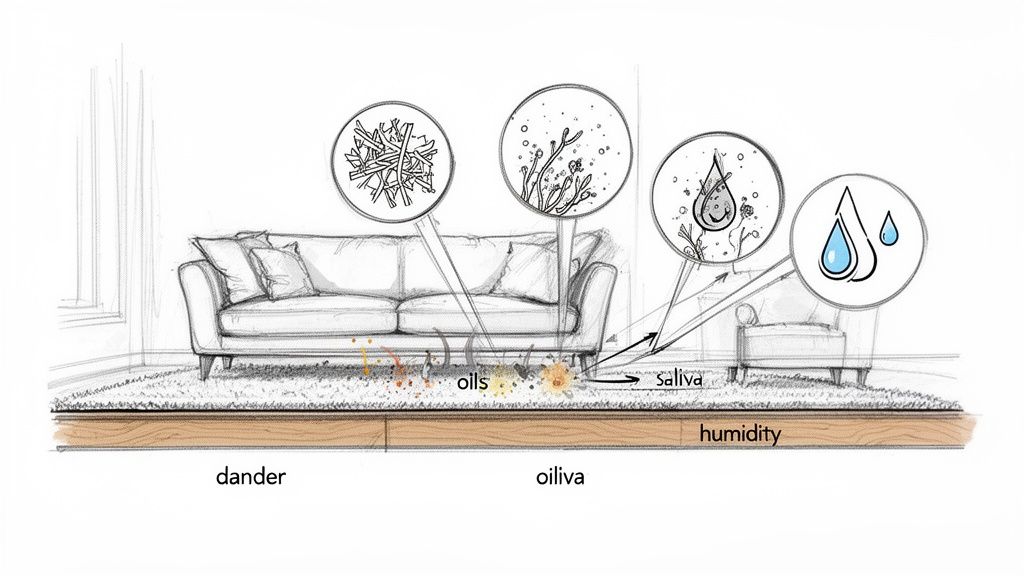
These smells don't just hang out on the surface. They sink into carpet fibers, furniture cushions, and even porous hard surfaces, making them a real pain to remove with your usual cleaning supplies.
The Primary Culprits Behind Pet Odors
That signature scent of your furry friend actually comes from a few different natural sources. Each one adds another layer to the overall smell that can become pretty overwhelming if you don't stay on top of it.
To help you track down that "what's that smell?" mystery, here's a quick reference guide to the most common odor sources and their favorite hiding spots.
Common Dog Odor Sources and Where They Hide
| Odor Source | What It Is | Common Hiding Spots |
|---|---|---|
| Dander & Natural Oils | Your dog's skin produces oils to keep their coat healthy, but they have a distinct scent. Dander (microscopic skin flakes) carries these oils everywhere. | Carpets, upholstery, dog beds, blankets, fabric toys, and anywhere your dog loves to lounge. |
| Saliva & Breath | Drool, licks, and panting leave behind saliva, which contains bacteria that can smell sour or musty once it dries. | Chew toys, bedding, the arms of your sofa, and even spots on the carpet where they've been licking. |
| Microorganisms | A dog's coat is home to various yeasts and bacteria. When they get wet, water evaporates and releases smelly compounds, creating that "wet dog" smell. | Their coat (especially after a walk in the rain), damp towels, and any fabric they lie on while still wet. |
| Urine & Accidents | The most potent culprit. Urine contains ammonia and uric acid, which creates a powerful, lingering smell that gets stronger as bacteria break it down. | Carpet and padding, area rugs, upholstery cushions, baseboards, and even the subfloor in severe cases. |
Knowing exactly what you're dealing with makes it a whole lot easier to pick the right cleaning method and finally kick those odors to the curb.
Key Takeaway: To effectively get rid of dog smell in your house, you have to go after the organic stuff causing it. This usually means you need more than soap and water—you need cleaners that can actually break down these biological compounds.
Why Your Carpet Is the Biggest Offender
Think of your carpet as a giant sponge for every smell your dog brings in. Those dense fibers are the perfect trap for dander, hair, oils, and the occasional accident.
Over time, all that gunk builds up, creating a reservoir of odor deep in the carpet pile and maybe even the padding underneath. It's no wonder so many homeowners end up calling in the pros.
In fact, the demand is so high that the carpet cleaning services market is projected to jump to USD 2.49 billion by 2032, and a huge part of that is driven by pet owners like us trying to deal with stains and smells.
For those really stubborn odors, especially old urine spots, you need products designed to completely dismantle the source. If you're wondering about the science behind it, you can learn more about how an enzymatic cleaner works to break down those tough organic stains.
Daily Habits for Immediate Odor Control
While a deep clean is your heavy hitter for embedded odors, what you do every single day makes the biggest difference in keeping that dog smell from taking over. These aren't permanent fixes for smells that have settled deep into your carpets, but they are absolutely essential for managing day-to-day air quality.
Think of these habits as your first line of defense. Simple, consistent actions can drastically cut down on airborne dander and zap odors before they even think about latching onto fabrics. The goal is to make your home a place where those smells just can't stick around.
Harness the Power of Fresh Air
Never, ever underestimate good old-fashioned ventilation. When air is trapped and stagnant, it concentrates odors, making even a minor smell feel completely overwhelming. A little airflow can truly work wonders.
Every day, make a point to open windows on opposite sides of your house for at least 15-20 minutes. This creates a cross-breeze that literally flushes out the stale, funky air and pulls in fresh air, instantly improving how your home smells. Even if you can't get a full cross-breeze going, just opening a few windows or using a window fan makes a huge difference.
Pro Tip: I've found the best times to do this are early in the morning before the humidity kicks in, or in the evening when things cool down. This quick daily ritual is one of the easiest and most effective ways to get rid of dog smell in your house.
Invest in an Air Purifier
Ventilation swaps out stale air, but an air purifier actively cleans the air that's already in your home. For a house with pets, this is a total game-changer. Look for one with a HEPA (High-Efficiency Particulate Air) filter, which is specifically designed to trap microscopic particles.
These purifiers are your secret weapon against the tiny culprits behind those stubborn smells, including:
- Pet Dander: Microscopic skin flakes that carry oils and are a major source of allergens and that musty "dog" smell.
- Airborne Hair: Those fine hairs that seem to float everywhere and eventually settle on every surface.
- Dust Mites: Tiny organisms that contribute to a stuffy, unclean smell.
For the best results, place the purifier in the room where your dog hangs out the most—like the living room or your bedroom. Letting it run consistently helps maintain a baseline of clean, fresh air.
Adopt a Quick Freshening Routine
A quick daily spritz can neutralize odors on surfaces that act like sponges, like your dog’s bed, the sofa, and area rugs. While plenty of commercial fabric fresheners do the trick, you can easily whip up your own non-toxic version at home. If you're into DIY solutions, you might be interested in our guide on pet odor removal home remedies for some great ideas.
For an even gentler approach that you can use daily, a product like a hypochlorous acid spray is a fantastic option. It’s incredibly effective at neutralizing odors on contact and is perfectly safe for homes with pets and kids.
This kind of daily maintenance, combined with your deeper cleaning efforts, creates a powerful one-two punch for keeping your home consistently fresh and welcoming. These small habits really do add up, preventing the slow buildup of odors that can become a much bigger headache down the road.
Your Room by Room Deep Cleaning Game Plan
Daily habits are great for keeping smells from getting out of hand, but to truly kick that lingering dog odor to the curb, you need to go deeper. Over time, smells from dander, oils, and those little accidents you might have missed will embed themselves into fabrics, carpets, and even hard surfaces.
Think of this as a complete reset for your house. We'll move room by room, starting with the highest traffic areas and working our way through, armed with the right tools and techniques to destroy odors at their source.
This simple daily process is a great visual for preventing odor buildup between those deep cleans.
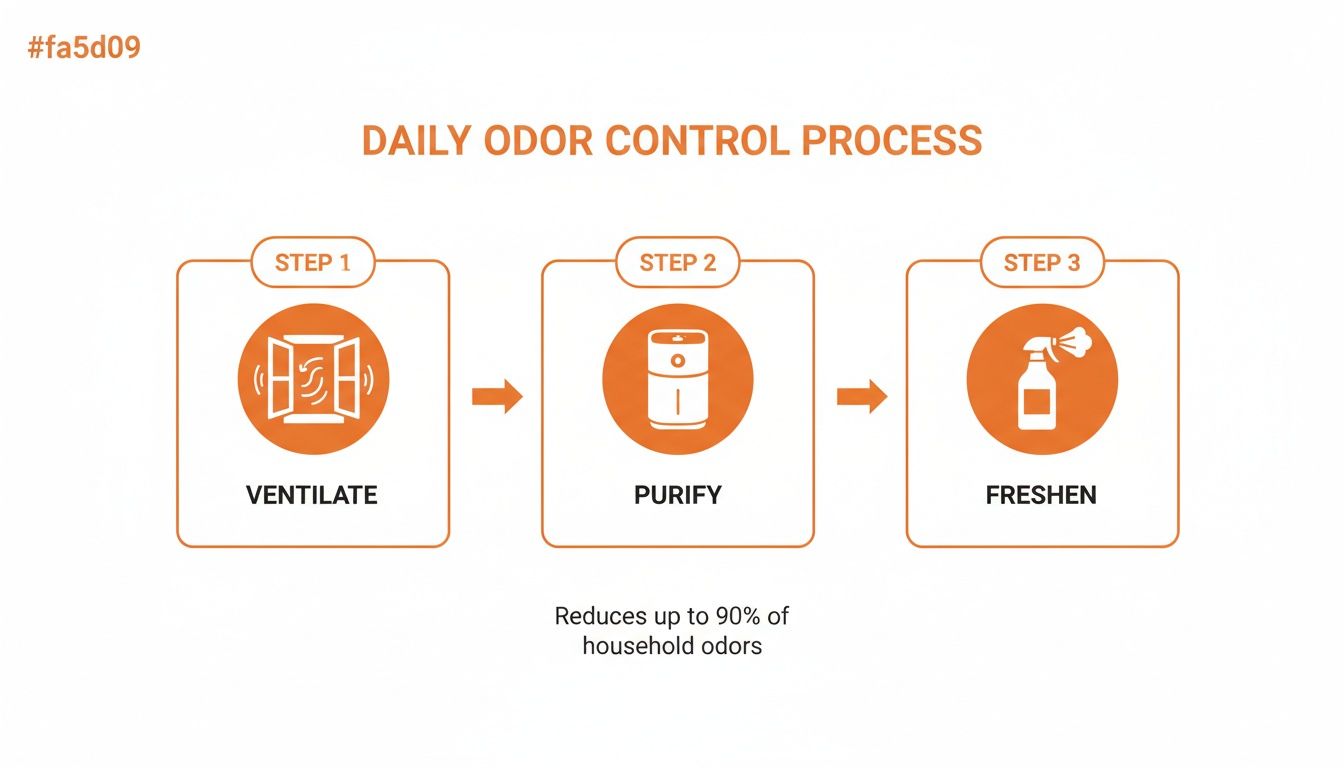
The big takeaway here is consistency. Combining ventilation, purification, and freshening is always going to be more effective than just doing one thing.
Tackling the Living Room Odor Hotspots
Your living room is usually ground zero for dog smells. It's where everyone hangs out—including your furry family member—which means sofas, rugs, and curtains are basically giant sponges for every scent imaginable.
Start with anything you can toss in the washing machine.
- Throw blankets and pillow covers: Wash these in hot water (if the label allows) with a quality detergent. I like to add a cup of white vinegar to the rinse cycle; it works wonders on stubborn odors.
- Curtains and drapes: People always forget these! They trap so much dust and dander. Most can go in the washer on a gentle cycle, but check the tag first.
- Dog toys: Soft toys can go into a mesh bag and join the laundry. For hard toys, a good soak in a 50/50 mix of water and vinegar does the trick.
Once the washables are handled, it's time to face the bigger challenges: the upholstery and carpets.
Deep Cleaning Upholstery and Furniture
Let's be honest, your couch has probably soaked up its fair share of dander and doggy oils. Before you do anything, find the cleaning tag (it usually has a code like "W," "S," "W/S," or "X") to make sure you don't damage the fabric.
For most fabrics, a generous sprinkle of baking soda is a fantastic first move. Let it sit for a few hours—or even overnight—to really draw out the smells, then vacuum it up completely with an upholstery attachment. If you need to go deeper, a handheld steam cleaner can be a game-changer on durable fabrics, using high-heat steam to kill bacteria without chemicals.
A Pro Tip from Experience: After my dog decided the couch was the best place to dry off after a run in the rain, that "wet dog" smell just wouldn't quit. I found that a light mist of isopropyl alcohol in a spray bottle neutralized the smell almost instantly as it evaporated, leaving no moisture behind. Just be sure to test it on a hidden spot first!
Uncovering Hidden Smells with a Blacklight
Sometimes, the worst smells are the ones you can't see. Old urine spots are a huge culprit behind that persistent dog smell, and once they're dry, they're often invisible to the naked eye.
This is where a UV blacklight is your secret weapon. In a dark room, old urine stains will glow, showing you exactly where you need to clean. I use painter's tape to mark the spots so I can find them again with the lights on. Hitting these specific areas with a good enzymatic cleaner is key—the enzymes literally break down and digest the uric acid crystals that cause the odor.
It's a much smarter way to work than just cleaning an entire room and hoping for the best.
Freshening Up the Bedroom
Your bedroom should be your sanctuary, but if your dog sleeps in there with you (or on the bed), it can quickly start smelling like a kennel. The plan here is a lot like the living room, but with a major focus on bedding.
Wash all of it—sheets, duvet covers, pillowcases—in the hottest water the fabric can safely handle. And please, don't forget your dog's bed. It’s a concentrated source of odor. If the cover comes off, wash it weekly. If not, you may need to wash the whole bed or hit it with a steam cleaner to sanitize and deodorize it.
Cleaning Hard Surfaces Correctly
Fabrics are the main odor sponges, but hard surfaces aren't off the hook. Smells can get trapped on wood, tile, and laminate, especially in the little gaps and grout lines. Just mopping with a standard cleaner often isn't enough.
A simple mix of one cup of white vinegar to a gallon of warm water makes an amazing deodorizing floor cleaner. The vinegar's acidity breaks down the bacteria causing the smell, and I promise the vinegar scent disappears completely once it's dry. Just be sure to wring your mop out really well, especially on wood floors.
Going room-by-room like this ensures you're actually eliminating odors, not just masking them. But some jobs, especially odors that have settled deep into carpet fibers, can be next to impossible for DIY methods. There's a reason the U.S. Carpet Cleaning Services industry has grown into a $5.9 billion market; professionals have the gear and solutions to fix what home remedies can't. You can discover more insights about this growing industry and see why so many homeowners turn to experts for tough pet odors.
Neutralizing Odors in Carpets and Upholstery
Let's be honest, your carpets and furniture are the undisputed champions of trapping dog smells. They're like giant, fibrous sponges, soaking up everything from dander and oils to saliva and the occasional accident. This is where we have to get serious and move beyond simple surface cleaning. If you don't focus on true odor extraction, you're just masking a problem that's buried deep within the fibers.
To really win this fight, you need to understand that you're battling organic compounds that have chemically bonded to the fabric. Let's walk through some effective DIY methods and, just as importantly, where they fall short.
DIY Solutions for Fabric Odors
When you need a quick, budget-friendly fix, a couple of common household items can be surprisingly effective on surface-level dog smells. These are your go-to methods for general mustiness or a light "doggy" scent that hasn't had years to set in.
Two of the most reliable workhorses are baking soda and white vinegar. They tackle the problem in slightly different ways.
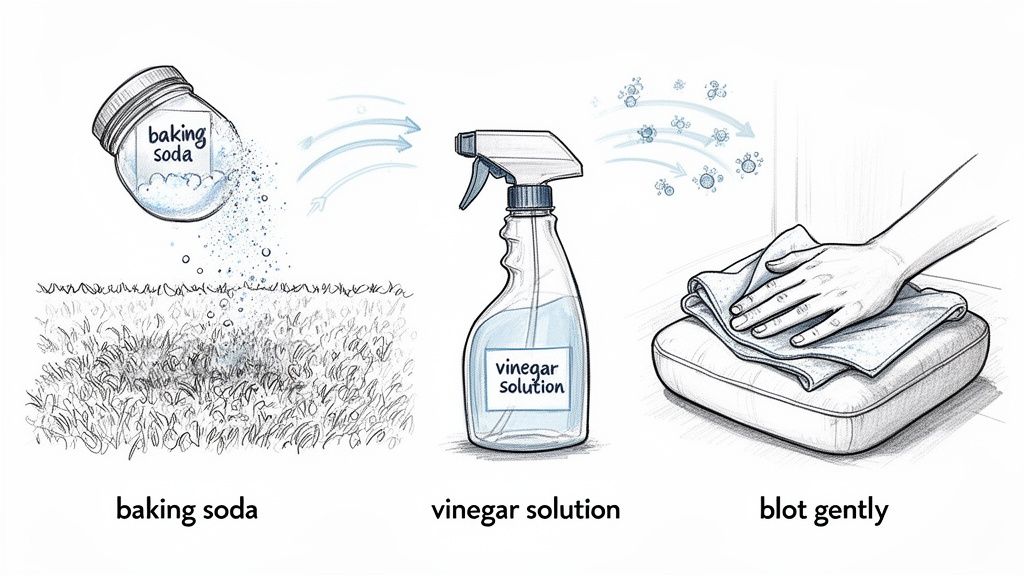
- Baking Soda for Absorption: This stuff is alkaline, and it works by absorbing and neutralizing acidic odor molecules. It's fantastic for drawing out smells from dry fabrics.
- White Vinegar for Neutralization: The acetic acid in vinegar is a natural deodorizer that breaks down the stinky bacteria. Don't worry about the vinegar smell—it vanishes completely as it dries.
Key Takeaway: The single biggest mistake people make with DIY solutions is using too much liquid. If you oversaturate your carpet or couch, moisture gets trapped in the padding. This can kickstart mildew growth, leaving you with a smell that's often way worse than the dog odor you started with.
How to Use Baking Soda Correctly
Using baking soda is one of the easiest ways to get rid of dog smell in your house, but technique is everything. Make sure the carpet or furniture is completely dry before you start. Sprinkle a generous, even layer over the entire surface. This is not the time to be shy; you want enough to really cover the fabric.
Grab a soft-bristled brush and gently work the powder down into the fibers. This is a crucial step for getting the baking soda deep into the pile where odors love to hide. Let it sit for at least a few hours, but if you can leave it overnight, even better. The longer it sits, the more odor it can absorb. When you're ready, vacuum it all up with a machine that has strong suction.
Applying a Vinegar Solution Safely
For those tougher, more set-in smells, a vinegar solution can pack a bigger punch. Just mix a solution of 50% white vinegar and 50% water in a spray bottle. The key here is to apply it as a fine mist, not to soak the fabric.
Lightly mist the smelly area—just enough to make it slightly damp. Let the solution air dry completely on its own. As it dries, the vinegar will neutralize the odors, and its own sharp scent will disappear right along with them. This is a great trick for deodorizing your dog's favorite spot on the couch or a specific area of a rug.
Common DIY Pitfalls to Avoid
While these home remedies can definitely help, they have some big limitations. Knowing the common mistakes can save you from a cleaning disaster that makes the problem even worse.
One major issue is leaving behind residue. If you get overzealous with dish soap in a spot-cleaning mix or don't fully vacuum up the baking soda, you're left with a sticky or powdery film. That residue is basically a dirt magnet, causing the area to get filthy much faster in the future.
The other critical error is using too much water. When you soak a carpet, moisture seeps right through the backing and into the padding—sometimes even the subfloor. That trapped moisture can't evaporate, creating the perfect breeding ground for mold and mildew. You might have fixed the dog smell, but now you've got a stubborn musty odor to deal with. For a closer look at how the pros handle this, our guide on carpet cleaning for pet odors explains how advanced, low-moisture techniques prevent these exact issues.
Ultimately, DIY methods are best for minor, surface-level odors. For those deep-set smells, especially from repeated urine accidents, you'll almost certainly need professional help to truly eliminate them.
When to Call a Professional Cleaning Service
Let's be honest. Sometimes, no matter how much you scrub, spray, and air out the house, that stubborn dog smell just won't quit. You've followed all the steps, tried every DIY trick you could find, and yet the odor sneaks back in a day or two later.
If this sounds familiar, you're not failing at cleaning. It's a clear signal that the problem has gone deeper than the surface—into places your home cleaning tools simply can't reach.
When you're dealing with smells that have soaked into carpet padding, upholstery foam, or even the subfloor, it's time to call in the professionals. Repeated accidents or long-term odor buildup create a situation where home remedies can only do so much. The source of the smell is just too embedded for any surface treatment to be truly effective.
Signs You Need Professional Help
Knowing when you've hit the limit of your DIY efforts is the key to finally solving your odor problem for good. If you're nodding along to any of these scenarios, it’s a strong sign you need an expert to permanently get that dog smell out of your house.
- The Odor Comes Right Back: You spend a whole afternoon cleaning, and things smell great… for a day. Then the dog odor returns. This usually means the source is trapped deep in the carpet padding, which re-releases the smell as it dries.
- Humidity Makes It Worse: Does the dog smell become overpowering on rainy or humid days? That's because moisture in the air is reactivating odor-causing bacteria buried deep within the fibers of your carpet and furniture.
- You Can't Pinpoint the Source: If the whole room smells funky but you can't find a specific spot, the odor has likely become widespread. It's not just in one place; it's embedded in multiple surfaces.
- Stains Keep Reappearing: Have you ever cleaned a stain perfectly, only to see it "wick" its way back to the surface a few days later? That's a surefire sign the source of the stain is in the padding, and it's pulling the mess back up as it dries.
The biggest challenge homeowners face is that pet urine can seep through the carpet backing and into the padding and subfloor within minutes. Once it’s there, no amount of surface scrubbing will remove it. This is where professional-grade extraction is essential.
The Advantage of Modern Cleaning Methods
When you decide to call a pro, it’s important to know that not all cleaning methods are the same. Most of us are familiar with traditional steam cleaning, which blasts carpets with high-pressure hot water and detergents. While it can be decent for surface dirt, this method often makes pet odor problems worse.
Why? It completely oversaturates the carpet and can leave behind a sticky, soap-based residue that actually attracts more dirt and dander over time.
This is exactly why modern, low-moisture cleaning techniques have become the go-to choice for pet owners here in Buford. At Citrus Carpet Cleaning Buford, we use a powerful citrus-based solvent that cleans deep without any soaps or harsh chemicals. Our process breaks down and crystallizes the dirt and odor-causing gunk, which is then lifted right out of the carpet.
Why Low-Moisture Cleaning Wins for Pet Odors
The benefits of a low-moisture approach are huge, especially when you're tackling stubborn pet smells. It directly addresses the core issues that make old-school methods fall short.
No Sticky Residue
Our citrus-based solution is completely soap-free. That means it doesn't leave behind any sticky film that acts like a magnet for new dirt and pet dander. Your carpets don't just get clean; they stay cleaner for much longer.
Fast Dry Times Prevent Mildew
One of the biggest risks of overwetting carpets is mold and mildew growth in the padding, which just trades one bad smell for another musty one. Our low-moisture system uses far less water, allowing your carpets to dry in just 1-2 hours, not days. This rapid drying time completely eliminates the risk of mildew and gets you back to enjoying your fresh, clean home right away.
By choosing a professional service that specializes in these advanced techniques, you’re not just temporarily masking the problem—you’re permanently eliminating the source of the odor. For Buford homeowners, this means a truly clean, fresh, and healthy home for you and your pets.
Keeping Your Home Fresh for the Long Haul
Getting rid of that dog smell is a great first step, but the real win is making sure it never comes back. Long-term freshness isn't about one giant cleaning blitz every few months. It's about small, consistent habits that you weave into your everyday life. The idea is to stop odors at the source before they even get a chance to sink into your home.
This is all about shifting from being reactive to being proactive. Instead of constantly battling smells that have already settled in, you're creating a home where they just can't get a foothold. The two biggest areas to focus on? Your dog's grooming and a few smart home defenses.
Get on a Proactive Grooming Schedule
A huge chunk of that "dog smell" comes right from your dog's coat. We're talking about dander, natural oils, and whatever dirt they've managed to collect. A consistent grooming routine is your absolute best defense for minimizing what ends up floating around your house and landing on your furniture.
- Brush, Brush, Brush: Brushing your dog a few times a week—or even daily if you've got a heavy shedder—gets rid of loose fur and dander before it has a chance to decorate your floors and sofa.
- Schedule Bath Time: A regular bath with a good, dog-specific shampoo is non-negotiable. It washes away the smelly bacteria and excess oils that cause odors. How often you need to do it depends on the breed and how much trouble they get into, but it’s a key part of long-term odor control.
And don't forget your pet's overall wellness. Making sure you're supporting good dog skin and coat health can dramatically cut down on smells by promoting a healthier, less oily coat from the inside out.
Set Up Your Home to Fight Odors
Beyond grooming your pup, a few simple tweaks to your home setup can make a world of difference. Think of it like setting up a defensive line that catches messes and smells before they can spread. This is how you stop asking "how to get rid of dog smell" and just live in a fresh-smelling home.
My Two Cents: The best way to keep a home fresh is to make cleaning easy on yourself. Using washable covers and putting down good mats means you're cleaning small, manageable things on a regular basis, not facing a massive deep clean every other month.
Here are a few simple ways to create an easy-to-clean environment:
- Use Washable Covers: Throw some stylish, washable slipcovers or blankets over the spots where your dog loves to hang out. Tossing a blanket in the laundry is a heck of a lot easier than trying to deep clean an entire couch.
- Put Down Absorbent Mats: Place some heavy-duty, absorbent mats at every door. This is a simple barrier that traps a surprising amount of mud, water, and whatever else they try to track in from outside.
- Clean Up Accidents Immediately: Don't let accidents sit for a minute. The moment you see one, blot it up and hit it with an enzymatic cleaner. This stuff breaks down the organic compounds completely so odors can't take hold.
When you combine consistent grooming with these smart home habits, you create a system that actually works. You can finally stop fighting a losing battle and just enjoy having your four-legged family member around, minus the lingering smell.
If stubborn odors have already soaked deep into your carpets and furniture, even the best prevention plan might not cut it. The team at Citrus Carpet Cleaning Buford uses a specialized low-moisture, citrus-based system to knock out odors for good, without leaving behind any of that sticky, dirt-attracting residue. Schedule your EXACT-imate today!