

Getting rid of a wet carpet smell isn't a one-step job. It’s really a two-part process: first, you have to thoroughly dry the carpet and its padding, and then you have to go after the odor-causing bacteria with the right cleaning agents. For little spills, that might just mean sucking up the water, hitting it with baking soda, and getting some serious airflow. But for those smells that just won't quit, a professional approach using low-moisture cleaning is almost always your best bet.
Why That Wet Carpet Smell Is More Than an Annoyance
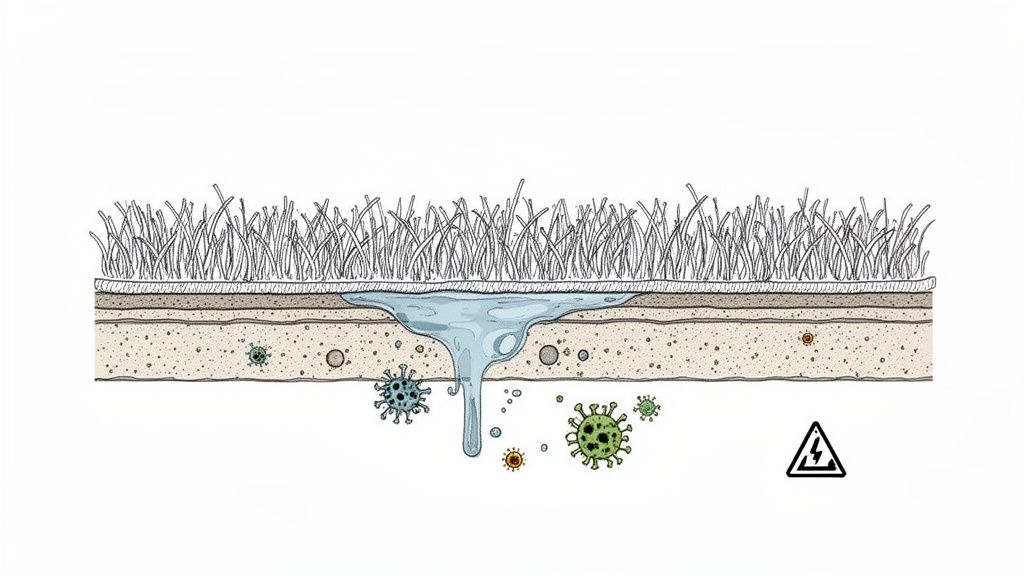
Let's be real—that musty, kind of sour smell coming from your floor is just plain gross. But it's so important to understand that the odor is more than just unpleasant; it's a warning sign something is wrong. That smell is literally produced by bacteria and mildew having a feast on the moisture trapped deep in your carpet fibers, the padding underneath, and maybe even the subfloor.
Think of this guide as your roadmap to fixing the problem for good, not just spraying some air freshener and calling it a day. We'll walk through everything, starting with how to find the real source of the moisture and then moving on to the right ways to dry and clean it.
What Causes That Persistent Damp Odor
For homeowners here in Buford, a few usual suspects are often behind that lingering wet carpet smell. Pinpointing the cause is the absolute first step to finding the right solution.
- Spills That Never Fully Dried: A knocked-over glass of water or a leaky plant pot seems minor, right? But if that moisture soaks all the way through to the padding, it can sit there and fester for weeks, creating a smell long after the surface feels dry.
- High Humidity: It's no secret that Georgia's climate is humid, and that moisture is always in the air. Without good ventilation or a dehumidifier running, your carpets can slowly soak up that ambient moisture like a sponge, creating the perfect breeding ground for mildew.
- Hidden Plumbing Leaks: This is the sneaky one. A slow, tiny leak behind a wall or under the floorboards can keep a section of your carpet constantly damp, leading to a really strong, concentrated musty odor in one spot.
The Health Risks Hiding in Your Carpet
That signature wet carpet smell is directly tied to hidden mold growth, which can start developing in as little as 24-48 hours. The dampness creates a five-star resort for microorganisms that tank your home's air quality.
This isn't just a "what if" scenario. Indoor dampness is linked to a 30–50% increase in respiratory problems like coughing and wheezing. This is especially true for kids and anyone with asthma. Because of Georgia's high humidity, carpets here dry much, much slower, which means Buford homeowners really need to act fast. If you're curious, you can learn more about how the carpet cleaning industry is tackling these issues over at AnythingResearch.com.
Key Takeaway: A wet carpet smell is a direct signal of microbial activity. Ignoring it is like giving bacteria and mold a green light to thrive, which can affect your family’s health and make the problem way harder to fix down the road. You have to address the moisture source immediately—it's non-negotiable.
Pinpointing the Source of the Wet Carpet Smell
Before you can tackle that wet carpet smell, you need to play detective. I can't tell you how many times I've seen people waste time and money scrubbing a spot, only to have the smell creep back a week later. Why? Because they treated the symptom, not the cause.
The cleaning method for a spilled soda is worlds apart from what you need for a hidden pipe leak. Getting this first step right is everything.
Get Your Hands Dirty (And Use Your Nose)
Your investigation starts on your hands and knees. Don't just look at the carpet—really feel it. Is it just a little damp, or is it spongy and saturated?
A spongy feel is a dead giveaway that moisture has soaked through to the padding and possibly the subfloor. That's a much bigger problem than a simple surface spill.
Now, trust your nose. Follow the scent to its strongest point. It sounds simple, but this is your best tool for narrowing down the search area. An odor that’s most potent near an exterior wall could mean a foundation leak. If it's strongest around your dishwasher, you might be looking at a busted hose.
Common Culprits and Their Hiding Spots
Moisture is predictable. It usually comes from a handful of common sources, so checking these systematically can save you a lot of guesswork. Start moving furniture away from walls and lifting the corners of area rugs to see what’s hiding underneath.
You're not always looking for a giant, dark water stain. Sometimes the clues are much more subtle—a slight discoloration of the carpet fibers or a faint ring where water has evaporated. Look closely along your baseboards for any swelling or staining. That's a classic sign of a slow leak happening inside the wall.
Here’s a pro tip: check the carpet tack strips. If you can, carefully pull back a corner of the carpet in a closet or another out-of-the-way spot. Look at the wooden strips along the wall. If you see rust on the tacks or dark water stains on the wood, you have definitive proof of a persistent moisture problem.
What Kind of Smell Are You Dealing With?
Not all wet carpet smells are created equal. The specific aroma can tell you a lot about where it’s coming from. A musty, earthy smell screams mildew and long-term dampness, while a sharp, acrid smell is almost always a pet accident.
Think about these common scenarios:
- Simple Spills: Water, soda, or juice spills usually have a localized, generally "damp" or slightly sour smell. The wet area will be a single, well-defined spot.
- Pet Urine: This one’s unmistakable. Cat or dog urine has a sharp, ammonia-like odor that only gets stronger as the uric acid breaks down. You might need a blacklight to find old, dried spots that are invisible to the naked eye.
- Hidden Leaks: A smell that’s consistently musty—like damp soil or a wet basement—often points to a slow, ongoing leak from plumbing, a window seal, or the roof. When you're facing a major water issue, knowing how to fix a leaking roof from the inside can be a crucial first step to stop the damage from getting worse.
- Sewage Backup: This is the worst-case scenario. The smell is overwhelmingly foul and requires immediate professional help because of the dangerous bacteria involved.
To help you figure it out quickly, I've put together a little cheat sheet.
Decoding Your Wet Carpet Odor Source
Use this table to quickly identify the likely cause of your carpet smell based on its distinct characteristics and other clues.
| Odor Source | Typical Smell | Visual Cues | Recommended First Action |
|---|---|---|---|
| Simple Spill | Mild, damp, or slightly sour. | A single, defined wet spot; may have a faint water ring after drying. | Absorb excess with towels; use a wet/dry vac if saturated. |
| Pet Accident | Sharp, ammonia-like odor. | Yellowish stain (may be invisible when dry); glows under a blacklight. | Blot immediately; treat with a specialized enzyme cleaner. |
| Hidden Leak | Persistent, musty, earthy smell. | Discolored baseboards, rusty tack strips, subtle carpet staining. | Identify and repair the leak source before cleaning the carpet. |
| Sewage Backup | Overpowering, foul sewer odor. | Dark, heavily contaminated water; often widespread saturation. | Evacuate the area and call a professional remediation service. |
Once you've matched the smell to the source, you'll know exactly what you're up against and can move on to the right cleaning and drying strategy.
Your Action Plan for Drying and Deodorizing
Once you've played detective and figured out where the water is coming from, it's time to get to work. Getting that nasty wet carpet smell out for good is a two-step process: first, you dry it aggressively, then you deodorize it properly. Just spraying some air freshener is a waste of time; the smell will always come back if the moisture is still there.
You have to get to the root of the problem, which is the water that's letting all that smelly bacteria and mildew have a party in your carpet fibers. Think of it like pulling a weed—if you don't get the roots, it's just going to sprout right back up.
This flowchart breaks down the simple process of finding the source of the wetness.
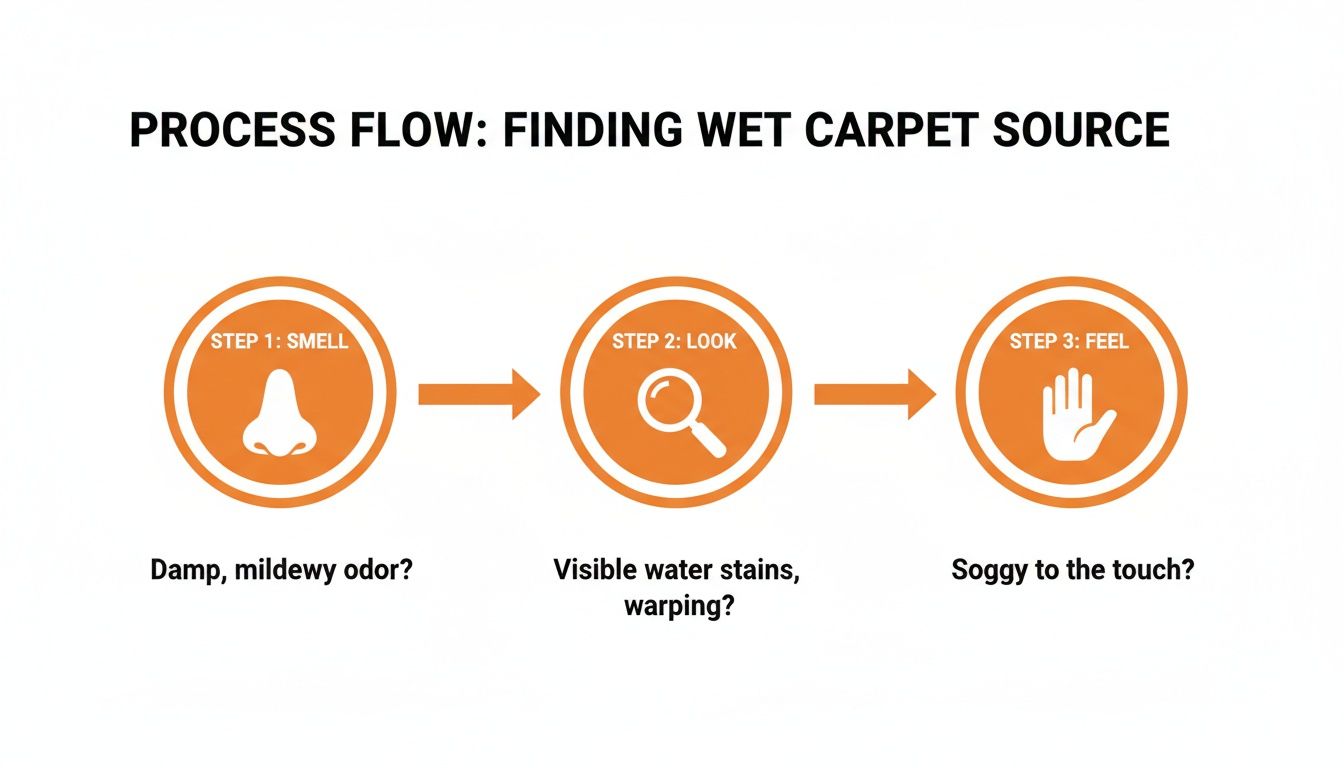
As you can see, a combination of your senses—smell, sight, and touch—is really the best tool you have for pinpointing exactly what and where the problem is before you start the cleanup.
Phase One: The Drying Imperative
Getting every single drop of moisture out as fast as you can is your absolute top priority. Seriously, the clock is ticking. Mold and mildew can start growing in as little as 24-48 hours. The top of the carpet might feel dry to the touch, but the real enemy is the water trapped deep in the padding and even in the subfloor below.
Your best friend in this fight is a wet/dry vacuum. Go over the damp area slowly, then do it again. And again. Let that powerful suction pull the water up from the base of the carpet and the pad. You’ll be shocked by how much liquid it pulls out, even from a spot that just feels a little damp.
After you've sucked up all the water you can, it's time to create a windstorm in your living room.
- Set Up Fans: One fan isn't enough. Grab a few box fans, or rent an industrial blower if you can. Point them at the wet spot from different angles to create some serious cross-ventilation.
- Plug in a Dehumidifier: This is a must, especially in a humid place like Georgia. A dehumidifier will actively suck moisture from the air, the carpet, and the pad, which really speeds things up.
- Open the Windows: As long as it isn't raining or muggy outside, opening the windows helps move that damp air out of the room.
If you're dealing with a big puddle or a really soaked area, you might have to carefully pull the corner of the carpet up from the tack strip. This lets you point a fan directly at the soggy padding and subfloor to make sure they dry out completely. If you skip this, you’ll be left with a permanent musty smell that no amount of surface cleaning can fix. The answer to "how long for carpet to dry" really depends on how hard you go at this drying phase.
Phase Two: Smart Deodorizing Techniques
Once the carpet, padding, and subfloor are completely, totally, bone-dry—and not a second before—you can start tackling the smell. If you throw cleaners or deodorizers on a wet carpet, you're just making a scented, soupy mess that traps moisture and makes everything worse.
The Power of Baking Soda
For a basic musty smell or an odor from a simple water spill, baking soda is your first and best bet. It's cheap, safe, and it works by absorbing and neutralizing the odor molecules.
Pro Tip: Don't be shy with it. Sprinkle a thick, generous layer over the whole spot. Use a soft brush to gently work it into the carpet fibers, and then just leave it alone for a few hours, or even overnight. Then, vacuum it up thoroughly.
When You Need an Enzyme Cleaner
If the smell is coming from something organic—we're talking pet urine, spilled milk, vomit—baking soda isn't going to cut it. For that, you need an enzyme cleaner. These products are full of good bacteria that literally "eat" the organic proteins causing the horrible smell, eliminating the source completely.
Just be sure to follow the directions on the bottle. Usually, you need to soak the area and let it sit for a while so the enzymes can do their job.
A Word of Caution on Store-Bought Shampoos
Be careful with those rental carpet shampooers and the cleaning solutions you find at the grocery store. Most of them are full of soap, and if you don't rinse every last bit of it out, it leaves behind a sticky residue. That residue is like a magnet for dirt, making your carpet get filthy again in no time. Worse yet, using too much water can put you right back at square one with a damp, sour-smelling carpet. For a real deep clean without the risk, a professional low-moisture cleaning is almost always a safer and more effective way to go.
Handling Mold And Mildew Growth Safely
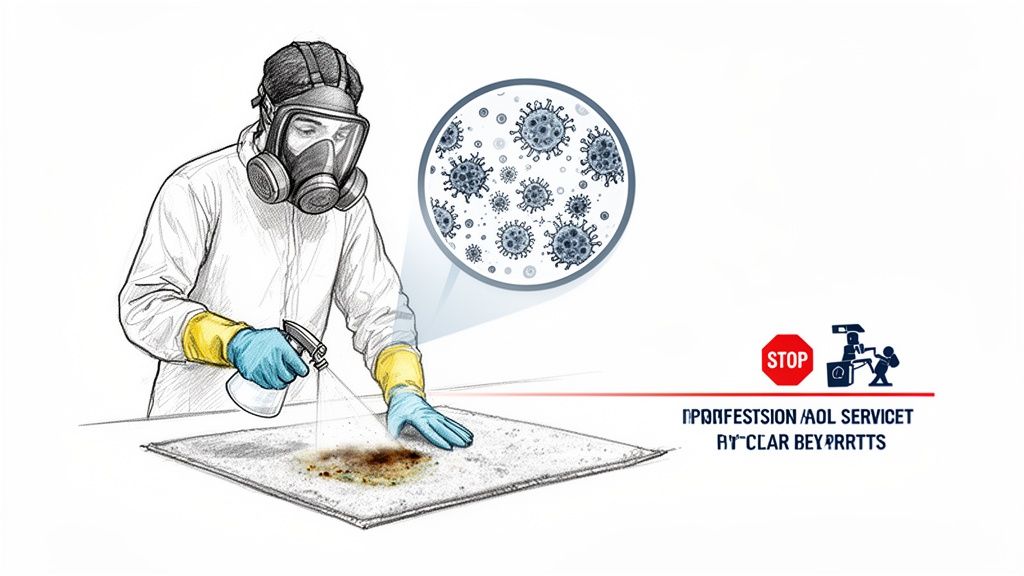
There's a point where a simple damp smell crosses a line and becomes something more earthy and musty. When you hit that point, you're not just dealing with an odor anymore. You've got a potential health hazard on your hands: mold or mildew.
Ignoring this smell isn't an option, especially for your family's well-being. Mold pumps spores into the air, tanking your indoor air quality. For anyone with allergies, asthma, or a compromised immune system, that exposure can mean respiratory issues, coughing fits, and other nasty reactions. This is why getting rid of mold is about protecting your health, not just cleaning a stain.
Identifying Mold Growth On Your Carpet
Before you can fix the problem, you need to know exactly what you're looking for. Mold is sneaky. It often starts growing in the carpet backing or padding long before you ever see it on the surface.
Keep an eye out for these tell-tale signs:
- Visible Discoloration: You might notice fuzzy spots or patches that are green, black, white, or even orange showing up on the carpet fibers.
- Earthy, Musty Odor: This is the big one. If a room smells like damp soil or a wet basement even after it's dry, you should suspect mold.
- Deteriorating Carpet: In really bad cases, mold will actually eat away at the carpet backing, making it brittle and causing it to fall apart.
Don't just look at the carpet. Check nearby areas and appliances that use water. For instance, understanding the potential harm from washer door gasket mold can help you pinpoint a hidden source before it spreads.
Tackling Small, Surface-Level Mildew
If you've caught it early and you're just dealing with a small patch of surface mildew—we're talking less than a few square feet—you can probably handle it yourself. But you have to be safe about it. Always gear up with an N95 mask, goggles, and gloves to avoid breathing in any spores.
A simple mix of equal parts white vinegar and water in a spray bottle works wonders. Lightly mist the area (don't soak it!) and let it sit for about an hour. The vinegar's acidity is great for killing mildew. After it's had time to work, gently scrub the spot with a stiff brush and then blot it dry with a clean cloth.
Crucial Reminder: The final step is getting it completely dry. Point fans directly at the spot and get a dehumidifier running to pull every last bit of moisture out. If you clean it but leave it damp, you're just making the problem worse.
When To Immediately Call A Professional
Knowing when to throw in the towel and call a pro is the most important call you'll make. Trying to handle a serious mold problem on your own is just too risky. If you run into any of these situations, stop what you're doing and call a professional mold remediation service right away:
- The moldy area is larger than 10 square feet.
- The carpet padding or the subfloor underneath is soaked and has mold on it.
- That musty smell is overwhelming and just won't go away, even after cleaning.
- Someone in your house is having unexplained respiratory problems.
The pros have the right equipment and containment strategies to get rid of the mold safely without spreading spores all over your house. For a closer look at what you might be up against, our guide on identifying and treating mold on carpet has more detailed information. When mold gets serious, professional help is the only way to be sure your home is safe again.
You've put in the work—drying, scrubbing, and finally getting that awful wet carpet smell out of your house. The last thing you want is a round two. Winning the battle is one thing, but winning the war means making sure it never comes back.
Honestly, being proactive is a whole lot easier than dealing with the cleanup again. Just think of your carpet as a giant sponge on your floor. It's designed to be soft, but that also means it’s ready to soak up every spill, tracked-in raindrop, and even the moisture hanging in the air. A few smart adjustments to your routine can keep that sponge dry and fresh.
Get a Handle on Your Home's Moisture
Here in the Buford area, humidity is just a fact of life, especially during those long, muggy summers. When the air inside your home feels damp, you can bet your carpets are damp, too. This is where a good dehumidifier becomes your best friend.
Running a dehumidifier, especially in a basement or main living area, can pull an incredible amount of water from the air. This one simple step stops your carpet fibers from turning into a perfect home for mildew. You want to aim for an indoor humidity level below 50%. That creates an environment where mold and all those other smelly microbes just can't get a foothold.
Expert Tip: Controlling your home's humidity is the single most powerful thing you can do to prevent musty carpet odors. You're cutting the problem off at the source by taking away the one thing odor-causing bacteria needs to survive: water.
A Few Simple Habits Make a Huge Difference
Beyond running a dehumidifier, a few small changes in your daily life can build a powerful defense against wet carpet smell.
- Attack Spills Instantly: This is the golden rule. When something spills, don't walk away and tell yourself you'll get it later. Grab a clean, dry towel and blot that spot immediately. Stand on the towel, shift your weight—do whatever you can to soak up the liquid before it seeps deep into the padding.
- Use Good Doormats: Put a thick, absorbent doormat at every single door leading outside. You’d be shocked at how much water, mud, and gunk a quality mat can trap, stopping moisture right in its tracks.
- Let Your House Breathe: Always use the exhaust fans in your kitchen and bathrooms to pull steam and moisture outside. On dry days, crack a few windows for 20-30 minutes. It does wonders for airing out the house and releasing any trapped dampness.
Why a Professional Low-Moisture Cleaning Schedule Matters
Finally, let's talk about the long-term health of your carpet. While your own cleanup efforts are crucial for accidents, nothing beats a regular professional cleaning to prevent those deep-set odors from ever developing. But be careful—not all "professional" methods are created equal.
You've probably heard of steam cleaning. It can seem like a good idea, but it often involves pumping gallons and gallons of hot water into your carpet and pad. If the technician doesn't extract nearly all of it, that leftover moisture can take days to dry. You can end up creating the very dampness problem you were trying to fix, leaving you with a sour, musty smell.
That's exactly why our entire system is built around a low-moisture, citrus-based cleaning process. We use a fraction of the water that traditional steam cleaners do, so your carpets are deep-cleaned and dry in just 1-2 hours. By never over-saturating your floors, we eliminate the risk of leftover dampness. A regular cleaning with us isn't just a cleaning; it's the ultimate preventive maintenance for keeping your home fresh and odor-free.
Knowing When to Call a Carpet Cleaning Professional
You’ve tried everything—the fans, the baking soda, the scrubbing—but that musty, wet carpet smell just won't quit. I see it all the time. Sometimes, no matter how hard you work, a DIY approach just isn't powerful enough to solve the problem for good.
Knowing when to hand the job over to a professional isn't admitting defeat; it's making the smartest, most efficient choice for your home and your family's health.
If you find yourself in a cycle of cleaning the same spot only for the odor to creep back in a few days, that's a huge red flag. It’s a clear signal the moisture has soaked deep into the carpet padding or even the subfloor. At that point, surface treatments simply can't reach the real source of the smell.
Clear Signs You Need an Expert
It’s time to pick up the phone when you’re facing something beyond a simple, contained spill. Calling in a pro is the best move for several key scenarios that demand specialized equipment and experience.
- Large-Scale Water Damage: If the wetness is from a burst pipe, a major roof leak, or any kind of minor flooding, the sheer volume of water is too much for household tools. Professionals use commercial-grade water extractors that can pull gallons of moisture from deep within the carpet and padding, something a shop vac can't touch.
- Recurring Odors: A smell that returns days or even weeks after you've cleaned is the number one sign of a deeper issue. This almost always means the padding is still holding moisture and breeding bacteria. Only a professional deep cleaning can truly resolve it.
- Persistent Pet Odors: When pet urine soaks through to the subfloor, the uric acid crystals left behind can continue releasing a sharp ammonia smell for years. We use professional-grade, citrus-based deodorizers that chemically neutralize these crystals—something store-bought sprays just can't do.
More and more homeowners are recognizing the limits of DIY solutions. The U.S. carpet cleaning industry now pulls in USD 6.9 billion in annual revenue, a number that's growing steadily. This trend shows a real shift where people are prioritizing guaranteed results and healthy indoor air over frustrating, repeated home remedies. For a deeper dive into these industry trends, you can explore the full market analysis on IBISWorld.com.
Our low-moisture cleaning system is designed to solve these exact problems. By using a fraction of the water of traditional steam cleaning, we get your carpets truly clean, and they are dry in just 1-2 hours. This rapid drying time is critical because it eliminates the risk of new odors forming from leftover dampness.
Ultimately, calling a professional saves you time, frustration, and guarantees the wet carpet smell is gone for good. If you're weighing the options, our detailed guide can help you decide if professional carpet cleaning is worth it for your specific situation, ensuring a fresh, healthy home environment.
You've soaked up the spill, dried the spot, but that lingering wet carpet smell still has you second-guessing. It's perfectly normal to have a few questions. Getting the right answers is key to tackling the problem now—and making sure it doesn't happen again.
How Long Does It Take for a Wet Carpet to Start Smelling?
Honestly, not long at all. A carpet can start to develop that sour, musty smell in as little as 24 hours. Here in humid places like Buford, it can happen even faster.
That smell is your first warning sign. It’s caused by bacteria and mildew having a party in the damp fibers. This is exactly why grabbing those towels and fans immediately is the single most important thing you can do.
Can I Just Use a Deodorizer on the Wet Smell?
Spraying a deodorizer on a wet spot is a bit like putting a band-aid on a broken arm—it hides the problem, but it doesn't fix it. The smell will absolutely come back because the source—the moisture and the bacteria feeding on it—is still there.
To get rid of the odor for good, you have to completely dry the carpet and then clean it to remove what’s causing the smell in the first place. A simple spray just adds perfume to a growing microbial issue and often makes the carpet even damper.
Is the Smell from My Wet Carpet Dangerous?
Yes, that musty smell can be a real health concern. It's the classic calling card of mold and mildew, which are busy releasing spores into your home’s air.
This kind of exposure can lead to a whole list of problems:
- Allergic reactions like sneezing, coughing, and itchy eyes
- Triggering asthma attacks, especially in kids or sensitive adults
- General respiratory irritation and other issues
Getting rid of that smell isn't just about making your house pleasant again; it's about protecting your air quality and your family's health. If the odor is strong or just won't go away, it's a clear signal that you need to take serious action, and fast.
When your best DIY efforts just aren't cutting it, especially with those stubborn odors that have soaked deep into the padding, calling a professional is the quickest way to get your home back to normal. Citrus Carpet Cleaning Buford has a low-moisture system that gets to the source of the smell and dries in only 1-2 hours, guaranteeing the problem is gone for good. Get your free EXACT-imate today!