
To truly get rid of that dog urine smell for good, you have to do more than just clean the stain you can see. The real problem is breaking down the invisible uric acid crystals left behind in your carpet. This is a job for a good enzyme-based cleaner, which actually eats away at the chemical compounds causing the smell. Once that’s done, it’s all about blotting and drying everything completely.
Your typical household cleaners or those aerosol fresheners just can't get the job done. They don’t touch the underlying crystals, which are just waiting for a little humidity to "reactivate" and bring that smell roaring back.
Why That Dog Smell Just Won't Go Away
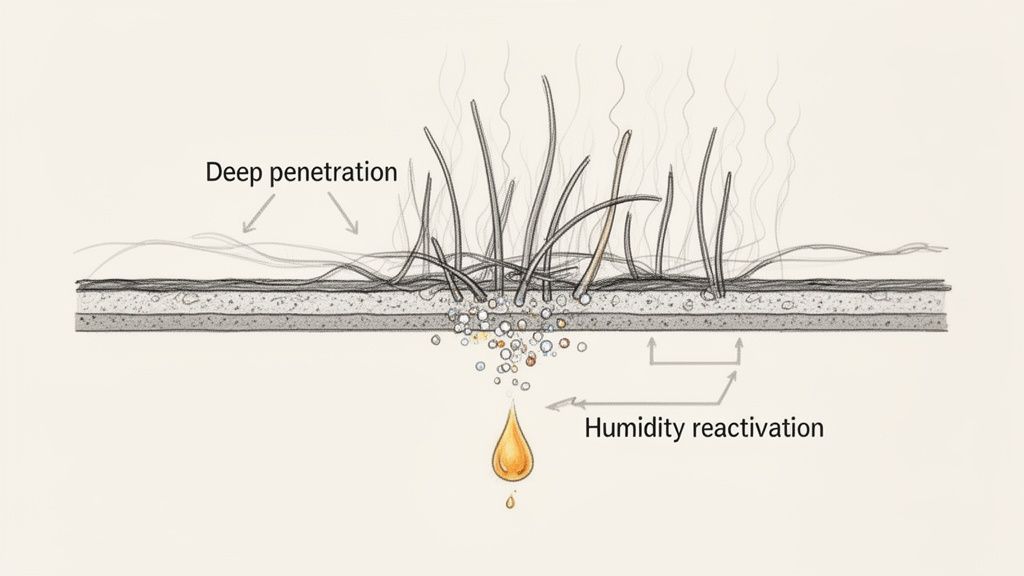
When your furry friend has an accident, that little spot on the carpet is just the tip of the iceberg. What you see is a small part of a much bigger problem. The liquid doesn't just sit on top; it starts a journey deep into your flooring, creating a hidden mess that's way harder to fix than you'd think.
That urine immediately starts seeping past the carpet fibers, soaking into the spongy padding underneath. If it's a big enough accident, it can even hit the wooden or concrete subfloor. This deep penetration is exactly why a quick surface scrub never seems to get rid of the odor for good.
The Science Behind That Stubborn Smell
Dog urine is a cocktail of different waste products, but the real troublemaker is uric acid. Once all the liquid from the urine evaporates, it leaves behind these tiny, sharp crystals that latch onto your carpet fibers and padding like glue.
Here's the frustrating part: these crystals aren't soluble in water. That means regular soap and water just won't wash them away. To make matters worse, they're "hygroscopic"—a fancy way of saying they pull moisture right out of the air. This is why you suddenly smell that phantom dog odor on a rainy Buford day or right after you steam clean. The humidity reactivates the crystals, releasing a fresh wave of that sharp ammonia smell.
You're not just fighting a stain; you're battling a chemical reaction. Getting rid of the smell means you have to completely break down those uric acid crystals at a molecular level, and that’s something most off-the-shelf cleaners just aren't built to do.
The Iceberg Lurking Under Your Carpet
Did you know a single pet accident can spread out to create a contamination zone up to 12 times larger underneath the carpet than what you see on top? It's wild but true. What looks like a tiny 3-inch spot on your carpet can easily become a foot-wide mess in the padding and subfloor below. This is because most carpet fibers are designed to repel liquid, pushing it downward and outward. You can learn more about how professionals assess this kind of damage on AVVO.com.
Understanding this "iceberg effect" is critical. It shows why just dabbing the spot you see on the surface barely makes a dent. To really neutralize dog urine in your carpet, you have to tackle the massive, unseen contamination hiding underneath. For recurring or severe problems, this is often where calling in a professional becomes the only real solution.
How to Find Every Hidden Urine Spot
Let's be honest, you can't get rid of that dog smell if you don't find every single spot. It's the old, dried accidents that are the real problem. They're often completely invisible to the naked eye but are the primary source of that funky, lingering odor you can't quite place. You might scrub the one spot you know about, only to have the smell creep back because of a half-dozen others you missed.
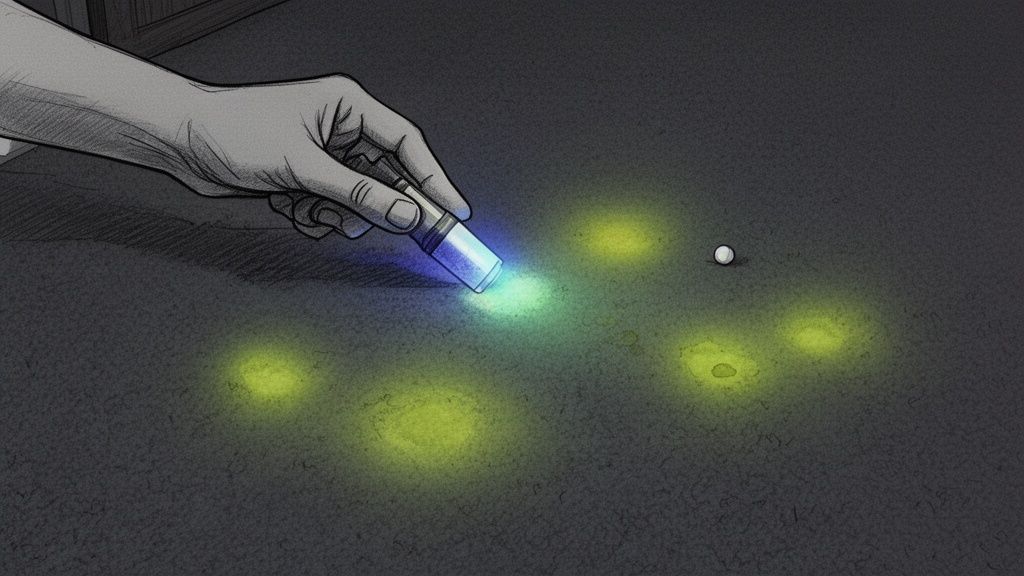
To hunt down these hidden problem areas, we do what the pros do and grab a simple but powerful tool: a UV blacklight. This is your secret weapon for a truly thorough cleanup.
Using a Blacklight to Reveal Hidden Stains
The process itself is pretty easy, but you need to set the scene first. Wait until it's dark outside or make the room as dark as you possibly can—close the blinds, shut the door, and turn off all the lights. The darker it is, the brighter those stains will glow.
Hold the UV light about a foot above the carpet and slowly sweep it across the floor. Make sure you pay extra attention to the corners, around the legs of furniture, and any of your dog's favorite hangout spots.
- What to look for: Dried urine has phosphorus in it, which glows under ultraviolet light. You're looking for a dull, eerie yellow or sometimes a faint greenish color.
- Marking the spots: Don't try to remember where they are. I've seen homeowners try, and they always miss a few. As you find each glowing patch, mark the edges with something you can see later, like small pieces of painter's tape or sticky notes. You're creating a cleaning battle map.
A quick heads-up: other things can glow under a blacklight, too, like old soda spills or residue from certain carpet cleaners. But that signature dull yellow glow, especially when you get close and can smell a faint odor, is the telltale sign of a pet accident.
When You Don't Have a Blacklight
No UV light? No problem. It's time to fall back on the good old-fashioned "sniff test." It's a low-tech method, sure, but it's surprisingly effective if you're willing to get up close and personal with your carpet.
You'll need to get down on your hands and knees and methodically smell sections of the carpet, focusing on high-traffic areas and places your dog likes to nap. When your nose tells you you've found the source, that's a spot that needs treatment. For a deeper dive into odor issues, you can check out our guide on how to eliminate pet odors in carpet.
Finding every single spot is the first real step toward getting your home smelling fresh again. Once you’ve mapped out all the problem areas, you're ready to get to work.
Your First Response to a Fresh Accident
We’ve all been there. That sinking feeling when you spot a fresh accident on the carpet. Every dog owner knows the feeling well. But what you do in those first few minutes is critical—it can mean the difference between a quick cleanup and a stubborn odor that seems to linger for weeks.
The biggest mistake people make is grabbing a scrub brush and going to town. It feels productive, but you’re actually grinding the urine deeper into the carpet fibers and, worse, into the padding underneath. This spreads the problem far beyond the little spot you can see on the surface.
So, what's the first rule of pet accident cleanup? Blot, blot, and then blot some more.
Grab a thick stack of paper towels or a few old, clean white rags. Lay them over the wet spot and apply a ton of pressure. Don't be shy—stand on the towels and use your body weight. The whole idea is to pull as much of that liquid out of the carpet and into the towels. Keep swapping out the wet towels for dry ones until they come away almost completely dry. This one simple move removes the majority of the urine before it has a chance to set in.
Creating A Simple Vinegar Neutralizing Spray
Once you've blotted up every last drop you can, it's time to deal with the acidic compounds left behind. You don't need to reach for a heavy-duty chemical cleaner right away. For a fresh spot, a simple homemade solution can work wonders.
White vinegar is your best friend here. Its natural acetic acid is fantastic for neutralizing the ammonia in fresh urine, which is exactly what you need to do to stop that sharp, pungent smell from developing as it dries.
Here’s the simple recipe I recommend to clients for immediate use:
- Mix Your Solution: In a clean spray bottle, combine equal parts plain white vinegar and cool water. A simple 50/50 mixture is all you need.
- Spray the Area: Lightly mist the solution over the entire spot. Make sure to spray an inch or two beyond the visible perimeter, as urine can spread sideways under the surface.
- Let It Dwell: Let the vinegar solution sit on the carpet for about five to ten minutes. This gives it time to work its way down into the fibers and start breaking down those odor-causing elements.
After it has sat for a bit, go back to blotting with fresh, dry towels to soak up the excess moisture. The vinegar smell might be strong at first, but don't worry. It will completely disappear as the area dries, taking a lot of the urine odor with it.
Using Baking Soda To Absorb Remaining Odors
After the vinegar has done its job neutralizing, baking soda comes in as the finisher to absorb any moisture and smells that are still hanging around.
Go ahead and sprinkle a generous layer of baking soda right over the damp, vinegar-treated area. You want a nice, even coat that completely covers the spot. The baking soda gets to work right away, wicking up residual moisture and trapping odors.
Just let the baking soda sit until it's totally dry. This might take a few hours, but leaving it overnight is even better for maximum effect. Once it has dried into a crust, just vacuum it all up. You'll probably need to make a few passes to get all that fine powder out of the carpet fibers.
For many fresh accidents, these two DIY remedies can work surprisingly well. They offer a quick, safe, and effective first response. Below is a quick comparison to help you decide which to grab first.
Comparing DIY Urine Neutralizing Solutions
| Method | Effectiveness on Odor | Effectiveness on Stains | Best For | Caution |
|---|---|---|---|---|
| Vinegar & Water (50/50) | Excellent. Neutralizes ammonia smell effectively. | Good. Can help lift fresh, light-colored stains. | Immediate response to fresh, wet urine spots. | The vinegar smell is temporary but strong. Test on an inconspicuous area first. |
| Baking Soda | Very Good. Absorbs lingering odors after initial cleanup. | Fair. Better for odor than stain removal. | Sprinkling over a damp, cleaned area to absorb residual moisture and smells. | Can be messy to vacuum up. Ensure the spot is completely dry before vacuuming. |
This two-step vinegar and baking soda method is an excellent immediate response. It’s effective, safe for most carpets, and uses ingredients you likely already have.
This method is great for tackling a fresh spot, but it doesn't break down the uric acid crystals that cause odors to return in humidity. For a deeper, more permanent clean, especially for repeat offenses, you really need to understand what an enzymatic cleaner is and why professionals consider it the gold standard for pet urine treatment.
Tackling Old Stains and Stubborn Odors
Dried urine stains are a completely different beast than fresh ones. Once a spot has had time to dry, the uric acid inside crystallizes, grabbing onto your carpet fibers for dear life. This chemical bond is what makes both the stain and that awful smell so resistant to your typical surface cleaners.
When you're dealing with these set-in problems, you're not just wiping away a mess; you're fighting a chemical reaction. And the only real way to win that fight is with a high-quality enzymatic cleaner. These products are fantastic because they contain beneficial bacteria and enzymes that get to work breaking down and literally "eating" the uric acid crystals. They don't just cover up the smell—they destroy the source.
Choosing and Using an Enzymatic Cleaner the Right Way
Not all enzyme cleaners are created equal, though. When you're at the store, look for a reputable brand specifically made for pet urine. A good one will have clear instructions and be formulated to break down the tough organic proteins that make these stains so stubborn.
Once you’ve got your cleaner, there’s a process to follow for the best results:
- Saturate, Don't Just Spray: Lightly misting the top of the carpet won't cut it. You need to use enough cleaner to soak through the carpet fibers, the padding underneath, and maybe even the subfloor if it was a big accident. The goal is to get the cleaner everywhere the urine went.
- Give It Time to Work: This is the most important part, and where most people go wrong. The enzymes need time to do their job. This "dwell time" can be anywhere from a few hours to a full day. I usually tell clients to cover the treated spot with a damp towel to keep it from drying out, which keeps the enzymes active and working.
- Blot and Dry: After letting it sit, grab some clean, dry towels and blot up as much moisture as you can. Then, just let the area air dry completely. This can take a day or two, but a fan can definitely speed things up.
For a fresh spot, the cleanup is much simpler. You just need to blot, spray, and dry.
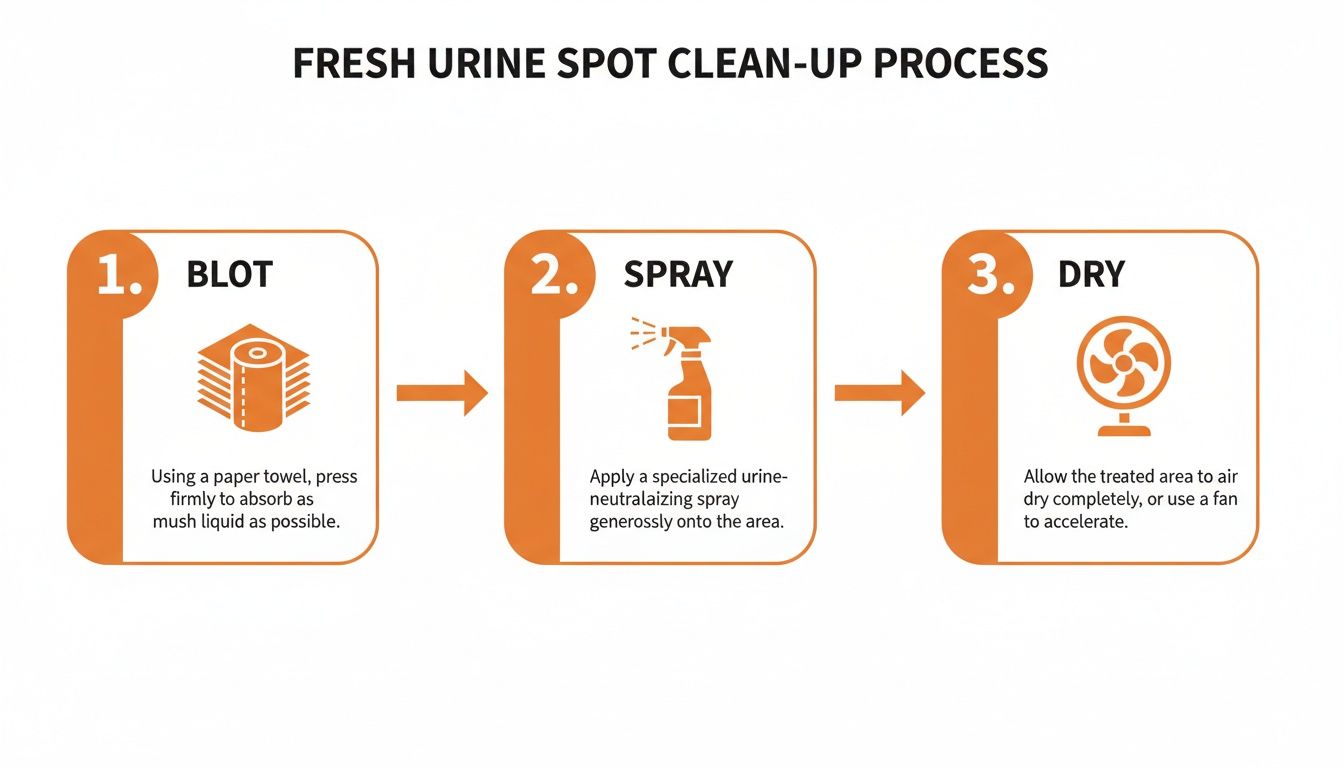
This just goes to show how critical it is to act fast. Dealing with it immediately prevents the urine from setting into those tough-to-remove crystals in the first place.
Common Mistakes That Just Make Odors Worse
Knowing how to neutralize dog urine in carpet also means knowing what not to do. Some common cleaning tricks can actually make the stain and odor permanent.
Whatever you do, avoid using a steam cleaner or hot water on urine stains. The heat will literally cook the urine proteins into the carpet fibers, setting the stain and smell forever. You should also stay away from ammonia-based cleaners. Their chemical makeup is too similar to urine, which can actually encourage your dog to mark the same spot again.
Untreated dog urine does more than just smell bad. It can void your carpet's warranty and start a frustrating re-soiling cycle that impacts over 50% of pet owners. Many don't realize that the acidic compounds in urine can permanently change carpet dyes in up to 35% of cases, leaving a lovely yellow reminder on your beige carpet.
And while we're focused on carpet here, these accidents can happen on any surface. For those of you dealing with this issue on other flooring, this guide on removing pet stains from hardwood floors is a great resource.
Knowing When to Call a Professional
You’ve done everything right. You blotted, sprayed, and saturated the spot with the best enzyme cleaner you could find, but that faint, stubborn odor just keeps coming back, especially on a humid Buford day.
While DIY methods can be fantastic for fresh accidents and minor spots, there comes a point where home remedies just can't reach the real root of the problem. Knowing when to wave the white flag and bring in a professional is the key to truly restoring your carpet and getting your home back to normal.
Sometimes, the problem is much bigger than what you can see. If you're dealing with multiple pet spots scattered across a room, or if one particular area has been a repeat target, the contamination has almost certainly soaked through the carpet padding. It might have even reached the subfloor.
Once urine gets into that padding, it acts like a sponge, constantly releasing odor-causing molecules. No amount of surface spraying is going to fix that.
Signs You Need Professional Help
It’s not always obvious when a pet urine problem is too big to handle on your own. It's easy to underestimate the extent of the damage lurking beneath the carpet fibers, out of sight.
Here are a few clear signs that it's time to call in the experts:
- The Smell Keeps Coming Back: You clean a spot and it seems fine for a few days, but then the smell reappears. This is the classic sign that urine has penetrated the padding, and your surface cleaning isn't touching the source.
- You Have Widespread Stains: If you break out a UV blacklight and your carpet lights up like a Jackson Pollock painting, the problem is far too widespread for spot treatment. Professionals have the heavy-duty equipment to treat large areas efficiently and effectively.
- The Carpet Feels Sticky or Looks Worse: Using the wrong products—or just too much of them—can leave behind a sticky residue. This gunk becomes a dirt magnet, making the area look even worse than before. We use specialized, low-residue solutions to avoid this exact issue.
Lingering dog urine is more than just a bad smell; it's a real health issue. These hazards are serious, with mold growth found in 40-60% of chronic cases and ammonia odors worsening conditions like asthma in 1 in 5 households. Industry data shows that DIY methods fail 80% of the time simply because urine spreads invisibly. This makes professional intervention not just a good idea, but a necessary one.
What Professionals Do Differently
When you hire a company like Citrus Carpet Cleaning, you’re not just getting a more powerful machine. You’re getting a strategic approach designed to neutralize dog urine in carpet from the tips of the fibers all the way down to the subfloor.
We use commercial-grade, low-moisture extractors that have the power to pull contaminants out of the padding—something a rental unit just can't do.
Our citrus-based cleaning solution is specifically formulated to break down uric acid crystals without leaving behind those soapy, sticky residues that cause spots to reappear. It means your carpet not only gets clean but stays cleaner for longer.
We can assess the true extent of the damage and, in many cases, treat the padding and subfloor directly. That’s something that’s nearly impossible to do correctly on your own. Deciding on the investment can feel like a big step, which is why it helps to understand if professional carpet cleaning is worth it for your situation.
For deep-set odors and widespread contamination, professional cleaning isn't just a better option—it's often the only one that truly works.
Common Questions About Dog Urine in Carpet
Even with the best game plan, questions always pop up when you're on your hands and knees scrubbing the carpet. Dealing with dog urine is frustrating, and I see homeowners in Buford make the same few mistakes time and time again.
Let's clear up some of the most common questions I hear. Getting these details right will save you a ton of headaches and make sure your cleaning efforts actually pay off.
Why Does the Urine Smell Come Back After I Clean It?
This is, without a doubt, the number one frustration I hear about. You scrub a spot, it seems fine for a day or two, and then—especially on a humid day—that awful smell creeps back in. This happens because the cleaning never reached the real source of the problem.
The issue isn't just the carpet fibers you can see; it's the padding and even the subfloor underneath. When your dog has an accident, the urine soaks deep, far beyond the surface. If you only clean the top layer, you're leaving the uric acid crystals behind in the padding. When the air gets moist, those crystals reactivate and release that pungent ammonia smell all over again.
The smell returning is a dead giveaway that the contamination is deeper than your cleaning method can go. This is the point where professional, deep extraction is the only way to fully pull the urine out of the padding for good.
Can I Use a Steam Cleaner on Pet Urine Stains?
Please, absolutely not. This is one of the biggest and most permanent mistakes you can make. While a steam cleaner seems like a powerful tool for dirt, the high heat is a complete disaster for urine stains.
The heat essentially "cooks" the proteins in the urine, permanently bonding them to your carpet fibers. It sets the stain and the odor, making them almost impossible for anyone to remove, including the pros. Always, always stick to cool water and proper enzymatic cleaners for pet accidents.
What’s the Difference Between a Standard Carpet Cleaner and an Enzymatic Cleaner?
This is a really important distinction. Most of the carpet shampoos you find at the store are just soap-based cleaners designed to lift surface dirt. They might make a urine spot look a little better temporarily, but they do absolutely nothing to break down the chemical compounds that cause the smell.
An enzymatic cleaner is totally different—it's a biological solution. It's full of beneficial bacteria and enzymes that are specifically designed to find and literally consume the uric acid crystals in urine.
- Standard Cleaner: Basically soap. It might mask the smell for a bit or lift some surface grime.
- Enzymatic Cleaner: A targeted weapon. It finds and destroys the odor-causing molecules right at the source.
When you're dealing with pet urine, an enzymatic cleaner isn't just a better choice; it's the only one that actually works for a permanent solution.
Is Baking Soda and Vinegar Enough to Neutralize Dog Urine?
For a brand-new, fresh accident you just caught, a vinegar and baking soda mix can be a decent first-aid measure. The vinegar helps cut through that initial ammonia smell, and the baking soda is great for absorbing moisture and some of the odor. But that's all it is—a surface-level fix.
This classic DIY combo just doesn't have the muscle to break down the tough uric acid crystals left behind once the spot dries. So, while it’s a fine choice for immediate damage control, it's not going to solve an old, set-in, or recurring odor problem.
And if you're thinking about the bigger picture of pet ownership, you might also be interested in learning how to protect your lawn from dog urine. Keeping things clean inside and out makes for a much healthier environment for everyone.
If you're tired of battling stubborn pet odors and stains, let the experts handle it. Citrus Carpet Cleaning Buford uses a proprietary, low-moisture citrus solution that neutralizes odors deep in the carpet padding without leaving sticky residues. Call or text us today for your free "EXACT-imate" and enjoy a fresher, cleaner home. Visit us at https://citruscarpetcleaningatlanta.com to learn more.