
When you find a fresh pet accident, you have to move fast. The first few minutes are everything. What you do right then and there will decide if it's a simple cleanup or a battle against a stain and smell that just won't quit.
Your Immediate Response to a Fresh Pet Accident

Honestly, that first 5-10 minutes is the whole ballgame. Your one and only goal is damage control. You need to get as much of that liquid out of the carpet as you can before it soaks down into the padding and subfloor. Once it hits the pad, you're in a whole different league of trouble.
When you see a wet spot, your first instinct is probably to grab a brush and scrub like crazy. Don't do it. Scrubbing just grinds the urine deeper into the carpet fibers. Even worse, it can wreck the texture of your carpet, leaving a frayed, ugly patch. Blotting is the only way to go, and it makes a world of difference.
The Art of Blotting, Not Scrubbing
Get yourself a stack of plain white paper towels or a thick, white terry cloth towel. It has to be white. I can't tell you how many times people have used a colored towel only to create a brand-new dye stain on their carpet.
Lay your white towels over the spot and apply firm, direct pressure. I mean really lean into it. You can even stand on the towels (with clean shoes!) to use your body weight. Your goal is to press the liquid up out of the carpet and into the towel.
Keep swapping out the saturated towels for fresh, dry ones. Do this over and over until the towel you pull up is almost completely dry.
Key Takeaway: The more urine you can physically blot up in those first moments, the less work your cleaner has to do later. This one simple act is your best defense against the urine reaching the carpet backing and pad.
After you've blotted until you can't blot anymore, it's time for a quick rinse.
Dilute with a Little Cold Water
With the bulk of the urine gone, you can dilute what's left by lightly misting the area with cold water.
Whatever you do, never use hot water or a steam cleaner on a fresh urine stain. The heat will literally cook the proteins in the urine, bonding them to the carpet fibers. It's like setting the stain in concrete and makes the odor a nightmare to remove.
Here’s how to do it right:
- Grab a spray bottle. Lightly mist the area with cold water. Don't pour water on it; you'll just oversaturate the carpet and push the mess deeper.
- Blot all over again. As soon as you've misted the spot, go back to blotting with fresh, dry towels, just like you did before. This helps pull up the diluted urine that was left behind.
This one-two punch of blotting and diluting is a powerful first strike. For a deeper dive into the next steps, check out our guide on the best way to clean up after a pet accident. Remember, acting fast and doing it the right way is the single most important thing you can do to save your carpet from lasting damage.
The Science Behind Pet Urine Carpet Damage
To really get rid of pet urine, you have to understand what you're up against. An accident isn't just a simple liquid spill; it's a chemical reaction that starts the moment it hits your carpet and continues deep within the fibers. At first, the urine is warm and acidic, which is the perfect environment for bacteria to start growing. But the real trouble begins as it dries.
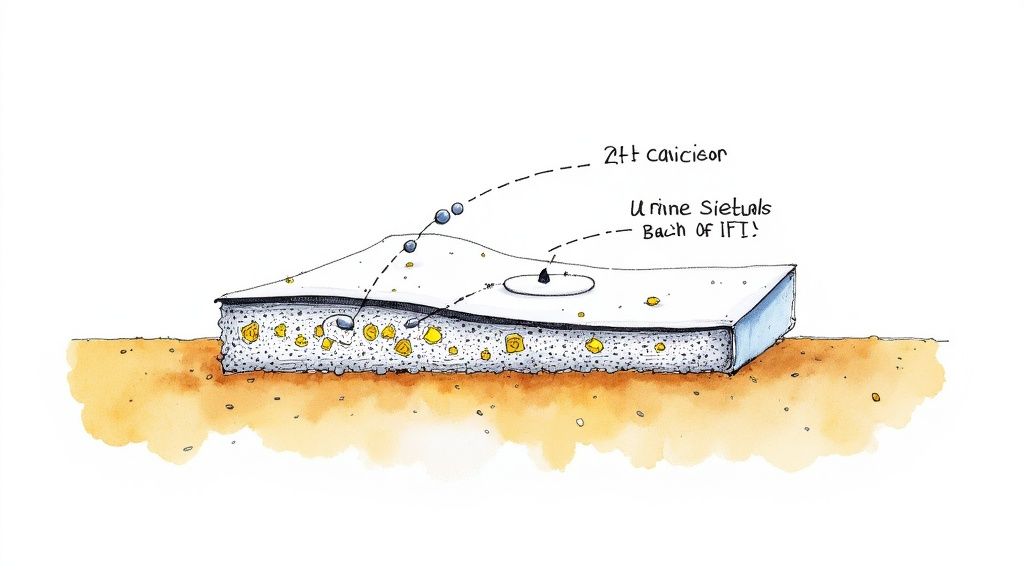
As the water evaporates, the urine's chemistry changes, becoming more and more alkaline. This is what starts to mess with your carpet's color. The alkaline salts left behind can literally bleach or alter the dyes in the fibers, leaving behind that stubborn yellow stain that seems impossible to remove.
And this isn't just a surface-level problem. Pet urine soaks deep, damaging the entire structure of your carpeting from the fibers all the way down to the subfloor.
The Unseen Structural Damage
Underneath the soft fibers you walk on, your carpet is a layered system held together with a strong latex adhesive. When urine soaks through, that moisture immediately goes to work breaking down this crucial bond. This process is called delamination, and it basically means your carpet is falling apart from the inside out.
You might eventually notice bubbling, ripples, or even the seams starting to separate. That’s the moisture from repeated accidents destroying the glue that holds everything together. Depending on your pet's diet and health, the urine's unique chemical makeup can even attack specific dyes, sometimes turning a beige carpet orange by bleaching out the blue tones. It's a surprisingly destructive process.
To see just how quickly things can go wrong, here’s a breakdown of how the damage progresses through each layer of your carpet.
How Pet Urine Damages Carpet Over Time
| Carpet Component | Immediate Effect (First 24 Hours) | Long-Term Damage (After 24 Hours) |
|---|---|---|
| Carpet Fibers | Warm, acidic urine creates a breeding ground for bacteria, kicking off the odor. | Alkaline salts form, which can bleach or permanently alter the carpet’s dye. |
| Carpet Backing | Moisture starts soaking into the latex adhesive holding the primary and secondary backings together. | The adhesive weakens significantly, leading to delamination (bubbling or separation). |
| Carpet Padding | The porous pad acts like a sponge, soaking up urine and trapping it far below the surface. | The pad turns into a concentrated source of odor and can transfer moisture to the subfloor. |
| Subfloor | With a large enough accident, moisture seeps into the wood or concrete subfloor beneath. | The subfloor can begin to rot, grow mold, or become permanently saturated with odor crystals. |
As you can see, what starts as a small spot on the surface quickly becomes a multi-layered problem. The longer it sits, the more it compromises the integrity of your entire flooring system.
The Real Source of That Lingering Smell
Ever notice how that faint pee smell comes roaring back on humid days, long after you thought you cleaned the spot? You're not imagining it. This is a chemical reaction, and the culprit is uric acid.
While regular soaps and cleaners might wash away the liquid parts of the urine and make the stain look better, they can't break down the non-soluble uric acid crystals. These microscopic crystals cling to the carpet fibers, the pad, and even soak into the subfloor. They just sit there, dormant.
Why the Smell Returns: When these crystals are exposed to any kind of moisture—from humidity in the air, a steam cleaner, or even a spilled drink—they reactivate and release that powerful ammonia smell all over again.
This is exactly why most household cleaners and carpet shampoos fail. They just aren't designed to destroy uric acid crystals at a molecular level. To permanently kill the odor, you need a cleaner that's specifically made to break down these organic compounds.
This is where specialized solutions come in. If you want to dive deeper into the science, our guide on what an enzymatic cleaner is explains why it’s the only real answer for defeating pet odors for good. Once you understand the chemistry, choosing the right cleaner becomes a whole lot easier.
Choosing Your Best Weapon Against Urine Stains
Stepping into the cleaning aisle can feel like a pop quiz you didn't study for. The shelves are packed with bottles, and every single one promises to be the magic solution for your pet stain woes. But when you’re dealing with the unique chemistry of pet urine, you quickly learn that not just any cleaner will do.
Using the wrong product can, at best, waste your time. At worst? It can actually set the stain and make the whole problem ten times harder to solve.
The real secret isn't just cleaning the spot you can see; it's about completely destroying the uric acid crystals you can't. These invisible crystals are the source of that stubborn, recurring odor that seems to reappear on humid days. This is where your choice of cleaner becomes absolutely critical.
The Power of Enzymatic Cleaners
When it comes to truly eliminating pet urine, enzymatic cleaners are the gold standard. I like to think of them as a team of microscopic Pac-Men. These cleaners don't just cover up smells or lift the surface stain; they unleash active enzymes that literally digest the organic matter in the urine.
Here’s a quick look at how they work on a molecular level:
- Protease enzymes go to work on the proteins that cause the initial stain.
- Amylase enzymes tackle the starches often present in the mix.
- Most importantly, other specialized enzymes attack the uric acid crystals, breaking them down into simple gases like carbon dioxide and ammonia that just evaporate.
This biological process is the only way to permanently destroy the source of the odor. Once the enzymes have done their job, the smell is gone for good because the compounds that created it simply no longer exist. It’s a total game-changer compared to old-school cleaners that just mask the scent.
For a deeper dive, check out our guide on the best carpet cleaner for pet odors to see how different products really stack up.
Other Cleaners and Their Limitations
While enzymatic cleaners are the undisputed champs of odor removal, you'll see other types of products out there. It's important to understand what they can—and definitely can't—do.
Oxygen-based cleaners, often labeled with "Oxi," are fantastic for stain removal. They use a chemical reaction to break the bonds of the colored molecules, basically bleaching the stain away without damaging most carpet dyes. They're great for the visible part of the mess but often don't penetrate deep enough or have the biological muscle to break down all the uric acid. They clean the visual problem but can leave the odor source behind.
Traditional detergents and carpet shampoos are easily the least effective options. These are soap-based formulas designed for general dirt and grime. When you use them on pet urine, they often just spread the urine components around and leave behind a sticky, soapy residue. That residue then becomes a dirt magnet, creating a dark, discolored spot where the original stain used to be.
Crucial Tip: Before you go all-in with a new cleaning product, always do a spot test. Find an inconspicuous area, like inside a closet or under the sofa, and apply a small amount. You need to be sure it won't cause discoloration or damage the carpet fibers.
What About Older, Set-In Stains?
For those older stains that have had weeks, months, or even years to set, a DIY approach might not cut it. Once urine has crystallized deep within the carpet padding—and potentially soaked into the subfloor—you're fighting a much tougher battle.
Honestly, this is when calling in a professional is the wisest move. For older, set-in stains, you need something stronger than a spray bottle. Enzymatic cleaners are still the key, as they are the only thing that will break down the organic compounds that standard detergents can't touch.
One thing to watch out for: steam cleaning is a huge no-no for urine stains. The high heat can actually "cook" the urine proteins, permanently setting them into synthetic fibers and making both the stain and the odor much, much worse.
Professional solutions are designed to dissolve those persistent urine crystals hiding in the carpet fibers and padding, finally eliminating the odor at its source. Choosing the right weapon is half the battle won, and knowing when to call for reinforcements ensures you win the war.
An Actionable Plan for Tackling Set-In Stains
Old, dried pet urine stains are a completely different beast than fresh accidents. They’ve had time to bond with the carpet fibers and crystallize deep down in the padding. This creates a stubborn source of odor that regular cleaning simply can't touch.
To win this battle, you need a more strategic approach. This isn't just about cleaning a spot; it's about doing a small-scale restoration. You have to find every hidden source, reactivate those urine crystals, and use the right tools to break them down for good.
Become a Stain Detective with a UV Blacklight
First things first: you can't clean what you can't find. Dried urine is often invisible to the naked eye, but the uric acid salts it leaves behind glow brightly under ultraviolet light. This is where a simple UV blacklight becomes your most powerful tool.
Wait until it's dark, turn off all the lights, and slowly scan the blacklight over your carpet, holding it about a foot above the fibers. Old urine spots will fluoresce, usually showing up as a distinct yellow or greenish glow.
You might be shocked by what you find. A single visible spot on the surface could be connected to a much larger contaminated area underneath. I always recommend using small pieces of painter's tape or chalk to mark the outer edges of every glowing spot you discover. This map is your guide to treating the entire problem area, not just the tip of the iceberg.
Rehydrate the Stain to Prepare for Treatment
Once you've mapped out every old stain, your next move is to gently rehydrate the area. Remember those uric acid crystals we talked about? They are dormant and non-soluble when dry. Applying a cleaner directly to a dry, set-in stain is like trying to wash a dish without water—it just won’t be effective.
Using a spray bottle filled with plain, cool water, lightly mist the marked areas. You're not trying to soak the carpet, just make it slightly damp to the touch. This moisture reactivates the urine crystals, making them vulnerable to the enzymatic cleaner you're about to apply. Let the water sit for about 5-10 minutes before moving on.
Apply the Enzymatic Cleaner Correctly
Now it's time to unleash the enzymes. This is the most crucial part of the process, and proper application is everything. The goal here is to saturate the area so the cleaner can penetrate as deep as the original urine did—all the way to the carpet backing and maybe even the pad.
Pour the enzymatic cleaner generously onto the stain, working from the outside edge of your marked area inward. It’s vital to apply the solution well beyond the visible or UV-marked spot. Urine spreads downward and outward as it soaks in, meaning the contamination in the pad is always larger than the spot on the surface.
A good rule of thumb is to treat an area at least 50% larger than the stain you see.
This visual guide shows the core steps for applying any carpet cleaning solution effectively.
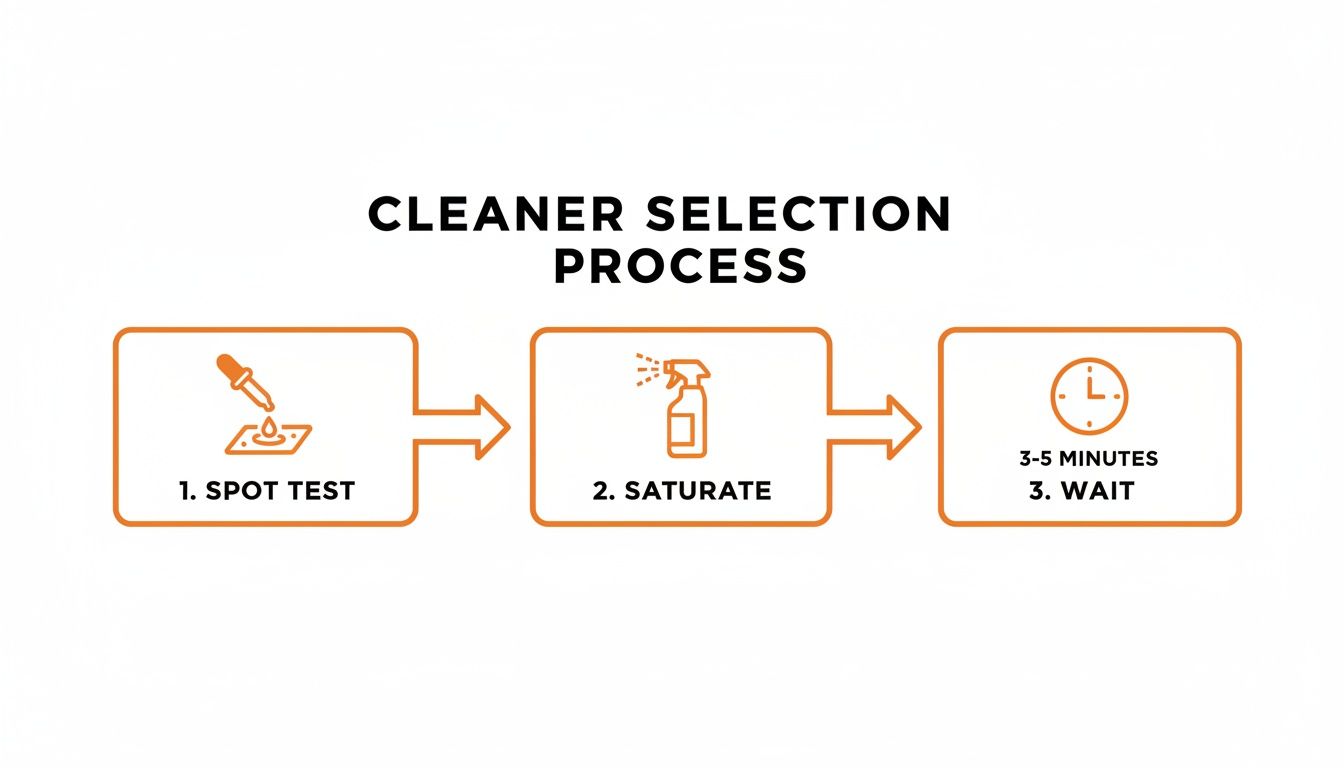
This process emphasizes patience—allowing the solution enough time to work is non-negotiable for success.
Patience is a Virtue: Let the Enzymes Work
You cannot rush this step. The enzymes need time—what we pros call "dwell time"—to effectively digest the organic matter in the urine.
The biggest mistake people make is scrubbing and blotting the cleaner up too soon. The enzymes are actively breaking down the uric acid, and if you remove them prematurely, you're stopping the process before the odor source has been destroyed.
Cover the treated area with a damp, white towel to keep the solution from drying out, and then leave it alone. Check the product label for specific instructions, but most high-quality enzymatic cleaners need anywhere from a few hours to a full 24 hours to completely work. Let it sit and do its job.
While our focus here is on carpet, understanding how to handle accidents on other fabrics is just as valuable. For a more general approach, check out this comprehensive guide on cleaning fabric sofas and removing various stains.
Extract and Dry Without Using Heat
After the dwell time is up, you need to extract the now-liquified urine and cleaning solution. Place a thick stack of dry, white towels over the area and stand on them to absorb as much moisture as possible. Repeat with fresh towels until the spot is just damp.
Finally, place a fan blowing directly across the surface to speed up the drying process. Good airflow is essential to prevent any musty smells or mildew from forming.
Whatever you do, do not use a steam cleaner or hairdryer. Applying heat at this stage can actually bond any remaining urine proteins to the carpet fibers, permanently setting the stain and odor you just worked so hard to remove.
When To Call a Professional Carpet Cleaner
Look, despite your best efforts with a spray bottle and elbow grease, some pet urine problems are just too big for any DIY solution. Knowing when you've hit that wall isn't a failure—it's actually the smartest move you can make to protect your home and your flooring. Continuing to throw store-bought products at a deep-set problem is a good way to waste time and money, and you can even make things worse.
Sometimes, calling in the professionals is the only thing that will save your carpet from being a total loss. The scale of the problem is just beyond what consumer-grade tools can handle.
Signs You Have a Deeper Problem
There are a few tell-tale signs that the urine has soaked far deeper than just the carpet fibers. If you're running into any of these issues, it's a clear signal you need a more powerful, professional solution.
Here’s what to look for:
- The Odor Keeps Coming Back: You clean a spot and everything seems fine for a few days. Then, the first humid afternoon rolls around, and that unmistakable ammonia smell comes roaring back. This is a classic sign that uric acid crystals in the carpet pad are reactivating with moisture.
- Widespread or Multiple Accidents: If your pet has had several accidents in the same general area, it’s almost a guarantee the urine has saturated the padding and maybe even the subfloor beneath. A spray bottle and a towel just won't cut it.
- Stains Reappear After Cleaning: You scrub a stain until it’s gone, only to watch it "wick" its way back to the surface as the carpet dries. This happens when liquid trapped in the pad is pulled up through the carpet fibers, bringing the stain right back with it.
Expert Insight: Think of your carpet pad as a giant sponge. Once urine gets in there, the pad holds onto a massive amount of liquid and becomes a concentrated source of odor that no amount of surface cleaning will ever reach. At that point, professional intervention is your only real option.
The Professional Advantage
Professional carpet cleaners, like our team at Citrus Carpet Cleaning Buford, bring technology and expertise to the table that's simply not available to homeowners. We don’t just clean the surface; we have specialized tools designed to attack contamination deep within the carpet's structure.
One of our most effective tools is a subsurface extraction wand. This piece of equipment lets us flush the carpet padding with a high-potency treatment and then use incredible suction to pull all that contaminated liquid out from underneath the carpet—without ever having to lift it. This process removes the source of the problem from the pad itself, which is the only way to truly solve it.
The demand for these advanced methods is on the rise. The global market for carpet extraction cleaners hit about USD 1.10 billion in 2024 and is expected to climb to USD 1.75 billion by 2032. North America, where homeowners are highly aware of home hygiene, makes up a huge 35.12% of this market. This shows just how many people are turning to professional-grade solutions for deep cleaning challenges. You can read more about the growth of the professional carpet cleaning market.
Ultimately, hiring a pro for severe pet urine damage is about protecting your home's health and value. It prevents the kind of long-term damage that leads to ripping out carpet and replacing subfloors, giving you peace of mind and a truly clean, odor-free home.
Your Top Questions About Pet Urine Cleanup
Even when you think you have a handle on it, dealing with a pet accident on your hands and knees always brings up new questions. It's easy to get confused between home remedies and professional products, and one wrong move can actually make the stain—and the smell—a whole lot worse.
Let's clear the air and tackle some of the most common questions I hear from pet owners. Getting the right answers means you can act fast, avoid the usual mistakes, and solve the problem for good, not just for a day.
Can I Just Use Vinegar and Baking Soda?
Everyone loves the vinegar and baking soda trick for general cleaning, but when it comes to pet urine, it's a classic case of using the wrong tool for the job. Sure, the vinegar might knock back that ammonia smell for a little while, and baking soda is decent at soaking up moisture and surface odors. But that’s all it is—a temporary, surface-level fix.
Here’s the problem: neither one does a thing to the uric acid crystals. These stubborn little crystals are the real source of that lingering, reactivated smell. To get rid of the odor permanently, you absolutely have to use an enzyme cleaner that's built to digest and completely destroy them.
How Do I Find Old, Hidden Stains?
This is a big one. You can smell it, but you can't see it. Dried urine is often totally invisible in normal light, which is why your carpet can look spotless but still stink. The single best weapon in your arsenal for this is a handheld UV blacklight.
Using one is simple, but you have to do it right:
- Wait for the room to be as dark as possible. Nighttime is best.
- Turn on your UV light and hold it about a foot off the floor.
- Sweep it slowly across the carpet. Old urine stains will light up, usually in a bright yellow or greenish color.
This trick shows you exactly where every single old accident is hiding. I always tell people to mark the edges of the glowing spots with a bit of chalk so they can be sure to treat the entire area, not just the part they thought was dirty.
Pro Tip: Brace yourself. The spot you find is almost always way bigger than you think. Urine spreads out like a pancake once it hits the carpet backing and pad, so the problem underneath is much larger than what’s visible on top.
Why Does the Smell Keep Coming Back?
This is easily the most frustrating part of the whole ordeal and a dead giveaway that the job wasn't done right the first time. That phantom smell returns because any uric acid crystals left behind get reactivated by moisture—any moisture. It could be humidity in the air, a spilled drink, or even your own cleaning attempts.
Once those crystals get damp, they release that pungent ammonia gas all over again. It’s a vicious cycle. It means your previous cleaner just masked the odor or only cleaned the surface, failing to break down the crystals buried deep in the carpet fibers. The only way out is to retreat the area with a high-quality enzymatic cleaner that can soak down just as deep as the original accident did.
And if you're thinking about long-term solutions for managing pet waste and minimizing indoor accidents, it might be worth looking into the best artificial grass for pets. It can provide a tough, easy-to-clean outdoor space that helps protect your carpets inside.
When you've tried everything and the stains and smells just won't quit, it's time to bring in a professional. Citrus Carpet Cleaning Buford uses a specialized low-moisture, citrus-based cleaning process designed to eliminate deep-down contaminants without leaving your carpets sticky or soaked. To get your home smelling fresh and looking clean, visit https://citruscarpetcleaningatlanta.com to schedule your "EXACT-imate" today.