
If you’ve ever cleaned up a pet accident only to have that awful smell sneak back a few days later, you’re not alone. It’s a frustrating cycle. You think you've won, but the odor comes roaring back, especially on a humid day. This isn't because you didn't clean well enough; it's because pet urine is a chemical powerhouse that most cleaners just can't handle.
To really get rid of pet urine smell for good, you have to break down the stubborn uric acid crystals that typical cleaners leave behind. This means you need a special tool for the job: an enzymatic cleaner. These cleaners don't just cover up the smell—they release enzymes that literally eat the odor-causing particles, making sure that smell is gone forever.
Why Pet Urine Smell Is So Hard to Beat
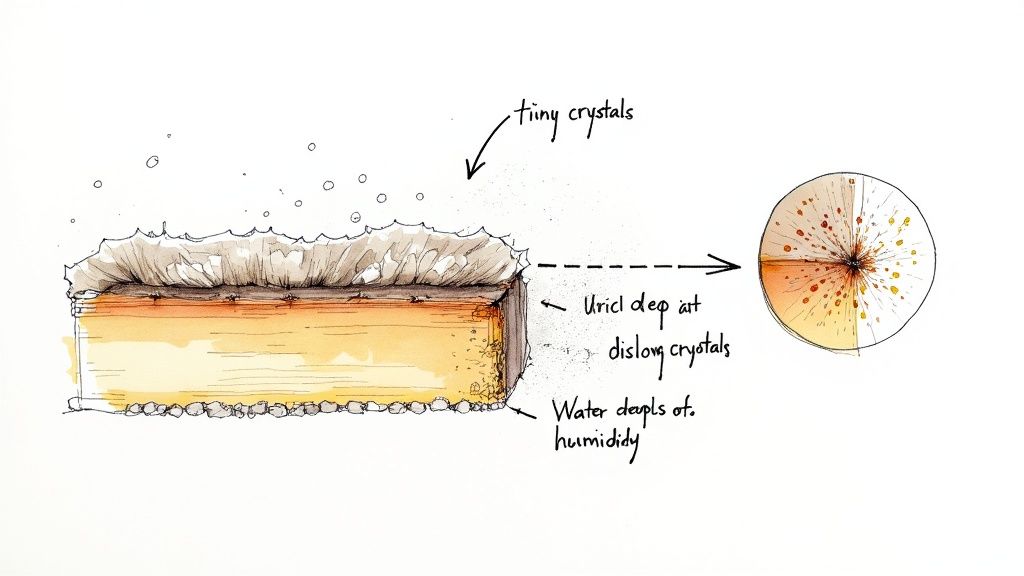
When an accident first happens, the urine is pretty easy to deal with. But as it sits, bacteria get to work, breaking down the urea and creating that sharp, ammonia-like stench that first hits your nose. That’s just the start of the problem.
The Real Culprit: Uric Acid Crystals
The real villain in this story is uric acid. This stuff is nasty. As the urine dries, the uric acid forms into non-soluble salt crystals that dig deep into your carpet fibers. Even worse, they soak into the carpet padding and can even seep into the subfloor.
These crystals are why the smell plays a disappearing act. They don’t dissolve in water, and your average soap-based cleaner won’t touch them. They just sit there, dormant, waiting.
The phantom odor's return is often triggered by humidity. Moisture in the air—from a rainy day, a running shower, or even a steam cleaner—reactivates the uric acid crystals, releasing a fresh wave of that foul smell.
This is exactly why so many standard cleaning methods just don't cut it. They might get the visible stain out and make things smell better for a bit, but they leave those uric acid crystals behind, ready to stink up your house again.
Why Some Cleaning Methods Make It Worse
Knowing the chemistry here helps you avoid making a bad situation even worse. Trying to steam clean a pet stain, for example, is a huge mistake. The heat can actually cause the proteins in the urine to permanently bond with the carpet fibers. You’re essentially "baking" the smell right into your floor, making it nearly impossible to ever get out. If you're curious about the nitty-gritty, you can find more insights on the science behind pet urine odor online.
To truly learn how to remove pet urine smell from carpet, you have to go after the crystals. This is where an enzymatic cleaner becomes your best friend. It doesn't just mask the smell; it unleashes active enzymes that devour the uric acid, breaking it down into simple gases like carbon dioxide and ammonia, which then just evaporate away.
Here’s a quick look at how a urine spot ages and gets worse over time:
- Stage 1 (Fresh): The spot is mostly water-soluble urea. This is your best chance to clean it up easily.
- Stage 2 (Drying): Bacteria start feasting on the urea, which creates that strong ammonia odor.
- Stage 3 (Dried): The uric acid crystals have now formed and are locked deep into the fibers and padding, creating that persistent odor that keeps coming back.
Once you realize you're in a chemical fight against these crystals, you can ditch the temporary fixes and start using a strategy that actually works.
Your Immediate Response Plan for Fresh Stains
When you find a fresh pet accident, the clock starts ticking. Those first few minutes are your golden opportunity to stop a small mess from turning into a permanent, stinky nightmare. Your gut reaction might be to grab a scrub brush and go to town, but trust me, that's the absolute worst thing you can do.
Scrubbing just grinds the urine deeper into the carpet fibers. It forces the liquid down into the absorbent carpet padding underneath, which is exactly where odor-causing bacteria love to grow. You’re not just spreading the stain; you're pushing it down where it becomes nearly impossible to reach.
The Power of Blotting, Not Rubbing
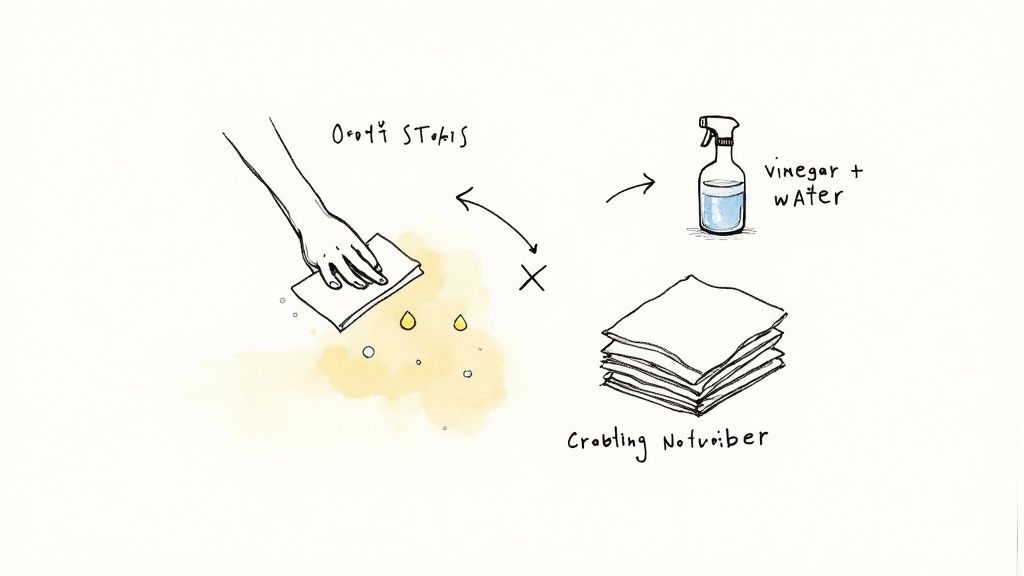
The right first move is always to blot. Grab a thick stack of paper towels or a clean, absorbent white cloth. Press down firmly on the wet spot, letting the towel soak up as much of the liquid as you possibly can.
Lift the cloth, find a dry section, and do it again. Keep repeating this, putting some real weight behind it, until the towel is coming up almost completely dry. This simple move pulls the majority of the urine out before it can saturate the padding, making every other cleaning step that much more effective. This is the cornerstone of the https://citruscarpetcleaningatlanta.com/best-way-to-clean-up-after-a-pet-accident/ and it's a step you can't skip.
Your Go-To DIY Neutralizing Solution
Once you've blotted up as much as possible, it's time for some quick odor control. You don't need anything fancy for this initial step. A simple mix of equal parts cool water and distilled white vinegar will do the trick. The acetic acid in vinegar is a champ at neutralizing the ammonia in fresh urine—that's what causes that sharp, initial smell.
Whipping Up Your Vinegar Solution:
- Mix: Combine one cup of white vinegar with one cup of cool water in a spray bottle.
- Apply: Lightly mist the solution over the whole affected area. Don't drench it! You just worked hard to get liquid out, so you don't want to add too much back in.
- Wait: Let the solution sit for about five to ten minutes. This gives the vinegar time to break down the ammonia.
- Blot Again: Using a fresh, clean cloth, blot the spot one more time to soak up the vinegar solution and the neutralized urine.
This vinegar treatment isn't a deep-cleaning miracle, but it's a fantastic emergency response. It basically hits the pause button on the odor-causing process, buying you valuable time.
This immediate action plan is your first line of defense. By blotting thoroughly and using a simple vinegar solution, you are actively preventing the formation of those stubborn uric acid crystals that create permanent odors.
This initial containment sets you up for success when you move on to a more powerful, targeted cleaning method. It ensures you're treating a surface-level issue rather than a deep-set problem that has already reached your carpet's padding and subfloor.
Finding the Right Cleaner for the Job
Walking down the cleaning aisle can feel like a pop quiz you didn't study for. The shelves are packed with products, all screaming that they’re the ultimate solution for pet stains. But if you really want to learn how to remove pet urine smell from carpet, you have to know what's in the bottle and why it works.
Not all cleaners are created equal, especially when you're up against the stubborn uric acid crystals that make pet urine so pungent. Choosing the wrong one won't just fail to kill the smell; it can actually make it worse. The secret is matching the cleaner to the problem.
The Undisputed Champion: Enzymatic Cleaners
When it comes to pet urine, enzymatic cleaners are the gold standard for a reason. These aren't just fancy soaps or perfumes—they're biological powerhouses. An enzymatic cleaner is full of beneficial bacteria that produce enzymes.
When you spray it on a urine stain, these enzymes get to work breaking down the organic matter. They essentially "eat" the uric acid, turning it into simple, odorless stuff like carbon dioxide and water. To learn more about how they work their magic, you can explore the science behind what makes an enzymatic cleaner so effective.
This biological process is why these cleaners don't just mask the smell—they eliminate it at the source. This is a huge deal for preventing repeat accidents. Your pet's nose is way more powerful than yours, and if they can still smell old urine, they'll see it as a green light to go there again.
The biggest advantage of enzymatic cleaners is their ability to destroy the odor-causing uric acid crystals completely. This ensures the smell doesn't return on humid days and helps break the cycle of your pet re-marking the same spot.
For these cleaners to do their job, they need two things: time and moisture. You have to completely saturate the spot (and the padding underneath) and often keep it damp for several hours, sometimes up to 24 hours. This gives the enzymes enough time to finish their meal.
Understanding Oxygen-Based Cleaners
Next up are oxygen-based cleaners, which you'll often see sold as "Oxy" products. These work through a process of oxidation. When the cleaner, which usually has hydrogen peroxide or something similar, hits the urine stain, it releases tiny oxygen bubbles.
Those bubbles help lift the stain from the carpet fibers and break down some of the odor-causing compounds. They are fantastic for tackling the visible part of the stain and work well on all sorts of organic messes, not just pet urine.
But here’s the catch: while oxygen cleaners are great stain fighters, they aren't specifically designed to target uric acid crystals like enzymes are. They might reduce the smell, but they don't always destroy it at the molecular level. That means the odor could come roaring back later. They're a solid second choice, especially for fresh accidents before the uric acid has fully crystalized.
Why Traditional Cleaners Fall Short
Finally, we have the old-school, soap-and-detergent-based carpet shampoos. These products are designed to lift general dirt and grime using surfactants. They’re great for making your carpet look clean, but they're completely outmatched in the chemical warfare required to beat pet urine.
These cleaners do absolutely nothing to break down uric acid. Instead, they just wrap the crystals in a soapy film. This not only traps the smell in your carpet but also leaves behind a sticky residue that becomes a dirt magnet. Even worse, using hot water or steam with these cleaners can permanently set the stain by bonding the urine proteins right to your carpet fibers.
To help you decide what to grab, here’s a quick rundown of your main options.
Comparison of Carpet Cleaning Solutions for Pet Urine
This table breaks down the different types of cleaning agents to help you choose the best weapon for fighting pet urine odors and stains on your carpet.
| Cleaner Type | How It Works | Best For | Potential Downsides |
|---|---|---|---|
| Enzymatic | Uses enzymes to break down and "eat" uric acid and organic proteins. | Old and new urine stains; completely eliminating odor at the source. | Requires long dwell times (hours) and must remain damp to be effective. |
| Oxygen-Based | Releases oxygen bubbles to oxidize and lift stains and odor molecules. | Fresh stains; removing visible discoloration and surface odors. | May not fully break down stubborn uric acid, allowing odor to return. |
| Traditional | Uses soap and surfactants to lift surface dirt and grime. | General carpet dirt and non-organic spills. | Does not break down uric acid; can leave a sticky residue that traps odors. |
Ultimately, investing in a high-quality enzymatic cleaner is your most reliable bet. It’s the only method that directly targets and destroys the true source of that persistent pet urine smell, ensuring that once the odor is gone, it’s gone for good.
Deep Cleaning Stubborn Set-In Odors
When a pet accident goes unnoticed or isn't treated right away, it goes from being a simple surface stain to a deep-set odor problem. For those stubborn, lingering smells that have been around for weeks or even months, a quick spray-and-blot job just won't cut it. You have to get strategic and go deep to truly get that pet urine smell out of your carpet for good.
This is about more than just cleaning what you can see on the surface. That visible spot is usually just the tip of the iceberg; the urine has likely spread out into a much bigger area in the padding underneath.
Locating the Hidden Sources of Odor
Your first mission is to find every single old stain, not just the obvious ones. Dried urine is often invisible, but your pet's powerful nose can find it every time, which encourages them to use the same spot again. This is where a UV blacklight is your secret weapon.
In a dark room, scan the blacklight over your carpet. You'll see dried urine light up, usually in a yellowish-green glow, thanks to the proteins and phosphorus it contains. You might be shocked to find spots you never even knew were there. I recommend using small pieces of painter's tape to mark the outside edge of each glowing area so you don't miss anything when it's time to clean.
The Saturation and Dwell Method
Once you've mapped out all the problem zones, it's time for the heavy artillery: a high-quality enzymatic cleaner. The key to tackling old stains isn't just applying the cleaner, but making sure it soaks in just as deeply as the original urine did.
This means you need to fully saturate the spot. Don't be shy here. Pour the enzymatic cleaner generously over the marked area, going about two inches beyond the edges you marked. The goal is for the cleaner to soak all the way through the carpet fibers, down into the padding, and reach every last uric acid crystal. It's the only way the enzymes can get in there and break down the entire source of the smell.
Here's a pro tip: After you've applied the cleaner, don't rush it. The enzymes need time to do their job. Cover the wet area with a damp towel to keep it from drying out too quickly and let it sit for at least 12 to 24 hours. This extended "dwell time" is absolutely critical for the enzymes to fully digest the uric acid.
This visual guide breaks down the essential steps for a truly deep, effective clean.
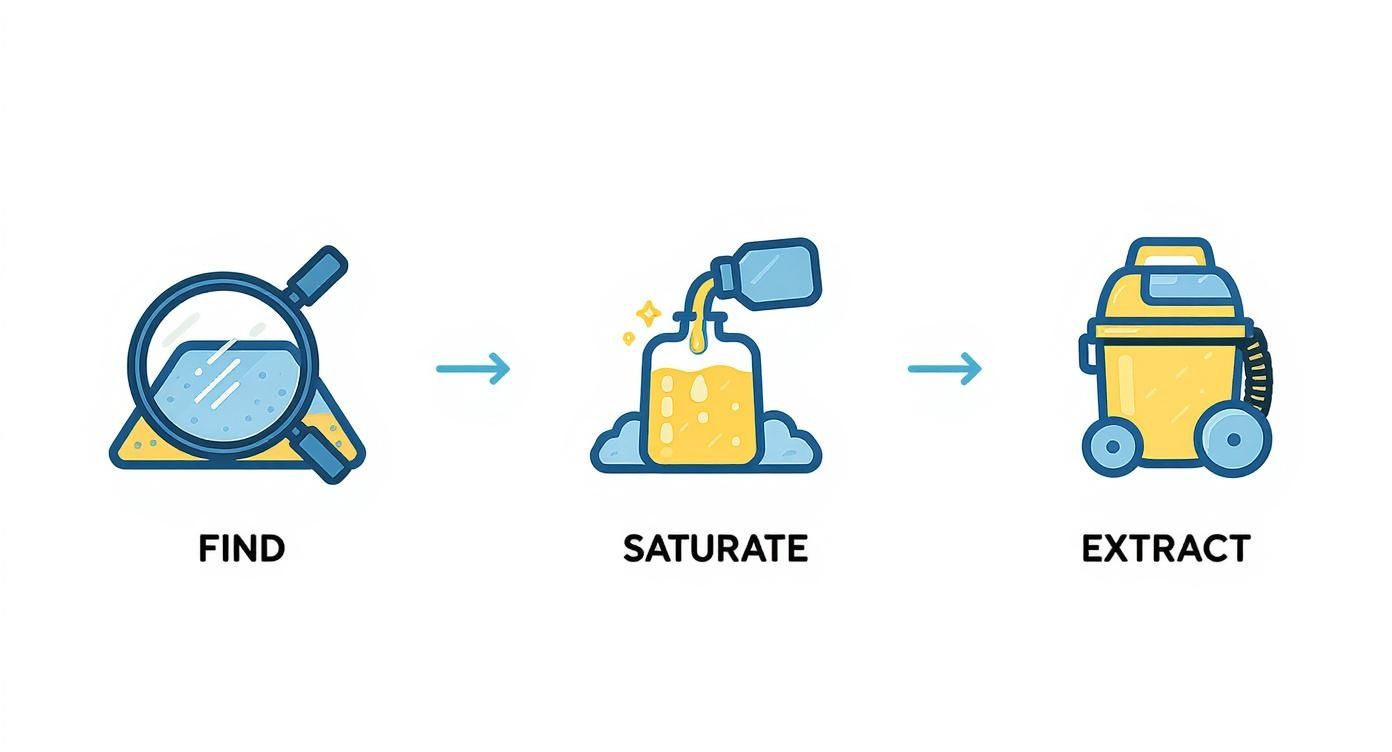
As you can see, you really have to nail each phase before you can move on to the next.
Proper Extraction is Non-Negotiable
After the enzymatic cleaner has had plenty of time to work its magic, the final, crucial step is getting all that liquid—the dissolved urine and the cleaner—back out of the carpet. If you leave the area sopping wet, you risk growing mildew, which just trades one bad smell for another.
You can try blotting with towels, but using a wet vac or a carpet cleaning machine (set to rinse-only with cool water) is a far better approach. A good machine will have the power to pull moisture up from the deep padding, not just the surface fibers. Make several slow passes over the spot until you don't see much more liquid coming up.
This extraction step physically removes the broken-down urine components and leftover cleaner, leaving your carpet truly clean. To get a better sense of what a comprehensive cleaning involves, you can learn more about our professional deep carpet cleaning services.
Understanding the Limits of DIY Cleaning
Sometimes, the problem is just bigger than a homeowner can handle. A common mistake is thinking that cleaning the carpet surface will fix a deep-seated urine issue. The reality is, urine can soak past the carpet and padding, all the way to the sub-floor. When that happens, you're looking at a job for the pros. It could involve pulling back the carpet, replacing the contaminated pad, and even sealing the sub-floor with special primers to block the odor for good.
Once you've extracted as much as you can, aim a fan at the spot or use a dehumidifier to speed up the final drying process. You'll want to give it a full day or two to dry completely before you declare victory and pull up your tape markers.
Knowing When to Bring in a Professional
You’ve tried everything. You blotted, you bought the fancy enzymatic cleaner, maybe you even rented one of those machines from the grocery store. But that faint, stubborn odor just won't go away.
This isn’t a sign that you failed. It’s actually a huge clue that the problem has gone deeper than your tools can reach—it’s now professional territory.
Sometimes, a single big accident or a few smaller ones in the same spot are enough to completely saturate the carpet padding. Once urine soaks through the carpet backing and into that thick, spongy layer underneath, it's almost impossible for home equipment to get it all out.
Signs the Problem is Deeper Than Your Carpet
Knowing when to wave the white flag and call for backup can save you a ton of time, frustration, and honestly, money in the long run. If any of these sound familiar, it’s a good bet the urine has soaked into the padding or even the subfloor.
- The Smell Comes Back: You clean the spot and think you’ve won. For a few days, everything seems fine. Then, on a humid day, the smell is back. This happens because you only cleaned the surface fibers, but the uric acid crystals left in the padding are reactivating with moisture in the air.
- The Stain Magically Reappears: Ever seen a stain vanish only to slowly return as the carpet dries? This is a classic case of "wicking." The stain deep in the padding is literally traveling back up the carpet fibers to the surface.
- Your Pet Won't Leave that Spot Alone: Despite your best efforts, your dog or cat is drawn back to the same area. Their powerful sense of smell is picking up on leftover urine compounds deep in the carpet that you can't detect.
These are all classic symptoms that you're dealing with a deep contamination issue that needs much more powerful equipment and expertise.
When you hire a true professional, you're not just paying for a machine; you're investing in their knowledge of the chemistry behind pet odor removal and their ability to diagnose how deep the problem really goes.
What to Expect From a Professional Service
Professional carpet cleaners bring out the big guns—commercial-grade equipment that blows away anything you can rent or buy. Their main tool is usually a truck-mounted Hot Water Extraction unit, which is leagues more powerful than any portable "steam cleaner."
They use this machine to blast hot water and specialized cleaning solutions deep into the carpet under high pressure, then immediately suck it all back out with an incredibly powerful vacuum. To tackle urine specifically, they'll pre-spray the area with powerful enzyme or alkaline treatments designed to break down those stubborn uric acid crystals before extraction even begins.
For the really tough cases, a true pro might use a special tool called a "subsurface extractor" or "water claw." This device is amazing—it lets them flush cleaning solution through the carpet and the padding, then pull it all back out from the bottom up. It’s like rinsing the padding without having to pull up your entire carpet.
How to Hire the Right Company
Here’s the thing: not all carpet cleaning companies are pet odor specialists. When you start making calls, you need to ask the right questions to make sure you're hiring someone who can actually solve the problem, not just mask it for a week. A little background on professional approaches to stain removal can give you a good idea of what an expert should be doing.
Key Questions to Ask a Potential Cleaner:
- What is your specific process for treating pet urine odors? If they don’t mention pre-treating with enzymatic cleaners and a deep extraction method, they’re probably not the right fit.
- Do you guarantee odor removal? A reputable company will stand by its work. They should offer to come back and re-treat the area if the smell persists after everything is fully dry.
- Do you charge extra for pet treatments? Watch out for companies with a super low base price who then tack on huge "pet treatment" fees once they're in your home. Always ask for an all-inclusive quote.
When you're fighting a smell that just won't quit, calling a professional is a smart investment. It can be the difference between saving your carpet and facing the much higher cost of replacing it completely.
Still Have Questions About Pet Urine Odor?
Even when you feel like you have a solid game plan, tackling pet accidents can bring up some unexpected questions. It's easy to second-guess your methods when you're on your hands and knees scrubbing away. Let's walk through some of the most common questions I hear from pet owners trying to figure out how to remove pet urine smell from carpet. Getting these details right is the key to a truly fresh-smelling home.
Answering these common dilemmas will make sure all your hard work pays off, leaving you with a carpet that's clean from the surface all the way down to the pad.
Can I Use Baking Soda and Vinegar Together?
This is probably the number one question I get, and it’s a perfect example of how cleaning chemistry isn't always intuitive. While baking soda and white vinegar are both fantastic cleaners on their own, mixing them is a huge mistake.
When you pour them together, you get that satisfying, fizzy volcano. Fun to watch, but terrible for cleaning. That reaction is actually the two ingredients neutralizing each other, creating little more than saltwater and carbon dioxide. It completely kills the cleaning power of both.
Here’s the right way to do it—as a one-two punch:
- Vinegar First: After you've blotted a fresh stain dry, hit it with a solution of half white vinegar, half cool water. The vinegar’s acidity is what neutralizes the ammonia in the urine. Blot this solution up really well.
- Then Baking Soda: This part is critical—wait until the spot is completely dry. Then, sprinkle a generous layer of baking soda over the area. Let it sit for several hours, or even overnight, to pull out any lingering odors before you vacuum it all up.
Using them one after the other lets each ingredient do its job without getting in the way of the other.
Will Steam Cleaning Make the Urine Smell Worse?
In most situations, yes, it absolutely can. Firing up a traditional steam cleaner or a hot water carpet extractor on a urine stain that hasn't been pre-treated is a recipe for disaster. This is one of the biggest mistakes people make.
The intense heat from the steam literally cooks the uric acid proteins, bonding them to your carpet fibers. It essentially sets the stain and the odor permanently. You'll quickly find the smell is way more potent and almost impossible to get out afterward.
The moisture from a steam cleaner also reactivates dormant uric acid crystals, which explains why a room can suddenly smell so much worse after you thought you cleaned it. Professionals use Hot Water Extraction, but they always pre-treat urine spots with powerful enzymatic solutions first to break down the uric acid before any heat is applied.
If you’re determined to use a home carpet cleaning machine, make sure you pre-treat every single spot with a quality enzyme cleaner and only use cool or lukewarm water. Never hot.
How Do I Stop My Pet From Peeing There Again?
Preventing a repeat performance is a two-part mission: it’s about cleaning and behavior. You have to solve both problems to get a lasting solution.
First, you have to completely destroy the odor. A pet’s sense of smell is estimated to be 10,000 to 100,000 times stronger than ours. If even the slightest trace of old urine is left behind, your pet’s nose will tell them that’s an approved bathroom spot. This is why using an enzymatic cleaner is non-negotiable—it’s the only thing that actually destroys the scent molecules your pet can detect.
Second, you've got to figure out why it's happening. A trip to the vet is the best place to start to rule out medical issues like a urinary tract infection (UTI), bladder stones, or diabetes. If your pet gets a clean bill of health, then the cause is likely behavioral. This could be triggered by things like:
- Stress or Anxiety: A new baby, another pet, or even just moving the couch can cause anxiety.
- Territory Marking: This is especially common for unneutered male pets.
- Training Gaps: A new puppy or a recently adopted dog might just need a refresher on house rules.
And remember, beyond just urine odors, managing other pet-related allergens like dander is a huge part of keeping your home’s air quality healthy for everyone. If the behavioral issues don't stop, talking to a certified animal behaviorist can give you strategies tailored to your pet's specific needs and help you finally break the cycle.
At Citrus Carpet Cleaning Buford, we know the unique headaches pet owners face. Our professional, low-moisture cleaning process is built to eliminate tough pet odors at the source without leaving behind sticky, dirt-attracting residues. If you're tired of fighting a losing battle against pet smells, let our experts bring the freshness back to your home.
Ready for a truly clean carpet? Contact us today for your free "EXACT-imate"!