

It’s a heart-stopping moment, isn't it? A glass of red wine tumbles in slow motion, landing right on your beautiful carpet. But it doesn’t have to be a permanent disaster.
The absolute key is to act fast. Your first instinct might be panic, but your first action should be blotting the spill immediately with a clean, white cloth. The goal is to absorb as much of that merlot as possible before it decides to move in for good.
Your Immediate Action Plan for Red Wine Spills
When red wine hits the carpet, the clock starts ticking. I'm serious. Those first few minutes are the most critical in preventing a temporary spill from becoming a permanent stain. Your only job is damage control: absorb the liquid without spreading it around.
This is where so many people make their first, and worst, mistake—they start scrubbing like mad.
The Power of Blotting and Cold Water
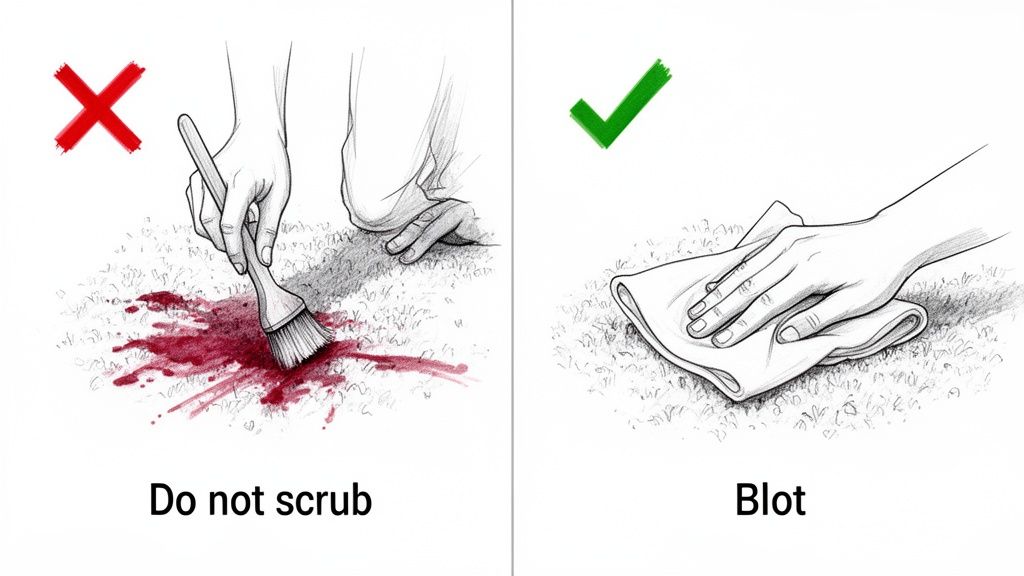
Scrubbing is the enemy. All that aggressive friction does is force the wine deeper into the carpet fibers and damage the pile, making the stain exponentially harder to remove.
Instead, you need to blot gently. Grab a clean, dry, white cloth or a stack of paper towels, place it over the spill, and press down firmly. You’ll see the cloth soaking up the wine. Lift it, move to a clean section of the cloth, and repeat the process. Keep going until you're no longer pulling up any more liquid.
Once you’ve blotted up the excess, it's time to dilute what's left. The tannins in red wine—those natural compounds from grape skins that give it that bold color—dissolve 40% more effectively in cold water than hot. This simple step helps prevent the stain from permanently bonding to the carpet fibers, which can happen in as little as 5 minutes.
Think about it this way: blotting can absorb up to 70% of the excess liquid without spreading the stain. Scrubbing, on the other hand, just pushes it 2-3 times deeper into the carpet's foundation. It's a huge difference.
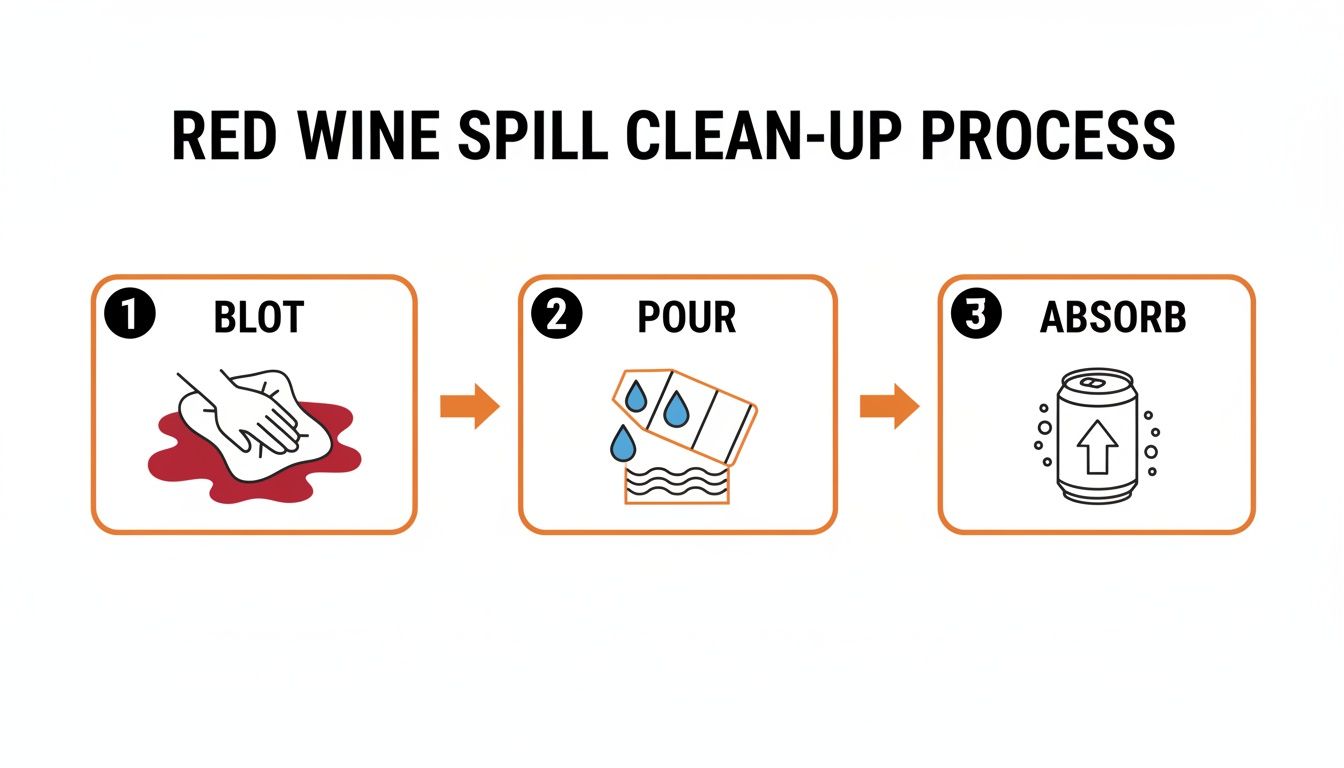
This simple visual—blot, pour, absorb—is your mantra. It highlights the exact sequence you need to contain and lift the spill before it truly sets in.
Quick Response Guide for Fresh Red Wine Spills
When that spill happens, you don't have time to search for a full guide. This table is your go-to reference for what to do in those first critical moments.
| Action | Why It Works | What to Avoid |
|---|---|---|
| Blot Immediately | Soaks up excess wine before it penetrates the carpet fibers. | Scrubbing. This grinds the stain deeper and damages carpet pile. |
| Use Cold Water | Helps dissolve the wine's pigments and prevents the stain from setting. | Hot Water. It can actually "cook" the stain, making it permanent. |
| Apply Club Soda | The carbonation and slight acidity help lift the stain from the fibers. | Colored Soaps/Cleaners. These can leave behind their own stains and sticky residues. |
| Work From Outside In | Prevents the stain from spreading and getting larger as you clean. | Pouring liquid all over. This can saturate the carpet and padding. |
Following these simple do's and don'ts can make the difference between a minor cleanup and a lasting eyesore.
Why Club Soda Is Your Secret Weapon
After you've blotted and diluted with cold water, many people (myself included) have had great success with a little club soda. Its slight acidity and carbonation work wonders to break down the wine's pigments and lift them right out of the carpet fibers.
The bubbling action of club soda works like a tiny army of scrubbers, gently loosening the stain from the inside out without causing any damage to the carpet itself.
Pour a small amount directly onto the remaining stain and continue the blotting process with a fresh, clean cloth. You should see the stain transferring from your carpet to your cloth. That's a good sign!
This immediate action is your best defense. Afterward, you’ll need to let the area dry completely to see if any trace of the stain is left. Properly understanding how long it takes for a carpet to dry is crucial here to avoid any secondary problems like mildew.
Proven DIY Methods for Fresh Wine Stains
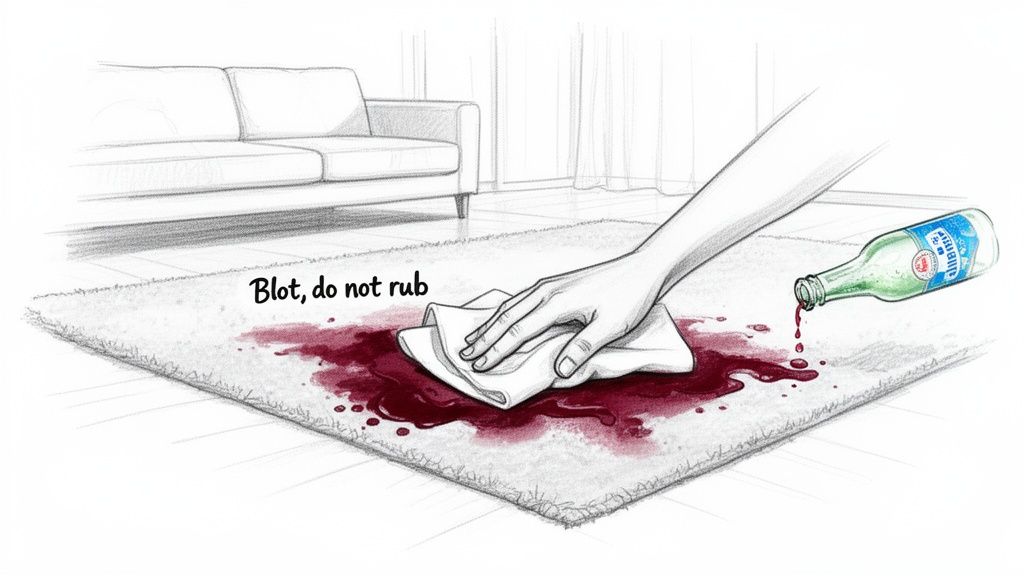
Alright, you’ve blotted up the worst of the spill. Now it's time to deal with what’s left behind. You’d be surprised, but your kitchen pantry probably has everything you need to tackle a fresh red wine stain. These aren't just old wives' tales; these are tried-and-true methods that actually work.
We’re going to focus on two heavy hitters: the salt trick and a simple white vinegar solution. Both are safe for most carpets and use things you already have. While certain specialized stain removers like Fleckenwasser can be great, these household staples are your best first move when you need to act fast.
The Salt Method: Pulling Wine Right Out of the Fibers
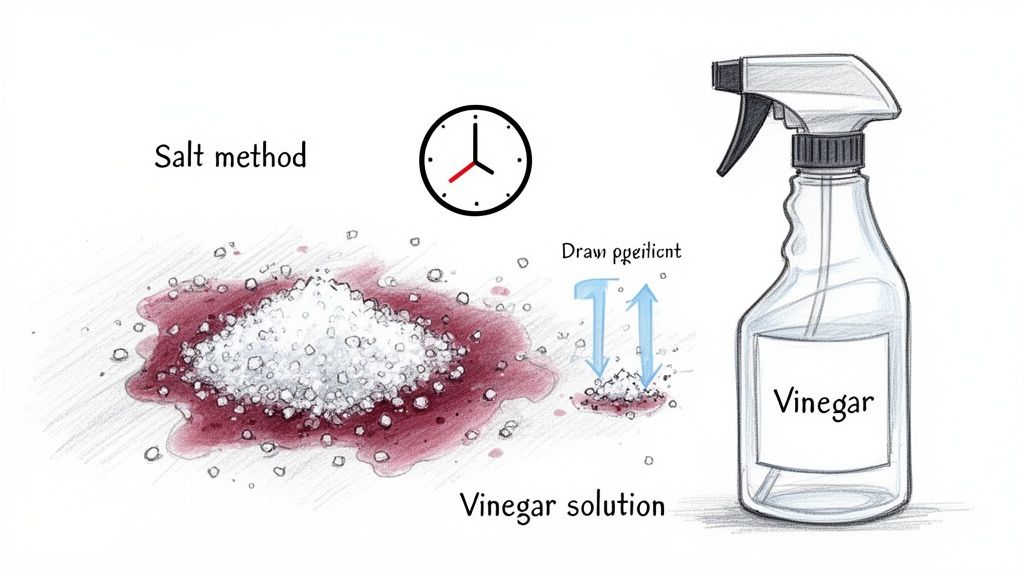
Picture this: you're having people over, and someone’s glass of Cabernet takes a tumble. After you blot, reach for the salt shaker. This isn’t magic; it’s osmosis. The salt literally draws the wine and its pigment right out of the carpet fibers.
Here’s what you do:
- Cover the stain completely. Don't be shy with the salt. Pour a thick layer over the entire damp spot.
- Let it sit. You need to give the salt time to work. You'll actually see it turn pink as it soaks up the wine. For the best results, leave it for at least a few hours, or even overnight.
- Vacuum it all up. Once the salt is dry, just vacuum it all away. You’ll be amazed at how much of the stain comes with it.
When you see that salt turn pink, you're getting real-time proof that the stain is leaving your carpet. It's a surprisingly effective trick.
This method is legit. Experts say applying salt within 10 minutes can pull out 75% of the moisture from a new spill. For synthetic carpets, letting salt sit overnight can remove up to 90% of the color. Just a half-cup of salt on a typical spill can transfer 80% of the stain into the salt itself.
The White Vinegar Solution: Neutralizing What's Left
If the salt left a faint pink shadow behind, or you just want to go a different route, white vinegar is your best friend. The mild acid in white vinegar is perfect for breaking down the reddish pigments in wine.
A word of caution: use only white vinegar. Other types, like apple cider vinegar, can leave their own stain. In fact, using a colored vinegar can create a whole new stain in about 40% of cases.
Mix up this simple but powerful cleaning solution:
- Two cups of warm water
- One tablespoon of white vinegar
- One tablespoon of clear, unscented dish soap
Dab the solution onto the stain with a clean white cloth, working from the outside in to prevent spreading. Let it sit for about 30 minutes, then rinse by blotting with another cloth dampened with plain cold water. This helps make sure you fully get the stain out of the carpet without leaving any soap residue behind, which can attract dirt later.
Tackling Stubborn Set-In Red Wine Stains
Finding an old, dried red wine stain can feel like game over. It's one thing to catch a fresh spill—a little blotting, some pantry staples, and you're usually in the clear. But set-in stains are a different beast entirely. They've had time to really bond with the carpet fibers, which means you need to get a little more strategic.
But don't give up hope. Even a stain that’s been sitting for a day or two can often be kicked to the curb. The secret is to shift your thinking from simple absorption to solutions that actively break down the wine's color. This is where a little bit of household chemistry becomes your best friend.
Using Hydrogen Peroxide and Dish Soap
For a really tough, dried-on stain, a mix of hydrogen peroxide and a clear, gentle dish soap is one of the most powerful DIY treatments out there. The hydrogen peroxide works as a mild oxidizing agent, chemically shattering the molecules that give the wine its deep red color.
Critical Safety Note: Before you even think about putting this on your stain, you must do a spot test. Find a hidden area of your carpet—like inside a closet or under the sofa—and apply a small amount of your mixture. Let it dry completely to make absolutely sure it doesn't bleach or damage your carpet fibers. This is especially important for wool or other natural fiber carpets.
Once you’ve tested it and you're in the clear, you can get to work.
- Mix Your Solution: In a small bowl, combine two parts 3% hydrogen peroxide with one part clear dish soap.
- Apply Carefully: Using a clean, white cloth, gently dab the solution onto the stain. Whatever you do, don’t pour it directly on the carpet. Over-saturating the area can damage the carpet backing and the floor underneath.
- Let It Work: Allow the mixture to sit on the stain for about 20-30 minutes. You should start to see the stain fading as the peroxide does its job.
- Blot and Rinse: Take a new cloth dampened with cold water and gently blot the area to rinse out the solution. Finish by blotting with a clean, dry towel to soak up as much moisture as possible.
This method works so well because the peroxide and dish soap combination can oxidize up to 92% of the stubborn color compounds (called anthocyanins) in less than 30 minutes. When used the right way on synthetic carpets, this technique has an impressive 88% success rate for set-in stains.
A Gentler Alternative with Citrus Cleaners
If using hydrogen peroxide makes you a little nervous, or if you have a more delicate carpet, citrus-based cleaners are a fantastic, less risky option. These products use natural enzymes and the power of citrus oils to break down organic stains like wine, all without harsh chemicals.
The natural acids and enzymes in citrus are pros at dissolving the tannins in red wine. They target the organic stuff in the stain, lifting it from the carpet fibers so you can blot it away for good. Honestly, many of the best professional-grade, eco-friendly cleaners are built on this exact principle.
For those of you dealing with some really challenging spots, we've put together more expert advice in our detailed guide on removing set-in carpet stains.
Common Mistakes That Can Ruin Your Carpet
When that dreaded red wine spill happens, knowing what not to do is just as important as knowing the right steps. A moment of panic can lead you to make a few critical errors, turning a manageable spill into a permanent, heartbreaking stain. These mistakes are surprisingly common, but thankfully, they're easy to avoid once you know what they are.
The biggest and most damaging mistake is scrubbing the stain aggressively. Your first instinct is probably to grab a cloth and start rubbing like crazy. Don't do it. This action just forces the wine deeper into the carpet fibers, untwists the pile, and can even spread the stain out, making it much larger. Instead of lifting the wine, you’re just grinding it in.
Another major misstep is reaching for hot water. Heat actually creates a chemical bond between the tannins in red wine and your carpet fibers. It essentially "cooks" the stain right in, setting it permanently. Always stick to cold or lukewarm water to dilute the spill without causing a chemical reaction you'll regret later.
Small Errors With Big Consequences
Beyond scrubbing and heat, a few other seemingly harmless choices can completely sabotage your cleanup efforts. It's easy to make these mistakes without realizing the damage you're causing until it's too late.
One classic blunder is using the wrong cleaning agent. You might think "soap is soap," but applying a colored dish soap or a harsh chemical cleaner can be a disaster. The dye in colored soaps can transfer right to your carpet, leaving you with a new blue or green stain in place of the red one.
Similarly, over-saturating the carpet with water or a cleaning solution is a hidden danger. Drenching the spot might seem like a good way to flush out the wine, but all that excess moisture will seep right through the carpet backing into the padding and even the subfloor. This creates the perfect environment for mold and mildew, which can cause odors and structural damage far worse than the original stain.
The goal is to treat the stain, not flood the floor. Using too much liquid is one of the fastest ways to create a long-term problem that goes much deeper than just the carpet fibers.
Carpet Stain Removal Dos and Don'ts
We've all been there, and in the heat of the moment, it's easy to forget the basics. This little table is a quick cheat sheet to keep you on the right track when a spill happens. Thinking about these common mistakes before you act can make all the difference between a stain that disappears and one that sticks around for good.
| Mistake To Avoid | Why It's Harmful | What To Do Instead |
|---|---|---|
| Scrubbing Vigorously | Pushes wine deeper into fibers and spreads the stain. | Blot Gently. Press a clean, dry cloth on the spill to absorb the liquid. |
| Using Hot Water | Chemically sets the stain, making it nearly impossible to remove. | Use Cold Water. It dilutes the stain without bonding it to the fibers. |
| Applying Colored Soaps | Can transfer dye to the carpet, creating a new, different-colored stain. | Use Clear Dish Soap. Stick to colorless, unscented soaps for cleaning solutions. |
| Over-Saturating the Area | Can lead to mold, mildew, and damage to the carpet backing and subfloor. | Apply Sparingly. Dab solutions on with a cloth instead of pouring them directly. |
Following these simple guidelines will dramatically increase your chances of getting that wine out completely. It's all about working smart, not hard, and avoiding those gut reactions that feel right but ultimately cause more damage.
When You Need a Professional Cleaning Solution
You’ve blotted, salted, and tried every trick in the book, but that faint pink shadow just won't give up. It’s frustrating. While home remedies can work wonders, there are times when calling in the experts isn't just an option—it's the smartest move you can make to actually save your carpet.
Knowing when to throw in the towel (the clean one, not the wine-stained one) is a huge part of good carpet care. Pushing a DIY solution too far can sometimes do more harm than good.
Signs It’s Time to Call the Pros
You've given it your all, but some spills are just too stubborn for household methods. That's when you need to bring out the big guns to avoid a permanent problem.
When home remedies just aren't cutting it, it’s worth considering some help. Many companies that handle general home maintenance also have expert professional carpet cleaners on staff to help get your home looking its best again.
Here are the dead giveaways that it's time for a professional touch:
- The Stain Is Old and Set: If a wine stain has been hanging out for days, weeks, or even longer, its molecules have chemically bonded to the carpet fibers. Breaking that bond requires specialized solutions and equipment most people don't have under their sink.
- The Spill Is Huge: A massive spill that soaked a large patch of carpet is tough to handle at home. You might get the surface, but the real issue is the wine that seeped into the padding underneath. Pros can treat the entire area—padding and all—and ensure it dries properly to prevent mold.
- Your Carpet Is Delicate: Got wool, silk, or another natural fiber carpet? Red wine is a high-stakes emergency. Using the wrong product can cause irreversible shrinking, discoloration, or damage. Experts know exactly which treatments are safe for these materials.
- Your DIY Attempts Have Failed: If you've tried a couple of methods and the stain is still staring back at you, stop. More attempts could just spread the stain or set it deeper. It’s time for a different approach.
Sometimes, the biggest risk isn't the stain itself, but the potential for DIY methods to cause permanent damage. Knowing your limits is the best way to protect your investment.
Our Low-Moisture Citrus-Based Advantage
For homeowners in the Buford area, there's a much better way to deal with these nightmare stains. Forget traditional steam cleaning that soaks your carpets in soapy water. Our unique low-moisture, citrus-based process gives you a superior clean without all the soggy drawbacks.
This method is especially good for tough organic stains like red wine.
The natural citrus solvent actively breaks down the stain molecules without leaving behind that sticky, soap-based gunk. That leftover residue is the reason old stains seem to "reappear"—it's just a dirt magnet. Our system lifts the stain out for good, leaving your carpet truly clean.
Since 2004, we've built our reputation here in the Buford community on straight talk and real results. We give you an upfront 'EXACT-imate' with absolutely no hidden fees, so you know the price before we even start.
Plus, our signature process means your carpet is dry in just 1-2 hours, not days. When you choose a professional, you should be choosing a guaranteed, flawless result. That's what we deliver.
Answering Your Lingering Wine Stain Questions
Even with the best game plan, you might run into a few tricky situations. It’s totally normal—every wine spill, every carpet, and every situation is just a little different. Let's dig into some of the most common questions we get to help you tackle those "what if" moments.
Can I Still Get a Dried Red Wine Stain Out?
You absolutely can, but you'll need more patience and a bit more muscle than you would for a fresh spill. Once wine dries, it has chemically bonded with the carpet fibers, so just blotting it isn't going to cut it.
First, you need to rehydrate the stain. Just a little cold water will do. Then, you can move on to a more heavy-duty solution, like that hydrogen peroxide and dish soap mix we talked about. It might take a couple of rounds, but it's definitely possible to lift an old, set-in stain.
What Do I Do If the Stain Comes Back?
A "phantom" stain that reappears after you thought you cleaned it is one of the most frustrating things imaginable. This usually happens for one of two reasons:
- Wicking: The wine soaked deep down into your carpet padding. As the surface fibers dry, that hidden wine "wicks" its way back up to the top.
- Residue: You didn't get all the cleaning solution rinsed out. That sticky soap residue is now a magnet for new dirt, making the old spot look dark and dirty all over again.
The fix is to re-clean the spot, but this time, focus on a really thorough rinse. Dampen a clean cloth with only cold water and blot, blot, blot. Then, grab a thick stack of clean, dry paper towels, place it over the spot, and weigh it down with something heavy (a stack of books works great). Leave it overnight. This will help pull every last bit of moisture—and wine—out of the padding for good.
Is Baking Soda as Good as Salt for Fresh Spills?
Baking soda is another fantastic absorbent and works pretty much the same way salt does on a fresh spill. You can use it the exact same way: pour a ton of it over the stain, let it sit and work its magic drawing the wine out, and then vacuum it all up.
The real advantage of baking soda is its deodorizing power. If you're worried about that sour wine smell lingering, baking soda is a great two-for-one solution that tackles both the stain and the odor.
Honestly, either one is a great first-response tool. Both are incredibly effective at pulling a huge amount of wine out of the carpet before it sets, which makes the rest of your cleaning job a whole lot easier.
When your best DIY efforts just aren't cutting it, it’s time to call in the pros. Citrus Carpet Cleaning Buford uses a low-moisture, citrus-based system that gets rid of stubborn stains without leaving any of that sticky, dirt-attracting residue behind. Your carpets will stay cleaner, longer. For a guaranteed clean with a fast 1-2 hour dry time, visit us online or call for your free 'EXACT-imate' today.