
You know that musty, earthy smell that sometimes creeps into a room? That’s often the very first red flag that you’ve got mold on your carpet. It’s a super common problem, especially when carpet fibers trap moisture from spills, leaks, or even just high humidity. This creates the perfect breeding ground for mold, and ignoring it can wreck your carpets and tank your indoor air quality.
Why Your Carpet Is a Prime Target for Mold
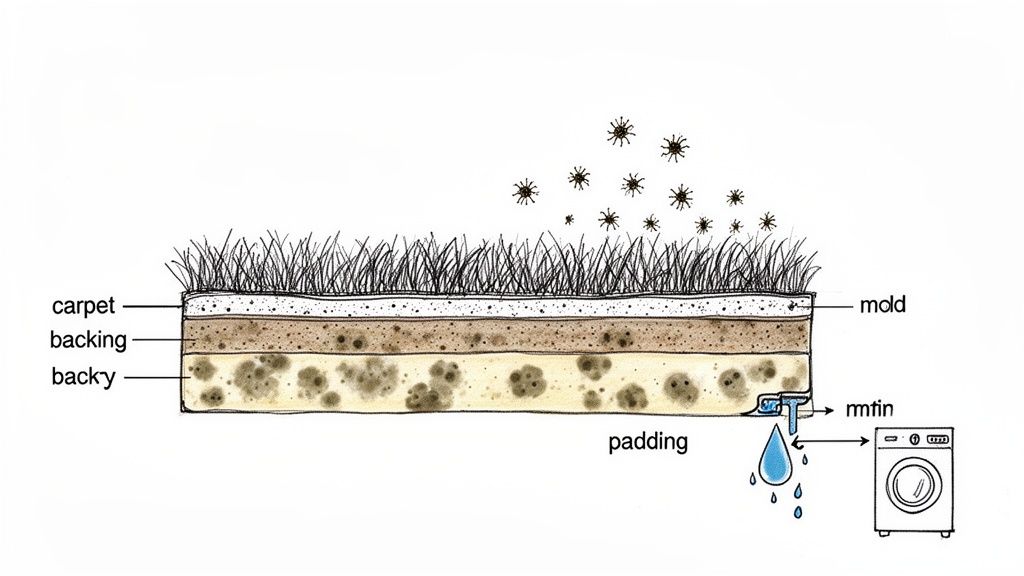
It’s really no accident that carpets are so prone to mold. Just think of your carpet as a giant, dense sponge spread out on your floor. The very thing that makes it comfy—its thick, absorbent structure—also makes it incredibly good at trapping everything mold needs to thrive.
This is a big deal for homeowners here in Buford, Georgia. Our humid subtropical climate means we're in a constant battle against indoor moisture. When your indoor humidity levels creep up and stay above 50%, the risk of mold popping up on the carpet surface and deep in the padding goes way up.
The Perfect Recipe for Mold Growth
For mold to really take hold, it needs a few key ingredients, and your carpet is like an all-inclusive resort providing all of them. Once you understand the recipe, you’ll see why stopping it before it starts is so important.
- A Consistent Moisture Source: We're not just talking about a major flood. It could be a slow, hidden leak from an appliance, condensation dripping from windows, or even a pet accident that never fully dried.
- Organic Food Source: Carpet fibers themselves, plus all the dust, skin cells, and dirt they trap, are an endless buffet for mold spores. All that organic gunk deep in the pile is basically fuel.
- Stagnant, Dark Environment: The thick backing of a carpet and the padding underneath block out light and stop air from moving. This creates a perfect dark, undisturbed hideout where mold can colonize without anyone noticing until it’s a huge problem.
- Warm Temperatures: Most of us keep our homes at a comfortable temperature, which, wouldn't you know it, is also the ideal temperature range for most common household molds to grow.
Beyond the Obvious Spills and Leaks
Sure, a burst pipe is an obvious cause, but a lot of the time, moldy carpets are the result of sneaky, hidden water sources. These are the most dangerous because they let mold grow completely unchecked for weeks or even months.
A classic example I see all the time is a slow leak from an icemaker line or a dishwasher. A tiny, steady drip can completely saturate the carpet padding without the surface ever feeling that wet. The first clue is usually that musty smell, which is a dead giveaway that something is wrong underneath. If you’re fighting stubborn odors, learning how to properly get odor out of carpet can help while you hunt for the moisture source.
Another common culprit? Bad carpet cleaning. A lot of those DIY rental machines—and even some so-called professional services—soak carpets with way too much water and don't have the commercial-grade suction to pull it all out. That leftover dampness creates the perfect storm for a mold bloom just days after you thought you "cleaned" it.
Key Takeaway: That musty smell isn't just a bad odor. It's the release of Microbial Volatile Organic Compounds (MVOCs). These are gases produced by mold as it eats and grows. If you can smell it, you have active mold growth, even if you can't see a single spot.
This is exactly why professional low-moisture cleaning methods are so critical. By using way less water and a specialized process, the carpet is left clean, fresh, and dry in just a couple of hours. This completely eliminates the risk of accidentally creating a new mold problem. It's a proactive approach that’s essential for keeping your home healthy in Buford's humid climate, where every little bit of moisture counts.
The Hidden Health Risks in Your Carpet Fibers
That little discolored spot on your carpet might seem harmless. It’s easy to cover it with a piece of furniture and just forget it’s there. But what you can see is often just the tip of the iceberg.
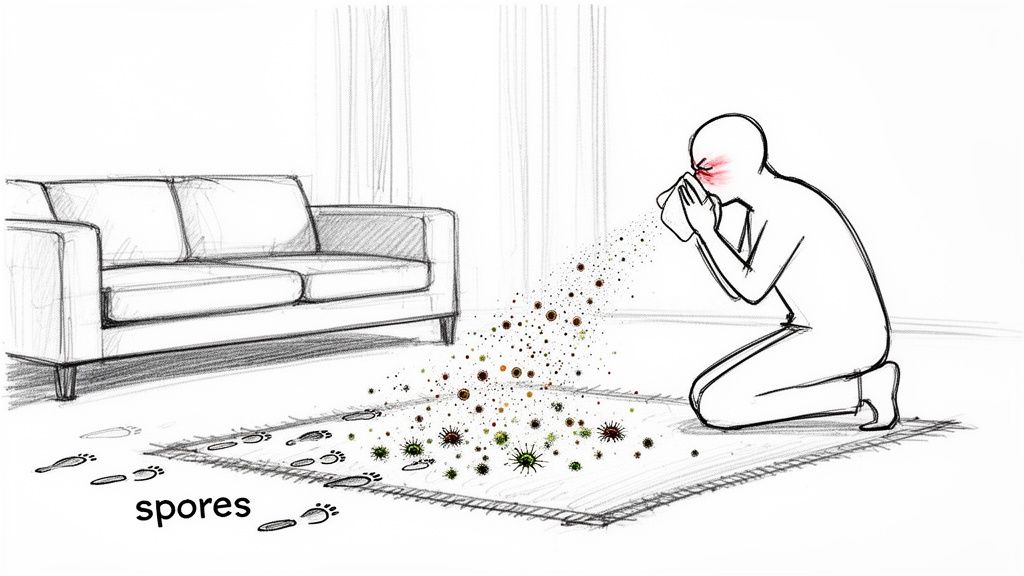
Beneath that surface stain, a whole network of mold could be thriving, releasing millions of microscopic spores into your home.
Every time someone walks over that spot, those spores get kicked up into the air and circulated throughout your house. This is where the real problem starts. You're not just dealing with an ugly stain; you're dealing with an active biological problem that’s tanking your home's air quality.
From Annoying Allergies to Serious Respiratory Issues
For a lot of people, the first signs of a mold problem get confused with seasonal allergies that just won't quit. If you or someone in your family is suddenly dealing with non-stop sneezing, a runny nose, or itchy eyes, the real culprit could be hiding in your carpet.
These are common allergic reactions—it's your body's way of fighting off the mold spores you’re breathing in. Other physical symptoms can pop up, too:
- Skin Rashes: Unexplained hives or irritated skin can be a direct result of coming into contact with mold spores.
- Chronic Coughing and Wheezing: A nagging dry cough or a new wheezing sound often points to irritation in your lungs and airways.
- Headaches and Fatigue: Some people are more sensitive and might experience persistent headaches or just a general feeling of being unwell.
For certain people, the stakes are much higher. Children, the elderly, and anyone with a weakened immune system are at a greater risk. And for those with asthma, mold on the carpet is especially dangerous. It’s a known trigger for severe asthma attacks and can make existing breathing problems much worse.
The Centers for Disease Control and Prevention (CDC) has directly linked indoor mold exposure to upper respiratory symptoms, even in healthy people. For asthmatics, the data is even clearer, showing a strong connection between the presence of mold and an increase in asthma attacks.
A Local Concern for Buford Residents
Here in Buford, GA, we love our warm weather. But that warmth comes with high humidity, creating the perfect breeding ground for indoor mold. When it's muggy outside, it gets damp inside, and our carpets become prime real estate for mold growth.
This constant fight against moisture means that mold on carpet isn't just a remote possibility—it's a serious local health issue we see all the time.
The spores coming from your carpet mix with all the other usual indoor pollutants, creating an airborne cocktail that's tough on anyone's respiratory system. Taking steps to clean up your home's air is one of the most important things you can do for your family's health. If you're worried about what's floating around in your home, it's a good idea to learn about professional solutions for improving your indoor air quality.
Ultimately, you have to see carpet mold for what it is: a legitimate health threat. It's an active problem that directly affects the air you and your family breathe every single day. Knowing the symptoms is the first step to protecting them and getting the problem handled correctly.
So you've found mold. What now? The big question every homeowner in Buford faces is whether this is a DIY job or if it's time to call in the professionals. Getting this decision right isn't just about saving a few bucks—it’s about protecting your home and, more importantly, your family's health.
A tiny, contained spot is one thing. But if that mold has started to spread, you're looking at a completely different beast.
First thing's first: you need to play detective, but do it safely. Before you even think about touching that carpet, gear up. I'm talking about an N95 mask, some protective eyewear, and a good pair of gloves. Mold spores are microscopic and get kicked into the air with the slightest disturbance, and you do not want to be breathing that stuff in.
Once you’re protected, gently pull back a corner of the carpet near the suspicious area. What you find lurking underneath is going to tell you everything you need to know.
What to Look For Under the Carpet
The visible spot on top of the carpet is usually just the tip of the iceberg. The real problem is almost always hiding out of sight, deep in the carpet fibers and beyond.
- Check the Carpet Backing: Flip that corner over and look at the underside. See any dark, ugly staining, discoloration, or fuzzy growth? If the mold has made a home in the carpet's backing, a simple surface spray isn't going to cut it.
- Inspect the Carpet Padding: Carpet padding is basically a giant sponge, and it loves to hold moisture. If that padding feels even slightly damp, looks discolored, or has that unmistakable musty smell, it’s contaminated. I'll be blunt: moldy padding is a lost cause. It can't be salvaged and has to go.
- Examine the Subfloor: Now, look at the wood or concrete that was under the padding. Do you see any water stains or, worse, more visible mold? If that fungus has reached the subfloor, stop right there. You're dealing with a serious issue that could cause structural damage if not handled by a professional.
The single most important factor here is size. As a general rule of thumb, we go by what the EPA suggests: the 10-square-foot rule.
If the moldy patch is smaller than 10 square feet (think a 3-foot by 3-foot area), you can probably tackle it yourself. But if it's bigger than that, or if you have any reason to believe it's gotten into your HVAC system, don't hesitate. It's time to call in the pros.
DIY vs. Professional: Making the Right Call
Weighing a DIY job against hiring an expert comes down to cost, risk, and whether the problem will actually be solved. A lot of folks in the Buford area try to save money with a DIY attempt, only to find the mold comes roaring back because the root cause wasn't addressed.
Sometimes, seeing the pros and cons laid out makes the decision crystal clear. We actually wrote a whole guide on this, which you can check out to see if professional carpet cleaning is worth it.
To help you decide, here’s a straightforward comparison of what you’re looking at.
Mold Removal DIY vs Professional Carpet Cleaning
| Factor | DIY Approach | Professional Service (e.g., Citrus Carpet Cleaning) |
|---|---|---|
| Best For | Small, surface-level mold spots (under 10 sq. ft.) with zero padding contamination. | Large mold outbreaks, contaminated padding or subfloor, and stubborn, recurring mold issues. |
| Cost | Seems cheap upfront (just cleaning supplies and gear). | A higher initial investment, but it's almost always more cost-effective when you factor in preventing a comeback. |
| Effectiveness | Might work for minor spots, but you'll likely miss the deeper mold roots, which just leads to regrowth. | Extremely effective. We use commercial-grade equipment and solutions to eradicate mold at the source and stop it from returning. |
| Risks | A high risk of spreading spores all over your house, not fully removing the mold, and exposing yourself to health hazards. | Minimal risk. A true professional uses proper containment and safety protocols to keep you and your home safe. |
| Time & Effort | Be prepared to spend a lot of your own time cleaning, drying, and then anxiously monitoring the spot for weeks. | We handle everything—from the initial assessment to the final cleanup—quickly and efficiently so you can get back to your life. |
Look, if your inspection reveals that the padding is damp or the mold covers a wide area, the decision is pretty much made for you. In those situations, that carpet and padding need to be carefully cut out, bagged up, and disposed of properly. If the damage is that bad, you might even need professional junk removal services to haul away the contaminated materials safely.
Trying to save a deeply infested carpet is a battle you're going to lose, and it’s a health risk you just shouldn't take.
Tackling Small Mold Spots on Your Own
So, you've taken a look and confirmed it’s a small, surface-level patch of mold on carpet. If we're talking about an area less than 10 square feet, you can often handle it yourself with a careful approach. But this isn't a five-minute job you can rush through. Getting the prep work and safety measures right is absolutely non-negotiable, both for your health and to keep from turning a small problem into a house-wide headache by spreading spores everywhere.
This is the critical decision point. This simple flowchart breaks down the choice between rolling up your sleeves and calling a professional, and it all comes down to size.
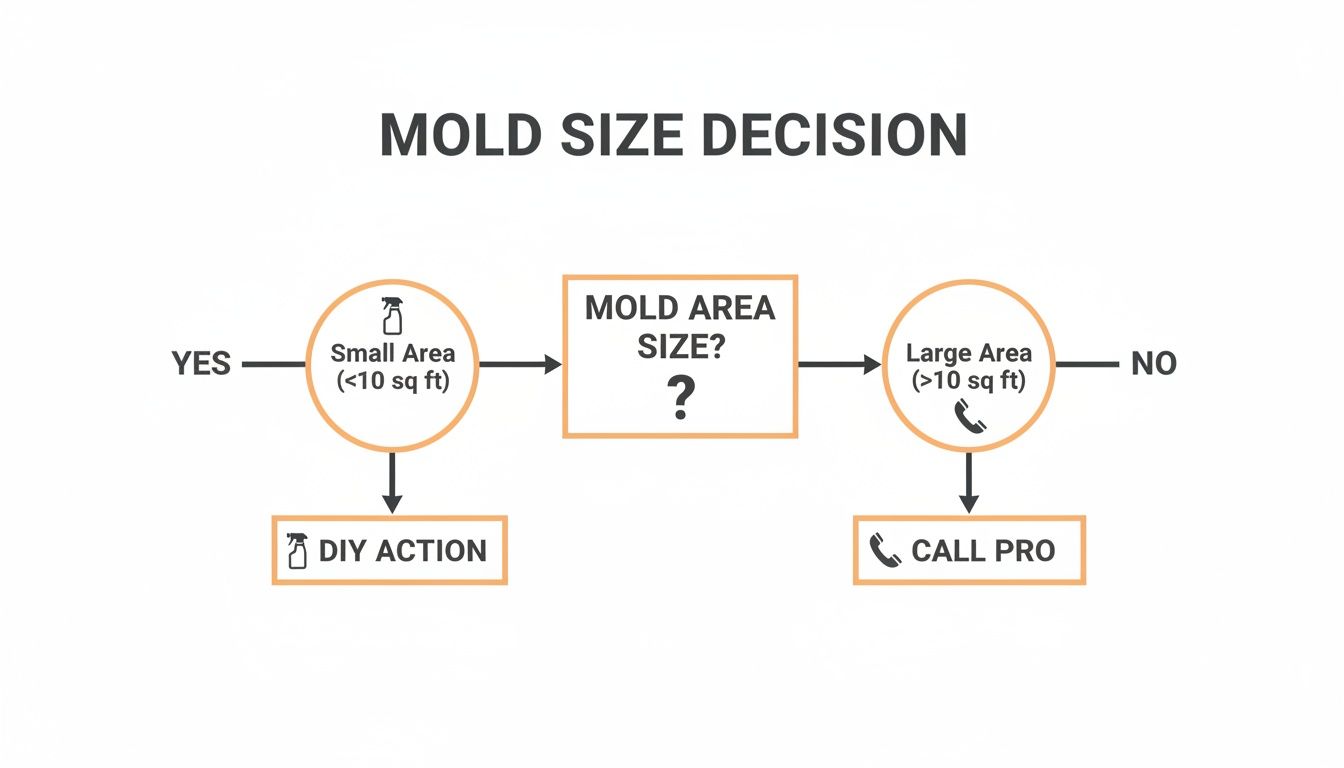
As you can see, the size of the moldy patch is really the deciding factor. Anything bigger than a small, contained spot is a job for the pros. It's just the safest and most effective way to go.
Gearing Up for a Safe Cleanup
Before you even think about mixing up a cleaning solution, your number one priority is protecting yourself. Mold spores are microscopic little irritants that you do not want to be breathing in or getting on your skin. Treat this like a mini-remediation project and gear up the right way.
- N95 Respirator Mask: A simple paper dust mask won't do the trick here. You need a proper N95 respirator that can actually filter out those tiny mold spores.
- Safety Goggles: Protect your eyes. You don't want cleaning solutions or airborne spores getting in there.
- Rubber Gloves: Go for a durable, non-porous pair that covers your wrists. You want to keep your hands completely shielded.
- Old Clothes: Pull out some long-sleeved shirts and pants that you don't mind getting dirty. You'll want to toss them straight into a hot wash cycle as soon as you're done.
Next, you need to contain the area. Shut any doors that lead to other parts of your home and turn off your HVAC system completely—the last thing you want is for it to circulate spores. Crack open a window to the outside to get some fresh air moving.
The Right Tools and Techniques for Carpet Mold
Okay, you've got your safety gear on and the room is prepped. Now it's time to clean. The secret here is using the right solution with a gentle but firm technique. Harsh chemicals can wreck your carpet, and scrubbing too hard will just launch a cloud of spores into the air.
What you clean with is incredibly important. A lot of people's first instinct is to grab the bleach, but that's a huge mistake. Bleach often just zaps the color out of the mold stain, fooling you into thinking the problem is solved. It doesn't actually kill the mold's "roots" (the mycelia) that have dug into the carpet backing. On top of that, it can permanently discolor your carpet.
Believe it or not, a simple, natural solution is usually the best bet for a small mold on carpet problem.
Pro Tip: A 50/50 mix of plain white vinegar and water is one of the most effective DIY mold killers out there. The acetic acid in vinegar is strong enough to penetrate porous surfaces and kill mold at its source, but it’s gentle enough that it won’t damage most carpets.
Here’s how to approach it:
- Apply the Solution: Pour your vinegar and water mix into a spray bottle. Give the moldy area a light misting—don't saturate it. The goal is to treat the mold without soaking the padding underneath.
- Let It Sit: Leave the solution alone for at least an hour. This gives the vinegar time to really get in there and break down the mold.
- Scrub Gently: Take a stiff-bristled brush (not a wire one, it’ll tear up your carpet fibers!) and gently scrub the spot. Always work from the outside of the stain inward to contain the mess.
- Blot and Rinse: Use a clean, dry cloth or some paper towels to blot the area, soaking up the moisture and the mold you've just loosened. Then, lightly dampen a fresh cloth with plain water and blot again to "rinse" any leftover vinegar.
The Most Important Final Step: Drying
You've cleaned the spot, but you're not done. If you leave that carpet even the slightest bit damp, you’re basically putting out a welcome mat for the mold to return. Getting the area completely dry is probably the most critical part of this whole process.
Set up a couple of fans and aim them directly at the treated spot. If you have a dehumidifier, now's the time to use it. Place it in the room and let it run for a solid 24 to 48 hours to suck every last drop of moisture out of the carpet, the padding, and even the subfloor below. Only when it feels absolutely bone-dry to the touch can you call the job done.
Preventing Mold from Coming Back
Getting rid of a patch of mold on your carpet feels great, but the job isn't done. The real challenge is making sure it never shows up again.
Mold spores are literally everywhere, just floating around, waiting for the right conditions to settle down and grow. Here in Buford, Georgia, our muggy climate gives them a huge advantage. Winning the war against mold isn't about one single cleaning; it's about changing your home's environment so mold can't get a foothold in the first place.
It all comes down to one thing: moisture control. Mold needs water to survive. If you take away the water, you win. This is about more than just sopping up spills—it's about managing the invisible humidity in the air that your carpets soak up like a giant sponge.
Creating a Mold-Resistant Environment
Trust me, being proactive about prevention is way less stressful and cheaper than dealing with another mold outbreak. A few simple, consistent habits can make a world of difference in keeping your carpets dry and your home healthy.
Your best weapon, especially during our humid Georgia summers, is a dehumidifier. Your goal should be to keep the indoor humidity level between 30% and 50%. You can grab an inexpensive little gadget called a hygrometer to keep an eye on the levels. Running a dehumidifier in basements, laundry rooms, or any space with poor ventilation is an absolute game-changer.
Don't forget about airflow. Stale, stagnant air is a moisture trap. Turn on ceiling fans or even a few small portable fans to keep the air moving, especially in carpeted rooms. Good ventilation helps moisture evaporate before it has a chance to sink deep into your carpet fibers.
A Proactive Checklist for a Mold-Free Home
Staying on top of moisture isn't a one-and-done task. It takes a few different strategies working together. Here are some real-world steps you can build into your routine to protect your carpets:
- Attack Spills Immediately: Don't just give a spill a quick wipe. Blot it aggressively with a clean, dry towel. Stand on it. Keep blotting until the towel comes up dry. For a bigger mess, a wet/dry vac is your best friend.
- Be a Leak Detective: Every so often, take a peek under your sinks, behind the fridge, and around window sills. Look for any signs of water. A slow, hidden drip is one of the most common culprits behind serious carpet mold.
- Choose the Right Padding: If you're getting new carpet, ask about rubber-slab or synthetic-fiber padding. These materials are naturally resistant to mold and mildew, unlike a lot of the standard stuff.
- Manage Your Houseplants: It's easy to overwater plants, which can lead to spills and add extra humidity to the air. Make sure your pots have good drainage trays underneath to catch any overflow.
To really get ahead of the game, it helps to understand the bigger picture of how to prevent damp and condensation in your home. This knowledge is a crucial piece of the puzzle.
The Role of Professional Low-Moisture Cleaning
Maybe the single most effective thing you can do is schedule regular professional cleanings with someone who understands our local climate. I've seen it a hundred times: traditional steam cleaning can actually make things worse by pumping gallons of hot water into a carpet and then failing to get it all back out.
This is where a low-moisture cleaning process makes all the difference. Imagine getting your carpets deep-cleaned and having them completely dry in just an hour or two. By using a specialized, citrus-based solution with very little water, we can pull out the dirt and grime without creating that damp breeding ground mold absolutely loves.
Statistically, around 70% of homes have some form of mold. Exposure is linked to 4.6 million asthma cases and costs an estimated $22.4 billion a year in health problems and property damage. Those numbers are a serious wake-up call, especially when you consider carpet is a prime habitat for mold growth.
Our low-moisture method is a powerful preventative weapon because it denies mold its most critical resource: water. When you choose a cleaning method designed to keep your home dry, you're not just cleaning up a mess—you're actively defending your home and family from future problems. Combine that with your own diligent moisture control, and you’ve got the strongest defense possible against mold making an unwelcome return.
Got Questions About Carpet Mold? We've Got Answers.
Once you’ve dealt with a mold problem, it’s natural to have some lingering questions. Frankly, mold on carpet can be tricky, so we’ve put together the questions we hear most often from homeowners right here in the Buford area to give you straight, simple answers.
This is all about making sure you’re confident in the next steps and don’t accidentally make a small issue much, much bigger.
Can I Just Clean the Visible Mold Spot on Top?
This is a question we get all the time, and the short answer is almost always no. Just scrubbing the spot you can see is like pulling the top off a weed—it looks better for a minute, but you haven't touched the roots.
Mold grows with root-like filaments, called mycelia, that dig deep into the carpet backing and, more importantly, the padding underneath. Cleaning the surface stain leaves that root system completely intact, just waiting for the right conditions to pop back up. You have to figure out if the mold has reached the padding. If it has, that whole section of carpet and padding needs to go for a permanent fix.
Will a Regular Steam Cleaner Kill Carpet Mold?
It sounds logical, right? Hit it with heat and steam. But in reality, using a standard steam cleaner is a huge gamble. While the heat might kill some mold on the very surface, the process itself can create a nightmare scenario. These machines blast a ton of hot water deep into your carpet.
Unless that water is pulled out almost perfectly with a powerful, commercial-grade vacuum, you're just making the problem worse. You’ve now created a warm, soggy environment—basically a five-star resort for mold to grow and spread. This is exactly why a professional low-moisture system is the smarter, safer bet. It cleans deep without soaking everything, which means a fast dry time that stops mold in its tracks.
Key Insight: The single biggest mistake you can make is adding more moisture to a mold problem. The real goal is to get rid of the mold and dry the area completely, not create a damp breeding ground for it to come roaring back.
What Does Carpet Mold Actually Smell Like?
That unique smell is usually your first clue that something is wrong. Carpet mold has a very distinct musty, earthy odor, kind of like damp soil, old socks, or rotting wood. It’s a smell you won’t forget.
That pungent smell comes from microbial volatile organic compounds (MVOCs)—basically, gases released by the mold as it grows and eats. In a lot of homes, you’ll smell this musty aroma long before you ever see a single spot of mold. If a carpeted room has a persistent musty funk that just won’t air out, it’s a huge red flag telling you to start looking for hidden mold.
Is It Safe to Live in a House with Moldy Carpet?
This really depends on two things: how much mold there is and who lives in the house. For anyone with asthma, allergies, a weakened immune system, or for the very young and elderly, even a small patch of mold can cause real health problems.
Honestly, long-term exposure isn't good for anyone and can lead to things like respiratory irritation, coughing, and headaches. If the mold covers a large area—say, more than 10 square feet—or if people in the house are feeling sick with no other explanation, you need to limit your time in that room immediately. In those situations, your best bet is to call in a professional mold remediation specialist to make sure the air and your home are safe again. Your family's health is always priority number one.
Don't let carpet mold put your home's health at risk. If you're dealing with a stubborn mold situation or just want to make sure one never starts, trust the team at Citrus Carpet Cleaning Buford. Our low-moisture cleaning process is the safest, most effective way to get your carpets clean and dry—fast. Schedule your EXACT-imate today by visiting us at https://citruscarpetcleaningatlanta.com.