
We've all been there—that heart-stopping moment when a glass of red wine tumbles onto a light-colored rug. It's a familiar panic. But before you grab the first harsh chemical cleaner you can find, you should know that a simple homemade natural stain remover is almost always the better, more effective choice. These solutions, made from stuff you probably already have, work wonders without leaving behind sticky residues or toxic fumes. They're just plain safer for your family and your fabrics.
Why Natural Stain Removers Just Work Better Than Chemicals
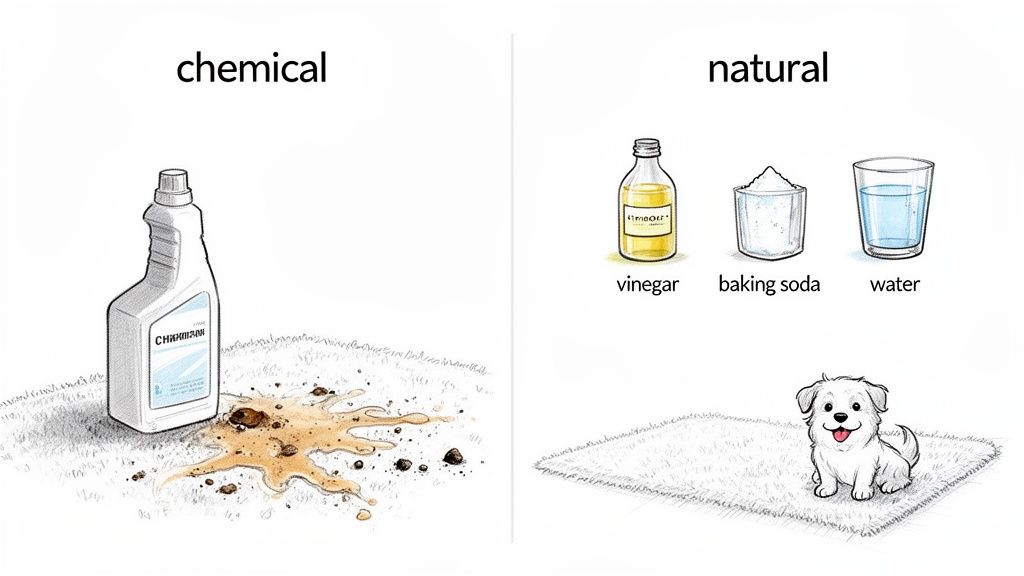
When you see a tough stain, the gut reaction is to reach for the strongest-looking bottle under the sink. The problem is, many of those commercial products rely on aggressive solvents and surfactants that can do more harm than good. At Citrus Carpet Cleaning Buford, we’ve seen the aftermath countless times: a soapy, sticky film left deep in the carpet fibers.
That residue is a dirt magnet. Over time, it causes the original spot to reappear, but this time it’s darker and grubbier as new dirt clings to it. It's a frustrating cycle we call "resoiling." Worse yet, those same harsh chemicals can weaken and discolor delicate carpet and upholstery, sometimes causing permanent damage. A natural stain remover, on the other hand, is designed to work with the chemistry of the stain, not against the fabric itself.
The Gentle Power of Everyday Ingredients
Going with a natural approach isn't about giving up cleaning power; it's about using smarter science. Common household items like white vinegar, baking soda, and hydrogen peroxide are incredibly effective because they target stains in specific ways without all the collateral damage.
- Vinegar: Its mild acidity is perfect for breaking down food-based stains and neutralizing alkaline messes like pet urine.
- Baking Soda: As an alkaline powder, it’s brilliant for absorbing greasy, oily spills and zapping acidic odors.
- Hydrogen Peroxide: This acts as a gentle oxidizing agent. It breaks the chemical bonds in organic stains (think coffee or blood), which is what lifts the color right out.
This targeted method cleans the actual stain without leaving a chemical footprint. Your carpet stays cleaner for much longer simply because there's no sticky residue left behind to attract new dirt.
The real secret to effective cleaning is simple: remove the foreign substance and leave absolutely nothing behind. Natural solutions are masters at this, rinsing away cleanly while preserving the look and feel of your carpet and upholstery.
Natural Vs Chemical Stain Removers at a Glance
To make the choice even clearer, let's break down the key differences between the stuff in your pantry and the harsh chemicals on the store shelf.
| Attribute | Natural Stain Removers | Chemical Stain Removers |
|---|---|---|
| Residue | Rinses cleanly; leaves no sticky film. | Often leaves a soapy, dirt-attracting residue. |
| Safety | Non-toxic, safe for kids and pets. | Can contain harsh solvents and toxic fumes. |
| Fabric Impact | Gentle on fibers; preserves color and texture. | Can weaken, discolor, or damage delicate fibers. |
| Cost | Extremely affordable; uses common household items. | Can be expensive, especially for specialized formulas. |
| Odor | Neutralizes odors naturally (e.g., vinegar, baking soda). | Often masks odors with strong, artificial fragrances. |
| Environment | Biodegradable and eco-friendly. | Can contain pollutants harmful to waterways. |
As you can see, the natural route offers a powerful clean without the serious downsides that come with conventional chemical products.
The Bigger Picture: A Shift in Consumer Demand
This move toward safer, more effective cleaning isn't just a small trend—it's a major market force. The global stain remover market was valued somewhere around USD 22-25 billion in 2023, and it's projected to climb toward an incredible USD 38.4 billion by 2033.
North America is leading this charge with a 32.5% market share, driven by people who are actively seeking out eco-friendly, plant-based products like those using citrus extracts. This data makes it clear: consumers prefer non-toxic solutions that deliver better results without the risks. You can learn more about this consumer shift toward natural products and market trends.
When you choose a natural stain remover, you’re not just making a safer choice for your home. You're siding with a proven, more effective method of cleaning that gets the job done right.
Building Your Natural Stain Fighting Toolkit
Forget that cluttered cabinet under the sink, crammed with expensive, single-use chemical cleaners. Honestly, the most powerful and versatile stain-fighting arsenal you can own is probably already scattered around your kitchen pantry.
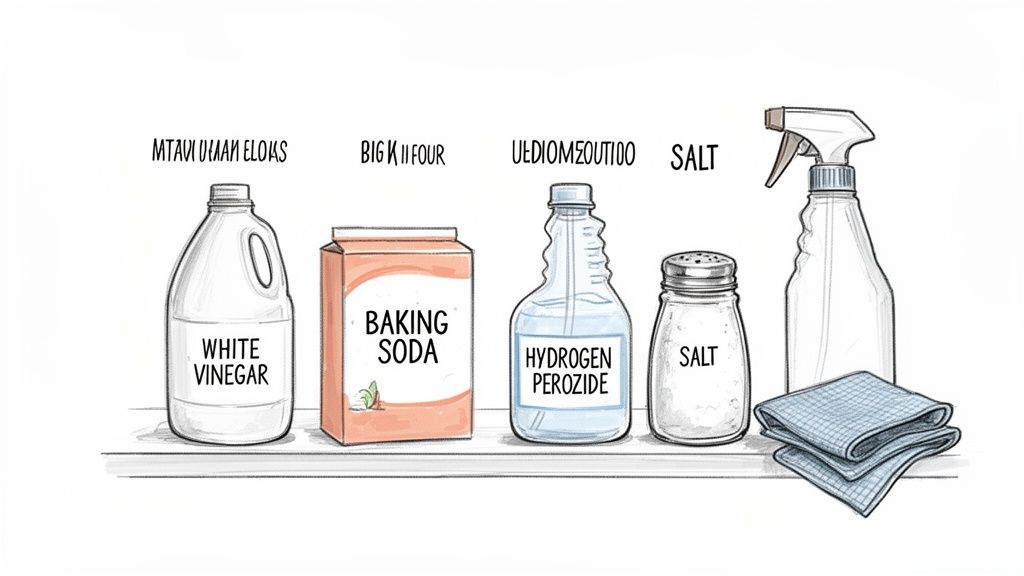
Putting together an effective natural stain remover toolkit is all about simplicity. You don’t need a dozen different products; you just need to understand how a few basic ingredients can tackle a massive range of messes. These items are cheap, easy to find, and incredibly effective once you know how to use them. Let's dig into the "Big Four" that will become the foundation of your homemade cleaning kit.
The Essential Ingredients
Each of these household staples has a specific job when it comes to breaking down and lifting stains. Think of them as a team of specialists, each bringing a unique superpower to the fight.
- Distilled White Vinegar: This is the absolute workhorse of natural cleaning. Its mild acidity is perfect for dissolving all sorts of gunk and breaking down many common food-based stains. It’s also a fantastic natural deodorizer, which is a huge plus.
- Baking Soda (Sodium Bicarbonate): When you need to absorb a spill and kill an odor, this is your go-to. Its gentle alkalinity helps cut through grease, and the fine particles give you a little scrubbing power without scratching up your fabrics.
- Hydrogen Peroxide (3% Solution): This is your gentle oxygen bleach. It works by breaking the chemical bonds that give stains their color, making it a beast for lifting discoloration from things like coffee, blood, or grass on light-colored fabrics.
- Salt: It’s more than just a seasoning. Salt is an incredible absorbent and a mild abrasive. It's fantastic for pulling up fresh liquid spills—like that dreaded splash of red wine—before they have a chance to set in.
By combining these four ingredients in different ways, you can whip up a targeted solution for pretty much any spill you'll ever face on your carpets or furniture.
Must-Have Tools for Application
Having the right ingredients is only half the battle. The tools you use to apply your solutions, work them in, and blot them out are just as important for getting a clean, residue-free finish without wrecking your stuff.
A common mistake we see is people using the right solution with the wrong tool—like a rough paper towel that disintegrates or a colored cloth that bleeds dye onto the carpet. Your tools should lift the stain, not create a new one.
Keep your application toolkit simple but effective:
- Spray Bottles: Grab at least two or three and label them clearly. Keep one for your vinegar solution and another for a hydrogen peroxide mix. Pro tip: use dark or opaque bottles for the peroxide. Light breaks it down and makes it less potent over time.
- White Microfiber Cloths: These are non-negotiable. They are super absorbent for blotting up spills and, most importantly, they won't transfer any color onto your fabric. Their tiny fibers are also amazing at trapping and lifting away dirt.
- A Soft-Bristled Brush: Perfect for gently working your cleaning solution into stubborn spots on more durable carpets. The key is to always use a light touch to avoid fraying or fuzzing up the fibers.
- A Small Bowl: You'll want this for making a simple paste out of baking soda and water, which is my favorite trick for tackling greasy or oily stains.
With these simple ingredients and tools in hand, you'll be fully equipped to handle messes confidently and effectively, the natural way.
Crafting Your All-Purpose Natural Stain Remover
Alright, now that you've got your toolkit ready, it's time to mix up the actual solutions. Forget that crowded cabinet full of single-purpose cleaners. These two simple, homemade formulas will honestly handle about 80% of the household spills you'll ever face. They cost pennies to make and work like a charm on most carpets and upholstery.
We'll start with a basic vinegar mix, which is your first line of defense. Then, we'll make a slightly stronger hydrogen peroxide solution for those more colorful, organic stains that really make you panic.
Recipe 1: The Everyday Vinegar Solution
This is your go-to for general spots, light grime, and a ton of food-based messes. The mild acidity in white vinegar is fantastic at breaking down the structure of a stain, making it easy to lift right out. It's incredibly simple, super effective, and rinses away clean.
Here's how to mix it:
- Combine one part distilled white vinegar and one part cool water in a spray bottle. Make sure you label it clearly!
- For a fresher scent and a little extra cleaning muscle, add 5-10 drops of lemon essential oil. Citrus is a natural degreaser and helps knock out minor odors.
- Just give the bottle a gentle shake to mix everything up, and you're ready to go.
This simple mix is a workhorse for things like muddy paw prints, minor food spills, and just general dinginess. If you're curious about other variations, we dive deeper in our guide to the best homemade carpet cleaner recipe.
Recipe 2: The Organic Stain Fighter (Peroxide Mix)
When you're dealing with something more stubborn or colorful—think coffee, tea, or even blood—you need a bit more firepower. Hydrogen peroxide works as a gentle oxygen bleach, breaking apart the chemical bonds that create color without the harshness of chlorine bleach.
Mixing your heavy-hitter:
- In a separate, opaque spray bottle, mix one part 3% hydrogen peroxide with two parts water. The opaque bottle is key; light breaks down peroxide and makes it useless.
- Add about one teaspoon of a clear, unscented dish soap (something simple like Castile soap is perfect). This helps the solution stick to the stain and tackle any greasy parts.
- Gently tilt the bottle back and forth to combine. Shaking it like crazy will just create a foamy mess.
This is your secret weapon, but a word of caution: hydrogen peroxide has a mild lightening effect. It is absolutely crucial to test it on a hidden spot first, especially on darker or brightly colored fabrics.
The Right Technique Is Everything
Having the best solution in the world won't help if your technique is wrong. If you only remember one thing, make it this: blot, never rub.
When you scrub a fresh stain, you're just grinding those particles deeper into the carpet fibers. You can even damage the fibers themselves, creating a fuzzy, worn-out patch that looks worse than the original stain. Blotting, on the other hand, uses gentle pressure to pull the stain up and out.
The trick is to always work from the outside edge of the stain inward. This stops you from accidentally spreading the mess and turning a small spot into a giant disaster. It's a tiny detail that makes a world of difference.
Always, Always Do a Spot Test First
Before you go spraying anything on a visible stain, you have to test it. I can't stress this enough.
Find a hidden area—under a sofa cushion, inside a closet, or on the skirt of a chair—and apply a small amount of your cleaning solution. Let it sit for a few minutes, then blot it dry with a clean white towel. Check for any color bleeding or change in the fabric's appearance. If it looks unchanged, you're good to go. This five-minute check can save you from a permanent, costly mistake.
This move toward simple, homemade cleaners is part of a much bigger trend. People are getting smarter about what they bring into their homes. The global stain removers market is projected to hit USD 23.61 billion by 2032, largely driven by the demand for non-toxic options. Here in North America, where the residential sector makes up 57.8% of the market, consumers are actively looking for formulas that clean well without leaving behind a chemical cocktail.
If you're interested in making more of your own effective cleaners, this ultimate DIY window cleaning solution recipe is another great resource. The same principles of using simple, powerful ingredients apply to many areas of home care.
A Practical Guide to Tackling Specific Stains
While having a great all-purpose natural cleaner is half the battle, some spills just play by different rules. Let's be honest, a splash of red wine calls for a totally different game plan than a greasy pizza mishap.
This is your playbook for the most common—and stubborn—stains we see. Having the right approach ready to go means you can act fast, preventing a minor "oops" from becoming a permanent fixture on your carpet.
The first step is figuring out what you're dealing with. Is the stain organic (from a plant or animal) or not? That simple question points you to the right starting formula.
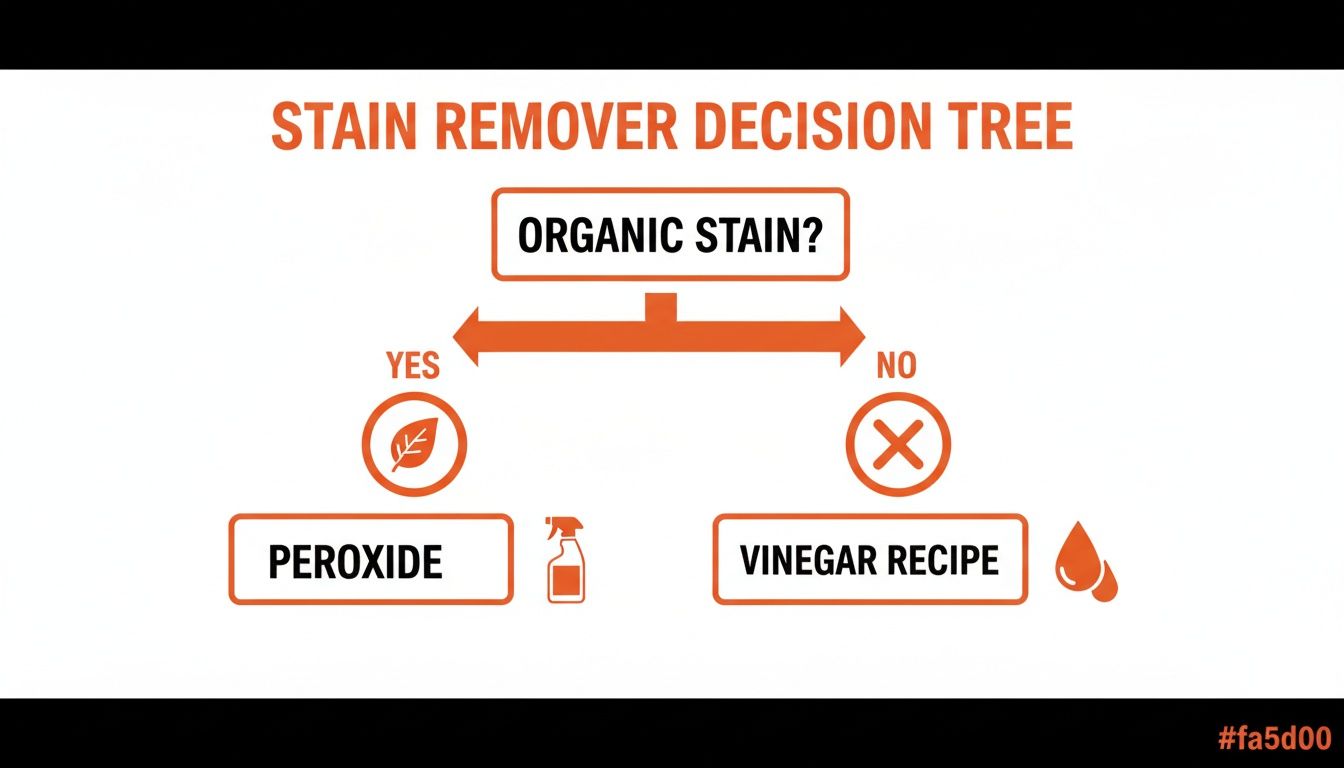
This quick-reference chart breaks down the best first move for common household accidents.
Stain-Specific Natural Treatment Guide
| Stain Type | Primary Natural Ingredient | First Action Step |
|---|---|---|
| Red Wine | Salt or Baking Soda | Blot gently, then cover with the absorbent powder. |
| Pet Urine | White Vinegar | Blot thoroughly, then saturate with a 50/50 vinegar-water mix. |
| Grease/Oil | Baking Soda or Cornstarch | Scrape solids, then cover with powder to absorb the oil. |
| Coffee/Tea | White Vinegar | Blot immediately, then apply a 1:2 vinegar-to-water solution. |
| Ink | Rubbing Alcohol | Carefully blot excess ink, then dab with alcohol on a cloth. |
Acting quickly and using the right ingredient is crucial for preventing a spill from setting into a permanent stain.
Conquering Red Wine Spills
Ah, the dreaded crimson splash. It’s the classic carpet emergency, but success comes down to one thing: acting fast. You need to absorb as much liquid as you can before it has a chance to dye the fibers.
First, blot—don't rub!—the area with a clean, white cloth. Immediately follow up by generously covering the entire stain with salt or baking soda. Just let it sit for 10-15 minutes. You’ll actually see it turn pink as it wicks the wine right out of the carpet.
After the salt has done its work, vacuum it all up. Then, mix a solution of one tablespoon of white vinegar, one tablespoon of clear dish soap, and two cups of warm water. Apply this to a fresh cloth, blot the stain, and keep repeating until it's gone.
Neutralizing Pet Urine Stains and Odors
When you're cleaning up after a pet, you're fighting two battles at once: the visible stain and the invisible, odor-causing uric acid. If you only clean the surface, that smell will come back, practically inviting your pet to use the same spot again.
Your best weapon is white vinegar. It's a powerful acid that directly neutralizes the alkaline uric acid. Mix a simple 50/50 solution of white vinegar and water in a spray bottle.
Go ahead and saturate the stained area. Don't be shy here; you need the solution to penetrate just as deeply as the urine did. Let it sit for about 10 minutes, then blot it up with a clean towel.
Once you've blotted, sprinkle a generous amount of baking soda over the damp area. You might hear a little fizzing sound—that's a good sign it’s working. Let the baking soda dry completely, which can take up to 24 hours, and then vacuum it all up. The stain and, more importantly, the odor should be history.
Of course, prevention is always easier. For homes with furry family members, practical solutions like waterproof couch covers for dogs can be a real furniture-saver.
Lifting Grease and Oil Stains
Greasy stains are tough because they repel water. This means your first move has to be absorbing the oil before introducing any liquid.
Scrape off any solid bits right away, then cover the stain with a thick layer of baking soda or cornstarch. These powders are amazing at pulling grease up and out of carpet fibers.
Let the powder sit for at least 30 minutes, though an hour is even better. Once it's had time to work, vacuum it up completely. Now, apply a small drop of clear, grease-cutting dish soap directly to the stain. Add a tiny bit of warm water and gently work it in with your fingers or a soft brush.
Blot with a damp cloth to "rinse" the soap out, then blot dry with a fresh, clean cloth.
Erasing Coffee and Tea Stains
Just like red wine, coffee and tea contain tannins that can dye fibers in a hurry, especially on light-colored carpets. Your best friend here is speed.
Blot up as much of the fresh spill as you possibly can. Mix up a simple solution of one part white vinegar to two parts water and spray it on the stain without oversaturating the area.
Let the vinegar solution sit for 5-10 minutes. Using a clean, white cloth, blot from the outside of the stain inward to keep it from spreading. You might need to repeat this a couple of times for a really dark spill. For more targeted advice, check out our full guide on how to get coffee stains out of your carpet.
Remember, the goal with any liquid stain is to pull it upward. Heavy blotting and absorbent powders like salt and baking soda are your first line of defense, doing most of the heavy lifting before you even introduce a cleaning solution.
Tackling Troublesome Ink Stains
A dropped pen can look like a nightmare on your carpet, but it's often manageable with the right solvent. You might be surprised to find that rubbing alcohol or even an alcohol-based hairspray can do the trick.
First, carefully blot any excess ink with a dry cloth. Be gentle—you don't want to smudge it and make it worse.
Next, dampen a clean white cloth with rubbing alcohol and dab the stain. You should see the ink start to transfer from the carpet to your cloth. Keep moving to a fresh section of the cloth as you dab to avoid reapplying the ink you've just lifted.
Once the ink is gone, "rinse" the area by blotting with a cloth dampened with cool water. This works well on many synthetic carpets, but always test the alcohol in a hidden spot first to make sure it doesn't damage the carpet's color.
How Different Fabrics React to Natural Cleaners
Using a homemade natural stain remover is a fantastic way to tackle spills, but let me tell you from experience: not all fabrics are created equal. Applying the wrong solution to the wrong material can turn a simple cleanup into a permanent, heartbreaking problem. The key to protecting your investment is knowing the difference between a tough synthetic fiber and a delicate natural one.
Before you even think about treating a stain, take a moment to figure out what you're working with. Synthetic fibers like nylon, polyester, and olefin are the workhorses of the modern carpet world. They're built for durability and can generally stand up to a variety of cleaning solutions. On the other hand, natural fibers like wool, cotton, and silk need a much gentler touch.
Cautious Cleaning for Synthetic Fibers
Even those tough-as-nails synthetic carpets have their limits. While they can usually handle a basic vinegar or dish soap solution, you've got to be careful with the stronger stuff. Hydrogen peroxide, for example, is my go-to for many organic stains, but it can absolutely have a mild bleaching effect.
Trust me, you don't want to use it on a dark green or deep blue carpet. It can strip the color right out, leaving a faded, discolored patch that's far worse than the original stain. This is a perfect example of why the "always spot test" rule is non-negotiable, even on materials you think are indestructible.
Handling Delicate Natural Fibers
Natural fibers demand your full attention. Their organic structure can be easily damaged by the wrong pH level or a harsh cleaning agent.
-
Wool: This is the classic example. Wool is a protein fiber, and highly acidic cleaners like undiluted white vinegar will eat away at it, causing yellowing and weakening the fibers over time. Your best bet is to stick with pH-neutral solutions or a heavily diluted vinegar mix.
-
Cotton and Viscose: These plant-based fibers are basically sponges. Over-wetting them is a recipe for disaster, often leading to browning or nasty water rings as they dry. Use your solutions sparingly and focus on aggressive blotting to pull that moisture out fast.
-
Silk and Jute: These are some of the most delicate materials you'll encounter. They are incredibly prone to color bleeding and water-staining. For these, it's often safest to skip liquid cleaners altogether and opt for a dry absorbent powder like cornstarch or baking soda.
Here's a pro tip I've seen go wrong too many times: Never use an alkaline cleaner like baking soda on a fresh protein-based stain (like pet urine) on a wool rug. The chemical reaction can permanently set the stain, making it impossible for anyone to remove.
The global stain remover market, which is projected to hit USD 38.46 billion by 2033, is booming for a reason. With the residential sector making up a massive 57.8% of this market, people need cleaners that work without destroying their stuff. This is why knowing your fiber types is so critical, especially as folks look for eco-friendly products that can clean effectively without harming sensitive materials. You can explore more research on the stain remover market to see how the industry is evolving.
When DIY Isn't Enough: Know When to Call a Pro
While a good homemade stain remover is great for everyday spills, there are times when even the best DIY effort can fall short—or worse, make things permanent. Knowing the limits of your own toolkit is just as important as knowing the recipes. It’s about recognizing when to step back and call in a professional to get the job done right without accidentally damaging your carpets or furniture.
Some messes are just too big or complex for a simple surface treatment. Think about a huge spill, like an entire pot of coffee or a pet accident that has soaked clean through the carpet fibers and into the pad underneath. A spray-and-blot approach just can't reach that deep. This leaves moisture and bacteria trapped below, which is a perfect recipe for mold, mildew, and odors that just won't quit.
Signs It’s Time for a Professional
Another major red flag is a stain that’s already been treated the wrong way. If you’ve scrubbed a stain too hard, used a harsh chemical that set the color, or applied heat to something like a milk or egg spill, you’ve likely created a much bigger problem. These set-in stains often require specialized equipment and professional-grade solutions to break them down without ruining the fabric.
Consider these scenarios your cue to pick up the phone:
- The spill is larger than a dinner plate. Once a spill gets that big, you can bet it has saturated the carpet pad and maybe even the subfloor. This requires professional extraction to pull all that moisture out and prevent long-term damage.
- The stain is on a delicate or antique fabric. Materials like silk, wool, or vintage upholstery are just too risky for DIY experiments. The wrong pH or cleaning method can cause irreversible damage.
- The stain keeps coming back after you clean it. This is a classic sign of "wicking." The residue is deep in the carpet fibers, and as the surface dries, it pulls the stain right back up.
- You have no idea what the stain is. An unknown substance could react in a totally unpredictable way with your homemade solution, potentially making it permanent.
We often see homeowners unknowingly create permanent spots by using the wrong natural solution on the wrong fiber—a classic example is using high-heat steam on a protein stain, which essentially cooks it right into the carpet. A professional assessment can prevent these costly mistakes.
At Citrus Carpet Cleaning Buford, we handle these tough situations every day. Our low-moisture, citrus-based system cleans deep into the carpet fibers without ever soaking the pad. The result? Dry times of just 1–2 hours, not days.
We effectively remove those stubborn, set-in stains and the odors that come with them, all without leaving behind the sticky, soapy residue that makes carpets get dirty again fast. If you've ever wondered if professional carpet cleaning is worth it, our process shows just how effective a targeted, residue-free approach can be.
When you need guaranteed results without the risk, we’re here to help. Contact us for a no-obligation "EXACT-imate"—the price we quote is the price you pay, or the cleaning is FREE.
Your Questions About Natural Stain Removers, Answered
Even when you have a solid plan, questions always come up in the heat of the moment when you're staring down a fresh spill. Getting clear answers is the key to feeling confident and getting the great results you're after. Let's dig into some of the most common questions I hear from homeowners.
Can I Mix Vinegar and Hydrogen Peroxide?
I get this one a lot. The answer is an emphatic no—you should never mix vinegar and hydrogen peroxide together in the same bottle. When you combine them, they create something called peracetic acid, which is a pretty nasty corrosive that can seriously irritate your skin, eyes, and lungs.
It's perfectly fine to use one right after the other on a stain (like using peroxide and then neutralizing with vinegar), but they absolutely must be stored and applied separately. No exceptions.
Are These Recipes Safe for All My Fabrics?
While these homemade solutions are much gentler than harsh store-bought chemicals, they aren't a one-size-fits-all miracle for every fabric out there. As we've talked about, delicate natural fibers like wool and silk can have a bad reaction to acidic vinegar or the oxidizing effect of hydrogen peroxide.
The golden rule I always tell people is this: always, always do a spot test. Find a hidden area—under a cushion, inside a hem, on a part of the rug that's under the sofa—and test your solution there first. This simple step is your best insurance policy against accidentally damaging a prized rug or piece of furniture.
How Long Will My Homemade Cleaners Last?
This depends on what's in the bottle. Your vinegar and water solutions are good to go pretty much indefinitely since vinegar is a natural preservative.
Hydrogen peroxide, however, is a different animal. It naturally breaks down over time, especially when light hits it, and loses its cleaning punch.
To get the most out of it, here's what I recommend:
- Always store it in a dark, opaque spray bottle to block out light.
- Keep it tucked away in a cool, dark cabinet.
- To be safe, mix up a fresh batch every six months or so. That way, you know it’s at full strength when disaster strikes.
Help! The Stain Came Back After It Dried!
Ah, the phantom stain. This is a classic, frustrating problem called "wicking," and it happens more often than you'd think. It's a sign that the spill soaked deep into the carpet backing or even the pad underneath.
As the surface fibers dry, moisture from the very bottom of the carpet wicks its way up to the top, bringing old, sticky stain residue along for the ride. When you see this, it means the original spill was much bigger than it looked on the surface. A DIY approach can't reach that deep. This is a job that calls for a professional extraction cleaning to completely flush the source of the stain out from the carpet's foundation.
When DIY just isn't cutting it for those deep-set stains or you're nervous about treating delicate fabrics, trust the experts at Citrus Carpet Cleaning Buford. Our low-moisture, residue-free process is designed to tackle the toughest messes and make sure they're gone for good. Get your no-obligation "EXACT-imate" today by visiting us at https://citruscarpetcleaningatlanta.com.