
Welcoming a pet into your home brings immeasurable joy, but it can also introduce stubborn, lingering odors that seem impossible to conquer. From urine accidents on the new rug to that general "wet dog" smell embedded in the upholstery, pet odors can quickly diminish the comfort and freshness of your living space. While a vast market of commercial cleaners promises miraculous results, some of the most effective, safe, and affordable solutions are often found right in your own pantry. This is where effective pet odor removal home remedies become essential for maintaining a clean and inviting environment.
This guide provides a comprehensive roundup of powerful, do-it-yourself strategies designed to neutralize and eliminate unwanted smells at their source. We will move beyond generic advice and provide detailed, step-by-step instructions for a variety of methods, ensuring you have the right tool for every situation. You will learn not just what to use, but how and why these remedies work, empowering you to tackle everything from fresh accidents to deeply set-in smells.
Inside, we will cover a range of solutions, including:
- Classic combinations like baking soda and vinegar.
- The science behind enzymatic cleaners, both store-bought and DIY.
- Powerful absorption techniques using activated charcoal.
- Targeted pastes made from hydrogen peroxide for tough stains.
Prepare to reclaim your home's freshness without relying on harsh chemicals or expensive, single-use products. Let's explore the practical, actionable techniques that will restore your home to the clean, odor-free sanctuary it should be.
1. Baking Soda and Vinegar Solution
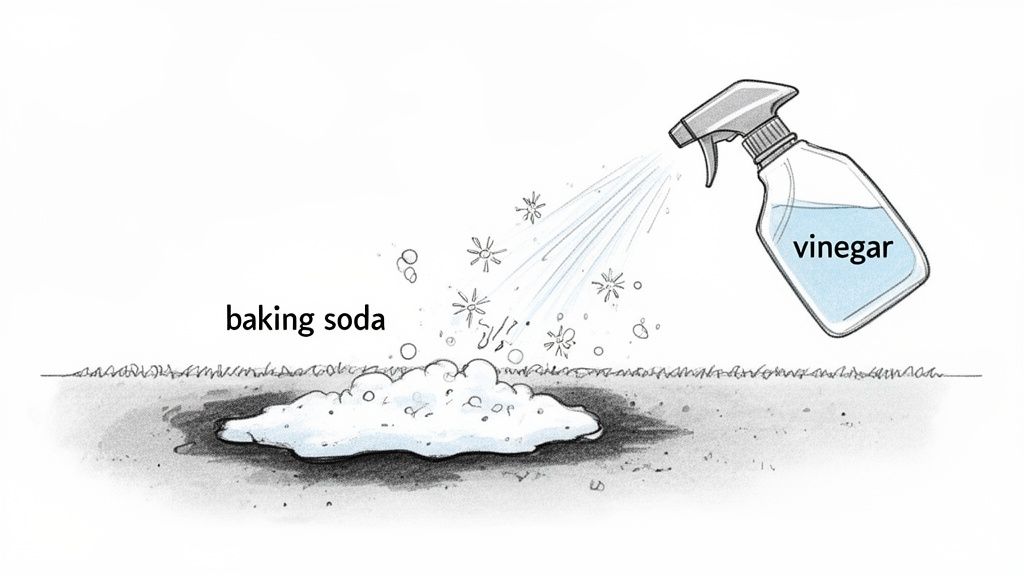
This two-step method is a powerhouse among pet odor removal home remedies, leveraging basic chemistry to tackle smells at their source. Instead of masking odors, this combination neutralizes them. Baking soda, a weak alkali, absorbs and neutralizes acidic odor molecules, while white vinegar's acetic acid breaks down the uric acid crystals in pet urine that cause lingering smells.
This approach is particularly effective because it addresses both fresh accidents and set-in odors on soft surfaces like carpets and upholstery. Its natural, non-toxic properties make it a go-to for many households, a core principle detailed in our guide on carpet cleaning without chemicals.
How to Use This Method Effectively
For best results, follow this process carefully, especially for stubborn pet urine odors.
- Blot First: If the spot is fresh, immediately blot the area with paper towels or a clean, absorbent cloth. Press firmly to soak up as much liquid as possible. Avoid rubbing, as this can push the urine deeper into the carpet fibers.
- Apply Baking Soda: Liberally sprinkle a thick layer of baking soda directly onto the affected area, extending about an inch beyond the visible stain. For maximum absorption, allow it to sit for at least 12 hours, or up to 24 hours for older, more pungent odors.
- Vacuum Thoroughly: Once the baking soda has had time to absorb the moisture and odor, vacuum it up completely.
- Spray Vinegar Solution: Mix equal parts white vinegar and water in a spray bottle. Lightly spray the area where the baking soda was. You'll notice a slight fizzing reaction. Let this air dry completely.
- Repeat if Necessary: Stubborn, set-in odors may require two or three applications. If the smell persists after multiple attempts, the urine may have penetrated the carpet padding, requiring professional intervention.
Pro Tip: Always test this solution on a small, inconspicuous area of your carpet or upholstery first to ensure it doesn't cause discoloration. Ensure the room is well-ventilated when spraying the vinegar solution to help dissipate its strong scent as it dries. While this DIY method is powerful, it's worth understanding vinegar baking soda carpet myths to know its limitations and when professional care is a better choice.
2. Enzymatic Cleaners (Store-Bought and DIY)
When dealing with organic stains like urine, feces, or vomit, enzymatic cleaners are a scientifically superior solution among pet odor removal home remedies. Unlike simple detergents that just clean the surface, these cleaners use specialized enzymes-protease, amylase, and lipase-to break down the specific organic proteins causing the odor. They essentially "digest" the stain and smell at a molecular level, completely eliminating the source rather than just masking it.
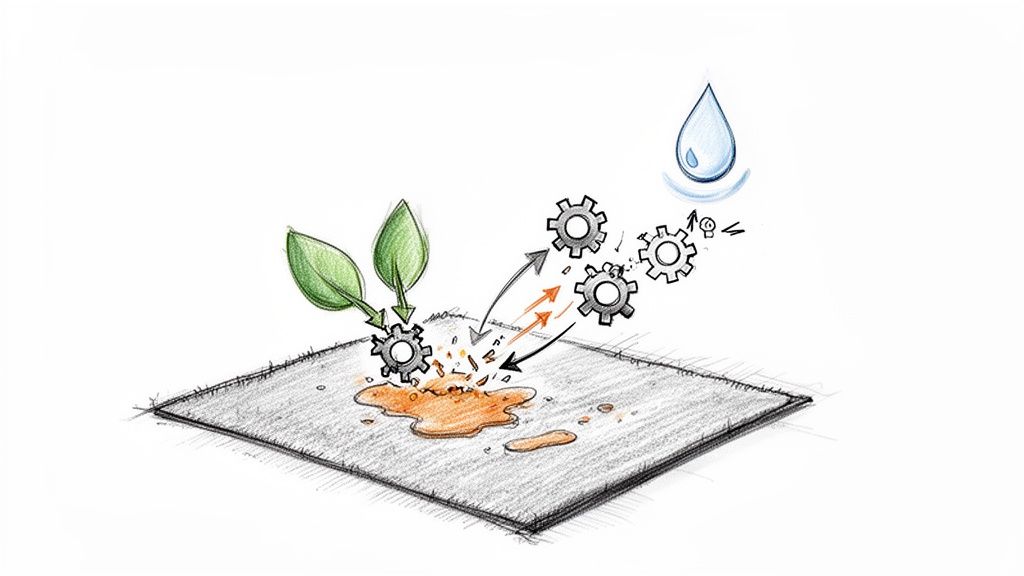
This method is highly recommended by veterinarians and professional cleaners because it removes the pheromones that encourage pets to re-mark the same spot. Whether you choose a well-known brand like Nature's Miracle or Rocco & Roxie or a DIY version, the key is the biological action of the enzymes. If you're curious about the science, you can learn more about what an enzymatic cleaner is and why it's so effective.
How to Use This Method Effectively
For enzymatic cleaners to work, they need to be applied correctly to fully penetrate the stain. Follow these steps for the best results.
- Blot and Remove Excess: As with any fresh accident, remove as much of the solid or liquid waste as possible. Blot liquids with a clean towel; do not rub.
- Saturate the Area: Generously apply the enzymatic cleaner to the stain, ensuring it soaks through all affected layers, including the carpet padding or upholstery foam underneath. The cleaner needs to reach every part of the urine to work.
- Allow Dwell Time: Cover the treated area with a damp towel or a piece of plastic to keep it moist. The enzymes need moisture and time-typically 12 to 24 hours-to effectively break down the organic matter.
- Air Dry Completely: Once the dwell time is over, remove the covering and allow the area to air dry completely. The odor should be gone once it's fully dry. When considering store-bought options, research the best hardwood floor cleaner for pet urine that utilize enzymatic formulas to safely eliminate odors and stains.
- Vacuum Residuals: After the area is dry, vacuum to lift any remaining residue and restore the texture of the carpet fibers.
Pro Tip: Always test the enzymatic cleaner on a hidden spot first to check for colorfastness. Never use steam cleaners or hot water in conjunction with enzymatic treatments, as high heat can denature and destroy the active enzymes, rendering the product useless. A black light can help you find all hidden urine spots to ensure you treat every affected area.
3. Activated Charcoal Absorption Method
This passive yet powerful technique is one of the most effective pet odor removal home remedies for tackling lingering, airborne smells. Activated charcoal works through adsorption, a process where its incredibly porous surface traps and holds odor-causing molecules. Unlike air fresheners that mask smells, charcoal physically removes them from the environment, making it a safe and non-toxic solution for ongoing odor control.
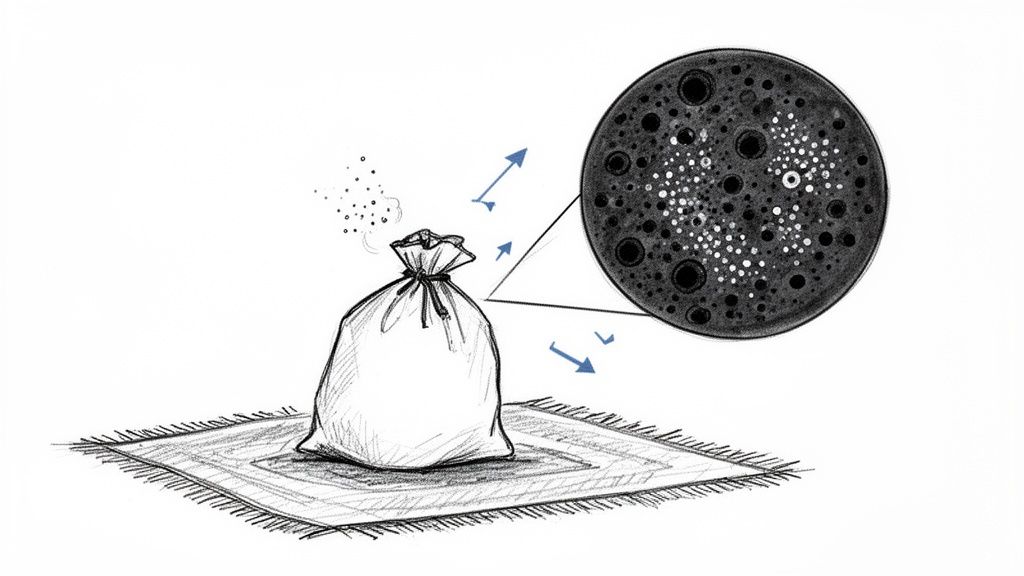
This method is ideal for purifying the air in entire rooms where pet odors have become pervasive, such as in multi-pet households or during vacancy periods in rental units. Its silent, chemical-free operation makes it a favorite among natural living advocates and property managers in Buford who need to ensure a fresh environment between tenants. It works continuously without electricity or sprays.
How to Use This Method Effectively
To get the most out of activated charcoal, strategic placement and maintenance are key.
- Purchase or Prepare: You can buy pre-made activated charcoal bags or create your own by placing food-grade granular activated charcoal in breathable fabric pouches like muslin or linen.
- Strategic Placement: Place the charcoal bags or open bowls directly in the area with the strongest odor. For room-wide odors, use multiple containers, aiming for at least one per 200 square feet. Place them near pet beds, litter boxes, or on carpets where accidents have occurred.
- Allow Time to Work: Adsorption is a gradual process. Allow the charcoal to sit undisturbed for at least 24-48 hours to notice a significant reduction in ambient odors. For stubborn smells, leave it in place for several days.
- Recharge for Reuse: Don't throw the charcoal away after one use. You can "recharge" it by placing the bags in direct sunlight for 4-6 hours. The UV rays help release the trapped odor molecules, making the charcoal effective again.
- Combine for Power: For tough, set-in carpet odors, sprinkle baking soda on the spot first, then place a bowl of activated charcoal directly on top of it before vacuuming the baking soda after 24 hours.
Pro Tip: Always use food-grade activated charcoal, especially if you have curious pets or small children, to ensure safety in case of accidental ingestion. To maintain its effectiveness, store any unused charcoal in a sealed, airtight container to prevent it from absorbing moisture and odors from the surrounding air before you're ready to use it.
4. Hydrogen Peroxide and Baking Soda Paste
This powerful paste combines the oxidizing strength of hydrogen peroxide with the absorbent qualities of baking soda to create a highly effective pet odor removal home remedy. Hydrogen peroxide works by breaking down the organic compounds in urine, including the uric acid crystals that cause persistent smells. Baking soda then absorbs the broken-down residue and lingering moisture, lifting the entire mess from the fibers.
This method is particularly useful for tackling fresh or moderately aged stains on light-colored carpets and upholstery. Its paste form allows for targeted application, ensuring the active ingredients concentrate directly on the problem area. For Buford homeowners dealing with a new puppy accident, this can be a go-to solution for immediate and effective treatment on a specific spot.
How to Use This Method Effectively
To ensure you neutralize the odor without damaging your surfaces, follow these steps precisely.
- Blot the Area: As with any fresh liquid stain, the first step is to blot. Use a clean white cloth or paper towels to press firmly on the spot and absorb as much pet urine as possible.
- Create the Paste: In a small bowl, mix a paste using standard 3% hydrogen peroxide (the kind found in a brown bottle at most drugstores) and baking soda. A good starting ratio is approximately three parts baking soda to one part hydrogen peroxide, aiming for a thick, spreadable consistency similar to toothpaste.
- Apply and Wait: Spread the paste directly onto the stain, covering it completely. Let the paste sit and work its magic for 10 to 15 minutes. You may see some light bubbling as the peroxide reacts with the organic material.
- Gently Scrub: Using a soft-bristled brush, gently scrub the area in a circular motion. This helps work the paste deeper into the carpet fibers to break down the odor source.
- Remove and Dry: Blot the area with a clean, damp cloth to lift the paste and residue. Once the spot is completely dry, vacuum thoroughly to remove any remaining baking soda crystals.
Pro Tip: Hydrogen peroxide can have a mild bleaching effect. It is absolutely essential to test this paste on a hidden area of your carpet, like inside a closet or under a large piece of furniture, before applying it to a visible stain, especially on dark or brightly colored textiles. Always ensure good ventilation during and after application.
5. White Vinegar Spray (Full-Strength Application)
For deeply embedded or particularly stubborn pet smells, a full-strength white vinegar application offers a more aggressive approach than diluted solutions. This method directly applies concentrated acetic acid to neutralize the alkaline uric acid crystals found in dried pet urine, which are the root cause of lingering odors. The undiluted vinegar maximizes the chemical reaction, breaking down these crystals more effectively and killing odor-causing bacteria.
This potent home remedy is ideal for situations where pets have repeatedly marked the same area, creating a concentrated odor source. Its strong antimicrobial properties make it a powerful disinfectant, perfect for homeowners in Buford dealing with multiple pet incidents or property managers needing to treat a rental unit with significant pet contamination before new tenants arrive.
How to Use This Method Effectively
A full-strength application requires careful steps to protect your surfaces and ensure complete odor elimination.
- Identify the Source: Before application, use a black light in a darkened room to pinpoint the exact locations of all urine stains. Uric acid crystals will glow under UV light, revealing the full extent of the problem.
- Saturate the Area: Pour or spray undiluted white vinegar directly onto the identified stain. Ensure the area is completely saturated so the vinegar can penetrate as deeply as the urine did, reaching the carpet padding if necessary.
- Allow it to Dwell: Let the vinegar sit for at least 24 hours. For severe odors, a 48-hour dwell time may be needed. This extended period allows the acetic acid to fully break down the uric acid crystals.
- Ventilate the Room: Keep windows open and use fans to ensure continuous airflow. The vinegar scent will be very strong initially but will dissipate completely as it dries and neutralizes the urine odor.
- Blot and Dry: After the dwell time, use clean towels or paper towels to blot up any excess vinegar. Press firmly to absorb as much moisture as possible. Allow the area to air dry completely.
- Follow with Baking Soda: Once dry, you can sprinkle baking soda over the area to absorb any final traces of odor and moisture, then vacuum thoroughly after a few hours.
Pro Tip: Always test full-strength vinegar on a hidden spot, like inside a closet or under a large piece of furniture, to check for colorfastness before treating a visible area. Apply this remedy in the evening to give it maximum, undisturbed processing time overnight.
6. Essential Oils and Citrus-Based DIY Spray
This natural spray combines the pleasant aroma and antibacterial properties of essential oils with the powerful deodorizing capabilities of citrus. This approach offers a two-pronged attack on odors: the essential oils immediately mask unpleasant smells, while the citrus compounds work to neutralize the underlying bacteria causing the odor, making it one of the most refreshing pet odor removal home remedies.
This method is perfect for homeowners who want to maintain a fresh scent between professional cleanings or for multi-pet households needing ongoing odor prevention. Its eco-friendly nature appeals to those seeking green cleaning solutions, leveraging the same natural citrus power we champion at Citrus Carpet Cleaning. It's especially effective on fabrics like pet bedding, curtains, and upholstery.
How to Use This Method Effectively
Create a versatile, fragrant spray that tackles everyday pet smells and keeps your home smelling clean.
- Gather Your Ingredients: You will need a clean spray bottle, distilled water, and your choice of essential oils. Lemon, sweet orange, and eucalyptus oils are excellent choices due to their strong antibacterial and deodorizing properties.
- Create the Mixture: In your spray bottle, combine 2 cups of distilled water with 10-15 drops of lemon or orange essential oil. For an extra boost against stubborn odors, add a teaspoon of baking soda to the mix and shake well until it dissolves.
- Apply to Surfaces: Lightly mist the solution over carpets, pet bedding, furniture, and other fabric surfaces. Avoid over-saturating the area to prevent dampness and potential mildew growth.
- Allow to Dry: Let the treated surfaces air dry completely, which usually takes about 30 minutes. Ensure the room has good ventilation to help the initial strong citrus scent dissipate into a subtle, clean fragrance.
- Use for Maintenance: For ongoing odor prevention, reapply this spray on a weekly basis, especially in high-traffic areas or spots your pet frequents. It's a fantastic way to maintain freshness after a deep cleaning.
Pro Tip: While this spray is great for general deodorizing, it's not a substitute for deep cleaning fresh urine or feces accidents. For new messes, use an enzymatic cleaner first to break down the proteins, then use this citrus spray as a follow-up to eliminate any lingering smells. Always test on a hidden spot first to check for colorfastness.
7. Black Light Detection + Targeted Spot Treatment
This proactive method takes the guesswork out of finding pet stains, ensuring you treat every source of odor, not just the ones you can see. Pet urine contains salts and phosphorus that fluoresce, or glow, under ultraviolet (UV) light, revealing hidden spots on carpets, furniture, and even walls. By using a black light, you can identify the full extent of contamination before applying any cleaning solution.
This systematic approach is a cornerstone of professional-grade pet odor removal home remedies. Instead of wasting time and product on general areas, you can apply targeted treatments directly to the source. It’s a technique used by property managers in Buford to document damage and by homeowners who are shocked to discover the true scope of their pet's accidents.
This diagnostic step is crucial because untreated urine spots will continue to release odor-causing bacteria. Pinpointing them ensures you can completely neutralize the problem rather than just temporarily masking it.
How to Use This Method Effectively
To successfully locate and treat hidden pet stains, follow this professional-grade process.
- Prepare the Room: Wait until it is completely dark outside or use blackout curtains to block all ambient light. The darker the room, the more vividly the urine stains will glow.
- Scan with the UV Light: Purchase an affordable LED UV flashlight (typically $15-25 online or at a hardware store). Hold the light 1-2 feet from the surface and slowly scan the carpets, baseboards, furniture, and lower parts of walls. Pay close attention to corners and areas near pet beds.
- Mark the Spots: When you see a yellowish-green glow, you've found a urine spot. Mark the outline of each spot with painter's tape or small sticky notes so you can easily find them once the lights are back on.
- Treat the Marked Areas: Apply your chosen cleaning solution, such as an enzymatic cleaner or a vinegar-based remedy, directly to the marked areas. Be sure to saturate the spot thoroughly to reach the carpet padding if necessary.
- Verify Your Work: After the area has been cleaned and is completely dry, use the black light again in a dark room to confirm the stain is gone. If a faint glow remains, a second treatment may be needed.
Pro Tip: Not all glowing spots are urine. Some cleaning detergents and even tonic water can fluoresce. Look for the characteristic drip patterns or splatter marks associated with pet urination. Documenting your findings with photos can be invaluable for landlords or anyone needing proof of the contamination. The insights you gain from a UV light will help you eliminate pet odors in carpet with precision.
8. Odor-Sealing Primer and Enzyme Combo Protocol
This two-phase protocol is a more advanced solution among pet odor removal home remedies, targeting severe, deep-set odors where simple surface treatments fail. It combines the biological power of enzymatic cleaners to break down odor-causing molecules with the physical barrier of an odor-sealing primer to permanently trap any residual smells. This method is ideal for stubborn situations where odors have penetrated subflooring or baseboards.
Enzymatic cleaners contain beneficial bacteria that produce enzymes to digest the organic waste, uric acid, and proteins in pet urine, effectively eliminating the source. The odor-sealing primer then acts as a final, non-negotiable barrier, encapsulating any remaining microscopic odor particles and preventing them from being released into the air, especially during humid conditions. This professional-grade approach is commonly used by property managers to restore heavily contaminated rental units.
How to Use This Method Effectively
For best results, this protocol requires patience and precision, as it involves treating both the surface and the underlying structure.
- Treat with Enzymes First: After pulling back the carpet, thoroughly saturate the affected subfloor, tack strips, and baseboards with a high-quality enzymatic cleaner. Allow it to sit and work for at least 24 hours, keeping the area damp if necessary per the product's instructions to ensure the enzymes remain active.
- Verify Odor Removal: Use a black light in a darkened room to check if the organic stains have been fully eliminated. Re-treat with enzymes if any glowing areas remain. The goal is to break down as much of the source as possible before sealing.
- Apply Odor-Sealing Primer: Once the area is completely dry, apply a specialized odor-sealing primer (like Kilz Original or a shellac-based BIN primer) directly to the subfloor, baseboards, and the bottom of any affected drywall. Use a paintbrush or roller to apply one to two even coats.
- Ensure Complete Curing: Allow the primer to dry and cure completely according to the manufacturer’s directions, typically 24 to 48 hours. Proper curing is critical for the primer to form an effective odor barrier.
- Reinstall or Replace: After the primer has cured, you can have the carpet professionally cleaned and re-stretched, or replace the padding and carpet if the damage was extensive.
Pro Tip: Proper ventilation is non-negotiable when using primers. Open windows and use fans to circulate fresh air during and after application. Always use low-odor or zero-VOC primers to avoid trading a pet smell for a harsh chemical odor. This advanced method is highly effective but complex; for widespread contamination, consulting a professional is the safest and most reliable path.
8-Method Pet Odor Removal Comparison
| Method | 🔄 Implementation Complexity | Resource Requirements | ⭐ Expected Outcomes / 📊 Impact | Ideal Use Cases | ⚡ Key Advantages | 💡 Quick Tip |
|---|---|---|---|---|---|---|
| Baking Soda and Vinegar Solution | Moderate — two-step application, scrubbing and drying | Very low cost; common household items; time-intensive (multiple applications) | ⭐⭐⭐⭐ — Effective on fresh and mild set‑in odors; limited on deep/crystallized deposits 📊 | Fresh accidents, spot treatments, rental turnovers | Low-cost, chemical‑free, biodegradable; safe for homes | Blot first; sprinkle soda 12–24h; use 1:1 vinegar spray; ventilate |
| Enzymatic Cleaners (Store‑Bought and DIY) | Low–Moderate — simple application but needs moisture management | Moderate cost ($10–$20); requires 24–48h activation time | ⭐⭐⭐⭐⭐ — Breaks down uric acid/proteins; strong molecular impact 📊 | Fresh and moderately set‑in biological stains; landlords, daycares | Targets root cause; minimal scrubbing; pet‑safe formulations | Saturate area, cover to retain moisture 24h; avoid heat/steam |
| Activated Charcoal Absorption Method | Low — place bags/pellets; passive maintenance | Low–medium cost; reusable but needs periodic recharging/replacement | ⭐⭐⭐ — Excellent ambient odor adsorption; not effective for deep urine 📊 | Ongoing maintenance between professional cleanings; multi‑pet homes | No moisture, continuous passive action, eco‑friendly | Use multiple bags (1 per ~200 sq ft); recharge in sun every 2–3 weeks |
| Hydrogen Peroxide and Baking Soda Paste | Moderate — mixing paste, spot application, blotting | Low cost; short dwell (minutes–hours); risk of bleaching on dark fabrics | ⭐⭐⭐⭐ — Stronger than soda alone; good on fresh/moderate stains 📊 | Fresh puppy accidents, light–moderate staining on light carpets | Dual-action oxidizer + absorbent; targeted application | Spot‑test first; use 3% peroxide; 3:1 soda:peroxide; limit contact time |
| White Vinegar Spray (Full‑Strength Application) | Low — saturate and wait; requires ventilation and long drying | Very low cost; introduces significant moisture; long drying (24+ hrs) | ⭐⭐⭐⭐ — Very effective on uric acid crystals; may leave vinegar odor 📊 | Heavy uric‑acid spots, corners, padding/subfloor saturation | Inexpensive, antimicrobial, penetrates to padding/subfloor | Apply in evening, ventilate; follow with baking soda after breakdown |
| Essential Oils and Citrus‑Based DIY Spray | Low — simple mixing and light spraying | Low–medium cost (essential oils); frequent reapplication for maintenance | ⭐⭐⭐ — Good for odor masking and light antimicrobial action; surface‑level impact 📊 | Maintenance, prevention, scent preference households | Pleasant scent, low moisture footprint, aligns with green cleaning | Mix 10–15 drops citrus oil per 2 cups water; avoid over‑saturation |
| Black Light Detection + Targeted Spot Treatment | Moderate — systematic inspection then targeted cleaning | Low tool cost (~$15–$30); time to inspect entire area; pairs with treatments | ⭐⭐⭐⭐⭐ — High diagnostic value; prevents missed sources and recontamination 📊 | Pre‑treatment assessments, landlords, large or recurrent odor problems | Reveals hidden deposits; directs efficient, targeted treatment | Inspect in complete darkness; mark spots and retest after cleaning |
| Odor‑Sealing Primer and Enzyme Combo Protocol | High — coordinated two‑phase process, primer application, long cure time | Higher cost ($30+); multi‑day drying; technical application for best results | ⭐⭐⭐⭐⭐ — Comprehensive and long‑lasting for severe contamination 📊 | Severe or long‑standing odors, post‑remediation, renovation projects | Combines elimination and sealing; prevents odor reactivation | Use enzymes first, verify with black light, then apply low‑VOC primer; ventilate |
When DIY Isn't Enough: Knowing When to Call the Professionals
Navigating the world of pet odor removal home remedies can be incredibly empowering. Throughout this guide, we've equipped you with a robust arsenal of DIY solutions, from the classic baking soda and vinegar combination to the targeted power of enzymatic cleaners and the deep-cleaning action of hydrogen peroxide pastes. You've learned how to leverage activated charcoal for passive odor absorption and how to use a black light to hunt down hidden urine stains with precision.
These methods are your first line of defense, offering effective and budget-friendly ways to tackle everyday pet accidents and maintain a fresh-smelling home. Mastering these techniques means you can act quickly when a mess happens, preventing minor spots from becoming major, set-in problems. The value in this knowledge is immense; it gives you control over your home's environment and the confidence to handle pet-related odors as they arise.
Recognizing the Limits of DIY Solutions
However, even the most dedicated pet owner can encounter an odor challenge that surpasses the capabilities of home remedies. It's crucial to recognize the signs that a deeper, professional intervention is required to fully resolve the issue and protect your home's value and air quality.
You might need to call in professionals if you encounter one or more of the following scenarios:
- Persistent Odors: You've tried multiple remedies, including enzymatic cleaners, but the smell returns, especially on humid days. This is a classic sign that uric acid crystals have penetrated deep into the carpet padding or even the subfloor, where topical treatments cannot reach.
- Widespread Contamination: The odor isn't isolated to one or two spots. Perhaps a pet was ill, or a new puppy had accidents in several areas. Large-scale contamination requires a comprehensive cleaning approach that is difficult to achieve without professional-grade equipment.
- Odor Saturation in Padding and Subfloor: If an accident was left untreated for a long period, the urine has likely soaked through the carpet and into the underlying layers. No amount of surface cleaning will remove the source of the smell. Professionals have tools to identify and treat these deep-seated issues.
- You've Just Moved In: You’ve inherited pet odor problems from a previous owner. The source and extent of the contamination are unknown, making it nearly impossible to treat effectively with spot-cleaning home remedies.
Key Takeaway: The primary challenge with severe pet urine is its composition. While you can clean the liquid and bacteria, the uric acid crystals left behind are insoluble and bond tightly to fibers. These crystals reactivate with moisture or humidity, releasing the pungent ammonia smell all over again.
The Professional Advantage: A Deeper, Lasting Clean
This is where a professional service like Citrus Carpet Cleaning Buford makes a critical difference. While DIY methods are excellent for maintenance and fresh stains, a professional service is an investment in a permanent solution for stubborn, deep-set odors. We utilize proprietary low-moisture, citrus-based cleaning technology engineered to do what home remedies cannot.
Our process doesn't just mask odors; it neutralizes them at the molecular level. The powerful citrus solution penetrates deep into carpet fibers and padding, breaking down the stubborn uric acid crystals that cause smells to return. Unlike conventional steam cleaning or DIY methods that can oversaturate your carpet and risk mold or mildew growth, our system uses minimal water and dries in just one to two hours. This rapid drying time is essential for preventing sticky residue and ensuring a truly clean, healthy environment for your family and pets.
For Buford area residents, property managers, and businesses tired of fighting a losing battle against pet odors, professional intervention is the most effective and efficient path to a truly fresh home. Don’t let lingering smells diminish your comfort. Take the final step toward a permanently odor-free space.
Ready to reclaim your home from stubborn pet odors for good? For residents in Buford, GA, Citrus Carpet Cleaning Buford offers a powerful, low-moisture solution that eliminates odors at their source. Visit our website at Citrus Carpet Cleaning Buford or call us today for a free, no-obligation 'EXACT-imate'.