
When we talk about "pet-safe carpet cleaning," we're talking about using cleaning methods and products that don't leave behind a cocktail of toxic chemicals that could harm your animals. It’s all about ditching ingredients like ammonia, chlorine, and phenols. These are the culprits that can cause anything from skin irritation and breathing problems to much worse if your dog or cat inhales the fumes or licks them off the carpet.
Why Pet-Safe Carpet Cleaning Is So Important
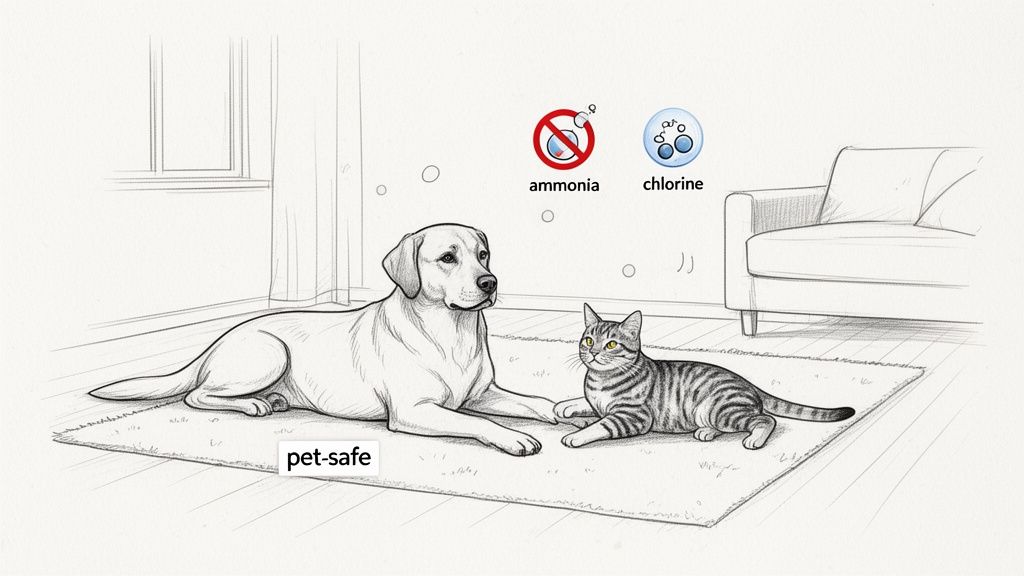
Our pets are family, plain and simple. We wouldn't knowingly put them in harm's way, but the chemicals hiding in many standard carpet cleaners are definitely not their friends. A freshly cleaned carpet might look fantastic, but the invisible residues left behind can be a serious health risk for the furry members of our family who live their lives much closer to the floor.
This isn't just about a weird chemical smell, either. It’s about real, tangible risks.
Picture your dog licking its paws after a nap on a just-shampooed rug. Or your cat grooming itself after rolling around on the living room floor. Through these totally normal, everyday actions, they can easily ingest or absorb harmful stuff left behind by harsh cleaning formulas.
Understanding the Everyday Risks
The real danger is in the common ingredients that are great at cleaning but are toxic to animals. Lots of conventional carpet cleaners are packed with chemicals that can cause a whole host of problems.
- Ammonia: It's a powerful cleaner, but it can cause severe irritation to your pet's respiratory tract, eyes, and skin.
- Chlorine: Often used for bleaching and disinfecting, it can lead to vomiting, dizziness, and even laryngeal edema if inhaled or ingested.
- Glycol Ethers: These are solvents that, with prolonged exposure, have been linked to nervous system, lung, and kidney damage in animals.
And here’s the kicker: these substances don't just vanish when the carpet feels dry. They can linger deep in the fibers for weeks, releasing fumes or transferring directly onto your pet’s skin and fur.
Choosing pet-safe cleaning isn't just a nice-to-have; it's a core part of being a responsible pet owner. It’s about recognizing that a clean home should never come at the expense of our pets' health.
The Growing Demand for Safer Solutions
This push toward more conscious cleaning is more than just a passing trend. It's part of a bigger movement to create healthier indoor spaces for everyone. The demand for non-toxic options has absolutely exploded, and the market is finally catching up.
The global pet-safe cleaners market is on track to hit USD 8,310.5 million by 2035. That growth is being fueled by the 66% of American households that now own pets. This surge shows a real collective understanding that old-school cleaners with harsh chemicals can leave behind toxic residues, causing everything from skin irritations to more serious respiratory issues when our pets inevitably interact with those surfaces. You can discover more insights about pet-safe cleaning trends and see just how big this shift is.
Ultimately, opting for pet-safe carpet cleaning methods is about protecting the most vulnerable members of your household. It makes sure your home is a true sanctuary where every member of the family—whether they have two legs or four—can be safe and healthy.
Choosing Genuinely Safe Carpet Cleaning Products
Walking down the cleaning aisle can feel like a trap. So many bottles scream ‘natural’ or ‘green,’ but honestly, those terms aren't regulated and often mean very little. If you want to make a truly informed decision, you’ve got to learn to look past the clever marketing and get right to the ingredient list.
That's the only way to pick a genuinely pet-safe carpet cleaning product. You're looking for something that cleans effectively without leaving behind a cocktail of harmful residues that your pets can inhale, absorb through their paws, or even lick off their fur.
Reading Labels Like a Pro
The first step is knowing what the good stuff looks like on a label. Instead of falling for vague promises, you want to find specific, science-backed terms that prove a product was formulated with your pet's safety in mind.
- Bio-enzymatic Cleaners: For organic messes like urine or vomit, these are your absolute best friends. They use harmless bacteria to produce enzymes that literally digest the proteins causing the stain and odor. The mess and the smell are gone for good, right at the source. If you want to get into the nitty-gritty, you can learn more about what is an enzymatic cleaner and why it's so powerful.
- pH-Neutral Formulas: A cleaner that’s pH-neutral is far less likely to irritate your pet's skin or paws. Think about it—harsh acidic or alkaline chemicals can be abrasive, but a balanced formula is gentle on both your carpet fibers and your furry family members.
- Plant-Based Surfactants: Keep an eye out for ingredients derived from things like coconut or corn instead of petroleum. These are natural cleaning agents that work by breaking the surface tension of water, allowing it to lift away dirt and oils without any harsh chemicals.
You also need to be wary of added fragrances. For example, it's crucial to understand the safety of common scents like lavender for pets, since many essential oils can be toxic, especially to cats. When in doubt, unscented is always the safest bet.
Key Takeaway: Ignore the buzzwords on the front of the bottle. Flip it over and look for real terms like "enzymatic," "pH-neutral," and "plant-derived ingredients." That’s how you confirm a product's safety claims.
The Red-Flag Ingredients to Avoid
Knowing what to look for is only half the battle; you also have to know what to run from. Certain chemicals are everywhere in standard carpet cleaners, but they pose some serious risks to our pets. Always check the label, and if you see any of these offenders, put that bottle right back on the shelf.
I've put together a quick cheat sheet to help you spot the villains and find the heroes.
Harmful vs. Pet-Safe Carpet Cleaning Ingredients
| Harmful Chemical | Potential Risk to Pets | Safe Alternative | How It Works |
|---|---|---|---|
| Ammonia | Respiratory irritation, burning sensation in the nose and throat. | White Vinegar | A mild acid that effectively breaks down dirt and neutralizes odors. |
| Chlorine | Vomiting, dizziness, and potential chemical burns on skin. | Hydrogen Peroxide | Acts as a natural disinfectant and oxygen-based bleach to lift stains. |
| Phenols | Can cause severe liver damage, especially in cats. | Enzymatic Cleaners | Uses biological action to break down organic stains and odors safely. |
| Glycol Ethers | Linked to nervous system, lung, and kidney damage. | Plant-Based Solvents | Derived from natural sources like corn to safely dissolve grime. |
Making this simple switch in your shopping habits is a huge step. It ensures your home remains a safe, healthy space for every member of your family—two-legged or four. By actively choosing products with safe ingredients, you're doing one of the most important things you can to protect your pet's well-being.
Your Go-To DIY Pet-Safe Carpet Cleaning Method
If you're the hands-on type, mixing up your own pet-safe carpet cleaner is a great way to go. It gives you total control over every single ingredient, so you know for sure that nothing harmful is touching the floors where your pets nap and play.
But before you start mixing anything, there’s one step you absolutely cannot skip: a really, really good vacuuming. This isn't just a suggestion; it's the most critical part of the prep work. If you don't get up the loose stuff first—all that pet hair, dander, and tracked-in dirt—it forms a barrier that stops your cleaner from ever reaching the actual carpet fibers.
Grab a vacuum that’s built to handle pet hair and make a few passes. I always tell people to go north-to-south, then switch and go east-to-west. This crisscross pattern is surprisingly effective at lifting that stubborn, woven-in fur that a quick once-over always misses. You need a clean slate for your DIY solution to have any chance of working.
Crafting Your Homemade Cleaning Solution
You don't need a lab's worth of chemicals to get a deep clean. A few simple things you probably already have in your pantry can make a surprisingly powerful, non-toxic cleaner. This recipe works great as an all-over refresh, especially if you have your own carpet cleaning machine.
Here’s a simple, effective mix:
- Two cups of plain white vinegar: It’s a natural deodorizer and a mild disinfectant that cuts through grime without any harsh junk.
- Four cups of warm water: Warm water just works better, helping dissolve everything and loosen up dirt.
- Two teaspoons of salt: Think of salt as a gentle abrasive. It adds a little scrubbing power to help lift out embedded dirt.
- Fifteen drops of a pet-safe essential oil (optional): Now, be very careful here. If you want a fresh scent, only use oils known to be safe for your specific type of pet, and don't overdo it. Honestly, unscented is always the safest bet.
Just mix these ingredients in a spray bottle or pour them right into the solution tank of your carpet cleaner. But always, always do a spot test first. Pick a hidden area, like inside a closet or under a sofa, to make sure it doesn't mess with your carpet's color.
Pro Tip: Whatever you do, don't soak your carpet. It's easy to think more is better, but over-saturating the carpet can let moisture seep into the padding and even the subfloor. That's a perfect recipe for mold and mildew, and trust me, that's a much bigger headache.
Whether you're making your own cleaner or buying one off the shelf, the same basic rules apply for choosing a safe product. This simple graphic breaks it down perfectly.
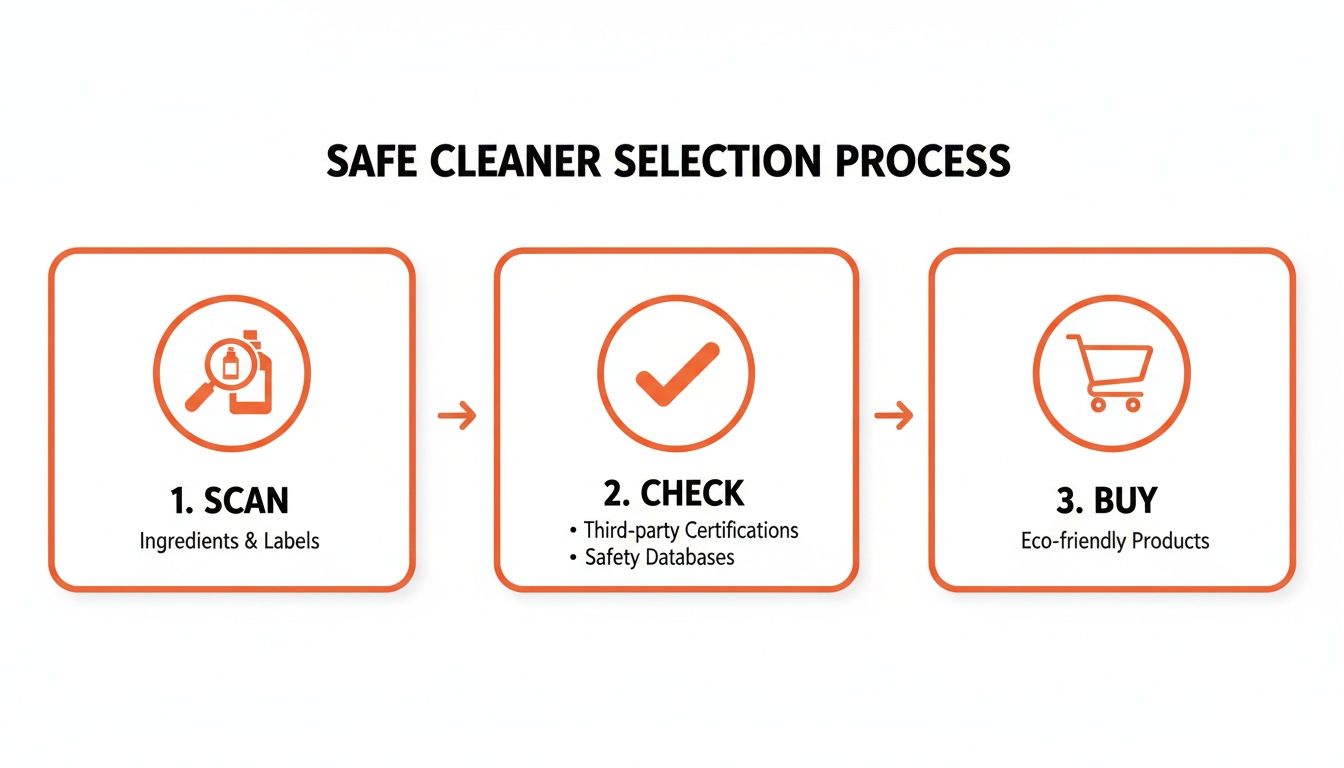
It really comes down to those three things: know what's in it, check for proof that it's safe, and then make a smart choice for your home.
Tackling Fresh Messes with Spot Treatments
For those little accidents that are bound to happen—muddy paws, a little spill—a quick spot treatment is your best friend. It can stop a minor mess from turning into a major stain. For this, a simple paste of baking soda and water is my go-to.
Just apply the paste right onto the fresh spot and let it do its thing for about 15-20 minutes. The baking soda is fantastic at absorbing moisture and pulling the gunk out of the carpet fibers. Once it's completely dry, you just vacuum it up. It's ridiculously effective and totally safe if a curious pet wanders over to investigate.
Tackling Pet Stains and Odors for Good
Accidents are just part of life when you have pets. But the stains and smells that stick around? Those don't have to be. The real battle with pet urine isn't the spot you can see; it's the invisible uric acid crystals that most cleaners can't touch.
Those crystals are the nasty source of that stubborn smell that seems to roar back to life on humid days. This is exactly why spraying an air freshener is a losing game. Your pet's sense of smell is an incredible 10,000 to 100,000 times stronger than yours, and they can easily sniff out those leftover crystals. That scent trail often leads them right back to the scene of the crime, creating a frustrating cycle.
The Secret Weapon: Enzymatic Cleaners
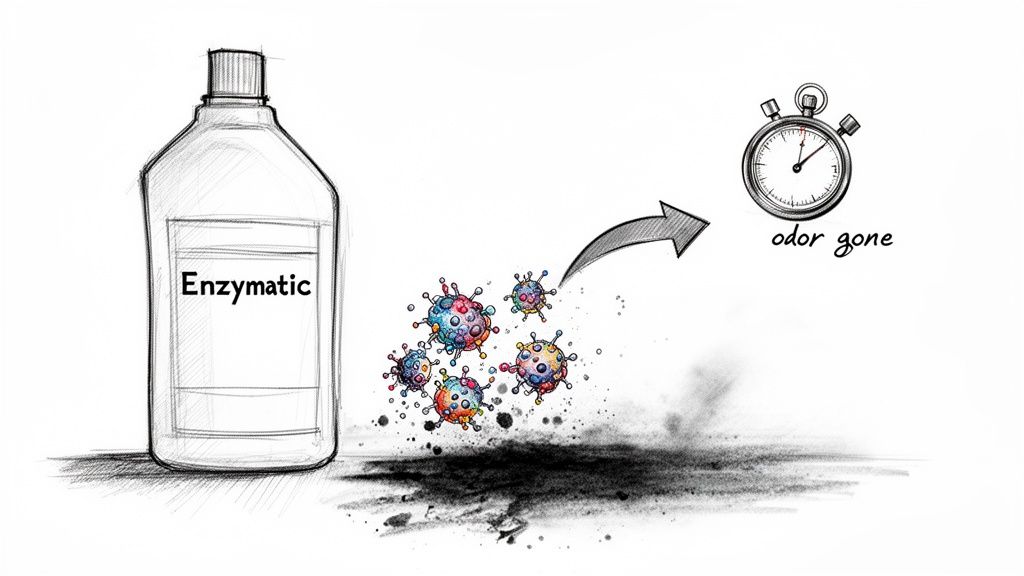
To truly get rid of that smell, you have to go straight to the source and destroy it. This is where bio-enzymatic cleaners are the undisputed champions for pet-safe carpet cleaning. They aren't your typical detergents. These cleaners are packed with beneficial bacteria that produce specialized enzymes.
Think of these enzymes as microscopic Pac-Men that are programmed to find and "eat" the organic proteins in pet waste. They don't just cover up the smell—they literally break down and digest the uric acid crystals until there's nothing left.
This approach gives you two massive wins:
- Total Odor Removal: The smell is gone for good because the source has been eliminated, not just masked.
- Stops Re-Marking: Once those odor-causing crystals are gone, your pet is far less likely to be drawn back to that same spot.
If you're dealing with stubborn smells, understanding the science behind removing pet urine smell from carpet is your first big step toward a fresher home.
Your Game Plan for Fresh vs. Set-In Stains
How you attack a stain depends on when you find it. But no matter what, always test your cleaner on a hidden spot first—like inside a closet or under the sofa.
For Fresh Accidents:
- Blot, Don't Rub! Grab some paper towels or a clean white cloth and blot up as much as you can. Stand on it, apply serious pressure. You want to pull that liquid up from deep in the carpet pad.
- Saturate with Enzymatic Cleaner: Don't be shy here. Liberally spray the area, making sure to go well beyond the edges of the visible spot. Urine spreads underneath the carpet backing.
- Let It Work. This is the most crucial part. The enzymes need time to do their job, which can take 24 to 48 hours. To help them out, cover the spot with a damp towel to keep it from drying out.
- Air It Out: After the wait time is up, remove the towel and let the area air dry completely.
For Old, Set-In Stains:
Dried stains are a tougher nut to crack because those uric acid crystals have bonded to the carpet fibers. You’ll likely need to repeat the enzymatic treatment two or even three times to fully break down all that built-up gunk. For more advanced strategies, digging into a guide on effective carpet cleaning for pet odor can offer some great tips.
Myth Buster: Step away from the ammonia. Never use an ammonia-based cleaner on a pet urine stain. Urine already contains ammonia, so adding more is like putting up a giant neon sign that tells your pet, "This is the potty spot!"
When a Professional Pet Safe Cleaning Is the Best Choice
DIY methods are fantastic for day-to-day stuff, like tackling muddy paw prints right after they happen. But let’s be honest, there are times when even the best home concoction just doesn't cut it. Knowing when to throw in the towel and call a pro is key to keeping your home truly clean and healthy for everyone, especially your pets.
If you find yourself scrubbing the same stubborn stain over and over, or if there's a funky odor that just keeps coming back no matter what you do, it’s a clear sign you need backup. The pros bring in high-powered, commercial-grade equipment that goes way deeper than any rental machine you can get your hands on. Their tools can literally pull dirt, allergens, and moisture from the very base of your carpet fibers—something that’s pretty much impossible to do on your own.
The Power of Professional Equipment and Expertise
When you hire an expert, you’re not just paying for a powerful machine; you’re paying for their experience. A seasoned pro can look at a stain, identify what it is and what kind of carpet fiber it's on, and then choose the perfect pet-safe formula to get it out without damaging anything.
That kind of know-how is crucial. Take professional hot water extraction (often called steam cleaning), for instance. It uses incredibly high heat to sanitize deep down, killing the bacteria and dust mites that can make allergies flare up for both people and pets. It's not surprising that professional cleaning is proven to remove up to 98% of common household allergens from carpets.
When you've tried everything and that pet odor is still there, it's usually because the source has soaked all the way through to the carpet padding or even the subfloor. At that point, only professional gear and specialized treatments have a fighting chance of getting it all out.
Choosing the Right Kind of Professional
Now, not all professional services are the same, particularly when you’re looking for pet safe carpet cleaning. You'll want to find a company that actually prioritizes non-toxic solutions. Services like Citrus Carpet Cleaning Buford, for example, use a low-moisture, citrus-based cleaning method. This approach ditches the harsh chemicals and soapy shampoos that often leave behind a sticky, pet-attracting residue.
This has some major perks for pet owners:
- Safety First: The natural citrus cleaner is non-toxic and biodegradable, so you don't have to worry about your pets.
- Faster Drying: Low-moisture techniques mean your carpets are dry in just a couple of hours. Your pets can get back to their favorite nap spots that much sooner.
- No Residue: Without that sticky soap left behind, your carpets actually stay cleaner for longer.
For anyone committed to keeping a healthy home, looking into specialized eco-friendly carpet cleaning services is a smart move. When you need a truly deep, restorative clean that keeps your whole family—furry members included—safe and sound, hiring the right professional is your best bet.
Of course, even the best-laid plans can leave you with questions. I get calls about this stuff all the time, so I've put together some quick answers to the most common things pet owners ask. This should help you feel confident you're doing the right thing for your pets and your carpets.
How Often Should I Clean Carpets with Pets?
When you've got pets, consistency is your best friend. To keep fur, dander, and tracked-in dirt from getting ground deep into your carpet fibers, you'll want to vacuum high-traffic areas daily. Aim to cover all your carpeted spaces at least 2-3 times a week. It sounds like a lot, but it makes a huge difference.
For a deep, restorative clean, you should plan on a professional service or a serious DIY session every 6 to 12 months. But don't wait that long for accidents! You have to spot-treat messes the moment you see them. If you don't, those stains and smells will set up shop permanently.
Are Essential Oils Safe in DIY Carpet Cleaners?
This is a big one, and you need to be extremely careful here. Just because something is "natural" doesn't mean it's safe for your pets.
Many essential oils are actually toxic to animals if they lick them, breathe them in, or get them on their skin. Oils like tea tree, pine, cinnamon, and even some citrus oils (in high concentrations) are especially dangerous for cats. Their livers just can't process these compounds the way ours can.
My advice? Don't risk it. Instead of mixing pure essential oils into a homemade cleaner, grab a commercial product that has been specifically formulated and tested to be pet-safe. If you just want a fresh scent, your safest bet is always to go unscented.
Is Steam Cleaning a Good Pet Safe Option?
Absolutely. Steam cleaning, which pros call hot water extraction, is one of the best and safest methods out there for homes with pets.
It works by blasting super-hot water deep into the carpet and then immediately sucking it all back out—along with the dirt, dander, allergens, and whatever else is hiding in there.
The real magic is that the process relies on high heat and powerful suction, not a ton of harsh chemicals. That high temperature is also great for killing off bacteria, dust mites, and even fleas. If you do hire a pro, just make sure to ask them what they use for a pre-treatment spray. You'll want to confirm it's pet-friendly. All in all, it's a huge win for a clean and healthy pet-friendly home.
Ready for a professional clean that’s guaranteed to be safe for your entire family? The team at Citrus Carpet Cleaning Buford uses a non-toxic, low-moisture citrus solution that leaves your carpets fresh, clean, and dry in hours, not days. Schedule your EXACT-imate today!