
When we talk about "pet-safe" carpet cleaning, what we really mean is getting a deep clean without turning your home into a chemical minefield for your pets. It's about using formulas—think non-toxic, plant-based, or enzymatic cleaners—that skip the harsh stuff like ammonia, chlorine, and phosphates.
These solutions are designed to knock out stains and odors but won't leave behind nasty residues that can irritate your pet’s skin, paws, or even their respiratory system.
The Hidden Dangers in Conventional Carpet Cleaners
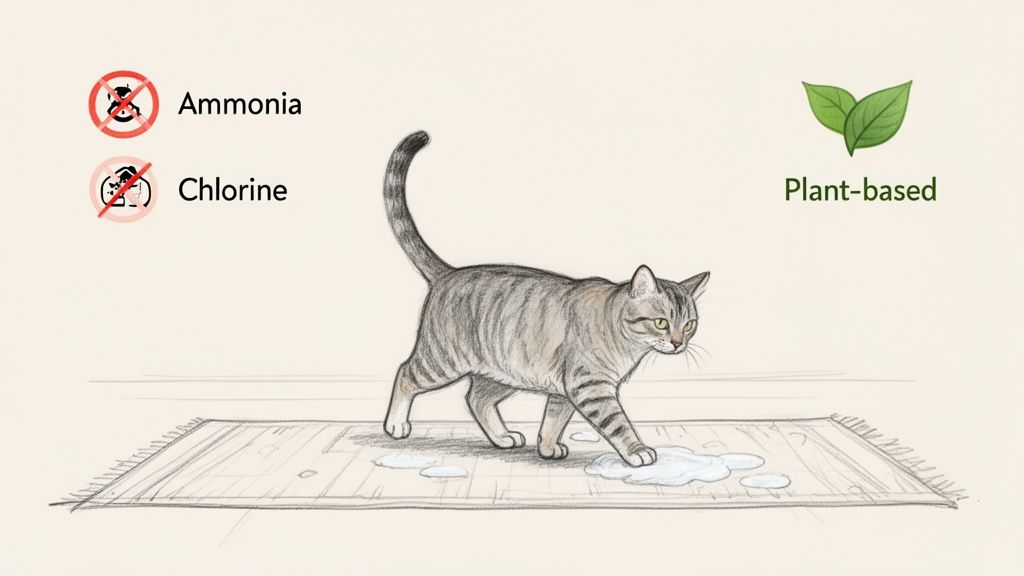
For anyone with pets, keeping the carpet clean is about more than just looks. It’s a health issue. Our four-legged family members live on the floor—they nap, play, and groom themselves there constantly. That up-close-and-personal contact means they’re the first to be exposed to any chemicals left behind from a carpet cleaning.
Many standard carpet shampoos are packed with ingredients that can be toxic to animals. Ever see a cat suddenly start avoiding a freshly cleaned room? Or a dog that won't stop licking its paws after the carpets have been treated? Those are classic signs of a reaction to chemical residues. Getting a handle on this starts with understanding the best pet-safe cleaning products on the market.
Key Culprits to Avoid
Your first line of defense is knowing what to look for on the label. Conventional cleaners often get their power from some pretty potent chemicals. Spotting these ingredients is the first step toward creating a safer home for your pets.
Some of the worst offenders include:
- Ammonia: A common cleaner that can cause serious respiratory irritation and even burn the sensitive mucous membranes in your pet's nose and mouth.
- Chlorine: Often found in disinfectants and bleach, it can lead to dizziness, vomiting, and skin irritation if your pet inhales or ingests it.
- Glycol Ethers: These are solvents that can actually be absorbed through the skin and have been linked to kidney and nervous system problems in animals.
- Formaldehyde: Sometimes used as a preservative, this is a known carcinogen that can trigger significant respiratory issues.
To make it easier, here’s a quick-glance table comparing the bad stuff with the good stuff.
Common Cleaning Chemicals vs. Pet-Safe Alternatives
| Hazardous Ingredient | Potential Risk to Pets | Safer Alternative |
|---|---|---|
| Ammonia | Respiratory irritation, chemical burns | Vinegar & Water Solution: Natural, effective, and non-toxic. |
| Chlorine (Bleach) | Skin irritation, vomiting, respiratory distress | Hydrogen Peroxide: A mild antiseptic that can lift stains without harsh fumes. |
| Glycol Ethers | Kidney and nervous system damage | Plant-Based Solvents: Derived from sources like citrus or corn, gentle yet effective. |
| Phosphates | Skin irritation, environmental harm | Enzymatic Cleaners: Break down organic stains (urine, vomit) naturally. |
Choosing safer ingredients doesn't mean you have to sacrifice a clean carpet; it just means you're prioritizing the health of your furry family members.
Choosing pet-safe carpet cleaning isn't just about avoiding accidents; it's a proactive step toward creating a healthier indoor environment where your entire family—paws and all—can thrive without exposure to unnecessary toxins.
The Growing Demand for Safer Solutions
The move toward safer cleaning isn't just a niche trend anymore. As more and more of us treat our pets like full-fledged family members, the demand for non-toxic products has exploded. It makes sense—with over 66% of U.S. households now owning a pet, people are paying closer attention to what they bring into their homes.
This shift has fueled a massive market for pet-safe cleaners, which is projected to jump from around USD 6.49 billion in 2025 to over USD 8.31 billion by 2035. What's driving this? A conscious decision by pet owners to ditch harsh chemicals in favor of plant-based and enzyme-based formulas that put pet wellness first.
This focus on safety brings up a really important point: it's not just about the pets. You might be wondering, why can carpet cleaning be a health concern for people, too? When you opt for pet-safe cleaning methods, you're making a healthier choice for every single member of your household.
Your DIY Toolkit for Everyday Pet Messes
When a pet accident happens, you have to act fast. Having the right supplies ready to go can mean the difference between a quick cleanup and a permanent stain.
A good pet-safe carpet cleaning toolkit isn't about complicated chemistry. It's about being prepared with simple, effective ingredients you probably already have in your kitchen. You can assemble this entire kit for just a few bucks, and it will save you a ton of headaches.
Your Essential Supply List
Before you start mixing up solutions, let's get your gear in order. Each of these items has a specific job to do, and together, they form the foundation of a solid cleanup strategy.
- A Quality Spray Bottle: Get a sturdy one with an adjustable nozzle. This lets you mist a solution evenly without totally soaking your carpet, which can lead to bigger problems.
- White Microfiber Cloths: These are your best friends for blotting. They're super absorbent and, most importantly, they won't bleed dye onto your carpet like a colored rag might. Keep a separate stack just for pet duty.
- Soft-Bristle Brush: An old toothbrush works perfectly. You need something to gently work the cleaner into the carpet fibers without fraying or damaging them.
- Plain White Paper Towels: These are for the initial blot. Again, white is key to make sure no ink transfers onto your light-colored carpet.
With these tools ready, you're set to handle most minor messes the moment they happen. Now, let's look at what to put in that spray bottle.
Simple Pet-Safe Cleaning Recipes
You really don't need a cabinet full of expensive, harsh commercial products for everyday spills and funky smells. These two simple recipes will handle the vast majority of minor pet issues you'll face.
1. The All-Purpose Freshening Spray
For general deodorizing or light messes, a simple vinegar solution is my go-to. The acidity in vinegar is fantastic for neutralizing odors, and it doesn't leave behind any nasty, sticky residues.
- Just combine one part white distilled vinegar with one part cool water in your spray bottle. Give it a shake.
- Lightly mist the spot you're treating—don't saturate it.
- Gently blot the area with a clean microfiber cloth. The vinegar smell might be strong at first, but it disappears completely as it dries.
Pro Tip: Always, always do a patch test before using any cleaning solution, homemade or not. Find a hidden spot, like inside a closet or under the sofa, and apply a tiny amount. Let it dry to make sure it doesn't mess with your carpet's color.
2. The Odor and Moisture Absorbing Paste
Baking soda is an absolute powerhouse. It's brilliant at pulling out both moisture and stubborn smells from deep within the carpet fibers. For those wet messes that have a lingering odor, this simple paste is a game-changer. We go into a lot more detail on the science behind using baking soda to remove stains from carpets in our full guide.
Here's how to make it:
- In a small bowl, mix a bit of baking soda with just enough water to create a thick paste—think the consistency of toothpaste.
- Spread it directly onto the stain and just let it be. You need it to dry completely.
- Once it's dry and crusty, the paste will have soaked up the liquid and the odor. Scrape off the bigger chunks and then vacuum the area really well to pick up the rest.
Having these two simple solutions in your back pocket means you can tackle messes right away, stopping them from setting in and becoming a much bigger problem down the road.
How to Tackle Tough Pet Stains and Odors
Even if your pet is perfectly house-trained, big accidents are bound to happen eventually. It's just a part of life with a four-legged family member. When you're dealing with something serious like pet urine or vomit, your go-to DIY spray probably isn't going to cut it. These messes demand a different game plan to avoid permanent stains, that awful lingering smell, and real damage to your carpet fibers.
The biggest mistake I see people make is immediately scrubbing a fresh accident. That aggressive rubbing just grinds the mess deeper into the carpet padding. Even worse, it can fray and damage the carpet fibers, leaving a noticeable fuzzy spot long after the stain is gone. Your first move should always be to gently blot with a clean, white cloth to pull up as much of the liquid as possible.
The Science of Enzymatic Cleaners
For pet urine, your average cleaner just doesn't work because it can't break down uric acid. That's the stuff that leaves behind stubborn, sharp-smelling crystals long after the spot looks clean. This is exactly why enzymatic cleaners are an absolute must-have for any pet owner.
These cleaners aren't just soap and water. They use helpful bacteria that produce enzymes designed to literally "eat" the organic stuff in pet waste—proteins, fats, and that nasty uric acid. This process doesn't just cover up the smell; it eliminates the source entirely. That's critical for stopping your pet from returning to the scene of the crime. You can dive deeper into the science behind what makes an enzymatic cleaner so effective in our detailed guide.
An enzymatic cleaner is more than just a cleaning product—it’s a training tool. By getting rid of the odor-causing bacteria that your pet can smell (even when you can't), you break the cycle of them repeatedly marking the same spot.
A Step-by-Step Response to Fresh Accidents
Let's walk through a classic scenario: your new puppy just had an accident on the living room rug. First, don't panic. Here’s exactly what to do right now.
- Blot, Don't Rub: Grab a stack of paper towels or a clean microfiber cloth and press down hard on the wet spot. Keep using dry sections of the cloth and repeat until you've soaked up as much moisture as you can.
- Apply Enzymatic Cleaner Generously: Really saturate the entire area with a good, pet-safe enzymatic cleaner. Make sure you spray a little beyond the visible stain, because urine spreads out underneath the carpet.
- Let It Dwell: This is the most important part. Those enzymes need time to work. Check the bottle, but most need at least 10-15 minutes. Some even suggest covering the area with a damp towel to keep the enzymes active longer.
- Blot Again: Once the time is up, use a fresh, clean cloth to blot the area and pull up the cleaner and what's left of the mess.
- Air Dry Completely: Just let the spot air dry on its own. Never use a hairdryer or heater on it—heat can permanently set any traces of the stain into the carpet fibers.
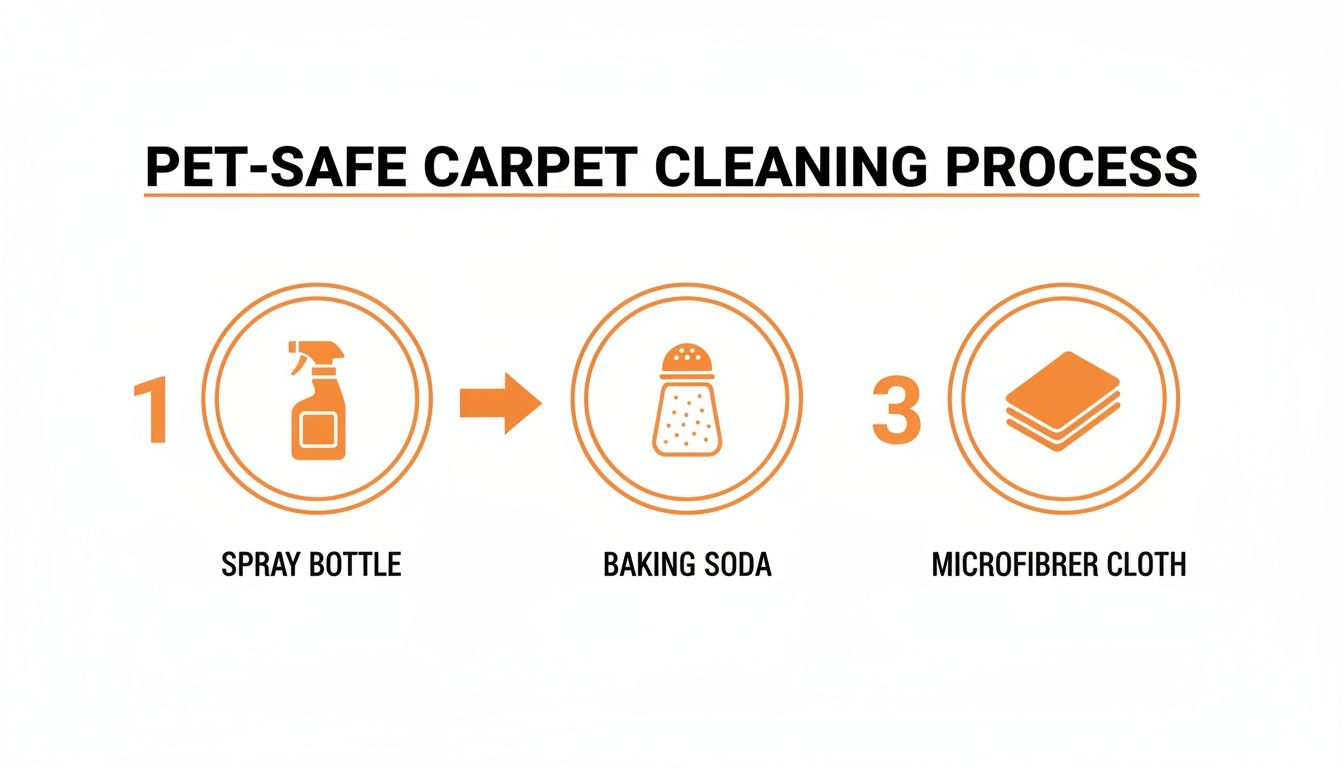
Keeping these three things on hand—a quality spray, something absorbent, and a natural deodorizer like baking soda—gives you a simple but powerful first-response kit for any accident.
When to Call a Professional Carpet Cleaner
Let's be real: DIY methods are your first line of defense. They’re fantastic for handling those daily pet messes and minor accidents that are just part of life with a four-legged family member. They keep your home feeling fresh and your carpets looking decent.
But there are times when even the best homemade solution or store-bought enzymatic cleaner just can't cut it. Knowing when to throw in the towel and call a professional is the key to protecting your carpet investment and making sure your home is truly a healthy space for you and your pets.
Sometimes, no matter how hard you try, certain problems just won't go away. Think about those lingering odors that magically reappear on humid days, or the widespread staining from a sick pet. These are clear signs that the mess has soaked past the surface fibers and seeped deep into the carpet backing—or worse, the subfloor. At that point, home remedies simply can't reach the source of the problem.
Signs You Need an Expert
It's crucial to recognize the limits of what you can do on your own. You should probably pick up the phone and call a pro if you're dealing with any of these situations:
- Stubborn, Lingering Odors: You’ve treated that same urine spot three times, but the smell keeps coming back. Professionals have specialized equipment to pinpoint and neutralize odor sources that have burrowed deep into the padding.
- Large or Widespread Staining: A single, major accident or a minefield of smaller ones across a room can be impossible to treat effectively spot-by-spot. The pros use commercial-grade equipment to deliver a deep, uniform clean that you just can't replicate.
- Delicate Carpet Materials: If you have carpets made from natural fibers like wool or silk, tread carefully. These materials demand very specific cleaning methods and pH-balanced solutions. Using the wrong product can cause permanent damage, making professional expertise a must.
The Professional Advantage for Pet Homes
Hiring a professional isn't just about cleaning; it's about restoration. Expert services, especially those that specialize in pet-safe carpet cleaning like low-moisture, citrus-based methods, offer a level of clean that home equipment can't even touch. This approach avoids soaking your carpets in harsh soaps, which means much faster dry times and no sticky residue left behind to become a magnet for more dirt.
Professional carpet cleaning can remove around 98% of pollutants and dirt from carpets. This is a game-changer in homes with pets, where dander, tracked-in soil, and urine residues can trigger allergies and create stubborn odors.
It’s no surprise that the market for these services is blowing up, driven by pet owners who demand solutions that are both effective and safe. Pet ownership and allergy concerns are now a huge factor in the USD 55.16 billion global carpet cleaning market, which is expected to keep growing through 2030. This trend just highlights how important professional deep cleaning is for maintaining a healthy home. You can dig into the numbers and trends in this comprehensive report from Grand View Research.
Ultimately, a professional cleaning is a periodic necessity for any pet owner. It tackles the deep-down grime, allergens, and bacteria that routine vacuuming and spot treatments leave behind. It’ll extend the life of your carpet and ensure it remains a safe, comfortable surface for your entire family—paws and all.
Keeping Your Carpet Fresh Between Cleanings
Look, dealing with stains after they happen is one thing. But the real secret to a home that always smells fresh is stopping the messes before they even start. A few simple, daily habits can make a massive difference, cutting down on those emergency deep cleans and just making your home a healthier place for everyone.
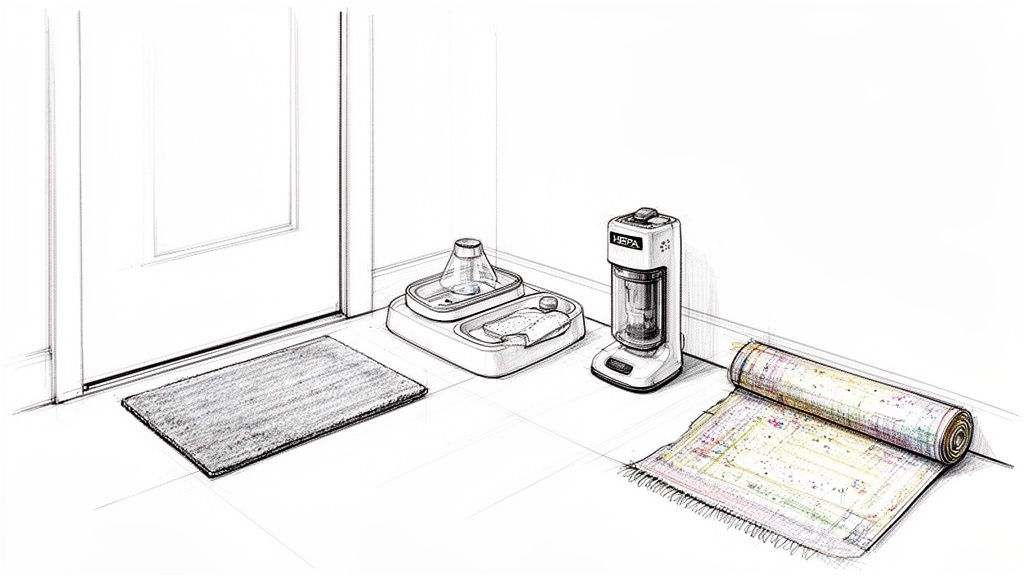
Think of your doorways as the front lines in the war against dirt. A good, durable mat at every entrance your pet uses can catch an incredible amount of mud, grass, and whatever else they've been rolling in. This one tiny change can slash the amount of grime that gets ground into your carpet fibers.
Set Up a Paw Cleaning Station
Want to take it to the next level? A dedicated paw-cleaning station right by the door is a game-changer. It doesn’t have to be anything fancy, but it makes a huge impact, especially when it’s wet or muddy out.
- Keep a basket of old, absorbent towels at the ready.
- Have a spray bottle filled with plain water nearby.
- For extra convenience, you can grab a paw plunger or some gentle, pet-safe wipes.
Making this a quick, easy ritual every time you come in from a walk prevents dirt from ever seeing the rest of your house. It’s a tiny habit that pays off in a big way, keeping your entire home cleaner.
The best pet-safe carpet cleaning strategy is the one you use before a stain even has a chance to happen. A few minutes of prevention saves you hours of scrubbing later and keeps your carpet looking good for years to come.
Smart Use of Rugs and Consistent Upkeep
Got a spot where accidents seem to happen more often? Maybe near the puppy’s crate or where your older dog likes to nap. A stylish, machine-washable area rug is your best friend. It protects the carpet underneath and you can just toss it in the wash for a deep, no-fuss clean.
And I can't stress this enough: consistent vacuuming is absolutely non-negotiable in a house with pets. You should be hitting those high-traffic areas at least two to three times a week, and make sure you're using a vacuum with a HEPA filter.
Why the HEPA filter? Because it’s a beast at trapping microscopic pet dander and allergens. This doesn't just make your carpet look cleaner—it genuinely improves the air quality in your home. A little proactive maintenance is the foundation of a clean, healthy, and happy home for you and your furry family.
Your Pet-Safe Cleaning Questions Answered
When you're trying to figure out the world of pet-safe carpet cleaning, you’re bound to have questions. It’s totally normal. Even after you think you've found the right stuff, there are always lingering doubts about whether you're really getting it right for your furry family. Let's clear up some of the most common questions we hear from pet owners just like you.
One of the biggest hurdles is just trying to decipher a product label. What does "pet-safe" even mean? You'll want to look for words like plant-based, non-toxic, and biodegradable. But the real story is in the "free from" list. Make sure it's free of nasty stuff like ammonia, chlorine, phosphates, and phthalates.
If a product smells like a chemical perfume factory, that’s a red flag. Those overpowering artificial fragrances just cover up the stink and can seriously irritate your pet’s nose and lungs. It’s easy to get confused about what scents and chemicals are okay, especially when you're wondering whether aromatherapy and its common components are safe for dogs.
Deodorizing Versus Sanitizing
This is a big one: deodorizing and sanitizing are two completely different jobs. A lot of products that make your carpet smell like a meadow do absolutely nothing about the bacteria that’s causing the smell in the first place.
- Deodorizing is all about neutralizing or masking odors. Think of sprinkling baking soda on your carpet—it's a fantastic, pet-safe way to absorb smells, but it's not cleaning anything on a microbial level.
- Sanitizing is what actually kills the germs and bacteria. When you're dealing with a pet accident, this is the step you can't skip if you want a truly clean, hygienic carpet.
You really need both to tackle pet messes effectively. That's why enzymatic cleaners are so great—they hit both targets. The enzymes break down and eliminate the odor-causing bacteria (the sanitizing part), which gets rid of the smell for good (the deodorizing part).
How Often Should I Deep Clean?
There’s no magic number here; it really depends on what's going on in your house. But I can give you a pretty solid guideline to help you figure out a schedule.
For a home with several pets or even just one that sheds a ton, you should probably get a professional deep cleaning every 3 to 6 months. This is the only way to really get a handle on the deep-down dander, hair, and allergens that your vacuum just can't touch.
If you just have one little low-shedding pet, you can probably stretch that out to every 6 to 9 months. But if you've got family members with allergies or a new puppy who's still figuring out the whole house-training thing, you'll want to lean toward more frequent cleanings, maybe even quarterly.
Think of it this way: regular professional cleaning doesn't just make your home healthier. It also protects your investment by removing the gritty, abrasive dirt that grinds down your carpet fibers over time. It’s a critical part of keeping your carpets clean and safe for your pets.
Ready for a deep clean that’s truly safe for every member of your family? At Citrus Carpet Cleaning Buford, we use a low-moisture, citrus-based solution that leaves no sticky, toxic residues behind. Get your free, no-obligation EXACT-imate today by visiting us at https://citruscarpetcleaningatlanta.com.