
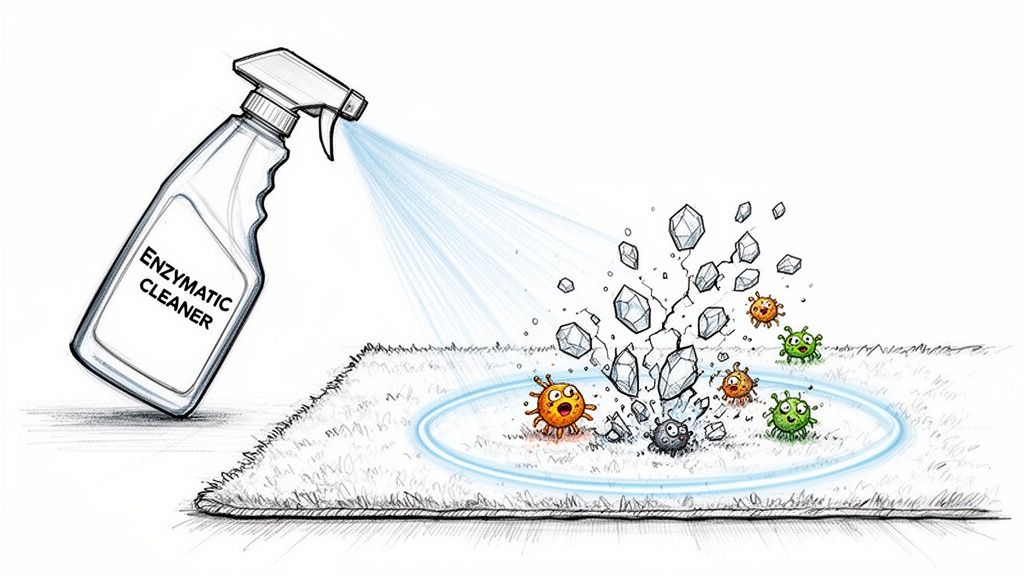
So, to really kill that cat urine smell for good, you have to go after the uric acid crystals that regular cleaners always miss. This is where a powerful enzymatic cleaner comes in. It has to be something that can get deep into the carpet fibers, the backing, and even the padding below to actually digest the source of the smell, not just cover it up. If you skip this, that awful smell will come back.
Understanding Why That Cat Urine Smell Is So Stubborn
Ever cleaned up a cat accident, thought you nailed it, and then the smell magically reappears on a humid day? You're not going crazy. And it’s not because you did a bad job cleaning. The real problem is the unique, stubborn chemistry of cat urine itself. Getting a handle on the science here is the first step to finally kicking that smell out of your house.
That sharp, immediate stench you recognize is ammonia. It comes from the initial breakdown of urea, which is a major component of urine. As bad as it smells, this part is actually pretty easy to clean up with basic stuff. The real enemy is what gets left behind.
The Invisible Culprit: Uric Acid
The true source of that lingering, impossible-to-get-rid-of cat pee odor is uric acid. Unlike the other components, uric acid isn't water-soluble. So, after the liquid part of the urine evaporates, the uric acid hardens into salt crystals that latch on tight to carpet fibers, the carpet backing, and even the subfloor underneath.
You can't see these crystals, and they laugh at standard household soaps and detergents. You can scrub that spot until your arms fall off, but those deeply embedded crystals won't budge. This is exactly why a simple soap-and-water approach never, ever works on set-in smells.
The heart of the problem is that cat urine isn't just a surface stain; it's a deep contamination. It soaks through multiple layers, meaning the source of the smell is often way bigger and deeper than the little spot you see on top of the carpet.
How Humidity Makes Everything Worse
Those sneaky uric acid crystals have another trick up their sleeve. They're hygroscopic, which is just a fancy way of saying they pull moisture right out of the air. On dry days, the crystals are dormant, and you might not smell a thing.
But as soon as the humidity rises—think rainy days or a hot summer afternoon—the crystals rehydrate by absorbing that moisture. This process releases that foul ammonia gas all over again, and suddenly your house smells like the accident just happened. It's this frustrating cycle that leaves so many pet owners feeling completely defeated.
Why Your Go-To Cleaners Just Don't Work
Now it all makes sense why most cleaning attempts fail. Your average carpet cleaner is made for simple, water-soluble messes like dirt or spilled soda. They just don't have the chemical muscle to break down and neutralize non-soluble uric acid crystals.
Even worse, some popular cleaning methods can make the problem permanent. Using a steam cleaner, for example, seems like a good deep-cleaning idea, right? Wrong. The intense heat can actually bond the urine proteins to the carpet fibers, essentially cooking the stain and smell in forever.
The challenge isn't just cleaning the spot you can see; it's about completely destroying the odor-causing molecules you can't. When a cat urinates on the carpet, it creates a multi-layer problem that seeps through the fibers, into the backing, the padding, and sometimes the subfloor. These dried urine salts are the real enemy. You can learn more about how pet urine affects carpeting and see why calling in a pro is often the only real solution.
Immediate Steps for Fresh Cat Urine Stains
When you find a fresh cat urine spot, you’re in a race against the clock. Acting fast—and correctly—is the single most important thing you can do to stop a simple accident from turning into a permanent odor nightmare. The whole idea is to get as much of that liquid out as you can before it soaks down into the carpet padding and subfloor. That's where the real trouble starts.
The very first thing to do is blot, never rub. Grab a thick stack of paper towels or a clean, absorbent cloth and press down hard on the wet spot. I mean, put your weight into it. You want to soak up every possible drop. Keep swapping out the wet towels for dry ones until nothing else is coming up. Whatever you do, don't scrub. That’s a rookie mistake that just grinds the urine deeper into the fibers and makes the problem bigger.
Rinsing and Neutralizing the Spot
Once you've blotted until the area is nearly dry, it's time to rinse out what’s left in the carpet fibers. But don't just grab any old cleaner. A simple mix of 50/50 cool water and plain white vinegar is your best friend here. Vinegar is acidic, which works wonders to neutralize the alkaline ammonia in fresh urine, knocking down that sharp initial smell right away.
Lightly spray or pour a small amount of your vinegar solution onto the spot. You want to dampen the fibers, not soak the padding underneath. Let it sit for about five to ten minutes, then get back to blotting with fresh, dry towels to pull the solution—and the diluted urine—out of the carpet. This is a crucial step that flushes out the residue your first round of blotting couldn't reach.
Pro Tip: Never use hot water or a steam cleaner on a fresh urine stain. The heat can literally cook the proteins in the urine, bonding them to your carpet fibers. Once that happens, the stain and smell are pretty much permanent.
Drawing Out Lingering Moisture and Odor
After the vinegar rinse and a final, thorough blotting, you can pull out any last traces of moisture with a household MVP: baking soda. Don't be shy—sprinkle a thick layer over the entire damp area. Baking soda is fantastic for absorbing both moisture and odors while it dries.
Let the baking soda sit for at least a few hours, or even overnight if you can. It needs time to work its magic and draw out that deep-down dampness. The next day, just vacuum it all up. Your carpet should be dry and smell significantly better. This is a powerful first-response tactic that can help you remove cat urine odor from your carpet before it digs in for good.
This diagram really shows why that immediate action is so critical. Urine doesn't just sit on top; it dives deep.
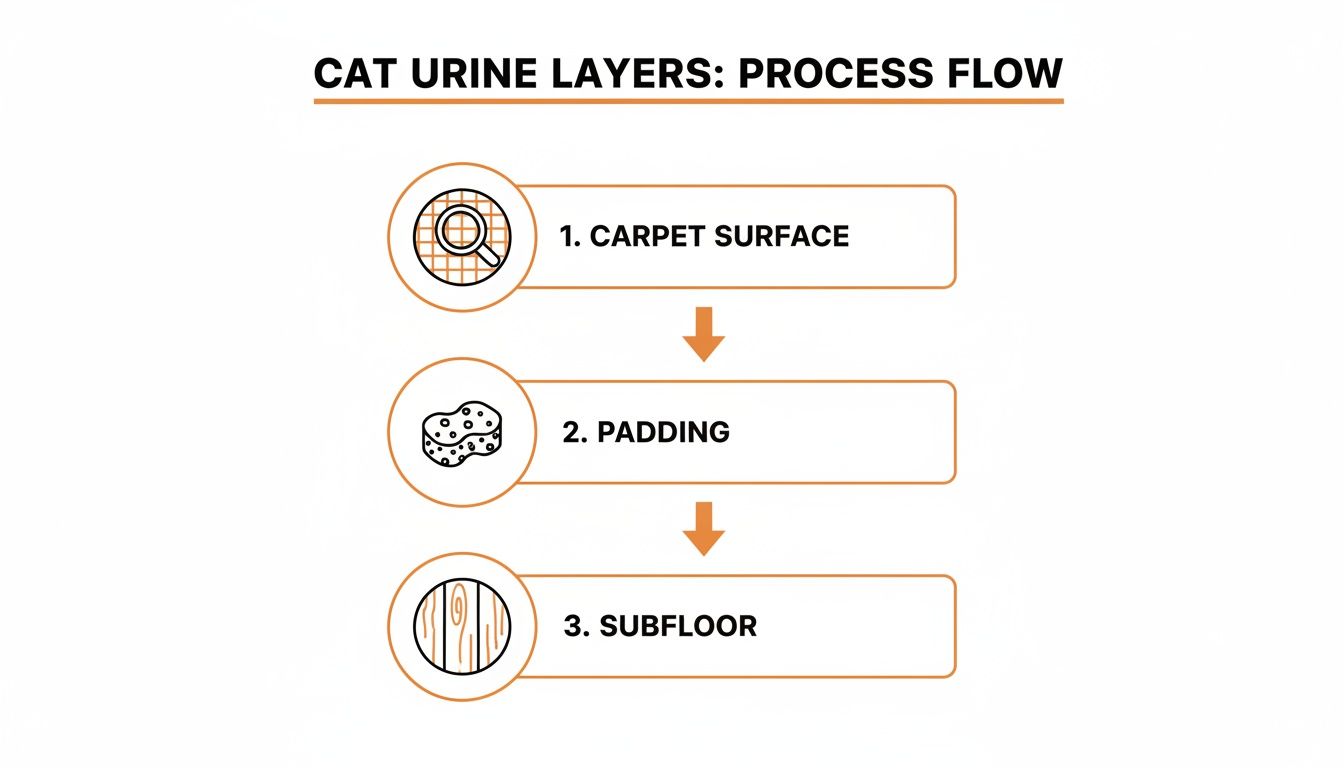
Seeing how it contaminates every layer makes it obvious why you have to stop it at the surface before it has a chance to sink.
Common Mistakes to Avoid Immediately
When you're panicking, it's easy to grab the wrong thing or use a technique that makes it worse. That's why what you don't do is just as important as what you do. The difference between a quick fix and a lingering disaster often comes down to these first few choices.
| Action | Correct Method (Minimizes Damage) | Incorrect Method (Worsens the Problem) |
|---|---|---|
| Initial Contact | Blot firmly with dry, absorbent towels to lift urine up and out of the carpet fibers. | Rubbing or scrubbing vigorously, which pushes urine deeper into the padding and spreads it. |
| Cleaning Solution | Use a vinegar and water solution to neutralize the ammonia in fresh urine. | Using ammonia-based cleaners that mimic the smell of urine and encourage re-soiling. |
| Temperature | Apply cool or room-temperature water for rinsing. | Using a steam cleaner or hot water, which permanently sets the urine stain and odor. |
| Application | Lightly dampen the area, applying just enough solution to reach the depth of the urine. | Drenching the spot with too much liquid, causing the urine to spread into the subfloor. |
Getting it right from the very beginning saves you a world of trouble later. Here are a few more critical mistakes to steer clear of:
- Using Ammonia-Based Cleaners: A lot of window and all-purpose cleaners contain ammonia. Since cat urine also contains ammonia, using these products basically puts up a neon sign telling your cat, "This is the spot!"
- Applying Too Much Liquid: While rinsing is key, flooding the area is a huge mistake. Over-saturating the carpet just pushes the urine deeper into the padding and subfloor, turning a manageable spot into a hidden disaster.
- Ignoring the Padding: Remember, that carpet padding is a giant sponge. If the urine soaked through, just cleaning the top fibers won't cut it. Your cleaning solution has to penetrate just as deeply as the urine did to be effective.
These core principles of quick blotting and careful rinsing apply to more than just carpets. If you’re dealing with a similar accident on another porous surface, these tips can help. For instance, you can Discover quick steps for cleaning urine from a mattress, which follows similar logic. By taking these immediate, careful steps, you give yourself the best possible shot at getting rid of the problem completely, with no lingering reminders.
How to Use Enzymatic Cleaners for Set-In Odors
So you missed the immediate cleanup window, and now that unmistakable cat urine smell has worked its way deep into your carpet fibers. This is where your typical spray cleaner or a bottle of vinegar just won't cut it. When an odor is truly set in, you have to fight biology with biology.
Enter the enzymatic cleaner. This isn't just another scented spray designed to mask the problem. Think of it as deploying a microscopic army to wage war on the odor at a molecular level.
These cleaners are packed with beneficial bacteria that produce specific enzymes. These enzymes target and literally break down the organic compounds in cat urine. Most importantly, they go after the stubborn, non-soluble uric acid crystals—the real culprit behind that lingering smell that seems to reappear on humid days. The enzymes essentially "eat" the urine, leaving behind only carbon dioxide and water. This is the only way to get rid of that smell for good.
The Golden Rule: Saturation is Everything
Here’s the number one mistake people make: they just spritz a little cleaner on top of the carpet. Remember, that urine didn't stay on the surface. It soaked down through the carpet fibers, into the backing, and maybe even the padding underneath. For the enzymes to do their job, they have to touch every single molecule of urine.
This means you need to saturate the area. Seriously, don't be shy about it. Pour the cleaner on, making sure it penetrates just as deeply as the urine did. A good rule of thumb is to treat an area about 50% larger than the visible stain on the surface. This helps you catch any urine that spread out underneath.
Give the Enzymes Time to Work Their Magic
Once you've applied the cleaner, your job is to be patient. This isn't a spray-and-wipe situation. The bacteria need time to get to work producing enzymes, and the enzymes need time to break down all that uric acid. This is called "dwell time."
Most products will tell you to let it sit for anywhere from a few hours to overnight. For tough, old odors, longer is almost always better. The trick is to keep the area damp the entire time. If the cleaner dries out, the good bacteria go dormant and the cleaning action stops dead in its tracks.
A great pro tip is to cover the treated spot with a damp towel, then lay a piece of plastic wrap over the towel. This little trick traps the moisture and creates a humid environment where those enzymes can stay active and work at full strength for hours.
Common Mistakes That Will Sabotage Your Efforts
Enzymatic cleaners are incredibly effective, but they're also a bit sensitive. A few common missteps can make them completely useless. Knowing what not to do is just as important as knowing what to do.
- Using Other Chemicals First: If you’ve already hit the spot with a chemical cleaner, disinfectant, or even vinegar, you have to rinse it thoroughly with plain water before using an enzyme cleaner. The residue from those other products can kill the beneficial bacteria on contact.
- Applying Heat: Heat is the enemy here. It can destroy the delicate enzymes and permanently set the urine stain. Don't use a steam cleaner or a hairdryer on the area while the enzymatic cleaner is doing its thing. Just let it air dry naturally when you're done.
- Picking the Wrong Product: The shelves are full of "pet odor removers," but not all of them are true enzymatic cleaners. Look specifically for products that state they contain live bacteria or enzymes formulated for pet urine. If you're curious about the science, you can read more about what an enzymatic cleaner is and how it works. Understanding this helps you buy a product that will actually solve your problem instead of just covering it up.
After the dwell time is up, blot the area with clean, dry towels to soak up the extra moisture. Then, just let it air dry completely. This can take a day or two. Don't be alarmed if the smell seems to get a little stronger as it dries—that's a normal sign that the enzymes have reached the deepest layers of uric acid and are finishing the job. Once it's fully dry, the odor should be gone for good.
Advanced DIY Methods and When to Call a Professional
So, you’ve hit the stubborn stain with a quality enzymatic cleaner, but that funky cat pee smell is still hanging around. This usually means you're dealing with a much deeper problem.
At this stage, you have two choices: go for one last, more aggressive DIY attempt, or finally wave the white flag and call in the experts. If you're determined to give it one more shot yourself, a simple but potent homemade paste can sometimes work wonders.
This is my last-resort recipe, and it involves a paste made from hydrogen peroxide and baking soda. It's a more serious approach that can be really effective, but I have to give you a strong warning: it carries a real risk of bleaching your carpet. Because of this, doing a patch test isn't just a suggestion—it's absolutely mandatory.
The Hydrogen Peroxide and Baking Soda Paste
Before you even think about putting this on a visible spot, you need to find a hidden area of your carpet. Think inside a closet, under a heavy sofa, or on a spare carpet remnant if you have one.
- Mix the Paste: Grab a small bowl and mix about half a cup of 3% hydrogen peroxide with one teaspoon of baking soda. You want to stir it until it forms a light, spreadable paste.
- Test a Hidden Spot: Dab a small amount onto your test area and just let it be until it’s completely dry.
- Check for Damage: Once it's dry, vacuum up the powder. Get in close and look at the fibers. Is there any bleaching? Any color change at all? If it looks exactly the same, you can move forward, but do it carefully.
Apply the paste over the urine stain, gently working it into the carpet fibers with your fingertips or a soft brush. Now you wait. Let it dry completely, which could take a few hours. The peroxide acts as an oxidizer to break down the smelly molecules, and the baking soda helps pull them out. Once it's bone dry, give the area a thorough vacuuming.
Knowing When You're Beat
Look, even the strongest DIY solutions have their limits. The hard truth is you can only clean what you can reach. If that cat urine has soaked clear through the carpet and into the padding—or even the subfloor—no amount of scrubbing on the surface is going to fix it.
Think of your carpet padding like a giant sponge. Once urine hits it, it spreads out, making the contaminated zone underneath far bigger than the stain you see on top. Your home equipment just doesn't have the muscle to flush out that deep-down contamination and then suck all that moisture back up.
When you've tried everything—enzyme cleaners, DIY pastes—and the smell still creeps back on humid days, that's the tell-tale sign. The urine has reached the padding or subfloor. At that point, your at-home efforts are officially futile.
Time to Call a Professional Carpet Cleaner
Professional carpet cleaning isn’t just a souped-up version of your rental machine; it's a whole different ballgame. The pros use truck-mounted hot water extraction systems that blast heated cleaning solutions deep into the carpet and padding. Then, incredibly powerful vacuums immediately suck all that dirty, urine-filled water right back out. This process physically flushes out and removes the uric acid crystals that cause the odor.
It's no surprise that the pet odor control market is massive. The U.S. market was valued at an incredible $6.47 billion in 2023 and is only expected to grow. This tells you that more and more homeowners are figuring out that for a serious problem like cat urine, professional help is the only truly reliable solution. You can read the full research about pet odor market trends to see just how big this issue is.
Ultimately, calling a pro saves you from endless frustration, wasted money on products that don't work, and the potential cost of replacing your entire carpet. If you're on the fence, asking yourself if professional carpet cleaning is worth it can help you see the long-term value. For a problem this stubborn, getting it done right the first time is always the smartest move.
Preventing Future Accidents to Keep Your Home Fresh
You've done it. You've conquered the cat pee smell and your carpet is finally fresh again. That's a huge win, but the job isn't quite finished. Now comes the most important part: making sure it never happens again.
It's easy to get frustrated and think your cat is just being spiteful, but I can tell you from experience, that's almost never the case. When a cat pees outside the litter box, they're trying to send a message—usually that something is wrong. The problem almost always boils down to one of two things: a medical issue or something in their environment that's stressing them out.
Rule Out Medical Issues First
Before you play detective and try to figure out what’s going on in your cat's head, your very first stop needs to be the vet. A sudden change in bathroom habits is one of the biggest red flags for a health problem.
Things like a urinary tract infection (UTI), bladder stones, or even kidney disease can make urination incredibly painful. Your cat starts to associate that pain with the litter box and begins avoiding it, looking for any other soft surface—like your carpet—to relieve themselves. Only a vet can run the tests to find out for sure. Seriously, don't skip this step.
Creating a Five-Star Litter Box Experience
If the vet gives your cat a clean bill of health, it's time to take a hard, honest look at their litter box setup. A bad bathroom situation is probably the number one cause of accidents.
Think about it from their perspective. Would you want to use a tiny, filthy portable toilet located in the middle of a loud, busy hallway? Of course not. Your goal is to make their litter box so clean and inviting that they wouldn't dream of going anywhere else.
Here’s what to focus on:
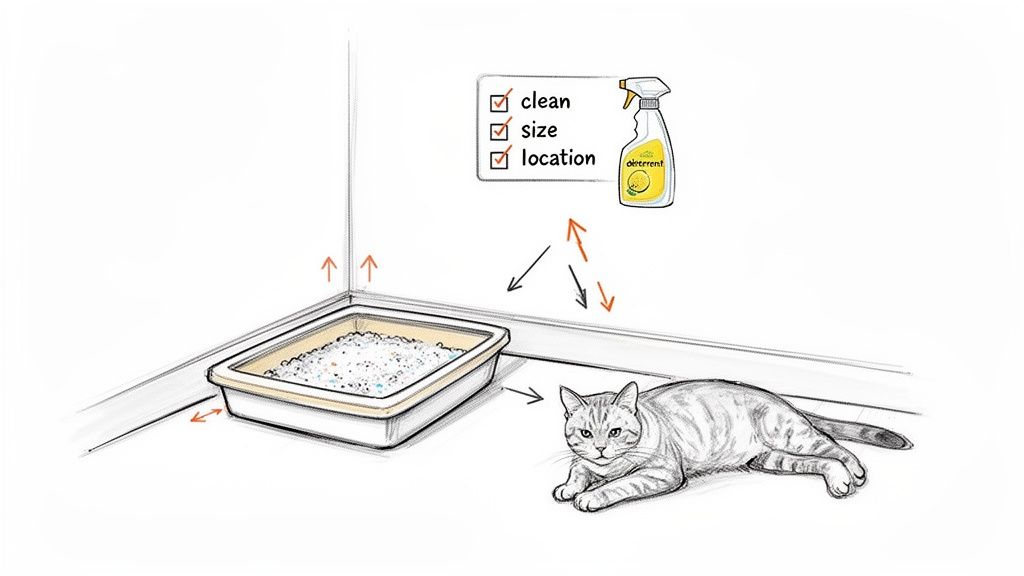
- Location, Location, Location: Tuck the box into a quiet, low-traffic spot where your cat feels safe and won't be ambushed by the dog or a running toddler. Stay away from loud appliances like the washer and dryer.
- Size and Style Matter: The box should be at least 1.5 times the length of your cat, from their nose to the base of their tail. Most of the boxes you see in pet stores are way too small. Go big, and ditch the lid. Covered boxes trap odors and can make cats feel claustrophobic.
- The Right Kind of Litter: Most cats are pretty clear on their preference: a soft, unscented, clumping litter is usually the winner. Those heavily perfumed litters are made for our noses, not their highly sensitive ones.
- Keep It Impeccably Clean: This is the big one. You have to scoop the box at least once a day—no excuses. Every few weeks, dump all the litter, and give the box a good scrub with plain old soap and water. A dirty box is a guaranteed ticket to a stained carpet.
Here's the golden rule for multi-cat homes: you need one litter box per cat, plus one extra. So, if you have two cats, you should have three boxes set up in different areas of your house. This prevents turf wars and ensures a clean spot is always an option.
Making Old Spots Undesirable
Once you've deep-cleaned an accident spot, you need to change your cat's mind about that area. Their powerful sense of smell can lure them right back, even when you can't smell a thing.
A simple trick is to change the purpose of that spot. After it's totally clean and dry, try putting their food or water bowl right on top of it. Cats are instinctively clean and won't eliminate where they eat. You can also try using citrus-scented sprays as a deterrent, since most cats can't stand the smell of orange or lemon.
Sometimes, just rearranging the furniture to cover the spot is enough to break the cycle. For a more permanent fix, think about the flooring itself. Investing in some of the top pet-friendly rug materials can make future cleanups way less of a nightmare. By tuning into your cat's needs and making those problem areas less appealing, you're setting yourself up for a cleaner, happier home.
Your Top Questions About Cat Pee Odor, Answered
When you're dealing with cat urine, you’ll find a ton of conflicting advice out there. It can get overwhelming fast. Let's cut through the noise and get straight answers to the questions I hear most from homeowners trying to get that smell out of their carpet for good.
Will a Steam Cleaner Get Rid of the Smell?
This is a big one, and the answer is a hard no. Please, do not use a consumer-grade steam cleaner on a cat urine spot. You’ll end up doing more harm than good.
The intense heat from those machines literally cooks the proteins in the urine, bonding them permanently to your carpet fibers. Once that happens, the stain and the smell are set forever. No amount of cleaning will get it out.
Now, this is totally different from the professional hot water extraction process we use. A pro uses carefully balanced solutions and incredibly powerful vacuums to flush everything out without setting the stain. For a DIY approach, stick to enzyme cleaners and stay away from high heat.
How Do I Find Old, Hidden Cat Urine Stains?
You can't clean what you can't find, and cats are sneaky. The absolute best tool for this job is a UV (ultraviolet) blacklight. You don't need some expensive, professional model; a cheap one from the pet store or online will work perfectly.
Wait until it’s completely dark, turn off all the lights, and slowly scan the blacklight over your carpets, baseboards, and even up the walls. Dried urine contains salts that glow—usually a bright yellow or greenish color—under the UV light.
A blacklight is a total game-changer. It shows you the real size of the problem, not just the spots you can see or smell. This is the only way to make sure you treat the entire contaminated area and eliminate the odor for good.
This is the exact same method the pros use. As you find spots, mark them with a small piece of painter's tape so you can easily find them again once the lights are back on.
Are Vinegar and Baking Soda Good Enough?
For a fresh accident, vinegar and baking soda are great first-aid tools. The vinegar's acidity helps neutralize that initial ammonia smell, and baking soda does a fantastic job of soaking up moisture and surface odors. They're a solid, cheap first line of defense.
But they are not a permanent fix for older stains. Neither one has the power to break down the uric acid crystals that cause that lingering, awful smell. They might make things smell better for a little while, but you’re really just masking the problem.
For a true, permanent solution, you have to use a proper enzymatic cleaner that’s designed to find and destroy that uric acid.
Why Does the Cat Pee Smell Come Back on Humid Days?
Ever notice the cat urine smell comes roaring back on a rainy or humid day? You aren’t going crazy. This happens because the uric acid crystals from an old accident were never fully removed.
These crystals are hygroscopic, a fancy word meaning they pull moisture out of the air. When the humidity rises, the crystals rehydrate, which triggers a chemical reaction that releases that foul-smelling ammonia gas all over again.
It’s a dead giveaway that the first cleaning job didn't get to the source of the problem. That frustrating, returning smell is the ultimate sign that you need a much deeper, more thorough enzymatic treatment to finally break the cycle.
When DIY solutions just aren't cutting it against stubborn odors, it's time to call in the professionals. Citrus Carpet Cleaning Buford uses a proprietary citrus-based cleaning solution to break down and remove deep-set pet odors without leaving behind sticky residues. Get your home smelling fresh again by scheduling your "EXACT-imate" at https://citruscarpetcleaningatlanta.com.