

That stubborn, discolored spot you’ve been trying to ignore doesn't have to be a permanent part of your decor. The real secret to removing set in carpet stains is simply understanding what you're dealing with and using the right approach. Forget feeling overwhelmed; you can absolutely reclaim your carpet from even the most defiant spots.
Tackling That Stubborn Carpet Stain Head-On

Before you reach for the first spray bottle under your sink, hold on. A successful stain removal mission always starts with a little detective work. You have to identify the enemy. Why? Because different stains react to different treatments, and grabbing the wrong one can lock that discoloration in for good.
This isn’t just a common household problem; it's a huge business. The global market for carpet stain removers recently hit around $2.5 billion and is projected to keep climbing. That's a lot of people trying to keep their homes clean, just like you.
Quick Stain Identification Guide
Use this checklist to quickly assess the stain you're dealing with before you choose your cleaning method. A correct diagnosis is half the battle.
| Stain Category | Common Examples | First Response Tactic |
|---|---|---|
| Tannin-Based | Coffee, tea, red wine, fruit juice, soda | Mildly acidic solution (like vinegar & water) |
| Protein-Based | Blood, pet urine, milk, eggs, vomit | Enzymatic cleaner with cold water |
| Oil-Based | Grease, cooking oil, makeup, ink, tar | Solvent-based spotter or dish soap |
Getting this first step right prevents you from accidentally making the stain permanent, which is the last thing you want.
Understanding Your Carpet Fibers
Just as critical as the stain itself is the type of carpet you have. Most modern carpets are made from synthetic fibers like nylon or polyester, which are pretty tough and can handle most cleaning solutions you throw at them.
Natural fibers, on the other hand, are a different story. If you have a wool or silk carpet, you have to be much more careful. A harsh chemical or a strong acid like straight vinegar can cause permanent damage, like discoloration or fiber breakdown.
Always, and I mean always, check for a manufacturer's tag or test your cleaning mix on a hidden spot first—think inside a closet or under a sofa. Knowing the best way to get spots out of carpet means working with your carpet's material, not against it.
Assembling Your Stain Removal Toolkit
When it comes to tackling a set-in carpet stain, success has less to do with frantic scrubbing and more to do with smart preparation. Before you even lay a hand on that spot, gathering the right supplies gives you the upper hand. This isn’t about running out to buy expensive, specialized gear; it’s about having a simple, effective arsenal ready to go.
Believe it or not, most of what you'll need is probably already in your kitchen or utility closet. Think of these common household items as your first line of defense. They are surprisingly powerful when used correctly but gentle on most carpet fibers.
This little infographic breaks down the basic process for mixing and using a general-purpose DIY stain remover.
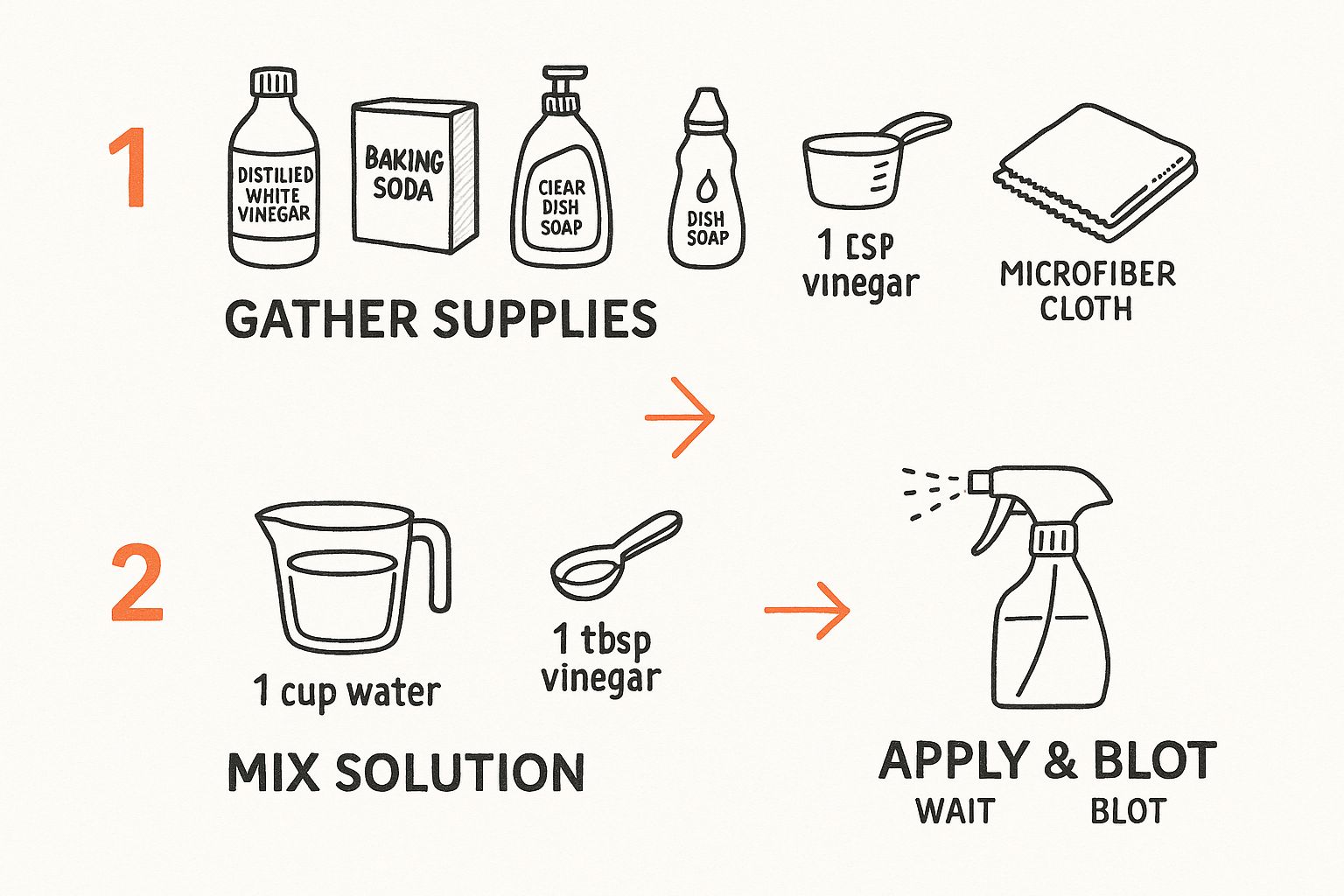
As you can see, the real power comes from combining these simple ingredients and applying them with the proper technique—blotting, not rubbing. Never rub.
Core DIY Cleaning Ingredients
Your homemade toolkit really just starts with a few key players. These items are the foundation for almost any stain-fighting solution you'll need for everyday spills.
- Distilled White Vinegar: The mild acidity is a miracle worker on tannin stains like coffee, tea, and some fruit juices. It works by dissolving the chemical bonds holding the stain to the carpet fibers.
- Baking Soda: This is your go-to for absorbing odors and providing a gentle abrasive lift. Sprinkling it on a stain first can help pull moisture and oily gunk from deep in the carpet pile before you even add a liquid.
- Clear Dish Soap: Grab a simple, clear liquid soap that doesn't have any bleach or lanolin in it. Just one single drop adds the surfactant power you need to lift greasy, oil-based messes out of the fibers.
My personal go-to recipe for a general cleaner is dead simple: mix one tablespoon of white vinegar and one small drop of clear dish soap into one cup of warm water. It's effective on a huge range of common stains without being harsh.
Essential Application Tools
Having the right solution is only half the battle. How you apply it is just as important, maybe even more so. Using aggressive tools can fray your carpet fibers and permanently change the texture of the spot you're trying to fix.
- Spray Bottle: This gives you total control. A light mist prevents you from oversaturating the carpet and soaking the padding underneath, which is a fast track to mold, mildew, and those ugly residue rings.
- White Microfiber Cloths: Always, always use white cloths. The last thing you want is to transfer dye from a colored rag onto your carpet. Microfiber is incredibly absorbent and designed to lift and trap dirt particles instead of just smearing them around.
- Soft-Bristled Brush: An old toothbrush is perfect for this. It lets you gently work the cleaning solution into the fibers without causing any damage.
Now, for tougher, organic stains like pet accidents or blood, that vinegar solution just isn't going to cut it. Those messes need a completely different approach. To get a better handle on why certain cleaners work so well on biological stains, it's worth learning about what an enzymatic cleaner is and how it actually breaks down the proteins in those stains.
For the really big, demanding jobs, having a wet/dry vacuum on hand can be a total game-changer, letting you pull out all the moisture and dissolved grime for a finish that's as close to professional as you can get.
Field-Tested Methods for Common Set-In Stains

Alright, let's get our hands dirty. Different stains need different battle plans, and knowing the right way to attack a spot is the key to removing set in carpet stains without accidentally making things worse. The main thing to remember is to always be gentle and patient.
The most important technique you'll ever learn is the blot and press. Scrubbing a stain like you're trying to start a fire is a huge mistake. All that does is drive the mess deeper into the carpet fibers and the padding below, leaving a permanent, shadowy smudge. Instead, you want to take a clean, white cloth and blot the area. Apply firm, steady pressure to lift the stain particles up and out of the carpet.
Another non-negotiable rule: always work from the outside edge of the stain toward the center. It's a simple habit, but it stops you from spreading the stain and turning a little spot into a giant disaster.
Tackling Tannin Stains Like Coffee and Red Wine
Ah, the classic culprits. That morning coffee you didn't see until dinnertime or the splash of red wine from last week's get-together can look pretty scary. These are tannin-based stains, which means a mildly acidic solution is your secret weapon.
Go grab your simple DIY solution: mix one part distilled white vinegar to two parts warm water in a spray bottle.
- Mist the stain lightly. Don't soak it. You just want to get the fibers damp. Let that solution sit for about five to ten minutes so it can start breaking down the tannins.
- Blot and press firmly. Get a clean, dry, white cloth and blot the spot. You should start to see the stain transferring from the carpet to your cloth. Keep folding and moving to a clean section of the cloth with every blot.
- Repeat if you need to. Older, darker stains might take a few rounds. Patience is everything here.
- Give it a final rinse. Once the stain is gone, lightly mist the area with plain water and blot it again with a dry cloth to get any vinegar residue out.
This slow, methodical approach is so much more effective than aggressive scrubbing. You're coaxing the stain out, not forcing it deeper into hiding.
The Greasy Mess of Oil-Based Stains
Oil and grease are tough because they're hydrophobic—they literally repel water. Your standard water-based cleaner isn't going to do much here. You need something that can break down and absorb the oil itself.
First, your goal is to absorb as much of that grease as possible. Sprinkle a generous amount of baking soda or cornstarch directly onto the stain. Let it sit for at least 15-20 minutes—or even a few hours for really old stains—to draw the oil out of the carpet fibers.
Once the powder has done its job, vacuum it all up thoroughly. Now you can go after what's left. Mix a few drops of a clear, grease-cutting dish soap with a cup of warm water. Apply it sparingly with a sponge or cloth, gently blotting until the stain lifts.
A critical final step for any stain is the "wicking" technique. After cleaning and rinsing, place a thick stack of clean paper towels over the damp spot and put a heavy book on top. This pulls the deep-down moisture—and any lingering stain particles—up into the towels as the area dries, preventing the stain from mysteriously reappearing a day later.
It's no surprise that the demand for good cleaning solutions is growing. The entire market for stain remover products was recently valued at around $22.27 billion and is projected to shoot past $31 billion by 2030. People everywhere are focusing more on keeping their homes clean and hygienic. You can find more insights on this trend over at Grandview Research.
Advanced Techniques for the Toughest Stains
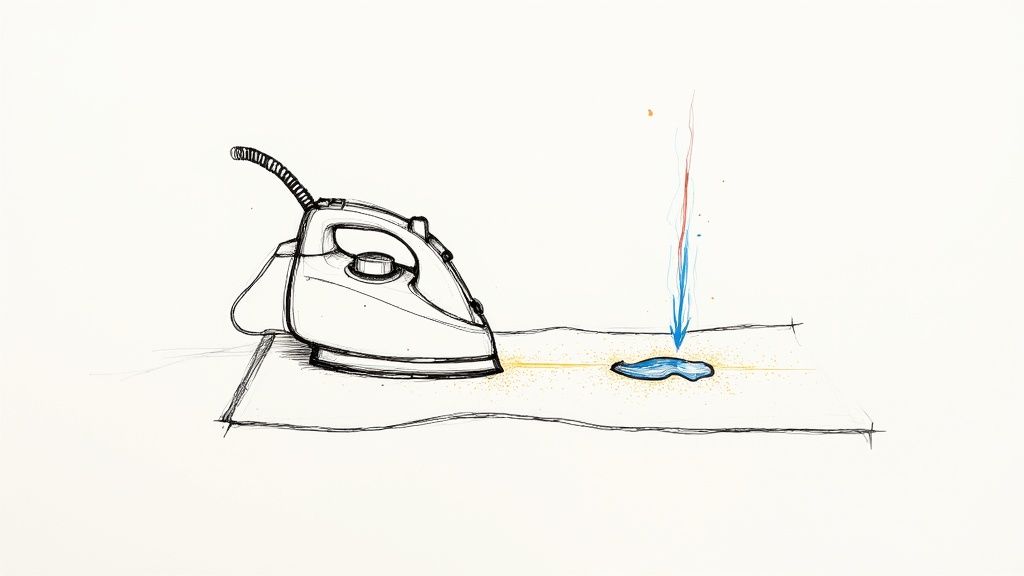
Sometimes, you do everything right—blotting with vinegar, gentle scrubbing—and that stubborn stain just stares back at you. That’s when you know it's time to bring out the bigger guns. When your usual methods for removing set in carpet stains just don't cut it, you have to move on to some more powerful, targeted solutions.
Let’s be clear, though. These aren't your everyday cleaning hacks. They require precision and a healthy dose of caution.
Important Takeaway: Before you even think about trying these on a visible part of your carpet, you absolutely must spot-test. Find a hidden spot in a closet or under a big piece of furniture. This isn't a suggestion; it's a non-negotiable rule to avoid a cleaning disaster.
Using Heat Transfer for Gummy and Waxy Messes
Ever had a run-in with melted crayon, candle wax, or a piece of gum ground deep into the carpet fibers? It's one of those messes that feels permanent. But a little bit of controlled heat can perform a small miracle here. The idea is to gently melt the substance just enough to lift it off your carpet and onto something else.
Here’s my go-to game plan for these sticky situations:
- Freeze It First: Grab a few ice cubes in a plastic bag and place them right on the mess. Let it sit until the gum or wax is hard and brittle. Then, take a butter knife and gently scrape off as much of the hardened gunk as you can.
- Apply Gentle Heat: Lay a clean, white cotton cloth over what’s left of the stain. Set your iron to a low, no-steam setting and press it onto the cloth for just a few seconds at a time.
- Lift and Check: The warmth will melt the wax, and the cloth will start to absorb it. Keep lifting the iron and checking the cloth. You'll see the stain transferring. Just keep repeating the process with a clean section of the cloth until the spot is gone.
This method pulls the stain up and out of the carpet fibers, which is so much more effective than trying to scrub something sticky deeper into the pile.
DIY Solutions vs Commercial Products
When you're deciding on your cleaning agent, you might wonder whether a homemade mix is better than a store-bought product. Honestly, it depends on the stain and your comfort level. Here's a quick rundown to help you choose.
| Consideration | DIY Solutions (Vinegar, Baking Soda) | Commercial Cleaners |
|---|---|---|
| Cost | Very inexpensive; uses common household items. | Can be pricey, especially for specialized formulas. |
| Effectiveness | Great for fresh spills and organic stains. | Formulated for specific, tough stains (grease, ink). |
| Safety | Generally safer for kids and pets, fewer harsh fumes. | May contain strong chemicals requiring ventilation. |
| Convenience | Requires mixing and preparation. | Ready to use straight from the bottle. |
| Risk | Lower risk of bleaching or damaging carpet fibers. | Higher risk; spot-testing is absolutely essential. |
Ultimately, DIY solutions are my first choice for everyday spills. But for those set-in, chemical-based, or just plain weird stains, a high-quality commercial cleaner designed for that exact problem is often worth the investment.
Cautious Use of Stronger Cleaning Agents
Okay, now we’re getting into advanced territory. When you're staring down a truly monster stain—like old grease that’s been there forever or a dark, mysterious organic spot—it might be time for a stronger chemical cleaner. Tread very carefully here, especially if you have natural fibers like wool, which can be damaged easily.
For those tough, greasy stains on synthetic carpets, a diluted ammonia solution can work wonders. Mix one tablespoon of clear, unscented ammonia into one cup of warm water. Use a cloth to dab it on sparingly, then blot, and rinse the area thoroughly with a clean, damp cloth.
If you're dealing with a stubborn organic stain on a light-colored carpet—think old pet accidents or food spills—a 3% hydrogen peroxide solution can be your last resort. Apply just a few drops, let it fizz for a minute, then blot and rinse. Remember, peroxide can act as a bleach, so that spot test is more critical than ever.
When you've tried everything and the stain is still there, it might be time to call in the professionals. They have access to powerful equipment and techniques, like deep steam carpet cleaning, that can safely tackle grime that’s buried deep in the fibers, something our DIY efforts just can’t reach.
When to Hand It Over to a Professional
Look, there’s a certain pride in rolling up your sleeves and conquering a tough stain yourself. I get it. But there's also wisdom in knowing when to tag in a professional. Pushing a DIY solution too far on the wrong type of stain can turn a simple spot into a permanent, ugly fixture on your floor.
So, how do you know when it’s time to throw in the towel on removing set in carpet stains?
A big, glaring sign is when a stain has soaked clear through to the carpet pad. If you've had a major liquid spill—think a whole glass of red wine or a pet accident that sat for a while—the problem runs deeper than the surface fibers. No amount of blotting from the top is going to fix what's lurking underneath.
Another classic red flag is the dreaded "reappearing stain." You scrub a spot, it looks perfect, and then a few days later, a ghostly version of it slowly creeps back into view. This is a classic case of "wicking," where residue from the original spill (or even your cleaning solution) is pulled up from the carpet backing as the fibers dry. It's frustrating, and it’s a sure sign the problem is deep in the carpet.
The Professional Advantage
When you hire an expert, you’re not just paying for their time. You're paying for their heavy-duty equipment and, more importantly, their experience. Those portable carpet cleaners you can rent just can't compete with the commercial-grade machines the pros use.
- Hot Water Extraction: You might hear this called "steam cleaning." Pros use high-pressure hot water to blast apart dirt and grime deep within the carpet fibers.
- Serious Suction Power: This is where the real magic happens. Professional units have incredibly powerful vacuums that suck out nearly all the moisture, pulling the dirt, cleaning agents, and grime right out of your carpet and the pad below.
This isn't just about cleaning the surface; it’s about restoring your carpet from the inside out. It gets to the source of the problem, deep within the fibers, which is something a spray bottle and a rag just can't do.
This level of service is a huge industry for a reason. In fact, the market for professional carpet cleaner equipment was recently valued at around $776 million and is only expected to get bigger. It’s a testament to how crucial this process is for maintaining a truly clean home.
Making the Right Call
Ultimately, deciding to hire a pro is a smart investment in protecting your floors. When you're dealing with stubborn, set-in stains that just won't budge with your best DIY efforts, it might be time to consider options like professional carpet shampooing.
For homeowners who want guaranteed results without the guesswork, taking a moment to understand the deep carpet cleaning process can give you the peace of mind that you're making the absolute best choice for those impossible stains.
Common Questions About Carpet Stain Removal
Even with the best game plan, you're bound to have questions when you're on your hands and knees tackling a nasty spot. Let's run through some of the most common ones I hear from homeowners.
Can I Use Baking Soda and Vinegar on Any Stain?
This classic DIY combo is fantastic for a lot of organic messes—think food spills, pet accidents, or that dreaded glass of red wine. It works especially well on durable, synthetic carpets.
But hold on. Vinegar is acidic, and that acidity can be way too harsh for natural fibers like wool or silk. It can actually cause discoloration or damage the fibers themselves. And if you're dealing with stubborn grease or ink, you’ll need a totally different, solvent-based approach because the vinegar solution just won't break that stuff down.
How Do I Stop a Spill from Setting In?
Speed is everything. The second a spill happens, your mission is to blot, blot, blot. Grab a clean, dry, white cloth and press down to soak up as much as you can. Never rub it. Rubbing just grinds the stain deeper into the carpet fibers, making your job a thousand times harder.
The key is to act before the spill has a chance to chemically bond with the carpet fibers. Once that bond forms, the stain becomes officially "set-in" and exponentially harder to remove.
If you're dealing with something solid or goopy like mud or dropped food, use a dull knife or a spoon to gently scrape up the excess before you start blotting.
Will a Steam Cleaner Actually Remove Set-In Stains?
Yes, a hot water extraction cleaner—which is what most of us call a steam cleaner—is a beast when it comes to set-in stains. It works by shooting a mix of hot water and cleaning solution deep into the carpet to dissolve the stain, then its powerful vacuum sucks all that dissolved gunk right out.
There's one huge exception, though. For protein-based stains like blood or eggs, you need to be careful. Hitting them with high heat can basically "cook" the proteins, setting the stain for good. Always pre-treat these specific types of stains with a cold-water or an enzyme-based solution before bringing out the hot water extractor.
Ready to hand over the toughest jobs to a team you can trust? Citrus Carpet Cleaning Buford offers transparent, "EXACT-imate" pricing with no hidden fees for a professionally deep-cleaned carpet that stays fresh longer. Schedule your cleaning today!