
When you hear "steam cleaning," what comes to mind? For most people, it’s the professional service that deep cleans carpets. But here’s something the industry doesn’t always make clear: what professionals call “steam cleaning” isn’t steam at all.
The core difference is simple: true steam cleaners use high-temperature vapor to sanitize surfaces, while the machines most carpet cleaners use—what we should be calling carpet cleaners—use hot water and powerful suction to deep clean fibers. This method is technically known as hot water extraction, and it's a world away from vapor-based steam cleaning.
Unpacking The Core Differences
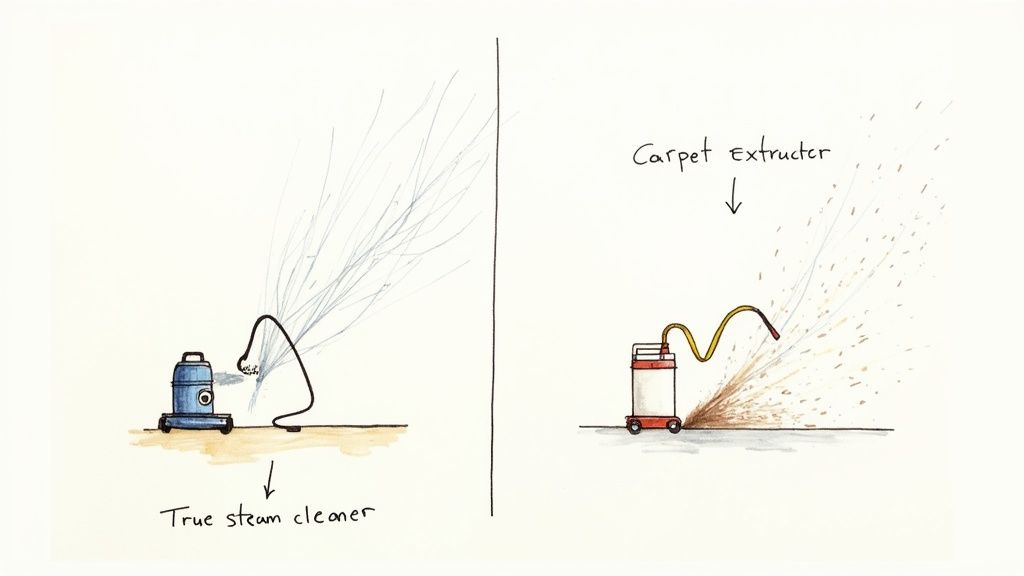
It's easy to get lost in the terminology, especially when companies use the terms interchangeably. Let's clear up the confusion and set the stage for a real, practical comparison.
True Steam Cleaners
A true steam cleaner is a machine that heats water well past the boiling point (over 212°F / 100°C), creating a low-moisture, high-pressure vapor. Think of it as a sanitizing powerhouse. This superheated steam is fantastic for disinfecting hard surfaces like tile and grout, killing bacteria, and melting away grime without any harsh chemicals.
But for carpets? Its use is pretty limited. At best, it's a surface-level sanitizer, not a deep cleaner.
Carpet Cleaners (Hot Water Extraction)
On the other side of the ring, you have the carpet cleaner, or what the pros call a hot water extraction (HWE) machine. This is the workhorse of the professional carpet cleaning world. It doesn't boil water; instead, it sprays a mix of very hot water and a cleaning solution deep into your carpet pile.
Almost immediately, a high-powered vacuum sucks that solution right back out, pulling dirt, allergens, and grime along with it. This is what delivers a true deep clean, but it comes at the cost of using a lot more water and requiring longer dry times.
The biggest misconception out there is that all "steam cleaning" services use actual steam. The reality? The vast majority of professional carpet cleaners rely on hot water extraction—a process of flushing and suction, not vapor.
Getting this distinction right is the first step toward choosing the right service for your home. It’s like understanding distinct cleaning processes like dry cleaning versus wash and fold; different methods are designed for different jobs.
The key is matching the method to your actual needs. This guide will stack these technologies up against each other, but we'll also throw in a third, innovative option: low-moisture cleaning. If you're someone who can't stand soggy carpets, our overview of the benefits of dry carpet cleaning offers some great insights into a faster-drying alternative.
Quick Comparison Steam Cleaning vs Hot Water Extraction
To make things even clearer, here's a quick side-by-side look at the two technologies. This table cuts through the jargon and gets straight to the point.
| Feature | True Steam Cleaner | Carpet Cleaner (Hot Water Extraction) |
|---|---|---|
| Cleaning Agent | High-temperature vapor (steam) | Hot water and cleaning solution |
| Primary Use | Sanitizing, surface cleaning | Deep cleaning, stain removal |
| Moisture Level | Very low | High |
| Best For | Hard surfaces, upholstery, grout | Deep-seated dirt in carpets |
| Chemicals | Typically chemical-free | Often requires detergents |
As you can see, they are built for entirely different purposes. A true steam cleaner is a fantastic tool for specific sanitizing jobs, while hot water extraction is designed for the heavy lifting of deep carpet cleaning.
How Each Cleaning Method Actually Works
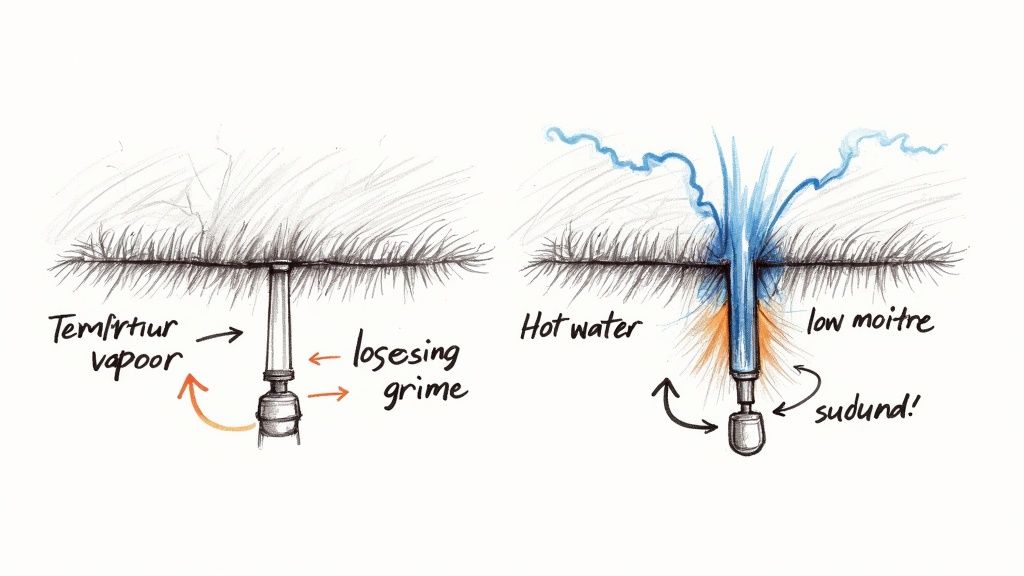
To make a smart call between a steam cleaner and a carpet cleaner, you have to get a handle on what’s actually happening inside the machine. They might look like they do the same job, but how they get there is completely different, and that changes everything for your carpets.
The Science of a True Steam Cleaner
A true steam cleaner works on a simple but very effective principle. It takes a small amount of water, heats it in a boiler to temperatures well above 212°F (100°C), and turns it into a high-pressure, low-moisture vapor.
This superheated steam blasts out of a nozzle, instantly dissolving grease and grime. It’s also a sanitizing powerhouse, killing up to 99.9% of bacteria and germs on contact, all without any chemicals. But here’s the key: because it's vapor, there’s very little water, so surfaces dry almost immediately. Think of it as a sanitizing tool first, a cleaner second. Great for hard surfaces, but it just doesn't have the muscle for deep-seated carpet dirt.
Hot Water Extraction: The Carpet Cleaner Standard
This is where the confusion usually starts. What most people—and even many companies—call "steam cleaning" for carpets is actually hot water extraction (HWE). This method is the undisputed champion of professional carpet cleaning, and for good reason.
An HWE machine injects a mix of very hot water and a cleaning solution deep into your carpet’s fibers. Almost at the same time, a powerful vacuum sucks that water, the solution, and all the loosened dirt, grime, and allergens right back out. It’s a true flushing action that gives your carpet a deep-down clean that vapor just can't touch. The only real downside is the amount of water it uses, which means longer drying times. To get the full picture, you can learn more about what wet carpet cleaning entails.
While both use hot water, the real difference is the state of that water. A steam cleaner uses a gas (vapor) for surface sanitizing. A carpet cleaner uses a liquid for a deep, flushing extraction.
The market tells the story. Carpet extractors are the dominant force in the industry, pulling in roughly 45.1% of the market revenue share simply because nothing else matches their power to pull out embedded dirt.
The Modern Alternative: Low-Moisture Cleaning
There’s a third option that really bridges the gap between the two. Low-moisture cleaning, like the citrus-based system we use here at Citrus Carpet Cleaning Buford, is a smarter, more modern approach.
This technique uses a specialized, eco-friendly solvent that goes to work breaking down dirt and stains chemically. The solution cleverly encapsulates all the soil particles, which are then lifted away from the carpet fibers with very little water, using absorbent pads or a unique extractor.
You get a deep clean that rivals HWE but with a ridiculously fast dry time of just 1-2 hours. It’s genuinely the best of both worlds.
Comparing Real-World Cleaning Effectiveness
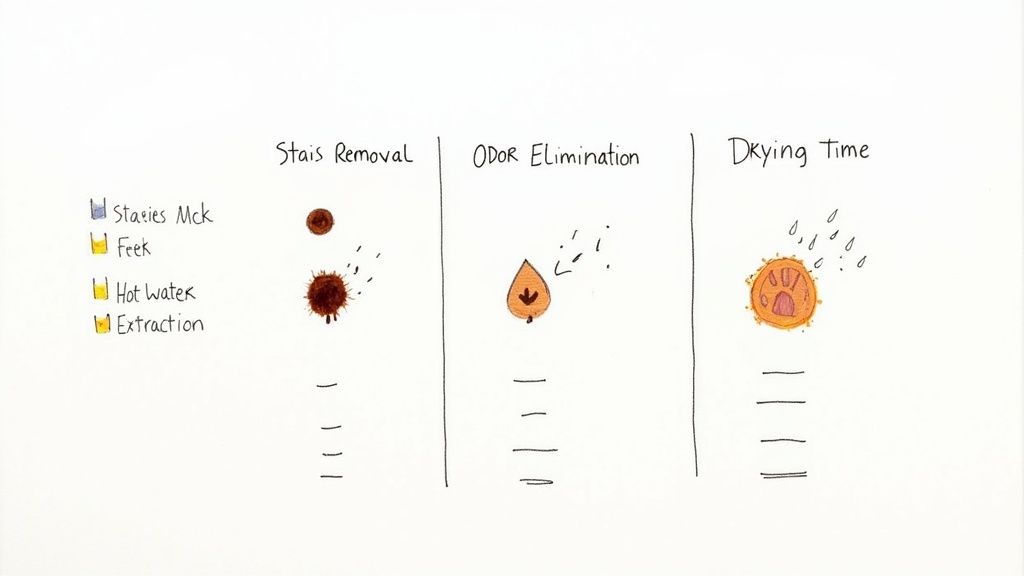
Knowing how a machine works is one thing, but what you really care about are the results it can deliver on your floors. When it comes to steam cleaners vs. traditional carpet cleaners, the real-world performance couldn't be more different, especially depending on the mess you're trying to tackle. Each has its moments to shine—and its total fails—when facing common carpet problems.
Let's cut through the technical specs and talk about what really matters to Buford homeowners: which one actually gets out the stains, kills the funky smells, and lets you get back to your life without waiting all day for the carpet to dry.
Stain Removal Showdown
Not all stains are created equal, and the same goes for the machines meant to fight them. A true steam cleaner, using super-hot vapor, is fantastic for melting away sticky, surface-level gunk like candle wax or gum. The heat is its biggest strength and its greatest weakness—if you use it on a protein stain like pet urine or blood, you’ll essentially "cook" it right into the carpet fibers, setting it for good.
On the other hand, a hot water extraction (HWE) machine—what most people call a "steam cleaner"—is the opposite. Its powerful flushing action is great for water-based spills like coffee or juice, and with the right detergent, it can tackle greasy spots. The problem is, it’s easy to overdo it. Too much water can just push the stain deeper into the padding if the machine isn't strong enough to pull it all back out.
For a lot of families in Buford, a low-moisture system is the perfect middle ground. It uses specialized solvents that break down a huge range of stains—from organic messes to oily spots—without the risk of heat-setting them or turning your carpet into a swamp.
The Battle Against Odors and Allergens
When you’re fighting odors, you’re really fighting something microscopic. This is where true steam cleaners are kings of sanitation. That high heat kills up to 99.9% of bacteria and germs on contact, neutralizing odors at the surface. It also works wonders on allergens like dust mites by denaturing them.
But for those deep-down smells, like pet urine that has soaked through to the padding, HWE is going to be more effective. The deep-flushing process literally rinses out the source of the odor instead of just sanitizing what’s on top. The catch? All that leftover moisture can turn into a musty, mildewy smell of its own if the carpet takes forever to dry.
The biggest issue I see with HWE is the sticky soap residue it almost always leaves behind. That stuff becomes a dirt magnet, attracting new grime and allergens and causing old spots to magically reappear just days after a cleaning. Steam cleaning, since it's just water, leaves absolutely nothing behind.
Performance Breakdown: Steam vs. Hot Water Extraction vs. Low-Moisture
To make it simple, here’s a quick look at how these three methods stack up when it comes to the results you'll actually see in your home.
| Performance Metric | Steam Cleaner | Carpet Cleaner (HWE) | Low-Moisture Citrus Cleaning |
|---|---|---|---|
| Stain Removal | Good for sticky, surface spots. Bad for protein stains (pet accidents, blood). | Strong on water-based stains; can handle grease with detergents. | Excellent for a wide range of organic and oil-based stains. |
| Odor Elimination | Sanitizes surfaces, killing 99.9% of odor-causing bacteria. | Flushes out deep-set odors but can cause musty smells if left too wet. | Neutralizes odors at the source without leftover moisture. |
| Allergen Removal | Kills dust mites and surface allergens with high heat. | Can remove deep allergens but leaves sticky residue that attracts more. | Removes allergens and leaves no dirt-attracting residue behind. |
| Drying Time | Nearly instant (minutes). | Very long (6-24 hours). | Very fast (1-2 hours). |
| Residue Risk | None. Uses only water vapor. | High risk of sticky soap residue that causes rapid re-soiling. | None. Soap-free formula leaves carpets soft and clean. |
As you can see, the choice isn't always straightforward. While traditional methods have their place, modern low-moisture approaches often provide a more balanced and effective solution for the average household.
Dry Time and Residue Risks
For most people, the most practical question is the simplest: when can I walk on my carpet again?
- True Steam Cleaner: Dries almost instantly, usually in just a few minutes. The vapor evaporates that fast.
- Hot Water Extraction: This is the big downside. It can take anywhere from 6 to 24 hours to dry completely. A huge inconvenience.
- Low-Moisture Citrus Cleaning: We get you back on your floors in just 1-2 hours. It’s a game-changer.
That long drying time from HWE isn't just annoying; it’s a health concern. Soggy carpets are the perfect breeding ground for mold and mildew. Faster-drying methods aren't just about convenience—they're about keeping your home healthier.
Crunching the Numbers: Cost vs. Long-Term Value
Let's talk money. Beyond the cleaning power and how fast your carpets dry, the financial side of the steam vs. carpet cleaner debate is a big deal for any homeowner. The cost isn't just about what you pay upfront; it's about the real, long-term value you get back from your investment.
If you're thinking of going the DIY route, a consumer-grade true steam cleaner might set you back anywhere from $50 to over $500, all depending on its power and the attachments it comes with. A home carpet extractor (what most people call a "steam cleaner") starts at a similar price point, usually around $100 and climbing past $500, but with a catch—you have to keep buying their special cleaning solutions.
For a one-off job, renting a machine from the grocery store seems cheap, typically $30 to $60 per day. But don't forget you also have to buy the detergents, which adds to the final bill.
What About Hiring a Pro?
When you bring in a professional, the pricing works differently. Traditional hot water extraction guys usually charge between $30 and $75 per room, and that price can swing based on how big the room is and how dirty the carpet is. True steam is rarely used for a whole house of carpet; it’s more of a specialized add-on service for sanitizing specific spots.
The real value isn't just in the price per cleaning, but in how the method impacts your carpet's lifespan. An aggressive cleaning might look good today but cost you a new carpet tomorrow.
Here’s the thing most people don't consider: over-wetting from a sloppy hot water extraction job is a huge problem. It can cause delamination—where the carpet's backing literally separates from the fibers. Once that happens, it's game over for your carpet. That damage is permanent and will send you shopping for new flooring way sooner than you planned.
A gentler approach, like a professional low-moisture system (hint: our citrus-based method) protects that backing. By using minimal moisture, we avoid soaking the padding and glue, which can add years to your carpet's life. Suddenly, the slightly different price tag for a better method looks like a much smarter long-term financial move.
The Bigger Picture
This isn't just a small decision; it's part of a massive industry. The global market for carpet cleaning services is already worth around USD 7.5 billion and is expected to more than double by 2033. That doesn't even count all the machines and cleaning products people buy. This shows just how much homeowners and businesses are investing in their floors, and you can explore more market research on carpet cleaning services to see the full scale.
Ultimately, picking the right cleaning method is a balancing act between your immediate budget and the long-term health of your carpet. That cheap rental might look tempting now, but a professional low-moisture cleaning delivers a deep clean that actually preserves your investment for the future.
Choosing the Right Cleaner for Your Home
Okay, let's cut through the technical jargon. Knowing the difference between "steam cleaning" and other methods is one thing, but figuring out which one is right for your home is what really matters.
What works for a quiet apartment just won't cut it for a chaotic family home in Buford with kids and a golden retriever. Let's walk through a few real-world scenarios so you can see which cleaning technology actually fits your life.
For Families with Kids and Pets
If you have kids and pets, your home is basically ground zero for spills, muddy paws, and mysterious smells. The name of the game is getting stains out effectively, using solutions that are safe for everyone, and getting back to life fast. Who has time for a soggy carpet that's a no-go zone for 24 hours?
Traditional hot water extraction is a powerhouse, sure, but those long dry times are a huge problem. Even worse is the sticky, chemical gunk it can leave behind. And when you're thinking about a healthy home, it's not just the carpets—it's also worth looking into choosing pet-safe wood floor cleaners for other surfaces.
Recommendation: A low-moisture cleaning system is the hands-down winner here. It chews through tough organic stains and pet odors without drenching your carpet pad. The result? A fast 1-2 hour dry time. This keeps disruption to a minimum and makes your home a healthier place for your little ones and furry family members.
For Allergy Sufferers
For anyone in your house battling allergies or asthma, cleaning is about one thing: getting rid of the microscopic villains. We're talking dust mites, pet dander, and pollen that have buried themselves deep in your carpet. The goal is maximum extraction and better air quality, period.
A true steam cleaner is great for killing germs on a hard surface, but it can't actually pull those allergens out of the carpet pile. Hot water extraction does a much better job of flushing them out, but then you've got a new problem. All that leftover moisture can become a breeding ground for mold, which is another massive allergy trigger.
Recommendation: Low-moisture cleaning hits the sweet spot. It pulls out all the deep-seated gunk and allergens without the risk of creating a mold problem from overwetting. For maintaining a truly healthy indoor environment, it’s the smarter choice.
This flowchart can help you visualize how your budget and needs point you toward either a DIY rental or calling in a pro.

As the guide shows, while a shoestring budget might push you toward DIY, investing in a professional service is almost always the most effective path for getting real results.
For Property and Business Managers
When you're managing commercial properties or rentals, the whole equation changes. Time is money, simple as that. You need a cleaning method that works, dries incredibly fast for quick tenant turnover, and protects your flooring investment.
Long drying times are a liability in a commercial setting. A carpet that stays wet for a full day can delay move-ins, disrupt business operations, and create risks of slip-and-fall accidents or mold growth between tenants.
Traditional hot water extraction is often just too slow and risky. Low-moisture cleaning, on the other hand, lets you clean the carpets in an office or rental unit in the morning and have it ready for business by the afternoon. This kind of efficiency is huge for minimizing vacancy periods and maximizing your ROI. For a deeper dive, understanding the real numbers behind https://citruscarpetcleaningatlanta.com/commercial-carpet-cleaning-cost/ is a critical next step.
Recommendation: For any commercial or rental property, a professional low-moisture system isn't just a good idea—it's the only logical choice. It delivers the speed, effectiveness, and asset protection you need.
So, What's the Final Verdict for a Cleaner Home?
Picking the right cleaning method really comes down to what you care about most. Are you looking for raw cleaning power? Or is a quick dry time and the long-term health of your carpet more important? It's a classic trade-off.
Traditional hot water extraction—what most people call "steam cleaning"—definitely has the muscle. It's great for flushing out the dirt that’s been ground deep into your carpet fibers. But here’s the problem: all that water. You're looking at 6-24 hour dry times, and if the job isn't done perfectly, you’re risking mold, mildew, and even damage to the carpet backing. On top of that, it almost always leaves behind a sticky, soapy residue that just ends up attracting more dirt.
And a true steam cleaner? The kind that uses high-heat vapor? It’s fantastic for sanitizing your kitchen tile, but it just doesn't have the "oomph" to pull dirt out of a deep-pile carpet. It's a specialist tool, not a whole-home carpet solution.
A Smarter, More Balanced Approach
This is exactly where a modern, low-moisture system—like our citrus-based cleaning—changes the game. We figured out how to get that deep-down clean without flooding your carpets. It’s the best of both worlds.
We get rid of the harsh detergents and skip the excessive water. The result? A clean that effectively lifts stains and eliminates odors while protecting the integrity of your carpet. No residue, no overwetting, just a healthier, longer-lasting clean for your home.
When you weigh all the factors, you can see which method truly aligns with your goals. It’s about getting a clean, healthy, and well-maintained home without the usual headaches.
Questions We Hear All The Time
When you're trying to choose between steam cleaning and other methods, a few key questions always pop up. Let's clear the air and give you the straightforward answers Buford homeowners are looking for.
Can a "Steam Cleaner" Actually Deep Clean My Carpet?
Here's the thing: a true steam cleaner, the kind that uses super-hot vapor, is fantastic for sanitizing hard surfaces. It can kill up to 99.9% of bacteria and germs on contact. But for carpets? It just doesn't have the muscle to pull out the dirt, dust, and pet dander buried deep in the fibers.
For a real, down-to-the-backing deep clean, you need a system that can flush out and extract all that gunk. That's where hot water extraction (often mislabeled as "steam cleaning") comes in, but it has its own set of problems.
Is Hot Water Extraction Safe for Every Type of Carpet?
Definitely not. The sheer amount of water and high heat used in hot water extraction can be a disaster for delicate fibers like wool or silk. It can cause them to shrink, bleed colors, or turn brown. You should always double-check what your carpet manufacturer recommends before letting anyone soak your specialty rugs.
Honestly, the biggest problem with hot water extraction isn't even the potential for fiber damage. It's the risk of overwetting. When a technician uses too much water or doesn't have powerful enough equipment, that moisture soaks right through to the padding and subfloor. That's a perfect recipe for mold and mildew, which is a much bigger headache than a few spots.
So, How Often Should I Have My Carpets Cleaned?
As a general rule, getting a professional cleaning every 12 to 18 months is a good idea. It keeps your carpets looking fresh and often satisfies warranty requirements.
But life isn't "general." You'll need to clean more often in certain situations:
- Homes with Pets or Kids: Spills, accidents, and tracked-in dirt are a daily reality. Cleaning every 6 to 9 months is a smart move to keep on top of stains, odors, and allergens.
- Anyone with Allergies: Your carpet is the biggest air filter in your home. More frequent cleanings pull out trapped dust mites and pet dander, which can make a huge difference in your indoor air quality.
Does Low-Moisture Cleaning Actually Work as Well as Soaking the Carpet?
Absolutely. For almost every home and business, modern low-moisture cleaning is not only just as effective, but it’s often better. Instead of flooding your carpet with gallons of water, our method uses a specialized, citrus-based solution that breaks down and crystallizes dirt particles.
We then lift that encapsulated soil right out of the carpet fibers. You get a deep clean that rivals hot water extraction, but your carpets are dry in just 1-2 hours, not days.
Tired of the soggy carpets, long dry times, and sticky residue left behind by other cleaners? At Citrus Carpet Cleaning Buford, we do things differently. Our low-moisture, citrus-powered system delivers a superior clean without the downsides.
See the difference for yourself. Get your free "EXACT-imate" today by visiting us at https://citruscarpetcleaningatlanta.com.