
The truth is, searching for a single "best" carpet cleaner for every stain is a frustrating, dead-end road. Why? Because a one-size-fits-all solution simply doesn't exist.
The real secret is knowing that the best cleaner is always the one made for your specific type of stain. It's that simple. An enzyme cleaner that works miracles on a pet accident won't do much for a greasy footprint from the garage.
Your Quick Guide to Matching Cleaners with Stains
Feeling overwhelmed by all the products on the shelf is normal, but it really boils down to one core idea: match the chemistry to the catastrophe.
Think of it like using the right tool for a job—you wouldn't use a hammer to turn a screw, right? A red wine spill and a greasy food mark require completely different battle plans. Once you get this, you stop guessing and start cleaning effectively. Instead of grabbing the first bottle you see, you can look at a stain, figure out where it came from, and pick a cleaner designed to break it down on a molecular level.
Understanding Your Stain Type
The first step is always diagnosis. Stains generally fall into a few main categories, and this handy chart helps visualize which cleaning path you should take for each one.
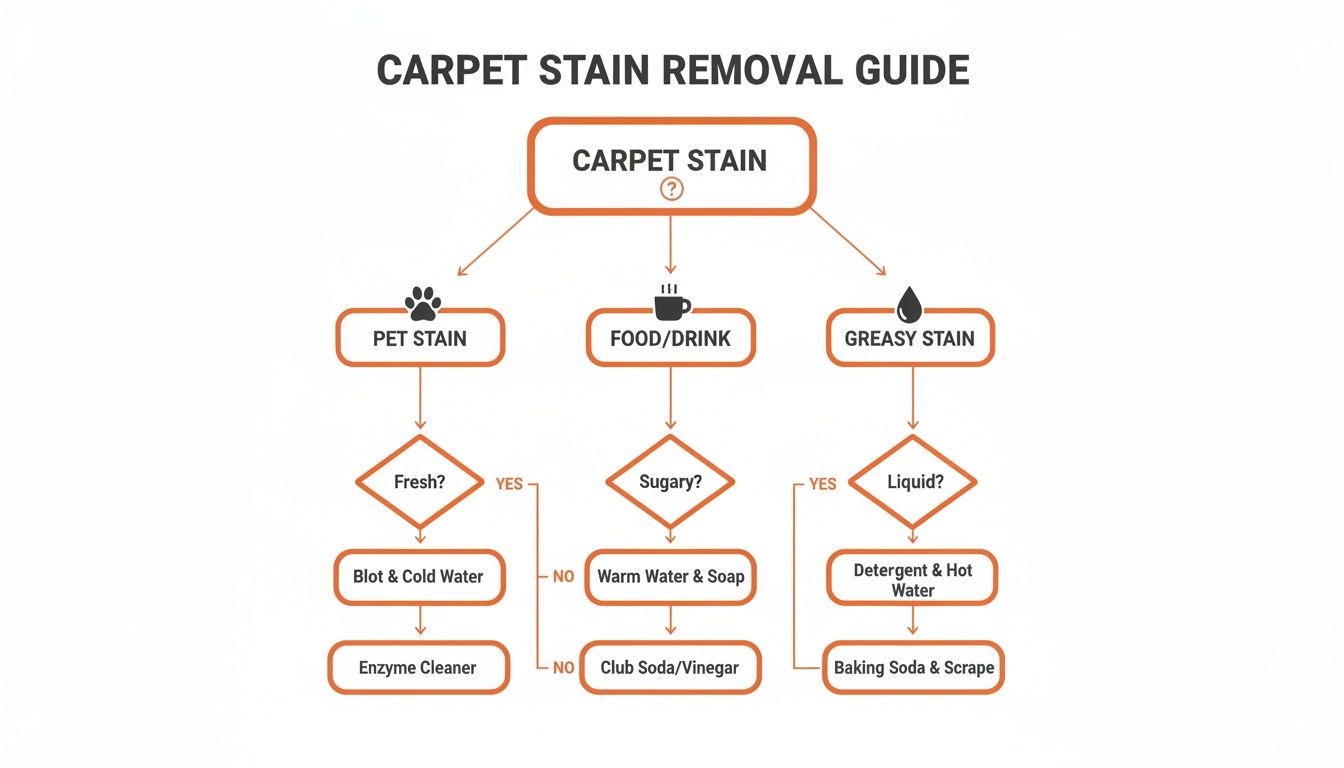
As you can see, pet messes, food spills, and oily marks each demand a unique game plan to get them out for good.
Matching the Cleaner to the Carpet Stain
Here’s a quick reference guide to help you choose the right cleaning agent for the most common household carpet stains. This is where most people go wrong, grabbing a generic cleaner that only makes things worse by leaving behind a sticky, dirt-attracting residue.
| Stain Type | Best Cleaner Chemistry | Why It Works |
|---|---|---|
| Pet Accidents (Urine, Feces, Vomit) | Enzymatic | Enzymes are like tiny Pac-Men that literally "eat" the specific organic proteins in pet waste, completely eliminating the stain and the odor at its source. |
| Food & Drink (Coffee, Wine, Juice) | Oxygen-Based (Oxy) | These cleaners use a chemical reaction to create oxygen bubbles. The bubbles gently lift and break apart colored stains from the carpet fibers without using harsh bleach. |
| Oil & Grease (Makeup, Ink, Food) | Solvent-Based | Solvents are specifically designed to dissolve oily, greasy, and other gunk that won't mix with water, lifting them out of the carpet so they can be blotted away. |
This chart is your new secret weapon for at-home spot treatment.
The need for effective cleaning is bigger than ever. The global carpet cleaning market was valued at USD 3.01 billion and is expected to jump to USD 4.56 billion as more people focus on home hygiene.
Key Takeaway: The secret to removing a tough stain isn't about scrubbing harder—it's about choosing smarter. Using the right chemical cleaner for the job saves you time, effort, and the frustration of a stain that just won't budge.
Of course, professional-grade solutions, like our citrus-based system at Citrus Carpet Cleaning Buford, often get results where store-bought products fail. We combine powerful, targeted chemistry with commercial-grade equipment to pull out the toughest stains.
To get a better handle on how these cleaners work, check out our guide on what an enzymatic cleaner is and how it tackles organic messes.
The Science Behind How Carpet Cleaners Actually Work
Ever wondered what’s really going on when you spray a cleaner on a carpet stain? It’s not magic, but it is a pretty cool chemical reaction designed to break down a specific type of mess. Getting a grip on this science is the key to picking the right product and finally winning the war against stains.
Think of it like this: different stains are like different locks. You need the right chemical "key" to open them. Using the wrong one is useless, no matter how hard you scrub. This is exactly why that generic, all-purpose cleaner so often fails—it has a key that doesn’t really fit any lock well.
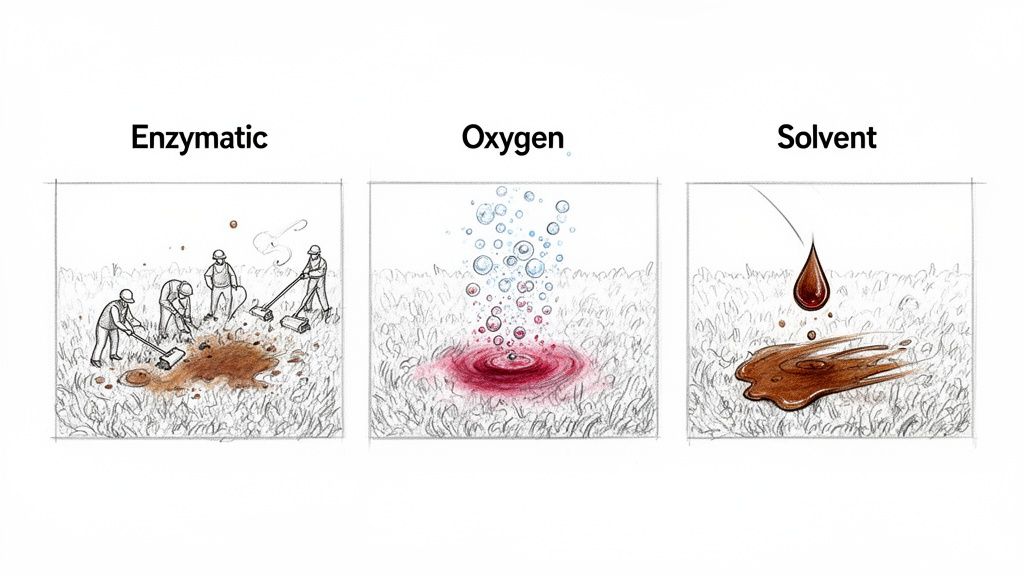
Enzymatic Cleaners: The Biological Demolition Crew
For organic stains like pet urine, food spills, or blood, enzymatic cleaners are your best bet. These formulas are packed with specialized proteins—enzymes—that act like a biological demolition crew.
Imagine each enzyme is programmed for a very specific mission. One type hunts down the uric acid in pet urine, while another is built to destroy the proteins in a milk spill. When they hit the stain, they get right to work breaking down the complex organic gunk into smaller, simpler bits that you can easily wipe away.
This process doesn't just lift the visible part of the stain; it completely digests and eliminates it, which is absolutely critical for killing nasty odors at their source. Without those enzymes, you might clean the spot you can see, but the odor-causing bacteria are left to fester deep in the fibers.
Oxygen-Based Cleaners: The Fizzing Stain Lifters
When you’re up against colorful, pigment-based stains from things like red wine, coffee, or juice, oxygen-based cleaners are what you need. These products, often called "oxy" cleaners, work through a process called oxidation.
The moment the cleaner hits the stain, it unleashes thousands of tiny oxygen bubbles. This creates a powerful fizzing action that aggressively attacks the chemical bonds holding that color pigment to your carpet fibers.
The oxygen bubbles literally break apart the stain molecules and lift them right to the surface, where you can blot them away. It’s a gentle but super-effective way to remove color without having to use harsh chlorine bleach, which can wreck your carpet.
This is the go-to method for those bright, scary spills that look like they’re there to stay.
Solvent-Based Cleaners: The Specialized Grease Magnets
Oil-based messes like ink, makeup, grease, or tar demand a totally different battle plan. We all know oil and water don’t mix, so a water-based cleaner will just slide right over these stains. This is where solvent-based cleaners shine.
Think of a solvent as a specialized magnet for all things oily and greasy. It’s chemically designed to attract and dissolve these non-water-soluble substances. The solvent surrounds the greasy molecules, breaks their grip on the carpet fibers, and pulls them out so you can absorb them with a clean cloth.
Stains are a nightmare for the 62% of U.S. households with pets or kids, which has created a huge market for cleaning products. The upright carpet cleaner market alone is projected to hit $1,150 million, but there’s a catch. Independent tests show many home machines only remove 60-70% of embedded dirt on the first pass, often just pushing the rest deeper and causing stains to wick back up later. You can explore more on these market trends and see why professional methods usually come out on top.
Citrus Solvents: The Low-Moisture Powerhouse
Here’s a more advanced approach that combines the power of solvents with a smarter, low-moisture system. At Citrus Carpet Cleaning Buford, we use our own proprietary cleaner made from natural citrus peel extracts. This citrus solvent is incredibly effective at cutting through grease and grime.
Unlike old-school methods that just soak your carpets with soapy water, our low-moisture system works differently:
- Breaks Down Grime: The natural citrus solvent dissolves the toughest oily residue without needing soap or harsh chemicals.
- Avoids Sticky Residue: Since we don't use shampoos, there’s no sticky film left behind to become a dirt magnet. Your carpets stay cleaner, longer.
- Lifts Dirt Away: We use specialized equipment with cotton bonnets to gently lift the dissolved soil out of the carpet, leaving it fresh, clean, and dry in just 1-2 hours.
This science-backed approach gives you a deeper, longer-lasting clean that you just can’t get from a bottle off the shelf.
Your Practical Playbook for Beating Common Stains
Knowing the chemistry behind stain removers is one thing, but actually getting a stain out of your carpet is a whole different ball game. This is your practical guide. We're moving past the theory and getting straight to a clear, step-by-step game plan for the most common messes you'll face.
Every stain has a weak spot. The trick is to match the right cleaning method to the specific spill. When you do that, your odds of completely removing it without wrecking your carpet go way up.
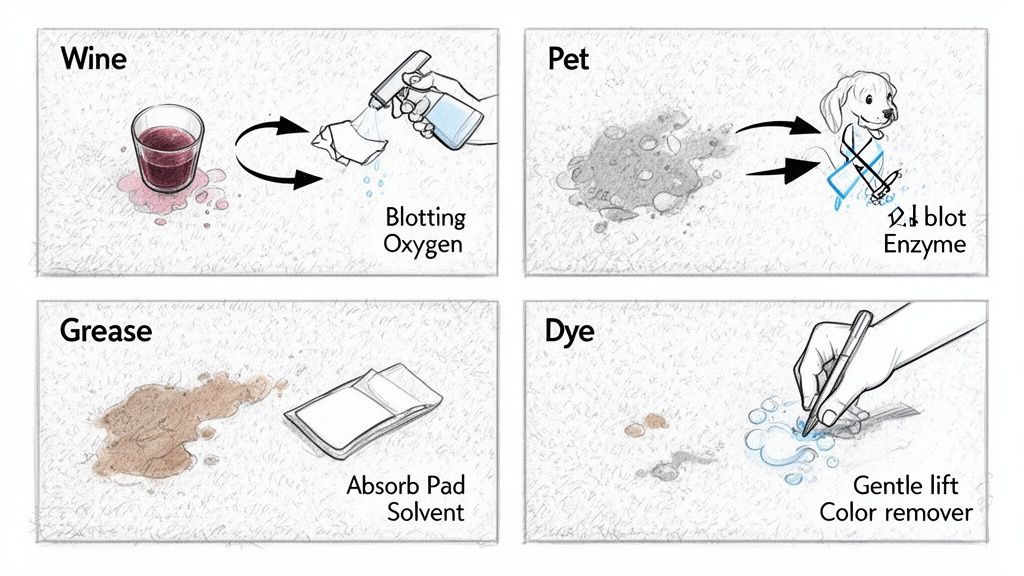
Tackling Organic Spills Like Wine And Coffee
Let's face it, organic stains from wine, coffee, grass, or blood are some of the most frequent offenders. Their pigments just love to bond with carpet fibers, which can turn into a nightmare if you don't handle them the right way, right away.
The key is to act fast and grab an oxygen-based cleaner. This is your go-to weapon for those brightly colored, ugly stains.
Here’s the simple process I use:
- Blot, Don’t Rub: The first rule of stain club. Grab a clean, white cloth and gently blot the spill. Always work from the outside in so you don't make the stain bigger.
- Use Cold Water: Lightly dampen the area with a little cold water. And I mean cold—never use hot water on protein stains like blood. Heat will literally cook the protein into the fibers, setting it for good.
- Bring in the Oxygen Cleaner: Apply your oxygen-based spotter according to the directions. You’ll see it start to fizz and bubble—that’s the magic happening, lifting the stain right out.
- Blot Again: Use a fresh, dry cloth to blot the area until the stain is gone and the spot is almost dry.
For those really nasty red wine spills, we've got a more detailed guide on how to remove red wine from carpet.
Handling Pet Accidents And Lingering Odors
Pet accidents are a double-whammy. You’ve got the visible stain, sure, but you also have an invisible enemy: the lingering odor caused by uric acid crystals. If you don't completely kill that odor, your pet will treat that spot like their personal restroom.
For this job, an enzymatic cleaner isn't just a suggestion; it's a must. You need those enzymes to literally break down and eat the organic proteins in the urine that are causing that awful smell.
Pro Tip: When you're cleaning up pet urine, what you see on top is just the tip of the iceberg. That little spot can spread to an area 5 to 10 times larger in the carpet padding underneath. Always treat an area much bigger than the visible stain.
Follow these steps for the best results:
- Soak It Up: Blot up as much of the urine as you can with paper towels or a microfiber cloth. Stand on it if you have to!
- Apply the Cleaner Liberally: Don’t be shy here. You need enough of the enzymatic cleaner to soak all the way through the carpet and get to the pad, just like the urine did.
- Give It Time: Let the cleaner sit for at least 15 minutes, maybe even longer for older stains. The enzymes need time to do their job and fully digest the stinky stuff.
- Blot Dry: Once it's had time to work, blot the area with a clean towel to soak up the extra moisture.
Defeating Oil-Based Marks And Grease
Greasy, oily stains from things like makeup, ink, or tar just laugh at water-based cleaners. For these, you need to bring in a solvent-based cleaner that's made to dissolve them.
The approach here is a bit different. You want to dissolve and lift the gunk without spreading it around.
- Scrape Off the Excess: If you have a solid glob (like lipstick or bacon grease), gently scrape it off with a dull knife first.
- Always Test First: I can't stress this enough. Test the solvent on a hidden spot—like inside a closet—to make sure it doesn't mess with your carpet's color.
- Apply It to a Cloth: Don't spray the solvent directly on the carpet. Instead, put a small amount on a clean, white cloth.
- Dab Gently: Dab the stain with the cloth. This transfers the solvent to the stain, letting it dissolve the grease. You'll start to see the stain lift right off onto your cloth.
- Blot to Finish: Use a clean, dry part of the cloth to blot the spot and pick up any leftover residue.
Of course, fighting individual spots is just one part of the equation. Getting some good habits for maintaining your area rugs and carpets will keep them looking great for years to come.
Protecting Your Carpet While Removing Stains
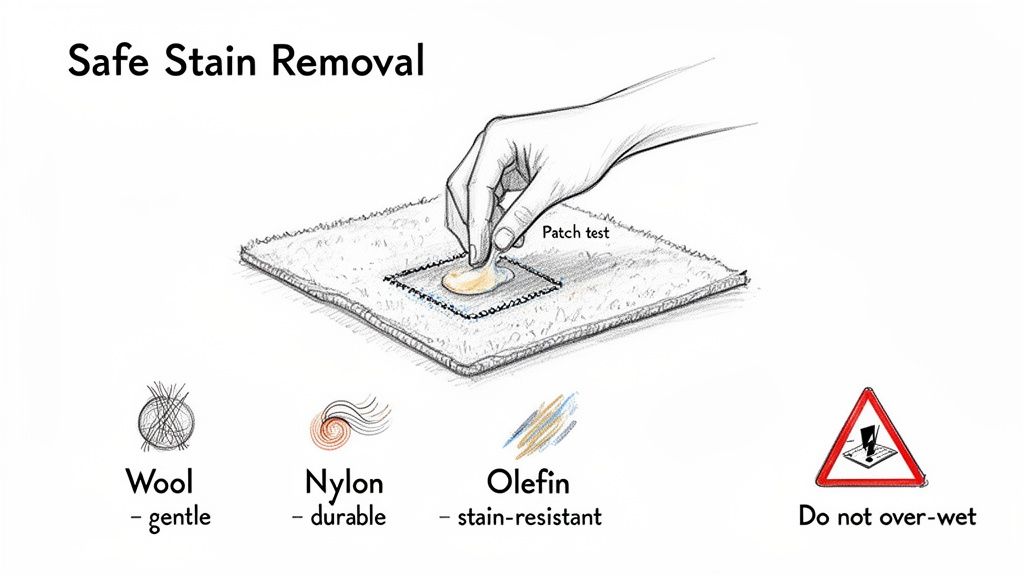
It’s a classic DIY disaster. You successfully battle a tough stain, but in the process, you've bleached, burned, or completely ruined the carpet underneath. Suddenly, a small spot has become a massive, permanent eyesore.
Winning the fight against a stain means getting the spot out without harming the carpet fibers. Just grabbing the strongest cleaner you can find and scrubbing away is a surefire recipe for disaster. The real secret to safe stain removal is knowing what your carpet is made of and always, always testing your cleaner first.
Know Your Carpet Fiber Type
Not all carpet is the same, and what works wonders on your friend's synthetic carpet could destroy your natural wool one. Applying the wrong chemical can cause irreversible damage, so a little fiber knowledge goes a long way.
- Nylon & Polyester: These are the workhorses of the carpet world. As synthetic fibers, they’re pretty tough and can handle most commercial cleaners, even those that are moderately acidic or alkaline.
- Olefin (Polypropylene): While fantastic at resisting stains, Olefin can be a bit sensitive to certain oil-based solvents. The wrong product can lead to discoloration, so be cautious with greasy messes.
- Wool: Think of wool like a fine sweater. It's a natural, delicate fiber that is easily damaged by high-alkaline products (like ammonia) or harsh bleaches. You absolutely must stick to pH-neutral or "Wool-Safe" approved cleaners to avoid a costly mistake.
If you have no idea what your carpet is made of, check for a remnant piece left from the installation or look at your original sales invoice. When in doubt, play it safe and treat it like delicate wool.
The Single Most Important Safety Step: The Patch Test
Before you put any cleaning solution on a visible stain, you have to do a patch test. I can't stress this enough. This simple five-minute check is the one thing that can save you from a huge headache and an even bigger replacement bill.
- Find a Hidden Spot: Look for a place no one will ever see, like the carpet inside a closet, under a heavy sofa, or on a leftover scrap if you have one.
- Apply the Cleaner: Put a little bit of the product on a clean white cloth and gently dab it onto your test area.
- Wait and Observe: Give it at least 10-15 minutes to work. Then, take a fresh, damp cloth and blot the spot.
- Check for Damage: Get up close and look for any signs of trouble—color bleeding, fading, or any weird changes in the carpet's texture. If you see anything amiss, that cleaner is a no-go.
This single step is the dividing line between a successful DIY spot removal and a permanent mistake. It ensures the product is compatible with your specific carpet fibers before you use it on a stain in the middle of your living room.
Before you start treating a stain, it helps to know which cleaners are generally safe for your carpet type. Here’s a quick guide to help you avoid common mistakes.
Carpet Fiber Safety Guide for Cleaners
| Carpet Fiber Type | Safe Cleaners | Cleaners to Avoid |
|---|---|---|
| Nylon | Oxygen, Enzyme, Solvent-based | High-alkaline or strong acidic cleaners |
| Polyester | Oxygen, Enzyme, Solvent-based | Harsh solvents that can damage fibers |
| Olefin | Oxygen, Enzyme, Citrus | Oil-based solvents, strong alkaline cleaners |
| Wool | pH-neutral, Wool-Safe certified | Oxygen bleach, high-alkaline (ammonia), strong acids |
This table is a great starting point, but remember, every carpet and dye is different. The patch test remains the ultimate safety check, no matter what your carpet is made of.
The Dangers of Rental Machines and Oversaturation
When a stain feels too big for a spray bottle, many homeowners run out and rent a "deep cleaning" machine. While they seem powerful, they often cause more problems than they solve by completely oversaturating your carpet.
These machines blast huge amounts of water and soapy detergent deep into your carpet's backing and padding, but they lack the suction power to pull it all back out. This leads to two major issues:
- Sticky Residue: Leftover soap acts like a dirt magnet. Once it dries, it leaves behind a sticky film that attracts new soil, making your carpet get dirty again even faster than before.
- Wicking and Mold: The soaked padding can take days to fully dry, creating a perfect breeding ground for mold and mildew. As the water slowly evaporates, it can pull deep-down dirt back up to the surface, causing old stains to mysteriously reappear.
This is exactly why professional low-moisture methods are safer and more effective. Our citrus-based system uses a controlled amount of a natural solvent that breaks down grime without flooding your carpet. This delivers a true deep clean with a fast, one to two-hour dry time. For more ways to keep your carpet looking great, check out our guide on protecting carpet from stains.
When to Stop Scrubbing and Call a Professional
Let's be honest, knowing when to throw in the towel is the smartest move a homeowner can make. There comes a point where even the best store-bought spot cleaner just can't handle a serious stain. Pushing it further usually just makes things worse.
Recognizing that moment isn't about admitting defeat; it's about making a strategic investment in your home. So, when is it time to put down the spray bottle and pick up the phone? Certain problems are clear signals that a stain has graduated beyond a DIY fix.
The Tell-Tale Signs You Need a Pro
Not every little spot needs a professional touch, but some are just too stubborn, too big, or too risky to handle on your own. If you see any of these red flags, it’s time to let an expert take over.
- The Stain is Spreading: You scrubbed, but the spot just got bigger. This is a classic rookie mistake, usually caused by using too much liquid or the wrong technique. All you're doing is pushing the stain deeper into the carpet fibers and, worse, the padding.
- The Stain is Old or Unknown: Has that mystery spot been hanging around for weeks? Maybe months? The longer a stain sits, the more its chemical bonds fuse with the carpet fibers, making it exponentially harder for off-the-shelf products to do anything.
- The Stain is Huge: A tiny spill is one thing. A giant, saturated area—like a knocked-over bucket of paint or a major pet accident—is a job for commercial-grade equipment, period.
- A Nasty Odor Lingers: If you’ve cleaned a pet stain but a funky smell remains, that's bad news. It means the problem has soaked through to the carpet padding. No amount of surface spraying is going to fix that.
Calling a professional isn't giving up. It's recognizing that some jobs require specialized tools and real expertise. A pro can save a carpet that might otherwise be ruined by well-intentioned but ineffective DIY attempts.
The Citrus Carpet Cleaning Buford Advantage
When folks around Buford decide it's time to call in the experts, they're looking for a solution that fixes the very problems DIY cleaning creates. At Citrus Carpet Cleaning Buford, our entire process is built to deliver a deeper, longer-lasting clean you just can't get from a rental machine or a bottle of chemicals.
Our citrus-based cleaning solution is a natural degreaser that dissolves grime without relying on soapy detergents. This is a huge deal. Why? Because leftover soap is the #1 reason carpets get dirty again so fast—it leaves behind a sticky residue that's basically a dirt magnet. Our soap-free process means your carpets actually stay cleaner, longer.
We pair this powerful cleaner with a low-moisture technique. Instead of flooding your carpets with gallons of water, we use just enough to activate our citrus solvent and then lift the dissolved dirt away with specialized equipment. This focus on efficiency is critical. In the cleaning services market, which is projected to grow from $451.63 billion to $859.20 billion, fast and effective methods are what separate the pros from the amateurs. In fact, efficiency is the top challenge for 60% of professionals, and our system tackles this head-on by slashing dry times. You can learn more about these cleaning industry trends and why fast-dry methods are leading the way.
The benefits for your home are immediate:
- A True, No-Residue Clean: Your carpet is left soft and fresh, without that sticky film that attracts new dirt.
- Fast 1-2 Hour Dry Time: Hot water extraction can leave your floors wet for 12-24 hours. Our low-moisture system gets you back on your carpets in a fraction of that time, which also reduces the risk of mold or mildew growth.
- Upfront, Honest Pricing: We give you an "EXACT-imate," not an estimate. The price we quote is the price you pay. No hidden fees, no surprise charges, and absolutely no per-spot upselling.
Choosing Citrus Carpet Cleaning Buford is choosing a smarter, more effective solution that protects your investment and brings your home back to life.
Your Top Carpet Stain Questions, Answered
Even when you feel like you've got a handle on things, a tough carpet stain can still leave you second-guessing. We get it. We've put together answers to the most common questions we hear from homeowners, giving you practical advice to help you decide what to do next.
Can I Mix Different Carpet Cleaners for Tougher Stains?
Please don't. This is one of the most common and dangerous mistakes people make. Mixing chemicals is like playing mad scientist in your living room—you have no idea what you're going to create. It could be toxic gases, or it could be a chemical reaction that permanently bleaches or even melts your carpet fibers.
For instance, if you combine a cleaner with ammonia and one that has bleach, you can create nasty chloramine gas, which is seriously harmful to breathe. It's just not worth the risk.
Stick to one product at a time, and follow the directions. If the first try doesn't cut it, rinse the spot really well with plain water, blot it as dry as you can get it, and let it dry completely before you even think about trying another product. This is a huge reason why calling a pro is safer; we know exactly how these chemicals work and use solutions that are powerful but stable.
Will a Store-Bought Cleaner Remove Old, Set-In Stains?
Honestly, it's a long shot. A powerful over-the-counter cleaner might lighten up an old stain, but getting it out completely is highly unlikely. The longer a stain sits, the more it chemically bonds to the carpet fibers. Think of things like wine, coffee, or pet urine—over time, they're not just on the carpet, they've actually dyed the fibers.
Most DIY products just don't have the muscle to break those aged, hardened bonds.
Key Insight: A set-in stain isn't just sitting on the carpet fiber; it has chemically become a part of it. Reversing that process takes a professional-grade solution.
That’s where a service like Citrus Carpet Cleaning Buford comes in. We use commercial-strength solutions and equipment that can break down those chemical bonds that consumer products can't touch. We can get much deeper into the fibers and dissolve the stain from the inside out.
How Often Should I Professionally Clean My Carpets?
This is a great question because being proactive is your best defense against stains setting in for good. Most carpet manufacturers will tell you to get a professional deep cleaning every 12 to 18 months. This isn't just for looks; it removes the deep-down, abrasive grit that wears out your carpet fibers and makes them more vulnerable to staining.
But your lifestyle definitely changes the timeline:
- Homes with kids or pets: You'll want to bump that up to every 6 to 9 months. It’s the best way to handle allergens, dander, and the never-ending parade of spills and messes.
- Households with allergy sufferers: A cleaning every 6 months can make a huge difference in your indoor air quality by removing trapped dust mites, pollen, and other gunk.
Getting your carpets professionally cleaned on a regular basis creates a healthier home and makes your own spot-cleaning efforts much more effective when accidents happen. And it's not just carpets! Keeping other textiles clean is just as important. For example, knowing how often should you wash curtains helps keep the whole house feeling fresh.
Is Citrus-Based Cleaning as Good as Steam Cleaning?
Yes, and in a lot of important ways, it's much better. "Steam cleaning" is a bit of a misnomer; it's really hot water extraction, and it has some big problems. That method blasts gallons of soapy water deep into your carpet and, worse, into the padding underneath.
If all that soapy water isn't extracted perfectly—and it almost never is—you're left with two major issues:
- A sticky, soapy residue that acts like a magnet for new dirt. Your carpets get dirty again, fast.
- Soaking wet carpets that can take 24 hours or more to dry. That's a perfect breeding ground for mold and mildew deep down where you can't see it.
Our citrus-based, low-moisture cleaning at Citrus Carpet Cleaning Buford avoids all of that. We use a natural citrus solvent that breaks down dirt and grime. Then we lift it all away with very little water, leaving absolutely no sticky residue. You get a deeper, longer-lasting clean with a super-fast 1-2 hour dry time, and you don't have to worry about old stains reappearing a few days later.
Don't let a tough stain win the battle. If you're in the Buford area and staring down a spot that won't budge, the team at Citrus Carpet Cleaning Buford is here to help. We give you a no-obligation "EXACT-imate" so you know the price before we even start. Give us a call or text to get on the schedule!
Get Your Free EXACT-imate from Citrus Carpet Cleaning Buford